
With the growing debate about an independent Scotland, I am starting to feel seriously left out. It seems you can only take part in this discussion if you live North of the Border or are a genuine Scot. My mother was one quarter Scots (which I suppose makes me 1/8th) but that is not really enough to qualify me as a genuine Scottish person. I also had a Welsh Godmother (now alas departed) and she lived in Edinburgh for a couple of years, but I don’t think this will help me either. Anyway, I digress…
This morning on the radio I briefly listened to Arlene from Arbroath who was in favour of devolution. So apparently was Penny from Perth. Then someone or other who had a very strong Scots accent rattled on and on but as I couldn’t understand a word he was saying, I have no idea where he lived and if he was for or against it.
But what about the rest of us? Don’t the good residents of England and the Marshwood Vale in particular have valid opinions too? Devolution is a two way street you know. It’s a split between two partners after 300 years of marriage and both parties need be consulted. Personally, if anyone was to bother to ask me, I would welcome Scottish devolution just as long as they pay for their share of their independent means (i.e. defence, their share of our collective national debt plus an export tax on haggis.)
It’s the current fashion for many Europeans to want to form a new country and forge a new national identity. It gives them a new start in life and makes them feel better about themselves. Did you realise that since 1990, there have been a total of 34 new countries in the world? Names such as Moldova, Georgia, Serbia and Ukraine now grace the Eurovision song contest—another newbie, Azerbaijan even won it last year. European sporting competitions have become more and more complicated with so many new countries taking part. It’s rumoured that football’s Euro 2016 might last all summer. Perish the thought…
This spirit of independence has all happened because their inhabitants wanted it to happen and they voted to make it so. Why don’t we do the same for the South West? I’m sure the rest of England wouldn’t be that bothered. They might even welcome it since they could then go abroad for their summer holidays while staying in the UK (if you see what I mean). Cornwall is nearly independent anyway and has its own Cornish road signs, language and pasties. The whole of Wessex or even just the Marshwood Vale could go the same way.
We would all have lots of fun designing the new Marshwoodian flag and composing our new national anthem. In keeping with our reputation as the food centre of the UK, our flag might feature crossed prawns on a bed of edible nettles or perhaps a West Bay crab with rampant claws. Our anthem would have to be composed by a good local band (hundreds to choose from) and written in praise of the noble Scallop. It would be sung at morning assembly in every Marshwoodian school. Economically we’d be fine as we would join the EEC as a separate nation and receive copious European grants. Just like the rest of England, we wouldn’t join the Euro but we would peg the English Pound to our new currency—the Golden Cap. ‘Want to stay with our Monarchy? No problem, we can join the Commonwealth as an independent country and keep Her Majesty as our Head of State just like Scotland is proposing to do.
Think of the advantages: we would be able to halve VAT to 10% and add our own tax—SWAT (South West Access Tax) to all foreign paying tourists from the rest of Britain who drive along the A35 and the A303 on their way to Devon and Cornwall. And we could have our own postage stamps (with nice little pictures of ammonites or Ottery St Mary) and our own language (every letter ‘s’ becomes a ‘z’). Schools could have their own Vale exam papers, Marshwoodian police cars be painted in forest green for better camouflage and we would all listen to MBC (Marshwood Broadcasting Corp) as well as Wessex FM. We could even enter ourselves for the Eurovision song contest and Euro 2016 if we had a whole summer available and if we deemed such events worthy of our many collective talents. Most important of all, if we organised the whole thing really quickly, we might be able to still send a team to the 2012 London Olympics. OK, maybe not representing every category, but certainly we could make a contribution to gig rowing and swimming. I reckon we could also put a great Olympic Skittle team together. Our gold medal winning team (from our local pub of course) would be paraded through Seaton, Crewkerne and Dorchester on an open-topped bus and the Mayors of Bridport and Lyme Regis would declare a public holiday. Well, it doesn’t do any harm to be an independent dreamer, does it?
Humphrey Walwyn 02/12

February in the Garden 2012
According to past statistics February is often colder than January. This winter so far has been very mild, especially when compared with 2010/11, so a cold snap this month would actually go some way to evening things up a bit. The fantastic flowering and fruiting last year demonstrated that plants perform best with a hard winter and warm spring. I’m worried that if we do not have a spell of sub-zero temperatures then pests and diseases will get the upper hand in 2012 and plants won’t have had a decent period of winter rest to gear up for brilliant blooming.
I had a wander around my garden the other day, doesn’t take long, noting what was in flower which really shouldn’t be. The oriental hellebores are often cited as flowering in winter but usually don’t get fully into their stride until March; right now I have a deep purple seedling in full bloom, with at least a dozen flower spikes, and it’s been like that since Christmas. Also, it’s brethren are similarly into their stride, which is at least a month early. Ok, ‘winter flowering’ species may be expected to take advantage of the mild winter to make an early start, I could also cite; primroses, violas, Ranunculus ficaria ‘Brazen Hussy’ as being particularly precocious.
What is weird this year is that I’ve never seen candelabra primulas in actual bloom in January! Likewise that ‘Chelsea Flower Show’ stalwart, Cirsium rivulare ‘Atropurpureum’, flowering with numerous spikes of reddish pincushions, is about four months too early. Plenty of roses are also in bloom. This is unusual as one or two my have the odd bloom in December but to have a selection to choose from in January is remarkable. One of the most overlooked plants, but ideal for border edging, Liriope muscari, is still brandishing spikes of purple bobbles on every plant—simply unheard of.
All this unseasonably mild weather at least means that gardening won’t have been held up by weeks on end of impossibly bad weather. Time to get ahead with all that border tidying, feeding with organic fertiliser and dressing with a weed suppressing mulch before herbaceous plants are awakened from their slumber. It’s a bit contentious but I like to add a very light sprinkling of slug pellets, if it remains mild after mulching, because reducing the mollusc population now, before they start multiplying exponentially, means that I can often get away with no more slug pelletting for the rest of the season.
Talking of getting ahead of myself; sowing hardy annuals in module trays and placing in coldframes, or in a very sheltered spot against the south side of the house, means that I’ll have a few bedding plants to plant out before their heat dependant cousins are tough enough to venture outside. Continuing to sow under glass, and pricking out / potting on, will give a succession of new plants to populate the garden and containers as things warm up. Order and plant up, in generous containers, some lily bulbs if you haven’t done so already—you can’t have enough of these exotic, yet tough, crowd-pleasers.
In a hard winter February is often cited as being the best month to plant bare-rooted specimens as they won’t be sat in frozen, or waterlogged, ground for as long as they would be if planted out at the start of winter. It means that the grower takes the risk with the stock and not you. The downside is that there is a chance that very unusual plants will have sold out by now; this isn’t really an issue with common hedging, or ‘woodfuel’, stock which is the mainstay of bare-root planting as far as I’m concerned.
When it comes to existing hedging and shrub plantings then major trimming or pruning needs to be completed soon because birds will be exploring for spring nesting sites so it’s best to curtail any disturbing gardening activities before they get their home building underway. I have hedges ranging from old and established, against the road, which get regularly ‘lorry pruned’, to ones which I’ve planted within the last few years. I cut these hard back for the first few seasons in order to promote branching at the base.
Once they have produced a lot of low down twigginess I let them grow up, a foot or so each year, until they reach my desired height. The emphasis here is on ‘my’ desire as I control how high and wide I want my hedges to be. Don’t let them dictate to you as, before you know it, they will be out of control and out of reach. In fact the maximum height of anything in my garden, which needs to be kept in check, is the height of my tallest pruning platform plus how far I can safely reach with the hedgetrimmers. I am going to have to put this into practice with an experimental bonsai-ing of my Wellingtonia tree because it’s now reached the required height, to blot out an undesirable view, and I don’t have room for it to grow into adulthood (they get to 300ft in the wild!!!).
Like many plants in my garden I grow it for a reason, we had an avenue of them at school, and every time I see it I remember my trip to ‘Madrona Nursery’ in Kent from where I purchased it having interviewed the owner. Nearby I have a couple of ‘special’ snowdrops, currently in flower, which a friend of mine from college days, also in Kent, sought out for me. Every time they bloom, a few more stems each year, I think of the times spent nursery visiting with Wendy and also those afternoons, in Wye, listening to ‘The Lilac Time’ and scoffing cake. A gardens is far more than just maintenance and rules; it is a part of life and something which I cannot imagine being without.
The Sidekicks
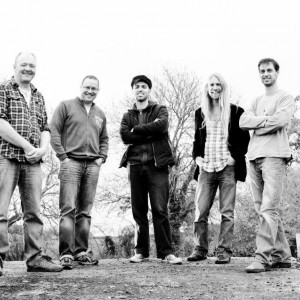
Although very much a local band in the West Dorset music scene, The Sidekicks have taken their unique brand of party music throughout the country thanks to word of mouth praise for their gigs over the last ten years. In fact the band was born thanks to the busking efforts of founder members Laurie Higgins and Sean Geraghty who wanted to subsidise a trip to France more than ten years ago. On returning they decided to keep the process going and began appearing as a duo. Their first gig was the second live event at the then recently opened No 10 in Bridport’s East St, on 11th September 2001. It’s fair to say their British debut was slightly overshadowed by other global events.
That Christmas Eve the duo were offered a one off gig if they could put a full band together. They did, and with no rehearsal the (nameless) band came up with a list of possible tunes on the spot, played a storming ad-libbed 2 hours and several gig offers followed. The band gigged for the next three years before deciding a rehearsal might be a good idea.
Often sets would feature songs discussed verbally and launched into on a nod and a wink. This approach offered a freshness to a variety of styles as the band mixed rock, reggae, funk and soul into an ever expanding repertoire.
Because band membership was originally fairly loose Sidekicks gigs offered opportunities to an avalanche of local musicians who were thrown in at the deep end. Familiar faces still feature in the line up as the band evolved into an established act.
The ‘keepers’ turned out to be the master-guitarist Dan Anderson, originally a blues-man with his band ‘Motel 6’. Thomas Hughes, who’s individualistic talent and customised Hammond organ first astounded locals with the psychedelic legends ‘Gothic Chicken’, who only just resisted the temptation to drive his car into a swimming pool to mark his debut.
The Sidekicks personnel has to date featured one lead singer (with one absence), six Bassists, eight guitarists, six pianists, six special guests and 25 drummers!
Founder member and vocalist Sean Geraghty remembers some of the close shaves: “Due to a drummer implosion, Andy Hancock got the call to fill the hotseat two hours before a crucial gig in October 2006. He has quietly (for a drummer) stayed on board for five years and has recently lost his junior member status by actually appearing in recordings and photographs.”
Over time the band has learned the art of survival, while struggling with the horrors of trying to sell themselves. Regular rehearsals have actually taken place, a web-site has been maintained which this year will be fully updated with new recordings.
Despite having no management or direct representation, the band continues to appear regularly, with bookings currently extending to November 2012.
They have lugged their equipment through muddy fields, up flights of stairs, in and out of barns and marquees, endured electric shocks, power-cuts, crashed their cars (2 in one night) been floated around the Isle of White on a vintage steam ship a few times, somehow headlined a graduation ball or two and provided the soundtrack to many marriages, birthday celebrations and public events.
Knocking over a cake at a wedding was Sean’s personal moment of horror. “We were invited back to play at their anniversary party a couple of years ago. She said they’d laughed about it, which almost lifted seven years of guilt and self-loathing.
“We have been truly heartened by the positive feedback and the friends we’ve made through simply doing our thing. We keep our fingers crossed that we can continue to work together in the same good humour and spirit.
“The ranks of deputies continued to swell with a guest drummer in the summer, (number 26) acquitting himself admirably with the tried and tested tradition of no rehearsal.
“We have developed a certain expertise in the one-off events as a result of our experiences. We have become friends, and have all helped each other out at various times extending way beyond musical matters. Most importantly we still enjoy playing together, the band is a part of our everyday lives, it would be intolerable to work together this long and under the subtle pressure that gigging brings without finding a way to get on. The friendship seems to follow on from that, even when things get stretched we seem to handle it through co-operation, good humour and civility.”
The band have just recorded a great rake of songs to put on the website, www.thesidekicks.co.uk, and recently bought a pro PA system to take on the bigger venues.
In typical fashion Sean is philosophical about the past, present and future of both the band and the music saying: “It’s best to enjoy music live and loud, feel the whole thing come together, dance or listen or whatever. As long as people get something positive from us at that point in time then we know we’ve done our part, and that makes all the difference. If that moment is your wedding day or your birthday party and clients have moved heaven and earth to bring their loved ones together, we know what’s expected from us, and we take it seriously—even if it looks like we’re just having loads of fun.”
As a trio the band play The George, Chideock, February 18th. Quicksilver Mail, Yeovil, April 13th and The Royal Oak, Drimpton, May 5th.
The full lineup appears at The Maypole Inn Thurloxton, nr Taunton, May 18th and the Ropemakers Bridport, May 27th.
To contact the band visit
www.thesidekicks.co.uk
Up Front 02/12
I know that the first month of the year tends to attract a lot of press comment on health and fitness but there seems to be a lot this month about both the physical and mental health of bosses and their employees. According to a recent French study, if you are unhappy at work, it could be partly due to your boss’ management style. Over-controlling managers who use threats as a way to motivate employees, and organizations that do not appear to value individuals’ contributions, frustrate our basic need for autonomy and competence, and this, in turn, is likely to have a negative impact on our well-being at work. Another piece of research from the Northern Illinois University in the US, suggested that moderate exercise minimizes supervisors’ abusive behaviour towards their subordinates. The research showed that stressed supervisors vent their frustrations on their employees less when they get regular, moderate exercise. Yet another report coming out of Loughborough University in the UK, pointed out that in a typical working week, people spend on average 5 hours and 41 minutes per day sitting at their desk and 7 hours sleeping at night. The report said that prolonged sitting at your desk is not only bad for your physical health, but potentially your mental well-being also. The researchers found that nearly 70% of employees surveyed did not meet recommended guidelines for physical activity. One of the report’s authors suggested workers should go and talk to their colleagues face to face, pointing out that it’s a lot more sociable and better for us than emailing them. No doubt all this research will open doors for more ‘well-being in the workplace’ consultants. If I thought it would help I might have strong words with my boss about long hours, low pay and stressful deadlines, but then I’d probably be fired for talking to a mirror. FB
Derek Stevens 02/12
Life in the immediate post war years was hardly one of reward for the victorious British. The country was exhausted and broke and everything seemed colourless and not particularly exciting. There seemed little to spice up life into a memorable peacetime mode. Rationing of food still remained, a starving Europe had to be fed, and clothes were very limited in style and material. When, as a thirteen year old boy, I had grown out of my first sports jacket I was greatly disappointed when I found that my father had bought another of exactly the same style and material.
Each returning serviceman was issued with a complete wardrobe of clothes upon demobilization. My dad arrived home with his complete with trilby hat, which he never wore, so I commandeered it. It was very useful as our visits to the cinema during long holidays from boarding school became quite frequent and wearing the hat helped me to pass as an adult to get myself and my small brother into films certified for children with adults only. Once, having left the cinema to return home we caught the bus up Wimbledon hill to return home. “Two halves please” I asked, the conductor gave me and my wide brimmed trilby hat a leery look. “What, with that bleeding great titfer on?” he replied. My embarrassment was compounded when standing on the platform at the back of the bus approaching our stop my hat blew off and bowled off down the road.
Our mother having died my 6-year-old brother and I had returned to London to stay with our Aunt Sue in her large house in Wimbledon. Brother Colin, having run wild in the Devonshire countryside during his young years, proved a problem for our aunt. She was constantly shouting at him for putting his arm around the doorway and turning the electric light on and off. The instantaneous bloom of light completely fascinated him, we had had oil lamps only back in Rousdon. Aunt Sue was also displeased when she returned from shopping one day to find her once immaculate lawn all chewed up into a muddy mess by bicycle tyres as Colin had been emulating Split Waterman, star of Wimbledon Speedway, which could be heard roaring away nearby every Thursday evening. Aunt Sue had a good sense of humour and was apparently quite amused when she eventually found out that because she so frequently fed us with fish, more easily available in those rationed times, we had dubbed her ‘Aunt smoked haddock’.
Many areas of South London had been bomb scarred, but nowhere could be compared with the scenes we were to see on cinema newsreels. There were three main cinema chains in those days, Granada, ABC and Odeon. There were two programs each week so keen cinemagoers could, if they so wished, see six different films. Each program was accompanied by a newsreel, as television was still in the wings these newscasts were our window on the world. Some scenes they showed at the time still stick in the mind after all those years. In particular I remember those terrible images of devastation the air forces of the allies had rendered to the enemy. During the final years of the war over 160 German towns and cities had been attacked by waves of bombers dropping as much as 34,000 tons of incendiaries and high explosives within a five month period. Those newsreel images showed landscapes of destruction, piles of rubble beneath remaining skeletal walls, but we were never to see the large timber funeral pyres loaded with dead air raid casualties, many children among them, being incinerated by flame throwers. After hostilities had ceased and the allied occupying powers had moved in we were constantly shown those scenes of destruction, now with chains of women strung over the debris, under instruction from the Allied Control Council, passing bricks, timber and broken concrete by hand from one to the other. 3.5 million homes has been destroyed and 7.5 million people were homeless. Those women, aged between 15 and 50, became known as ‘Trummerfrauen’, rubble women and many memorials have been erected to the memory of their efforts. At the end of the war Germany was missing 15 million men, most of them dead but many of them still missing. At the battle of Stalingrad alone 91,000 German troops had been captured, only an estimated 5,000 were to return.
At the winding up of the war 740,000 German POWs were handed over to France by US forces, and several thousand others were handed over to the Soviet Union as a ‘gesture of friendship. Many of them ended up in Siberia, the survivors among them being repatriated when Stalin died in 1953.
Despite the effect of the war to condition one to despise the enemy and everything German it was difficult not to feel sympathy when newsreels showed scenes at German railway stations of womenfolk holding high photographs and names of their missing menfolk, desperately hoping for some recognition by the repatriated POWs as they arrived back from the Russian camps.
Many German POWs had the good fortune to end up in British camps, but despite limitations set out in the 1929 Geneva Convention they were kept captive until three years after war’s end. 400,000 POWs were retained in this country, most of them being returned from camps in the USA and Canada. The last were repatriated in 1948 leaving the newly constructed Empire Way leading up to the twin towers of Wembley Stadium as a memento of their stay. British agricultural authorities resisted the return of their cheap labour force but were advised that they should recruit replacement labour from the many Poles who had been isolated in this country by the Soviet occupation of their country.
The repatriated Germans were to return to a country of those desolated landscapes, tidied up by the trummerfrauen. Probably a traumatic experience for most of them at the time, now, it is generally accepted that those vast areas of wasteland, prepared by those wartime raids of the RAF and the USAAF, were the basis for the reconstruction of industries which, within half a century, were to become the foundation of the greatest economy of Europe.
Derek Stevens is available for talks on the subject of life during World War II. Anyone interested should phone 01297 553765.
Fergus Dowding 02/12

Beetroot are so easy to grow, they mature quickly, and are such a sweet and rich vegetable. Not everyone loves it because it tickles their insides, but those that do should read on.
Like all seedlings, beetroot are tasty to slugs, and the young leaves can be eaten as spinach. Sown into moist warm soil in May, germination is quick and successful. But to harvest your first beetroot by late May, my preferred method is to sow indoors in module trays. Either plant one in each module, and plant out at 8” x 8” spacing, or plant 4 seeds, one in the corner of each module, and later plant out at 16” x 16” spacing.
Sowing in mid-February in the greenhouse means seedlings are ready to plant out 6-8 weeks later. Best then kept under fleece until the end of April, the first small roots are ready to eat soon after. Sowing in modules is so much easier than sowing in the soil, simply requiring daily watering.
The plants remain fairly small until May, when growth can be meteoric. The key to all good plant growth is heavy dressings of organic matter. Scatter as much as you dare on top of the soil between plants, which will mulch the soil and then feed the plants.
It works well if you pull the biggest roots first, leaving the smaller plants to fill the space left behind. You can keep pulling ever bigger roots until October. If your soil is rich and the plant has healthy, luscious leaves, this first sowing will be sweet as sweet all the way until October, even though there may be signs of the roots becoming white and woody when cut open. A good sign of this is that the leaves cease to look fresh and begin to die back, in preparation to seed next year. Pick if this happens.
For winter beetroot, you are best to make a second sowing in May or June. This will give you a second harvest, and roots that have a good chance of staying sweet into the winter. As you read this, we are still pulling beetroot and making Bortsch. This splendid winter soup is also a good way of using up any dessert apples which have gone soft, but which sweeten the soup a treat. The taste would make a Pole happy!
Beetroot is a close relative of spinach, and young leaves can be cooked in the same way as their cousins, adding a dash of colour to a dish. How satisfying, nothing is wasted.
My preferred varieties are still Detroit 2 and Boltardy. The name Boltardy refers to the fact that the plant can rise to flower, but in my experience this only happens in impoverished or dry soil, or when planted much too close. Once established, there are really no pests except mammals, which should be casseroled on sight. As we approach Easter, what happens if you pour a boiling kettle into a rabbit hole? Of course, you get Hot Cross Bunnies.
Cecil Amor 02/12
Whilst a National Serviceman in the Royal Air Force, I spent about twenty months at Chivenor in North Devon, where the champion ‘Military Wives’ singing group are now based. One evening activity for us was to go to the “Astra”, as the camp cinema was called. I remember in particular a season of Marilyn Monroe films and especially the film ‘Niagara’, with the star walking away from the camera. It had always been said that Bromide was included in the tea at Initial Training, but it was evident from the catcalls, that the effects had certainly worn off by then !
I knew the part time projectionist, a Bristolian, who referred to the ’cinemal’, whereas the London lads spoke of ’the Flicks’. He invited me up to the Projection Box, which was interesting as the company I worked for before call up had manufactured some cinema equipment. Also, I saw the film free !
As a small boy I had often visited my grandmother, who was also visited by an uncle who worked for the local newspaper as a ’Reader’, a now outdated occupation it appears. His job was to read advance copies and correct any mistakes, before the main print run. A ’perk’ of the job was a selection of newspapers and magazines, which he deposited with grandmother, to be read by myself and various cousins in the area. One magazine was ’Film Fun’, which for a short time included short film strips, of a few frames from various films. I begged these and my intention was to make a projector and show these strips and make my fortune. Making a projector at that age was beyond me and the film strips were eventually consigned to the waste bin, along with my dream.
In those days the Cinema, or Picture Palace, was one of the main entertainments. The earliest visit I can recall was to ’Sabu the Elephant Boy’ and then ’Snow White and the Seven Dwarfs’, a Disney cartoon. These were first shown in Bridport in 1937 and 1938, so this is probably when I saw them in Wiltshire. But when did the cinema first appear here ?
A slim volume by Peter Dyson ‘A Century of Cinema in Dorset’ says that it all started here in 1896 as the old Shaftesbury Hall in Bournemouth had a showing of ‘Cinematographe moving picture show’, followed by the ‘Theatrograph Life size moving photographs’ at the Theatre Royal in the same year. About the same time Poole showed a ‘Theatrograph animated picture show’ in the Amity Hall. However, in smaller places the first films would have been seen in a ‘Bioscope Booth’ owned by travelling showmen at fairgrounds, e.g. at Sherborne at the turn of the century.
In 1901 the Shaftesbury Hall in Central Bournemouth was presenting films and live entertainment, as ‘West’s Pictures’. The Grand Theatre (later the Hippodrome) in Boscombe and Pokesdown showed films from 1897 by Birt Acre’s Royal Cinematographe.
Dorchester had some interesting moving pictures in the Corn Exchange from 1903. Large painted canvas rolls moved between two rollers, known as the ‘Myriorama’. Films followed there from 1909 and the Electric Picturedrome in Durngate Street operated from 1911.
At Gillingham cinema started with Walford’s Electric Picture Palace in the market hall, then in 1911 the Gillingham Palace in Buckingham Road was opened by R Robinson. Lyme Regis apparently showed films from the First World War in the Assembly Rooms by John Raymond, with his daughter playing the piano, as the films were silent. In 1912 Bridport opened the Old Artillery Hall, Barrack Street, as the Electric Palace, a name which was to move to several locations over the years.
On Portland there were presentations in the Jubilee Hall, Easton from 1908. Shaftesbury presented Magic Lantern shows in the Ebenezer Hall, then opened the Picture Palace in 1914/1915. Travelling showmen brought shows to Sherborne from 1906 and then films were shown at the Drill Hall and Rawson Hall. In 1912 Swanage opened the Gilbert Hall Pictures, but Weymouth had commenced in 1909 in the Jubilee Hall.
So from 1896 to around the First World War most towns had seen films introduced. Unfortunately Peter Dyson does not catalogue all the films shown.
However, I have a copy of ’The Cinemas of Bridport’ by John Surry which lists many of the films shown in the town. Looking at the inevitable war films after 1945 can be found a comedy ’The Navy Lark’, which had been filmed locally. Also ‘Cockleshell Heroes’, ’The Cruel Sea’, ’The Dam Busters’, ’Reach for the Sky’, ’Bridge on the River Kwai’, ’Sink the Bismarck’, ’Guns of Navarone’, ’The Colditz Story’, ’Stalag 17’ and so on.
On Tuesday 14th February (Valentine’s day !) Bridport History Society will be transported to ’Stalag 8B via Dieppe’ not on film, but in an illustrated talk by Sheila Meaney at 2.30pm in the United Church Main Hall, East Street, Bridport. All welcome, visitors £2, including tea. Details from 01308 – 425710 or 456876.
Cecil Amor, Chairman, Bridport History Society. Tel : 01308 – 456876.
Up Front 01/12
As the curtain slowly closed around the coffin in a small and rather bleak crematorium in Slough last week, I didnt know whether to laugh or cry when the first bars of Bruce Springsteen’s Born to Run suddenly broke the silence in the room. As it happens I did both. I cried for the loss of my oldest and dearest friend, but chuckled inside at the bemused look on the elderly priest’s face, as Springsteen’s lyrics filled the room. I could imagine the smile on my friend’s face if he had been there, and couldn’t help but conjure up an image of him leaping out of the coffin to entertain the assembled group of friends and relatives with a dance that would have shaken the building to its foundations. Earlier, when arriving, I had seen the families from the previous funeral service leave, and as I left, yet another group of mourners were gathering for the next service. I wondered what pieces of music had been chosen to help drown their tears. Down the road a colourful group of West Indians carrying steel drums were gathering around a hearse at another church, no doubt about to go through a similar series of emotions. It was a striking reminder of just how much music has played its role in marking some of the emotional moments of our lives. Whether it is the crooning strains of Frank Sinatra singing As Time Goes By, in the film Casablanca, or the haunting lyrics of Dame Vera Lynn’s, We’ll Meet Again, or the powerful march of Blake’s Jerusalem, or even the burst of energy as Bruce Springsteen races across a stage belting out his home spun philosophy—music has the ability to lift spirits and leave fervour, anger, despair and joy in its wake. Isn’t it good to know that, as we look toward 2012, with a song in our hearts and a shimmy in our feet, the X-Factor will be there again next year to help guide us.
Fraser Christian
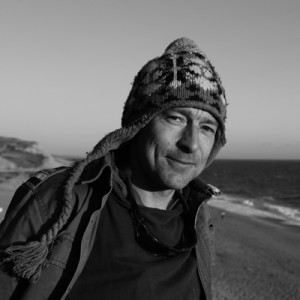
Robin Mills went to Burton Bradstock to meet Fraser Christian. This is his story.
“I come from Chipping Sodbury, between Bath and Bristol. My Mum and Grandad still live there. I went to school there, to a pretty rubbish comprehensive, and I was always in trouble. I’m dyslexic so I struggled, and eventually I got expelled with no qualifications. Probably the only thing that kept me out of Borstal was the Scouts and the Army Cadets, which I excelled in. I’ve always enjoyed the outdoor life, adventure, leading people, so I’d climbed Ben Nevis and Scafell Pike by the time I was 14. Not much really scares me and I like a challenge.
My Grandad was a gypsy, and Great Grandad travelled with Romany gypsies; he was well known for his expertise in horse medicine. My Dad didn’t ever teach me a great deal, but what he did was quite good. As a kid I was into punk music, smashing stuff up, and I couldn’t see the point of anything. He told me about Paradise Island near Papua New Guinea, where the people live under a volcano that could go bang any minute, and they don’t sit around waiting for the world to end, they’re known as the happiest people anywhere. So I remembered that, and I think it helped change me.
After school, my plan was to join the Royal Marines, do a few years then maybe get a job as a bodyguard. I was well into martial arts. So I went with a mate to a Navy recruitment office to sign away my life and join up. He went in first, and when he came out he described this humiliating test, doing pull-ups from a bar, naked, in front of a Navy doctor who was squeezing a very sensitive part of his anatomy. I just had this epiphany moment, I realised the Navy wasn’t for me; I’d grown up in total freedom, poaching, living in the woods, hunting and fishing, using a shotgun since I was 10, and I realised it was about me submitting to the service rather than being good at what I could already do, and my life’s plan flew out the window at that moment. Grandad had been in the Special Boat Service in his day, the elite service in Special Forces, and he’d done all sorts of exciting life-and-death stuff which I suppose had been part of the appeal for me.
Anyway, I’d been helping out in a pub on the weekends, so I decided to go to catering college and learn to be a chef. I had to blag my way in, saying I was going to join the Catering Corps after a year, but I got in to Brunel Technical College in Bristol and did a 2 year professional course. We learned the whole trade, waiting, front of house, as well as cooking, and I qualified with distinction, the highest marks in the college. The principle often told me he wished he could expel me, I was so much trouble, but I was the best student he’d ever had so he couldn’t. As one of the top students, I got offered jobs in a lot of top hotels like Claridges, Gleneagles, the Dorchester, but because the college had links with another college in Bordeaux, and I was good friends with a local French family, I got a job down there in a hotel. That only lasted a month, there were crossed wires, and I went off travelling with a French girl for a few months, who taught me nice things about French culture.
When I came back to England, I worked at a new country house hotel near Bath called Hinton Grange for a year and a half, then the Head Chef and I went to work at the Redesdale Arms in Moreton-in-the-Marsh, followed by the Manor House Hotel, a 4 star hotel in the village, where I became the 2nd Chef after about 6 months. I was just 20 then, with 5 blokes working under me, and that was really tough. Then one day, the boss came in and was moaning at me, and I looked at his new Mercedes and then at my old Cortina, and I just thought I’ve had enough. So I left, went travelling, bought an old caravan and lived on some hippy sites, lived in a wood for a year; sitting on the ground round a fire, all that was a more normal way of life to me.
Living in Bristol, city life didn’t really suit me, so when I found an old Mercedes van at my cousin’s place I bought it for £80, spent £300 on it to get it through the MoT, and took off with my girlfriend and some mates to the South of France, the Ariège. A rich friend had a house and some land there, and we did some work clearing the land and doing up the house. We were also attending big parties, in France and down into Spain, which had become hard to do in the UK with the new laws. I knew a lot of people doing parties in Prague, where Frank Zappa had been appointed Minister of Culture. Then I came back to Bristol, briefly, and took off to India, something I’d always wanted to do. I spent 3 months there, in Goa, helping out at a beach café, probably the easiest 3 months of my life; there’s always great fish to eat, you hardly need money, and I put on half a stone while I was there. Although, my girlfriend back home got it together with my best mate when I was away, something I just knew was going to happen.
Back in the UK, about that time I got my dog, Marley, a lurcher, when he was about 6 months old. He’s 15 now, and on his last legs. I was going from Bristol to Brighton when I had a call from a friend in Bristol, and something made me turn round and go back, one of those turns that changes your life. Gypsies talk about “there’s no such thing as a wrong turn, just a new adventure” and this was one of them. My friend had this young lurcher there, and couldn’t cope with him as she had a young child. So I just took the dog, and he just changed my life really. I’d been away from my usual life, living in towns, and he got me back to the countryside. I have never come across a cleverer dog, and I never will as long as I live; you could say he’s a soulmate, 110% dog.
I lived in Brighton, and was helping a friend doing plastering. Quite quickly I found I could turn my hand to it myself, and there was loads of work on at that time, so I found myself earning up to £350 by lunchtime. Then I got a big £30,000 job from a couple completely gutting a house, which went wrong; it turned out there was no money, and I ended up with very little after paying off debts to people who were working for me, and business loans. I was learning a lot about fishing then, from the beach, but also I shared a boat with a friend, an Arran 16, and went out to sea fishing every day I could, foraging when I couldn’t. At that time, I decided there were lots of things to learn about, including fishing, that I knew about but didn’t really understand. I also bought an old river cruiser, 24ft, sold the engine and did it up to live in, with my dogs.
I came down here to Dorset because I got a call from my friend Pete who was front of house manager at River Cottage, when they were at their old place near Bridport. I was up in Wales with my cousin on a week’s living wild and foraging, and Pete said one of the chefs was off. They were doing a “Catch and Cook” day, and were desperate for someone to help out in the kitchen. Then they asked me to help out with the fishing, which went well, and one thing led to another so that my friend Tom Lichfield and I ended up running the courses. I’d written my own course, and at River Cottage I realised that you could teach something you have a passion for, which is how after I left River Cottage I ended up running my own courses on coastal foraging, bushcraft survival skills, and cookery. I’m not really a business person, I probably don’t promote myself enough, but it just about makes me a living, leaving plenty of time to go fishing!”
Up Front 12/11
Every morning I get up and make a solemn promise to either, go to the gym, take a brisk stroll, have a swim, or at the very least walk the dog. Any of these activities might help to fight middle aged flab and give me a little much needed exercise. More often than not, however, work takes over, and before I know it it’s time to chase around the countryside collecting children before going back to deal with yet more office chores of a sedentary nature. With Christmas around the corner and the possibility of a little over indulgence I am thinking of making yet another solemn promise: this time to join my girls in a dance routine, (obviously in a place where they can’t be too embarrassed). Or I could get one of the latest gadgets designed to help people to lose weight. Launched by a Swedish company, the Mandometer is an interactive computer system that aims to retrain users in their eating habits. The device is essentially a weighing scale which hooks up to a small computer. Users place an empty plate on the scale, then slowly add the food they plan to eat until they reach a previously agreed upon quantity. As they eat the food, they receive constant feedback from the ‘talking plate’ regarding the rate of consumption—friendly advice such as ‘please eat more slowly’. The device is to be trialled by the NHS to help fight Britain’s obesity problem and though it might sound ridiculous, previous tests have apparently proved successful. The good news for the manufacturers is that the Manometer is costing the NHS around £1,500 per unit. It seems we have come such a long way since Mum used to say, “Don’t bolt your food darling.”