
Saturday, September 19, 2026
Home Blog Page 95

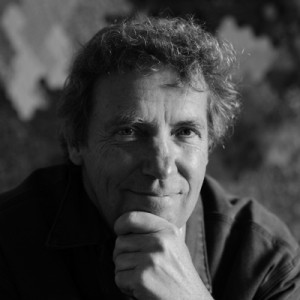
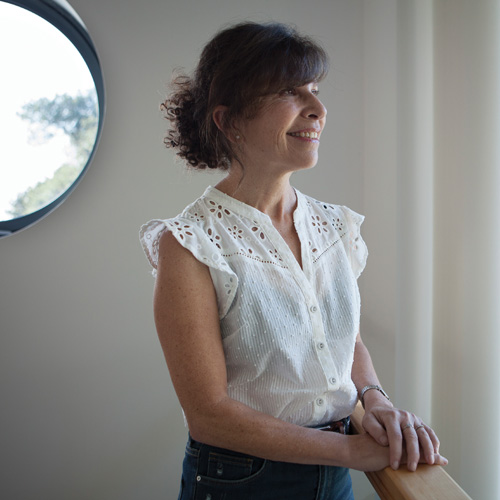
Merrily Harpur

Robin Mills went to Cattistock, West Dorset, to meet Merrily Harpur. This is her story.

“My upbringing was in Surrey, although I was born in Buckinghamshire. All the while I lived in Surrey, I was wishing I lived in Dorset, and it’s taken me this long to get here. My father was youngest son of a rector of the Church of Ireland, from County Laois in the Republic of Ireland. He came to England after his education, and was working in newspapers when he met my mother. She was from a Scottish/English family who had been living in France, so they both had a slightly foreign take on England, and although they were very English in their attitudes they perhaps considered themselves a bit foreign. I think that might have rubbed off on us, especially as my mother, who was a witty person, found the English very funny. I have three brothers and they are all very droll in different ways—tremendous company.

I went to boarding school, Headington School, in Oxford. Oxford’s an interesting place to be at school; there are undergraduates everywhere which is just the job if you’re a certain age. I didn’t know whether to go to Art School, or to university to read English which was the other great interest of my life. In the end I chose the latter, because I thought I’d never get round to reading Anglo-Saxon unless I was forced to. I went to Trinity College, Dublin, got a degree in English, and set about trying to live by my wits. I had made a vow to myself, which was that I would never have to set my alarm to make myself get out of bed, ever again, and I don’t think I ever have. It comes from a horror of having to be constrained by anyone else’s timetable, but if I give the impression of being slothful and unreliable I’m certainly not: I get up at 5.30am every morning, and I think that’s because I don’t have an alarm—I get up just dying to start the day.

So I’ve always been self employed; I started off as an apprentice picture restorer, living in a farmhouse in Herefordshire with various artists and craftspeople. About that time I began to get into cartoons. I’ve always had a feeling I could draw cartoons, even at school, and that I could make them funnier than the ones I saw in newspapers. Then I got an agent, and that made a huge difference. They force you to produce a huge amount of work, very quickly, on typing paper, and none of these beautifully crafted images I used to do sitting at a table. And then I suppose my little vow of never having to undergo formal constraints rather went out of the window, because I had to reel off all these cartoons, rather like having to do an exam every day. If you’re working for a newspaper you have to produce a cartoon by say 2.00pm on Friday or else forget it, and you have to produce four or five different ones because the editor chooses the one he thinks is funniest, and you’ve maybe only started that morning.  Luckily I’m quite good at exams.

Getting into cartoons was actually brilliant, especially as it was during the 1980s which was the absolute heyday for cartoons. Most of the magazines had cartoons, and I had a double page spread to myself in Punch every week, when Alan Coren was editor. I was lucky enough to surf that wave in the 1980s, coinciding with the success of  Steadman, Trog, McLachlan, John Glashan and Michael Heath, wonderful cartoonists, when having great cartoons in a magazine seemed to be the coolest thing. Anyway, I moved to London and became—what seemed to me then—rich and famous. My work was based on social satire, and I worked for the broadsheet papers, mostly the Guardian and the Sunday Telegraph. Mac’s cartoon was on the front of the Sunday Telegraph, and I was on the back, quite annoying really, but he is the best pocket cartoonist. I’ve had several strip cartoons running in newspapers, and they’ve always been on the same subject, which is about London people who move to the country. The idea was to satirise both the London people and the country, so I had a lot of fun at the expense of people who live in “Ye Olde Pigsty”, etc. These days there’s a bit of a dearth of good satire, especially political.

At about this time I learned to fish, thanks to a keen salmon-fishing boyfriend. We used to go to Scotland two or three times a year, but these days I love trout fishing—it’s more skilful—and I’ve been a member of the Dorchester Fishing Club for 12 years. It’s a life support system for me, and it’s what I do in the summer when I’m not painting.

I then found I was actually in a position to sell my flat in London, pay off the mortgage, and buy a house in Ireland. So I moved to South West Cork, the Mizen Peninsula, my idea of heaven because of its remoteness and beauty. I could do that because the fax machine had been invented, and that meant I could still produce the work, while enjoying the blissful freedom of living where I liked. Later of course came email, which was even better. Originally I would drive to the offices of the paper in Fleet Street and put the cartoon on the editor’s desk, so I was one of the first people to have a fax machine, even before the Guardian had one.

South West Cork contained quite a lot of English, Germans, and Dutch people, and after a while I thought I’d prefer a more undiscovered part—the Ireland I remembered from family holidays when I was a child. So I bought a sort of hovel in County Roscommon, in the middle of Ireland, the nearest town being Strokestown which is a delightful backwater. That was marvellous, and I got to know all my neighbours who said I was the first “blow-in” they’d had living there. The local postman was a chap called Pat Compton, who said what we really need is a festival. So we cooked up the idea of Strokestown International Poetry Festival, and I was the first director, a kind of founding mother. And I run it to this day. It’s tremendous fun, and keeps me in touch with Ireland.

In the early 1980s I became very intrigued with the idea that there were big cats roaming the countryside, and started to do research. Perhaps the seeds of my interest were sown by what was known as “The Surrey Puma” which provoked many fruitless police hunts there when I was a child in the 1960s. It’s a very puzzling idea, and one of those that becomes more puzzling the more you know about it. Dorset’s a bit of a hot spot for big cats, although sightings have been recorded in every county. In my earliest research I tried going out looking for them, but quickly cottoned on to how hopeless that was; you are more likely to come across one completely by chance. In fact I’ve written two books on the subject, and could for all I know be a world authority, but the fact remains I’ve never actually seen one. There are many mysteries—you never find one dead beside the road, 85% of them are black, there are no spotted ones; all these anomalies, and yet the sightings are by completely reliable people like farmers and gamekeepers who know very well what they’re looking at. I thought the first book would take me 6 months to write, but there was so much to get my head round, it actually took 6 years. And my head’s still not round it. I do talks on big cat sightings, and I also do talks on hunting; the anthropological and philosophical aspects of it, its history and mystery.

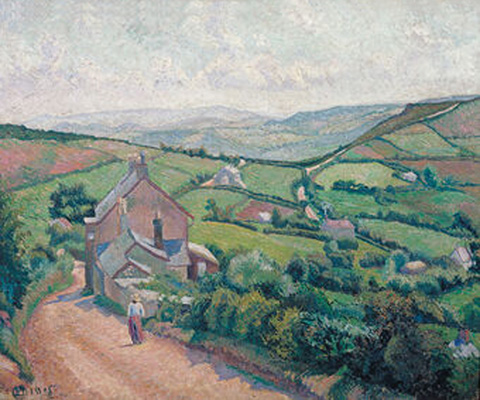
After my mother died my brother and I moved to Dorset. She had been living in Wiltshire, so I’d got to know Dorset a bit more through visiting her. West Dorset’s really an earthly paradise, and no one who lives here, myself more than most, ever stops congratulating themselves on living here, rather smugly. About 4 years ago I sold my place in Cork and bought my cottage here in this wonderful village. I’m still doing one cartoon a week for the London Evening Standard, which is a very welcome bit of regular income, but for the last two or three years I’ve been painting full-time, every day. In fact if there’s a day when I can’t paint I feel quite uneasy. And it’s been brilliant because the work has sold well—about 90% sold in my first Dorset Art Weeks—which has spurred me on even more. I’ve had a lot of help from the other artists here in the village. We sometimes call ourselves, rather cheekily, ‘Tate Cattistock’ ”.
Cecil Amor 11/11

When I was a small boy, we had a large framed silk depiction of all the flags of the participants in the 1914—1918 War, on a mauve background and the legend ‘Victory for the Allies’, hung on the wall. I am not sure now what the centre piece was, a faded oval photograph of either the King and Queen, or of my father in army uniform. I imagine my father brought it home from India. I wonder what happened to it, as it disappeared long ago and I imagine my mother, a great person for ‘getting rid of old rubbish’, probably did just that. What a shame.
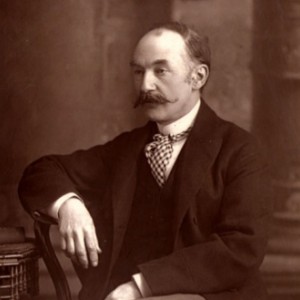
Something that mother did not throw away in the early days were faded family photographs, some of which showed my Dorset grandfather, with the large felt hat (trilby?) of the 1920s and sporting a large moustache. I now realise where I have seen a similar photograph, of course, Thomas Hardy, the famous writer. Perhaps it was the sepia print, or is it a Dorset face?
More often seen hanging on a wall would be an embroidered sampler, or a poker work wooden plaque bearing the motto, ‘Home Sweet Home’.
One can imagine either of these on the wall of the cottage at Higher Bockhampton where Hardy grew up. I had not realised until recently that Thomas Hardy was one of a family of four, he had a brother, Henry and two sisters, Mary and Katharine. Only Thomas became famous, as the others were like most people, useful in their own right, but not ‘special’. A small monograph, published by the Thomas Hardy Society, written by Professor Donald J. Winslow, ’Thomas Hardy’s Sister Kate’ has enlightened me about the family. Katharine was known as ’Kitty’ or latterly ’Kate’ and was the youngest, four years younger than Henry and sixteen years younger than ’Tom’, who was closer to Mary, his junior by only a year.
Their father, another Thomas, was a mason and builder, which probably influenced his son Thomas to begin his working life as an architect. Henry became a builder and inherited the family brickyard in Broadmayne and the business. The two girls went into teaching, studying at Salisbury Training College, but not together, owing to the age difference. Prof Winslow says Hardy used their experiences in ‘Jude’. Kate received her teacher’s certificate, second class, in December 1878, having served the required period of probation at Sandford Orcas School. Later both sisters taught at Dorchester Church of England Girls School, Mary becoming headmistress and they lived together. Eventually Thomas gave Kate a terraced house in Wollaston Road, which the two girls shared.
Their father died in 1892, aged 80, but their mother lived until her ninetieth year. The two sisters returned to Higher Bockhampton by 1904, the year their mother died.
The brother, Henry, built the house at Max Gate, to designs by and for Thomas. Henry had inherited land in West Stafford, from their father and also built a house there, Talbothays Lodge, also designed by Thomas, similar to Max Gate. Henry and his two sisters, Mary and Kate then lived at Talbothays Lodge until they each eventually died there. (The family had never owned the house at Higher Bockhampton).
From Kate’s diary it appeared that they usually had visitors for tea, including occasionally brother Thomas and Florence. Kate was fond of music and played the organ at Sandford Orcas and later Thomas bought her a piano for Talbothays, which she played for him at tea time! In 1931 Kate bought a new organ for Stinsford Church.
Signs of the period are that Henry had a ‘wireless set’ installed in 1926, which was troublesome and Kate wrote that it ‘was no end of expense and trouble’ and Thomas was ‘not pleased at our having Wireless—says tis too expensive’. Later on they were able to hear the Armistice Day programme ‘beautifully’. Thomas eventually succumbed and said his dog liked to hear the news! They also had the telephone put in at Talbothays, but a ‘party line’ until 1936, when Kate had a private line installed. Thomas and Florence were encouraging about this, although it was some time before he would use the one at Max Gate. In 1924 Henry bought a Sunbeam Talbot open car and by his 73rd birthday was taking family members for drives. The same year he drove to London and back. He was a fast driver, whereas Thomas used a chauffeur, driving at not more than 25 miles per hour.
Although Kate was later involved in meeting famous people, known to Thomas, there were occasions when she was left out, even ignored by Thomas. In 1916, she ’went up to see him but he did not care about seeing me’. Again in 1918 she took flowers to the Stinsford graves, whilst ’Tom and Mr Cockerell …. either did not, or would not recognise me’.
After Thomas Hardy’s death, Kate became more involved with his associates, corresponded with Eden Phillpotts, was visited by Gertrude Bugler, etc., culminating in opening the Thomas Hardy Memorial Room in Dorset County Museum, with John Masefield, Poet Laureate, in 1939.
Bridport History Society will learn about ‘The Hardys at Home’ from Jacqueline Dillion on Tuesday November 8th at 2.30 pm in the Main Hall, Bridport United Church. This will involve memories of Max Gate. All welcome, entry for visitors £2, with refreshments. More information from 01308 488034 or 456876.
Cecil Amor, Chairman, Bridport History Society. Tel : 01308 456876.

Derek Stevens 11/11

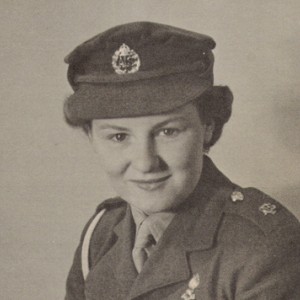
Mrs Pat Brunsdon and her family moved to Axminster in the early sixties where she worked in a radio and record shop and later in the town’s TIC.  After retirement she was well known as an active member of several local voluntary organisations. After her death in Axminster hospital in 1995 her diaries of her time in the wartime ATS were found by her sons. An edited account of her interesting experiences I feel well worthy of recording and appears as follows: –
When war was declared in September 1939 my mother declared “Thank God I have two girls”. Little did she know where the course of the war would take me during the following months. Anxious to do my bit for the war effort I got a job in a local factory fitting filaments in electric light bulbs but my patriotism began to wane with the fiddly nature of the job. “You will be wearing glasses like the rest of us in a few months’ time,” I was told by a workmate in her broad Yorkshire accent. Having to wear oversize blue overalls and suffer the racket of surrounding factory machines didn’t help either so I gave in my notice. I was then told that in doing so I would have to face a tribunal, employment in national service was bound within strict rules. Terrified, and without telling my parents, I went to the local recruiting office. It was a shattering experience. I was given a medical, first to see if I had VD, then to make sure I was not pregnant. I was mortified, how dare they suggest I might be a girl of easy virtue! After signing some forms I was given the King’s shilling and told that I would be notified.  I was nineteen years old.
Then I had to go home to face my parents.  Dad took it quite well despite previous warnings he had given me that I would end up peeling spuds and cleaning toilets. Mother did not, we had lost my sister, she had fallen sick and died in September 1940, a shattering experience for us all. She was not going to lose another. I should stay home and keep her company. This I could not do, conscription was coming anyway and I wished to be in the thick of all that was going on.
My call-up papers eventually arrived. I was to report to Glen Parva Barracks, Leicester in January 1941. My parents took me to the train; I was in a lovely suit, Bomberg silk stockings and felt very smart. There were tears as the train pulled out, I was off to war, all 5ft 1 in of me.
On arrival at the barracks we were taken to the stores. What an experience that was.  In one end in my smart suit and out the other in a khaki skirt, much too long, a tunic which fitted nowhere and a cap which sat stupidly on top of your head. There was a mirror at the end of the corridor. I could not believe I was the same person; it was very funny, we all looked like characters in a cartoon strip.
I went to bed in a Nissen hut on a hard mattress and have never been so cold in all my life. I felt homesick, but not for anything would I have admitted this to anyone, least of all my parents.
It took all of six weeks to get us into shape. Drilling, route marching, PT, spit and polishing for early morning hut inspections, falling exhausted into bed aching in every limb. After final assessments we were told we had the option of leaving and returning home. Not one girl from the intake wanted to do so. We were all beginning to enjoy army life and felt it would be a worthwhile job. Eventually our postings were announced. My fellow Yorkshire friend and I were to be telephonists and were to report to Oswestry.
On arrival at the camp we were issued with trousers, boots, gaiters, leather jerkin and waterproof capes.  What do telephonists do with such kit we wondered? The next morning we arrived on parade in our skirts, tunics, shoes and stockings. There were hundreds of girls on parade dressed in trousers, battle dress blouses and brown boots who were regarding our presence with some curiosity. The Junior Commander told us that we must dress like everyone else; we had joined the Royal Artillery and would be joining a heavy ack-ack gun site.  Battle dress and brown boots were, therefore, to be worn.
After technical lectures, aircraft recognition instruction, more lectures, table tennis, dances and going to the pictures in the big cinema on the camp we were given some leave. When we returned we were issued with more strange clothing, steel helmet, gas mask, ground sheet, and also field dressings. We were then posted to a gun site. There we found big 4.5in guns, range finders, predictors and a command post. We stood in the gun pits with cotton wool stuffed in our ears to get used to the noise. Our real war work had finally started. Being telephonists we worked in the command post underground, eight hours on eight hours off, all around the clock.
Our Gunnery Officer decided that I should go on a course to become a predictor operator. Our male Sergeant instructor was rather sarcastic about this saying I hadn’t a hope of passing the course.  To his and my own astonishment I did pass and was promoted to the rank of Corporal. I felt very proud as I marched my girls from our tents to the gun site and back again. We lived under canvas and moved around the south London area of Bromley, Petts Wood, Chislehurst and St Mary Cray, working continuously to bring down the dreaded Doodlebug.
In late 1944, with the Allied forces making headway towards Germany we were disbanded and reformed. It was all very hush-hush and there was a lot of drilling to keep everyone occupied. Christmas came and there was no leave. Instead we embarked on a ship in Tilbury Docks one dark and very stormy night. By this time I had received my third stripe, I found it very hard to control the turmoil in my stomach during that voyage, after all an ATS Sergeant could not be seen in the throes of seasickness by her girls.
We arrived in Ostend and were loaded into some very uncomfortable lorries driven by some very fine-looking Royal Marines. We were to relieve an all male battery that was being moved further into Holland.  This gun battery was right in the middle of Antwerp. As we drove in we did so below a huge firework display, a terrible air raid was happening and every gun was firing. We must have been the first ATS girls to be under fire. I thought I would never see England again.
Our quarters were awful. No water, no wood for the fires, and we had to sleep rough that first night. In the morning, I and a fellow Sergeant gathered our girls together, all seventy of them, and marched them to the Royal Marine HQ, gathering any wood we could find for our stoves. The sentry at the entrance appeared very puzzled by the arrival of a bunch of girls, rosy-faced with cold and wearing boots and gaiters, leather jerkins and woolly scarves. He sent for a senior NCO who, in turn, called the Duty Officer. I explained our situation and that we would all appreciate a hot drink. He sent us off to the mess hall where we found a crowd of very surprised soldiers, sailors and marines.
After the very welcome refreshment happily given us the girls, naturally, began to want to spend a penny. I sought out the Duty Officer and asked if there was a ladies toilet. “Good God girl, this is a man’s war!” he declared irritably. However, he softened and directed us to the officers’ mess.  As I waited for the girls in the hall a handsome Royal Marine Warrant Officer strode in. He asked me who I was. I told him I was an ATS Sergeant in the Royal Artillery. “What. Girls on guns?”
The following day we got our equipment in order, did our maintenance and reported “Ready for Action”. From then on our guns were constantly firing and, I believe, we were the first British women to directly engage the enemy in action. We brought down many Doodlebugs and spent the rest of the war in Belgium where we celebrated VE Day in Antwerp, which was wonderful. Then we dismantled the equipment and finally home and demobilisation.
I married that handsome Marine and am now a grandmother.  Not much has been written about the ATS and the wonderful work they did under great stress, discomfort and heavy gunfire. I think we became liberated women all those years ago and certainly did all we could for the war effort.

Derek Stevens is available for talks on the subject of life during World War II. Anyone interested should phone 01297 553765.

November in the Garden 2011

Remember the very early and steep dive into winter which occurred last year? I’ve taken extra precautions this year, starting by adding extra bubble-wrap insulation in the greenhouse which is easily fixed with plastic clips against the aluminium framework. What’s interesting is that some plants which I thought I’d totally lost due to the early and sustained cold winter have, in fact, bounced back. My long established stands of Melianthus major seemed completely wiped out, showing no signs of life right up to mid-summer. Now they have put on new growth, sprouting from beneath the soil, to provide valuable glaucous green ‘exotic’ foliage right now.
It’s a timely reminder just how useful foliage is in the garden. Now that herbaceous plants are dying down and deciduous ones dropping their leaves it is the evergreens which come into their own. Evergreen specimens are often referred to as the ‘bones’ of the garden on which the summer ‘flesh’ is draped. As such they should not dominate, as ‘evil evergreens’ like Leyland cypress can do, but work best as formal structure or specimens. Box edging, topiary shapes and yew hedges are standard, classic, examples of evergreen structure but the list of possibilities throws up a few surprises.
At precisely this time of year it is possible, in a well stocked garden, to turn a corner and get a strong blast of sweet perfume on the air. The source may at first be hard to identify, as it is not a ‘shouty’ plant, but Elaeagnus x ebbingei is a handsome evergreen shrub. Its insignificant little white flowers have the most amazing scent and bloom at this otherwise unprepossessing time of year, taking the unwary by surprise. It will make a large shrub, or even better as a hedge, but will require careful pruning to keep it in check. There is a glossier, more ‘shouty’, variegated version descriptively named ‘Gilt Edge’ if you need it to make more of a statement.
Working in a client’s garden recently reminded me that keeping large leaved evergreens, such as elaeagnus, in check is a bit of an art. The time-limited (lazy?) gardener might just go at everything with a hedgetrimmer, or shears, and then wonder why their evergreens look tatty. Fortunately my Netherbury garden curators let me take the time, and therefore their extra expense, to laboriously trim some evergreens with secateurs and not hedgetrimmers. Small leaved evergreens, such as Pittosporum, are fine to run over with powered trimmers but specimens like Portugese Laurel, with larger, glossy green leaves, need to be pruned back with secateurs—snipping off excess growth back to a leaf joint each time.
If cut ‘willy-nilly’, with shears or hedgetrimmers, every leaf which is chopped in half, or left in tatters, will die back along the cut edge leaving a mish-mash of brown scars and dead or mortally wounded foliage. This is one of those finer points of gardening maintenance which sets the private garden apart from the more corporate, or public, offering. I can’t imagine anyone, the odd Russian oligarch excepted, could afford the labour to trim huge quantities of laurel, bay or Aucuba by hand with secateurs; that would be akin to trimming the lawn with nail scissors!
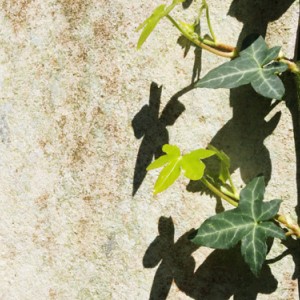
On the matter of lawns; cut less often and raise the cutting height on your mower. Clear fallen leaves regularly to prevent them from shading out much needed light which would weaken the grass at a time of year when it needs all the help it can get. In places where grass refuses to grow, due to tree cover or very poor soil, another often overlooked evergreen may prove your salvation. Trailing ivy, used as groundcover, is a brilliant foil to other plants and is very easy to control—it needn’t be a ‘mortar destroying thug’ which is sometimes how it is portrayed. I have a small variegated version which runs around in a border daintily hiding bare soil and giving light relief when everything else is gloomy. This particular anonymous cultivar started off life as one of those tiny plug plants in a hanging basket multi-pack. When the original container was planted out in the border, as I am wont to do with exhausted bulbs, this ivy took off and is now an invaluable constituent of this part of the garden. It’s great when little events like that happen in gardens. You don’t plan for them, I am not by inclination a ‘planning’ type of person, but it’s just a happy side effect of being a canny gardener.
Having not planned, and being particularly skint, I am not planting any tulips this year but that is what YOU, gentle reader, should be doing if you want them to grace your garden next spring. I did recently purchase, at a car boot sale, a pair of, very damaged, ‘Staffordshire flat-back’ spill holders (ask your Granny if you’re not sure what they are) which each depict a happy couple stood either side of a ‘parrot’ type tulip. I like to think that this was, perhaps, a folk reference to the infamous ‘Tulip madness’ when, allegedly, single bulbs changed hands for the price of a house. The way things are going we may well be returning to those days…
PS—having spent far too long weeding other people’s flower beds I should put in another plea for you to mulch your own borders and that does require a bit of planning. Get the mulch in soon so that it is to hand when you have spare moments over the winter months to ‘deweed’ and then mulch your beds and borders. The mulch does need to be sterile (ie. free of weeds and their seeds) if it is to be any use and as such is only really available as a ‘bought-in’ product. I’ve not plugged them for a while and, as a local company providing an excellent service, I hope my editor will let me mention Beaminster based ‘Komit Kompost’ in this brazen manner. I notice their prices have gone up, unavoidable I guess, but if you can ‘cash and carry’ that will help, or club together with fellow gardeners and arrange a delivery of bulk bags. Makes an ideal Christmas gift too—though too big to get in to a stocking I find!

Fergus Dowding 11/11

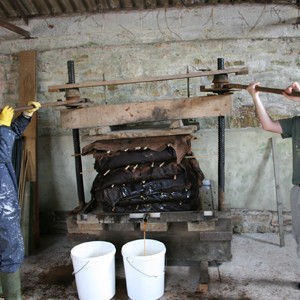
It seems you are rarely more than 100 yards form someone making their own cider around here. And you are rarely that far from an apple tree, and it is satisfying to use them rather than chuck them. Using fully ripe apples, spotlessly clean equipment and barrels, and a cool place to ferment, all help make good cider.
Waiting for the apples to ripen allows the sugars and flavours to develop. It is tempting to shake them all off the tree as soon as the first apple falls, but you should leave them for a month on the ground while they mature. The second largest cider factory in England, Magners in Shepton Mallet, is blocking up regularly this autumn because the apples it is using are unripe and starchy.
The machinery needed to make cider is expansive, so see if you can share with a well willed neighbour. Using a really good pulper that chews the apple into a fine pulp makes pressing the apples quick and easy. If you want your own equipment, go to Vigo in Cullompton. They sell all the best equipment, and you will come home happy and bankrupt. But you are rarely more than 15 miles from someone who will press your apples for you, so make enquiries locally.
They may also offer you a bottling service, and this is good if you prefer drinking apple juice. Although dessert apples are reckoned to be best for juicing, cider apples juice makes a drink with more complex flavours and tannins.
Cider matures best at a constant cool temperature. Unless you have a good underground barn which does not fluctuate in temperature, using large barrels is best. We have a modern barn which warms up in the summer, and the cider sugars ferment out and make a very dry, astringent, drink unless you keep adding sugar.
It is best to rack off the cider from one barrel to another in January, leaving its lees, the yeasty sediment, behind. This allows a slightly sweeter secondary fermentation. A slow fermentation is reckoned to make the best cider. If it is made in November, it will ferment slowly. Racking it off a second time in April or May will further stop it souring by sitting on its decaying yeasts.
We use plastic barrels, as it is almost impossible to clean all the vinegar bacteria out of wooden barrels. There is a lingering scrumpy tradition that you should use rotten wooden barrels, which make for a horrible taste. Keeping the air out at all stages is important too.
And those, in my opinion, are the basics. It is a complicated subject, and there are infinite techniques you can use. And  a plethora of nasty chemicals and bought yeast you can add to help you cut corners and make a standardised product. But we find we make a fine cider without any funny business.
A longer account which I have found very useful can be found in James Crowden’s book Ciderland. I warn you that there are as many different ways of making cider as there are people. What did the apple say to the pumpkin at Halloween? Nothing, it just sat be cider.

Humphrey Walwyn 11/11

We need a larger letterbox at home. November is the merry month of mail order mayhem—the time of year when every supermarket, weekend newspaper, toy retailer and garden store produces its list of special Christmas offers. Tons of glossy paper flooding over our door mats and gigabytes of colourful data glowing in our email boxes, and they’re all trying to sell us stuff for Christmas that we don’t actually want, let alone need. And if I don’t want it, why on earth are they supposing that my relations or friends might want it instead? Would my youngest niece really benefit from a swaying upright plastic cobra with flashing eyes for Christmas (‘Fun For All The Family’)? Who do they take me for… a snake fetish charmer? Perhaps both my sons are longing for that battery operated tea and coffee maker complete with LED alarm clock and portable humidifier (‘You Never Thought It Could Be SO Useful’)! No, indeed I would never have thought so…
Would my aged aunt appreciate receiving a luminous loo seat cover so she can find her way there in the dark (‘Never Get Caught Again’)? Actually she might, but I don’t think it’s very tactful of me to present it as a Christmas gift to joyously remind her of her slight problem in front of all the family. However, owing to the success of the Vampire Diaries and current teen movie culture, I could be tempted to buy three sets of sharp vampire teeth for my nephews in the vein hope that they might all bite each other to oblivion.
Where do they get this stuff from? Presumably there’s a large factory in South Korea or downtown Shanghai with a long production line containing an endless supply of edible underpants, heat sensitive cufflinks, mini TV remote controls disguised as 9 inch long pink cockroaches and other exotic junk. Can you imagine their weekly new product marketing meetings:
“Ok, everyone, settle down. What’s new?”
“Well sir, I’ve got an idea for a rubber camel that lays peanuts and olives out of its bottom…”
“Great! I shall call it the “Perfect Party Pooper”! Lets make 3 million of them—delivery by Tuesday. Next…”
“How about the Electronic Pepper Mill with Built-in Spanish Phrase Book and Barbeque Firelighter…”
“Great idea—“Learn And Burn!” Let’s do 2 million of them in fluorescent green and another 2 million in silver plastic to be sold as the Deluxe Version—both for the UK market. Brits will buy anything that combines cookery and holidays and they can always Buy One and Get One Free! Batteries not included of course…”
You see? We’re already known for being a soft touch for most types of useless gadget. Why anyone should want a single one of these items—let alone two of them—is hard to fathom. Of course they’re trying to sell you more of the same festive flotsam that they’ve still got stored away from last year. Most of it’s only been repackaged and re-stickered for 2011 (‘New For The Family This Christmas’ etc) in a desperate attempt to shift redundant stock, but you can only sell so many pepper mills (with or without extra language learning capabilities).
Then there’s the item on page 60 of a particular brochure advertising an “I.E.D.”  I kid you not… I thought this particularly explosive item was fortunately only available in faraway places like Afghanistan or Iraq, but I see here that it can be found in a UK Christmas catalogue. Luckily, in this case, I.E.D. stands for Inflatable Electric Dolphin. Phew! So, that’s OK then…
Another thing… have you noticed how many of these items can only be written about with Initial Capital Letters? They have to leap out at you off the page to be noticed. A battery operated owl noise doorbell sounds sort of boring and ordinary. However, an “Electronic Digital Owl Hoot Horror (‘Amuse All Your Friends’—‘Be The Life And Soul of Any Party!’) is perhaps more sellable. I say ‘perhaps’ but personally I might have preferred the 20,000 Volt Electric Death-Ray Doorbell to blast unwelcome visitors to a crisp. Party pooper? Moi?
And there are some products that probably started off as a popular joke and sold so well that someone somewhere decided to go completely over the top with them. Last year it was Sudoku, but the chief culprit for gift overkill for 2011 must be the Cuddly Meerkat. Formerly known as a nice little animal from the Kalahari Desert that stands on its hind legs and looks kinda cute, this small mammal has captured the imagination of an entire nation from its appearance in a series of TV adverts. You can get candles, car stickers, books, DVDs, kitchen cutlery, door stops, IPhone cases and cuddly toys all in meerkat flavour. None of them look remotely natural—more like grizzled rats with ear to ear sickly grins.
Who thinks up such entirely awful products as the nodding 3 foot Meerkat with a lopsided wide plastic smile for your garden (‘Cute and Adorable Lawn Pets’)? Are they kidding? And there’s not just one of the wretched things—you can buy a whole Meerkat Adams family of them leering at you from beside the hedge. Is this supposed to be a restful rural addition to your rose bed or a terrifying invasion of leering alien life forms? Simple? You bet… Yes, I can feel an attack of the Scrooges coming on. Bah Humbug! After all, ‘tis the season to be shoddy…

Alan Heeks

Robin Mills went to Bridport to meet Alan Heeks. This is his story.

“I was actually born in Bournemouth, which was Hampshire in those days, but my mother’s side of the family was very West Dorset. Grandfather was called Robert Wakeley, and he came from Loders, and then moved to Bournemouth. Mother’s mother was a Dashwood, from Piddletrenthide. So having finally moved to West Dorset only a couple of years ago, it’s been like coming home because this is definitely where my roots are.

At school I loved English Literature, and went on to university at Oxford to study it. At university I’d enjoyed promoting functions like exhibitions and theatrical events, so when I’d finished I decided I’d go into marketing, and got a graduate trainee job with Procter and Gamble. I went straight into work, no gap year, from Oxford to work in Newcastle upon Tyne, and I still have mixed feelings about that move. It was quite a shock, going from a free-and-easy Oxford student life immersed in literature and philosophy to a hard-nosed, structured business world. The company operated like a machine, which from the word go raised the question with me about how to bring about human fulfilment in work, and still make a business profitable. In a sense that was quite a fruitful shock for me, because that was a question that has stayed with me ever since, and once I become passionate about something, I stay with it. That marketing job was also hugely beneficial, in that I have been able to apply the same methodology to non-profit ventures I’ve undertaken in later life.

I spent four years with Procter and Gamble, and although I progressed in the company, it was clear the work wasn’t for me. I’d met my wife in Oxford, married in Newcastle, so I took the gap year then, and we travelled in Africa and Asia. Then I got a scholarship to go to America and study for an MBA at Harvard, where there was research into human fulfilment within working life. When I came back from the States, I got a job in Merseyside, as marketing manager of Hygena Kitchens; then I became a founder member of a group called Caradon, and worked as the managing director of  the largest subsidiary, Twyfords Bathrooms. During the four years I was there as MD I was able to put into practice some of my ideas about improving human fulfilment, as well as the business results. One of my favourite films is the Ealing comedy I’m All Right Jack, and this company was straight out of the film. There were five dining rooms, each for different levels of staff within the company from the directors down to the ‘peasants’, and basically the workers had never seen, or met, the management. So I introduced a single canteen where everyone ate, and regular meetings between management and staff in which eventually all 1600 staff got to meet and talk to everyone in management, and once it was clear we were genuine, everyone went along with it, results improved, and more importantly morale improved as well.

After four years, I was ready for a major change. I was 40, had been working incredibly hard, and was missing out on family life; I was worried about what sort of life I was bringing my kids into. So, I gave back the Jaguar XJ6, gave up the big office and full-time secretary, and set myself up as a management consultant and trainer. However, as well as the consultancy work, since 1990 I’ve been involved with creating non-profit ventures. The thread of these has been what could be called land based sustainable education, using some sort of project which gets people into closer contact with nature, with two aims; to bring about not only better understanding of environmental sustainability, but also human sustainability. I firmly believe that the same principles apply to both; I think many people are being factory farmed in their working life, in the same way that the natural environment is.

When I left my business career behind in 1990, I already had a vision of these ideas; meeting some visionary and like-minded Dorset people, like Mark Measures, and Will Best, helped me put things into practice quite quickly. I never had any doubts about establishing this project in Dorset, because there do seem to be more inspiring and innovative people here, and pioneering centres like Pilsdon, Monkton Wyld and Othona have suceeded. We formed a charity and bought a run-down 130 acre beef farm on the Somerset/Dorset border, called Magdalen Farm, with a courtyard of buildings that lent themselves to conversion into a residential centre.

In one sense it was a crazy idea for me; I had no background in farming, running a charity, or education, but I had the time and the commitment. Also, the Harvard training does teach you to be a business paratrooper, to land in unknown territory and find the right people to provide the expertise. Over the first few years we learned as we went, and experimented a lot. We converted the farm to organic, evolved curriculum-based education for school children in a residential setting, with added personal and social education—things like trust games, night walks, learning about food and farming, the differences between organic and conventional. The Magdalen Project is still going strong, 21 years later.

From the experience of creating the Magdalen Project, I realised that organic farming was actually the model I had been looking for in my search for human fulfilment within the workplace, so I started to run business training workshops at the farm, using organic farming techniques as examples of sustainable production which people could apply their own businesses. In 2000 my first book was published, The Natural Advantage: Renewing Yourself, which I wrote both for individuals and business organisations.

I had been thinking a lot about what I call the next level of sustainability. There is a limit to how much energy consumption we can reduce in our homes with technical solutions like double glazing and insulation in our lofts. Food and travel accounts for more than half the average household’s energy consumption, and whilst I was interested in sustainable building, I was also concerned with human sustainability in a community sense; my marriage had by now broken up and I was living on my own. In about 2002, I found out about cohousing, a well-established concept in Scandinavia, although quite new here. It’s based on small self-contained dwellings, so everyone has their own front door and their own space, but there are shared facilities like a garden courtyard where people can easily meet and chat. There is also a common house, a bit like a village hall, in which there can be shared meals, parties, meetings, film shows, etc.

It can meet the needs of people who are very sociable as well as those who aren’t, unlike a commune. I formed a group of interested people, and in 2004, the project came about in North Dorset, called the Threshold Centre, near Gillingham. It’s the first project of its kind in the UK done in cooperation with a housing association, so half of the properties are affordable, and it’s successfully demonstrating ideas of lifestyle sustainability, with its own one acre community garden growing food for the householders, and a pool car and ride-sharing. I’m also very proud of the fact that the ecological footprint per household has been measured at half the UK average, despite its rural situation and poor public transport service. There are 14 households, with young families, older people, and a wide range of social backgrounds.

I always intended this to be a stepping stone for a bigger project, one in West Dorset, so in 2009 I began to look for local people to put together something similar in Bridport. By now we have 24 members, and we are working with the same Housing Association as at Gillingham who will act as the developer, so that at least 40% of the properties will be affordable to people on the Housing Register. The District Council is now open to innovative forms of affordable housing, and we’re hoping to submit a planning application within the next year for 30 dwellings, which means that we’re still looking for more members to join.

One of the things I’ve been involved with over the last 15 years or so has been men’s groups, and this relates to the second book I’m writing. When my marriage broke up, the best support I had came from a men’s group. I’m particularly interested in men over 50, who these days, possibly up to age 80, often have quite good health, have more time, enough money, and opportunity, but can suffer from loneliness, depression and addictions, because they need the life skills to deal with the ‘shipwrecks’ that often occur at this time. So I’ve set up a website and a blog to help men in this situation, and I’m working with a retired GP from Maiden Newton, Max Mackay-James, to offer resources to men in this age group. Perhaps men aren’t good at collaborating; it’s been said that men get to know each other shoulder to shoulder, not face to face.”

Up Front 11/11

About 27 years ago, after I had watched my father succumb to cancer, I learned a profound lesson. It became blatantly obvious to me that very little of what I worried about in my life really mattered. Like most people I had become caught up in the minutia of life and allowed insignificant detail to interfere with the really important things: things like family, friends, community and living a decent life. It was a useful lesson but one easily forgotten as life became more complicated. I was reminded of it on two occasions recently; inevitably both times because of funerals. One occasion was at the funeral of a neighbour who had made it clear she wanted no eulogy. However, a poem by Ralph Waldo Emerson, which was read at the service, not only summed up the enormous contribution she made as an individual but it also concisely described what really matters in life. The other occasion that reminded me of my profound lesson was after the death of Apple’s Steve Jobs. I read a quote from the speech he made to students at Stanford University in 2005, where he pointed out that when you know you are dying, you are released from the things that really don’t matter. As he put it: “all fear of embarrassment or failure—these things just fall away in the face of death, leaving only what is truly important. Remembering that you are going to die is the best way I know to avoid the trap of thinking you have something to lose. You are already naked. There is no reason not to follow your heart.” So the next time you see me dancing in public, forgive me my clutz-like performance, I’ve probably shed my fear of embarrassment, decided I’m already naked and am dancing to a completely different beat. On the other hand if I am completely naked, please feel free to make a citizen’s arrest—gently.

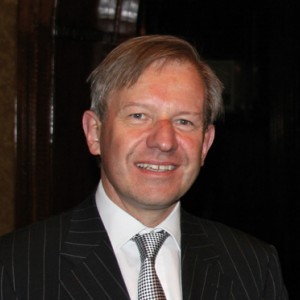
Sir Sherard Cowper-Coles – Challenges Remain

As Britain’s Ambassador to Afghanistan, Sir Sherard Cowper-Coles was in a unique position to understand this country’s role in a war that has now gone on for more than ten years. He talked to Fergus Byrne about what could be done to end the conflict.

Sir Sherard Cowper-Coles is predictably charming. His warm, relaxed greeting as he ushers me into his office at BAE Systems is that of a man totally at ease with visitors. Naturally adept at close communication and exuding a warmth and refinement that cannot be learned or purchased; he has brought his wisdom and intellect to bear on British International relations with countries as diverse as Northern Ireland, Israel, Hong Kong and Saudi Arabia. Most recently he was British Ambassador to Afghanistan and special envoy to Afghanistan and Pakistan.  He sports a Diplomatic corps smile that sits easily on a weather-beaten face. After more than 30 years as a diplomat, he has ‘retired’ from the service, both to write and to pursue other interests, including his new job at BAE Systems where he is International Business Development Director, focusing on the Middle East and South-East Asia.

Earlier this year he published a book centred around his years spent trying to bring some form of civil sense to what most people only know of as the military conflict in Afghanistan. Cables from Kabul is as detailed an account as he was allowed to give of his time spent meeting, greeting, advising, cajoling and debating with some of the many players in a complicated conflict that is ten years old this month. The book gives us, not only an insight into the inner workings of the life of a diplomat in Kabul but also a bird’s eye view of how politicians, the military and many of the major players in this conflict have blindly stumbled through the last ten years without a clear exit strategy. The BBC’s World Affairs editor John Simpson calls it; ‘The clearest, best informed, and most honest account yet of why and how Britain was drawn deeper and deeper into the Afghan war, by the man who knows more about it than just about anyone else.’

The driving theme running through the book is one of frustration. Frustration at having his hands tied by the Americans and frustration at having to peddle an official line when he could clearly see the need for more focused processes to bring about political and civil stability to the region. He points out the folly of Britain’s efforts to discuss and debate strategy in Afghanistan when in reality it was just a powerless small partner in the overall scheme of things. And although he dedicates the book to the memory of his opposite number, the late Richard Holbrooke, who was US special envoy to Afghanistan and Pakistan, he makes it clear that his relationship with Holbrooke was one of playing catch up: constantly trying to interact with him but often being brushed aside like a pestering mosquito.

Another major source of frustration was the monotonously regular mantra peddled by most middle-rank military leaders; that they were ‘making progress, but challenges remain’. He points out that the choreography for visiting guests of honour was that they would ask a series of questions—supposedly penetrating but rarely cutting through to the real issues—and the answer would always be the same, ‘progress but challenges’: covering up the reality that the whole venture, costly in terms of both lives and money, was doomed without a clear political strategy.

The third source of frustration running through the book is another story entirely: that of his frustration with his superiors within the Diplomatic corp. Having taken their pound of flesh he was passed over for the top jobs that had been dangled like carrots in front of his nose throughout the latter part of his career. Although sometimes more outspoken than is healthy when working in a tight-knit organisation like the Diplomatic corps, he is quick to point out that he left the service, not because of any “row over policy in Afghanistan”, but because there were many other things he wished to do. If he bears any bitterness now he is keen to push it under the carpet.

Today he is no longer bound to a political line and firmly lays the blame for the situation in Afghanistan on our American ‘partners’. “I think the real problem, unfortunately, lies with Washington,” he says. “In particular in the State Department where Mrs Clinton hasn’t backed up a very good speech, she made last February when she called for a political surge to accompany and enfold the military surge and development surge. But there hasn’t really been a surge, there’s been a trickle.” He says the top-level administration has not been doing what is really essential to solve the problem. He maintains, as he did in Cables from Kabul, that America should be bringing all the regional powers on the borders of Afghanistan together in conference. Not just once, as is planned for next month in Istanbul, but “systematically and serially”. He believes that collectively, “as stakeholders in this project”, countries like Iran, Pakistan, India, China and Russia, as well as the smaller border states, should be working together for a solution, so that there is what he calls, “outside-in pressure on the individuals inside Afghanistan”. He compares it to a double-decker bus. “You need the regional powers on the top deck and on the lower deck all the internal parties because it’s not just a problem internal to Afghanistan.” He says he simply doesn’t understand why Mrs Clinton is not doing what Kissinger would have done; which is to try and broker a peace, get the parties round a table and hammer out an agreement.

Whilst Afghanistan’s President Hamid Karzai and American General Stanley McChrystal have both recently pointed their fingers at the mistakes made by the allies over the last decade, many observers see the situation as impossible and some suggest that once Western forces pull out in 2014, the country will quickly descend into civil war. I put it to Sir Sherard that the recent murder of ex-president  Burhanuddin Rabbani by a Taliban suicide bomber must surely show that the Taliban are playing hardball and don’t really want peace. But he takes a more positive stance and believes that Rabbani was not the right man to lead a peace drive. “But irrespective of that,” he says, “these things should only increase one’s determination to work for peace.” Although he concedes that dealing with Afghanistan is akin to playing difficult, complicated, multi-dimensional chess, he still believes that there is a way to bring a lasting peace to the area. “Afghanistan’s not impossible,” he says. “But it requires courage, statesmanship and leadership”.

He believes that the Taliban have come to realise that they are never going to rule the country again and are therefore ready to talk and suggests that they are willing to reach a deal because they don’t want Afghanistan ever again to be used as a base for attacks on other countries. He points out that the real enemy is al-Qaeda, not the Taliban, reminding me that Richard Holbrooke used to say that ‘we are fighting the wrong enemy in the wrong country’.

Cowper-Coles’ frustrations at the lack of political progress go somewhat deeper than that of a political observer. His vast experience of the region and his on the ground interaction with both the military and local Afghans has left him believing that, unless we make a more concerted effort to find a political solution, we are badly letting down both the military and the innocent Afghans. “I feel for the families and next of kin of our soldiers who have died,” he says. “I think we are dishonouring them if we don’t make a serious effort to stabilise the country before we leave.”

The current situation in Afghanistan is nothing if not fluid. Since I met with Sir Sherard, Afghan president Hamid Karzai has announced that there is no one within the Taliban to negotiate with and suggested discussions with Pakistan. He then promptly did a deal with India, incurring Pakistani wrath. The US, in the meantime, has had a spat with Iran over an alleged assassination attempt on the Saudi ambassador and, as we go to press, US Secretary of State Hillary Clinton is visiting both Pakistan and Afghanistan. Sceptics will see this as political posturing whilst others may be hopeful that it is a sign that Mrs Clinton will be making good on her promise to ramp up efforts toward a peace process. Either way, Sir Sherard Cowper-Coles will have an interesting take on the situation as well as an experienced insight into what may happen next.

Up Front 10/11

Most of us living in the country have become used to the disruption to the rural idyll that happens around the end of summer; when tractors turn the lanes into a grand prix circuit in an effort to get the harvest in. In times past, many of the processes used to bring crops in from the fields were done by hand. Hardy men sweated for long hours in the fields, supped home-made cider to quench their thirst and occasionally brought a rabbit home for the pot. Today even small farmers will bring in contractors who have invested in bigger, faster and more efficient machinery to do the same job. Gone are the days when children had time to get out of the way of a tractor hauling a trailer full of grass down the road. Along with lightning-speed broadband the countryside roared into the 21st century with sophisticated balers, combine harvesters and tractors that can offer speeds of up to 80 km/h. And for those following the technology and looking to shave off a bit more of the effort from the process, a Belgian group has now engineered a fully automated, self-steering robotic tractor. The tractor adapts itself to terrain conditions and adjusts its speed and turning radius automatically. It can complete a pre-programmed route with exceptional precision…and without the intervention of a driver.  It’s been a long time since we first complained about machines taking over our jobs. That quiet revolution that began many decades ago, when robotic machines undertook jobs that were too dirty, dangerous or boring for humans, has changed many lives. No doubt it has saved many lives also but it’s hard to imagine the typical cartoon of a farmer leaning on a gate watching a driverless tractor ploughing his field.