
Saturday, September 19, 2026
Home Blog Page 93

Sandy Gall – Unfinished War

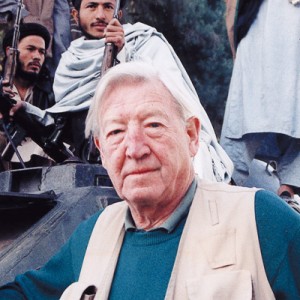
Veteran news reporter and broadcaster Sandy Gall has been reporting on Afghanistan for more than thirty years. He talked to Fergus Byrne about the current state of the conflict.


In a 2004 documentary on Afghanistan, Sandy Gall described the country as a place of staggering beauty and remarkable people. He also pointed out that the story of its history is that of ‘repeated invasions, heroic resistance and countless wars’.  A story, he said, that had come to dominate his life since he first reported on the country in the early 80s. In the documentary that resulted from that first visit in 1982, he is seen trekking through the mountains with the Mujahedeen and the ‘Lion of Panjshir’, Ahmad Shah Massoud, one of the leaders of the resistance against the Soviet occupation who was assassinated just before the 9/11 attacks in the United States. Crossing rivers and negotiating dramatic yet inhospitable terrain, Gall trekked for twelve days through the mountains dodging air and ground attack from Russian troops. Next month he visits Beaminster to talk about his latest book War against the Taliban: Why it all went wrong in Afghanistan.

The book centres on the main themes that currently impact the country, its people and their hopes for peace and security. What becomes clear is that Afghanistan, although suffering invasion from the days of Alexander the Great and Genghis Khan, is not really much better off now than it was when US and allied forces took the post 9/11 war on terror to the Taliban on their home soil. War against the Taliban draws on the results of dozens of interviews with politicians, diplomats, military and civilians from the many sides of the current conflict, to add flesh to the bones of the theory that enormous mistakes have been, and continue to be made there. And like many before him, the veteran broadcaster and journalist shows his frustration at the many things he sees as key to the state of Afghanistan today.

First and foremost is the fact that America, having ousted the Taliban, then took their eye off the ball to invade Iraq, thus allowing the Taliban to regroup—a situation that could easily be seen as having caused countless loss of life since. Speaking of the months after the initial Afghanistan campaign Sandy Gall told me: “The Americans just said that’s that, we’ve got rid of Al Qaida, but of course they hadn’t got rid of Al Qaida.” He pointed out that because Iraq then dominated American thinking “they failed miserably in Tora Bora” in the disastrous effort to capture or eliminate Osama bin Laden—an operation that saw up to 800 Al Qaida escape overnight across the border to Pakistan.

But if the Iraq war had, as he says, “a really terrible effect on Afghanistan”, Pakistan, or its security force the ISI, is seen as the oil that keeps the Taliban and other insurgent groups fuelled for battle. Much as it has been denied by Pakistani officials, the theory that American tax dollars—given as aid to Pakistan to help its economy and its assistance with the war on terror—are in fact being fed to Al Qaida and the Taliban to kill allied soldiers, carries much more weight, and it is one of the greatest challenges facing the allies today. However, Sandy Gall doesn’t believe much will be done to deal with that until after the US elections in November. Speaking of what he sees as Pakistan’s complete duplicity he says “In Hollywood terms, it’s a complete double-cross.” Pointing out the comments of one ex-ambassador to Afghanistan, who said the Americans could put Pakistan and the ISI on the terrorist list he said: “There’s an impasse in which I think Obama, because of the upcoming election, is not prepared to take that sort of strong action.”
Inevitably there are other considerations in the ebb and flow of diplomacy. Not only is Pakistan’s control of the border routes into Afghanistan important to sustain supplies to NATO troops, but it will also be a vital route out when those same troops need to take out the millions of dollars of equipment and hardware that has been amassed over the last decade. The route has been closed for the last six months because of a row over a US airstrike that killed 24 Pakistani troops, and though a more expensive route has been used since then, it remains an important card for Pakistan to play in its negotiations with the US.

Although there are many who feel the withdrawal of troops by 2014 will only lead to another civil war, I asked whether an Afghan army, supported by ‘non-combatant’ troops and US drone attacks would be enough to contain the Taliban and allow an Afghan government to stabilise the country. The answer, of course, is what ex-US Secretary of Defence Donald Rumsfeld might call a ‘known unknown’. “Some Americans, some of the senior Americans, are optimistic,” he says, but “rather a lot of other people are pessimistic. I think the Taliban have got so many tentacles and so on throughout the country that you can’t drone them all.” For many Afghan citizens, the prospect of a computer-operated war from a base in California will not win hearts and minds.

But there is a third theme that raises its head throughout War with the Taliban: that of corruption. Pointing out that ‘corruption lies at the heart of present-day Afghan politics’ Sandy Gall says that, prior to the assassination of Ahmed Wali Karzai, younger half-brother to President Karzai, he was said to be seen as the President’s political enforcer and his personal representative in the drug-rich south. He mentions how American journalist Gretchen Peters highlighted one report on drug-related corruption within the Karzai administration that suggested a complex system of kickbacks. UN researchers had estimated that officials who won ‘plum assignments’ stood to earn enormous amounts of money in bribes. Like a multi-level marketing system bribes are fed up the chain of command in varying degrees. One researcher suggested that top police officials had to pay as much as $40,000 (£25,000) a month in bribes just to keep their jobs. An Afghan architect interviewed described the Afghan government as an ‘exact replica of the Mafia’. I asked Sandy Gall whether he felt it really is that bad. He said: “Yes it is, I think Karzai is—you know he’s the Godfather”. Although he says they obviously wouldn’t admit to that description he points out that “huge amounts of money are involved, a lot of it comes with the drug business, inevitably, and so I think all aspects are a great problem, and the Americans don’t seem to be able to stop it; they keep saying to Karzai you’ve got to reform and nothing happens.”

However, the accusation of corruption can’t be targeted at the Afghan administration alone—in fact, it is how they have done business for hundreds of years—there are other foreign interests that have done well out of the billions of dollars of aid pumped into Afghanistan since the war began. The corruption and diversion of aid is an intractable circle that is highlighted by Dr Ashraf Ghani, an academic and one-time advisor to President Karzai. He says that the chain of corruption in international contracting is ‘hair-raising’, citing an example of a $125 million contract to build a new road. Initially granted to an American company, that company then subcontracted to a firm from a regional country for $80 million, making a profit of $45 million. What makes the whole scenario even more ridiculous is the fact that the company building the road will have had to negotiate with either local Taliban commanders or narcotics family warlords for security of transport to complete the job. The negotiated fee again likely used to help arm those fighting NATO forces.

After more than thirty years reporting on Afghanistan Sandy Gall’s knowledge and contacts put him in a position to know more than most. In War with the Taliban: why it all went wrong in Afghanistan he uses interviews and observations from many of those on the ground in that country to paint a realistic picture of a war that is very much unfinished. Although written from the stance of a professional reporting journalist, dealing in fact and anecdotes, there are moments when his emotion for a country that he has shared history with comes to the surface. One feels he has an awful lot more to say.
Up Front 06/12

As a younger person living in London I remember that Bournemouth always seemed to be the butt of many ageist jokes. It was always seen as a bit of a retirement centre, mostly frequented by people well ‘beyond the pale’ of youth. Newspaper articles that mentioned the town often carried photographs of elderly people sitting on benches on the seafront, and postcards of busloads of genteel tourists didn’t do much to change the look. I don’t know if that is still the perception but it all came back to me recently when I visited the Bournemouth International Centre to see Elvis Costello in concert. Having a drink at the bar before the start of the show I couldn’t help thinking how old most of the audience looked. It may have taken me a while to remember that I hadn’t been to see Elvis Costello for about 25 years, but it didn’t take much longer to realise that I was as old, if not older, than most of those around me. Hearing an announcement asking people to ensure they switched off their mobile phones I had a moment of worry that I might fall asleep during the performance—as might happen occasionally at the cinema. I needn’t have worried. Elvis Costello, at the sprightly age of 57, stormed through a nearly three hour set of just a fraction of his wealth of material and did it with as much, if not more energy than many of today’s ‘stars’. Where some of those that wowed their audiences in the 70s and 80s often appear today as a weak parody of themselves, Costello managed to remain relevant and energetic. He was even gracious enough to share the stage with members of the audience whom, after helping to choose the songs to be played, were offered the opportunity to get into a go-go dancing cage and dance under the bright lights on the stage. That was the point when it all looked a bit Bournemouth again. For some of us there is a point in life where we accept that we are just not go-go dancers, but for others… well you only live once.  

Dot Browning

Robin Mills went to Plush, mid-Dorset, to meet Dot Browning. This is her story.

“My childhood was spent in a fairly leafy part of South London, between Streatham and Tooting. I was the youngest of three girls, and we lived next door to the vicarage where there were three boys; there were two more in another nearby house, so I think my sisters and I all grew up as tomboys. We lived in London until I was about 13; things I remember from childhood are mainly family holidays, and that was when I got to know Southwold, on the Suffolk coast. I can also remember going to Wales—I’d have been about 5 or 6—on the train, with my sisters, and for some reason I didn’t question why we went all that way unaccompanied by our parents. I only found out a few years ago that it was because there was a family funeral, in Southwold, in those days something to which children didn’t go. The other thing which, as children, we didn’t really know much about was that my mother’s grandfather was an equestrian, in the family circus. There was a time when coming from a circus family was a bit frowned upon, and that might have been why the subject didn’t often come up. My grandmother grew up in the circus, and there’s a true story about a wind pump, which remains a special place to my family, at Walberswick; aged 9, and egged on by her brother and cousin, she jumped up and clung on to one of the wind pump sails and rode right round its huge arc—a feat of daring happily without dire consequences. At the age of 12 she ran away from the circus with her sister in London and went in to service.

When I was 13, my parents decided they wanted a different life from London and work in the City, and became tenants of a hotel in Southwold. Having been to a London co-ed college, I found myself going to a catholic convent in Lowestoft, a very different experience. I remember the local catholic Father coming once a week to teach a particular lesson, which only catholic girls were allowed to attend, which turned out to be sex education from which strangely we non-catholics were excluded. After school, I did a secretarial course, and got a job in a bank. And then, I decided I’d go and visit my sister and her husband who were working in Uganda. I spent 9 months there, with the idea of finding out about the people and their culture rather than just being part of the ex-pat community. I travelled a lot, and worked in a family planning clinic; quite a challenge for a 19 year old, advising women some of whom had had no education. Colonial attitudes to the inequalities amongst African people still held by some Europeans incensed me, and had a lasting effect. Before I went to Africa, I’d already met my husband-to-be, John, and during my stay there I had a proposal – by telephone. We got married on my return, honeymooned in Scotland, and after finishing his professional practice exams in Windsor, John got a very exciting job as a young architect based in Norwich, with a firm responsible at the time for the architecture of both Norwich Cathedral and York Minster.

In the early seventies, John became a partner in a new practice based in Winchester. The practice is now 40 years old, so it’s been a long association. One of the original partners was Richard Plincke, now over 80; he gave up architecture to become a painter in the early eighties, and I think it was his work which really drew my interest to art. Richard’s studio was at the top of the practice building, and instead of taking a rent, the accountant suggested that each of the partners would once a year choose a painting. I did try painting myself, with Richard as a tutor, but soon found I had more aptitude for written appreciation of painting than actually creating pictures, and writing continues to be a creative outlet. It’s something which brings me joy, it’s something I do entirely for me, but it’s not yet reached a publishing stage.

I’d become very involved with the practice from early days, originally organising the architectural library, but later as the practice grew, I was developing the marketing and publicity, covering both the architectural and national press. That was something I really enjoyed, and it also involved running exhibitions of the practice’s work. So it was a very busy time for both of us; we bought a house on Dartmoor and commuted to Winchester weekly, but the travelling became too complicated, and about 12 years ago we bought Millers Barn here in Plush. At the end of a huge amount of remodelling work, the sight of pristine, bare walls gave me the idea of hosting an art exhibition. Our first one showed 6 artists, over a weekend, and it went so well that I repeated it the next year for longer. We’ve hosted exhibitions here every year, and then 5 years ago I was diagnosed with Breast Cancer.

Two years later, I particularly wanted to show the work of Dorset artist Harriet Barber, and when I went to see her, blown away by her landscapes, I discovered that she had just had a mastectomy herself and was halfway through chemotherapy. Later, Harriet had the idea that she wanted to have a solo exhibition of paintings and drawings of women with Breast Cancer, and asked me to organise it. I don’t think either of us had an inkling then of where the exhibition would take us. Between February and August 2010, Harriet drew and painted 24 Dorset women (and my sister from Somerset), aged between 35 and 80, who had suffered Breast Cancer and received varying types of treatment. It was always going to be a problem finding enough subjects who were willing to pose naked for an artist, but through the Macmillan Breast Nurse Specialists in Dorchester who really got behind the project, a wonderful number of women came forward when the benefit in terms of self-confidence and positive self-image became clear to them. We launched the exhibition here at Plush in September 2010, as Breast Cancer LIFE, and then it went to Poundbury Garden Centre Gallery in Dorchester, and on to the Malthouse in Lyme Regis.

Stewarding that exhibition, its reception from the visitors, who came from far and wide, was extraordinary. People were moved not only by the quality of the work, but for many of those who knew sufferers or had lost someone close it was a positive, life-affirming experience. The exhibition spent a month in Salisbury, then at the Lighthouse in Poole. Finally, the exhibition of 44 works, and 2 sculptures, Greta Berlin’s “Woman” and a stunning ceramic by Jenny George of a pair of knee-high high heel red suede boots worn by one of the ‘models’, was selected by the National Cancer Research Institute as the key visual element of their 7th Annual Cancer Conference, held in Liverpool. The venue was the BT Echo building on Liverpool’s waterfront, where party political conferences are held, and was absolutely huge. There were 2000 delegates from all over the world attending, who found it a wonderfully positive experience. It was the first time the National Cancer Research Institute had used art in this way, and it was a first for the venue, which had never installed an exhibition in their galleria before.

That experience was quite overpowering, to think that pictures of 25 Dorset women had been shown at a huge event the other end of the country. We owe thanks to the many people who helped with donations and generously discounted professional work. As a lasting legacy for the project, I’m in the process of creating a DVD of the whole story, including footage, shot by her husband Dan Thompson, of Harriet painting one of the ‘models’, and the people involved, and the ‘models’ as well as their images.

At the launch of the exhibition, held here, we had all but about 4 of the models attending over the weekend. When each one arrived, they were given a flower to hold, and my daughter photographed each one in front of their own painting. Those images are a powerful symbol of continuity for those women, something to hold on to at difficult times which can be very demoralising. When asked why she’d taken part in the project, our 80 year old ‘model’ said memorably: “because I’m here, and because I can”.

Lloyd Curtis

Robin Mills went to Hursey, near Broadwindsor, to meet farmer Lloyd Curtis. This is his story.

“I’ve lived on a dairy farm my whole life. The family started farming down at Whetham, a couple of miles away, and the land down there and this farm where I am now were owned by my grandfather’s twin brother. I suppose we’ve been at Whetham a hundred-odd years; I mean grandfather’s brother came out of the First World War and married into the farm. But he’d been shot up a bit, and his legs were bad, so he gave up in the sixties, and Father took it on and we rented it, then he managed to buy it, in ’74 I think. I was brought up at Whetham, so that’s three generations have been there. We didn’t get electricity there until ’63, and that made a difference. We went round with hurricane lanterns until then. My wife Alison and I built this bungalow here at Moorlands Farm in Hursey when we got married in ’77, and the farm buildings across the fields from here where we have the dairy went up in the early eighties.

I’ve got one brother, Steven; he’s two years younger than me, and he runs the farm at Whetham. We went to school at Broadwindsor, then to Beaminster comprehensive. I think at first I wasn’t sure if farming was what I wanted to do. I’ve always been quite good at fixing things, without trying to blow my own trumpet, and Father wanted me to learn to be an agricultural engineer after school, but I loved animals so I was a bit tugged in two directions. Anyway, farming won, and after I left school I said I wanted to go to college to learn farming. Father said, “Why do you want to do that, you always hated school”, but I went, and enjoyed it, and I did very well.

Just after I left college, Father had a major heart attack, but then he had a bypass operation and made a good recovery. So my brother and I were working the farm, but the problem was we had too many cattle down at Whetham; all the silage had to be hauled down there from here, and the manure back up here again. We have two blocks of land virtually the same size, just about 100 acres each, and we rent quite a bit as well. A lot of dairy farmers rent land like we do; land’s got too expensive to buy, but when non-farmers do buy it they don’t really know what to do with it, so I get asked to look after it. So back in the eighties I told Father I wanted to put up a shed up here, and start milking, which was exactly what we did, and now I’m here at Hursey milking about 100 cows, and Steven’s down at Whetham.

The land round here’s good grass land, but not really suitable for anything else, like corn. If it rains, it tends to lie wet for quite a long time so crops can easily spoil before they can be harvested. And in the early days we had sheep, pigs and beef cattle as well as the dairy. Sheep were never really my thing; the pigs I was ok with, and at one time we had about 200, but it was always either boom or bust with them. Nowadays, you just can’t; different enterprises all mean more and more labour, and more and more paperwork. So, we specialise in dairy, and we’ve got a cheese contract which means we’re looking for very high protein milk. A firm called Lactalis, a French company who make Somerset Brie up at Cricket St Thomas, buys all our milk, which is great because the milk only travels about 5 miles from here. Personally, I think it’s a hell of a good product, and we beat the French at their own game; I’m quite proud to be one of the 10 farms producing milk for it. We’re using Friesian cows, with a few Jersey crosses, and I’m experimenting with different breeding to get higher protein, but also because we’ve had too much trouble with their feet, and I think perhaps the pure Friesian just won’t stick the English climate.

I do most of the milking myself, and I like it. It’s my thinking time. My son Stuart does the feeding and cleaning out, and now we’ve gone to a new feed wagon which weighs and dishes out the rations to the nearest kilo, it’s that precise. It helps us to look after the cows the way they should be, more naturally, with much more roughage in the diet, rather than the trend which was at one time to feed them like racehorses. We have to buy in protein, and straw, but everything else they eat, grass and grass silage, and maize silage, is grown here on the farm.

Obviously the changes in farming in my lifetime have been huge. The tractors for a start, from a David Brown Cropmaster and a Massey 35 when I started, to the sort of machines we all have now; I mean we can be nostalgic about the old tractors, but what we can do in a day now, in comfort, is a million miles from those days. But the job has become a lonely one. I spend 5 hours a day milking, with only cows, or my dog, to talk to; the reps don’t even call in to try and sell you something these days. In my father’s day, there were 23 people working on both farms, but now it’s just me and Stuart. Alison’s always helped me on the farm when she can, and does the milking from time to time. So it’s ok really; we managed a holiday last year, and went on a cruise with some friends to celebrate Alison’s birthday. I didn’t think I’d enjoy it, but it was great; I love meeting people and talking. Turned out there were quite a few other farmers on the boat, and that was the first time we’ve ever had a fortnight’s holiday. Then there’s the village holidays we go on, just for a couple of days down at Woolacombe, always unpredictable but always a lot of fun. It’s a lovely village, Broadwindsor, a great community. The pub’s unfortunately been shut since September, but it’s opening again now, and we’re trying very hard to get the shop open again. I’ve been on the Parish Council for 29 years now, took over from Father when he was bad. Sometimes I come home from meetings thinking that’s it, I’m not going back, but I do. Parish Council, it’s miniscule government, and sometimes it takes a long time to make things happen, but it’s great when something does get sorted. It’s doing your little bit for the community, and I think it’ll become more important for the community in the future. I’ve also had a lot to do with the NFU, and I do quite a bit with Beaminster Young Farmers. I started with them when I was about 15, and I’m still going.

I’ve stuck with dairying all these years, when many, many farmers haven’t. I’ve gone years without making a profit, but I’ve stayed here. I’ve always tried to keep expanding the business a bit, and move forward and look at different ideas. We try and save a penny here and a penny there, so the supermarket can make a fortune. It was a fairer system years ago in the days of the Milk Marketing Board; there were equal shares for all. These days the supermarket takes the profit, and the farmer and the processor are squeezed. As a producer, I’m in such a weak position; the milk tanker comes every day, the milk’s got to go. But then I don’t know what price I’m going to get paid for it until 6 weeks later. Since last December, we’ve actually broken costs, which flabbergasts me; in the last 4 years we’ve sold milk at consistently 4p/litre under costs, so we only survive because barren cow prices are good.

Alison and I also have two daughters, Emma and Sonia, both married to farmers’ sons. We’ve got 6 grandchildren, and there’s another on the way. They’re all local, all involved in farming, and so it carries on. Stuart’s married a farmer’s daughter as well, so it does seem farming’s quite infectious. And since he’s been home, it’s been a lot easier. I’m lucky to be doing what I do because I love it, and helping feed the nation in the process.”

Up Front 05/12

I came across an old song the other day that bemoaned the fact that the English language was being ruined. It had been ‘totally diswobbled, pulverized and collywobbled’ according to the song. The songwriter had created an amusing ditty by highlighting some of the words whose definitions had been given new meaning over the years. A ‘buzz’, for example was once a ‘noise insecticidal’, instead of a word for a high obtained by chemical means in the days when he wrote the song. Today a buzz is common for another reason entirely. It is the insistent noise made by mobile phones when they want to nudge people about a new text, email, tweet or social network alert. Whether you are on a train, in a supermarket, queuing for theatre tickets or just sitting at home with your children, the buzz of our new world communication device is everywhere. It makes me about as comfortable as an elephant with tinnitus. I mentioned to someone the other day that because of the high usage of text, email and instant messaging systems, our children would never master the art of having a telephone conversation, let alone a face to face discussion. Generations to come may well sit around the cabinet table at 10 Downing Street texting each other their views on how to run the country. So what a relief it was when I found that one of my daughters had discovered the joys of listening to the radio on her phone. As she wandered through the kitchen the other day, headphones on, engrossed in a radio programme, I thought how useful this device could be and asked if she was listening to a play or maybe a political discussion or even The Archers. She gave me a look that I interpreted to mean, ‘Dad, you can’t dance to current affairs’ and turned tail in search of more interesting conversation. As she pirouetted out of the room I distinctly heard an insistent buzz. It was only later I discovered that she hadn’t actually heard a word I’d said.

Up Front 04/12

The website Wikipedia describes ‘brain drain’ as the large-scale emigration of a large group of individuals with technical skills or knowledge. However, a local man I once met used the term for something completely different. In the later years of his life he described ‘brain drain’ as the complete waste of all the wisdom he had gained over his many years alive. He explained that the pool of wisdom gained from experience that we all build up over our lifetime, is very hard to quantify and obviously hard to pass on. Although he had written a great deal he said that no matter how hard we try to teach our children, our friends, neighbours and fellow man, the bulk of what we have learned is simply lost when our brains finally expire. No doubt people of various religious faiths will disagree, but for the purposes of this point let’s assume there is no afterlife. He described how as parents we have often despaired while watching our children make exactly the same mistakes we made when we were their age? We roll our eyes as they make it clear that we are old and have absolutely no hope of understanding what they are going through. We might even remember, with a twinge of embarrassment and sadness, how we said exactly the same things to our parents, and realise that we not only hurt them, but failed to gain from the huge pool of wisdom they built up over their lifetime. What my wise friend went on to allude to was the vastness of that wealth of wisdom, when you multiply it by every person who has lived on the planet. What a shocking waste of the world’s most valuable asset. I thought of him yesterday whilst listening to a post budget political debate on the radio. It was obvious that, for those involved, winning the argument was more important than finding the right answer—their jobs depended on it. I imagine my friend would have produced a wry smile and said ‘we never learn, do we?’ 

Miranda Vickers

Robin Mills went to Lyme Regis to meet writer Miranda Vickers. This is her story.

“I’m a West Londoner through and through. I was brought up there, although nowadays I spend much of my time, especially during the summer, in Lyme. I was an only-child and my parents split up when I was 18 months old, so I didn’t really know my father. My mother was from a staunch London/Irish background, and it was very difficult for her as a single working parent, so she sent me to live with my Irish grandparents in Acton, West London. I went to a strict Catholic girls’ convent school which I absolutely hated. We were hit repeatedly by the nuns using the sharp edge of a ruler on our hands and legs. I got expelled at the age of 13. This was easy to do because something as trivial as smoking, or carrying the Thoughts of Chairman Mao instead of a prayer book, was an expelling offence. I was then sent to another even stricter convent, from which I also got expelled for trying to run away.

In those days you could leave school at 15, so along with my cousin who was 16, I took the Magic Bus from Victoria Station on the four-day journey to Athens where we got jobs as chambermaids in the Monastiraki district. I learned to speak Greek, and after the chambermaid job I bought a forged English degree from a dealer in Piraeus and we took the boat to Crete where we settled in a small fishing village and I taught English at a language institute in Iraklion. I also taught Greek to American personnel at the nearby U.S. airbase. In the end, I stayed in Greece for nearly 5 years.

However, the situation in Greece at that time, the mid-1970s, was very unstable. Following the coup by the colonels, there was an extreme right-wing government, and I was involved with left wing politics so it wasn’t a good place to be. My Greek boyfriend had been arrested and tortured and I was asked to leave the country. Simultaneously, my mother became seriously ill with cancer. So I returned to London and my mother died, leaving me with next to no family. I tried to settle back in London, but having only a forged degree and no formal qualifications, I found it difficult to get work.

I met a boy from Belfast, and packed him and our friends into my mother’s flat in Ealing where we lived as a little commune. I became vegetarian and eventually we decided to try and embark on the good life wholeheartedly. I sold my mother’s flat and bought a cottage near Arundel in West Sussex with an enormous garden, and tried to become self-sufficient. We acquired quite a menagerie of cats, chickens, ducks, a rabbit and a guinea pig but we had absolutely no experience, and of course we couldn’t kill anything. That first winter we collected wood from the forest for our fire but it was damp and wouldn’t light so we froze, and in the spring we planted vegetables but got very thin and hungry waiting for them to grow. We got thinner and thinner, and friends from London would visit with hampers of food and implore us to return to civilisation. Eventually my boyfriend got a job as a tomato pollinator, and with my vast experience I got a job as a chambermaid.

It became obvious, however, that we were never going to be able to live as we’d intended, so we returned to London bringing back most of the menagerie, including Gertrude the bantam hen that we’d rescued from a gang of boys with catapults, who lived to the great age of 14. I bought a derelict cottage back in Ealing, made it habitable, and decided to get myself properly educated. So I did a foundation course then a Degree in modern history followed by a Masters Degree in Balkan history at London University, at the end of which I wrote my first book, The Albanians – a Modern History. I studied Balkan history because of the affinity I’d had for the Balkans ever since living in Greece. Before Greece joined the European Union, non-Greeks had to leave Greece every 3 months in order to get a new passport visa. So my cousin and I would leave Crete, and travel right up to a village just over the Yugoslav border where we’d stay a couple of nights. That was where I met my first Albanians, who described their mysterious, inaccessible, mother country, and that was how I got interested in Albania and the Albanians living in Yugoslavia.

As soon as I’d finished my MA a journalist from the Independent, James Pettifer, contacted me via the University because he’d been commissioned to write the first Blue Guide to Albania, and he needed a researcher to go there with him; so we met in a pub in Aldwych, got on like a house on fire, and he offered me the job. That was 1991 and we have been working together ever since. Albania then was almost a pre-industrial world, akin I imagine to how England was in the 1840s. The Communist regime was crumbling and the people were desperately poor, having been locked into an isolationist time warp for nearly 50 years.

The country was at that time completely anarchic, with people looting whatever they could and trying to flee the country. Food was scarce and the political situation was incredibly volatile. Everyone was armed including our driver, who taught us how to shoot and we kept a pistol in the front of the car. The following year the Yugoslav wars began, eventually spreading south to the Albania-inhabited region of Kosovo.

From then on, throughout the 1990s I worked in Albania and Kosovo as a journalist and, until 2006, as a political analyst for the International Crisis Group. James and I wrote a book chronicling what we had witnessed in Albania called Albania – from Anarchy to a Balkan Identity, which was published in 1997. The following year my book on the history of Kosovo was published. During this whole process, I became an acknowledged specialist on Albania and the southern Balkans and was visiting the region five or six times a year. It was a very busy and stressful time and I started coming to Dorset for short breaks in order to relax, often staying in B&B’s around Lyme. I found that West Dorset was far enough away from London to provided real escapism. My boyfriend and I decided that if anything cheap in Lyme came up we’d try to buy it. So in 1995 we bought Wren Cottage near the Mill. In 1997 I split up with my boyfriend and began a relationship with another Belfast man whom I eventually married in 2009. He has a fishing boat in Lyme harbour and we share a little cottage in Church Street.

Over the past few years, Albania has settled down to relative tranquillity along with the Balkan region as a whole. Although I still work on Albania-related issues, going to conferences, writing articles for newspapers and journals and have published two more books on Albania, I travel there far less frequently. Despite my deep affection for Lyme, I love London with a passion, especially my home ‘manor’ of Ealing. When I’m not in Lyme, I spend much of my time on my allotment in Ealing and boating on the Thames. As a child I would play beside the River Thames at Chiswick, with my cousin, and we would walk across to a little island at low tide. There we would build our secret camp and swim on warm summer days. That childhood smell of Thames mud never really left me, even in the Balkans. Despite the Thames playing such an incredibly important role in English history, I was amazed to find that nothing had been written about the 190 or so islands in the Thames, so in 2007 I decided to write a book about the islands called Eyots and Aits – Islands in the River Thames, which will be published in May 2012. I have a small boat in which my husband and I have greatly enjoyed the last few summers going up and down the Thames searching out all the islands. Much of the book has been written in our peaceful garden in Lyme. The thing about writing a book is that when you’ve got this thing in you, you’ve just got to get it out, to express it, and that’s what I’m doing.”

John Carter

Robin Mills went to Yarcombe, East Devon, to meet John Carter. This is his story.

As a child of the war, I was evacuated from London aged four, to Lewes in Sussex with my sister, who was seven. Together with my mother, we went to live with my aunt Freda; her garden, and the nearby South Downs, became the scene for every adventure we children could invent. In fact we played out the war while my mother and aunt had to live with the fears and anxieties that war brought every day. We acted out the dogfights that were happening above us, wheeling round with bony arms outstretched, and with stuttering machine gun noises exacted revenge on the Hun that lurked behind every bush. Eventually my father returned from the Desert War but Uncle Arthur, Freda’s husband, died as a P.O.W., building the railway featured in the film Bridge over the River Kwai. The sacrifice of his life for our benefit affected me more than anything else at that time, inspiring me to make the best of mine for his sake.

My father resumed his job as an agent for the Prudential Insurance. He was a Socialist, keen to help build the peace, and led a team which built a new Social Centre in Lewes. Both my parents devoted themselves to serving the community and I was brought up in a warm and caring environment with plenty of company. I went to school in Lewes, but academically I struggled. I did however pass the entrance exam for Grammar School aged 13, where I acquired a cauliflower ear playing rugby but not much else. I also played other sport, and acted, something my mother organised. My body had developed but my brain was yet to do so.

My father placed great importance on security, after the war years, and felt I should learn a trade, apprenticing me for five years in the printing trade. I really wanted to be a poet, write and play rugby. At the end of the 5 years I was obliged to join the Army for a further 2 years’ National Service. By that time I’d met my future wife, Dawn, a fellow actor, when we were both involved in a drama festival at Glyndebourne.

I stuck with the printing apprenticeship and gained the qualifications out of respect for my father, but without his approval I also took correspondence courses in English and poetry, and agriculture. I worked Saturdays on a farm locally, and became determined to work my way in to a career in farming. I had a desire to be involved in something which lasted, which had permanence beyond the material world. I felt the secret of life could be found in the countryside, working with and close to nature.

National Service fortunately only lasted a couple of months as I had a rugby injury that refused to heal because of the square-bashing, so I was de-mobbed. They assured me I would be the last person to be called up if there was another war. Within a few weeks I was pitching bales on a mixed farm in Oxfordshire, as a live-in student, being paid only pocket money but learning huge amounts about all aspects of farming. I had a go at everything on that farm, even took a church service when the vicar didn’t turn up one Sunday. The next job was looking after a farm nearer home owned by a crazy army officer—who would shoot an escaping pullet as an example to the others—after which, as by now we were married and Dawn was expecting our first child, I managed to get a one year job with a cottage on a large farm on the Wiltshire Downs. There I learned about shepherding, cereals and beef cattle. I was playing rugby for Newbury then, and loving the work, but we were still paying to learn on £7 a week.

The tied cottage system allowed us to gain experience by moving around to different jobs; dairying in Leicestershire, large scale arable, outside pigs and other livestock in Oxfordshire. I began to realise that the only opportunity to farm on my own account lay with low capital outdoor pig keeping. So I took on a unit manager’s position with the West Wycombe Estates looking after 100 Saddleback sows in beech woods, and 500 ewes. I was working long hours, including gaining farm management qualifications part time, but in farming at that time the chances for a penniless chap to break in were pretty well impossible. We stayed there for 3 valuable years while starting to look around for opportunities to farm on our own—by now the family had grown and we had 3 daughters.

My grandmother’s memories of her farming life at Winsham may have caused me to look for free-draining soil in the West country; eventually, with the landlord as sleeping partner, I rented 5 acres with a cottage outside Ottery St Mary. In an orchard and some woods we started a nucleus herd of Saddleback sows to produce our own hybrids. We had to borrow capital and pay our electricity bill of £6 by instalments, but I was confident there was profit in the system we were developing. We rented stubble from other farmers after harvest; I designed and built my own pig huts. The system was flexible and low cost; the money was all in the pigs and everything else was manual work, but I could do that. Gradually my pig keeping operations expanded. We were offered another 120 acre run down farm, anything but ideal at 900ft with high rainfall, but by this time I’d negotiated security of tenure with the landlord, and then whenever more land became available we expanded the herd adding sheep, cereals and potatoes. I had a young enthusiastic workforce, no boss worker relationship, just a great team spirit and a desire to achieve. With my loving wife, children, dogs and cats, and young farming people around the kitchen table it took very little to make us all laugh.

Bit by bit things expanded, and I was able to buy Lashbrook, the farm we tenanted at Talaton; we were now farming 800 acres, with pigs, sheep, potatoes and cereals. We took, housed and trained students from Seale Hayne, Bicton and veterinary colleges. As well as this complete seven day farming family life, Dawn and I have had many other interests and involvements which included singing at Ceilidhs, Mummers plays, and Pantomimes, and I’ve served as a magistrate for 30 years. I’ve been involved with co-operative marketing and helped to establish the Institute of Agricultural Management, eventually becoming National Chairman. But I’ve always got up early enough in the morning to see to my stock before anything else, because it was vital to keep hands on with the farm and the team: to feel the seasons, to sense the animals, the weather on my face and the soil under my feet. That’s where my heart and skills lay.

My niece was teaching mixed race children in a London inner city school; tough country. We wished to share our good fortune and so we asked her if they would like to bring a group down in the summer to visit. The local Scouts provided a camp, the keeper took them out in the woods, they went walking on Dartmoor, and the local farmers invited groups to feed stock, and to breakfast every morning. At the end of their stay, the children put on a show for farmers and wives; it continued for many years. We have shown many foreigners, farmers and children round our farms but this was the most rewarding.

Being involved in village life, I got badgered to take things on. When the village shopkeeper decided to call it a day in 1993, as chairman of the Parish Council I was expected to do something about it. And so, I found myself leading a wonderful village effort to establish the second community-run village shop in the country. It turned out a great success, still goes strong and later won the Queen’s Silver Jubilee Award.

The meat processors and supermarkets started to dictate to producers what breed of pig they should rear; our pig, which we had spent so much time developing for mothering ability, quality and taste, was not on their list. We believed in our pigs even if they didn’t, so I began to explore marketing our meat direct to the customer, through Parish magazines and village shops, and then through Farmers Markets as they started at Cullompton, Crediton, Bridport, Dorchester, and Chard. We also set up a website and sold by national mail order. It was a great success, an essential part of keeping the business going when the market was declining around us. A Farm Shop followed and a further web site to market in co-operation with other farmers. The virtues of buying and eating local food was added to talks I gave on our farming and establishing village shops.

My life in general has been hugely rewarding, but there have of course been ups and downs. Foot and Mouth Disease hit us hard in 2001; although we avoided being slaughtered out, the movement restrictions were disastrous. Our young team became disillusioned with farming. Afterwards Dawn and I decided as we were well into our 60’s rather than trying to rebuild we’d wind down the business. These days I farm only 50 acres with a neighbour, but I’ve published two books —Both in it Together, A Farmers Life with Foxes, and Journey into Farming. And being fully involved with village life, and with my lovely family, there’s plenty of new road to travel and to look forward to.

Up Front 03/12

In a recent blog, my eldest brother—a latecomer to the industry but nonetheless a news reporter for over thirty years—explained that he had decided to slowly wean himself off the daily news feed that had for so long dominated his life. As a news junkie and broadcast journalist he had spent a great deal of his life using newspapers, radio, television and the internet to keep himself abreast of what was going on in the world. But now he has decided—not necessarily to kick the habit completely—but to at least tune out somewhat. He explained to a colleague that he didn’t want to hear the whinging anymore. He didn’t want to listen to the tit-for-tat reactive politicking. He didn’t want to listen to the complaints from former ministers about things the successor Government was doing. Or the bleating of the Government in power as they constantly blamed their predecessors for the current situation. However one point he made that struck me more than any was that, as a seasoned journalist, he had always presented the news from all sides and in a what he hoped was a fair and balanced manner—but now he feels that he has gone beyond what he calls the journalistic balancing act, and may, just occasionally, take sides. It was a point that was brought home to me when I listened to journalist Marie Colvin’s last broadcast from Homs in Syria, two days before she died. She made it very clear that what she was seeing on the ground was ‘sickening’ and that the army were ‘simply shelling a city of cold, starving civilians’ and that it was a ‘lie’ that they were targeting terrorists. Back in November 2010, giving an address during a service for war wounded held at St Bride’s church in London, she said the job of a journalist was to try to ‘find the truth in a sandstorm of propaganda.’ It’s a sad fact that often, telling the truth can appear to be the same as taking sides—a dangerous, yet one hopes, worthy course of action. FB

Adapt or Change

My advice is this; if you get two of your heroes in a room, bring along a film camera and plenty of tape. Luckily, this is exactly what I had done the day that novelist Jonathan Coe, Guest Artistic Director 2011, and Francine Stock, Guest Artistic Director 2012, met to discuss From Page to Screen. Seeing an opportunity to bring together Bridport’s twin loves of film and literature in celebration of the process of adaptation, from book to screenplay to finished film, founders Nic Jeune, Steven Horner and Lindsay Brookes came up with the concept of Bridport’s Film Festival. The first event in 2007 was part of the Bridport Literary Festival; since then the festival has been standing alone, and growing in ambition and confidence, allowing it to sneak into the film world’s cultural calendar (this year marked by the involvement of Bafta for an event with screenwriter Moira Buffini at a screening of her film Jane Eyre).
Francine opened their conversation by asking Jonathan how he felt when he was asked to Guest Direct. “To be involved was just a fantastic opportunity; film and the novel specifically are my two real passions and the idea of a festival that brought both of these together and enabled you to think a little bit and talk a little bit about the nature of the marriage between the two was just perfect”. Bringing this enthusiasm to the programme, Jonathan invited Booker Prize Winners (Kazuo Ishiguro), Bafta winners (Bill Forsyth), screenwriters and directors to join him at screenings of their films. The festival was a rip-roaring success. But there’s no doubt that Francine can fill the boots Jonathan has left by the back door. As presenter of Radio 4’s The Film Programme and author of this year’s In Glorious Technicolor, she is a mine of film knowledge. She, like Jonathan, is drawn in by the kernel at the heart of the festival. “I love it when people talk about films afterwards” she says. “I think it should be a communal experience; some kind of discussion does seem to be part of the process of cinema. If you can get a discussion with the writers as well, especially if there are books where people feel they have some kind of ownership because they’ve already read them then it’s just like a 3D book club isn’t it?.”
I’d brought Jonathan and Francine together in order to hand over the reins of directorship, and for Jonathan to impart some pearls of wisdom on how to survive among the Bridport literati, but their conversation soon turned to the question at the centre of From Page to Screen. “It made me think a lot about what a good adaptation is” says Francine. “I came across a quote from Virginia Woolf on seeing an early adaptation of Anna Karenina; ‘a fur stole and a string of pearls does not make Anna Karenina!’ But then I thought, she’s kind of missing it, because it’s the way that that stole is worn that says with one shot something that might take pages and pages to do.” “Yes” agrees Jonathan “as someone who has had two of his novels adapted, you do realise that—you can look at a single frame of an adaptation of one of your books and think, that is actually a better rendition of everything I was trying to convey and that took me two chapters; it makes you realise films’ strengths as well as its weaknesses and limitations”. Hence a good adaptation can use the tools at cinema’s disposal—visuals, sound, music—to re-invent the story and actually add something to it.
But it’s not always that easy. Fired by the emotional attachment we all have to our favourite books, there often comes an instinctive distrust of adaptation; do we want to see someone messing around with them? Someone else’s vision of our beloved characters, our favourite moments? Is it true that “The Book is Always Better”, as diehards claim? Joe Dunthorne, whose novel Submarine went on to become an award winning film said after his appearance at the Bridport Open Book Festival “Like many people I have a fear of seeing my favourite books turned into films. I dare not watch The Road or Revolutionary Road for fear of destroying my perfect memories of the books”. It’s always a fertile ground for discussion, for debate, for argument, and, just occasionally for acceptance that the film CAN be as good, or even better than, the book.
This emotional attachment in part explains why the film industry falls on literary sources with such a passion when it casts about for a new project. In the early stages of planning, the festival’s committee drew up a list that showed that 80% or 90% of the year’s releases would be based on books. “It was slightly shocking really” says Jonathan; “you would hope that cinema as the mature art form that it now is had found its own way of originating stories but in fact so much of modern film is still based on literary sources and cannibalising literary sources and producing travesties of literary sources and then very occasionally respecting the material and getting it absolutely right”.
And how to go about getting it absolutely right? Every screenwriter approaches it differently; over the years, we’ve certainly learnt that. Jonathan quotes Hitchcock; “his approach to adaptation was to read a book once and then toss it aside and just remember the outlines of the story and reinvent it completely in cinematic terms. In a way, this is the obvious and right way to go about it”. But at the other end of the scale, those who were there will always remember Bill Forsyth at the Electric Palace at last year’s festival, drawing a battered old copy of Housekeeping out of his plastic bag on the stage, dissected and filleted, the passages he loved the most actually cut out and stuck into a scrapbook. In an article in Movie Maker last year, Rowan Joffe (who closed the 2011 festival with a sell-out screening of his film Brighton Rock) said he is constantly going back to the author to find out what his or her solution to a particular narrative challenge is. “By the time I finish adapting a book” he said, “the novel itself has been everywhere with me for at least six months, is covered in notes and highlights and has been inadvertently dropped in the tub at least twice”.
One element of this different approach for the screenwriter is the decision to stick rigidly to the text or simply stay faithful to what Graham Greene as master adapter of not least, The Third Man, calls “the spirit of the novel”. “I quite like the ones where the film maker has done something completely different” says Francine, “those slightly oblique takes on books where you feel that the director and whoever has written the screenplay has had the freedom to do something else but has captured the mood of it; it sneaks up on you unawares so you suddenly realise, oh! That’s what it was all along”. Hence there will be a strand of “undercover” films at the festival. This is the opposite to Jonathan’s aims in his programme; “what I wanted to do with my choices was to find the exception to Hitchcock’s approach… adaptations that had stayed faithful to the novel and found a way of fully reimagining them for the cinema”. These differences in approach are what makes having the personalised stamp of a Guest Director such a fascinating addition.
And what better place for it than Bridport? We love a festival, as we well know from the profligacy of literary festivals, the hat festival, the food festivals—but for Jonathan as last year’s Guest Director and a newcomer to Bridport, the way the town embraced From Page to Screen came as a pleasant surprise. “For those four or five or six days in Bridport, it has such a buzz around it and it becomes the focal point of the town. You have a sense that that discussion is going on all the time all around you. Frequently I would leave the screenings and come back to my hotel and sit in the bar and meet with whoever I was meant to be introducing next on stage and the conversations on the tables that you would hear around you were—oh that film was a load of rubbish or wow I’m really glad to have had the opportunity to have seen that on the big screen. The festival does become a very living thing in the days that it is taking place”. Francine’s eyes have lit up, and her passion for the programming is re-invigorated.  It promises guests including Olivia Hetreed (screenwriter of this year’s Wuthering Heights) author Paul Torday and Oscar winning screenwriter Simon Beaufoy (Slumdog Millionaire) on Salmon Fishing in the Yemen, Owen Sheers and Amit Gupta, author/screenwriter/directing team behind Resistance, as well as other big names in the pipeline.
And the festival will be keeping faithful to the screenings of lesser seen films too; “is there an adaptation you’re determined to get into the programme?” Jonathan asks “well…” Francine says, smiling, “I must say, finding the excuse to show Renoir’s La Bete Humaine—that I would love to do. It’s a wonderful convergence of politics and Freud and a fantastic Zola story. Just at that point in 1938, it’s all coming together beautifully—this is the birth of film noire but it doesn’t know it yet”. That’s excuse enough for us; on the 11th April, La Bete Humaine will take the opening night slot in this year’s festival.

Visit the website to see the filmed interview between Francine Stock and Jonathan Coe, as well as up to date programming news.