
Recent headlines citing a survey carried out by ‘Love to Learn’, a new online learning website, declared that middle age doesn’t begin until we are 55. Presumably for anyone under that age that’s good news. The same survey has concluded that old age doesn’t begin until we are 70—again, great news for anyone not there yet. However the main point of the survey was to try to understand people’s educational interests at different stages of their lives and one question asked what gave people of a certain age an appetite, or a lack of appetite for learning. Fourteen per cent of those who failed exams in their youth said it put them off learning until now (several decades on) and a further five per cent of those who failed felt dubbed a failure. Many still blame the experience for negatively impacting on their thirst for knowledge. Looking at the results of this survey, it’s easy to see why so many teachers are up in arms about the recent GCSE grading debacle. Many students received lower grades than expected because grading levels were changed after the papers had been checked. The resultant uproar led to the re-grading of GCSE English exam papers for pupils in Wales and thousands of them have had their grades raised. However the decision not to allow the same re-grading for 84,000 students in England has added another level to what is gradually being seen as a farce, and opened up plenty of opportunity for political sniping between the Education Secretary Michael Gove and his Welsh counterpart. If the results of the ‘Love to Learn’ survey carry through to the current situation, thousands of children will have lost their enthusiasm and thirst for learning and many will be put off for life. On the surface it is starting to look like another case of politics before people instead of politics for people, whilst below the surface… well, it doesn’t look much different.
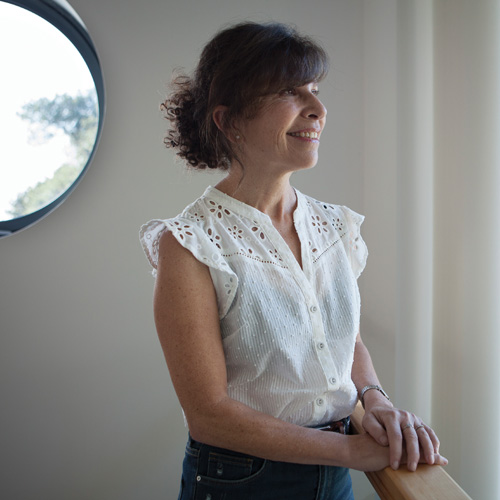
Jill Kennington
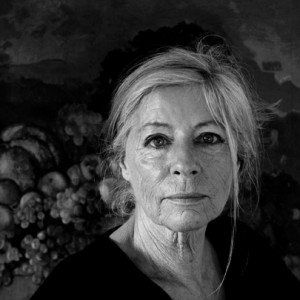
Brendan Buesnel met with Jill Kennington at her home in Whetley, West Dorset. This is her story.
“I was born on the edge of The Lincolnshire Wolds on 2 January 1943, in a tiny village called Riby. Despite the intensity of the War at this time, our life was good and my memories of childhood are happy ones. I have two sisters, one older and one younger and a brother, ten years younger, born on Christmas Day! Life seemed to be an adventure for us all as we grew up together. We lived on a farm that had cattle and sheep and arable land too, we had cats, dogs, guinea pigs, chickens and ponies. There was plenty of freedom to explore the countryside around us. It was a wholesome, self-sufficient upbringing and my love of the natural landscape stems from this early part of my life. I attended a small primary school in the market town of Louth and am still in touch with some of my best friends from there. My secondary years were spent at a boarding school in the Lake District, many miles away from my parents’ farm but close to my Grandmother’s house, which had been a destination for childhood holidays and is now owned by my one of my sisters. For me there is a real sense of belonging associated with this part of the world.
In 1960 at the age of seventeen I went to a finishing school in Sussex and came out with a hunger for life and a list of things that I didn’t want to do! My first taste of the vibrant and cultured life of the 60s came when I went to stay with my Aunt in central London. She was a buyer at Harrods and introduced me to the city. After plenty of negotiating and discussion with my parents, I moved to London and secured a job at Harrods. Within three months of moving to bustling London I was introduced to a top agent during a party at The Savoy. That was the beginning of my modelling career and the end of my Harrods job. Within a week of being with this agent I was taken on a tour of the British Isles with Norman Hartnell, dress designer to the Queen. On returning from the tour I saw some test shots that eminent fashion photographer, John Cowan, had taken of me some weeks before, there was much interest with jobs already lined up for me. At this point I changed my agent and started the next phase of my career. The first shoot was for the Daily Express fashion pages. I was to feature as a girl from the country, going to Ascot, Henley and Glyndebourne. It ran over several weeks and I enjoyed this type of work. It was the beginning of a huge change in the fashion scene as young photographers changed their approach to fashion shoots, instead of being 20 but trying to look 30 we were being 20 and trying to look 20! I worked with Mary Quant, who was instrumental in the design of the ‘Miniskirt’ with my hair done by the late Vidal Sasoon who was, at the time, revolutionary in his approach to hair styling. There was something about London then that was buzzing, the size of ‘the pool’ was a lot smaller than it is now, and the creativity of the young people was in an exciting new era. I started to work with some very dynamic photographers from New York and Paris. I was lucky that they wanted me as much as I wanted to be a part of that scene. The approach of these photographers and publications was exactly what I wanted. Over time I forged my own niche and although I always had an agent I was in total control of the work I was doing; the shoots often required me to travel to places as diverse as the Sahara Desert or the Arctic.
Another major aspect to life at this time was the music, the scene was fantastic. I met Mick Jagger in the Vogue studios whilst doing a shoot with David Bailey, he strolled in and said hello—it was all very casual and relaxed. The Beatles would be at the same cocktail parties I went to, the people and the atmosphere were vast, the whole scene was brimming with vibrance. There was never a dull moment. In the mid 60s I played a small part in a movie by Michelangelo Antonioni called Blow Up, now a cult classic. The film is partly inspired by the life of David Bailey and was shot in John Cowan’s studio in the swinging sixties. In January 1968 I did some work in Paris and ended up staying there for a year. I had a flat in the Latin Quarter and witnessed the infamous student riots sometimes having to rush home from work so that I didn’t get caught by the tear gas. From Paris I moved to Italy, with my first husband, where we stayed for the next 9 years, I continued globetrotting for publications such as Vogue and Harpers Bazaar. I lived in Rome where I honed my appreciation of good food—loving trips to market to select fresh ingredients to cook with. On occasion I would be lucky enough to be given tightly guarded recipes—I was in my element. During those years I was very good friends with the director David Lean, (Lawrence of Arabia, The Bridge on The River Kwai) and his wife Sandy. We went on several reconnaissance trips together to Polynesia and Africa and it was on one of these trips that I questioned whether it was time to slow down my work for the industry.
In 1979 I went to stay in a friend’s apartment in the south of France where I lived for a couple of years. I did some occasional work with Helmut Newton who would sometimes be shooting in the area. It was not only the modelling that was coming to an end, I realized that it was time to end my marriage too. I came back to England and got divorced.
It was 1982, I was about to turn 40 and a new chapter was beginning in my life. I decided to get away and so went to the Outer Hebrides to stay in my mother’s crofters cottage. For this trip I decided to buy a camera and try taking some photographs. I brought a Nikon FM2. Having seen the pros use this camera, I knew it would be a reliable bit of kit and tough. The landscape pictures I took on that holiday really blew me away and I knew this was the beginning of a new and important relationship between myself and the camera. I still shoot with that camera today. Later that year I showed the Scottish landscape photos I’d taken to some friends and they really loved them and wanted to buy prints from me. This greatly boosted my confidence and I knew that I had to carry on shooting. Another important relationship had begun too, with Richard Courtauld. I met Richie, who had a club in London, he had two wonderful children, Jamie and Chloe, from a previous marriage—they were 11 and 13. We married in 1984 and I became pregnant. Charlotte was born that year and Christabel came 3 years later. Having children was the most magical and immensely pleasing thing that has ever happened to me.
In 1985 we went to stay on Long Island in New York at my sister’s place and it turned out that a great friend of Richie’s was working for Andy Warhol at The Factory, we were invited over for lunch one day and I took the camera with me. I asked Andy if I could take his picture, he said ‘yeah’ and so I asked him to sit in a chair I had spotted downstairs. It was a curious chair that looked slightly ominous. He sat in it with the studio dog and I captured what became one of my most popular shots. The Factory was, at this point, very successful and productive. Andy had a Texan client with him who had commissioned a portrait in his iconic ‘Pop Art’ style and the place was buzzing with activity. It was not like the crazy, drug-fuelled party house that one might have imagined—given its previous reputation. I went on to take David Lean’s portrait and one thing led to another and the commissions started to roll in. I was very happy being the photographer and my work was proving to be successful. I am proud to say I now have 21 portraits hanging in the National Portrait Gallery. By this time we were missing the fresh air of the country and wanted to get out of the city. We decided to move. I wanted the kids to have the same rural upbringing that had been so instrumental to my positive outlook and appreciation of life. The move did mean that I severed some of my city contacts, but being back in the English countryside with my family was far more important to me. We eventually landed here in Whetley, a small settlement nestled below Eggardon Hill. I really love it here. I continue to take portrait commissions and enjoy photographing the landscape as it changes through the seasons.”
Up Front 09/12
Whilst it’s not difficult to imagine there might be dubious alternative agendas behind some people’s denial of global warming and its contribution to climate change, it is often harder to pinpoint everyone’s true motivation. On one level it could be an attachment to a particular political or industrial lobbying group. On another it could be a case of natural healthy scepticism or on the other hand it might just be an ego-driven need to try to be interesting by singing a different tune, regardless of the consequences. Whatever the reason and whatever the stance, people will go to great lengths to get their point across and it’s good to see a semi-retired weather man get into the fray, even if it is to help promote a clothing brand. Television weather man Michael Fish, who made a bit of a name for himself in 1987 by saying there was no hurricane coming just hours before the worst storm since 1703 laid waste to great chunks of the countryside, has completed a BASE jump to raise awareness of climate change. 68 year-old Michael made the freefall jump, landing by parachute, after training with experienced urban BASE jumpers. Before he jumped he said: “Raising awareness of climate change is really important, because there is no doubt whatsoever that if we carry on the way we are, there will be shortages of food, shortages of water, towns and cities will be flooded, there’s all sorts of chaos that could arise, in fact some of it is already happening. We have to do something about it now, not wait until it’s too late. If some of us have to make sacrifices, like risking our lives by jumping off buildings, then so be it.” A video of his jump is available on Rapanui clothing’s website and there is no doubt it is an impressive effort. On landing in one piece Michael had this to say: “Bloody Hell!” Not dissimilar to what most of us said on the morning of October 16th 1987.
Darren Windsor
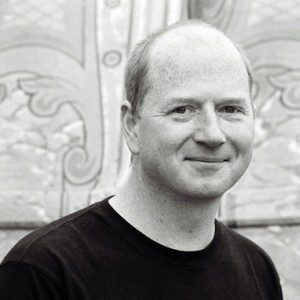
Julia Mear went to Axminster, Devon, to meet Darren Windsor. This is his story.
“I was born in Eton, Bucks, Mum and Dad had second-hand shops when I was growing up—Dad used to do house clearances—this was when they did proper house clearances—houses full of antiques and weird and wonderful objects. He used to have a large ‘junk’ shop, from a very young age I had access to all sorts of unusual stuff. My grandparents also had a part to play in this. My older brother, Nick, and I would stay with them every weekend, from Friday until Sunday. Grandad was very important to me; it’s where I get my practical side from. He was a carpenter by trade but also had a vast assortment of model planes and boats. One of his friends had built K9 from Dr Who.
I had my own bench in Grandad’s workshop from a very young age—he’d leave me to it and I’d just make stuff. Grandad was a bit of a hoarder and every Saturday morning he’d take me and my brother to scrapyards in Slough. We’d get the good bits like badges off cars, old radios and fix them up, parts of steam engines—shiny bits is how I saw it. Every Saturday afternoon we would go over to Windsor Great Park and fly model aircraft. It was all about the journey for Grandad, he would often crash them and just laugh. It meant re-building, sourcing parts, repairing and seeing it work again. Something I couldn’t understand at the time. On Sunday mornings we would go to Black Park, next to Pinewood Studios, because it had a lake. During the week Grandad would have added props and tinkered with his model boats, ready to launch them at the weekend.
We moved down to Dalwood in Devon when I was nine. Dad opened a couple of second-hand shops, one in Axminster and one in Taunton. He still did the house clearances but they were changing – car boot sales started to come in and people would sell their own stuff more. Dad did the market stall in Bridport selling second-hand stuff, house clearance days seemed to be numbered.
We went to Brighton for a holiday and this was my connection with slot machines—I spent a whole morning playing on them—I vividly remember turning the handle on ‘what the butler saw’—a bit naughty but it stuck in my memory. Through Dad’s house clearances he got a slot machine—I was transfixed. When we moved to Devon he sold it and I was devastated. We did however go up to the dump one day and found three full sized pin ball machines and a juke box, I was about ten. I enjoyed taking them apart, seeing how they worked and fixing them—I’ve enjoyed collecting things ever since. I had my own shed at home so was always tinkering with something. I had a welder, bandsaw, drill, everything I needed and I was surrounded by interesting stuff.
As soon as I could drive I discovered car boot sales—bought some slot machines over time—they’ve been in the loft for a number of years but just recently I got some down to put together for my new journey—a vintage penny arcade.
When I became a ‘teenager’ I got into skateboarding and met Charlotte, my wife, at the local skateboard park through friends—I remember my brother saying I had ‘no chance’ but we became closer and were married in 1997. We moved to Axminster and now have three children. Living in the West Country we have good steam fairs and carnivals and I would get involved whenever I could. I’d always been fascinated by the bright lights of this type of entertainment. I think it was the visual aspect and at the same time I was always watching and thinking about how it was all made.
Having the children gave me the excuse I needed to make a carnival float, something I’d always wanted to do. With some friends, we built from scratch a magic roundabout train and entered it in the ‘pushed class’. Next we built the Peter Pan pirate ship, the following year a spaceship—we won at Bridgwater carnival—then we retired. One day I had a trailer for sale in my front drive, a chap knocked at the door. He’d arrived in a minibus full of clowns! He was the owner of the world famous Arnett Paulos circus from up country. He’d come from Lyme and was taking the clowns to Cricket St Thomas for an event. We got chatting and I showed him our spaceship—he bought that as well, to use as a prop for the clowns. A lady from the National Trust knocked on our door enquiring about the pirate ship and they now use it for the ‘Pirate Day’ in Charmouth each year. It’s nice to think they have gone to good homes and are still being used.
Mum had bought me a metal detector when I was eight, but I’d never had much luck. Years later I found a much better one at a car boot sale and I started to find stuff. I worked for a local company, Axminster Tool Centre from about 18 years, in their Garden and Machinery Hire department—I met a lot of local farmers and was able to get kind permission to use my metal detector on their land. My favourite metal detecting finds are a 6” cannon ball and a piece of eight—a Spanish 17th century coin—I see this as proper pirate’s treasure! Last year I found a 17th century gold posy ring; this is currently in the British Museum in London. Mum has played a major part in my collecting ‘genes’. I remember her large antique Victorian doll and toy collection and a large “bear” on wheels from a display at Blackpool Tower. She has always encouraged me to search for the rarer unusual looking items—those once in a lifetime finds.
I’ve owned a 1950s German bubble car and I had my first VW Beetle when I was 16. I’ve had one or two ever since, until recently. I would restore and tinker with them. I had four at one point but they have all been sold now, I’m almost 40 and I’m ready to start my new journey. I’ve decided to turn my energy towards a new big project which encompasses all my interests of restoring, woodwork, art work and also my family.
I pondered over this for a year or two, looked at a couple of fairground rides to restore but decided against it. Then I considered the Vintage Penny Arcade, I did some research and networking. I didn’t get any leads for about six months. Part of the journey is not to just be able to go out and buy one, it’s got to be difficult to find. I placed a few ads in magazines and one day I was contacted by a guy in Glasgow. He had his Grandad’s Vintage Arcade, last used in 1978 and packed away in his showman’s yard. Three days later I flew up there, paid him and I was suddenly driving it back in a hired van. I managed to get one old picture from when it was fully built and in use. It was exactly what I wanted but twice the size as what I had expected! It’s called the ‘Lucky Coin Amusements’ and had travelled around Scotland during the 60s and 70s. I’ve just bought the website, so I’ll build that up too. The whole going to the Showman’s yard, having tea with him in his caravan, listening to his stories and rooting around a showman’s shed was all part of the experience. As soon as I saw the artwork and that it was his Grandad’s gave it substance and I bought it more through sentimentality rather than what was practical. It will be challenging to complete but my vision is that in two or three years’ time it will be completely up and running as an original Vintage Penny Arcade. I plan to take it to local festivals and steam fairs with my family. Charlotte is very supportive and understanding but considering the size of it I know I need to make this a viable project! I have since been on a fairground signwriting course at Carter Steam Fair for a week to learn how to restore the artwork. I’ve bought more slot machines and in the meantime, to help fund the future plan, which involves needing to buy a vehicle to transport the arcade, I am setting up some of the slot machines in a small trailer to take a ‘mobile’ penny arcade to local events. James my 12 year old son is very involved with everything I’m working on. Our twins, Georgia and Rosie, are looking forward to running the ‘traditional roll down tables’, although they are trying to twist my arm for a small ‘hook the duck’ game.
I’d been advertising for slot machines on various websites and publications and I had a call from a guy—Richard Cadell—I googled his name and discovered he was the presenter of the Sooty Show. He owns Brean Leisure Park so I drove up there and bought a vintage slot machine from him. He showed us some of the props from Sooty. Again, it’s all about the journey—the people I meet on the way and the thrill of the chase.”
Up Front 08/12
In any one month we help promote hundreds of charities and local fundraising events through the pages of this magazine. At one point recently someone did a rough calculation of how many events we had featured over the last ten years and it was a jaw-dropping figure. So we’re only too aware of how much hard work goes into putting on what are largely volunteer-led projects, and even more aware of the impact they have on the local community. From big events such as the Buckham Fair which has raised more than £70,000 for local charities to small fetes that raise money for their churches or village projects, the effort that people put into these events is tremendous—which makes it even more heart-breaking when all that effort is dashed by the weather. However, much has been made of British resilience over the last few months and one event that I attended recently, which thankfully wasn’t affected by the weather, was a real highlight of how people can work together to make a difference. I found myself surrounded by a sea of pink as speakers blasted out warm-up music for those attending Cancer Research’s ‘Race for Life’ at Westpoint in Exeter. Since ‘Race for Life’ began in 1994 over six million participants across the UK have raised more than £457 million to fund the work of researchers, doctors and nurses dedicated to helping people beat cancer. This has led to an overall drop of around 16 per cent in the death rate from all cancers since it began. The atmosphere at Exeter was electric and as emotionally charged as any event I have ever attended. The energy created by this enormous human effort was huge. Afterwards tearful, breathless and elated people hugged each other and promised to be there again next time. And although it’s not really my colour I did spot a nice pink wig on a smiling rocking horse at home this morning, that just might keep the sun off next year.
Joy Michaud
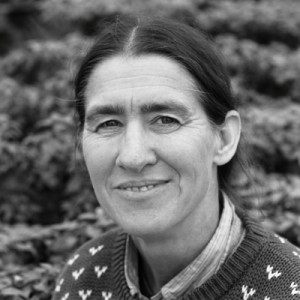
Robin Mills went to West Bexington, Dorset, to meet Joy Michaud. This is her story.
“I could definitely be described as a West Bexington person, but I wasn’t actually born here. My parents owned a house in the village, but in 1956 went to Nigeria, with two small children, where my father taught in the main secondary school in Northern Nigeria, and I was born out there. They came back here for holidays, but when I was two they returned for good, mainly because I was rather a sickly child and the intense heat of Northern Nigeria didn’t suit me at all. I was too young to remember anything of Nigeria from that time, but the funny thing was that when I went back, at the age of 19, I remembered the smells. All those tropical smells, I just knew them immediately so they must have been deep in my memory from my childhood.
I was involved with my parents’ farm from quite an early age, and as a teenager I’d be expected to help out most weekends with the animals and market garden, and that was the life I liked. I was very into horses, and we bred several foals which I trained, never very well, but I loved it. The first foal I had I had in shafts pulling a governess cart at 2½, much too young to ride, but that was my passion. I have four brothers and one sister, a big family, and we got on very well so with wonderful parents and a wonderful place to live, it was quite idyllic. As a child, the sea was ever present, I rode on the beach a lot and it seemed we’d swim and have a picnic lunch there in the summer every day. It’s strange that the sea’s no longer a part of my life these days. Bexington’s about the only village on the Dorset coast which is right on the sea; all the others are back inland a bit. The beach is very popular for fishing, and gets quite crowded in the summer, but that’s always been the case.
I went to Litton Cheney primary school, and Colfox at secondary level. All six of us did. I did well enough at school to get a place at Aberystwyth to study agriculture. For me, agriculture was a really good choice, although at the time I didn’t know what else to do. Aberystwyth was a small university town, a bit like Bridport, and I loved it, it was a really magical time for me. I got a good enough degree to be awarded a university grant to do a PhD, but decided to defer that for a year, came back and worked on the farm for a bit, then spent the rest of the time in Nigeria. There’d been so much family talk about it, and friends from Nigeria visiting, I had to go. I had contacts from when my Dad worked there, and got a job out there on a research farm. That was fantastic; I loved being part of another culture and all that entails. Though, for the first time I was seeing and experiencing real poverty. I worked with people whose whole family were living in a mud hut half the size of my living room. I’d be invited to their home, and there was one piece of meat in the soup they made. At first I left it as I thought it rude to be greedy, but then I was told that the one bit was there especially for me and if I didn’t eat it they would be insulted—normally they wouldn’t have any meat in the soup. I learned a lot about generosity and kindness and perhaps about priorities that we’ve drifted away from in our culture. I wasn’t in Nigeria nearly long enough, there was a visa issue, but after that I knew I wanted to use my skills to work in third world agriculture.
After my PhD I was offered a job with the Overseas Development Agency, but by then I’d already met my husband Michael so it was a case of either one or the other. However we were both determined to do overseas work as agriculturists; Michael had devoted his whole education to preparing himself for overseas agriculture, but as soon as he’d graduated the employment scene changed. After getting an offer of a job in the Gambia, which was withdrawn virtually while we were packing to leave, we got jobs in the Virgin Islands and moved there. I was the natural resources specialist for the US Virgin Islands, which meant I travelled around the Caribbean a lot; it was a lovely job and a wonderful place to be. But it wasn’t overseas development work, which was what we really wanted, and so after 5 years when we hadn’t found the right job, we came back to Bexington where we had already bought a house and land. We had bought the land first, and Michael, as an American, thought you could just build a house on the land if you owned it, which of course we couldn’t. But we were incredibly lucky as our house became available, with access to the land, at the right time.
Our land, which is 15 acres, is fine for a hobby smallholding, but much too small to make a living out of as a farm. We started growing vegetables and selling at markets twice a week at Dorchester and Weymouth. We had high hopes it would make us a living, but there was no way, it was impossible. It soon became apparent, though, that we needed other streams of income and Michael became an organic inspector for the Soil Association, and I took up editing work. The magazine editing was quite intense for a many years; as well as the Soil Association magazine—at the time called New Farmer and Grower—I edited the magazine for the International Federation of Organic Movements (IFOAM). This involved the whole project management, from commissioning to editing and typesetting the 40 odd pages. To do this I had to learn PageMaker on the computer. Nowadays, I only edit and typeset a small monthly magazine called The Organic Standard. When I started editing, there was no internet or email, so contributors would send floppy discs and I’d spend hours on the phone. Now, it’s so easy. With The Organic Standard, my publisher is Swedish, the commissioning editor is Spanish, and we have authors all over the world, most of whom I’ve never met.
From an early age I was into photography. As a child I set up a makeshift darkroom at home but it was at university where I really got into it and would spend days under the red light printing up photographs. As an editor I found I needed photographs so if I didn’t have a one for an article, I’d go out and take it. Then other magazines started getting in touch with me asking if they could use those photos. At the time, you could sell a good image of, say, a cauliflower for a minimum of £40, sometimes up to £200, but sell the actual cauliflower for 25p. So I started a slide library, taking photos of vegetables. In the end I must have taken 30,000 transparencies of vegetables all catalogued in filing cabinets. So for many years, I was doing editing and photography, which was making much more money than market gardening. There was a time I thought I might make photography my profession, but I couldn’t quite give up the editing, or the growing; then the heyday was gone when digital came in, and I think my heart went out of photography with that change. Some agencies will nowadays supply a digital image to a magazine for £4, any size. I used to belong to the Guild of Garden Photographers, some of whose members are the most fantastic photographers, but they’re all struggling now to make a living out of it.
Both the photography and the editing have now taken a back seat because of the way our growing business has developed. We work seven days a week. We sell vegetable seeds, testing every variety for yield, flavour and quality, making sure everything we sell is the best. But chillies are what we’re best at. We do a lot of breeding—the Dorset Naga, one of the hottest chillies in the world is our variety—and probably half the chilli seeds we sell are varieties we’ve bred ourselves. We also grow fresh chillies and plants and take them to shows, festivals, any event really where we can sell plants and produce. We’re very lucky to be part of the huge change in attitude towards gardening and food, in particular the British attitude to eating chillies. Twenty years ago we threw away chillies we’d grown through lack of demand. Now we’re using Facebook and Twitter as part of out marketing drive. Who knows what’s next.”
Choose your Journey
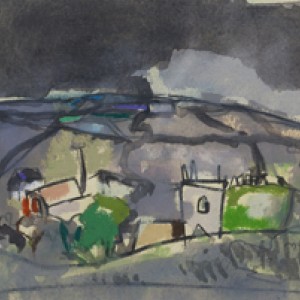
Julian Bailey is one of this country’s foremost figurative painters. His new paintings represent the culmination of thirty years work, searching for and exploring a painter’s language that is both true to himself and appropriate for our time. Instantly recognisable for his eloquent, seemingly effortless brushstrokes, Julian’s work has grown up with him through a process of hard work and a kind of relentless daring.
Invited to preview the exhibition at his studio, I find myself in a delightful gravel courtyard surrounded by geraniums in terracotta pots with doves, chickens and ducks roaming free. Julian appears dressed in an old guernsey and fisherman’s cap and leads the way into a sunlit room where thirty or forty canvases thickly painted in compelling colours are lined out on shelves.
Concentrating and looking carefully at each one, it becomes clear that something has changed in his work. Soft greys and shades of tan surround the brighter colours, causing them to glow even more vividly. From windswept coastal landscapes to figurative groups, the themes that have occupied him for many years have now attained a maturity and strength. The skies are stormy but always there is a ray of light. “They’re paintings about release from constraint,” Julian says over coffee. “For me it has always been about more than happiness or fun. It’s the contrast that counts, a moment of joy that lifts out of the mundane. I’ve painted boys diving and yachts in full sail, people literally taking the plunge and feeling the wind on their faces. More recently my figures are setting out on a journey either on foot or by canoe or by some other means.”
I ask about the journey that has brought him to where he is now. His father, Dudley Bailey, is a painter and Julian grew up drawing wherever he went, just as he still does. His father was “hugely encouraging. We always talked about painting and, yes, my first paintings were really quite like his.” Julian held his first exhibition aged 17 in the Malvern Library. “It spoilt me for ever really. They sold masses of paintings and I tend to think it should always be like that.”
At the Ruskin School of Art in Oxford, “I’d always been top in art class at school, and I walked straight into the trap. They tore my work to shreds. It was quite a blow. I had to completely rethink.” Having graduated from Ruskin he went on to the Royal Academy Schools. A year of life drawing helped him to rebuild. “I started to draw from life and then paint from the drawings. So the drawings have to contain the information that I will need. I don’t use photography.”
After he left the Royal Academy he continued to enjoy the student life in London, painting the Portobello Market, staying out late with friends drawing people in jazz clubs and cafes. He was taken on by the New Grafton Gallery in Barnes where he showed foreboding paintings with stark lighting and black outlines reminiscent of Josef Herman and David Bomberg.
By this time Julian had met and married the potter Sophie Cullen. In 1994, they took a flat for six months in Bath. The studio had a lovely view over the river and there Julian had a break-through moment. The black outlines disappeared. His palette lightened up and he realised he could draw colour against colour in paint on a board. He had found his painting style.
Shortly afterwards Julian was taken on by Browse & Darby. As a teenager Julian’s father used to take him there to look at the work of Gwen John, Sickert and Degas. When William Darby agreed to take five of Julian’s pictures, “I was incredibly excited.” Julian has since had five solo shows there.
In 1998 Julian and Sophie bought their house and moved to Dorset. With a young family, Julian turned to Gifford’s Circus, theatre and short trips to the Mediterranean to find subject matter efficiently. Then he could come back and paint at home. “I’m interested in the relationships between the figures, the male and female, the performer and the person watching, using gesture to convey language. The paintings are about the joy of youth, about being part of a group, but of course they are also about being the one left out. The artist is on the outside looking in.’
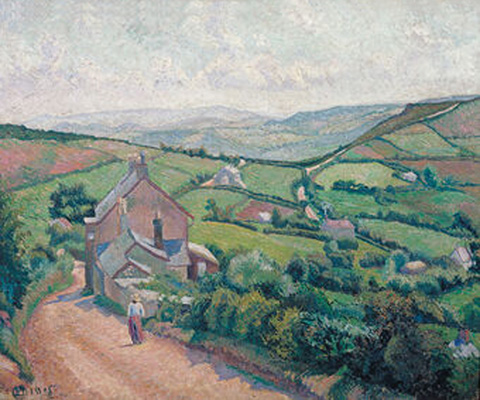
As his four children grew, Julian introduced the coastal landscape to his work. They were spending time on the beach at Ringstead and Lulworth, messing about with a boat. “It’s why we came down here—the creamy white cliffs against the sea and sky, the hills like upturned pots, the dry clay and chalk—they’re spell binding.”
He paints every working day to a disciplined schedule and finds it really tiring. “It’s demanding, always looking to find freshness and clarity, like an electrical charge.” He does layer after layer of painting and scraping off, each time upping the ante to come closer to what he wants. “It all has to come together at the same time or it all has to unravel. I’m trying to paint form, in space, in good colour all at once.” As it is his brushstrokes are deliciously economical conveying the weight of rock, the lilt of a boat, the poise of a figure. “I’m not stroking the surface,” he says with a smile.
How does he decide what to include? “I take the point where I am sitting and I draw the line to where I want to be. Draw that first on a clean sheet of paper. Choose your journey. Follow the white tracks scored into the green landscape. Make it a searching line. It might follow a hedge winding up a hill or go over a rooftop, as long as it leads your eye. Everything else in the picture then has to compliment that line.” I can’t help feeling that Julian’s own journey will always follow a searching line.
Up Front 07/12
I bought myself a copy of Butch Cassidy and the Sundance Kid a while ago, and though it now seems a bit dated I remembered why I had liked it so much when it first came out. There were some great one-liners, such as Butch’s, ‘you crazy—the fall’ll probably kill ya!’ when Sundance admits he can’t swim, and ‘If he’d just pay me what he’s spending to make me stop robbing him, I’d stop robbing him!’. It also had some great music from Burt Bacherach and Hal David, including Raindrops Keep Falling on my Head and the brilliant South American Gateway, sung by the Ron Hicklin Singers. But most of all it was memorable for two very likeable bank robbers—Paul Newman and Robert Redford. They immediately came to mind recently when newspapers carried a story about just how badly paid bank robbing is. According to a report in Significance, the magazine of the Royal Statistical Society and the American Statistical Association, the average proceeds from a bank robbery in the UK are £20,331, with one third of robberies yielding nothing at all. It also points out that carrying out multiple raids in the hopes of increasing income only increases the probability of getting caught and ending up ‘inside’. And it appears that although there is a clear connection between the number of raiders and total takings—the bigger the gang, the greater the success, with every extra gang member raising the take on average by £9,033.20—with extra gang members to share the proceeds the haul per person decreases. It seems deterrent factors also reduced the probability of successful raids. So both the film and the report leave us all feeling a little bit sorry for our lovable bank robbers—yet remarkably, neither appear to show any sympathy at all for the bankers.
Island Life
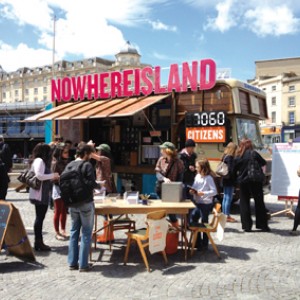
East Devon artist Alex Hartley started out with an idea for a sculpture but ended up with more than anyone could have imagined. He talked to Fergus Byrne about an island on the move.
The day I meet artist Alex Hartley at his studio in Dunkeswell in East Devon the sun is blazing through a bright blue sky and most of England is already complaining about the ‘unseasonal’ heat. It is moving towards the end of May and while locals potter in the garden in shorts and t-shirts to a backdrop of pre Jubilee patriotic bunting and effigies of the Queen, Alex Hartley is working on a project that began in a totally different climate. He is putting the final touches to the embassy for Nowhereisland, one of twelve projects commissioned by the Arts Council as part of the Cultural Olympiad. It is a project that, though initially courting its own fair share of controversy, has now developed a level of ambition and scale that has taken on a life of its own and transcended the arguments of many of its original critics. On the surface, it is an island sculpted from Arctic earth.
Nowhereisland began in the sub-zero temperatures of the Norwegian archipelago of Svlabard after Hartley made an expedition there with the organisation Cape Farewell in 2004. Cape Farewell had been started by artist David Buckland in 2001 to instigate a cultural response to climate change. Although he hadn’t set out to find a new island, it wasn’t long before Alex Hartley was scanning the horizon for new land. “You could see that what we were looking at was so different to what was on the maps” he says. “Because there were no Inuit in this place, it used to be a no-man’s land, and then it was lent to the Norwegians. So it was very poorly mapped and hadn’t been done properly for twenty years. The glacier ridges were enormous. I thought I could find a little rock and stand pathetically on it, but what I found was about the size of a football pitch.” He remembers being “super high” with the genuine thrill of standing on a piece of land that no human had ever stood on before and was soon dreaming up creative ways of using it. The end result is a sculpted island that, having travelled from the Arctic, will visit eight ports around the south west of England starting with Weymouth on July 25th. It also has a travelling embassy, a growing citizenship and is already propelling a powerful debate about a range of challenges facing our world—a debate that is likely to continue for many years after its inception.
Once the six tons of earth from the Arctic island were towed into international waters it was declared a new nation and at the time of writing over 7,000 people have signed up to become citizens of Nowhereisland. The mobile embassy, a converted livestock truck, made its first appearance in Bristol recently and as it travels around the south west, the population, already more than twice that of the Falkland Islands, is set to grow. After the Olympics it is scheduled to tour Norway and with citizens signed up from over 100 countries the possibilities created for carrying its message are endless.
At each of the ports on its journey around the south west, thousands of school children as well as community groups are preparing harbour-side welcomes and are getting ready to explore and learn from the project. That is one of the things that excites Alex Hartley. “The producer and I were very much about putting work in the public realm and helping people engage with it”, he explains. A lot of the money raised for the project has gone into ensuring that communities along the journey gain from the awareness of the wider implications of our rapidly changing world. “I suppose most of all it’s the otherness that we’ve brought” he says. “You can imagine some of the journey within its depths. It’s so different from the landscape of the south west, it’s like the alien that’s within our shore-line. I think that that’s important because it leads so clearly onto the questions that I’m more interested in raising, which are to do with citizenship and belonging. Obviously some of those are harder concepts to grasp and that’s why the education interface, the engagement bit, has been targeted to help people into that.”
A website, (www.nowhereisland.com), offers many levels of information on the project including the thoughts of 52 different ‘resident thinkers’, a group of individuals who have offered support and comment on how Nowhereisland and its developing ethos may affect or increase awareness about issues today. They include Yoko One, Tim Smit and Peter Thatchell as well as artists, poets, lecturers, writers and designers.
Simon Anholt for example, an advisor on nation branding, highlighted some of the challenges that a borderless project like Nowhereisland brought to mind. The obvious challenge, he says is climate change but it also brings to mind environmental degradation, cultural and religious intolerance, terrorism, nuclear proliferation, pandemics, economic and financial crises, poverty, human rights, education, water and of course Arctic territorial and mineral rights. He points to three things that all of these problems have in common: one they are borderless, two they are all getting worse and three, multilateral institutions, national governments and even rock stars have been unable to find ways to fix them. His belief that we need to completely rethink how we run the world echoes the thoughts of many.
Alex Hartley is quick to point out that artists are not necessarily good at answering questions, however they are often the ones that spark debate, thus creating a forum where new ideas can help us to see problems with more clarity and allow discussion on more far reaching solutions.
Nowhereisland citizens have been asked one simple question by the artist: if we were to create a new nation, how might we begin? As citizens submit their thoughts as well as ideas for Nowhereisland’s constitution, it becomes clear that the impact of this particular arts project is not only far reaching but also multi-layered and multi-cultural and that it is being followed closely by many of those that are keen to shape a better world. Tamsin Ormond, director of Climate Rush, points out that ‘there are 9 billion citizens, one planet and a model of growth that tells everyone to want more and to consume more’ and asks, what will evolution look like if we keep to this trajectory?
Tim Smit, co-founder of the Eden Project calls for a world that is ruled by ‘pragmatists with hearts of gold’ and says that ‘those imbued with certainty about how others should lead their lives are responsible for almost all the pain and suffering visited upon humankind.’ The late Vidal Sassoon, a resident thinker shortly before his death, had a lesson on social structure and pointed out that capitalism in its worst form creates communism and fascism, both of which he believed to be monstrous. Stephen Pax Leonard, a research associate at the Scott Polar Research Institute points out that whilst Nowehereisland might appear to an outsider in the form of a floating art exhibit, it’s special community of citizens have the opportunity to be open to the world, and to share knowledge and help deal with key issues such as sustainability and environmental exploitation.
In his own statement as resident thinker, Alex Hartley says that the island nation that will have journeyed south is to be only the symbol of Nowhereisland and that the real heart of the project is spread across the globe within its citizenship.
What began as an idea presented on a sheet of A4 paper is now a project where people from over 100 countries are speaking as one. The travelling sculpture and its embassy are merely the outward symbol of a much bigger work of art and if a work of art can ever be seen as collaborative then this is it. It now comprises the thoughts of many thousands of people and emits a gentle buzz like a beehive slowly taking form. Nowhereisland may have begun with the hope that people would engage with it as a work of art but it has now become a forum where people from many cultures and backgrounds are engaging with each other. It is perhaps that rare piece of art that does more than ask questions—it allows its living core to offer answers.
Nowhereisland will arrive in Weymouth on July 25th. For more information about the project and where to see it in the south west, visit www.nowhereisland.com.
Dave Symonds
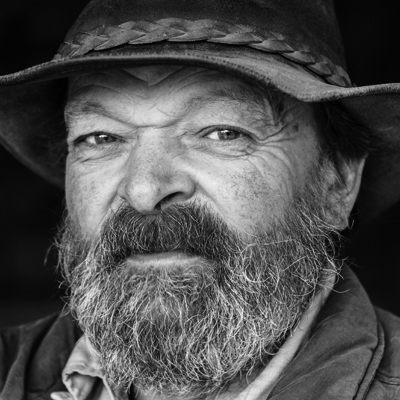
Robin Mills went to Chideock, West Dorset, to meet thatcher Dave Symonds. This is his story.
“My interest in thatching started when I was 11 years old. I got off the school bus one day, and the local thatcher who was working on the roof of the house by the bus stop asked me to carry up something he’d dropped. That started a bit of a relationship, and every time he was in the area I’d try and join in. When I got to about 13, he said to me, “If you want a job when you leave school, come and see me”.
Our family were farmers; Grandfather had a farm in Ryall, but I was brought up in Whitchurch Canonicorum because there wasn’t enough room in the family house for my mother, father, and four children. I was actually born above the stables at Catherston Manor where my mother was employed by the Bullen family. I spent all my time on the farm, and it seemed obvious that was what I’d do when I grew up; I could drive a tractor aged 7, and ploughed a four-acre field when I was 9 with a grey Fergy. By the time I was 14 I could do most things. But Grandfather died when I was 15, and there was no tenancy succession, so that by the time Grandmother had sorted out the estate fairly there wasn’t enough for any of us to carry on with the farm, and Father went into agricultural contracting.
So when I was 15, I left school, took up the offer of going thatching and went to work for Ron Thomas, whose family had been thatchers in the area for five generations. I didn’t do an apprenticeship. I did go on a course, aged 16, organised by CoSIRA, an organisation which helped train people in rural skills in those days, for 12 weeks up in Northampton. But my employer was one of the old school, and taught me things which I could only have learned by working for him. Ron Thomas was instrumental in raising the standard of thatching from an agricultural level to the pristine work you see today; he had real good skills and could get the nice straight lines you see on roofs. You’ve only got to look at the old photographs to see the standard of work done in the 1800s and early 1900s. Retained thatchers on the big estates in those days would spend more than half their year thatching hay and straw ricks; the hay ricks would need thatching from May/June, the corn ricks at harvest time, and then the thatch would be moved from the sheaves at thrashing time and put on the straw ricks in the late autumn. And then they’d work on the cottages in the rest of the year, which was almost a case of laying the straw on the roof just to keep the rain out. Many cottages got burnt, too, nearly always started by the village baker, and you could only chuck buckets of water on to try and put it out, so mostly they let them go.
I worked for Ron Thomas for 5 or 6 years, and then I went self-employed, but I only worked for him. Gradually I began to take on my own customers as well, and my brother was also working with us. When Mr Thomas fully retired, my brother and I decided not to work together, but Mr Thomas did a nice thing and wrote to all his customers west of Bridport suggesting that they should contact me for any work, and those customers east of Bridport should contact my brother. That would have been in the early seventies, but I’ve been self-employed for 45 years. For the first few years I was on my own, and I didn’t work beyond the parishes of Chideock and Whitchurch Canonicorum. It would take me two or three months to thatch one decent-sized house. Nowadays, if we spend more than two or three weeks on one house, that’s a big job, and that’s because my son Scott now works with me, and we have three full-time employees. That was a big step in the business, about 20 years ago, when Scott joined in, giving me fresh impetus. It meant everything I’d learned and everything I’d built up could be passed on to him, and he’ll take it a step further. So he’s taken a lot of pressure off me.
I’ve also got the thrashing machine. Originally I was helping a local contractor in the Marshwood Vale with his machine who serviced the farms in this part of the world, but I got more and more involved with it because I enjoyed it, and I knew what I was doing because I’d been doing it since I was 16. Right from an early age I dreamed of owning my own machine, and so because we were growing our own wheat for thatch, it made sense when one came up for sale on Dartmoor, to buy it. Thrashing now takes me away from thatching for four months of the year; I go all over the place with it. It’s actually a reed-comber, which means it’s the only machine which will separate the grain from the straw without damaging the straw. It was made in 1906, by Marshall, with a Murch reed-comber adaptation. I know its life history; it had two owners in North Devon, from where it went to Oxford, owned by a thatcher like myself, then right up to Braintree in Essex, and then back down to Salisbury. From there it returned to Dartmoor. So it’s covered much of the South of England. I’ve had it 16 years. I tow it behind a tractor, but originally it would have been towed and driven by a steam traction engine, running on iron wheels. I set off with it at the end of August; go right up to Salisbury, across to Taunton, and through the Somerset levels. Last year we went to 15 farms, and produced 61,000 bundles of thatch. So it’s no wonder, with a 1906 machine, I have to spend a couple of weeks every year maintaining her. Basically she’s worn out, but I haven’t got another one so I’ve got to keep her going. The mechanisms are mostly quite simple, but what with woodworm and rust, no sooner I’ve cured one grain leak, another trickles out. I have to rely on a skinny lad that works for me to get inside and mend the awkward places.
We grow between 40 and 60 acres of wheat for thatch around the village. In 1989 I was lucky enough to rent a small farm, where we grow maize, stubble turnips, and the wheat. Growing wheat for thatch has to be done right, not at all the same as ordinary wheat for the grain. We use an old long-strawed variety, fertilize with dung and no artificial, and spray minimally to keep the weeds out. It’s easy for the straw to get spoilt; in 2010 we lost 10 acres that went flat because there was too much fertility in the soil, and another year 400 sheep got into a lovely field of wheat and wrecked a few acres. The farming’s become quite a big part of my work now, but that’s because I was born to it, and it’s something that’s in me. And I’ve enjoyed cider since I was a boy too. Grandfather never restricted the grandchildren from drinking it, knowing that sooner or later they’d have a bit too much and make themselves ill, then learn to respect it. It’s a refreshing drink if you’re doing a physical job. I remember the old boys on the estate farm in Chideock drinking it, so the club we have now’s a spin-off from those days. We make 2,000 to 3,000 gallons a year, none of it is sold, and two or three times a week people in the village meet to have a drink and a natter. All the money, which comes from donations to Chideock Cider Makers, goes to charity, somewhere between £4,000 and £7,000 a year. People from all walks of life belong, and what with all the things that go on in the village when cider is on offer, the community drinks it.
I love my vegetable garden. It’s something I inherited from my father, who was a great vegetable grower, as was my grandfather. Right from a young age I’ve grown veg, and my wife Chris and I are about 60% self-sufficient here. We’ve got ducks, and chickens, and we keep the odd pig. We try to do without the 40% we haven’t got. A good garden doesn’t take that long; an hour or two of an evening or a Sunday morning either before or after bell-ringing. I’m captain of the bell-ringing team; I’ve been ringing since I was 12 years old. Everything I’ve done, the thatching, the farm, and the garden, has been about job satisfaction. When it goes well, there’s nothing better, and I’m chuffed.”