
Over the Christmas break, although suffering from that seasonal illness that only men can understand, I shook the hand of a man who was born in 1788. I say hand but actually it was more bone and sinew. It was attached to the right arm of a pugilist named Dan Donnelly, whose body had been stolen from its grave after his death in 1820 and sold for use in medical research. As he was quite a famous pugilist there was a public outcry, and his body—for some reason minus his right arm—was returned to the grave. After a spell in travelling shows and a further spell in someone’s attic, the arm fell into the hands of my family and has recently returned home from a tour of various museums around the world. Although I grew up seeing it nearly every day, I can’t ever recall touching it before, as it was in a glass case on display in the family business. I’m told it was preserved by a process using red lead, which gives it a wooden look—though in feel it is nothing like wood, and strangely not as gruesome as one might expect. It hails from an era when there was quite an industry in grave robbing in the name of medical research and recent news that there is currently a shortage of skeletons available for teaching purposes might tempt one to think the practise could begin again. However Dr Tim Thompson, a reader in biological and forensic anthropology at Teesside University, has founded a company called Anthronomics to help students of skeletal anatomy. The first product is a range of incredibly detailed 3d models of bones. Students simply download the ones they want, load them up in a purpose-built viewing programme and study away. Dr Thompson admits that perhaps it is not as good as the real thing but until a method of finding more skeletons is found he sees it as a good alternative. In the meantime, Dan’s right arm has been put back into a vault somewhere near Dublin. They’re not getting him again.
Rosie Young
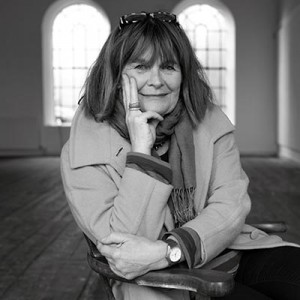
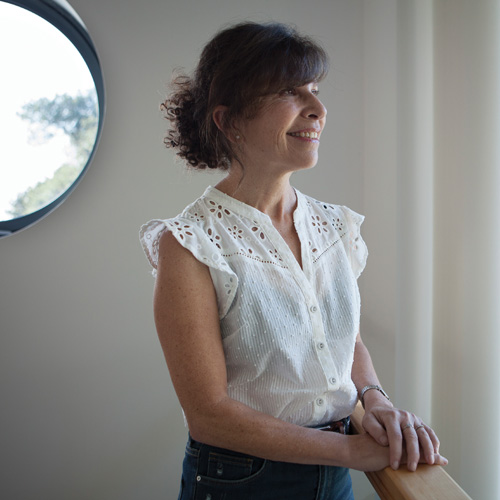
Robin Mills went to Lyme Regis to meet Rosie Young. This is her story.
“My twin sister Susy and I were born in Somerset in 1946. My grandfather, a tea planter in India, retired early and bought a house near Bridgwater. That was the thirties; the Depression came, and he lost a lot of money, and the large house. My father had been working in Java for a Dutch shipping company; he was on one of the last boats out when the Japanese invaded, losing en route many possessions including his precious books. When they met, his parents (my Irish connection) and my mother’s parents lived in a small village on the Somerset Levels, and my father was teaching in the local school just to make ends meet.
Then my father was offered a job in London with his old firm Delarue, and we went to live in Harrow. My mother wasn’t happy there; she was used to country life, and disliked suburbia. So then her father, an imperious man, said, and I can imagine the conversation, “I’ve found this wonderful little tea-room in Dorset that you and Phil (my father) might be able to make a go of.” On viewing it, it turned out to be a fully up-and-running 13 bedroom hotel, Hammonds Mead, set in 7 acres of land, right by the beach in Charmouth. Quite a tea-room—and quite a lot of money at £18,000. That was 1948; my sister and I were aged 2, and my brother David 3, when we came to live there, with our faithful nanny Libby (who has only just died), and an idyllic carefree childhood began. We could go through the garden, with its various lawns, tennis court and large vegetable plot, through a field, over a stile, and there we were on the beach where we spent most of our young days. It’s difficult to be objective about one’s childhood, but I think we were very much left to run free; being twins gave us a certain confidence, and having an older brother only added to our fun. Our parents were always so busy with the hotel; our mother cooked, Libby was a sort of Maitre d’, while my father took bookings, organised food from the gardens and kept the many hens and geese under control. They were not well off. My grandfather would arrive at intervals to see how they were getting on, always a big event, and he’d sign the cheques. But in the end they managed to pay him back, and we remained there for 25 happy years. During those years, our small hotel played host to some interesting guests, including the artist Ruskin Spear, MP Hugh Gaitskill, and author Kenneth Grahame’s son.
On arrival in Charmouth my parents were introduced to the Miss Whittington sisters, direct descendents of Dick Whittington, Lord Mayor of London. They ran an old fashioned ‘Dames’ school, and invited us to attend. Our education was eccentric; from a very young age we performed plays in French, spoke Latin at lunch, and sang Victorian Ballads around the piano, whilst sums were pretty much ignored. We therefore failed our 11-plus, couldn’t go to Woodroffe School where my father wanted us to go, and instead went to Leweston School near Sherborne. We enjoyed it there, never unhappy, maybe because there were two of us, but we didn’t totally conform. We wanted to go to Art School; we didn’t complete our A levels, and instead did a Foundation course at Bournemouth Art School. After a year we decided to cut short our studies, went travelling to Spain, and never returned to Art School. Instead we headed to London; it was 1965.
Our mother must have worried about us, aged 18, apparently guiding ourselves through life. It was all so casual in those days—everything and anything seemed possible—it didn’t seem necessary to worry about qualifications or careers. Everything would somehow be ok. But we remained close to our parents, our easy-going upbringing had made sure of that, and we loved our home in Charmouth.
Being the older twin, I was usually the one who instigated things, and I insisted we get jobs as soon as possible in London. I went for an interview at Harvey Nichols, and landed a job in the “Inexpensive Shoe” department. In the meantime Susy found a job at Biba, one of the first boutiques, and the only place to be; I, of course, envied her. Shop girls became glamorous; they were to join the whole trendy, swinging scene that included photographers, designers, pop stars, actors and hairdressers, and there we were at the centre of it all, the culture that people talk about now when they refer to the mid-sixties. When Susy told Biba she had a twin sister, they gave me a job there too. We were now special shop girls, the “Biba Twins” and were much photographed as such, appearing in magazines of the day; we were never models, but as pretty twins we were in demand by photographers.
Everyone who was anyone went to Biba. Amongst the many famous names who visited the Kensington Church Street shop, the two people who caused the most stir were Princess Anne, and Brigitte Bardot, an icon even then. Promoted to “personnel manager”, one of my few claims to fame was the unfortunate sacking of a youthful Anna Wintour. After 2 years we left and ran Big O Posters, a stall in Kensington Market until a friend, a graphic designer, suggested I go and work for him, because I liked typography and lettering. That led to another similar job; I loved the design of books, type in relation to illustration. I worked on designing books including David Hockney’s version of Grimm’s Fairy Tales. And I started collecting books.
Like many people at that time, in the early seventies, with self sufficiency as our aim, we decided to move back to the country. We knew people in Dorset of course, one of whom was the writer Peter Glidewell, who offered to rent me, Susy and her boyfriend, the painter Michael Upton, the miller’s cottage which adjoined his watermill in Stoke Abbott, for £2 a week. Each morning, Susy and I would whizz through the Marshwood Vale in our VW Beetle to work as chambermaids at our parents’ hotel.
All this time I was collecting books. I’d visit a particular book shop in Crewkerne, and when the shop came up for sale, the hotel by then having been sold, my father gave Susy and me the money £3000 to buy it fully stocked. We sold books and antiques, and by this time Susy, Michael and I were living together in South Perrott. Susy then became pregnant, so wasn’t able to help with the shop as much, especially after the birth of her second child. I was doing more and more book fairs, and working with other book sellers. When my partner Crispin Meller and I wanted to buy a place together, I sold the shop and we bought a remote farmhouse in the Marshwood Vale. I continued to sell books at book fairs and on a market stall in Bridport, working now with Caroline McTaggart, who remains my business partner to this day. This was the early 80’s, and soon I had two boys, Harry and Barney.
Then came great sadness. My sister died. She was diagnosed with breast cancer, and although she lived for 8 years after having had a mastectomy, the cancer returned. I think treatment today would have been different and maybe more successful. At this point she was living in Bridport with Michael and her two children Jess and Sam. Her death left me completely devastated. But I had my young children to look after, and Sam came to live with us, becoming part of our family. After Susy’s death, my relationship with Crispin ended; I left, with the boys, and rented a house from a friend in Charmouth. I was happy there with the three boys—I had a lot of help from friends, and managed to continue selling books.
Caroline and I had always wanted the shop we now run, Bridport Old Books. It was then called Pics, owned by Peter Craddock. I’d pester him regularly, asking if he was fed up with it yet. When he finally said yes, we took it over with another colleague, Stephen Clark, and the three of us ran it together. That was 16 years ago, and it’s been a success. My main interest is still, whatever the subject, good typography, illustration and design; the feel of a book—something Kindle can never replace. Now it’s just Caroline and me, Stephen having sadly died. We’re the best of partners and it’s good to be part of Bridport’s cultural and friendly community.”
Brian Jackman
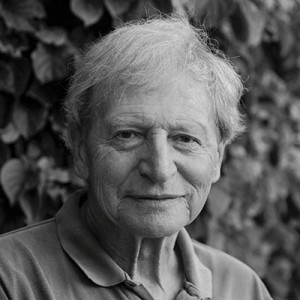
Fergus Byrne went to West Milton, Dorset, to meet Brian Jackman. This is his story. “I grew up in the Surrey suburbs but I always went on holiday to Cornwall every year. My dad worked for what used to be the Southern Railway, so he got privilege tickets, which meant while all my mates went to Bognor and Littlehampton, we could go all the way down to St Ives. And so I fell in love with Cornwall and the West Country. In fact there’s not a year of my life I haven’t crossed the Tamar. Then came the war. One night when I was five years old a bomb fell not so very far away and all the ceiling fell down on me in bed and I said, ‘Dad, was that a bomb?’ He said, ‘Yes it was, go back to sleep.’ In the morning I sat down in the kitchen to have breakfast and a delayed action bomb went off and blew the kitchen door across the room. As a result of that I was evacuated to a farm in Cornwall and I lived there for nearly two years. I never went to school. I used to milk by hand and plough with a heavy horse called Punch. We had water from the well, oil lamps and a bath in a tin tub in front of the range once a week. Then I went to Rutlish Grammar school in Merton which I hated because it was a rugby school. I just wanted to go to Epsom Grammar where they played football. They’d say ‘Jackman you’re playing for the school second 15 this afternoon’, and I’d say no I’m playing football for Wimbledon Juniors, and off I’d go. That was absolutely heresy then. We all dreamed of playing for England. My Dad took me and a friend to see Chelsea versus West Ham on a damp, misty, foggy London day, and warming up Tommy Lawton thumped this old fashioned muddy leather football against the crossbar and it just rattled. That was it for me, I was utterly hooked, that’s all I ever wanted to do. Not making it a career is my one bitter, bitter disappointment in life. However I resurrected my career late in life and played Sunday football for Powerstock—scored a couple of golden goals which I dream about even now. So I got my seven O-Levels and went off and became a Fleet Street messenger boy earning three pound ten a week. Then came National Service and I joined the Navy. It was a great leveler, you met guys from all over the place, Brummies, Geordies, Scousers, Glaswegians and the people I enjoyed best were the good old easy going west countrymen. One of my closest mates was a guy from Yeovil called Max Seaford, and he became the world’s most unlikely bank manager I think. The year I got out of the Navy I hitchhiked down, turned up at his door and his mother said, ‘Oh he’s not here he’s gone to West Bay.’ So off I went to West Bay, pitched up at Pier Terrace and there was a little note on the door and it said “this is the abode of Roger Courtney and Bill Snakebite Hitchcock, friends rings twice, girls walk straight on up.” So we’d go down and drink snakebite in the Bridport Arms and then lay out on the east beach and then go off to another party. Eric Hamblett, who eventually became the harbourmaster, used to sleep in the bath. I was allotted two armchairs shoved together to make a bed. I would go to sea with Rex Woolmington and Barry Hawker who owned a lovely old boat called the Peace & Plenty. I used to help them pull lobster pots and set nets for sea bass. So it became the start of a brilliant time with this wonderful crowd, a lot of whom I know to this day. Ray and Eva Harvey, Arthur Watson who I first met grilling mackerel over a driftwood fire on the Chesil Beach at an all-night party. And of course my great friend ‘Stu’, Ian Stewart—sublime boogie piano player and one of the original Rolling Stones, who was also a regular visitor to West Bay in the 1960s. Sadly a lot of them have passed away including Eric Hamblett. Around the same time I started a skiffle group called The Eden Street Skiffle Group. We played at the Royal Albert Hall, the Royal Festival Hall. There were three of us who played guitars and sang in harmony, one of them being Hamish Maxwell of Custer’s Last Blues Band. We used to come down with the group and play in pubs like the Bridport Arms. Hamish loved Bridport and West Bay as much as I did and he eventually moved down. And then I got married and bought a cottage in Powerstock for a few hundred pounds, you could still do it in those days. That was in the late 1960s. I’d managed to join The Sunday Times and became the lowest paid journalist on the paper but I didn’t care. I was so proud to walk in through this door which bore the legend of The Sunday Times. And so I became one of Harry’s children, Harry Evans the greatest editor ever. So they got me writing stuff on wildlife and conservation and that was the time when Kenneth Allsop was on TV most nights. Kenneth Allsop came to live down here at West Milton and because of a shared interest in bird watching we very soon became friends. He had a fantastic colourful turn of phrase which I was very strongly influenced by at the time. He became my guru both as turning me onto what conservation was all about and also the finer points of writing. It was only a couple of years later that he died, which was a dreadful wrench. He loved peregrines as I do and he never lived to see the peregrines return to West Dorset. Much as I enjoyed working in London I could hardly wait for Friday, when I would catch the train to Dorchester and then drive west, following the sun over the Roman road to Eggardon. For 30 years Eggardon filled my kitchen window, a billowing cloud of grassy limestone starred with flocks of grazing sheep. For me, its reassuring presence on the eastern skyline was a monument to Dorset’s enduring nature, shutting out the world of cities. Like Karen Blixen on her farm at the foot of the Ngong Hills in Kenya, I would wake every morning and see Eggardon and think—here I am, where I belong. I used to wake up in Powerstock to the sound of cows being taken down the road to milk, the clatter of hooves and the slap of cow pats hitting the tarmac. Travel took me all over the world—I was so lucky. I went to the Arctic looking for polar bears and to India to look at tigers, and I’ve been to the Pantanal, the Galapagos, skied in 60 different resorts all over the world. But Africa was always my big passion. Eventually The Sunday Times let me go there in 1974 and it just blew me away, and I saw my first lion. It was just stunning. And then very soon after that I got to meet Joy Adamson and after she was murdered I got to meet George Adamson at the funeral. I went with George to see his lions. He chucked some old camel meat in the back of the Land Rover and we drove down to the river. He called for a lioness called Arusha, like you would call for a Labrador, and this lioness came bounding up, blood all over her muzzle and she ran at George. I thought she was going to kill him but she just stood on her hind legs and draped her huge paws over his shoulder, and he just hugged her. She saw me and wandered over and her head filled the window. She was right next to my face and her breath smelt. How amazing it was. I went back again and stayed and spent quite a lot of time with George and we became friends until he also was shot dead by bandits, poachers. But I remained and still am a trustee of the George Adamson Wildlife Preservation Trust and a patron of Tusk Trust and all these things that you collect on the way, fellow of the Royal Geographical Society. And then, after I had known George, I met Jonathan Scott, the Big Cat Diary presenter. We wrote this book about lions called The Marsh Lions and it became a wildlife classic. In fact this year it was republished in paperback on the 30th anniversary of the original publication 30 years ago. I covered all the ivory poaching wars and tried not to get shot by bandits. In Tsavo National Park at the height of all the trouble, AK47 bullets whistled over my head, which was not fun, and finding these appalling carcasses of elephants with their tusks and their faces sometimes sawn off with a chainsaw—was absolutely dreadful. I still go to Africa two or three times a year and probably know the Maasai Mara more intimately than I know Dorset—it’s extraordinary. But I could never live anywhere else but here. My roots are here deep down. I live with my wife Annabelle. We’ve got a beautiful garden and this fabulous view that sums up everything I feel about West Dorset, the green West Dorset hills. I am surrounded by wildlife, badgers come and eat our carrots, we’ve got otters and kingfishers in the stream, the buddleia gets covered in Red Admiral butterflies. Annabelle has a donkey, an Exmoor pony, a beehive, two cats and nine hens. It’s the idyllic country existence and I’m either writing or gardening these days. I still write, I mean, why should I ever want to stop?”
Up Front 01/13
Housekeeping is a term that often crops up before a concert, a talk, a conference or any meeting with more than a few attendees. The Chairman or host explains what is expected of the audience regarding questions, agenda or anything else relevant, and these days usually points out the need to turn off mobile phones. In a rare outing from the office recently I visited the House of Lords to attend the launch of the publishing of a facsimile reproduction of the Second Domesday of the United Kingdom (The Return of Owners of Land 1872). The meeting was chaired by a larger than life Lord of the Realm who pointed out that apart from the usual housekeeping items, we were to be aware that it was against the law to die in the House of Lords. When the gentleman in front of me asked what was ‘the punishment’ the chair smiled benignly and gave him an ‘I’ll do the humour’ look. But it’s not often we find ourselves in a position where one of the many strange, and in many cases probably mythical laws, become relevant. For example I don’t expect to be there in the near future, but apparently, it is still illegal in Liverpool for a woman to be topless except as a clerk in a tropical fish store (I’m sure there’s a marketing opportunity there somewhere). I also don’t plan to visit the city of York anytime soon but I’ll keep in mind that according to legal folklore, in that city it is legal to murder a Scotsman within the ancient city walls, but only if he is carrying a bow and arrow. However there is one mythical law that I may have to break soon and that is the law against eating mince pies at Christmas. Legend has it that mince pies and Christmas puddings, in fact Christmas festivities in general, were banned in Oliver Cromwell’s England as part of efforts to tackle gluttony. So there we have it—stuff yourself at Christmas and suffer the consequences. Merry Christmas and Happy New Year.
Up Front 12/12
A recent email alerted me to the death of one of the ‘characters’ that played a part in my youth. The local cobbler—a business one doesn’t often come across these days—would pass our door at the same time every morning on his way to work, and during the week not a day went by when he wasn’t to be seen sitting in his window, facing the street, working on someone’s shoes. He didn’t always look up when you passed but you knew that he didn’t miss much of what went on in the village. Hearing of his passing led me on an internet trail of obituaries from the last six or seven years and I was surprised to read that many others whom I have long since forgotten are no longer with us. Reading about people’s lives is so often a revelation and the fact that we know so little about those around us until they are dead was one of the reasons we began our series of cover stories, giving people an opportunity to talk about their lives. Sadly, as a general rule many of our observations of people are tainted by perception or assumption. It is so easy to make decisions about what type of person someone is with little or no knowledge of their lives. They may spend great chunks of their time quietly doing charitable works, caring for sick relatives or assisting behind the scenes in local community initiatives, but we don’t find out until after they are gone, only learning from a eulogy or an obituary. We may have thought them cold, grumpy or humourless, when to their close family they were a tower of strength with a great sense of humour, but it is then too late to elevate our long held opinion—one that might have been shaped by an ill-informed rumour or a gossip’s throw-away comment. There are hundreds of people whose stories we would like to publish but as a monthly magazine we are never likely to catch up. However we are working on it, and though we can’t control the fact that the printed page has to be paid for, whether it has editorial or advertisements on it, we look forward to publishing many more.
Eve Bonham
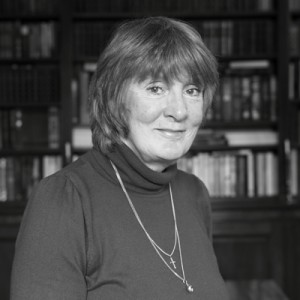
Robin Mills went to Cheselbourne, Dorset, to meet writer Eve Bonham. This is her story.
“My school friends used to call me the storyteller—and I’ve been one throughout my life. I’ve scribbled in diaries, written letters and told tall tales ever since I was a child. They say truth is stranger than fiction and I look at the story of my life and it does seem like an amazing dream.
My father and mother were both Londoners: she was half Canadian, he was the youngest of a large family, born in 1904. His eldest brother was killed aged 18 in the Battle of the Somme. My father was very British, with Victorian values, and he went into the family auction business, Bonhams, founded in 1793 by John Bonham. My aunt Helen worked in the auction house too, conducting sales all through the Blitz when her brother, my Dad went off to the war. She was the first ever woman auctioneer and I later became the second.
We lived in Berkshire, but I was sent to boarding school in Worcestershire, a less than happy experience. My two brothers went into the family business after they left school, but I wanted to break the mould and teach, so I went to Trinity College, Dublin and read English and Irish Literature. I loved Ireland and university life. I edited the college magazine, did athletics, acted in plays and went to great parties. I didn’t put in many hours studying, but worked hard for my exams and got a good degree. After that I had a burning desire to get away, so I went to the Far East.
I got a job for 2 years teaching English as a Foreign Language in Bangkok in the early 1970’s. Apart from the cars, it wasn’t dangerous in Bangkok, but there were lots of Americans on R&R from Vietnam, saying “it’s hell out there”, so I thought I’d take a look. Off I went to Vietnam and Laos in the midst of the war. I wrote a story called Fly Baby about my adventures in Laos. Whilst travelling in Sumatra, I got stoned and I don’t mean drugs. Some tribal people took offence at something about me and their kids started throwing stones. So I ran. Fast. I was lucky to escape with only bad bruising. After another spell in Bangkok, I took off again to travel overland back to England. Burma was my favourite place but I also loved Afghanistan, travelling there by bus through the Khyber Pass, and then exploring the country. In Iran, I found Tehran threatening, but in the south, Persepolis and Isfahan were wonderful. I arrived home in England after nearly 2 years away and no telephone contact at all during that time!
Back home, I took a business management course and then joined the family business. I had lots of ideas and little practicality, but I learned from the bottom up. My father wanted no nepotism in the firm, so my brothers and I were the worst paid! At that time Bonhams were the only fine art auctioneers with family members still involved. After 5 exciting years I left the business—I had other fish to fry!
I worked for an adult literacy scheme in London, employed by Red Ken and the Inner London Education Authority, commuting from Chelsea to New Cross. That lasted for a short time as we were subject to cutbacks, so I left London and went to live in Wiltshire. I was still involved doing PR work for Bonhams, writing articles for magazines, but I learned picture framing and enjoyed using my hands for something other than wielding a gavel. I was finding more time to sail. As a family, we had always sailed and raced in small boats off the Isle of Wight. In 1974, Clare Francis, (we’d dug sandcastles together as children), asked me if I’d like to do the Round Britain Race with her. She’s my best mucker really—godmother to my daughter, and I’m godmother to her son. We were the only girls in the race, the weather was vile, and we came third. I was quite nifty on the foredeck and went on to do lots more ocean races: Whitbread Round the World Race with Clare in 1977/78, followed by the Transatlantic race in ’81, another Round Britain race and AZAB (Azores and Back—2,500 miles) which I did with my mother in a 32ft boat.
Michael and I met sailing and got together in 1984. I was by then back in London, as UK campaign organiser for the UN International Year of Shelter for the Homeless. They must have been insane to appoint me—I had no qualifications for the job—just enthusiasm! I started with a room and a typewriter in Shelter in Waterloo Road, and ended up with a large office in Russell Square with hordes of volunteers. It generated in me a lifelong sympathy with in the problems of the homeless.
In 1986 our daughter Julie was born followed by Jack 2 years later, when I was 41. This was such a blessing—I’d never expected to have children or even get married! Getting tied down had been the last thing I’d wanted. But when it happens, it happens. In 1989, Michael, who is a chartered surveyor, sold his business and we went to live in a Breton village in France. Soon after that the family sailed away on our beloved boat ‘Gem’ and over a few years did much sailing in the Caribbean, Venezuela, and all the way up the Eastern seaboard of the USA and Canada. I wrote lively logs of all our voyages. After a dozen years in France, we came back to England to enable our children to have some English education. It had all been in French up till then—they still speak French “sans accent”. So we bought a house in a Dorset village.
I had always intended to become a writer—having produced many articles and also given lectures and talks. I promised myself I’d start creating fiction when the children left school. As a journalist, even though I knew little about a subject, I could always swot it up and manage to sound plausible. If asked to write about collecting antique teddy bears, I could do it competently and submit it on time! So I sat at my desk in my new home in Dorset, looking out over the sheep in the valley meadow, and started writing fiction. I already had many stories, some written down and others in my head and began working up a collection of short stories. Inevitably these were often drawn from real incidents and people I’ve known. I love writing; it’s something I have to do, but it can be very hard to get it right, and one needs to be disciplined about putting the hours in. Using my experiences and my imagination, I write about the human heart. If a reader says that they’ve really identified with a character or an emotion in my story, I feel I’ve succeeded in what I’m trying to do. I find other people’s lives fascinating and instructive. I love my family and learn a lot from them too. My husband is especially supportive.
My first book, Madness Lies and Other Stories, a collection of 16 short stories, was published in paperback in 2008. My novel, To the End of the Day, was published in hardback in 2011 and tells the story of a turbulent friendship. I have been persuaded by my publishers to help promote my books—which have done alright and continue to sell in Waterstones and on Amazon. I’ve been encouraged to have a website, a Facebook fan page, a monthly blog and to give talks at book festivals, for the U3A and to libraries. As a writer I am keen to gain readership and support libraries and book clubs. I am also a passionate reader of books by other authors.
I’m working on my next project—nearing the end of my new novel. This book has a much wider scope; its themes include forgiveness and redemption. I found faith in a loving God back in 2006, and I know that love is the most important thing. This book is a complex love story and an affirmation that we can turn ourselves around and become better people if we try.
Living in Dorset, I feel really grounded. I appreciate having a home and I still work with the homeless. I’ve taken up watercolour painting which is creative and a great way to relax. I love this county—people give you time here, and as a writer that’s what I need. After being the rolling stone of the family, that no one could pin down, always doing outrageous things, I seem to have come back home and become like my mother, rooted in the country. I grow vegetables. I’m learning lots about trees. We’ve planted over a hundred in our garden and the surrounding fields. I like the thought of someone saying, when I’m pushing up daisies under one of them, ‘I wonder who had the vision to plant all those lovely trees?’”
Up Front 11/12
Hogwarts fans will be delighted to hear that the University of Huddersfield has recently appointed the world’s first Visiting Professor of Performance Magic. US-born Dr Todd Landman, who combines a career as a magician and mentalist with a post as a Professor of Government, apparently delves deeply into the history and heritage of magic and believes that it enables the world to be viewed with a fresh sense of wonder. He has said he is trying to rescue magic from its worst faults—‘cheesy guys in cheesy ties with rabbits in hats!’ But perhaps what makes him most unique is that in addition to his activities in the realm of magic and performance, he is also Professor of Government and Director of the Institute for Democracy and Conflict Resolution at the University of Essex. As a political scientist and author Professor Landman has written numerous books on human rights and is the former president of the Human Rights Section of the American Political Science Association. The interest in magic however came first when he was a child growing up in Pennsylvania. His magical upbringing, in what he describes as a rural idyll, included ice skating in winter and swimming in summer. It was only later at university that he developed an interest in politics. For most of his academic career he has managed to keep the two dimensions of his life separate, but more recently he has explored intersections between illusion and politics, such as the use of rhetoric and the exploration of free will. Perhaps his influence at the University of Huddersfield won’t be exactly what budding Harry Potter fans are really after but who could deny the need for a bit of magic to sort out the world’s political problems. Abracadabra—Oh look they’ve all turned into rabbits. Aren’t they sweet… FB
Secrets & Hidden Graves
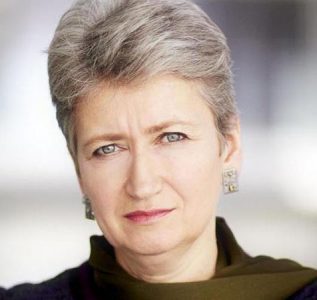
Lindsey Hilsum, Channel 4 News’ International Editor has covered the major conflicts of the past two decades, including the wars in Iraq, Afghanistan and Kosovo and was the only English-speaking foreign correspondent in Rwanda when the genocide started. Her first book, Sandstorm, describes the story of the revolution in Libya. She spoke to Fergus Byrne about the horrors that led to the fall of modern history’s most notorious dictator.
There’s a photograph doing the rounds on the internet at the moment. It shows a picture of an old cassette tape alongside a pencil and underneath are the words, ‘Our children will probably never know the link between the two’. It’s an amusing truth but it made me think of some of the other links that our children may not know, such as those that the International News Editor of Channel 4, Lindsey Hilsum made in her recent book Sandstorm. Giving a detailed account of life in Libya before and during the revolt against Muammar Gaddafi she highlights his links to the IRA, the Japanese Red Army, the ANC and even Arthur Scargill. She reminds us that as far as Gaddafi was concerned ‘there was no difference between the IRA planting bombs in Britain, the ANC fighting apartheid in South Africa and the Japanese Red Army, which blew up Lod Airport in Tel Aviv and wanted a global communist takeover.’ His support for Arthur Scargill was because he saw the then leader of the British National Union of Miners as a challenger to Margaret Thatcher. Although Gaddafi may be remembered for his role in the Lockerbie bombing, the killing of PC Yvonne Fletcher in London in April 1984 and the bombing of a Berlin discotheque in 1986, the lengths he went to in sponsoring terrorism around the world were shocking. These are just some of the links affecting the west that one hopes will not be so easily forgotten.
However, what may not be known or understood by those outside of Libya is the culture of fear and intimidation that was the hallmark of Gaddafi’s rule. In Sandstorm Lindsey gives, for example, a detailed account of the Abu Salim massacre—the slaughter of 1270 prisoners in a Libyan jail in June 1996. She talks to an eyewitness who, through a small gap in his cell, watched as the blood-splattered the walls of the prison compound while Gaddafi’s men ‘positioned on the roof shot into the crowd in the yard until no one was left alive.’ The slaughter took hours and the sound of the shots rang out throughout the city of Tripoli. According to Lindsey, a month later Amnesty International had information that something had happened, but their public call for an investigation did not rise above other news stories at the time such as, ‘the war in Bosnia, the bombing of the Khobar Towers in Saudi Arabia, the divorce of the Prince and Princess of Wales.’ Many of the families of Abu Salim prisoners were unaware of the event and carried on bringing food and clothing parcels to their relatives for up to fourteen years, eventually discovering their loved ones were long dead.
Saying that Abu Salim is a place of secrets and Libya is a place of hidden graves, Lindsey Hilsum places this event at the top of the pile of atrocities that took place under Gaddafi’s regime. What began as a popular coup in 1969, when a handsome young military officer led a bloodless take over of power from the then King Idris while he was in Turkey having medical treatment, soon turned into a nightmare that devastated the lives of generations of Libyans. By the mid-70s, with purges, mass arrests, summary trial by Revolutionary Committees and executions becoming a part of life in Libya, Gaddafi was beginning to turn into the sort of dictator that history remembers with far too much painful detail. I asked Lindsey what had happened to that handsome young military cadet who promised change and progress to the Libyan people at the end of the sixties. “I’m sure psychologists could say all sorts of things,” she said. “I mean there’s an obvious progression that we’ve seen many times, which is that somebody comes to power and people put a lot of hope in them because they’re replacing a tired, old system, and then the dictator becomes corrupted by his own power and by other people’s adulation. And that’s a syndrome, like dictator syndrome. With Gaddafi, you added into that his material character and this belief in his own power of thought, so that he developed this strange philosophy which was in the Green Book and it just fed on itself. I think there’s a lot more about Gaddafi to come out. There are a couple of films that have come out recently about his predatory behaviour towards women, particularly young women. I put a little bit of that in the book but many more details have been coming out since.”
In the late seventies, he invented a new word ‘Jamahiriya’, which translates to a ‘state of the masses’. Not wanting parliamentary democracy he had created his own form of government and rule, whilst claiming that he was simply a ‘guide’ to the people of Libya and not their ruler. He set up a system of local community rule which made it difficult for any state infrastructure to exist. He created an atmosphere of mistrust, suspicion and fear. In the end, his rule is seen as more akin to a mafia organisation, with his sons and extended family strategically placed in positions of power and control. He kept control by ensuring that everyone around him was in the dark—never knowing what his real objectives were. He built the World Revolutionary Headquarters outside Benghazi as a training centre for anyone hoping to overthrow a regime that he did not like. It was part of the ‘Centre for Resistance against Imperialism, Zionism, Racism, Reaction and Fascism’ that Gaddafi had set up in 1982. According to Linsdey students included ‘Charles Taylor, who turned Liberia into a killing ground, and ended up on trial for war crimes; Foday Sankoh, whose forces in Sierra Leone were notorious for chopping off people’s arms and legs, raping little girls and forcing little boys to kill members of their family; Laurent Kabila, who ousted Mobutu Sese Seko in Zaire, and presided over an equally brutal replacement regime; Blaise Compaore, who overthrew his best friend, the popular left-wing leader Thomas Sankara, in Burkina Faso; and Kukoi Sanyang, who mounted a coup against the democratically elected government of Gambia.’
When the people of Libya eventually rose up to take on the dictator he warned the rebels that millions from the Sahara would come and ‘cleanse Libya inch by inch, house by house, home by home, alleyway by alleyway, person by person, until the country is cleansed of dirt and scum’. He was calling in favours from some of those that he had given money to in the past. Mercenaries, many of whom had fought in wars that Gaddafi had funded, came to fight against the rebels—then a motley crew of ex-pats and young boys who had never seen a gun in their lives. I asked Lindsey what she thought would have happened if there hadn’t been NATO intervention. She replied that Gaddafi would probably still be in power but more importantly there would likely have been massacre on a huge scale. She said: “Some people say maybe intervention was a bad idea. But being in Benghazi just before the intervention, I have no doubt that Gaddafi meant what he said. And I have no doubt that he would have gone alleyway to alleyway slaughtering people in Benghazi, so I think there would have been a huge loss of life and I think there would have been a massive refugee exodus to Egypt—which could have destabilised Egypt.”
The story of how Gaddafi met his end is well documented but how the country is to rebuild after the revolution is another matter. Lindsey points out that the Arab Spring uprisings in Tunisia and Egypt removed leaders, but left the infrastructure of government intact, whereas Libya’s revolution has torn apart an albeit corrupt and fragile state and left a potentially very dangerous vacuum in its place. She explained how the dictator’s absolute power has made it difficult to create any kind of cohesion amongst the many rival groups now vying for position in the new Libya. “I think what we’re seeing is the legacy of the Gaddafi years,” she says. “Power was concentrated in one man, he was the spider at the centre of the web and no one else was allowed to make a decision at all, and so no one else can make a decision and that’s why central government, such as it is, is so weak. Central government is made up of academics and a few businessmen—they’re a bunch of dithering old men.” She explained that because Libya is now “allergic to the idea of a strong man” they have gone from this very strong state of power centralised in one man to, “complete dither and failure to make any decisions at all.”
Using interviews with some of those that came back to Libya to join the revolution, as well as with people who never left but had never seen, let alone spoken to, a foreign journalist, Sandstorm often reads like a novel. At times one feels like a voyeur observing lives and sitting at the dinner table sharing the intimacies of tragic family life. At other times one can only wonder at the depths of human depravity. I asked Lindsey why, after covering conflicts all over the world, she had decided to write a book about Libya and she explained that because Libyans inside the country had never been able to speak openly to foreigners because of the repression, they also couldn’t speak to each other. “And there is a moment after a revolution,” she said, “when people are speaking for the first time and it is an extraordinary moment. It doesn’t last very long, maybe six months, when people are telling their stories and they are desperate to talk. And I was very keen to catch that moment and I think that’s what the book is really—it’s the moment when people are talking for the first time about what they’ve endured.”
Today, a year on from the revolution that toppled a dictator’s 42-year reign, Libya is still in a delicate state. Armed militia battle for position and the town of Bani Walid, a Gaddafi stronghold is still in the hands of those who supported him. Indeed the man who found Gaddafi was captured there and tortured for two months before dying. In a recent blog, Lindsey pointed out that ‘those who fought for liberation have to overcome their own propensity for violence and find other ways to settle disputes, or Libya will never emerge from the shadow of dictatorship and conflict.’
Black Cow Vodka
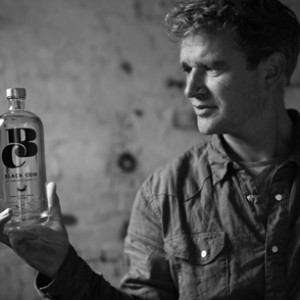
FRUSTRATING it may be, but there’s something comfortingly fitting about being stuck behind a milk lorry when you’re travelling down a West Country lane, especially when in search of a dairy farm. On a recent occasion, crawling at a snail’s pace and backing up every five minutes to let other cars pass, I found myself sorely tempted to use the advice of one of Douglas Adams’ characters, Dirk Gently, and simply follow the vehicle in front to see where I would end up. As it happens this particular milk lorry soon headed off in a different direction, no doubt to deliver its cargo to a processor who would put it to its traditional use of making cheese or even bottling milk. I, on the other hand, was in search of a dairy farmer who had come up with an altogether more unique idea: that of making vodka from his milk. Pure, clear and deliciously smooth Dorset vodka, made from the milk of cows grazed on the lush green fields of a county that many see as the jewel in the West Country: at least that’s what I had been told and to my absolute delight, that’s exactly what I found.
Black Cow vodka, as it is known, has been in the works for about two years and is now available at a select few shops, pubs and restaurants locally, as well as a few fairly well known establishments outside of its home patch.
At the moment it is a classic cottage industry but Dorset dairy farmer Jason Barber and his team have a very simple, clear ambition. They want Black Cow vodka to be ubiquitous in the West Country. Jason’s partner in the business Paul Archard, better known as Archie, explained how he sees the future. “You’ve got Scotch whiskey made from grain, French Armagnac made from local grapes, Japanese Saki made from rice and Kentucky Bourbon made from corn—why not Dorset vodka made from milk?” The profound logic of this statement is blazingly clear and most locals who have tried the product agree. The new ‘Spirit of the West’ has been born and it’s not in a stable but a couple of fields away in a dairy.
Sitting on the veranda at the back of Jason Barber’s house near Broadwindsor it’s hard not to think ‘rural idyll’. As the early autumn temperature begins to drop, the waning evening sun throws a soft light over multiple shades of green and birds flit though nearby trees. As though on cue, cattle call from a nearby field and I ask Jason how he went from dairy farmer to vodka farmer. With a cup of green tea in his hand he quips: “I drink a lot of vodka and wanted to cut down on my bills!” Weather beaten after twenty years milking, his face lights up into a devilish smile and he keeps the humour going. “Basically I’ve always drunk vodka. It’s the only way I can get up in the morning to milk the cows …without a hangover. I also thought, wouldn’t it be nice if I could get two more pence a litre for our milk.” Like with many farmers it’s hard to know where the humour ends and the canniness begins. He tells me that he was inspired by the people of Tuva, a small country in southern Siberia where they made vodka from Yak’s milk. “I thought that can’t be bad stuff” he says. “So I set about making it. Once I realised that I could make a brew out of milk, the next step was to make it into vodka—I didn’t fancy drinking fermented milk. So we’ve been refining the process for two or three years.” No stranger to the processes involved in making alcohol Jason explained that he was asked to leave his school when it was discovered that he was making a brew by fermenting orange juice in the back of a fridge. When he needed to increase production he found that the heating pipes running along the school’s unused cellars proved a better fermenting area and was soon being supplied with orange juice from other students. Jason remembers how his father was informed that he may well be wasting his money on his son’s education.
Today the process is somewhat more modern and infinitely more successful. Archie explains the basic principle. “We use nothing but milk. There are no added ingredients whatsoever” he says. “After the curds and whey are separated and the curds have gone off to be made into cheese, we take the milk sugar out of the whey and that is what the vodka is made of.” The secret of why this particular vodka is so smooth is a mixture of using a truly quality source product and ‘processes that we can’t really tell you about’. The fact that Jason’s milk is also used to produce internationally renowned cheeses at Barbers in Somerset and Ashley Chase in Dorset only serves to enhance the growing reputation of Black Cow vodka as being a cut above the rest.
Archie was aware of the commercial viability of their discovery from the very beginning. He remembers how the very first time they tasted it they realised they had something special. He says: “I remember getting a phone call from Jason saying ‘come down now, I think we have got something really unique here’. It’s very difficult to think of things to do that are exciting in a rural economy and we really felt we had hit upon something, and felt we really needed to bottle it and get it out there.”
Initially they called it gold top so they could come up with a blue top, green top etc. but both Archie and Helen Watkins, who along with Neil Gregory make up the rest of the team, are keen to concentrate on producing the best possible product before expanding their horizons. “The problem is people tend to be over keen to diversify and often the dilution is covering up for a not great quality product” says Helen. Archie joins in: “What we want to do is make the best pure milk vodka that can be made. We want to create one really fantastic, high quality premium product—because vodka is a very singular drink. It’s very neutral and ours is just different enough. It’s smoother, it’s got a creamy finish and that’s what’s really good. We’re just concentrating on keeping that high quality.” They have had a few people asking if they are going to produce flavoured versions but as Helen points out people can do that at home. “By all means take it home and stick a vanilla pod into it” she grins. “We just want to produce the best possible milk vodka. That’s our goal.”
Black Cow vodka has also been championed by local chef Mark Hix who now stocks it throughout his restaurant chain. It is also available in Washingpool Farm Shop outside Bridport, Miller’s Farm shop in Kilmington, the Townmill Cheesemonger in Lyme Regis, River Cottage Canteen in Axminster and Felicity’s Farm Shop in Morecombelake.
It’s not hard to reel off the names of West Country producers whose brands conjure up images of working farms where producers have created added value to their products. Locally they include Denhay Bacon, Wild Meadow Lamb, Woolsery Cheese, Somerset Ducks, Somerset Cider Brandy and most recently Furleigh Wines—to name just a few. Collectively, these along with so many other products from the West Country, represent a diverse and resilient part of the country that has, over the years, earned a deserved reputation as the source of many excellent products. It’s nice to see Dorset milk helping to add yet another dimension to the mix.
Arthur Watson
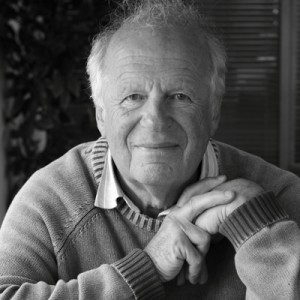
Robin Mills went to West Bay, Dorset, to meet Arthur Watson. This is his story.
I’ve been in West Bay for quite a long time, now. I was born in 1936, in Surrey, and in 1939 at the outbreak of war, my father, and I’ve never been too clear exactly why, chose West Bay as the place to which my mother, sister and I were evacuated, and we arrived in 1939.
For a while we lived in the old coastguard cottages on East Cliff, and then a house came up on West Cliff, which my parents managed to buy, and I lived there from the age of 3 until I was about 20. Perhaps it should have been an idyllic place for a boy to grow up, but the war was ever present. The Army was here, and the Navy, there were tank traps and barbed wire, and you needed passes to move around. So there were a lot of restrictions, and life was quite difficult, the main problem being there were few other children around. Once, a highly secret Heinkel aircraft came down by West Cliff; the German crew were completely disorientated, thinking they were in northern Spain, and crash-landed on the beach. The pilot was killed, but the crew sought help from the locals, thinking they’d get a reasonably friendly reception, only to get arrested. The crashed plane was cordoned off by the Home Guard, and when officials arrived to investigate the plane’s sophisticated, secret anti-radar equipment, in true Dad’s Army style they were refused access because they didn’t have the proper documents. By the time three successive tides had washed back and forth over the plane, there was nothing left to investigate. That was the story, anyway.
The American Army came in 1944, taking over most of the houses, but because my father was in the Navy they didn’t requisition ours. Then we had the time of our lives; the Americans all had families back home, and they treated us kids like we were their own. We rode on tanks, had chewing gum and bananas for the first time. West Bay was a quiet, gentle place to grow up. The cinemas, the Lyric and the Palace, showed wonderful films like Old Mother Riley and The Three Stooges, and war films of the day. I swam, and we all did daft and dangerous things like swimming across the harbour between the old stone piers. And I played water polo for Bridport—for many years the pitch was set up in the River Brit!
My mother was from Tiblisi in Georgia. My father must have met her when the British were sent, after Salonika where he’d fought, to Georgia to protect the oil pipeline from the Caspian to the Black Sea, and also to try to deal with the “descending Red Hordes”, the communist threat from northern Russia, which of course was a hopeless task. That must have been 1919 or 1920, and we never knew if they were married in Georgia or here, but she came back to England with him to live in Surrey in 1920. From their photos of the time, they had quite an exotic lifestyle; there were many expatriate Russians living in London at the time, Tsarists who’d fled to Paris and London. But not Bridport, as my mother found when she moved down here. Sadly, my father had got involved elsewhere and didn’t return, so my mother found herself very isolated, with two children and no means of earning a living. Her hurt meant she rarely mentioned my father again; he ceased to exist for her. This has always seemed to me to be a lesson for all of us; it’s important to find out as much as possible about one’s parents while they’re around because after they’ve gone, the family stories go with them.
For a while my mother worked at Gundry’s in Bridport with a French friend, making camouflage nets. After the war she opened our house for bed and breakfast, and then took on The Bay House and ran the café. In those days, it was very simple; there were coach parties, and campers arriving by bus or train for a fortnight’s holiday from Bristol, Swindon, Yeovil, or Crewkerne, and she did cream teas, crab sandwiches, egg and chips, that sort of thing. After that, she took on the Watch House café for several years, and of course I had to help, doing the spuds, and cleaning up. Then it was time for me to do my National Service, so I joined the Navy first as an ordinary seaman, then a midshipman, and finished up after two years as a sub-lieutenant. I had a marvellous time, saw lots of things abroad you wouldn’t come across in Bridport, but didn’t have to do anything very serious or warlike. And that reflected the time, the late 1950’s. Everything was gentle, the music was light-hearted and romantic; people wanted softness after the war, not the hard grunge and grime that came later.
Then my mother and sister took on the Riverside café. My sister had been in the Wrens, was good at accountancy. The café was a little old wooden building, very much egg and chips, beans on a good day, which they leased from the district council. It was very busy, and it was home from home for the fishermen who played dominoes endlessly, sometimes up to midnight in the winter months. It was more club than business. But my sister found another life and left the business, so that my mother found it hard to cope. I was helping out at the café, when I was asked to go on a sailing expedition with Eric Hamblett, who later became the Harbour Master.
There was a chap called Uwe Steffan, a Swedish/German, larger than life in every conceivable way, who arrived in West Bay with an old Swedish sailing ship called the Black Rose, and set about doing it up. He spread the word around the area that one day he would have his own ship and would be looking for a crew, which most of us treated with some scepticism having heard similar stories before. I’d got married in 1960, but it hadn’t worked out, so I was at a bit of a crossroads when I got a call from Uwe. He said that his ship, a three-masted schooner called Mary, was lying in Hamburg and he expected us there within the month. So off we went, Eric and I, and found the ship was a Baltic Trader, of over 100ft, with three timber masts 60-70 ft long. The plan was to sail to the Caribbean and fit it out as a sail training vessel for American university students. We sailed first to Portsmouth (collecting a stowaway en route) and then to Cherbourg to pick up ballast. Leaving Cherbourg that October, we hit a huge storm in the Bay of Biscay, and ended up at La Coruna with half the sails blown out. After we’d made repairs, we set out for the Canaries that November, but hit another, bigger storm off Cape Finistere, which we later learned was Force 12. We made it to the eye of the storm, but then the wind hit from the opposite direction and in the middle of the night we lost all three of our masts, leaving us drifting around for two days, cutting back the rigging. Fortunately the ship had an old engine, and we limped to Vigo in Spain. That adventure, during which I saw the biggest seas I’ll ever see in my life, cured me of ever wanting to go sailing again.
When I got back, my mother needed help at the café, so I slotted in quite nicely. That was 1963, and I thought it would do until I’d decided what to do next, and I’ve been here ever since. In the 60s and 70s we were regularly getting flooded, and the council would only renew the lease if we rebuilt at a higher level. To a design by architects Piers Gough and Roger Zogolovitch, the present restaurant was completed in 1976, and remains much the same today. West Bay was very traditional in the 60s and 70s, but then in the 80s, things began to change in West Dorset. There were second weekenders arriving, media people, lawyers and other professionals, who didn’t want chicken and chips; they quite liked the idea of fish, and fish on the bone, which we’d never contemplated. So we responded to what out customers wanted and developed ideas of our own, a sort of partnership really, but always trying to retain informality and contact with the locals.
I’ve never had much expertise with cooking; my role has only been to run things. Most of the creative skill came from my wife Janet; when she joined the business she introduced an entirely different expertise, and brought in great recipes. And we’ve always had fantastic staff, one of whom has been here for over 30 years, 3 of whom over 20 years. It’s not an exaggeration to say the place wouldn’t have happened without the brilliant staff, most of whom are local; some now have family members working here. We have never had the ambition or desire to enter the world of celebrity chefs or Michelin stars. We seem to have been important to the local community and to visitors, and that is how we hope to continue. Ive been involved for many years with local sports: playing rugby for Dorchester, water polo for Bridport, and as a founder of Bridport Leisure centre 35 years ago, of which I am chairman. West Dorset is a wonderful place to live!