
In any given month we see a lot of books coming through this office. They are a mixture of local and not so local, some are self-published and many come from well-known publishers. We try and read them all and they join a growing library, but once in a while one of them falls off the shelf and gets picked up again and re-read. Last week I picked one up called 54 Simple Truths with Brutal Advice by Personal Development Consultant Mike Wash. The book is full of useful advice designed to help us get through life without letting the little (and big) things completely derail us. Included in the 54 simple truths are things like ‘Death is inevitable’, ‘You will experience injustice’, ‘You will be jealous and envious’, ‘You will be wrong about things’ and ‘You will make mistakes’. Each of these statements has a couple of paragraphs of wisdom designed to help us move on and get over it. For example, without making mistakes we would never learn, grow and become stronger. Or that being right and wrong is based on our best judgement at the time. I can certainly remember as a young teen being right about absolutely everything. There was nothing anyone, especially parents, could say that challenged my ability to see quite plainly that nobody—other than a few friends of my own age—had a clue about the real world. So I couldn’t help smiling this morning when a note came in about a piece of research commissioned by Lil-Lets to launch their ‘Becoming a Teen’ campaign. Apparently in any given year a teenage girl may slam the door 164 times. She will have around 183 arguments with her Mum; 153 arguments with her Dad; 257 arguments with siblings; 127 fall outs with her mates and spend on average 274 hours on the phone. I have no doubt I was equally impossible and I’m sure I slammed the door a few times too, but I question the statistic about amount of hours spent on the phone. Surely in this age of the Smart Phone, that figure is a bit low.
Liz Chilcott
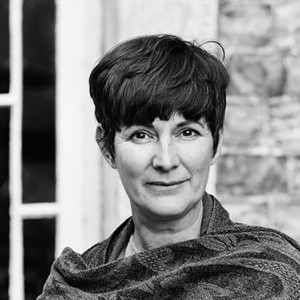
Julia Mear met Liz Chilcott at her home near Honiton, Devon. This is Liz’s story:
“The midwife who delivered me in Lagos, Nigeria was from the Yoruba tribe; she gave me a Yoruba name, Tukumbo, meaning ‘stranger in the land of her birth’. While my father was at work, for the Bank of West Africa, my mother would accompany missionaries taking me out into the bush to demonstrate to other mothers how to care for their babies. It makes me cringe to think that Europeans thought they knew more than the Nigerian mothers, but they believed they were doing good and meant well. I think at that time big companies were trying to sell formula milk, so missionaries were trying to promote the benefits of breast feeding.
My first memory is being evacuated during the Biafran war; we were given an hour’s notice to leave our home. I clearly remember being driven along straight jungle roads and having to stop at lots of army checkpoints. I was three years old. It was just my mother and I who got out—my father had to stay behind, but he escaped about six months later in a dug-out boat through the creeks into the Congo. Meanwhile back in England my sister, Siobhan, was born. With my father living in a war zone, there was no communication available to my parents, so he did not know whether he had a son or daughter until his return.
We returned to Nigeria, mostly living in the North—including in Kaduna, Kano and Jos. These were lively, intriguing and happy places; sadly they are now frequently in the news for tribal and or religious violence. I used to enjoy talking with the different tribes-people—Fulani milkmen herded cattle past our house, and I spoke a little of one of the local languages, Hausa. At the age of nine I went away to school in Surrey, flying back to Nigeria for the school holidays. I’d always known that this would be the case, so had prepared myself for boarding school by reading all the Enid Blyton books; I’d planned the midnight feasts, and I enjoyed it.
My father’s job moved to Lesotho and we lived in the capital city, Maseru. Known as the Mountain Kingdom, the country is incredibly beautiful and totally surrounded by South Africa. While we were there Bishop Desmond Tutu was appointed Bishop of Lesotho. He moved into a house opposite us. The day he arrived in 1976—our road was crowded with excited and hopeful people all ululaying joyfully, and he came across to our gate and picked up my sister and carried her aloft. The authorities had wanted to move him to a quiet backwater because he had been stirring things up in South Africa, but of course he was unstoppable.
We lived there during the time of the Soweto massacres but, because of media censorship, knew very little about it. We did however meet Donald Woods, the journalist of the film, Cry Freedom. It was the New Year in 1979; my family was at a lunch party at the home of the acting British High Commissioner. Donald Woods had escaped to Lesotho and had arrived at the house the night before. Throughout the party journalists from the BBC and other world news organisations were telephoning to interview him; the atmosphere was one of high excitement, but also serious horror while we all sat around him, listening to his story. He told us how he’d escaped, and how his children were sent some t-shirts through the post that had been injected with poison. The Apartheid Government had wanted to stop him from publishing reports about what was going on in South Africa, including the death of his friend and activist Steve Biko, so his family were threatened.
Whilst at boarding school I went on a ski trip to Yugoslavia and met Duncan. He was the son of one of my teachers—Mrs. Chilcott! At that time Duncan was a porter at Christies, taking the opportunity of a cheap skiing holiday as one of the teacher’s sons. We met on the slopes and have been together ever since. Duncan later joined Phillips, another firm of Auctioneers, and moved to Leeds, but he returned to London when I went to Art College and, during the second year of my fashion degree course, we moved in to a flat in Whitechapel together.
I became more interested in the marketing element of the degree, so when I graduated I was offered a place on Marks and Spencer’s graduate programme, working in the Head Office in Baker Street training to be a Selector (buyer). I liked my job, but not the company politics so much; I found it quite constraining. Duncan, who was now manager of Bonham’s Chelsea Saleroom, and I made a five year plan to leave London. However, five weeks later he was offered the position of Managing Director of Bonham’s West Country in Honiton. I decided to leave my job and move with him; it was April 1991. After living in Honiton for six months we found this place, a lodge house in glorious East Devon countryside. At that time the two main local farmers, as well as the residents in our village, made us feel incredibly welcome. We have lived here for twenty two years and we still haven’t tired of it.
Eventually Duncan and I decided to marry. This was not a foregone conclusion because, due to feminist and other reasons, I have always questioned the need to marry. However marriage is undeniably a wonderful public recognition and celebration of a committed relationship. On the birth of our first daughter I gave up paid employment to stay at home. I keenly felt that the role of parenthood lacked status or public appreciation; it seemed, and still seems, that the emphasis is on getting parents back to work rather than supporting those who wish to stay at home full time to carry out a role that is key to building a successful society. We chose for me to stay at home, and I loved being a full time mother, finding the early development of our four children fascinating and challenging. I was never bored—I thought I’d be watching daytime TV but, thankfully, that never happened.
When Mary, our youngest, was about two, Duncan decided to leave Bonham’s, and together we set up ‘Chilcott’s’, a firm of Auctioneers and Valuers’. Our main base is in Honiton just behind St. Paul’s church in the centre of town. I love the work that we do; it is interesting in the fact that many of the items we sell have an intrinsic fascination, but also we meet a wide cross section of people—both face to face and throughout the world via the Internet. Arriving for work each morning I never know who I will be helping or what I will be dealing with. Sometimes it can be sad—people ringing after a loved one has died and needing us to value or sell the possessions—but there are lots of happy endings too.
In 2011 I was heavily involved in starting the Honiton Antiques Festival; we wanted to showcase the wide variety of antiques and works of art available within the town, and to promote the associated knowledge and skills. As well as attracting visitors from far and wide, many local people decided to take the opportunity of exploring what Honiton’s antiques businesses have to offer—feedback was extremely positive with locals expressing surprise as to why they had not done so before. It is now a very successful festival which benefits the town as a whole because of the number of visitors it attracts.
Many people who do not live in the West Country imagine the lifestyle here to be lovely and relaxed. They see only the idyll that they experience when on holiday; when I think about life in East Devon I do not see it as being at all relaxed—one has to work extremely hard—but it is a lovely place in which to do so.”
West Country Watch – Daphne du Maurier
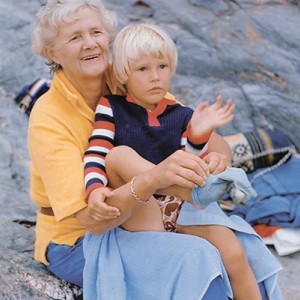
Ned Browning, grandson of Daphne du Maurier talks watches with Fergus Byrne
For a brief moment in Alfred Hitchcock’s film of the Daphne du Maurier book, Rebecca, a young Laurence Olivier is seen wearing a watch. It is a fleeting glimpse, but one that helps to set his character apart from those that still delved into their pockets to tell the time. Maximilian (Maxim) de Winter, a widower with a mansion in the West Country, may not have been depicted as the world’s most lovable character, but none the less has enough charm and mystery to sweep a young Joan Fontaine off her feet and make her the second Mrs de Winter.
In the book, she is never given a name prior to her introduction as Mrs de Winter, a fact that helps to increase the presence of her deceased predecessor, Mrs Rebecca de Winter. However, despite the naïve charm and beauty of his new wife, it is Maxim and Rebecca that are the powerful and haunting characters in the book—which is why a new range of watches designed in Dorset has launched with the first models named after these two characters, Maxim and Rebecca.
Du Maurier Watches is the brainchild of West Dorset resident Ned Browning and his wife Marianna. They have set about creating a range of Swiss-made, yet quintessentially English watches, rising from an era when the timepiece was moving from inside a waistcoat pocket, to become a dashing and very visible accessory.
The collection is born out of a heritage that most marketing departments could only dream of. Designer, Ned, is not only Daphne du Maurier’s grandson but his family also includes actors, artists and decorated officers. His father was a filmmaker and photographer and his mother the one-time beauty queen Olive White. Sir Frederick Arthur Montague Browning, his grandfather, was head of the 1st Airborne, whilst earlier generations included George du Maurier, famous Punch cartoonist, and celebrated actor Gerald du Maurier.
The soul of the watch design, however, lies deep within the West Country and takes its initial inspiration from the writing of his grandmother, Daphne du Maurier. As a child, Ned spent all of his summer holidays with his grandmother at her home in Cornwall and remembers the idyllic days on the beach with warmth. Speaking to me at his home in Holditch he said: “I have very fond memories of my Grandmother. Endless summer holidays down at her house in Cornwall—sand, sea, cornfields, cricket and rather vicious sword-fights with my brothers, using the never-ending supply of bamboo sticks and fake blood from squashed mulberries! I can still feel the whack of a bamboo stick on the knuckles from a stray parry, which always used to bring the game to an abrupt end, with one of us running off in tears to tell my Grandmother.”
Ned remembers walks along Par beach with his grandmother and her dogs as very special. “During the holidays, the days were divided up between me and my brothers—my sister being a little too young at the time—as to who would accompany her each morning on the daily dog walk. These were really lovely times, where we would talk about school, drawing and tell each other stories. Mostly though we’d discuss my birthday, as I was lucky enough that it always coincided with the Summer holiday in Cornwall and resulted in a trip down to the toy shop in Par with my Grandmother, where I got to choose a present…an Action Man or cricket bat usually! The trip to the beach was about a mile and she often let us lean over and steer the car…not something I would encourage with my children, but great fun all the same!”
The photograph above, never before published, show a grandmother at ease and enjoying precious time with her grandchildren. “I remember the day the picture was taken,” he says. “It was the day before my seventh birthday, and I had just taken a rather large tumble whilst rock climbing at the beach. Not much sympathy was forthcoming from my parents who had specifically told me not to go on my own, but my grandmother took me aside and helped get me dressed and we discussed what I might want for my birthday. That particular year I was lucky enough to get a purple scooter—looking at the picture, perhaps I should have asked for a more stylish pair of swimming trunks!”
One of the things that many of us enjoy about the West Country, especially in a good summer, is the feeling of time standing still. This part of the world has its own special pace. Social media and the race to adopt a new technological world may slowly nudge their way in but most who live here hope to enjoy an easier pace and spend time making precious memories for their own children. For Ned Browning time became a bit of an obsession. He developed a fascination with watches and began to collect them. “My love of watches started when I was about 17 years old,” he said. “Having two older brothers and a Dad that were also watch crazy, it was always a hot topic of conversation around the house, from what model James Bond was currently wearing to what celebrities and friends had on, and what we could lay our hands on for not much money. Since then I’ve become increasingly more obsessed and often change my watch twice a day depending on what I’m doing. Designing the collection has been a dream come true and I am loving every minute.”
The first watches have been released in limited editions, each with its own unique number. They are sleek and sophisticated with subtle hints of du Maurier reflected in the design. “The designs that we have created are very much in keeping with the characters and period that my Grandmother’s books represent,” says Ned. He has focused on a very classic, clean style that echoes the art nouveau period. This is particularly evident with the launch collection: the ‘Maxim’ and ‘Rebecca’. However, he also wanted the watches to feel contemporary and not dated. “It’s very important that we create something unique so that the look and style of the watches become familiar and recognizable, and to present ourselves as a quintessentially English brand. There are a huge amount of competitive watch brands out there and we need to be different. I do think my Grandmother would have loved what we have created, especially as they are very true to the style and fashion of the time, as well as embodying the characters themselves.”
Du Maurier Watches are launching at a time when many of us have taken to relying on our mobile phone as a timepiece. Whole generations have now reverted to the old fashioned method of reaching into their pockets and purses to check the time; to see whether they are late for school, whether it’s time to leave for their next appointment or whether it’s opening time down at the Dog & Parrot. But there was always a solidity about wearing a watch, and perhaps the du Maurier line might help remind us that some of the old ways had a little something special about them.
The whole venture is now very much a family affair with Ned’s wife and business partner Marianna playing key roles from admin to PR and marketing. Even their young children are keen to be involved. Ned says: “My two little girls May and Daisy are beginning to bombard me with watch designs they want made immediately… mostly with lots of love hearts and flowers and very expensive diamonds. I’m not sure how long I can hold them off!”
Up Front 05/13
Mars One co-founder, Bas Lansdorp, whose company plans to organise the first attempt at human habitation of Mars in 2023, used interactive audience survey software at a conference recently to see how many audience members would like to go to Mars. The result was that more than a third of attendees suggested they would like to leave Earth and go to live on the red planet. The Mars One mission has 24 to 40 openings for a crew of Martian explorers and the company is inviting applications now. Throughout the astronaut selection program, they will look for people who have good physical and mental health and show five key character traits: Resilience, adaptability, curiosity, ability to trust others, and creativity/resourcefulness. They say that they are looking for applicants who are both mature and interesting and no particular academic or professional background is considered a prerequisite for selection. “Gone are the days when bravery and the number of hours flying a supersonic jet were the top criteria,” said Norbert Kraft, Mars One’s Chief Medical Director and former NASA senior researcher. “For this mission of permanent settlement we are more concerned with how well each astronaut lives and works with others and their ability to deal with a lifetime of challenges.” Lansdorp went on to say that, in a thousand years, everyone on Earth will still remember who the first humans on Mars were, just like Neil Armstrong is etched in our memories forever. Tempting? Well Mars One hopes so. The whole project is to be funded by making it ‘the biggest media spectacle in history.’ The company hopes to involve the whole world as the audience of ‘an interactive, televised broadcast of every aspect of the mission, from launch to landing to living on Mars’. It’s brilliant really, Big Brother goes from a house, to a jungle, and now to Mars—or at least to a television studio in Holland. Exciting stuff, but it’s got nothing on Broadchurch.
Ben Waters
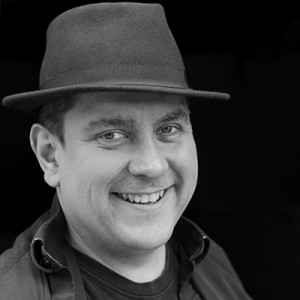
Robin Mills went to meet piano player Ben Waters at Owermoigne, Dorset. This is his story.
“I’ve always lived in Dorset; born in Weymouth, brought up in Southill, then Upwey, and that’s where my Mum and Dad still live. It’s fantastic there; I love it, and have good memories of the countryside and friends. My Dad did an apprenticeship at Vickers, then started making torpedoes for the Admiralty, and later was selling torpedoes for Honeywell, so he had lots to do with torpedoes—he is very clever. Mum worked as a secretary at Weymouth and District Hospital and always made sure me and my brother were ship-shape. They were really fun parents, and there were always good things happening.
I was at Wey Valley School, aged about 14 when I got into music. Ours isn’t an especially musical family, although my Dad played trombone in Dorchester Town Band, and I remember my great Granddad Ernie playing piano—he’d play in pubs and stuff—but it was my aunt and uncle, Eva and Ray Harvey, who were great friends with Ian Stewart “Stu”, the pianist and founder member of the Rolling Stones, who helped start my interest. It was their 25th wedding anniversary and Ian Stewart played at their party, and I just thought “Wow, this is really good”, although I had no ideas of playing myself at the time. And then my Mum and Dad made me watch (thinking this is going to be really boring) a programme about Fats Domino, filmed in a club called Storyville in New Orleans. The music was so lively, so full of energy and fun, and from that minute I was just hooked. I got a little keyboard, and using a video I’d just watch the player’s hands and work out what they were doing, and try and learn like that. For a short period I had piano lessons from a lovely lady called Sheila Bellamy who lived in Upwey, who did her best to straighten me out, and taught me invaluable things like fingering techniques so that I didn’t run out of fingers all the time. I couldn’t read the music, so I’d wait for her to play it, then, having watched what she’d done I could play it myself. That was easy for me because by then I’d been learning to play like that for ages, but it really annoyed her and she’d make sure I couldn’t see next time she played. But I still couldn’t read the music, and still can’t. I met Dr John once, and asked him if he could read music, and he said “Not enough to do any harm”. Although the lessons were really helpful to me, I just have to love something to be able to learn it. For instance if I had to learn to play some Debussy I’d really struggle with that, but put on some Ray Charles and I would find that easier, and that’s because I’ve spent 25 years or so learning that style of playing.
Back at school, I became obsessed with the piano. I was playing for 8 or 9 hours a day. It wasn’t practice—it was never like that—I just had to get to a piano and play. I’d watch something on the TV, like a South Bank Show about boogie piano players like Big Joe Duskin and Axel Zwingenberger, and I’d be sitting all through French and PE thinking, how did that go. And then in break time I’d go to the music block and play it, and again at lunch time. I’d become so obsessed with it that the music teacher at the time banned me from going in there. He said “It’s the wrong kind of music”, and they locked the doors, but I’d rigged the fire exit so I could get in that way, and with the soundproof rooms I could just get on and play unnoticed. Eventually I think they realised they couldn’t stop me, and soon friends would come and join in, so from being a bit geeky it became quite sociable.
My parents were always utterly supportive. It helped that I was playing the music they liked, like Fats Domino, and I think when I was about 16 or 17 I got offered some gigs at the Dolphin in Weymouth. If you sit in a pub with a drink you probably won’t talk to anyone else in there, but if you play the piano you’ll talk to everyone, and I love that. So did my Mum and Dad, who came too because Dad had to drive me, and Mum just loves to talk to everyone and join in anyway. And as a result all our lives changed a bit.
Then I started playing at the Fox at Corscombe on Saturday nights, after which I’d go to Eva and Ray’s house. They had an amazing collection of Stu’s records, obscure stuff that you couldn’t get in Weymouth record shops, and footage of Stu playing with his band Rocket 88 at Montreux Jazz Festival and other gigs. It had been filmed so that you could see his hands all the time, so this became the beginning of a completely new phase of learning for me, and I spent 2 or 3 years learning Stu’s techniques because I just loved the way he played. When you compare him to other piano players, he had his own unique style; nobody plays guitar like John Lee Hooker, and nobody plays piano like Stu.
I got together with a band called Custers Last Blues Band, and we played in Weymouth on Thursday nights. Again, I had to learn fast because they’d say “we’ll play this in E”, so after I’d made a bit of a fool of myself I’d go home and learn everything in E; and then the next night they’d say “we’ll play this in F sharp”. Hamish Maxwell was the lead singer; he knew Stu well and was in fact his best man. Hamish loved his style, so we used to do more piano-based music, all the time increasing the range and repertoire of music I could play.
I recorded my first CD when I was 18. A guy called Dave Hatfield had a record shop in Crewkerne, and he talked me into it. I hadn’t even thought about it at that stage. We did it in a studio in Powerstock, just me on an old upright piano and Dave on double bass. We just played about 45 minutes of material, all through just once. I didn’t know about overdubs then, so I didn’t know you could re-do bits, and when I went to see him again a few weeks later, there’s 1000 CD’s sitting there. I had no preconceived ideas about how a CD should end up, as I would now; I just did it, and when I listened to it there were all sorts of things wrong. But the thing was, people really seemed to like it with all the mistakes, they liked its honesty, and after my aunt Eva sent it to Radio One, all of a sudden Andy Kershaw and John Peel were playing it. So then I had to do a session at the BBC, and next thing all sorts of people were getting me to play at their parties. The next CD was more polished, with overdubs and editing and perhaps musically more accomplished, but not what I’m really like live. When I recorded more recently with Jools Holland, to get a “real” sound he insisted the whole band played facing one another and were recorded as one, as they would have done in the 50’s, much to the frustration of the engineers. It’s so easy these days, people can add in bass patterns, amazing drumming, even a brass section to the recording at the touch of a button, and you can’t tell it’s done with a machine. But I prefer the old fashioned way.
My wife Ruth has been incredibly supportive, especially early on when I wasn’t earning much and effectively was a kept man. It really wouldn’t have happened without her. I know a lot of musicians whose wives give them a hard time about being away or getting up late, so I really am very lucky with Ruth being so understanding. We have two children, Tom who’s 12 and Molly who’s 11. They’re both doing really well at school, full of energy and life, and into all sorts of things, including music. I’ve never pushed them in to music, but from a few days old they’ve been going to gigs and festivals, so they’ve heard and seen all sorts of wonderful musicians. At the age of 8 Tom got his first saxophone—he just announced that’s what he wanted to play. Although he could only play one note to start with, he’d play it in exactly the right place when we played together. He is now playing amazingly and even features on Ronnie Wood’s I Feel Like Playing album which is amazing. Molly’s into singing in a big way, she has sung to thousands of people. They both really enjoy it and have their own band and do their own gigs. It’s great that they’ve both seen so many performers, so that they realise the worth of originality in music. They’re overtaking me and I am very proud of them.”
Caroline Conran
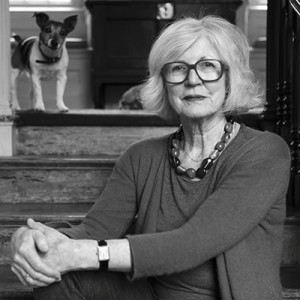
Fergus Byrne went to Bettiscombe, Dorset, to meet Caroline Conran. This is her story.
“My life began in a place called Digswell which used to be outside Welwyn Garden City in lovely countryside. It’s been more or less swallowed up by housing now. My father ran an Arts Club and put on plays and made scenery and all that sort of thing and we lived nearby in the countryside. He had wanted to be an artist but his younger brother and his mother were abandoned by his father and he had to look after them. So he got a job and became a very successful businessman running the Danish Bacon Company.
During the war, we three girls, me and my elder sisters and my mother, were sent off to America, because my parents were afraid of the bombing, although only one bomb fell near our house.
Baltimore wasn’t a great success for my mother, she didn’t enjoy it. So she came back with me and I can remember air raids and rationing and GIs in the park opposite our house and green oranges. But my sisters stayed in America and when they returned after three years away it was a bit of a shock because for a while I had been the one and only. When they came back that all changed. They had become quite Americanized and had lots of American little phrases and so on. They would say things like, ‘Why don’t you go and suck eggs?’—they thought I was a spoiled brat. They seemed much more grown-up than me.
Sally and I went to school at Knebworth House, which was later the venue for rock festivals. It was a grand house. I can remember being in the splendid gothic revival assembly room there and then all trooping off to swim in their swimming pool, which was boat-shaped, bright green and full of frogs. I think the place gave one a bit of an idea of what gardens should be because the garden had been done by Gertrude Jekyll. In fact, Edwin Lutyens had done quite a lot of work on Knebworth House—he was the son-in-law of Edward Bulwer-Lytton, the Viceroy of India.
But then we were packed off to boarding school. It was a very boring school in Suffolk which was about as far away as it could be from where we lived. In school, I decided that I was going to become a journalist but then changed my mind and decided I wanted to be an artist. So I went to art school in Cambridge and had rather a lovely time there. When that finished I decided I really wanted to go out to work so went to London to find a job. And actually it’s incredible how early we left home in those days. I left home and lived in really scruffy digs from the age of just 17. And I did struggle at times and was quite poor and lived on toast. I finally managed to get TB. I can remember the doctor being very unsympathetic and ticking me off saying, ‘You look scruffy and you’re not eating properly and that’s why you’re ill’. I was in hospital for six months. But I did become a journalist, starting with a job on House & Garden helping build room sets. We had an enormous studio on the top of Vogue House, first of all in Golden Square and then in Hanover Square. I would be running out and getting all the furniture together and helping put up the curtains on the fake windows and all that sort of thing. Then I got a job on Queen Magazine and after a time became the home editor. I wrote about peoples’ houses, about lingerie, children’s clothes, and travel, but my favourite was food. So that really became my career.
The first love of my life came from Bridport and his mother lived in Shipton Gorge. We had this MGA which was a 1929 model with an open top and cost £20, and we decided to drive down from London to see her. And those hills just as you approach towards Bridport turned out to be a bit too much for this car, so I had to get out and push. When we got to his mother’s house she was very disapproving of me because my trousers were dirty. But she didn’t know I’d been pushing her son up this hill. It was very funny. Anyway, I kind of fell in love with the place then but it wasn’t until much later that I came to live here.
It was while I was at Queen Magazine that I met and married Terence Conran. He was a designer then and my sister was his PA. An ex-boyfriend of mine had been offered a flat in Terence’s house because he was working as a designer for him, and he explained to me that he was actually planning on leaving, so would I like to look at the flat. I had a look, and three weeks later I was going out with Terence and had moved in with him! He was 29 and I became his third wife. He already had two children and we went on to have three together. We were married for 30 years. During that time I helped him set up Habitat and then went back to writing. I freelanced as the Food Editor for The Sunday Times for about thirteen years, such great people worked there, some of them are still friends now and during that time wrote several food books, starting with Poor Cook in 1971. I also wrote The Conran Cookbook which sold over a million copies. I was astonished. It went into Swedish and Spanish and it went to Australia and it was in German and French—it just went everywhere. I did all the Self-Sufficiency Campaigns in The Sunday Times including the Real Bread Campaign. And I introduced, sadly, well not so sadly, the Nouvelle Cuisine to the UK. I translated books by French chefs such as Michel Guérard. I really enjoyed that. I used to have to go down to their Michelin starred restaurants and kitchens. I can remember going down to Eugenie-Les-Bains in S.W. France with my editor and we’d eaten exquisitely at Michel Guérard’s restaurant three days running. In the end, we had to escape to a little café in the village and order an omelette, which we thought was the most delicious thing we’d had.
In the end, Rupert Murdoch came along and ruined The Sunday Times and I left.
Around that time we were living in Kintbury in Berkshire. We had a big house on the river which was lovely. I’d been brought up in a house on the river so I’ve always had a thing about water. And then the children left and things didn’t go so well and we split up. I think I must have foreseen that things weren’t going to go so well because about seven years before we parted I sold some Habitat shares. It was really booming quite well in those days, and I wanted to buy a farm and a friend told me about Bettiscombe and I came to see it on the day of the auction. Michael Pinney showed me round and I just fell in love with it instantly. I put in the winning bid. That was in 1986.
After I bought it I used to come every week. A friend of mine was here and we’d do it up very slowly because it was a bit of a wreck. It had dreadful dry rot, all the panelling was off and there was no heating or anything. No insulation in the roof. How they lived here I don’t know. The first winter in Marshwood Vale I had 42 burst pipes because the roof and the building weren’t meeting. The east wind had blown in between. When my marriage split up I came straight here. And it’s been an absolutely wonderful place for me. So I’ve been very lucky.
I met Michael, my partner, who is a left-wing lawyer, 19 years ago and we’ve been together ever since. Between my children and step-children, I have 12 grandchildren. They don’t all come here at once very often, but my youngest son and his family have a cottage next door. So in the school holidays, they’re all running around here.
I have a book club in London which I enjoy and in the last two years I have taken up jazz piano. I used to paint a lot, but that, along with gardening which I also used to spend a lot of time doing, has slipped a bit lately, probably because my creativity is going into the piano. But my father was the same, he would have crazes and for two or three years he’d be translating sagas from ancient Norse and we’d all have to listen to them, and then he was writing poetry and then he was painting, and then he was doing something else. So I’m a bit like that.
I’m still writing and just now taking a pause after my last book which has just won the Andre Simon Award for the best cookbook of 2012. I feel very bereft if I haven’t got something to write.”
Up Front 04/13
At about this time last month I was driving along the coast road. As I slowed down, coming into one of the villages, a lady on the sidewalk seemed to mouth the words ‘too fast’ to me. At the time she appeared like a slow motion movie and the image stayed in my mind for the rest of the journey. Later, entering another village, I thought I heard a voice on the radio whispering ‘there’s no hurry’. As it happened, despite staying within the speed limit, I made it to my sister’s bedside a good half hour before she passed away. Later that evening I couldn’t help attributing those two strange messages to my dying sister. I convinced myself that she had been looking out for me. It’s one of the oddities of life that when we are in a situation of deep emotion, often around the death of a loved one, that we imagine and attribute slightly supernatural events to the moments around saying goodbye. We need comfort, and especially the comfort of a strong connection to those final moments. For the best part of nine years my sister had endured the highs and lows of cancer and remission, but for the last month one of her own comforts was the daily visit from the Marie Curie nurse. She often talked of what a great job they did. It was only after she was gone that I learned of her wish to have become a palliative care nurse herself. She could have a brought a little bit of sunshine into the lives of so many people, but she didn’t believe she could have coped with the studies needed to qualify. As a young girl in school she had been put to the back of the class because she had trouble reading, and therefore fell behind in academia. She had one of the sharpest brains of anyone I’ve met but in school she suffered from dyslexia, which in those days was little understood. Today it’s a condition where recognition alone can completely change a life, replacing darkness with confidence and hope, and in the long run, maybe helping to bring a little more sunshine into people’s lives when they need it most.
Interview with a Producer
The opening scene in one of film producer Stephen Woolley’s films, How to Lose Friends & Alienate People, shows a little boy glued to a TV screen. At a young age he is obsessed by film stars and the glittery life that comes with it. I asked Stephen if that little boy could have been him and he quickly points out that it is more likely to have been Toby Young, the writer of the book that the film was based on. However he does admit that to some degree we are all drawn to the glitter of the silver screen, and like me, he grew up during a time when television showed films in prime time. Today films are mostly relegated to their own channels and the main stations concentrate on lifestyle. Stephen remembers a different TV era: “I was very lucky in as much as, when I was growing up, things like Buster Keaton and Laurel and Hardy and all those great classic movies from The Big Sleep through to the Marx brothers, were on television. If you pick up a Radio Times from 1967 or 1986 and you look at only having two stations ITV and BBC, the amount of classic films that were shown at that time was extraordinary, because they were thought of as fillers. Now you would be watching reality TV shows. People love those shows, the selling antiques and making hairdos and cooking countless pies, and all the rest of it that goes on—Big Brother times fifty. But for me, I grew up with the great classic films and in those days they started to show subtitled films as well, late night on a Friday on the BBC.”
If that is what gave Stephen Woolley the motivation to start making films then the world is an infinitely better place for it. A fraction of the movies he has produced includes: The Company of Wolves, Absolute Beginners, Mona Lisa, High Spirits, Scandal, The Crying Game, Backbeat, Interview with the Vampire, Michael Collins, And When did you last see Your Father and Made in Dagenham. His list of credits goes on and on but there is one unique thread that has run through his whole career, and that has been his interest in finding stories that stand out from the norm. Asked what he looks for in a book, script or idea he said: “I have never been guided by anything other than a personal desire to see things that are unique or different, or take a unique and different view of something, and that are going to be able to be exciting and stimulating and entertaining for an audience. As an independent film maker I am not necessarily looking for big budget projects because that is not the world that I live or work in. Although I have made big budget films, generally if I were in the business of making big budget pictures I am more likely to be living in Los Angeles than Europe. I suppose the kind of films that we make are the kind of films that we have made, and they do fall neatly into original ideas which have a contemporary resonance now, like Made in Dagenham did. And then adaptations of novels and books that hopefully do have a resonance now, and also have a smaller inbuilt audience because they are books that people can reference, like And When did you last see your Father’ for instance, or Great Expectations. And then genre films like Byzantium and movies like How to Lose Friends and Alienate People which are comedies but were slightly more edgy and subversive.”
Stephen Woolley’s films are littered with unique and often slightly offbeat characters. Jim Broadbent goes from a slightly ironic bartender in The Crying Game and an emotional train wreck in Perrier’s Bounty to an endearing GP come inventor, ‘not always right, but never wrong’, in And When did you last see your Father. Cillian Murphy, whom Neil Jordan has referred to as a ‘transformative actor’, shows his wide ranging talents in Perrier’s Bounty and transformative skills in Breakfast on Pluto.
Whilst much of the character and direction of a film can be attributed to the Director and the actors, it takes a producer to tie together what others may not be able to achieve. Stephen Woolley has an eye for the people and stories that make us slightly uncomfortable but yet gripped. I asked him if throughout the development process he was trying to learn more about what makes characters what they are. “I think that you are searching for stories that somehow fell between the cracks” he said. “And sometimes those stories fall between the cracks because it is very hard to identify a definite hero or a definite villain. If you look back at films like Scandal, Stephen Ward, who was played by John Hurt, is an ambiguous character. And we all love stories about heroes and heroines but ambiguity is something that is more difficult to pinpoint. And what is good and bad and what society perceives as good and bad, is something I think I have always been drawn towards. I suppose if anything we have always made films for the people that don’t necessarily subscribe to the idea that life is full of winners and losers, and life is more complex and there is a grey area. And there should be movies which are about that kind of complexity and that ambiguity—that you don’t necessarily have to win it all. That is really what makes it very hard to work in a situation like Hollywood, where the onus is always going to be, in the final analysis, on the box office and achieving the highest gross that you can. Then you just reduce everything to the lowest common denominator, which is something that I don’t think yet in the movie world in Europe, we have to do.”
Stephen began his film career tearing tickets at his local cinema and gradually worked his way through the system to own a cinema, and then a distribution business, before starting his own production company—this on the advice of many in the industry such as Jeremy Thomas and John Boorman who told him ‘you should produce films’. The process has left him with, not just a wide ranging knowledge of the industry, but also an insight into the extraordinary patience needed to see a project through. The period from initial concept to the completion of a film can take many, many years. Stephen cites Michael Collins as an example. “Ironically Michael Collins was the film that Neil Jordan was working on when we made Company of Wolves together” he said. “We didn’t make the film for another 12 years.” He is keen to encourage young writers and film makers to persevere. He points out that a lot of films come together out of a convoluted mix of events rather than from a set formula. “In my life as a producer I think things have gone from as little as nine months to a year, up to twelve, thirteen, fourteen years. Other projects that we have could well have been around for decades. So there is no prescribed amount of time. It is that kind of experience with different writers about how scripts and books and ideas become convoluted into other movies, and they sort of emerge at strange places where you didn’t expect them to. You can have a great idea and a great script but it never finds its audience because of bad timing. The wonder of the film business is that it is all made up as you go along and the downside of the film business, in terms of funding and financial security, is that sadly, it is all made up as you go along.”
Stephen admits that he never set out to be a film producer. “I suppose that’s the luck of it”, he says. What consumed his life was cinema—seeing films, writing about them and discussing them. He may not be the little boy glued to the TV screen, obsessed with celebrity, but he certainly was the little boy that was captivated by film. It gave him a passion for the industry and he has become a great promoter of the business as well as an engaging speaker.
Up Front 03/13
Humphrey Walwyn’s hysterical take on the current horse meat scandal, (page 27), is a great reminder of the joys of the British sense of humour. Although known for a ‘stiff upper lip’, Brits are also known all over the world for their ability to lighten the moment with an often irreverent poke at the world around them. From the Ealing comedies in the sixties and The Goons, with Spike Milligan and Peter Sellers, to the lovable Monty Python, humour has always played an important role in helping this nation cope with the down times. Although we may cringe a little nowadays, think of Eric Idle strapped to a cross singing ‘Always look on the bright side of life’ or Basil Fawlty beating up his car in Fawlty Towers, or even the Young Ones’ madcap spoof of University Challenge. Think also of the deliciously irreverent and ground-breaking Kenny Everett, of Billy Connelly, the Two Ronnies, The Goodies or Peter Cook and Dudley Moore. In recent years I have spent many happy moments laughing at Mock the Week or marvelling at the quick wit of Sandi Toksvig on Radio 4’s The News Quiz or Paul Merton on the BBC’s Have I got News for You. When the time comes for us to look back on our lives we should surely think of these people and the moments they gave us with a smile. That’s the silver lining that comes with a good scandal—the opportunity to find a way to laugh at it. In another life, (not The Good Life), I worked with the late Richard Briars on a commercial project. It was only for three days but I ached for at least a week afterwards from the constant laughter brought on by his dry wit and acute perception of life and what went on around him. Like many before him he brought a little bit of fun into a world that needed as much of it as it could get. FB
Harry Harrison
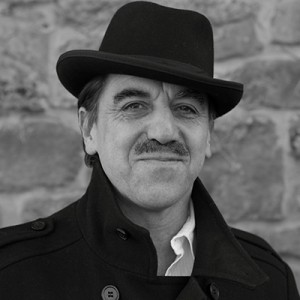
Robin Mills went to Symondsbury, Dorset, to meet Harry Harrison. This is his story.
“I may not look like it, but I was born and brought up a Dorset lad. I would have been born in Bridport, but because I was one of a twin my mother had to go to Portwey Hospital, and that was where I arrived, in 1960. My great grandparents are buried outside Eype Church door. My grandparents were called Legg: my mother, also a twin, was a Hounsell, a well-known Bridport name. I think there were 11 on the Legg side, and 7 Hounsells, so I’ve got lots of second cousins.
My father died when I was only 18 months old, so I have no memories of him. I have two older sisters Brenda and Margaret, and there’s my twin sister Linda and me, who mum described as a gift from heaven because we gave her a reason to carry on after the loss of my father. They’d met during the war, when as a Royal Marine he was stationed at what was the Bonville Hotel, now the Eype’s Mouth. My mother had an older sister who was a GI bride and went to live in Texas in a town called Beaumont. My grandfather, William Hounsell, was a builder, and along with my father and uncle built Beaumont Avenue on Coneygar Hill in Bridport, named after the town in Texas where my aunt had gone to live.
We grew up at Sunny Bank in North Allington. Mum was short of money but despite her hardship we were never short of love and I had a very happy childhood. When I tell my daughters how we shared an outside toilet in the garden with the neighbours, they find it a bit shocking. We didn’t know any different so we didn’t think anything of it. We were dressed in hand-me-downs and it wasn’t a problem; I think people expect too much these days. Mother’s widow’s pension was very small, but we had a bit of help from the family and we got by. I had lots of freedom as a boy, playing up Allington Hill with friends. It all seemed perfectly safe, everyone knew everyone else and we all looked out for one another.
I went to school at St Mary’s, and then to Colfox. My name’s actually Andrew, but because there were three Andrews in the class I got the nickname Harry. At Colfox I met Marilyn when I was late for a science lesson, and because there was nowhere else to sit, had to sit opposite her. She spent the lesson kicking me under the table, so I pulled off her shoes and tickled her feet and of course got into trouble for that. That was 1973, we were 13 years old, and we’ve known each other and been together ever since, which is 40 years now. We got engaged when we were 16 and married at 20. I may have held hands with another girl at primary school, but never really had another girlfriend. Marilyn was brought up in the country; her family’s Dorset accent is stronger than mine and they reckon I’m a townie, so initially conversation was quite tricky. When aged 13 I first went to meet her she stood me up. We’d arranged to meet at Blue Bull crossroads, and she wasn’t there, so I walked all the way to her house at Broadoak, getting attacked by dogs on the way. Her grandfather answered the door, and when I said I’d come to see Marilyn, he said, “You’d best come in then, boy”. I think he recognised determination.
I enjoyed school, more the social side than anything else; I think I was probably the class clown. I loved sport, and creative work which involved making things, and also history, particularly stories of the war. I used to watch “The World at War”, hoping I’d see my father on it as he was a marine—there were few photos of him at home and no videos then.
My uncle, Jack White, and Aunty Beryl had a plumbing business, and after school I went to work there, also attending Weymouth College to learn lead work. I worked at B J White’s until 1983; then I started to help out Marilyn’s father, John Creed, who owned Creeds the printers at Broadoak. My interest grew and I began work full-time later that year. There was a lot to learn but the job was varied and interesting and I enjoyed producing a quality finished product. I feel very lucky; my job has given me the chance to meet many interesting people as we serve all areas of business: leisure, charities, the arts, organisations and private clients. My journey to work each morning through the lane from Symondsbury to Broadoak sets me up for the day—I quite often see deer and other wildlife. Marilyn and I, and our daughters Catherine and Laura now run the business. Printing has changed dramatically over recent years with technology and the internet; small, individual print companies like ours are a rarity these days. We are fortunate to have Catherine and Laura who are enthusiastic, bright and creative and are taking the business forward with new technology. It’s good to know that it will be in safe hands when Marilyn and I eventually retire! We also have an elder daughter Rachel, whose dedication to her studies and determination has paid off as she is now a French teacher and enjoying living in Bath.
Playing sport has been quite a part of my life. My uncle introduced me to golf when I was quite young. I was pretty good at one time, but I don’t play so much these days. I got into football when I was about 20, played for Chideock; in fact I was captain, not because I was the best player, but more because I had the biggest mouth, which of course was good for encouragement purposes. Marilyn was involved with amateur dramatics, and I got roped in too and loved it, and then I joined Symondsbury Mummers. It’s great fun; I play the part of St George. Being a Mummer means that as a member of the cast you know that if you make a mistake you’re not going to get any help from the others. With new members we’re a bit more lenient, but if you forget your lines you have to improvise and that’s part of the act. We live by the sword and we die by the sword, which is what the audiences expect. Performances are November through to January, and that’s because of the pagan origins, which were about the end of an old year and the beginning of the new, or death and resurrection. New Years Day at the Ilchester Arms, Symondsbury, is our big night, with an audience of maybe 100 plus. The story has been handed down over centuries, the current script rediscovered in Victorian times. The Symondsbury play is considered to be the most complete of its kind, and includes an English Mumming song. Marilyn and I have been involved with Symondsbury Players, Chideock Players, and Lyme Regis Operatic. I seem to get the ethnic roles, I don’t know why (!), like Ali Hakim in Oklahoma, the Hungarian interpreter in My Fair Lady, and I’ve played the Italian with the dead chicken on his head in ‘Allo ‘Allo. Marilyn and I, Sue Hanger, and David Warren also perform a sketch as old Dorset folk putting the world to rights, basically we find out who’s going to be attending, and then tear them to pieces. It seems to go down well!
Our family has long had connections with Symondsbury parish. We got married in Symondsbury church as did my ancestors in 1795! We’ve lived here since 1991; our house was originally a forge, situated at Sprake’s corner, the name of the blacksmith. I’m proud to have been involved with lots of things happening in the area. It’s a lovely village with some real characters and a real heart (the pub and the church both well supported). When the girls were at Symondsbury School we enjoyed helping out with fund raising. The school went through quite a tough time then but it’s popular again now, and we made lots of good friends through the process of support.
There are lots of twins in my family; Mum was a twin, I have identical twin girls, and so does my twin Linda. My older sister Brenda has identical twin boys; then my cousin John’s wife has twins. The next generation has not managed the twin thing yet—but watch this space!
We now have a wonderful grandson George who’s just a year old. In my upbringing and later family life I’ve been the only man, having sisters when I was young, and my own children all being girls. So I look forward to spending more time with George and having a bit of male bonding. More football and less shopping!”