
Wednesday, March 25, 2026
Home Blog Page 98

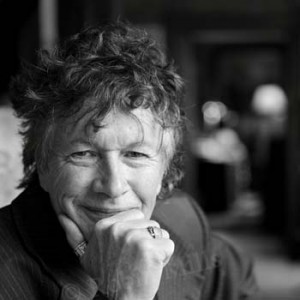
Simon Wheeler

Photographer Simon Wheeler has reached a stage in his life that a lot of people will find very familiar: his children have all gone back to university and the house seems deathly quiet. For many, this is a time of reflection. It is a time when we can take stock and look at what we have achieved over the years, especially the ones that went by in a blur while our children grew from tiny pink dolls to confident members of the community.

Busily working on the launch of his first website, with literally tens of thousands of images at his fingertips – as well as buried in storage boxes – Simon is uniquely positioned to use an enormous body of work and experience to launch himself into the next phase of his career. He is also – perhaps not so uniquely – now able to muse on the missed opportunities of high speed youth. An opportunity to meet Lord Snowdon for example, was missed because he ‘simply couldn’t be bothered’. I suspect there are few of us that haven’t at some point realised how little we saw of life when we were too busy being busy. However, regardless of missed opportunities, Simon Wheeler can use a wealth of imagery to show he has made good use of exceptional talents in his career to date.

Educated at Headfort, a small prep school in Kells outside Dublin, followed by St Columba’s College, he never seriously thought about following the family tradition into medicine and even walked away from a place at Trinity College in Dublin. In St Columbus he ran the photographic club but was also ‘mad keen’ on sports, playing in both the hockey and the rugby firsts. “Academically I was pretty average” he remembers “and though I managed to scrape a place into Trinity College, I decided to come to London to pursue my interest in photography. In those days Ireland was a real backwater.” This was not before his flair for imagery got him a first exhibition in the Photographer’s Gallery in Dublin, where he showed black and white nudes of his then girlfriend, along with West of Ireland landscapes. He was recently asked to supply a couple of his first photographs to be hung at St Columba’s College.

He came to London, joined a studio and learned his photography in the old fashioned apprenticeship style, but quickly found himself sucked into the busy, exciting and heady world of advertising and editorial. He worked for big names like BAA, Swatch, Cat, Silk Cut, Range Rover and Wedgwood. He also worked prolifically for English and American House and Garden, French Elle, The World of Interiors, Arkitectur und Wohnung, Stern, Weltbild, Sunday Times, Conde Nast Traveller, Observer Life, Vogue and Tatler. He worked seven days a week doing both advertising and editorial and remembers the excitement of being busy. “When you’re in the mix of all those people – and we were all about the same age – it was a great buzz. And you all think you’re God’s gift to humanity – even I did, secretly”. It was part of the roller coaster ride of being freelance. “We were all totally passionate about what we were doing. We’d work till 3 in the morning, working weekends, cancelling our holidays and so on”. And although, for a time, his expertise gave him a lucrative career, he spent much of it shying away from the work that would eventually define his style. The bulk of his work in those days was still life. “I wasn’t a particularly confident young person,” he says. “If I’d had a bit more confidence I probably should have gone into more fashion and reportage work. Now after 15 years of doing still life I’ve gone back to that. That’s been a really good move, although financially it’s not nearly as well paid as still life.”

The reason he gave up still life was because he didn’t want to be stuck in a studio photographing a fig roll for three days. “I was completely detached from my children” he says. “I would come back in the middle of the night, never see them, all that sort of thing. It had to change”. It was that need for change that eventually helped create the style of food photography that makes his work stand apart from so many others. Most people here is the Westcountry will know him from his work on Hugh Fearnley-Whittingstall’s River Cottage books, however a few years before then, his first full book commission was Tamasin Day Lewis’s West of Ireland Summers. He remembers how the plan to photograph it all in black & white was changed after he had already left London and arrived in the West of Ireland to do the shoot. “I did have some reservations” he says. “I hadn’t even packed any colour film. In fact at one point I even said I wouldn’t do it, but Tamasin just said ‘Oh don’t be silly Simon, just go into the village and get some colour film from the chemist’, so I got on with it”. Although now out of print and hard to find, the book gives an early hint of the humour and personality that was to characterise his later work with Hugh Fearnley-Whittingstall. It is a relaxed, off-beat style that really brings a cookery book to life.

He remembers how life was at the original River Cottage in Dorset. “Hugh did lead a very, very simple life when I first met him. He was literally living in this tiny damp cottage by the river with his girlfriend. It was pretty rough inside, there were no frills at all. We produced that little book not knowing whether it would be any good or not. Now ten or twelve years on he has become extremely successful with all the things that that brings, but basically Hugh could crash down on a bit of an old sofa in a wooden hut up the Himalayas any day. It wouldn’t bother him.” The River Cottage Cook Book was hugely influential and won the Andre Simon Food Book of the Year Award, the Guild of Food Writers’ Michael Smith Award and the Glenfiddich Trophy and Food Book of the Year.

Simon has gone on to collaborate with Hugh on all the major River Cottage books and also brought his keen eye to books by Heston Blumenthal, Monty Don, Lindy Wildsmith and Anthony Demetre, to name a few. His style is utterly unique, bringing a depth and character that elevates good writing, brings life to recipes and helps carry a narrative that wouldn’t necessarily be there without him. His work adds extra levels of personality to each book. I asked him how that style developed. “I just didn’t want to lug all that equipment around anymore” he laughs. “But the truth is it was also a way of getting away from the tediousness and technicality of still life. I decided to kick all that technical stuff into touch. I wanted to get to the moment. You want to get under the skin of whatever the project is and go about it your own way. You try and work together with the person your working with and think, ‘How can I best try and tell this story’. And I developed a style that I think is really a slightly glamorised snapshot.”

Glamorised snapshot may be a good description but it is also an obvious understatement. His work manages to combine honesty and humour whilst portraying the positive side of his subject. He uses the example of photographing an animal being slaughtered. “I don’t really want to make it look like hell” he says, “because you could so easily do that. It’s so easy to make it look awful. It’s actually much more difficult to make it look real but quite optimistic. So what I try to do is to tell real stories, but just make it optimistic instead of deeply depressing.”

Lately he has turned his talents to design and production, photographing and designing company reports and books such as Medina Kitchen, a North African food and travel book, plus a brochure for Anta, produced on location in Lapland. Simon can be contacted on simonwheeler@onetel.com.

Cristian Barnett

Tracking down photographer Christian Barnett is no simple task. As a food photographer he is much in demand, however his love of travel is as likely to keep him on the move as much as his love of photography. When we caught up with him recently in between locations, he had just finished working with chef and food writer Valentine Warner and was dashing off to his next job with chocolate maker Willie Harcourt-Cooze in Devon. “I seem to spend half my life on either the M4 or the A303” he told me. “At least every other week I am shooting in the South West”. He doesn’t see that as any surprise, pointing out that the area is brimming with great food producers and writers. But the time spent travelling from his home near Cambridge to photographic shoots is not what he means by a love of travel. In his career to date he has compiled an enviable collection of photographs from countries as diverse as the United States, Columbia and Morocco as well as the more northern climes of Norway, Iceland, Finland, Sweden and Alaska. A diverse range of locations, but then, as Christian cheerfully admits, that was one of the driving forces that helped him choose a career as a photographer. “In many ways it’s a valid excuse to do anything” he says. “I have been able to have these experiences of meeting amazing people simply because I have a camera in my hand.” A project he has been working on, which took him into the homes of the Inuit in Alaska, highlights what for him is one of the features of his job. “When I travel I am attracted more to the people of an area than the landscape. It’s a really amazing experience to be able to go somewhere for a few days and to spend that time going into people’s houses. People accept you because you are a photographer. There are very few other scenarios in which that would be allowed to happen, or where people would welcome you in the same way.”

Echoing the very sentiment that launched this magazine, Christian says that food photography, although partly about food is, for him, more about the people involved in the industry than the food itself. He loves photographing people, especially what he calls “ordinary people doing extraordinary things with food.” His first foray into taking photographs however had very little to do with people or portraits, although in a quirky way it did include food. He remembers being given his first instamatic camera when he was about ten year’s old and about to go on holiday. Instead of taking the holiday snapshots his family expected, when the film was developed they found nothing like that. “I had photographed things like tins of dog food and commercial pack shots” he remembers. “I had these little Star Wars toys and I had built little film sets and photographed them. They were sort of odd photographs for a ten-year-old and they were always out of focus because you could never get very close to a subject with the old instamatic. I think everyone was a bit surprised when they were developed to see pictures of dog food and toys instead of holiday snapshots.”

He progressed to developing his own film in the family bathroom. Saturday afternoons meant noone could use the bathroom while Christian blacked out the window and locked everyone out. “I came to photography from a slightly lateral point of view” he says. “I am interested in the whole process of what happens while taking a photograph, more than just the photograph itself.” He is not interested in the technical process but has always appreciated the magic that occurs in the darkroom, “the brilliant experience of processing film.” He eventually progressed from the bathroom to having a permanent darkroom under the stairs and the need to immerse himself in the full experience of processing film meant wherever he lived he had to have a darkroom; in the coal shed at his first home in London or in the kibbutz he lived in whilst travelling. A very keen cyclist at one point he even decided to photograph every village in Northumberland.

Born and raised in Newcastle he studied photography in school but it was thanks to an “excruciatingly dull” Geography A Level that he decided to enrol on the photography course at the next door Art College. “I remember watching all these cool people going into the College next door and decided to go and enrol.”

As a passionate traveller Christian had wanted to be a travel photographer, but it soon dawned on him in his early days as an assistant, that he wouldn’t be able to make a living doing that. By chance he made contact with an old friend from college days in Newcastle and suddenly found himself on a plane to America to photograph a story about American whiskey. Since then food photography has helped him enjoy the travelling he so wanted to do.

Unlike many artists Christian is not influenced or inspired particularly by art, painters or photographers, he finds in many cases he is more inspired by the lives of the people around him and those he meets on his travels. One case he remembers is a trip to South America. “This time last year I went to Columbia and visited a farm that had been under FARC guerrilla control for about thirteen years. The head of the family had been kidnapped at one point and they had been forced to grow Coca for cocaine production. Eventually the Americans had come in and sprayed all the Coca crops to kill them off and the family had planted Cacao trees to process cocoa instead to sell for chocolate production. It was one of the most humbling and inspiring stories I have worked on. This family’s resilience and their excitement about the future was truly amazing.”

That’s not to say that the chefs and producers that he has worked with are not as inspiring, however as Christian points out, you don’t often get to spend much quality time with many of those being photographed. There is so much going on that must be done in a defined short period of time. He has been fortunate to work many times with Michel Roux Jr whom he holds in high regard saying, “He is a genuinely amazing person, a really, really lovely man. He is so down to earth and yet so inspiring – so talented that he doesn’t need to make a point of it – a quiet gentle man.” He has also done the last four Hairy Bikers books. “They are great fun,” he says. “The first time I worked with them I found them incredibly frustrating because I couldn’t get them to do anything I wanted. But then I realised that you have to just stand back, let them do what they’re doing and photograph what goes on.”

Outside of his food photography, since 2006 he has been working on a book of photographs of people living along the Arctic Circle. “One of the reasons I chose to do that particular project” he says, “is that I have a soft spot for the North. I like travelling in cold countries, Scandinavia in particular.” He is hoping that a book of the photographs will be published in the near future, and although he sees the need for photographers to be adept at making moving film as well as stills, something he has been working on for a while, a final comment about the Artic Circle project helps to illustrate a philosophy that will no doubt allow him to carry on his successful career. “This project is fifty percent about photographing people but also fifty percent about me having a great time meeting them.”

Up Front 03/11

When sorting out some of my mother’s possessions after she died many years ago, I came across a video of the film Wall Street. At the time it struck me as a very odd choice of film for her to own – she was never wealthy, didn’t own stocks and certainly never appeared to have aspirations toward the lifestyle presented in the film. Like many of her generation she was frugal, she scrimped and saved, preferring to forego her own luxuries in favour of helping her children and grandchildren. We even discovered an envelope of cash, some of it no longer legal tender, in which she had enclosed a note saying it was to be used to cover funeral costs in the event of her death. I was reminded of this when watching the follow up to Wall Street recently. In the opening few minutes Gordon Gekko, the character who coined the phrase ‘lunch is for wimps’, collects his possessions at the end of a jail sentence. The size of the mobile phone he collects stands out. In the 80s using a mobile phone was a bit like holding a Doc Martin boot to your ear. Today of course it is all very different. In pubs or restaurants the chances are that anyone not in conversation with someone else will have their head down staring at a small screen. Marketeers now need to reach a generation of people that text, tweet, browse Facebook and listen to music and watch television at the same time. There is a constant race to produce money spinning applications and games for mobile devises but the one that I think my Mum would have enjoyed a hearty laugh at, is the new application designed to help Catholics to make confession. The App offers ‘a personalized examination of conscience for each user, password protected profiles’ and ‘invites Catholics to prayerfully prepare for and participate in the Rite of Penance.’ Although a devout Catholic, I’m sure my mother would have found this too amusing to be upset by. I think she would be more likely to start a campaign to bring back the Doc Martin sized mobile and herd the Gordon Gekko’s of the world into a giant warehouse to make their confessions – perhaps they already do.

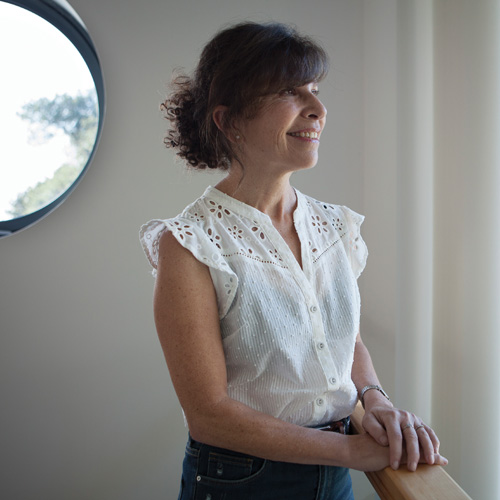
Kay Townsend

“If I say to local people my name’s Townsend, they often say, ‘What, the Fair people from Chickerell?’ Which is true, that’s who I am. My family’s been here in Putton Lane since 1933. When my Granny bought the land it was a turnip field in winter, and of course it was very, very muddy; we had heavy traction engines to put in the field, so we bought cartloads of ‘bats’, which are reject bricks, from the local brickworks and made a road right down through the field. That was the beginning of our showman’s yard. We had traction engines for many years, with dynamos powering the rides and lights. We bought two which came from the Portland stone quarries. My Uncle Tom paid £25 for the pair, and we converted one into a showman’s engine, with the canopy, and all the brass work. This one was originally called Nellie, after a servant girl who worked at Portland Castle. My uncle christened her ‘Queen Mary’, by breaking a bottle of milk stout over the wheel. She’s owned by a family called Cook now, and still goes to the Great Dorset Steam Fair every year.

My family have been showmen since 1876. My great granddad lost his job, driving the mail coach between Radstock and Bath. He had nine mouths to feed, so he bought a small children’s roundabout, which packed away into a cart, and was pulled by a horse. When it was open, the horse was led around, thus turning the roundabout to give the children their ride, and that little ride was the start of show business for us. My grandparents’ last child born was my Dad, and he was one of triplets, born in Commercial Road in Weymouth, in a showman’s living wagon parked by the water’s edge. Sadly the other two babies didn’t survive.

My parents, Joe and Esme Townsend, raised me, an only child, in the old-fashioned way; never lie, never swear, work hard, and show respect. I have never met anyone who didn’t like my father. He always wore a trilby hat; he had a kind heart, and worked hard all his life. They met when Townsend’s fair was open at Milborne Port; she came to the fair, had a ride on the swinging boats, and her dress blew up in the breeze. Dad caught sight of her legs, and that was it. In the early days, education wasn’t seen as particularly important in showland. My Dad did go to school in School Street in Weymouth for a while, so he could read the paper every day, but through dictating he got someone else to write his love letters to my Mum when they were courting.

My earliest memory as a child was of Uncle Dick and Uncle Pat painting the rides in our big paint shed, ready for the summer season. We were open from April to November, travelling all over Dorset, Somerset, and a bit of Wiltshire. So really I only had half the schooling of other children, as we were on the road all that time. I can remember my first day at Chickerell School, when I cried, because I’d stepped into everybody else’s world, and in my life I’d only experienced our world. I felt very alone. Every year after Portland Fair, which was always the last fair of the season, my Mum made sure I went back to school. She was determined I should read and write, but even now my spelling and punctuation’s far from perfect. People often say to me ‘I suppose you’ve had a colourful and exciting life’. Not really, because the fairground was my world; the rides, the sounds, the travelling, it was normal life to me. I was brought up in a caravan; then when I was nine, we had our bungalow built here in Putton Lane. Like many show children, as a little girl people called me gypsy, because my family were show people. I’d say ‘no I’m not’, but now I’m older I can explain to people what the differences are between us and gypsies.

Growing up most of the time on the road, early in the season there weren’t that many other children to play with, not until the later part of the season when other showmen and their families would join us at the fairs; then I’d see more of my friends. My school reports would always say the same: ‘Kay does her best’, so it’s true my education was limited, and it was hard catching up with the other children. But I’ve never let it hold me back, to the extent that I’ve now published four books about the showman’s life and history – with considerable help from spell-check and proof readers! Three of my books were printed by Creeds of Broadoak, near Bridport, who were exceptionally helpful to me as an ‘amateur’ writer.

Our season’s work included charter fairs, which were always on a fixed date, for example Wool Fair which was always the second weekend of May, then Beaminster Fair. Other fairs and carnivals, we would apply to the local committee for permission to bring our fair along, so the season’s dates were always planned in advance. We would also do private events, where we would rent a field from a farmer for a week outside a town to hold a fair. We did this at Swanage, usually for two weeks. When we were on the road, we had three rides; we had Dodgems, an Octopus, and a Noah’s Ark ride. Since 1918, we have had swinging boats and roundabouts on Weymouth beach, and we still have family connections with today’s operation there. I stopped the travelling a few years ago now: something just clicked and I thought I’d had enough of it, although once a showman always a showman. It’s in my blood, and I still feel more at home in my caravan than I do in any house. Nowadays I run a shooting stall which I take to shows, right down to Cornwall sometimes. The operating costs now for the travelling fair are phenomenal, with fuel, labour, and capital outlay on the rides, plus the insurance and testing of the equipment for safety. Then during the winter maintaining and painting the equipment for the season all adds up, and makes the rides quite expensive. We also have to compete with theme parks, where you pay a fixed entry, then all the rides are free.
If I’d been asked say four years ago whether I thought the showman’s way of life would continue, I’d probably have said not for much longer. But I’ve changed my mind now; people are adapting to change, and although many families have left the business, there’s a few people who are determined to keep it going. It’s a struggle, but they’re supported by the Showmen’s Guild which is always there behind them. The atmosphere at the fairs has changed a lot, so that it’s noisier and glossier now; but thankfully there are still people keeping the old traditions and styles going.

I actually launched my last book standing in front of our old engine ‘Queen Mary’, and that was a very special moment for me. Writing about my family’s way of life and the history of showmen has been very important to me, and it’s good to preserve and pass on the stories. I wouldn’t change my upbringing for anything, because who I was yesterday makes me who I am today.”

Fergus Byrne Spring 11 People & Food

Looking through this issue it is hard not to notice how political it is. You might be forgiven for saying that food is a political hot potato – or you might not. But the fact that the production, processing, import, export, marketing and transportation of food affects millions of lives, means it’s no surprise that people have strong opinions on how we deal with the issues that inevitably arise around it. Lorraine Brehme, one of the founders of Clipper Tea talks to Katherine Locke about the early days of Fairtrade and how difficult it was to bring Fairtrade tea to a wider market. Tim Crabtree, until recently Executive Director of Local Food Links has been involved in aspects of the industry as diverse as dealing with malnutrition in the Philippines, to making leek and potato soup for Bridport school children. Michael Feasey, always passionate about food and sustainability, finds a local fisherman who has a unique answer to how to deal with the insane ‘discards’ regulations, as highlighted in Hugh Fearnley-Whittingstall’s recent ‘Fish Fight’ campaign. Also in this issue, Simon Ford wrestles with his conscience about eating eel, knowing that some people believe that we may face a catastrophic species collapse, while Victoria Byrne meets a couple whose efforts to live a low impact life may have lessons for us all. In a recent Financial Times, Clive Stafford Smith, founder of the charity Reprieve, said that everything is political. He talks to Franny Wood about his memories of food, his anorexic youth and his view that vegetarianism is probably a luxury of the privileged. At whatever level the food industry impacts on our lives, it is hard not to have an opinion, especially when viewing food production on a global scale. A recent report from IGD, the international market intelligence organisation working in the food and farming sector, suggested that if every Chinese man drinks just one extra beer a week, this would require 231,235 hectares of annual barley production, the equivalent to a fifth of UK barley production. Heaven forbid they have two extra beers a week.

Up Front 02/11

I have four young daughters. Each one is completely different to the other, and living with them as they grow up is an experience I was as unprepared for as any parent. I still smile when I remember how a friend, in a moment of intense frustration, bemoaned the fact that his children hadn’t come with an instruction manual. At times they can infuriate, exasperate, frustrate and incense their parents. At other times – more often than not – they can fill our lives with smiles, laughter, wonder, exhilaration and a level of affection we would never have dreamed ourselves capable of. Then one day, as we see them becoming stronger and more capable of dealing with their own lives, we wonder why we suddenly feel tired; we wonder where our lives went whilst we focused on our children. But none of that really matters. We put as much of our selves into our children as we have to give, and in return we get something that words haven’t a hope of expressing. I remember the intensity of emotion when one of my children was very ill as a child, and I thought I could feel her life slowly slipping through my hands: or how when another lost all her hair and showed bravery beyond her years, I thought my heart would burst with a mixture of fear, awe and then pride. This last week, the stories of two families who have each tragically lost a daughter will have touched the hearts of many parents and made them hug their children that little bit harder. I can only imagine the pain these families are feeling and my heart goes out to them, but imagining it is enough to make me want to relish every moment of my own children’s lives, from two year-old tantrums to teenage strops and more.

Peter Hitchin

“My childhood home was in Tunbridge Wells, on the Kent and Sussex border. My father was the headmaster of the senior school, what would now be called a comprehensive. I found it something of a disadvantage, growing up, to be the son of the headmaster; it’s a bit like being the son of the vicar, and I suppose I felt I had to try a bit harder to be delinquent. I went to the local grammar school for boys; there was a separate grammar school for girls opposite, and I can’t say I really enjoyed it.

I left with three “A” levels but didn’t want to go to university; it was 1962, a very exciting time and I headed for Europe to be a beatnik, hitch-hiking around and getting odd jobs. I briefly met Pablo Picasso that year in the south of France and spent time in Paris trying to become a Left Bank intellectual. Soon London began to “swing”, and I had various short term jobs in London, in an advertising agency and working in a gallery on the Kings Road, that sort of thing. I wasn’t really thinking about what I wanted to do. I was just living for the day, but eventually the thought coalesced that I might become a writer. To that end I enrolled in a teacher training college in Winchester (now the University), thinking that I could be like William Golding and write books in the long school holidays. They quickly saw through me at the college and I left after the first year. However, I stayed in Winchester as I had made many friends there, mostly at the art school. It was an experimental time for art schools, which were in their heyday. Brian Eno was there, and he did his fine art degree show in sound rather than in the plastic arts. It was a good city and I enjoyed living there. Eventually I had the idea of starting a tutorial college with a group of tutors, and I rented a house outside of Winchester where we started tutoring teenagers that had been excluded from their schools, and helping them get through their “A” levels. It became very successful, and after two years I moved the college into Winchester. We were tutoring teenagers, mostly from independent schools from all over the UK, providing them with individual tuition and getting them to university.

By now I had married. My wife was from Bridport, and we would come down to visit her family; while I was out on a walk around the area, I came across Symondsbury Manor which had been empty for some time and was romantically overgrown. I think it was 1975, the time of the oil crisis and three-day week, so quite a few houses had become too expensive for their owners to keep up. I completely fell in love with it, and although the college was going well in Winchester and everyone told me it would be financial suicide to move it to Bridport, I didn’t listen; I managed to raise a business loan, sell the Winchester property, and bought it. That was thirty-five years ago, and I have lived here ever since. Originally I moved down here with Ros and John Higgins, good friends of ours. John, who was a builder, and I undertook the restoration together. Nowadays we let one end of the house for country house weekends and weddings, and we live in the other.

For another five years I kept a tutorial college going in Winchester which I used to visit once a week. Then I opened a study centre in France, and in the 1980’s, with a group of Art School lecturers, I started the West Dorset Art School, also in Symondsbury. I can’t say that the Art School was a great success. We weren’t able to get accreditation to offer BA’s; we were much too small and so it became difficult attracting students. We changed the Art School eventually into studios and low cost accommodation for artists and that proved very popular. Many of them came to Symondsbury, found their feet here, and then decided to stay on in Bridport, and I think this may well have contributed to the area now having such a thriving art scene.

In 2003 I noticed that the Palace in Bridport was up for sale, and I was looking for a new project. Again it was really the building that attracted me, I just wanted to restore it; I wasn’t really looking to run a cinema particularly. Once again, friends in the entertainment business told me it would be financial suicide (this time they were pretty much right). I got it open and re-decorated eventually and the interior now looks splendid thanks to the help of friends who rose to the challenge of painting fresh pictures on the large empty panels around the auditorium. I ran it for a while but it needed a younger hand at the helm. It’s tremendously difficult to make a venue succeed without any financial support from the Arts Council. Fortunately first my son Gideon and now Gabby volunteered to run it and it’s now it’s a great success. We are getting good audiences which have given us the confidence to put on top acts. Amongst the performers, the Bridport audience is becoming famous for the appreciation and response it shows to comedy and music. Well known artistes are keen to come to Bridport even though it’s a relatively small venue for them. They like the town and they like The Electric Palace. I am still the “eminence gris” behind it, and I give it my support, but I’m not so involved in the day to day running of it, which is a great relief.

I have always painted; it’s really my abiding interest and a lot of my friends are successful painters. I’ve got hundreds of my canvases stacked in the attic. They’re not as good as I want them to be but I like the process of creating pictures. I don’t think it’s important to exhibit them but I have, this year, had an exhibition in Dublin- really my first. The paintings are homage to James Joyce, and were exhibited during Bloomsday. That was great and they are about to be reviewed in The Irish Times. I should paint more than I do but I just can’t resist exciting schemes and trying to make ventures work. I believe there is a lot of creativity in building a business if it is approached in much the same way as making a work of art.

Bridport is an extraordinary town and I hope it will manage to hang on to its unique atmosphere. There are fewer and fewer towns that still have independent butchers, bakers and greengrocers in the profusion that we have. Our small shops, combined with the multitude of junk shops, artists’ studios and of course, the market stalls, make it a vibrant place to live. Hopefully, the Electric Palace contributes to this and I believe that as long as Bridport can foster its character, it can thrive. The town is getting frequent mentions nowadays in the national press because of its creative scene and its “lifestyle and scenery”. It’s difficult to impress the value of this upon the local authorities and I wish that the town planners would do more to support the small shops and individual businesses through this present recession, rather than allowing chain stores to homogenise our town, as has happened in so many other places. I am very encouraged by the terrific audiences we are getting at the Electric Palace; to me they demonstrate the true spirit of Bridport in all its diversity and enthusiasm.”

Up Front 01/11

The way that people behave in shops has been monitored by marketing experts for some time, and over the last ten years or so, similar monitoring has been used with great success to analyse how website visitors react when shopping online. Technology has also been tested to help high street shop owners direct customers to products that they may have more interest in. Recently a consortium of European researchers, using video monitoring to help with escalator safety, has found ways to use this technology for more commercial purposes. Surveillance cameras, used to detect situations such as accidents on escalators, could stream video to be analysed by computer software that determines what people stop to look at in shops. Knowing what has sparked their interest could allow shoppers to be directed to products they are more likely to buy. Decades ago I worked for a company that used an audio visual system to show in-store commercials to roaming shoppers. We used a ‘people sensor’ that automatically started the commercial when someone walked by. The first words were always ‘Hello there!’ It became monotonous for us but amused shoppers for a while and certainly confused quite a few small dogs and any other animals that might have passed by. How times have changed. Where once we were gently reminded or alerted by relatively low level advertising, these days we are influenced by product placement in films and TV and now manipulated by hidden surveillance cameras, and herded like robots into the sweetie corner. We might just as well give our money to the bank and let them spend it for us. But then that would just be silly …wouldn’t it?

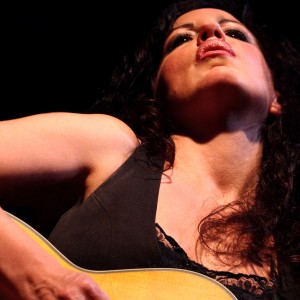
Sarah Gillespie

It’s natural for reviewers, critics and journalists to want to categorise the people they write about. Without some sort of benchmark, classification or standard it is hard to measure relevance to the world we live in. However it’s also sometimes too easy to write someone off or dismiss them because they are easily categorised – that may simply show a lack of imagination on the part of the writer. As a musician, a writer, painter and poet Sarah Gillespie doesn’t present any of these problems. Although she doesn’t necessarily defy categorization she is still utterly unique. Her latest CD In the Current Climate with Gilad Atzmon is due to be officially released in January and touring the UK she will play at the David Hall, South Petherton on January 14th. John Fordham in The Guardian described her as, ‘an incandescent new presence’, whilst The Independent pointed to her ‘haunting tunes and striking lyrics’. Other reviewers have described ‘wry lyrics and sinuous melodies’ and ‘poetic songs and wonderfully colourful arrangements’ whilst one suggested, ‘Gillespie’s voice has more balls than a lot of men, and her stage presence is palpable’. So it might be safe to categorise her as utterly unique.
Although she didn’t write down the words to the first song she wrote until she was about nine, Sarah remembers making up songs as a four-year-old. She remembers thinking that she was being naughty by making up new lyrics to the tunes she heard, instead of learning the original words. She began to play the piano and although she wrote hundreds of songs with it, when she was about fifteen she ‘begged and begged’ for a guitar. One day she came back from school and there is was. Her interest in music was obsessive and she taught herself. “When I was a kid listening to music, it wasn’t enough for me to listen to it, I wanted to climb inside it” she says. “It was a sort of frustration that egged me on to practise and practise – it was more of a compulsion.” Her father was a huge music fan introducing her to what she remembers as “an eclectic mix of music – blues, classical, old jazz, rock ‘n roll and folk, Billie Holiday and Bessie Smith”.
Dyslexic, she says she has “always had a strange relationship with words”. However she found a way to navigate around that and gained a first class degree in Film and Literature and an MA in Politics and Philosophy from Goldsmiths University. “I think I wanted to convince myself I wasn’t a stupid as I was told I was” she says.
Perhaps the greatest influence on her writing and musical journey though, was what she calls her “liberal upbringing”. Her father was a working class Londoner with a Physics degree and her mother a psychotherapist from Minnesota. She says, “I grew up in a house with a lot of political discussion. My parents weren’t what you’d call activists but there was plenty of discussion about everything from the Crusades to Perestroika. From an early age I was plugged in to the notion that there were other people in the world living very differently to me.” The turmoil of Sarah’s political journey shows through, not only in her writing – she has been published on palastinianthinktank.com – but also in her poetry and song lyrics. She has a deep sense of justice and uses her fascination with words to great effect in songs like Ahmed and Dangerous on her first CD Stalking Juliet and How the West was Won on In the Current Climate. She talks of the things that worry her both as a thinker and as an artist. “Certain people, due to a lottery of their birth, have an advantageous life and others don’t” she says. “I think what’s happened latterly, that both fascinates and disturbs me, is that all the rhetoric of the enlightenment is mobilised to abuse people. Ideas about freedom and democracy have become tools to morally intervene, and essentially to bomb people. I always think of the great battle cry of the French Revolution Liberté, Egalité, Fraternité, ou la Mort, Liberty, Equality, Fraternity, or Death. Now it’s more like ‘be free, be equal, be brothers … or we’ll kill you.’ The hypocrisy of that disturbs me greatly. There are legitimate tricky questions today such as how do we tolerate intolerance in a so called tolerant society. We are on the precipice of monumental change. There are all sorts of cataclysms going off.” She laughs at the irony as she suggests that we are in “an explosive age”. It’s an irony that is echoed in the title of her new CD In the Current Climate – alluding to what she calls “the so called war on terror”, the depression and the environment.
Her music is obviously influenced by the brilliant Gilad Atzmon, her producer and musical partner. His clarinet, saxes and accordion weave an extraordinary mix of Middle Eastern sounds, folk, jazz and even vaudeville into Sarah’s blues, beat poetry, rap, haunting lyrics and guitar. In the Current Climate may not have immediate hooks like How the Mighty Fall from Stalking Juliet, but it features a maturing musician and songwriter who deserves all the plaudits heaped on her by reviewers and critics. Emotional energy, stinging lyrics and stretching arrangements make for a pretty standard classification – unique.

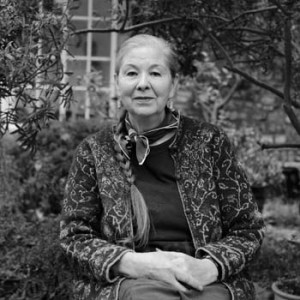
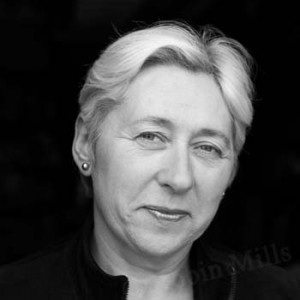
Barbara Laurie

“My father was an army officer, and it was when he was posted to China that he and my mother met. She was quarter Chinese, quarter Spanish and half German. Later my father was posted to India, so my sister and I were both born there. Life for an army family in those days in India was very different to home life in England. We had servants, an increasing number as my father rose in rank, so by the time I was four, I was really being brought up by Indian people; I had an ayah, there was a bearer, there were gardeners, cleaners, a cook, and people who did the washing up. As a result I became fluent in Urdu, and because I spoke it rather better than my father, I became an underage translator for him. He would sometimes have to interview Indian soldiers, for example when they requested compassionate leave, and would haul me in to translate what they were saying. This could be quite distressing for me, as sometimes he made it quite clear he didn’t believe their stories, and I was pleading on their behalf. I think this experience was formative for me; I felt like an outsider from an early age, and maybe that’s helped me to listen objectively to people’s arguments, and then to try to help them achieve their goals. I’m sure my parents loved me, but I didn’t really see a whole lot of them, having servants to do all the things parents would normally do. I was a daughter of the Raj.

When I was five, I was sent to boarding school in the hills, where it was thought to be better for my health. I reacted badly to the frequent vaccinations we had as children, so I spent three years at school away from home. I didn’t actually recognise my mother when I came back, and felt unsettled by not being too sure where my home really was. Then when I was eight, we left India and returned to England. We arrived at Southampton in the sleet. It was a very big change for me; suddenly we had to wear shoes all the time, suddenly there’s no sun, just a dismal grey light, and there was drab post-war austerity. We moved around a lot, making me feel more displaced than ever, living in Shropshire, London and finally Reigate in Surrey; happily we stayed there, right up to when I got married.

When I first met my husband Peter, we were both 16 and we were at a party. We didn’t start going out until we were 18 or 19, but we got married when he was an undergraduate at Cambridge, one of only three undergraduate married couples in the whole university. By the time we were in our mid-twenties, we had three children. Peter was working for Vogue magazine, then later for the Sunday Times, and I stayed home to look after the children. That was really hard for me; much as I adored my children, motherhood didn’t come easily to me. I needed to get out and do something, so when they were at school I began to do research for Peter’s articles. Of course there was no Google then, so it meant trawling through newspaper archives for material, much more time-consuming. Stimulating though that was, I felt I needed to do something that I was in control of, so when the children were all in full-time schooling I joined with a friend, Carola Casson, in opening a shop selling kids’ clothes on the Portobello Road in London.

We lived above the shop, but we began to realise how wrong an environment Portobello Road was to bring up children, so we decided to try and find a place in the countryside for the school holidays. Through a friend, we heard of a cottage in Little Bredy for rent, so we set out to take a look. Forty years ago there was no M3, etc, so it was a long journey, and halfway down I told Peter I thought the whole idea was mad. Of course, when I saw the cottage, even though it was a wreck, I told him I didn’t care how long the journey took, it was marvellous. Despite the single cold tap and chemical toilet, to go there was a brilliant experience for the children who were used to a cramped flat above a shop. We had the cottage for 21 years, as weekenders.

The decision to leave London completely was brought about by several factors. My children were teenagers, so my interest in kid’s clothes had lessened, so we closed the shop. Peter had a computer business which was suffering in the recession, and we were both working very hard to try to rescue it. We just thought now’s the time. So when we moved, the release of stress was enormous for both of us. We had no idea, all the time we were “weekenders”, just how much artistic and community life goes on here in Dorset. And it was so much easier to play an active part in it here, compared to London. After a while, I got involved with a dramatic society called the Gabriel Players at Whitchurch Canonicorum, making the costumes for three of their productions. I got to know quite a few people through that, and then we were asked if we’d like to be on the committee organising the Abbotsbury Music Festival, a series of classical concerts held in the church. Marina Tafur was the musical director, and as a professional opera singer she was able to invite world-class performers to the festival. After a year helping out on the committee, I offered to undertake the marketing for them, something I really like doing and have plenty of experience in. With a small budget, which was easily recouped by increased sales, it went well, and then Marina suggested staging an opera. Some people thought it was too ambitious, but Peter and I, not really knowing what was involved, thought it a great idea. We enlisted the help of a film director friend, Mike Hodges, to direct it, and Odaline de la Martinez, the conductor, to conduct and help find the orchestra and singers. Our first opera was Dido and Aeneas, which we staged at Ashley Chase, and it was a huge success. There were perhaps 24 cast members, and I and a friend from the Gabriel Players, Elizabeth Fortescue, made all the costumes. We had to make the costumes for the non-local singers “by post”, using the measurements they supplied. Interestingly, it was the blokes who lied the most about their measurements, so that Elizabeth had to spend hours unpicking waistbands and inserting elastic because they were way too tight. It was a nightmare getting help with building the set, being July and August when the farms are all busy, so we ended up doing that as well. The whole thing nearly killed us. It was, though, the most wonderful experience of my entire life. There were lots of unforeseen problems, but it was the farm manager at Ashley Chase whose confidence in our success encouraged us to sell tickets for the dress rehearsal. The weather was marvellous and we sold out both nights.

After that experience, Marina decided it might be easier to hire a touring company every year, so now the Garden Opera, who were in their very early days back then, have come every year for the last 14 years. They’ve performed in the Sub-Tropical Gardens, the Abbey House Hotel, and this year, for the first time, they performed indoors, at the Electric Palace in Bridport, which was originally built as an opera house. Our audiences were becoming dispirited with getting wet and cold at outdoor performances, and dwindling as a result, but the move to the Palace was a great success and sold out. Nowadays I do the marketing, which is really my first love. I think it was because of my childhood experience I find I can stand outside of things, and see a bigger picture, see possibilities of how things might work in different ways. I think I’m quite good at that. Two of our three children have followed us to live here in Dorset, one lives in London, and we have lots of grandchildren; 6 boys and one girl, and they’re all different but all brilliant. So now we’re very much a local family.”