
Wednesday, March 25, 2026
Home Blog Page 97

John Leach

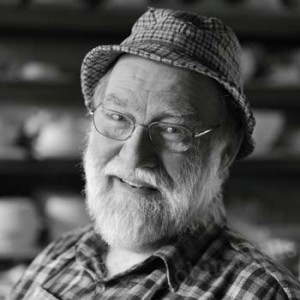
I was born on 21st July 1939 in the pottery cottage belonging to my grandfather Bernard Leach, in St Ives, Cornwall. My boyhood in St Ives was pretty idyllic; our playgrounds were all the coves and beaches round West Penwith, and I can remember when the distress rockets went up, running down to the harbour to watch the lifeboat go out, which was the most exciting thing for a small boy. It was wartime, my father was away in the army with the Duke of Cornwall’s Light Infantry, and mother invited a friend she’d met at the bus stop in St Ives to bring her two little girls round to have a bath, because we had a proper one, and they only had a galvanised tub in front of the fire. We were all aged about three or four, so my brother and I, who were nasty little boys and made the girls sit up the tap end, shared our bath tub with these two little girls and had lots of fun – and that was how Lizzie and I met. We married in 1961, so it’ll be our 50th anniversary later this year.

My father David was in partnership with his father Bernard in St Ives. Grandfather set up the pottery there in 1920, where there was already a very well-established artistic community going back to the 1880’s. After he returned from studying pottery in Korea, China and Japan between about 1910 and 1920, he’d been asked to join the Cornwall Handicraft Association, and had some assistance in setting up the pottery in St Ives. To put it into perspective, he started making pots in the old fashioned way, like I do now, during what was the post-industrial, post Victorian era, and his approach was controversial, very influenced by his experiences in Oriental culture, and caused questions to be asked. What was this man doing returning to the old ways, hand-throwing, when all the interest of the time was in new mould-making machinery, and mass-production? He would talk about spirituality, the “soul and personality” of the pot, and I’m the same, but the difference is that today there’s more acceptance of this approach, and I think Grandfather’s work had the same ethos as all craftspeople who go against the guide of modernity and the industrial process; they mind about their work, they care about it. If you ask me who am I making pots for, I’d have to say it’s for me. In designing and making pots, I’m trying to satisfy my own standards and criteria before I’m happy to present them to the customer; whilst I can’t ignore what the market wants, my work is product-led rather than market-led. When I have a cup of coffee from another potter’s mug, I like to feel I can commune with the maker, who may be someone I may already know, and although the coffee tastes the same no matter what I drink it out of, it’s a privilege to use a handmade object, and this adds an extra dimension to the experience.

I went to Dauntsey’s School, in Wiltshire, but I left school a very academically underachieved schoolboy. I loved school, but it was the sport I loved, and was in all the teams, so my parents were a bit disappointed with me. In about 1955/56, my father and mother moved to Bovey Tracey, and a year after that I left school and started my 5-year apprenticeship with my father. He’d helped set up a pottery at a Carmelite monastery in Kent, and I went there during my apprenticeship to work, which I really enjoyed. Then I went to work for a well-known potter called Ray Finch at Winchcombe in Gloucestershire, who’s a lovely, humble man, still alive at 96. And then I worked with my Grandfather, so that was four different potters over a 5 year period, all very exciting, and in the process I learned to both pick up and discard different approaches to the job, and find out what suited my own style.

After our son Benedict was born I was looking for a good job, before I settled down; I had no money to set up on my own. One came up in California, at a lovely place called Mendocino on the coast about 150 miles north of San Francisco, and I worked at the Art School, and helped set up a pottery. We were there 6 months, in 1963, so it was an interesting time. I remember a story in the San Francisco Chronicle at that time; a woman had run naked through the streets of St Ives, ending up tolling the church bell in a dramatic fashion. This presented the authorities with quite a problem as to how to restrain her, as her arms were firmly attached to the bell rope, providing them with no convenient parts of her to catch hold of. And of course the Beatles had just exploded on the scene, so everyone was saying how very exciting life must be in England. Then when we came back to England, my dear mother-in-law lent us £3000 and that enabled us to buy this place at Muchelney, in ’64, and build a kiln.

These were all old farm buildings, where once they made cheese, and stripped withies. Often it was the woman left at home who would strip the withy using a brake, a single post with a v-shaped device which stripped the bark as it was pulled through. At one time nearby in Kingsbury Episcopi there were several withy merchants; also a blacksmith mending farm implements, a boot maker, strappers who dug the ditches, three bakeries, two butchers, and a saddlery, so there must have been dozens of little live/work situations; there were also two pubs and two grocery shops. Originally we didn’t have a shop; everything more or less was sold wholesale, but it was clear that people like to buy from the source. So we took down the old traditional double pigsty that was here, saving the blue lias stone and some tiles, and in ’67 built the shop, so that we could retail. And then nearly 7 years ago we built the gallery, which despite turning out to be quite a lot of work, does keep the place a bit lively. We’re lucky here at Muchelney, which is comparatively well-known with the historic Abbey and the Priest’s House, so there are lots of visitors and we enjoy a sort of symbiotic relationship. I couldn’t operate from an industrial estate, which is maybe what the planners would have preferred.

In 1972 Nick Rees wrote to me. He was a teacher, a bit disillusioned with his work, and wanted to do a pottery apprenticeship. That was 39 years ago, and he’s still working here, and then Mark Melbourne, who was originally taught by my brother Simon, rejoined us 7 years ago. So from Monday to Friday they work for the business, producing the repeat ware from my designs, but as my grandfather did, I encourage them to make their own pots in their own time, which are then put through the kiln and sold through the gallery, keeping their own creative spirit alive.

In 1986 I bought 9 acres of land here behind the pottery, and two years later dug the pond, landscaped it and planted 500 trees. Then in ’91 planted a further 3500 trees, a mixture of indigenous broadleaf species. I’d been burning wood in the kilns, offcuts from sustainable sources, and I began to think about how much this country needs more trees, about how we’ve used up all our own indigenous forests over the centuries, and now we’re exploiting other countries’ resources. And then finally, I heard about the Yanomami Indians in the Amazon who in the ’70’s were ruthlessly cleared from their villages by beef or timber barons; they were in the way, they just didn’t count, and I was shocked. So what I’ve done with my little scheme is a speck, it’s nothing, but lots of people are doing it. What started as a conscience thing has now become an indulgence. I enjoy it, almost more than I can say, watching the trees and the wonderful myriad of species within the habitat grow and develop. It’s quite amazing how quickly it’s all happened, and now because of the dragonfly population it’s a designated County Wildlife Site.

As for our family, as well as my eldest son Benedict, there’s Jennifer, who incidentally married an American, Doug, and they live in Glastonbury, Connecticut; there’s also Karen, and Joe, and Tobias. Between them there are 10 grandchildren, and all of them except Jennifer’s children over in the States live within about 16 miles of here. So we’re lucky, with our family, the pottery, and the land; they’re all so very close by.
Up Front 06/11

I was surprised last month at how the premature death of golfer Seve Ballesteros affected me. I am not a golfer. Yes, in younger years, when I had more time and money to spare, I whiled away a few happy hours hitting a little white ball around well manicured fields, and thoroughly enjoyed it. But I never obsessed about the game. I didn’t strap myself in front of the television for days on end to watch the Open or the Ryder Cup. Yet hearing about the end of Seve’s battle with cancer at the age of 54 was a blow that took me a while to figure out. He won 87 titles over his career including the Open in 1979, 1984 and 1988 and won the Augusta Masters in 1980 and in 1983. His inspirational leadership also led to great Ryder Cup victories for the European team. However it isn’t these trophies that make him so memorable for me, it is the fact that his charisma and personality represent an era when sport had less of a corporate feel. Seve may have earned a reasonable income compared to the average man in the street but it didn’t compare to the heavily sponsored sports stars of today, where signing bonuses, endorsement deals and tournament prizes put earnings at jaw dropping figures. With the Olympics coming up next year I can’t help wondering what will attract our children to the various sports that will feature throughout the tournament. There will always be a lot of corporate money thrown at sports like boxing, football, tennis and now golf, but who is going to want to pursue a career in archery, fencing, handball, water polo or even synchronised swimming? In the late seventies personalities like Seve Ballesteros helped elevate golf to a wider viewing public, thus paving the way for high earners like Tiger Woods. It will be interesting to see what personalities can put new sports onto the high earnings trail after the next Olympics.

Robert Golden

It’s fairly safe to say that photographer and filmmaker Robert Golden sees things a little differently to many people. After a long career and an enormous body of work he still brings an uncompromising intensity and depth to his subjects, and although his unique eye is obvious when looking at his photography and the films he has made, it is the way he lives his life that stands out. Shouldering a keen sense of justice he stands ready to do what is right, whether that is choosing to only eat locally sourced food where he lives in Dorset or ensuring that the young people in a film he is making in Bosnia are fairly represented.

Growing up in America in the Vietnam War era it was always going to be that way and his political beliefs ensured a rocky road through his University education. Although he had won more awards for his photographs than any other high school student in the country, in University, becoming active in the anti-Vietnam War and Civil Rights movements, his success incurred the wrath of one right wing teaching fellow and resulted in him being ‘kicked out’. He decided to study for a year in London at the London School of Film Technique and only then returned to finish his degree.

However even after three years of working successfully in New York, and selling his studio at a healthy profit, he was drawn to travel abroad again. He remembers the final moment that made him decide to move on. “I was really lost” he says. “I had been in so many street battles, so much struggle – some with camera and some not. The stuff I saw was just unbearable. The final moment in New York that made me leave was when I was arrested walking down the street in Soho, just for having a moustache. The cops picked me up, held me for about 7 hours and then just said f**k off. It was just intimidation, but because I had a moustache and long hair I must be against the war.” Ironically, shortly afterwards, deciding the look was now becoming just a fashion statement for many people, he decided to shave the moustache and cut his hair, and was subsequently attacked in a supermarket by a man who mistook him for a ‘businessman’, part of the establishment. “And so I sat there surrounded by the whole mess of baked beans thinking, I hate it” he says. “I hate this struggle. I hate America for what it’s doing. I hate the war in Vietnam for what it’s doing and I hate Nixon.” With the direction his life was to take it is truly ironic that this turning point in his life was on the floor of a supermarket.

However regardless of the torment his drive and natural talent soon helped him pave a career as a prolific photographer and after doing dozens of book covers, book illustrations and commercials he was approached by an advertising agency and asked to do a short film as part of a campaign for a client. The move from stills to film wasn’t easy. “The conversion between being a stills photographer to being a director is quite difficult. Film and stills have photography at their heart but it’s not just about photography. With stills you’re talking about one frame and what is internal to that frame, whereas with film, you not only have that, you also have the whole question of story telling, rhythm and movement. I cut my teeth on it. Someone said that a commercial is to a feature film, like a haiku is to a novel. And it’s very true. You have to be incredibly reductive. You have to understand the intention of every shot. It’s a very refined skill. I’d call it commercial art.”

He is also quick to highlight the talent of the people around him at the time. “Because I had done so much food, I naturally became more and more a food guy. When I was doing the books there were food stylists. In terms of people, the quite unknown food stylists are the real heroes. They are brilliant the way they can make food look fabulous and stay under the lights. They really understand the chemistry of food. My joke is you never want to photograph kids, cats or soufflés. And I discovered a way to shoot soufflés, which was that we cook them until they’re absolutely perfect and then, of course, eventually they fall down, so we put them out in front of the camera when they’re absolutely perfect, film them as they fall and then reverse it and see them as they blow up. Through that time I learnt a lot about food and cookery. In those days everything had to be perfect. For example taking different materials and making them look exactly like ice cream, because ice cream has a melting point. These days things are a lot more casual than in the past, the idealisation has gone.”

By the end of the 90s Robert had made about 600 commercials and decided to create a series of documentaries celebrating the culture of food around the world. He financed it himself and sold the resulting series, Savouring the World, to 35 countries – although not the UK. Although the BBC wanted it at some point he remembers they offered “a derisory amount of money.”

But having done that series it became clear to him that, universally from country to country, people were all saying the same things – their lives were changing. As they struggled to do what their parents and grandparents had done before them they could see the future for their children was under threat. “There was a sense of fear in people” he says. “And what was interesting was that it was universal. When we came back, I was very moved by all that and started doing research to understand what globalization was doing. It meant the destruction of communities, traditions and customs, and of course central to all of that is the food culture, having been central to everything that humanity has ever done. And on the basis of that, a couple of years later, we decided to make the series Savouring Europe.”

If Savouring the World was a celebration of food around the world Savouring Europe was much more political. Stunning cinematography is coupled with a script that highlights the dark realities of small communities who suffer under the growing power of global forces. The result is a haunting series of films that have a profound message. “I realised much more deeply and profoundly what was going on in the food industry and how central food is to our total way of life” he says, “but also to political as well as economic stability. I realised how transnational corporations are in essence extraordinarily evil – in the sense that the same corporations are responsible for the use of things such as trans fats and the creation of obesity, but at the same time, because of their purchasing practices and selling practices, they are also responsible for starvation. That is quite extraordinary.”

When I last interviewed Robert he was putting on a touring exhibition of photographs he had taken in the 70s. They showed what he saw as the destruction of the British working classes in the early stages of globalization. At that time he described an analogy that is worth repeating here. Whilst travelling through Europe making the series Savouring Europe, he got an image of how unseen forces were manipulating peoples lives. “It is like people experience the wind,” he said. “You never know where the wind comes from. You can’t see it. You can see the trees bending or feel the power as you walk against it, but you can’t see it.” To Robert, this was what was actually happening to people all around the world. The relentless march of globalization was squeezing traditional lifestyles and moulding the production and supply of food to fit into the strategy of a relatively small number of businesses. Distant forces in places like New York, Chicago, Tokyo and London were controlling the lives of billions of people. People who are either directly or indirectly involved in the growing, processing or retailing of food. Like the wind, the force is invisible, but supremely powerful.

With a lot of his photographs in different photographic libraries and dozens of other projects completed or in various stages of production he is currently finishing a film on Bosnia. “It is about young people’s struggle to create a new and better world in the context of the horrible genocide that occurred in their town, and how they find themselves in conflict with these powers who are, by and large, corrupt” he says. It is an extraordinary and inspiring story and totally in tune with a man who many years ago decided to take editorial control of his own work to ensure he could put his remarkable natural talents to good use.

For more information on Robert Golden visit

www.robertgoldenpictures.com.

Robbie McIntosh

“My Dad loved music, especially jazz, although his interest kind of stopped at bebop. He loved Oscar Peterson, Bennie Goodman, Fats Waller, people like that; Mum taught me to widen my taste in music, and encouraged me to take my playing seriously. I have two sisters, one eight years older than me, and one ten years, and I think they really got me going with music. Being that bit older than me, they were into the Beatles, who they’d seen play in 1963, the Stones, and Bob Dylan of course. They had loads of Bob Dylan records. We lived in south London, although I was born in Sutton, Surrey, and brought up in Merton. You couldn’t say I had any musical influences from where I was brought up – if it had been Brixton I’d have been into reggae perhaps – it all came from the Dansette record player really, one you could put a whole stack of singles on. We didn’t get a stereo until I was 16. So, thanks to my sisters, I began to get into all sorts of music, especially blues musicians like John Lee Hooker and Lightnin’ Hopkins. More to the point, my sisters had a guitar which they shared, so I first picked it up when I was about 8 or 9.

When I was 12 or 13, my Mum must have recognised something in me, and organised some guitar lessons. These were classical guitar lessons with a really good teacher from the Royal Academy, but he was very strict and didn’t like anything that wasn’t classical, unless it was Django Reinhardt. I had lessons right up till I was 18, and did all my grades up to Grade 8. My teacher was constantly getting me to move my thumb position, which needs to be round the back of the neck of the guitar for classical playing, as opposed to where it ends up when you’re self taught, and techniques like that have been invaluable to me. Classical teaching on any instrument teaches you techniques which should enable you to do anything; playing with speed and fluidity, being able to reach big stretches with my left hand, all comes from that. Also, the discipline and structure of the lessons was important; they were once a week, you have to practice all the time, and learn the piece you’d been set by next week, or else. Once or twice I got a bit jaded with it, but my Mum encouraged me, and I’m glad I stuck with it.

At school I stayed on to do A levels, but unfortunately failed them; that was because I was just playing guitar all the time. I don’t think my Mum and Dad were all that pleased, but they began to realise that I was doing something I loved, and which was working for me. So although my Dad thought I should have “something to fall back on”, my parents were pretty supportive, quite proud actually. The first band I was in lasted a couple of years or so, and then I got a job with a builder’s merchants, driving a tipper lorry. It was great, one of the most enjoyable times of my life actually, £10 a day, plus I was playing at local pubs at night.

Then out of the blue I got a call from a guy who was with Manfred Mann’s Earth Band, and he asked me to join him in a band he’d formed to tour the States supporting the Doobie Brothers. That was my first big tour, and I was pretty young; it was fantastic, the first time I’d really seen America, and to be playing to audiences of up to 25,000 instead of playing in pubs in London was quite a jump. In a way I wish I’d been a bit older at the time, I might have appreciated it a bit more. Then that band split up, and I started doing session work in the early eighties. The guitarist James Honeyman-Scott, who I’d known for quite a while and was a good friend, had been asking me if I’d like to join the band he was with, The Pretenders, to augment their guitar sound. And then in ’82, he sadly died. He was only a little older than me. So in September ’82 the band asked me to join as guitarist, and this came at a pretty good time for me because I was badly in need of work; Flo and I had just got married, she was expecting Hannah, our first, and we were living in a squat. I had very mixed feelings about it, because Jimmy, the one I replaced, was a great guy, but then suddenly I had a regular gig, and so I was with the Pretenders for 5 years. When we weren’t touring or recording I did session work for Roger Daltry, Talk Talk, and other artists. In 1985, we moved to Weymouth from Surbiton, mainly because we’d had enough of London, and Flo’s sister lived here so we’d visited quite a lot. I admit the thought of moving terrified me at first, and I convinced myself I’d have a car crash driving up and down to London all the time. It hasn’t happened yet though.

I left the Pretenders in ’87, and was doing more session work, but in ’88 I began to work for Paul McCartney. Then in ’89 he asked me if I’d like to join his band, Wings. That suited me fine because we had two little girls by then, and in ’92 and ’94 we had two boys as well, and he said that if we toured, we wouldn’t be away for more than 2 or 3 weeks. With the Pretenders, we’d tour for such long stretches, and that’s really hard on family life. I played with McCartney for 5 years, until ’94, with his wife Linda also in the band. She was absolutely lovely, one of the nicest people I’ve known. She treated everyone exactly the same, cleaners or celebrities. I’ve got a photo she took of us all, with an old wooden plate camera, but I wish I’d looked after it a bit better. I played with Paul at the Albert Hall in ’97, in the house band, at the Music for Montserrat charity gig, but by then Linda was too ill to take part. She died in 1998.

After playing with McCartney, I did a lot of work with an old family friend called Diane Tell, a French Canadian living in France, and that kept the wolf from the door for quite a long time, along with the session work and local bands. I wasn’t really touring much, but in 2004 I got a call from Norah Jones’ management who asked me to go on tour with her. That was a world tour, lasting a year, the first world tour I’d done, and I really enjoyed that. I love her voice, the music was quite mellow so I didn’t have to play too loud, and I played different instruments, like mandolin, and lots of slide guitar, so I was a sort of utility musician, and even did backing vocals. Being away for a year was hard on Flo, but the children were old enough to understand, and of course the money’s pretty good. We also toured the Far East for 12 weeks, including Australia, China, and Japan, even somewhere called New Caledonia. In 2006, I got a job touring with John Mayer, who’s very big in America, and on and off I’ve toured with him for the past 4 years, mostly in America; he’s a great guy to work for, and they really look after me on tour. And now I’m working on two more albums of my own, one solo acoustic and one with a band, for release later this year, plus some solo shows.

Playing live is of course hugely exciting, and I find it so whether it’s a full house at the Albert Hall, or at local venues with friends like Steve Wilson and Jess Upton, or the Steamer Ducks. You can practice till you’re blue in the face, play fantastically in your own front room, but you have to be able to pull it off in front of people, and that’s what keeps the skills sharp – playing live and working with younger musicians. I’m generally the oldest guy in the band now, but I’m fine with that.”

Fergus Byrne Summer 11 People & Food

Reading through Simon Ford’s article about bread and the ‘quiet revolution’ that is taking place in the baking industry, reminded me that the Chorleywood Bread Process he mentions – the process that allows large bakeries to speed up breadmaking – will be fifty years old this summer. It’s quite a milestone when you consider what a huge amount of additives and improvers have found their way into what for many youngsters has been a huge part of their daily diet. Even more thought provoking is the fact that most people beyond fifty five are likely to have consumed more than 3,000 loaves of the stuff so far. There is an argument that the human body has the ability to build new defences against much of the alien matter that gets thrown at it by the modern world. But I don’t buy that. It’s not a strong argument and those making it usually have another agenda. The organisers of the ‘Real Bread Campaign’, a group devoted to highlighting and promoting old fashioned breadmaking have recently been running a competition to design a ‘pappy birthday’ card to highlight the Chorleywood Process anniversary and have enlisted the help of Michel Roux Jr as one of their judges. He says ‘The Chorleywood Bread Process is past its sell-by date. It was in part to blame for the loss of the once great British baking industry and the disappearance of our local bakeries, which has been a factor in the sad demise of many a high street.’ It’s good to see organisations like the ‘Real Bread Campaign’ getting support and the ‘quiet revolution’ opening up a market for old fashioned high street bakeries. What’s not so great is the news that the price of wheat has risen to record highs this season. Although that will affect high street prices it apparently hasn’t helped local farmers. According to Justin Lascelles, associate director at rural consultant Savills, farmers could have bought 211 pints of bitter for a tonne of wheat in 1981 – today they could only afford 65 pints. Now that’s serious.

Up Front 05/11

The fact that men and women may occasionally think differently has been debated and researched for centuries, and no doubt it’s a subject that will keep many of us amused for years to come. But researchers at the University of Warwick have recently found evidence that men tend to make black-or-white judgments, when women are more prone to see shades of grey in choices and decisions. The researchers asked people whether each of 50 objects fitted partially, fully, or not at all into certain categories. The 50 objects were ones likely to stimulate debate or disagreement about which category they fitted into. For instance: Is a tomato a fruit? Is paint a tool? The researchers found that men were more likely to make absolute category judgments (e.g., a tomato is either a fruit or not), whereas women made less certain category judgments (e.g., a tomato can “sort of” belong in the fruit category). The women surveyed tended to be much more nuanced in their responses and were 23% more likely to assign an object to the “partial” category. Whilst most people will admit that this isn’t particularly new information, it’s the question of which is the better method of judgment that is still open to debate. University of Warwick psychologist Dr Zachary Estes pointed out for example that, male doctors may be more likely to quickly and confidently diagnose a set of symptoms as a disease and although this brings great advantages in treating diseases early, it obviously has massive disadvantages if the diagnosis is actually wrong. Dr Estes suggested that in many cases, a more open approach to categorizing or diagnosing would be more effective. Personally I think we should have turned left at the pub back there.

Lal Hitchcock

“I’m the middle one of three children. My parents both went to Cambridge after the war – my mother read history, my father mechanical engineering. He’d been wounded in the Normandy Landings. Talking with my mother only recently, she said that today my father would be diagnosed with post-traumatic stress disorder, but then there wasn’t a name for it. Most of my childhood I was aware of him painting; he was painting around the theme of war, as if he was trying to paint his way out of trauma. This really carried on for most of his life, although he switched from painting to writing and back again; his surreal imagery was all around the house as we were growing up. I was also aware of his rather dark presence – this person who could be unpredictable and sometimes explode. My mother was the opposite, as if she was trying to counter that; she was sunny and bright, and tried to protect all of us, including my father, from the outside world. So it was quite a strange upbringing; it was very privileged, but in another way kind of deprived, in that we were always a bit cut off from other people. We always lived in isolated places, and there was a sense that the rest of the world was slightly contaminated; perhaps what we were deprived of was relationships; we had friends at the private schools we were sent to, but I think there was a sense of society at large being a rather threatening place. All this, along with my father’s imagery, has been a strong influence on my brother and I – he’s a singer/songwriter. As artists, I think we both have our roots in surrealism.

I was sent to a very enlightened private boarding school, Bedales, which has a great reputation for the arts, and is coeducational, but I was homesick. It was a misguided thing which so many middle class people did at that time – parents thinking they were doing the best for their children, when actually it was possibly the worst. I couldn’t wait to get home, and after I left school and went to do my foundation year at Winchester School of Art, I lived at home and walked in to college along the river every day, as if I still needed that umbilical connection. After Winchester, I went to Newcastle Poly, as it then was, to do a Fine Art degree. That was in the seventies, so it wasn’t as exciting as the decade before, when Brian Ferry, Alan Price, et al, were strutting their stuff, but it was before all the cut-backs, so there was no limit on materials. I was experimenting with, and wasting loads of materials like clay, and resin. I hate to think how much resin I used.

Newcastle then was just on the cusp of becoming a really exciting, vibrant place and I loved the landscape of Northumberland, and Cumberland, which we explored at weekends. I think somehow I missed out on popular culture. At boarding school there was no television, and at art school, half the time I lived in places with no electricity, and I think it just passed me by. I don’t know where I was; I think I was living in my imagination, and I wasn’t really aware of what was going on out there. I began to like Newcastle more and more; I had a good circle of close friends, and I might have stayed there but for the fact I had a boyfriend in London, so I moved down south again.
And then I got pregnant, and had my daughter Ruby, and we moved to Sydling St Nicholas here in West Dorset. That was over 30 years ago. We’d been visiting Dorset when I lived in Winchester; it seemed to have a magic about it then – ancient earthworks and forgotten hamlets with damp and collapsed cottages. Walking into a pub you’d get stared at, for not being a local, and none of the footpaths led anywhere, they were all so overgrown. It was frustrating, but there was something really mysterious about it, as if you really could still get lost.

I set up a printmaking studio, and found I could sell etchings quite easily. They were small and intense, and mostly based on landscape. Coming here was that classic artist thing of trying to find a retreat to work in, somewhere up a track, although actually we lived in the village. I didn’t drive, and Ruby and I would take the bus once a week to Dorchester to do the shopping, or if we wanted to go further afield, we’d walk the two and a half miles over the hill to Maiden Newton, (Ruby aged 2) to get the train. Without a car, you get to know an area more intimately, but I think I did feel a bit trapped, especially with a small child and not really knowing anyone. I became disenchanted with my work too, probably because I wasn’t being experimental enough. But because it sold well, it was hard to give up.

When Ruby was five, we went to live in Rampisham with George, her father, who’d moved from London. He’d bought a derelict farm, and that was up a track; I found it really liberating, and began to get back into 3D work. I needed to get away from the straight, tight, controlled part of me that was coming out in my etchings, and play about a bit. My son Edmund was born, ten years after Ruby, and I was very bound up with looking after him. I was growing vegetables and keeping chickens as well. And then my father died.

When Edmund was four, I left George, left Rampisham, and came to live here at Mapperton, and I went into therapy. That connects with my life now, because I’m training to become a psychotherapist. While I was in therapy, I began to work with the flotsam and jetsam washed up on Chesil Beach. Making sculpture out of rubbish, I now realise, was a kind of metaphor for what was happening to me in therapy; I was trying to redeem myself by connecting up all the different parts, and making myself into something whole. The therapeutic part was never knowing what I was going to make until I was actually making it. With the etching there was always a feeling of failure, of not being able to do justice to the landscape, as if my only option was to replicate it. Also the process of etching involves a kind of commitment; once you’ve put the metal plate in the acid, it’s very hard to reverse anything; you can add, but it’s almost impossible to take away. But with the beach detritus I can endlessly add bits or take them away again. I love working with worthless materials, I get self-conscious and a bit scared using anything new. Blank sheets of paper intimidate me. When I go to the beach, I try not to look for specific things, but inevitably I have a kind of unconscious wish-list. I feel very ambivalent about the sheer amount of ‘stuff’ there; stuff we throw away, or lose, or somehow manage to forget. We’re using the sea as a dumping ground, yet my work wouldn’t exist without it. It’s a strange kind of symbiosis. How these things arrive here, and what part of the globe they come from, never fails to intrigue me, as does the mystery of how the sea sorts them out – left footed flip-flops on one beach, right footed on another. Every beach has a theme, depending on the tide and the season.

I started running workshops with kids about fifteen years ago. I encourage spontaneity; try to get them to play around with different objects, different imagery and associations. They learn the skills of construction; how to join things, make them balance, stand up, or move. More importantly, they learn how to overcome difficulties – there always comes a point in every piece of work when I feel I’ve reached an impasse, and I can’t see a way of resolving it. But eventually I do find a way, and I try to encourage children to do the same. It’s like a microcosm of life – constantly confronted by obstacles, and trying to learn how to overcome them. It’s very satisfying when you do.”

Will Best

“I was born and brought up here at Manor Farm, but my father’s side of the family had Cornish roots. He grew up in Bournemouth, but his father was a GP, who came from Cornwall. He was the son of a shopkeeper, had lots of brothers and sisters, and one of his sisters was the housekeeper on St Michaels Mount, home of Lord and Lady St Levan. So my grandfather, who was in his forties and unmarried, happened to be visiting his sister at the castle, where a female relative of Lady St Levan was staying. The relative was taken ill, so Grandfather’s sister suggested he, as a doctor, take a look: the unwell relative, also in her forties and unmarried, and my grandfather got on rather well, and a sort of upstairs-downstairs romance blossomed. This caused considerable disapproval in her family, but it didn’t deter them; Grandfather had been quite successful in his life, passing exams to become a doctor and working hard to expand his practice, but he was the son of a shopkeeper, a tradesman, and she had family living in a castle.

My father was lucky enough to inherit from the estate of a wealthy family friend, so, as he loved the countryside and farming, he found himself able to buy a farm. In 1937 he bought Manor Farm here in Godmanstone, partly because it was on the boundary of two hunts (the Cattistock and the South Dorset), but also as a devout Christian and a lay reader, he liked the fact it was close to the Franciscan Friary at Hilfield. I’ve always wanted to farm, never wanted to do anything else, apart from when I wanted to be an engine driver and play cricket for Somerset; I still love steam engines and cricket. So from a very young age I was the one to get involved in the farm, rather than my two brothers and sister. I remember vividly Fred Moxom and me on our David Brown Cropmaster tractor, which had a double seat; he’d sit me up alongside him, and he’d smoke while I steered, as we ploughed or rolled the fields. It was just bliss. I remember driving Tim Crabb’s Fordson tractor, while the men picked up bales of hay. Tim said, “when I do shout, staaand on the clutch, and pull on th’ brake!” I can’t have been much more than about five, and of course couldn’t really manage it, so was demoted for a while, though I was allowed to row up hay with the Cropmaster when I was 10. It was a different world then, when things seemed to happen slowly enough, so that children got to drive tractors.

After school, I went to Cambridge to read agriculture; not through any great desire on my part to go to Cambridge – it was expected of me as I’d passed the exams – but I did want to read agriculture. It was actually pretty hard work; people had made out agriculture to be a bit of a doss, but it was an honours degree like anything else, and we did all the agricultural sciences and I found it hard graft. Cambridge didn’t suit me all that much. Then during my first year, my Mum died, very suddenly. Father was pretty lost without her, and said that if I wanted to run the farm, I could start as soon as I’d qualified. Then Pam and I got together, and so it was graduation in June ‘69, wedding July ’69, started work August ’69. In October 1970 I became the tenant, our first dairy heifers started calving, and Laura our first daughter was born. Kate came along a couple of years later and Patrick a few years after that.

Farming in the 1970’s was very different, pretty dire really. My agricultural education, and the whole ethos of the industry, was about increasing production. Farmers were spreading more and more ammonium nitrate fertilizer, dosing the cows with antibiotics when they got mastitis, and there was aerial spraying on the hills around the village. We were looking for less intensive ways to farm, trying some nitrogen fixing crops like peas and lucerne; then Pam went on a homeopathy course in Devon, in about 1980/81. The people there were wondering why on earth Pam, as a farmer, was studying homeopathy, which is all about the effects of substances in tiny amounts, when we were using all these chemicals. That was really the clincher, that was when we said to ourselves “we have to do this”, and go organic. I was saying we’d probably go bust, but my protestations went unheard and Pam said we’d just have to make it pay somehow; she’s always been like that with what we’ve done, determined, positive, and brave, and none of this would have happened without her. The conversion took quite a long time because there wasn’t really a model to follow back then, nor were there any conversion grants, so we were feeling our way. Conversion was complete by 1988, with the dairy, lambs for the freezer, and wheat. We grow a very old variety called Maris Widgeon, for the long thatching straw as well as the grain for flour. Thatchers really like it, and it fetches a good price, so it was a significant part of the business, particularly before the milk got going. It’s also very beautiful; the binder cutting it, the stooks in the field and the ricks before it’s thrashed, like land art where it all appears in the landscape, then disappears, and then it all happens again the next year.

Our organic milk went first to Unigate in Devon, on a pilot scheme for organic bottled milk which didn’t work, then to Bussey’s Farm in Sussex, where they were making organic yoghurt. They found they also had strong demand for liquid milk, and suggested we put in our own processing plant to supply that market, which we did in’92. We soon found ourselves, Manor Farm Organic Milk, with production of about 1000 litres a day, supplying all the branches of Waitrose and all the branches of Safeway from Penzance to Inverness. We were the only commercial organic dairy farm in Dorset for 10 years. Then it all began to run away from us when the market took off; we needed to make a massive investment to supply Waitrose’s own label, which was far too scary, and we were bursting at the seams to process through the small plant we had. So eventually we contracted out the processing to Coombe Farm at Crewkerne; and then after attending a trade fair called Natural Products, at Olympia, we found ourselves with firm orders to supply our milk to a number of independent traders. That involved a delivery round in London, using our own vans and drivers, all of which completely changed our lives.

In the midst of what was probably the busiest time of my life, five years ago I suffered a subarachnoid haemorrhage. I was in Yeovil market, washing out the trailer, having delivered some bull calves for sale, when I collapsed. I was found unconscious, drenched in very cold water, and that was one fact that may well have saved my life, the cold slowing everything down. The other was that I finished up in Frenchay hospital, Bristol, where they specialise in brain injury. A day and a half after collapsing, I woke up to find my family all lined up round my bed, so then I knew the situation was quite serious. Later, I had an operation, in which they accessed the damage via a blood vessel in my leg, through the heart, to my brain where a piece of platinum was inserted to plug the leaky vessel. The surgeon told me there was a two percent chance of not surviving the operation, but actually my chances of surviving the haemorrhage itself had been less than 50:50. Pam spent 3 days and nights on the ward in a chair by my bed, so she could get help quickly if needed.

The process of recovery allowed quite a lot of thinking time, of trying to make sense of what happened. I found myself not only wondering why I’d survived, but also wondering at my good fortune in having survived, and of course wondering what I was meant to do now. The love and good wishes from family and friends at the time, confirmed to me that what I do, as an organic farmer, as a Dad and a Granddad, is what I am meant to be doing, and so having been lucky enough to come through all of it, I’m carrying on as before. We sold the milk business a couple of years ago now; we’re still very busy farming, but trying to make life a little simpler these

Up Front 04/11

‘Solar Genocide’ is how one person described the government’s recent announcement that it may cut its incentive initiative, the Feed-in Tariff (FIT), by up to 75% for solar projects above 50kW. The announcement by Greg Barker, the climate change minister, has caused outrage amongst many businesses that hoped to fund large scale solar power projects by taking advantage of the subsidy system announced last year. One of the many businesses affected by the change is mO3 Power, one of the UK’s largest solar developers. It is part funded by Tom Singh, owner of Weymouth based company New Look. Ken Moss, CEO of mO3 Power railed against the government’s announcement saying: “The future of Britain’s development of solar energy has been totally destroyed. At a stroke, all solar developments above 50kW have been rendered totally non-financeable.” The government, on the other hand, says the action is being taken to stop companies such as mO3 Power from “soaking up” all the cash meant to support homes, communities and small businesses. Mr Baker said: “The FITs scheme was never designed to be a profit generator for big business and financiers.” With the average household solar installation at around 2.5kW, homeowners looking to review their energy supply by adding solar capability won’t be affected. However those looking at a bigger picture, where investment in large scale solar power, subsidised by FITs could help Britain develop safer and cleaner energy supply will be lobbying against the plans. In the meantime, a two year project partly funded by the MOD is hoping to use solar power to help provide a reliable power supply for soldiers engaged in the battlefield. Replacing traditional battery packs, it will be lighter and will improve soldiers’ mobility. Moreover, by eliminating the need to return to base regularly to recharge batteries, it will increase the potential range and duration of infantry operations. No word so far on a feed-in-tariff for military battery packs, but of course it’s early days yet.

Bill Forsyth

Film director Bill Forsyth doesn’t watch a lot of movies. In fact, a boxed set of about a dozen classic films, given to him by a friend a few years ago, makes up the bulk of his DVD collection. His spare time is more likely to be spent reading, writing or thinking through the detail of future film projects. Director of such memorable films as Gregory’s Girl, Local Hero and Housekeeping he will be coming to Bridport in April to participate in Bridport’s unique Film Festival ‘From Page to Screen’. It is one of many film festivals that Bill has attended in recent years which has become a pastime that he laughingly says if he’s not careful, could turn him into someone who actually likes watching movies. However that doesn’t necessarily apply to his own work. When he comes to Bridport he will talk about his film Housekeeping with festival curator Jonathan Coe. Although he tells me it is probably his favourite of the films he has made, he finds watching his own work an uncomfortable experience. “It’s just not an experience I like.” he says. “Even just after the films were made – and I don’t think I’m unusual in this – I didn’t like to see them. You just see all the flaws, all the things that weren’t how you wanted them to be. You enjoy the nice bits but you mostly remember where something better could have happened.” When he met film critic Mark Kermode on the set of Local Hero 26 years after it was made, and watched it in the local village hall with a hundred local people, he was watching the film for first time since its release.

It’s an experience that most artists feel after their work has gone into the public domain and it must be doubly harrowing for those whose written work is then taken into a different medium. The vision behind the Bridport Film Festival is to highlight films that were adapted from previously published books, and Housekeeping was Bill Forsyth’s first foray into adapting someone else’s work. He actually optioned the book himself. He says: “An actress friend had recommended it to me – it took me a long while to realise that she probably wanted a part in it. Anyway I got the book and fell in love with it really. It was a fairly difficult process because I had never adapted a book before. The only reason I made the film is because I love the book so much.” But although the film is described as ‘a faithful adaptation’ of Marilynne Robinson’s novel, he had no worries about how his interpretation might have been perceived by the author. They met several times to discuss the work and as Bill points out: “I don’t think anyone could try to do anything else with that book. It was what it was. I think she knew that anybody who was going to be interested in it was going to be interested for the right reasons.” However that doesn’t mean that the film wasn’t a process of original work. “You actually get quite possessive and quite selfish about how you see it” he says. “And I think most novelists aren’t particularly precious about their work when they hand it over – because they can’t be. Adapting any kind of work to a film is such a violent process. I think it was one of the classic American novelists who said ‘There’s only one way to deal with this. You drive to the Californian border, throw your book over the fence and then you drive home – and wait for the cheque.’”

Bill Forsyth is not by any means a prolific film maker but the films he has made show an attention to detail that creates the sort of depth so lacking in much of what cinema-going audiences are fed today. Born in Glasgow next to the river Clyde, his father worked in the shipyards and Bill applied for what few jobs there were available to him as a youngster. One of them was for a local documentary production company which was making films before sound recording was available. Consequently people didn’t feature much in those films, so when Bill got the opportunity to make his own features he tried to bring out the little bits of individuality of every character. I asked him if he was always attracted to eccentric characters. “I feel that everyone is an eccentric and all that I try to do is bring out individuals, whether they are a main character or not. And it comes across as eccentricity because in most films the standard is to have two or three main characters who are painted very vividly, not in a naturalistic way, but in a vivid way for the sake of the narrative. So the smaller characters don’t really have much of a profile. I think it’s a little device that I cooked up to make all the characters more interesting. It comes across as eccentricity but in a funny way it’s the opposite of that – it looks eccentric because it didn’t happen a lot in movies. The whole idea of movies in those days was that they were kind of clichéd, so you knew what to expect. I think if you took the time to get to know anybody on the planet you would find things that you might term as eccentric about them. We all just wear a lot of masks to hide it from the world anyway. It’s easier than having to explain yourself everywhere you go.”
A quiet and relatively shy man Bill Forsyth could never be seen as the bullying type of Director and he is somewhat bemused by the fact that he is touted as some kind of founding father of the Scottish film industry. “It’s strange to be given a label and apportioned a place in history” he says. “It was a very common thing in my generation for people to leave home if they had any kind of ambition. In fact it was necessary, especially if you had an eccentric ambition like working in film. It wasn’t a conscious decision for me to start a film industry – it’s just that we were the ones that didn’t have the wherewithal to leave the place. We ended up having to make the films here rather than go somewhere else to make them.”

Today he is working on ‘a few projects’ but has seen a huge change in the way these things develop. He says: “The industry is changing so much even in terms of where you would go for finance. There are so many tie-ups and so many different sources and different countries that producers have to pull together. It’s such a complex process that you really have to hook up with a good producer and hang onto their coat-tails.” And although the industry may have changed, the film-making formula seems to be hanging in a time warp. He says: “The whole thing about a feature film is there has got to be what the American studios would call a ‘journey’. The main characters have got to be better, or smarter, or richer, or happier in the end, than they were in the beginning. The underlying message is that you have witnessed the character grow in some way. Whether it’s because of adverse situations or whatever, the idea is that the main characters have made a worthwhile ‘journey’ at the end of the day. And that’s the thing that I enjoy disputing really. Because I can wake up today and make exactly the same mistakes I made yesterday.” His comment carries a poignant reflection on the society we live in, where even the biggest lessons in history don’t seem to stop us making the same mistakes again.

Bill feels that he is still ‘a journeyman film maker, still trying to get projects and still writing every day and reading and thinking.’ Writing is for him the most enjoyable part of the process of film making. But his perception, sense of reality and sense of humour are starkly missing from the industry’s day to day churn and I know that I am just one of many that are eagerly awaiting the results of those ‘few projects’ that he is working on.