
Wednesday, March 25, 2026
Home Blog Page 54

Brian Rice

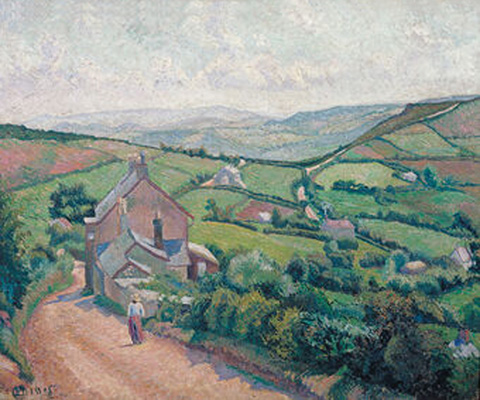
‘I was born in Yeovil maternity hospital in 1936. My mother died a couple of weeks later from septicaemia and complications following the birth; there were no antibiotics in those days. My father arranged for my paternal grandparents to bring me up, in Tintinhull, until I was 11, when my grandmother died. So basically I was brought up by Victorians. It was strict, but I was well looked after, and after passing the 11-plus at Tintinhull village school I went to Yeovil Grammar. My father was in the RAF in India, remarried during the war, and lived with his new wife and her daughter in a prefab in Montacute. So I went to live with them, where two more children were born, moving into a council house as the family expanded.

After the war, my father bought a milk round from a local farmer, supplying the villages of Montacute and Stoke-under-Ham. One day, someone from the village, who had an off-licence, suggested that we swap houses. So we moved from our council house to a lovely mediaeval hamstone house at the other end of the village, called the Shoemakers Arms. Officially it was an off-licence, but the regulars would lift up the counter shelf and come and sit in our sitting room. My father built up the business into a well-stocked shop, as well as continuing the milk round, and that really was my life until I left home.

At grammar school the one thing I really enjoyed was art, and I wanted to pursue that in life. My mother’s sister who kept a pub in Lyme Regis had always taken an interest in me, and I used to spend my summer holidays with her, which was brilliant. She suggested I could be an architect, and that sounded appealing, so she took me to Yeovil School of Art, where they designed a course which would get me in to architectural school. But in the second year I changed over to a Foundation course and then illustration, and textiles for my last two years. These turned out to be important choices, because I was introduced to printmaking, and learned lino block cutting, lithography, and printing on fabric, and after four years I had my degree.

From the age of 17 I had a parallel career as a racing cyclist. I was quite successful at a local level, three times champion of Yeovil Cycling Club. Due for my National Service, I was approached by the head of the Army Cycling Union. He said that if I joined the army, I’d be sent to Aldershot under his command, and he could promise me all the cycling I could handle. So I spent a very enjoyable two years’ National Service either cycling for the army, or doing a course called “tactical sketcher” (inevitably known as testicle scratcher), run by and attended by other art students doing their National Service; it was fairly anarchic, and a lot of fun.

When I left the army I took up a place on the teacher training course at Goldsmiths College in New Cross, London. From there it was easy to get into town to see plays, concerts, and exhibitions, a massive contrast to life in Yeovil. In those days the art magazines were printed in black and white, and the library at Yeovil Art School had been a glass-fronted cupboard, containing maybe 50 books. But the teaching at Yeovil was thorough. You were taught the essential skills of drawing, painting, and theory of colour. I was at Goldsmiths for a year, and learned a lot about art in general, then took a job at a secondary school in High Wickham for the year’s full-time teaching needed to complete my qualification.

After the year’s teaching, I went to France to see if I could make a living as a racing cyclist. However the French way of racing didn’t really suit me as it was very fast and furious, a lot of sprinting, and my forte was stamina, long distance racing up to 12 hours. So I travelled on down through Spain and met up with an old pal from Yeovil, Derek Boshier. I left my bike in Gibraltar, and we crossed to Morocco, hitching south to the Sahara. We drew, just using pencils and charcoal; and there was a moment, there in the Moroccan desert, when I clearly realised this was what I wanted to do. I thought it doesn’t matter what job I do as long as it’s undemanding and allows me to make art. So on returning to Montacute, I worked as a gardener, and produced some large paintings. With these I held my first successful solo exhibition in Bath. At the end of that year I decided I needed to go back to London, live amongst the art scene, and find a gallery. That was 1961; I worked in the evenings and painted by day, and was introduced to a very avant-garde gallery which showed abstract work from all over Europe—the New Vision Centre. I had two exhibitions there, in 1964 and 1965.

In 1966 I received a call from the head of printmaking at Brighton College of Art, a friend from Goldsmiths, offering me a job teaching screen printing. Initially it was only one day a week, but well-paid enough to allow me to continue painting. I took the job, and in fact carried on teaching at Brighton until I retired in 2001. I was always a painter who taught part-time, not a teacher who painted at weekends. I had a contract with an American dealer who sold large numbers of my prints in the USA.  I continued painting and showing work, however, a recession meant it became hard to sell work, and I found I’d painted myself into a cul-de-sac, making paintings from pre-determined colour charts. I had the equivalent of writers block.

In 1971 I bought a cottage in Lyme Regis, and spent weekends and holidays here. West Bay was the social honeypot at that time, there were always parties on a Saturday night, and the Bridport Arms was so packed you’d never get a drink unless you knew someone by the bar. Of course London was amazing too at that time, the late sixties, and I was one of the first generation of working class kids who had benefited from further education, along with David Hockney, Peter Blake and Derek Boshier, all of whom I knew then and still do. Despite its attractions London was losing its appeal for me, and having sold our properties my then partner and I bought a small farm near Askerswell, where I reared sheep. Country life didn’t suit her however, so she returned to London and we sold up. The proceeds from that enabled me to buy Newhouse, which was derelict, but I needed a project and spent most of my time restoring it. Slowly I began to paint again, and in 1995 held an exhibition at the Meeting House in Ilminster, the first one in 20 years. I began to sell in London again, and through a gallery in St Ives, and my career grew once more.

Four years ago during Dorset Art Weeks a man walked in, who turned out to be an art dealer who knew everything about my past career. He was able to get me a show at the Redfern Gallery in 2014, which was a huge success and has made life comfortable for me. Over the years there have been many influences on my work. I knew from the word go I was never going to be an illustrator, so the work has always been abstract, imagined from influences as varied as Dorset archaeology to prehistoric rock art in Ireland and Brittany.

I’m have now completed a catalogue of my 64 years of paintings. It was published on the 12th August, my 80th birthday. The first book launch was at the Art Stable, Child Okeford on 17th September. My partner of 10 years, Jacy, and I live here in happy isolation, two artists with a beautiful view of the Axe Valley and Windwhistle Hill.’
October in the Garden

With luck October can yield a good many days upon which gardening is positively joyful. Not so cold that you have to be cocooned in many layers of restrictive clothing and yet not so hot that any degree of physical activity brings on a sweat. There is a good chance, by now, that the soil is moist, from more frequent rainfall, without being wet to the point of saturation, which would put a stop to all tasks involving messing with the soil.

On the plant side of things it is the big old grasses which dominate in my garden. Stripy ‘Zebra Grass’ (Miscanthus sinensis ‘Zebrinus’) is a solid backdrop to various tall asters and other late flowering members of the daisy family. It’s fortunate that this grass is grown more for its bold yellow / green variegation than for its flowers, which I find are only produced in particularly favourable growing seasons.

Other Miscanthus produce great, airy-fairy, flowering plumes this month. The ‘flowers’ are really tassels, in a subtle range of colours, rather than conventional flowers which have brightly coloured petals in every colour imaginable. The palette includes rich, mahogany, red (Miscanthus sinensis ‘Malepartus’), through shades of browns and golds to the silvery white tassels of Miscanthus sinensis ‘Morning Light’.

If in doubt as to what to expect from Miscanthus, in all its many hues and sizes, then a quick internet search of the genus, choosing ‘Images’, will throw up a good sample to show just how useful these plants are to add form and structure to the post summer garden.

I have a few different varieties of this one species of grass. The ‘variety’ being identified by the name in single quotes. These will have been man-made ‘selections’, from all the slightly different plants raised from a batch of seeds, selecting an attribute, such as particularly deeply coloured tassels.

Once the selection has been made then all future plants must be produced by vegetative propagation, rather than by collecting seed, from your chosen example. Seed will always have some variation, in the population of plants raised from it, whereas vegetative propagation produces ‘clones’ so that each new plant raised this way will be a ‘carbon copy’—having the exact same coloured tassel, or particularly bold foliage, as the one you first picked out.

My Miscanthus seed around the garden and, in order that they don’t eventually take over from the ‘named’ varieties, these ‘mongrel’ offspring need to be weeded out. Having said that, if one does appear to have something special about then I tend to dig it up, carefully, and plant it in a pot to grow on to see whether it makes a good mature plant.

October is a good time to continue the sprucing up and titivating of mixed or herbaceous border and potting up any seedlings of plants which you’d like more of or for which there is a chance that the parent plant might perish in a very cold winter. I always lift some Verbena bonariensis. popping them into a cold frame, as an insurance policy against the winter being so bad that it wipes out the unprotected garden population. They’re always useful for plugging gaps at some point, or for adding height to container plantings, so they won’t go to waste.

Gently tidying borders to remove the worst of the decaying herbaceous foliage, without stripping them bare, will prepare them for the full onset of autumn and allow those plants which are still doing well to really shine. Dahlias will still be blazing, amongst the less exotic border plants, and will continue to do so, if dead-headed and propped up, until the first frosts. Plant spring flowering bulbs into any gaps which are revealed, marking the spot with a label so that you don’t dig them up by accident before they emerge.

If you don’t have room for spring flowering bulbs in your borders, or want a moveable feast of spring colour, plant them up in pots and containers. Add plenty of drainage to the bottom of the pot, coarse gravel will do, and use a 50:50 mix of loam based and multi-purpose compost on top of that. Add your chosen bulbs in layers with the largest at the bottom; the bigger the container the more bulbs you can cram in and the greater the mix of types for the longest succession of blooms. Try tulips at the bottom, daffodils in the middle layer and grape hyacinths on the top level. This will require a large, deep, pot but it will provide a spectacular firework display of spring colour.

Spring is still a little way off and before that there is the winter to contend with. I tend to think that the first frost marks the point of no return as far as the growing season is concerned. In the mild southwest it may not happen this month but it pays to be prepared for it by lifting tender perennials that you plan to overwinter, chop them back and pot them up, with a little fresh compost, in the smallest pots that their rootballs will fit into. They’ll need to be kept frost-free over winter so make room for them in the greenhouse, if you have one, or organise space on windowsills in an unheated spare room if bringing them into the house. The aim is to keep them ‘ticking over’, but not actively growing, so only minimal watering is required. The drier they can be kept the lower the temperature they can endure without succumbing to rot.

Apart from keeping on top of those tasks like clearing up fallen leaves, lifting and dividing perennials and autumn planting, there shouldn’t be a mad panic in your gardening schedule so make a point of enjoying your garden. Whenever there is a particularly good day or two take a leisurely look at what you’ve created and make plans for any major works which can only be completed over the winter. A garden is never ‘completed’, it is always a ‘work in progress’.

Vegetables in October

The last few months have been a veggiehead’s dream, with warm nights, warm soil, good light levels and just enough rain.

Every inch here has been taken up by growing crops, even the potatoes have no blight yet, and it’s been the best year for outdoor tomatoes ever.

As we now approach winter, you can transplant salad crops from modules such as spinach, land cress, coriander and dill. Or even, if it stays mild, try sowing seeds—they will come up slowly even as the days darken, but you may have a crop by the new year if your slugs are kind. Or when a crop is finished, such as sweetcorn or dwarf beans, our much-loved winter squash planted nearby soon grow into their place.

The nights have been so warm we have been tempted into thinking there may be another warm winter(!) We have even been transplanting bulb fennel, as there are now varieties of fennel, such as Sirio which, while they do not like ongoing frost, seem able to grow on and bulb up until Christmas. Turnip transplants also, especially if you like them small.

These mild winters persuade me to plant October sowings towards the end of the month or even early November. These include Aquadulce broad beans, garlic and overwintering onion sets. The mild winter last year may be the reason that our garlic was ready to pick by mid-June rather than the usual July.

As bare soil opens up, growing green manure springs to mind. Sow some cheap seed such as mustard, which a good frost should kill, so that by next spring they will have trotted down a treat. You don’t need to dig them in—digging is bad for soil structure, kills worms and is wasted effort. If they don’t die but start flowering, hoe them through and put stemmy stuff on your compost heap.

If you have lots of weeds germinating, pull them all out and cover with a thick layer of compost. This will have rotted down by April to a perfect sowing tilth. If you see weeds coming up through then hoe them, which also helps break down any lumps.

Some feel obliged to use black plastic as a mulch. If you have to, use some old plastic—not new, that’s wasteful. While this can warm up the soil in spring, that heat disappears before the next crop germinates. We find fleece better over a seedbed as it seems more and more necessary because our feathered friends are forever scratching freshly sown seedbeds. Fleecing was the only way we could get our carrots to come up this spring. This also applies to plantings of garlic and onion sets, as the birds are attracted by the disturbed soil and bright colours of the garlic.

As bare soil appears indoors after tomatoes and peppers, we will be sowing carrots—which want plenty of moisture to germinate—and winter salads such as the wonderful Red Frills mustard, Winter Gem lettuce and true spinach. Transplants of coriander or dill too, or even a new sowing, which may give you a crop of leaves by spring.

Having said all this, we will probably have a hard winter. But what did the mother strawberry say to the little strawberry? Don’t get into a jam.

Words Fail Me by Humphrey Walwyn

Like many of us, I expect you may be suffering from the symptoms of ‘Rio-Drawal’. No more glorious daily avalanche of medals, no more newspapers full of smiling union jack anointed Brits and no more getting up at 1.30 in the morning to watch the Ladies’ Beach Volleyball matches. I shall certainly miss the latter since I discovered that live broadcasts of shrieking young ladies desperately flinging themselves all over the place can be strangely irresistible.

The sheer amount of Olympic stuff on the telly at all times of day and night ensured we were both deafened by the excitement and blinded by the huge diversity of Olympian activity. The result of all this was I developed an almost unhealthy interest in sports that I would otherwise have ignored like Keirin Cycling, Handball or Greco-Roman Wrestling. I used to think that Men’s Pommel Horse might be a rather nasty neurological disease of the spine, but now I know it’s a UK gymnastic gold medal won by Max Whitlock from Hemel Hempstead. A few years ago, my sporting ignorance was such that I thought Taekwondo was a mouth-watering Asian dish featuring prawns, chilli and noodles, but now I know better since Jade Jones from Denbighshire in Wales won a second gold medal in it.

So, for the foreseeable future, there will be no more Super Saturdays, Special Sundays, Marvellous Mondays or Terrific Tuesdays. You can put away the horses, bicycles, rowing boats and sailing dinghies into their boxes for the next four years while we slump back into boring Nine To Five and good old British post Brexit politics and drizzly weather. It’s really quite a relief to get back to normal activity. Some of our BBC commentators definitely need time to gargle their sore throats and get their voices back.

It was all such a rush (literally)—such a Team Pursuit, such a Trott, such a Bolt—that we’ve run out of words to describe what went on. I counted up those that were used the most and the winning word by far was ‘Unbelievable’ (over 100 times every day) followed at some distance by ‘Amazing’ and ‘Overwhelming’. Literally every athlete interviewed after winning a medal of any colour used the word ‘Unbelievable’ at least twice. It almost became an Olympic cliché—a word used so often that it eventually destroyed its own meaning and became ‘Believable’. I can also now add another word to this list—‘Exhausting’—after so many nights spent listening to the radio as various athletes ran faster, threw things further or danced more artistically than anyone else. We will need to invent a new word to describe a multitude of gold medals. Is it a Glut of Gold? Or perhaps a Shower, a Heavy Thud (gold is very heavy) or even a GB of Gold (also short for Gold Bar). My favourite word for this is short and simple—a ‘Mo of Gold’.

The English language is constantly changing, so we need new words for a new world in 2016. If Windows 10 and my Android phone system keep asking me to download new updates, so too should my English dictionary. Here are some topical suggestions from the Olympics:


a Rio of colour, noise and excitement;

an If-Only of silver medals;

a Kleenex of fourth placed athletes and

an Unbelievableness of interviews.
and just to show that there really is life even after Rio, here are some non-Olympian suggestions:
a Chesil Beach of Dorset knobs;

a Trump of spoken gaffs and lunatic speeches;

a Corbyn of confusion—or of clarity—depending upon your political point of view and whether you read this before or after the Labour Leader election result on 24th September;

a Bottle Inn of stinging nettles;

a Heads-Down of smartphone users on a train;

a Drain of iPhone batteries;

a Self Promotion of selfies;

an AZ6D!39P78N? of internet users’ passwords

an Apocalypse of seagulls;

and my current favourite—a Fridge of magnets.

Golden Cap by Philip Strange

The west Dorset coast contains many wonders but one stands out above all others. This is Golden Cap, the distinctive steep-sided, flat-topped hill with its golden edge and cliffs falling precipitously to the sea. Visible for miles around and rising above all its neighbours, it stands 191 metres above sea level and is the highest point on the south coast of England. It is a local landmark, a place of legend, and an inspiration to writers and artists.

I first climbed Golden Cap nearly thirty years ago. It was a mild, early spring weekend and I was entranced by the experience. It’s now one of those places I like to visit periodically so, on a warm mid-July day earlier this year, I set out from the Stonebarrow Hill car park above Charmouth. The grassy track descended steeply between brambles and bracken towards Westhay Farm with its mellow stone buildings decorated with roses, honeysuckle and solar panels. I paused in a gateway near the farmhouse to look at one of the hay meadows. Bees and butterflies enjoyed the thick covering of grasses and colourful flowers while the sun gradually won its battle with the clouds. Flower-rich hay meadows were once an important feature of the countryside but they have mostly been lost since 1930 as a result of agricultural intensification. Managed in the traditional way with a late July cut for hay, they support a rich community of invertebrates, birds and flowers. The meadows at Westhay Farm are no exception and rare plants such as the green-winged orchid thrive here. My gateway reverie was interrupted when a fox suddenly appeared in one of the breaks in the meadow.  We stood looking at one another, a moment out of time, before the fox lolloped off through the long vegetation.

Beyond the farmhouse, the path descended across open grassland dotted with sunny stands of ragwort and tall, purple thistles populated with bumblebees. The sea, a pale steely blue, was now ahead of me, dominating the view. Today it was calm but the slight swell was a warning of its power. Golden Cap loomed to the east like a steep pleat in the coastline and, when the sun shone, the cliff face revealed some of its geological secrets. About half way up, a large area of rough grey rock was visible. This was laid down some 200 million years ago and is mainly unstable grey clays of the Middle and Lower Lias prone to rock falls and mud slides. Towards the summit, tracts of distinctive “golden” rock glowed in the sunshine. The rock here is Upper Greensand, sandstone laid down about 100 million years ago, forming the “cap”.

The coast path continued eastwards in a roller coaster fashion. Prominent fingerposts pointed the way and I passed vast inaccessible coastal landslips and descended into deep valleys with rapidly flowing water, only to climb again on the other side.  In meadows alongside the path, bees, moths, beetles and butterflies flitted among the many flowers including purple selfheal and knapweed, yellow catsear and meadow vetchling. The final push towards the summit of Golden Cap began very steeply across open grassland before entering a stepped, zigzag track which was easier to negotiate. As the path rose there was a change in the landscape. Bright purple bell heather began to show and bracken surrounded the stepped path; a kestrel hovered briefly above.

Suddenly the path levelled out; I had reached the summit and here were the familiar landmarks: a low stone marker informing me how far I had walked and the larger stone memorial to the Earl of Antrim.  The dedication told me that the Earl was the Chairman of the National Trust between 1966 and 1977. What it didn’t tell me was that he recognised the importance of preserving our coastline from encroaching development and spearheaded the Enterprise Neptune appeal which led to the purchase of 574 miles of coast saving it for future generations. Golden Cap was one of two coastal sites purchased in his memory after he died.

I reminded myself of the long views from this high, flat-topped hill:  to the east across Seatown, Thorncombe Beacon, West Bay and Portland, to the west over Lyme Regis and the wide sweep of Devon coastline, to the north across the Marshwood Vale. Looking down, I saw water skiers carving patterns in the sea surface far below. The sea now seemed so far away that I felt momentarily separated from the rest of the world.

On my return journey, I headed down and slightly inland to the remains of the 13th century chapel at Stanton St. Gabriel. Set in meadowland beneath the western slope of Golden Cap, the derelict, grey stone walls and the porch of the old chapel are all that remain. There is also a cottage nearby and a large building, originally an 18th century manor house, now restored by the National Trust as four holiday apartments. But why was a chapel built in this isolated spot and why is it now derelict? A settlement existed here for many hundreds of years and Stanton St. Gabriel was mentioned in the Domesday Book (1086). There was a farming community of about 20 families in the vicinity until the 18th century and this was their chapel but the settlement was abandoned when some people were lured to Bridport to work in the flax and hemp industry. Others may have moved to Morcombelake when the coach road from Charmouth to Bridport along the flank of Stonebarrow Hill was moved away from the settlement to its present route.

The derelict chapel provides a potent reminder of the community that once lived in this isolated but beautiful spot beneath one of west Dorset’s most striking landmarks, Golden Cap.


Margaret Bondfield

Chard has more than its association with the first powered flight as a claim to fame. Margery Hookings has been learning about Margaret Bondfield a native of the town who became Britain’s first female cabinet minister.

Chard Museum is a gem of a place, its bright and airy interior displaying models of aviation pioneer John Stringfellow’s flying machines and packed full of fascinating displays and information on everything from carnival costumes to farm machinery.

It’s a cornucopia of everything Chardian. Having spent my teenage years at school here in this town, I am ashamed to say this is the first time I’ve ever ventured inside.

This old building is vast, comprising four former cottages, a pub, skittle alley, barn and a field, complete with picnic tables.

I am overawed by the size of this museum, and the great things on display and that’s not just because it all began in 1880 with the eclectic collection of curiosities acquired by Arthur Hull, whose surname I had as a teenager. My mother has yet to find a connection to Arthur and our Hulls in the family tree, but I’d like to think we might be related.

Reaching the top of the stairs, I glance up at Arthur’s portrait. But Arthur’s story will have to wait, as I’m here for another slice of the town’s history. It’s one I don’t know much about but it ought to be shouted from the rafters. If anyone knows the actress Emma Thompson, perhaps they can persuade her to make a film about one of Chard’s most famous people.

I’m here to find out more about Margaret Bondfield, Britain’s first female cabinet minister and a champion of social reform. Today, at a time when Britain is only on its second female prime minister, it’s astonishing to think that Bondfield was blazing a trail back in the 1920s, particularly when she came from such humble beginnings.

“If you press the button on the radio, you’ll hear her voice,” says the nice lady who is manning the reception counter.

Upstairs, in front of the Margaret Bondfield display, I see the old radio and push the switch. Suddenly, the upper gallery is filled with the clipped tones of a woman who doesn’t sound at all like she was born and brought up in Chard. In practised Queen’s English, she tells the BBC in a three-minute recording about the day she was appointed Minister of Labour by Ramsey McDonald.

‘I’ve met people who knew her and they say she had a very broad Somerset accent,’ collections curator Roger Carter tells me as museum chairman Vince Lean delves into a display cabinet and brings out some of the memorabilia connected to Bondfield, including the companion of honour medal.

Margaret Bondfield was born in 1873 in a cottage in Chaffcombe Road, near the reservoir, which was created in 1842 to provide water for the Chard Canal. She was the tenth of eleven children. She went to school in Chard High Street, just above the museum where there is now a plaque on the wall. Her family were stalwart members of the Congregational Church in Fore Street, the site of which is where the Co-op is now.

When she was eight, her father lost his job as foreman of a lace factory after 60 years’ faithful service. The unfairness of it all was something that stayed with Bondfield all her life.

‘He was dismissed with a week’s notice,’ Bondfield said in her biography, A Life’s Work. ‘That week’s notice planted in me the seeds of revolt.’

‘The old radicalism and nonconformity of Chard…must somehow have got into the texture of my life and shaped my thoughts…’

At the age of 14, Bondfield left Chard to live in Brighton where she was apprenticed to a draper, working from 7.30am to 8.30pm, six days a week. In 1894, at the age of 21, she moved to London.

‘For the next three months, I was nearer to starvation that at any time before or since. I learnt the bitterness of a hopeless search for work,’ she recalled.

Securing a job, she joined the national union of shop assistants, warehousemen and clerks and by 1898, at the age of 25, she was its full time assistant secretary. A year later, she attended the Trade Union Congress as the only woman delegate. Her political star was on the rise.

According to the museum’s display, ‘her best work was done before 1914 as a fearless trade union organiser, speaker and writer whose enthusiasm and idealism made a strong impression.’

Bondfield went on several lecture tours in the United States and Canada. In 1919 she visited the Soviet Union in a TUC delegation and met Lenin.

In 1923 she was elected Labour MP for Northampton and was appointed as parliamentary secretary to the Minister of Labour. She lost her seat the following year but was re-elected in 1926 as MP for Wallsend. From 1929 to 1931, she was Minister of Labour in the second minority Labour Government. It was a difficult post. It was the time of the Great Depression and unemployment was soaring.

In 1930, British political theorist, economist, author, and lecture Harold Laski said of Bondfield: ‘She has the gift for that passionate oratory which captures the emotion of the audience and sweeps it along with her.’

She retired from full time union work in 1938 and made her last US lecture tour at the age of 75. Her last visit to Chard was in 1948 for the Stringfellow anniversary.

Belinda Burton, who lives in Chard and sits on the South West Executive of the TUC, said she found Bondfield’s story and achievements truly inspirational.

“I didn’t know much about her and then a couple of years ago I had to do a presentation on her. I thought she was an amazing woman. She came from a poor background and I found her quite inspiring, particularly because of the sort of work I do. I work for Unison and represent low paid members, mostly women, in local government in the care industry and in schools.”

When Bondfield was awarded the Freedom of the Borough of Chard in 1930, she said: “I am prouder, I think, than of anything else that has happened to me in my life that my own home town has seen fit to confer upon me this freedom.”

Margaret Bondfield died on 16 June 1953 at the age of 80, the mayor and town clerk of Chard attending her cremation.

There is a road in the town which is named after her and there are in the town two plaques—one marking the site of her old school and the other at the Guildhall, which was unveiled by Barbara Castle in 1985: ‘Shop worker, Christian, Socialist, Trades Unionist, she devoted her life to improving the lot of the downtrodden’.


Virginia Stewart

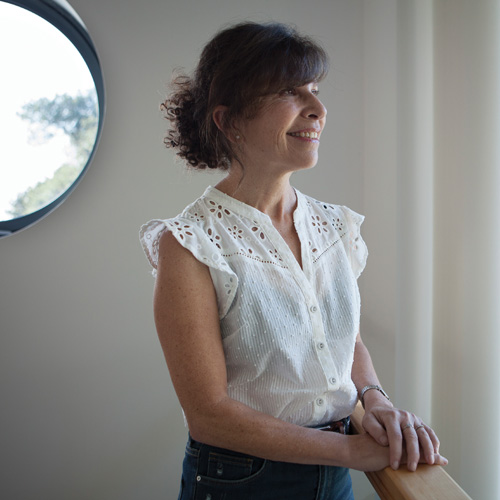
‘My Dad came from an old Sussex farming family in the tiny village of Ifield, which developed into the new town of Crawley. My mother came from a completely different family; her family was artistic and ambitiously academic. They moved from Manchester to Crawley, which is where my Mum and Dad met. They married at the age of 19, and had my twin sister Lorna and me when they were 20. At that age twin girls must have been a huge challenge for them. Nonetheless Mum, Adrienne, was ambitious and went back to college, and became a primary school teacher. She adored her work, and was Head Teacher for over 20 years.

My Father, Jack, was an industrial engineer, so my parents both worked hard, but Dad kept more conventional hours, so that often when we came home from school we had lots of time with him, although of course we’d all be together during school holidays. Dad was a very active person and would take us on long country walks. He’d say “come on girls, up and out”, and we’d walk for miles. He also took us swimming at the pool in Crawley, and built a bike for me so we’d go cycling too. Mum’s teaching enabled long summer holidays—although I’ve no idea how Dad managed to get five or six weeks off—and we’d pack our Ford Anglia Estate to the roof with camping gear and head to the beaches of the south of France. We still do this every year, so that now France is like a second home to us. Even though our children have grown up, they bring their partners and we still all go together as a family, although not for six weeks, and swim, hike, and go rafting. We rent a house big enough for us all; I’ve done enough camping and prefer a bit more comfort. Family time spent together is really important to all of us.

I met my husband Richard when we were both on an A level geography field trip. We were rock climbing and he hauled me up, which was a great way to meet. I went to Roehampton to study English literature, which I loved, and he went to L.S.E and read History. We got married when we were 24, and bought a flat in London. I worked for a financial services company and learned all about mortgages, then for an insurance company. I loved my job, but commuting to London was really time consuming. We then lived in a village on the Surrey/Sussex border, and I gave up work to bring up our three children there. My husband had joined the Territorial Army which helped make ends meet, and he is still serving as a Major in the Rifles. All the years I was bringing up the children, he’s worked really hard and made a good life for us. Richard travels around the world for his company ASMPT who are based in Weymouth.

Sport has been massively important to all of us, coming mainly from my Dad’s influence as he is such an active and supportive person. Both my sister and I grew up in a sporting environment, and became strong swimmers, with both of us representing our town, and Sussex at county level. My husband’s a great walker, and runs marathons and off road races, so our children have had a lot of encouragement from us as well as support from my parents and sister. We wanted them all to grow up healthy and fit, and take sport as seriously as their academic life. Being involved in sports opens up so much in life for youngsters; they meet people, and are challenged, all of which boosts their self-respect.

All of our children went to school locally either in Bridport or Colyton. Our eldest son, Alexander, is teaching science at a boy’s school in Sussex and our daughter Harriet, aged 22, is a personal trainer. Phoebe, our youngest, is 18 and just about to take her A levels and hopefully go to university to study sport, with the aim of becoming a sports teacher. In fact, they’re all very sporty and have competed locally and at a county level. Alex played rugby for Bridport, going with the team to New Zealand for three weeks on the trip of a lifetime.

I was sitting with a friend in Bridport Leisure Centre watching our children swim when we decided it would be great if we could get back into swimming ourselves. With the patient tuition of Mike Craddock we started, and after a month of sessions it had just come back, and felt totally natural. My friend and I encouraged each other when either of us felt a bit unenthusiastic, and both of us got involved with Bridport Barracudas where we coached. I swam competitively for the club in the Masters team, and I loved butterfly and backstroke. Butterfly’s a bit of a killer, and really hard to swim well, but I love it and I’m really proud that I can do it. Personally, the best bit was that I had been a Mum for my children for a good ten years, and now the swimming was just for me. That inspired me to train as a swimming teacher and I started teaching at Bridport Barracudas and then Bridport Leisure Centre.

I love teaching swimming because I always work with such lovely people, from young children to adults of all ages. The young children are fascinating; their characters are so individual and exuberant. As they get a bit older and go to school they become a bit more compliant, but they’re full of enthusiasm and just a real pleasure to be with. Adults are all very different, but they tend to learn with a sense of humour and are very good company. They are often there to push themselves, whereas with children you often need to coax and stretch them. Some adults are returning to swimming after a bad experience, and I’m there to reassure and rebuild their confidence. Teaching is not a process of saying “now we’re going to do this”; it’s always “let’s try this together”, so achievement comes at a gentle pace. Some of the more difficult to teach are the 40-50 year old men who want to be triathletes. They can run for ever, they can cycle for ever, fantastically fit, but all that heavy muscle works against them in the swimming pool so it can be tough. Sometimes they can’t swim at all when they come to me, and they need to overcome their fears so that ultimately they can do a long very competitive open water swim and fulfil their ambition to complete a triathlon. They have great determination; they dig in and go for it.

We’ve had the campaign to keep the Bridport swimming pool open; I think many pools around the country are under threat as they are very expensive to run. When my sister and I were young we’d spend all afternoon playing in the swimming pool, or run and play in the fields behind our house, we had so much time and freedom. Times have changed for children; they don’t seem to have that freedom now, so the pools aren’t used as much by children and teenagers just coming to the pool and having fun. So that’s what I’m aiming to do in the next year or two, to encourage children and families to come to the pool simply to have fun in the water, which is really quite a cheap way to spend some family time. I’m also trying to encourage families to bring in their children so that they can learn to swim confidently. Living near the coast as we do, we must teach our children to swim and how to keep themselves safe around the sea. Putting it all together, learning to swim brings lots of benefits to children for their physical development, concentration, and confidence, as well as enabling them to enjoy the water safely.’

September in the Garden

For a little while last month I was forced to adopt my ‘emergency hot weather’ gardening mode. This involves early starts, with late finishes, in order to carry out watering tasks before the sun is too fierce and also so that I, not a fan of roasting in the midday heat, could effectively ‘take a siesta’. Of course it’s nice to get some properly hot and dry weather but, now we’re into September, I hope the risk of a damaging dry spell is behind us for another year.

The soil where I garden has, in most areas, a high proportion of clay in its structure which means that it holds onto water well, generally a good thing as far as plants are concerned, but has the downside that it sets like concrete as soon as it dries out. This isn’t helped by compaction, generally caused by stepping on it, which is why it is essential to use a border fork to lift out all footprints if, for any reason, you have to walk on the borders. It also means that to carry out any lifting or replanting tasks, during dry weather, the area concerned has to be watered first and, in the case of planting, well-watered afterwards too.

A ‘good watering’ following a hot dry spell is enough to initiate flowering in autumn flowering bulbs like Amaryllis belladonna and Crinum x powellii; these are pretty monstrous and need a large space to look their best en masse. Nerines do much the same job and are much ‘prettier’ with finer leaves, which are less of a problem, and in a greater choice of varieties.

They all require a fair degree of sun but, for shadier spots, Autumn crocus and Colchicums are better, some of the larger varieties naturalising in grass. In practice, naturalising can be tricky as their large, frankly coarse, leaves persist for many months after the flowers have gone. I prefer them in pools (as in ‘patches’ not ‘ponds’) under small-leaved trees like birches or Amelanchier. Gathered around the base of the tree the flowers are dramatically spring-like in contrast to the general ‘onset of autumn’ feeling everywhere else.

We have the aforementioned Amaryllis belladonna under wall trained nectarines. When their naked flower stalks begin emerging, just about now, they look pretty strange—like a troupe of little aliens arching their pale heads out of the soil before invading the world! In fact, it’s not the flowers that threaten to wipe out all opposition but the leaves that follow, persisting through much of the following year, as these blot out all light to the soil beneath and, unless dealt with, will harbour a huge population of slugs and snails (which in our case climb up the walls and chew on the defenceless baby nectarines).

Cyclamen are more ground-level with the advantage of having attractive leaves, especially in the case of C. hederifolium, and these quickly naturalise to spread and carpet even in full shade. In sunny, but not arid, flower beds, you could do worse than Schizostylis coccinea. The variety ‘Major’ is the one most often seen and it’s a truly rich red with, improved, large flowers. The, smaller, white flowered form does well here, liking the water holding capacity of our clay soil no doubt, and is a breath of fresh air blooming away as the perennials die down. The grassy foliage is present for most of the year, often not fully dying down even into winter, and it’s the cooling temperatures, teamed with more abundant moisture, which coaxes them into flower around this time of year.

In the flower garden there’s a lot to do to prolong the summer display. Dead-heading, weeding, cutting back perennials and pulling out tired bedding will all help to keep it looking respectable. Any gaps revealed are an opportunity to bung in some spring flowering bulbs (top slimming tip : buy them in the supermarket instead of a packet of biscuits!). Replant the area with winter bedding to mark where they are buried – to stop you from digging them up again. Good old winter flowering pansies like to get their roots down before the proper cold weather arrives, or else they may sulk all winter instead of flowering their socks off.

Of course, dahlias, cannas and all the late flowering tender perennials will only just be reaching their peak so growing these in your borders will naturally extend the season. Perennial grasses are the perfect foil for these and, if planted ‘cheek by jowl’, they perform a useful role in propping up their more floppy bedmates. Tall grasses may also help a little bit in protecting more delicate exotics from the worst of the wind and rain which can devastate late summer borders as we head deeper into autumn.

Moist, warm, soil at this time of year means that it is a good time to move evergreens and conifers which need to be able to recover from the shock of transplanting, by producing new roots, before the ground is so cold that it stops growth. By the same token it’s a good time to prepare new areas of ground where you want to plant herbaceous plants because if you need to clear it first, using a non-persistent ‘glyphosate’ weed-killer, then September is the last month when this is likely to work. Even if you’re clearing it by hand then this needs to be done in good time so that any weed regrowth can be removed before new perennials, or divisions from existing plants, can be put back into the weed-free soil.

Hedge trimming, having started on the yew last month (chance would be a fine thing), continues as and when I get around to it. Also, I’d quite like to have a go at removing the thatch and moss from the formal lawns but this is very weather dependent. I live in fear, because it’s not my lawn, of timing it wrong and having a patchy looking mess for the whole of next year. I think I’ll experiment on a bit that doesn’t show from the house 😉

PS—Last month I mentioned the very joyful annual mix flowering away at the council recycling centre. I was less pleased to see, towards the end of the dry spell, that the specimen trees, forming the ‘spine’ of this planting, were looking decidedly stressed and desiccated. These trees would not have been cheap to buy, or plant, and I’d have expected, if there was any ‘joined-up thinking’ at all, that someone at the facility would have been tasked with keeping these expensive items well-watered, at least for their first year in the ground. I mentioned this to the ‘recycling centre operatives’ but, rather depressingly, as far as they were concerned it was not their problem;. As a tax-payer I would very much suggest that it should be their problem!!!


Vegetables in the Garden

September is about harvesting, planning new plants when existing crops are finished, and judicious watering where required.

A hot and sunny August made a big difference to growth and fruiting—such an abundance we have hardly been able to go on holiday!

Regular watering of ‘Defender’ courgettes (soil not leaves) and French beans has paid off with massive yields. While the dwarf ‘Sonesta’ French beans gave a fair crop outdoors, the ones in the polytunnel had 300% more. The dwarf varieties fruited all in one go, whereas Cobra climbing up 8’ bamboo wigwams are giving big harvests and set to continue until the last few in October.

So you can tell we like French beans, which means we give them great attention. Yet although our indoor tomatoes have done well in the heat, I managed to under-water them in the hope there would be less side shoots. Disaster, less fruit has set and blight has taken over as a result of stress. It is a good lesson to pay attention to detail, but luckily the blight around here rarely attacks our fruits, mysteriously it only affects the leaves until late October.

We have not watered sweetcorn, parsnips or winter brassicas. The last two are storing sunshine energy and will grow strongly when the rain arrives. But there is a point, especially if you haven’t enriched the organic matter in your soil, when the plants get dangerously weak, and then you really should water them.

Sprinkler systems are wasteful, better to water the soil around the plants with a watering can. This makes you think about how much water you are using, is much more efficient and may encourage you to use as much rainwater as you can. Our leeks would like water, but we won’t give it to them unless rust gets going, when we will water the soil not the leaves.

While it is generally more fun to concentrate on your successes, we have plenty of failures this year. My polytunnel aubergines refused to set fruit, I probably let them grow too big and flower too much. Nest year we will keep them pruned hard, which we have done with Sweetheart melon, and now have many fruits ripening.

And why did our potatoes have no blight in late August. The wet June saw the plants grow big and healthy, and perhaps the almost dry weather since (except for 1” rain on 1st August) has helped. The tubers we have been digging are big too.

The transfer from summer to winter vegetables is gradual if September is sunny. As crops such as sweetcorn are harvested be sure to fill the space with transplants or even sowing straight into the soil early in the month. You can even transplant between plants that will soon finish such as lettuce.

Transplant Spring cabbage and overwintering onion sets. Sow leaf crops such as true spinach, chervil, dill, coriander chard, rocket, and orientals like mustards, Pak Choi, Tatsoi and Mizuna may produce good leaves through the winter and certainly in early spring. They will produce more and fleshier leaves in a greenhouse.

Penelope Frigon

Covering a maternity leave post in adult education some years ago, Penelope Frigon found it full of exams and paperwork, all a bit sterile really. She thought she could do better and so founded Love Learning; a learning centre with an eclectic mix of courses.

Mainly based from above The Olive Tree restaurant in Bridport, Love Learning covers languages; French, Spanish, Portuguese and Italian to Creative Writing and Song Writing / Performing. Whether it be a coffee and patisserie or a glass of wine and tapas served while students learn, the relaxed atmosphere generates great results. Inspired by the success of the courses, Penelope also organises Field Trips abroad. Individuals who take part can enjoy the country and its culture, practice the language and inevitably make new friendships with like-minded people.

Penelope has a Degree in French and Spanish and spent several years travelling around the world; some as a diving instructor as well as time spent in Japan teaching English. The Cayman Islands especially hold a special place in her heart as she met her husband, Stephane, co-owner of The Olive Tree in a dive shop there; also a diving instructor at the time. Often they speak in French at home, as Stephane is French Canadian, creating a bi-lingual atmosphere for the children to grow up in.

Penelope has grown the business around her family life, which she cherishes above all else. She works from home much of the day, and is able to take a break in the form of a dog walk or yoga when she needs, describing her enterprise as a “cottage based kitchen table company”. Recently, Love Learning was invited to Portland to teach the Olympic Sailing Team Portuguese before their trip to Rio. Let’s hope the winning combination of food and language learning generates similar results for our Sailors this summer.