
Wednesday, March 25, 2026
Home Blog Page 52

Peter Bartlett

Julia Mear met Peter Bartlett in Beer, Devon.

‘I was born in one of the Fisherman’s cottages on Sea View Road, the fifth one down, in 1932. The locals know me as ‘Chunky’. My grandfather, Joseph, was one of the first tenants of these cottages. He and my father, Herman, both fished. My grandfather died aged 38 years and left eight children behind. My mother, Isabelle Tuck, was from Bournemouth. She was one of a twin and her aunts brought her up. Their family ran a café in Swanage. My mother went to Sidmouth to learn the business with a view of running the café in Swanage later but she never did that. Instead she met my dad; he was 42 when they got married. My father had a few huts on Beer beach. In the summer he did his deckchairs and beach huts and in the winter he went fishing. There were lots of herring to catch in those years between the wars. The owner of a boat took on Father as an extra man and they went three in a boat herring drifting. It could be quite perilous if you struck shore. During the war Dad was an auxiliary coastguard. Mum worked at the Anchor Inn as a cook, she was there for 16 years.

I have a brother, Timothy, who is three years younger than me. When he was born I went to stay with my aunties in Bournemouth for about six months. My brother didn’t stop crying and I told Mum to throw him out the window—that’s what they tell me anyway.

As much as I wanted to go fishing, I was too young. But, by 11 years old I was working 35 hours a week for my uncle, Ken Bartlett, who was a baker in the village. His son and workman both went off to war and he talked me into giving it a go. I could get the dough out of the trough which you couldn’t see in the evening but by the morning it was lifting the lid off! Bread was bread then and we’d cook five hundred loaves in a morning. Even at 11 I was soon able to cut it into lumps and weigh each one—2lb 2oz for a large loaf. Then I’d throw it onto the table for my uncle to mould it up. I was excused from school on Tuesdays and Thursdays until 10am so I could help my uncle. He would then go off and deliver in Seaton in his little Morris Eight van. In my 1 1/4hr lunch break I would deliver more bread through the village with a carrier bike. Then, when I came out of school we finished off delivering in the what is now Peco area and Barline. We still had to load the van to go to Branscombe starting at Quarry cottages around 5.30pm. In 1947 we had some bad snow and couldn’t see the roads for three weeks or more but we never missed a delivery in Branscombe. We put chains on the tyres and somehow managed to get through all the steep windy lanes.

My uncle was a big influence on my life. I still done a bit of fishing when I could, but through doing the bakery work, it meant I never had holes in my shoes again. I left school at 14, the bakery always had to come first but the sea bit was no trouble to do; I loved it out there. I started off with crab and lobster pots and at 17 I had a brand new fishing boat that I paid £319 for, which would be about £20,000 today. It was some feat at the time because my mum needed 10 shillings of my pay to feed me.

I got better at fishing and in the summer, in the fifties, after I came back from pulling my pots, I ran a boat for Dougie Orley. There was a lot of money to be made and we took out around eight boat trips of people each day. By then they had started letting out self-hire boats and Dougie let mine out as a self-hire as well so I had a share of that. He once said to me the worse thing we did during those times was to not charge double! We charged £1/hour for a whole boat load of people and me as skipper. He was a good friend—his daughter now owns and runs the Dolphin in Beer. In the sixties I went begging to the bank for a loan and bought my first ‘bigger’ boat. This meant I was able to achieve the best of what you can achieve to be a successful fisherman. In my time I’ve had five wooden boats built for me. The last one I had built in 1974 and it’s still on the beach today.

I’ve been married for 60 years. My wife, Barbara Ebdon is from Axminster, she looked after Dr Parkinson’s children. I met her at a dance held in the Plaza Ballroom, the building behind the Guildhall then. The band playing was The Modernaires. There were dances every Saturday in Axminster back then, they were very popular. We would get the bus to Axminster and then a taxi home. George Hoare ran the taxis, he’s still alive today. If you didn’t get to the taxi in time you would have to stand on the running board with the window down and hang on! If any lights came, George would slow down and shout ‘jump jump’ so we’d jump off until the lights had gone then get back on. We were lucky if someone got out at Musbury so we could get inside the taxi. We got married in 1955 in Axminster and rented The Dairy in Beer, now Jean Bartlett’s Holiday Cottages. We got it rent free plus £5/week. Barbara ran the dairy and I managed to convert some sheds out the back into a bit of a bathroom. This was sheer luxury from what I’d been used to; it had been a tin bath by the fire before that.

I learnt that if you worked hard you could earn a bit more than what you needed. Sadly, young people today struggle to get a property or a boat with the prices today. The cottage I was born in was built for £200 and the last one sold for £360,000.

From about 1949 to 1973 I’d done years of pretty serious fishing. When you’re going out there on your own you have to make your own decision on how the weather is going to be. If I was carrying passengers I’d be out for the day sometimes so I had to be careful. I’m not very religious but in all my fishing life I have prayed for real five times; meaning I thought I’d need some help to get me back when the weather had changed worse than I’d estimated. But I’ve always loved it out there. You never knew when you were going to see dolphins and they seemed to like to play a game with my boat. They’d stay about an hour or so, leaping out of the water almost landing in the boat at times. It’s magical when they’re in the boon; they perform like they’re doing a show just for you. It used to be a regular thing years ago but it’s much rarer nowadays.

We had two children, Jane and Simon and it felt right raising my family and being able to support my children rather than giving parents money like I did from such a young age. Barbara and the children came out a fair few times on pleasure rides. But mostly for family time and days out the weather would have to be winter rough to keep me off the boats. Jane works as a midwife in Honiton and Simon’s got the self-hire boats on the beach. My son never wanted to go fishing like I did. Today you have to have certificates to go out fishing before you even know if you like it. Someone once said to me there’s nothing you can’t buy to go out fishing but they were wrong; you can’t buy experience.

I’ve got a beach concession for my beach huts—you get a length of beach for huts and deckchairs. Although I don’t own any boats now, I still go out on my son’s self-hires; some of which used to be mine. I still have five traps but I don’t go out every day; I’ll go out on my own, much to my wife’s disgust! I wouldn’t say I’d like to fall overboard but I’d rather go that way than end up stuck indoors with illnesses, the thought of that haunts me. I still wonder what I will catch tomorrow; gives you something to get out of bed for.’

Up Front 12/16

A couple of weeks ago, as part of Bridport Literary Festival, I interviewed Times journalist David Aaronovitch about his book Party Animals: My Family and Other Communists. He is such an engaging speaker that there were questions which we never got to, and I imagine that discussing the result of the US election the day before could have kept many audience members engaged for hours. We could also have spoken about another book David wrote called Voodoo Histories: The Role of the Conspiracy Theory in Shaping Modern History, especially in light of debate about the role of social media in disseminating ‘fake news’ throughout the run-up to the election. Voodoo Histories debunked many of the major conspiracy theories that have been given an extended life by the system of delivering tailored news and information to users of social media—in this case the delivery of stories that feed conspiracy theorists’ need for conspiracy. The practice of featuring content based on an algorithm to suit reading habits has been a source of irritation for some time, and although it could be said that manipulating readers has been a feature of the popular press for decades, the scale and style of modern ‘news’ delivery has changed dramatically. Not only does it reach an audience of people that may not have bothered to access as much news as they now do through their mobile devices, but canny marketers can make a living by preying on some of this audience’s need to be connected to social groups and socio-political positions. Whilst internet giants go on the defensive and claim to be dealing with the fake news issue, there is a deeper problem that won’t be so easily fixed. We live in a world where content is consumed in headlines. Headlines that are replaced by new ones every day, and few people can follow them all. This means that stories that for example might implicate people in crimes they didn’t commit are headlines they will live with for the rest of their lives. Whilst stories pedaled by pay-per-click operators, or even those with more sinister motives, will also stick in the memories of those that don’t bother to search beyond them. The truth may be out there, but we’re not always listening on the day it gets published.

Vegetables in December

After a deluge of rich foods at Christmas many people will be delighted to see a bowl of salad hit the table, and possibly even some freshly picked and al dente sprouts might go down well too.

Our sprouts have tasted really sweet in spite of comprehensive caterpillar attack in August. Sown outdoors in late May in modules, they were attacked by both birds eating their leaves, and flea beetle. This shows how every year is different, as normally flea beetle has subsided by then and birds have plenty else to eat in late May.

These skeletal plantlets were transplanted into rich soil in a suddenly hot July and the plants grew fast and furious. The tall and healthy stems formed lots of sprouts, but pushed their protective Enviromesh up off the soil floor and the cabbage white duly laid a mass of eggs. Yet the sprouts are now yielding well, and strong growth and good seed means very few ‘blown’ (loose) sprouts.

While first pickings are sweet, later pickings from further up the stem are often slightly less so. But if you manage to boil them for only a few minutes in the hiatus of Christmas Day their flavour and texture will be notably good.

Turning now to that Christmas salad, leaves tend to be thin and small in midwinter, and make slow and fiddly picking. In a greenhouse or tunnel you get faster growth and sweeter leaves.

Outdoors we have some true spinach (as opposed to perpetual spinach), land cress, dill, rocket, coriander and chervil, all from a late July sowing. The dill and landcress seed was seven years old, and made a slow and weak start but have now gained strength. The spinach is attractive to slugs but each plant still yields a leaf or two each week, with the promise of more as the days lengthen.

My household seems less keen on the ‘cabbagey’ taste of pak choi, tatsoi and mustards, and for me lambs lettuce is too fiddly to pick. Exceptions are Mizuna and Red Frills mustard, which have a mildly piquant taste, crisp texture when picked small, and are steadily productive even in midwinter. In the spring the flavour of Red Frills is wonderful.

Our Christmas salad bowl also features radicchio hearts from plants sown in late June, which are crunchy and crisp, and add a welcome red colour to proceedings. As you get to the small leaves in the centre the flavour is really sweet. Outdoor endive and swiss chard is also quite productive, best with regular picking of small leaves.

I hope you have all vegetated well this year, and wish you all a rich and fertile Christmas. But watch out, what do you get if you have too many Christmas decorations? Tinselitis.

December in the Garden

I think we’ve had a pretty ‘standard’ sort of year, for the UK, weatherwise if not politically. Every year will have periods that, in isolation, seem unusual but these events balance out over time. This autumn was pleasingly dry and warm, compared to some, but not in the way in which it will be remembered for decades to come.

When I think of droughts I automatically go back to 1976, I was a small boy (!), and that hot summer was memorably exceptional and hasn’t been repeated since. There were even bumper stickers produced (whatever happened to them?) with the legend ‘Save Water—Bathe with a Friend’!

As far as one-off events go, then the ’87 hurricane is hard to beat. It was so unusual that, if you were in the SouthEast, then you will definitely remember exactly where you were at the time it struck. I was in Wye, Kent, in ‘Halls’ during my first term of a degree in Horticulture. The copper roof pealed off the student accommodation and landed in the car park – that was pretty memorable.

Of course, I hope that this winter carries on in an unremarkable vein. I’d like a bit of cold, some snow maybe, but nothing that will remain noteworthy for decades to come. A bit of ‘proper cold’ is good for killing off some of the overwintering pests/diseases and also, via frost action, for breaking up a heavy soil. For any frost to really get into the clods of earth, it does rely on my having got around to digging the veg beds before the frosty weather attacks.

As I write this it is definitely too wet to be trampling all over the soil, or attempting to dig it over. From bitter experience, I’ve learnt that a compacted soil, with all the life-giving air squeezed out, is a serious barrier to good plant growth. Always best to leave any earth maintenance activities to periods of dry weather. This may require a little patience in a warm, wet, winter.

It’s the perfect time to order bare-root plants, the most cost-effective and easiest way to obtain a wide variety of trees and shrubs. You can always ‘heel them in’ if the weather isn’t perfect for planting when they arrive by post. I’m constantly amazed when browsing through specialist suppliers of such things, just how diverse the choice can be. I’ve always bought my ‘mixed hedging’ and ‘wood-fuel tree mixtures’ this way but if you are planning a block planting, of willows or Cornus for example, then bare-root is the way to go.

Having a quick look on the website of my usual supplier, ‘Hopes Grove Nurseries’, the first thing I notice is that I could plant a small grove (over 20), 4-5ft tall, bare-root Amelanchiers for under a hundred pounds, including delivery. The ‘Snowy Mespilus’ is one of those large shrubs / small trees which really should be planted everywhere. I don’t think it has a single ‘vice’. It even responds to be treated as a hedge, if the ‘tree option’ won’t fit into your garden.

The season for obtaining and planting bare-rooted plants is from leaf fall to bud burst. Best not to leave it until the last minute as they certainly prefer to have a little winter rest, post replanting, rather than getting a rude spring awakening immediately after the trauma of being dug up, transported and stuffed into new ground. Having said that I have, on occasion, left it obscenely late to get bare-rooted hedging planted and it’s still romped away in the spring.

I like experimenting in the garden so when I planted my own ‘native’ hedge I added about five species of rose, to the standard mix, for more floral interest, colour and wild-food value. It’s proved a great success and now, if I was planning another hedge, I think I’d be very tempted to populate it with a large number of the more ‘ornamental’ trees and shrubs, available bare-root, as they are so, comparatively, cheap. If some don’t survive the competition or fail to thrive as part of the mix, then it’s not the end of the world. I find, in gardening, it is the unexpected successes that you remember and not the occasional disaster.

Luckily for us, whoever planned the annual explosion of overconsumption that is Christmas, was thoughtful enough to make sure it takes place at perhaps the quietest time in the garden. Perhaps the only garden-related task that you’ll have to do is to choose a present for a gardening relative or think of one that you’d like yourself.

I am extremely fortunate in that I either already possess any gardening tool that I could possibly need or my employers, being practical sorts, have ensured that the garden I work in is equipped with every piece of machinery required for modern horticultural excellence.

This year I have been experimenting with a piece of equipment that I picked up years ago, for about a tenner, from a well-known online auction site. It’s a soil steriliser and probably cost hundreds of pounds new but was being sold, by a horticultural group in the middle of nowhere, because they had no use for it. They hadn’t even been plugged in!

In those days I was privileged to have use of BBC hire cars, at licence fee payers expense, to roar all over the country in the arduous task of looking at lovely gardens before deciding whether we would deign to film them or not. The joy of this was that items listed as ‘Pick Up Only’, which were impossible to post, and with a very limited market, would sell for next to nothing and all I had to do was to combine collection with a ‘recce’ nearby. Bingo! Lovely soil steriliser, minimal cost, very little hassle.

Anyway, this year has been the first in which I’ve been able to make good use of it. I’ve been using it to recycle old compost, after it’s been used to grow tomatoes and the like, mixing it with some garden soil, running it through a ‘Rota-Sieve’ and then ensuring that it’s sterile by a quick blast in the soil steriliser. The resulting ‘compost’ just needs the addition of a base mix of nutrients before being recycled for repotting shrubs/perennials which like to have a bit of loam in their potting mix.

That would be my Christmas present of choice if I didn’t already have one. Failing that ‘Groves’ (still one of the best garden centre nurseries in the UK, I reckon) vouchers can’t go wrong. Happy Christmas one and all.

PS—I am not connected in any way with any product or company mentioned—they really are the places I go to, or products I choose, from my own experience. I cannot guarantee that they are the best out there, just the ones I prefer…

Watering Holes in East Devon

Last February we teamed up with Bradt Travel Guides to launch a writing competition highlighting the beauty of East Devon. Entrants were asked to describe, in no more than 500 words, their own perfect 24 hours in the region. Joanna Griffin from Gloucester won a short-break holiday at Cuckoodown Farm near Ottery St Mary staying in one of their luxury yurts, and runners-up each received a copy of Bradt Travel’s Slow Travel East Devon & The Jurassic Coast by local writer Hilary Bradt. This month we are fortunate to publish Joanna’s winning entry below.


Total immersion. It’s a rule.

That’s fine by me. The midsummer sun is high and already the day is warm. We’re hot from the mile-long walk upstream to the bend in the River Otter at Fluxton Weir. 

A brief breeze ruffles the leaves of the old willows lining the bank of the deep natural pool above the weir. Their long branches dip into the water as if they too are longing for a swim. I ease myself into the water, which, even on a day like this feels cool on my skin. Total immersion I remember and I submerge myself as my friends do the same. I feel the familiar combination of elation and slight fish-related anxiety, common amongst wild swimmers.  A few of us swim upriver between the banks of willow and meadowsweet, whilst the others swing from the rope hanging above the pool.

We dry off in the sun in the field above the river before driving south to the pretty village of Colaton Raleigh, where Woodsys award-winning cider is produced and sold from the Woods Village Shop. Resisting this and the draw of the Otter Inn, we turn towards the church of St John the Baptist, dating back to the twelfth century, and from there we take a footpath back to the river where we find a small beach. The sun is now high but it is cooler here; the pool is deep and sheltered by ivy and fern-clad cliffs and we spend another happy hour or so of total immersion. I think to myself that we could simply have drifted down to here all the way from Fluxton Weir.

We drive towards the coast to Otterton Mill, Devon’s oldest working watermill, recorded in the Domesday book of 1068, where twice every month the power of the Otter is still used to mill the flour for their bakery. We’ve also heard about its other accolade—its second place in the Sunday Times top 20 places in Britain for afternoon tea—and we decide to stop.

Later in the afternoon, replete with scones and clotted cream, we move west to Bystock pools nature reserve. This time we don’t swim, but we walk along the boardwalks overlooking the lily ponds watching the hairy dragonflies and small red damselflies flit between the lilies. It is too early for the glow worms and the nightjars which, later on, will bring the summer night to life.

Early in the evening we drive back to Sidmouth to find a watering hole of a different kind, where we’ll raise our glasses to a perfect day. But as we reach the town the tide is low, exposing the golden sands of Jacob’s Ladder and allowing easy access to the sea. The sun won’t set for another two hours so there’s time for just one more thing.

‘Anyone for a swim?’


Robin Goodfellow

Waking up for cuddles with his baby daughter Pippa, Robin Goodfellow, Director of CHG South West is usually in the office for 7am. Sometimes even, at 6am for the Directors meeting held once a week, and he can also be out working till 9pm at night too. But then, that’s what being your own boss is all about, he says. He’s proud that at the age of 28 he is Director of a company of 50 people, a company he is passionate about.

Formed in February this year, CHG covers all areas of electrical, plumbing, heating and water services, specialising in renewables; ground source heat pumps, solar energy and the newly available Tesla Home Battery. Robin enjoys Project Managing the electrical jobs, as well as doing some practical with the Tesla Batteries which he fits himself. He loves seeing the job from start to finish, satisfied when customers are happy upon completion.

Growing up on a farm in Netherbury, Robin gained his work ethic from helping out his parents before school, and often after. They supported him at 16 when he decided he didn’t want to go down the farming route and instead trained for an electrical apprenticeship in Yeovil. At 19 he bought a ticket to Australia, the start of a journey, working on a 36,000acre arable farm, then New Zealand on a large scale dairy farm, enjoying days out with the sheep shearing gangs. After that Ukraine for the harvest, then Canada, on a young farmers scholarship, based in Nova Scotia.

Now married to Phoebe, with Pippa born in July, Robin makes time to renovate a bungalow in Beaminster, which is almost ready for them to move into. He also plays hockey for West Dorset and has recently taken up golf. Robin also manages to squeeze in the odd board game with Phoebe, often playing on into the evening together.

Ottery St Mary Astronomical Clock

One of the more unusual features of the magnificent St Mary’s Church in Ottery St Mary is the ancient astronomical clock. Not only does it tell the time, it also shows the age and phase of the moon, and it has done so for more than five centuries. This beautiful clock is a rare example of medieval craftsmanship and gives us a unique insight into life many centuries ago.

Perhaps there is a chiming clock in the town where you live that insists on telling you the hour.  You probably also wear a wristwatch and, failing that, your computer or phone provides minute by minute updates of the time.  But it hasn’t always been like this, so how were clocks developed and how did time come to rule us?

The earliest clocks

In Western Europe, the first rudimentary clocks began to appear only during the medieval era.  They were the preserve of monasteries and their purpose was to provide a signal to the sacristan who then rang the cloister bell, calling the monks to prayer at regular intervals.  These simple timepieces were probably water clocks, where time was measured via the flow of water in to or out of a vessel.  Although they were not very accurate, they were a great improvement on sundials in a cloud-prone country.

Then, in the late 13th and early 14th centuries, a major breakthrough in clock development occurred. Reports of new mechanical clocks began to appear from various places in Europe including Exeter (1284) and Salisbury (1306) and, most likely, this coincided with the invention of the escapement.  These new clocks would probably have been driven by a weight attached to a rope wound round a drive shaft.  The escapement was a device that enabled the weight to descend in a stepwise manner, each step representing the passing of time which could be displayed on the clock face. The familiar “tick, tock” of these clocks is the sound of the escapement.   So began a new era of mechanical clocks composed solely of metal wheels and gears.  These clocks were enthusiastically installed in church towers and other public buildings allowing a bell to be rung at intervals throughout the day, broadcasting time to the inhabitants of the town and, for example, signalling the opening of trading at the market.

As these mechanical clocks became more sophisticated they were elaborated to show not only time but also the age and phase of the moon.  The south west of England has four well preserved examples of these ancient astronomical clocks that have survived for at least five centuries, perhaps because of their novelty or their beauty.  They are to be found in Exeter Cathedral, Wells Cathedral, Wimborne Minster and in Ottery St Mary Church.


The Astronomical Clock in St Mary’s Church,

Ottery St Mary

The clock hangs high above the south transept and below the bell tower.    Its bright blue face, about a metre and a half square, is liberally decorated with gold and red and topped with a gold angel blowing a trumpet.  Unashamedly beautiful and garish at the same time, it dominates the scene.

The clock has two circular dials. The outer dial shows the hour with two sets of twelve Roman numerals.   A golden sphere, representing the sun, moves to show the time.  The inner dial contains thirty Arabic numerals with a gold star moving between them to show the age of the moon.   Within the inner dial is a sphere painted half white, half black which rotates on its axis once every 29.5 days depicting the moon and its phases; the moon sphere also moves around the dial once every 24 hours.   A black sphere at the centre of the clock shows the earth as the centre of the universe.  The clock mechanism is visible behind the face.

The exact age of the clock is not known but we may get a hint from the strong similarity between the Ottery St Mary clock and the astronomical clock in Exeter Cathedral, which dates from the 15th century.   Also, both timepieces depict a medieval view of the structure of the universe where the sun rotates about the earth.  This model was only superseded in 1543 when Copernicus proposed that the earth actually rotates about the sun, so we can be fairly sure that both are older than this date.


Why astronomical clocks?

It is easy to understand the purpose of a clock that broadcasts the time of day to a busy town but why would the medieval clockmaker go to the trouble to include information about the age and phase of the moon and the apparent movement of the sun about the earth?  One possibility may have been a desire of the contemporary Church to create a model of God’s celestial universe but perhaps there were secular reasons as well.  For example, knowledge of the phases of the moon would have been useful in planning a long journey at night or a meeting in winter.  Also, because of the influence of the moon on tides, knowledge of the state of the moon would have been useful for seafarers.

When they first appeared, these clocks must have seemed miraculous: man had constructed a machine that would predict the motion of the sun and moon and show the hours of the day.  Possession of such a clock would have been a source of civic and ecclesiastical pride and conferred distinction on a town.   For Ottery St Mary, perhaps it was considered fitting to install such a clock in its “mini-cathedral” of St Mary’s church.

The 21st century observer, surrounded by technology and gadgets, might, however, simply view the Ottery St Mary clock as an ancient curiosity.  This would be a mistake: the clock is a rare example of advanced medieval craftsmanship as well as offering considerable insight into how life was lived so many years ago.  It is a true medieval marvel.


End of the line for the Bopper Bus?

For the past 13 years a coach has set out, summer and winter on Friday evenings during term time to collect children from villages and settlements within the Marshwood Vale and along the A35. Escorted by volunteers, who are all Police Checked, trained in Child Protection and First Aid, the children are taken to Bridport Leisure Centre for two hours where they take part in a variety of sports led by BLC instructors, followed by supervised swimming. They then gather together for a snack and a chat before returning home on the coach. During those thirteen years, over 370 children between the ages of 8-16, have had the opportunity to develop skills in sports they have never tried before, to practice and improve their swimming and to meet new friends and consolidate friendships which many, who live in areas without public transport, can only enjoy at school.

The activities the children have been offered, indoor or out have included all ball games, trampoline, martial arts, badminton, table tennis, short-mat bowls, tag rugby, gymnastics  and  team games, a favourite being crash-mat racing.

Some of the children’s comments have been recorded and show just how much they have enjoyed their time on the Bopper Bus:

“I like the Bopper Bus because it is really fun and I like all the new games I get to try”.

“I like the Bopper Bus because it is very, very, very, VERY FUN”.

“I like going to the Bopper Bus because I meet new friends”.

“I think the Bopper Bus is GRATE because you get to do GRATE activities”.

The Bopper Bus began in 2003 as an idea which received the largest number of votes by Chideock children at a meeting in Chideock Village Hall connected to the Parish Plan scheme run by the Countryside Agency through Parish Councils.  A generous start-up grant from the Bournemouth Dorset and Poole Local Network Fund, kept it running for the first two years and since then the management committee have managed to raise sufficient funding to keep going from Parish and District Councils, Trusts, sponsorship, community grants and individuals, as well as their own fundraising events which have included sponsored walks and swims, stalls at fetes and fairs, a race night for parents, raffles and chocolate tombolas.

Seats on the bus are limited to the size of the bus which has to negotiate very narrow lanes in the Vale. Tickets are booked at the Post Offices of Charmouth and Chideock Central Stores on a ‘first come-first served’ basis.  As a result of generous donors, grants and successful fundraising events  and  Sovereign Coaches ‘holding ‘ their charging rate for many years, the Bopper Bus has only raised its ticket price once in 13 years from £1.00 per child to £2.00 with a sliding scale for other siblings.

Since 2003, nearly 50 local men and women have trained and served as escorts to take care of Bopper Bus members, some for many years. In all that time the bus has only ever had to be cancelled due to extreme weather conditions such as flooding, heavy fog, snow or road closures.

However, as the saying goes “All good things must come to an end” so very sadly the Management Committee has to announce that the Bopper Bus Organisation will close down in December. Two of the present committee, (Kate Geraghty and Lyn Crisp) both founded the Bopper Bus and served as escorts on the bus during those thirteen years, two others (Mandy and Melanie Harvey) for nine years each, also as escorts, and Charlotte Dixon for the past year. They  now all have other calls upon their time and, despite trying for the past year, have been unable to recruit a full, new team to replace the management committee, or enough escorts prepared to make a long-term commitment to fulfil what is required to continue running the bus in the future.

On behalf of the management committee of Kate Geraghty, Lyn Crisp, Mandy Harvey, Melanie Harvey and Charlotte Dixon, Kate Geraghty said: ‘We are very proud to have been part of the Bopper Bus Organisation and if we haven’t already said so to all our supporters, you know who you are, we cannot thank you enough on behalf of all the Bopper Bus children for helping it to run successfully during the past 13 years.’

There is sufficient funding for the bus to run as usual through November, and make its last journey to the Leisure Centre on December 2nd. The organisers always end the Christmas Term with a Party so this year they will be holding a Farewell to the Bopper Bus Party in Chideock Village Hall, on Friday 9th December  5.30-8.30pm for all members, escorts, helpers, sponsors, donors and supporters, past and present, to publicly thank everyone for their support for this project.

As associates of the Dorset Youth Association and in line with their Constitution, they will offer any surplus funding to DYA for other Dorset youth groups.

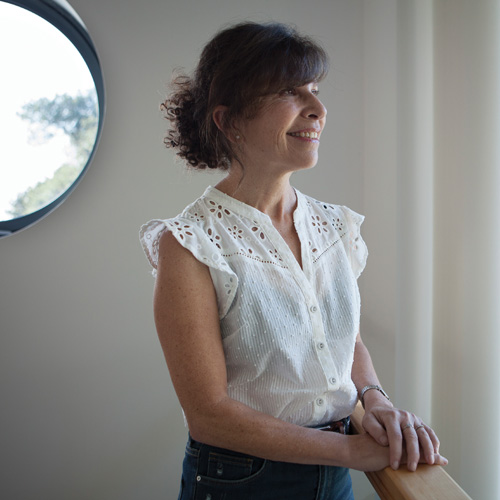
Bella Blanchard

‘My childhood was spent in rural Wiltshire, where my sister, two brothers and I had a very happy and carefree upbringing. My mother took us riding around the countryside and we played in the fields and woods. My father was a bit eccentric. He strongly believed that we should learn to stand on our own two feet, and with that in mind, used to drive us into the middle of nowhere, equipped only with compasses, the plan being that we should find our own way home. As contrary individuals we immediately went our separate ways, so he had to round us up again with strict instructions to stay together. He wanted us to be like the Von Trapp family, so that when he blew a whistle we’d all come running, but I think really he preferred our individualism. He was a keen sailor, and we’d often go on the boat with him, although crossing the channel in gale force winds with four young children must have been interesting.

I was quite naughty at school, ironic as I am now a teacher. Inclined to be noisy, I used to sing and laugh everywhere.  In fact, my laugh was once mistaken from the other side of the school for the fire alarm. At the end of my school days I hatched a plan with a great friend from Ecuador to go travelling in Greece and Israel. Her name was Beatrice, but no one could pronounce this so she became known as Potter. I worked in a wine bar which allowed me to save up some money for the trip. When Potter and I met in London for the first leg of our journey, my rucksack broke a table in a cafe. We stayed our first night with a much-travelled godmother in London, who removed the 20-odd books and the year’s supply of shampoo I’d packed, and sent us off the next day, somewhat less loaded. As almost penniless 18 year-olds we had great fun, living as cheaply as possible. For a long ferry trip, we supplied ourselves with a large pack of pitta bread which I ended up boiling because it had gone stale. It wasn’t too bad with Marmite, a resource I felt no traveller should be without.

The following year I worked in Switzerland and saved a bit of money. Potter invited me to visit her in Ecuador and so, equipped with a much lighter rucksack, off I went.  I stayed with her family for a few weeks in Quito, and then travelled around this fascinating country by bus, often with her sister Catalina. There were adventures, like clambering over a fallen tree trunk above a ravine in the dark to get round a landslip across the road or waking up in a hut to see a scorpion dangling above my head. Without a guide book, I often took a bus to places that simply looked interesting on the map. I spoke Spanish pretty well and always felt safe on my own, although I was careful what I wore and where I went. People were amazingly friendly and helpful. I then travelled down to Peru and visited the Amazon. This turned out to be more alarming than I had expected as at one point I lost my footing and fell in the fast flowing water and was quickly swept downstream. Luckily some people hauled me out further down. I’m not sure where this love of travelling comes from, but I’m fascinated by people, their cultures, their languages, and the excitement of not being sure what’s going to happen next. From Bolivia I went to the Galapagos Islands on a military plane which was very cheap—I think the flight was £15. I spent three weeks exploring these islands which are quite extraordinary.  Getting off the islands was more difficult because the military plane didn’t return. I managed to get back to Quito minutes before my flight back to England and went to London to start university.

I read history at London University although as a great reader, my first love was English. Many of my friends were English and Drama students, and we had a wonderful time enjoying the life that London offered, going to shows, and having huge fun at the Edinburgh Fringe one year. I always worked while I was a student, in restaurants and at the Barbican, so that I could save money for the next trip. The first summer holiday was to Turkey, in a camper van with my sister and a group of friends. We met in Canterbury, and a few miles down the road the clutch went which wasn’t a great start. En route eventually, we visited some great European cities and toured the whole of Turkey, which was unforgettable. Sadly the camper van met with an accident, to put it euphemistically, presenting a considerable problem for those of us who had filled it up with luggage and now needed to get everything home somehow on buses. So much for my very light rucksack. The following year I travelled to Africa, another challenging summer.

After university a friend suggested I did teacher training, which would enable me to work and earn either at home or abroad. So I did and found that I loved it. I worked in London, then went to South East Asia and Australia for a year, on to the Philippines, China and then worked in Hong Kong for the British Council. My mother decided to come out and visit which was probably quite a trip for her. I was living on a small island in a little house on top of a hill—362 steps uphill through vegetation to the front door. When my mother got to my house, she proudly announced that she’d brought both gin and tonic, by then much needed, but was shocked to find I had no ice, nor indeed any suitable glasses in her opinion. My sister also visited and halfway through her stay we heard that a typhoon was on its way. She decided that we would not stay in my little house which was sure to blow down and so we stayed with a friend on Hong Kong. Admirable decision.

After a brief spell back in England, I was offered a job in Italy, near the lakes. So I bought a car, got a map, and set off in January, taking what seemed the most obvious route which was over the Alps. It was spectacular, especially at night with the full moon on the snowy mountains and Pink Floyd’s Dark Side of the Moon. Only when I got to Italy did I find out why there had been no other cars on the road. At that time of the year, everyone goes through the tunnels of which I was blissfully unaware. While I was in Italy, I met my husband, John, who ran a company there with an Italian called Giuseppe, and eventually we returned to England, got married, and set up home near Bath. After our first child Theodore arrived, we decided to move to Dorset; John’s work could be done from anywhere, and I had a great aunt who lived in Loders called Mona whom we had often visited as children. She had worked in the Natural History Museum, was incredibly knowledgeable, and was known to locals as “the terror of the lanes” due to her driving, which varied in recklessness. I had happy memories of epic picnics provided by Mona on the beaches and clifftops. We bought a house, and moved here 22 years ago. Two more girls came along, Alex and Antonia, and I think our children have had a wonderful family life. I went back to teaching English after some years, in Bridport and Dorchester, and sometimes from home on Skype. Since we moved to Bridport and were bringing up a family, the travelling slowed down, mainly because I have been absurdly happy here. We go back to Italy regularly where we have friends, but in the future we might just hop in a camper van, with a map but no particular plan, and just see where we end up.’

Aggressive Trousers

I’ve been reading about the strange goings-on at Esh Parish Council in Durham. Apparently, one councillor has been reprimanded for wearing ‘aggressive and intimidating’ trousers to a council meeting. The afore-mentioned trousers are of a mottled green camouflage pattern—passively informal from a military perspective, but I should have thought not actively aggressive like getting up to physically bite other council members on the leg! The trousers’ occupant (if such be the right word) says he owns 41 pairs of the things—all in a camouflage design—and he never wears anything else except at funerals. In which case, I’m not sure what the fuss is all about since he’s obviously so well camouflaged every normal day that he must be invisible to most complainers…  However, they are obviously not smart enough for wearing in polite Esh society and eight other councillors have recently resigned in protest, so the aggression has turned itself into all-out war.

This is now causing me considerable anxiety. On looking through my wardrobe I find several items that I would consider to be equally violent or at least mildly hostile. I am worried that I might be arrested for wearing them down Lyme Regis high street or at the bank in Bridport. Sheltering on a hanger behind my dark blue corduroys and faded 60’s style jeans are a pair of orangey-yellow moleskin chinos. I have never dared to wear them for fear of my being mistaken for a streak of custard and I once bought them in Florida in 1980 after consuming too many margaritas for lunch. This was so long ago, I’m sure they won’t fit me anymore, so out they go… And while I’m about it, I’d better throw away my red suede slacks—not so much red as a violent horror film blood-soaked scarlet. Aggressive? You betcha… In Your Face Red. Put these on and you’ll feel like Rambo in a porcelain fine china factory—not just mad bull, but a third world war with legs or Armageddon with pockets. Wearing them, I wouldn’t be arrested: I’d be shot with a tranquiliser dart and carried to Bristol Zoo to humanely recover like an escaped gorilla.

I think clothing should be classified by volume. Not by volume meaning mass or largeness, but volume meaning loudness or noise. I have several pairs of Christmas present socks that I would classify as not merely loud but piercingly strident or even shrill. Passers-by cover their ears and eyes when I let slip a flash of them over my sneakers. Small children are shielded by their parents: “Come away Henry”, says the worried guardian, “That man’s got dangerous socks!” I also have a booming fluoro-green sweater (slightly mothy) and a couple of florid waistcoats that really should not be allowed out in public, so they’re all going in the charity bag today.

I’m not the only one with aggressive clothing. People who play golf and (more particularly) Americans who play golf often wear trousers that shout loudly at you whenever they approach the green (see the picture). I’m not entirely sure why they do this. Perhaps it’s a winning tactic to intimidate the opposition and deafen him/her with a blast of 124 decibel golf pants. It might be bravado like ‘Look At Me, I’m The Best’ or a jarring blast of vulgar plumage on a big green and blue parrot. This is Nature’s way of warning off the competition. Once spotted, never forgotten… you’ll need ear plugs as well as dark glasses to deaden the noise, but you’ll look even more of a prat when you go into the water on the fifteenth.

Of course, if you want to avoid attention you can simply drift past whisper-quiet in a subtle symphony of cool grey and cream. You can then be a noiseless member of society. Pale blue with faint Val Doonican drab diamonds is about as quiet as you can get—almost inaudible. That’s no doubt why they call it the silent majority.

But even if you wish to be nice and quiet so you can safely graze in the romantic council offices of Esh, you can still be a part-time rebel. Carrying a shrieking scarlet handkerchief well hidden in your pocket is just like having a secret 200 DB sound system concealed in a Mini. You may not ever produce it or use it, but the fact that you know it’s there can make you smile with a secret squirrel type smile all day. Take out your loud hanky and wave it about in the middle of Waitrose for a couple of seconds and you’ll see grown men faint near the ‘ready meals’ section. Mums and young kids may cry out in alarm and cover their ears (the men’s ears of course). Warning: You might be acting in too aggressive a manner, and if so, put it back in your pocket and carry on shopping as if nothing had happened. If questioned by shop staff, deny everything.