Monday, March 23, 2026
Home Blog Page 51

People at Work

It’s 6am and Richard Robinson’s mind is on the orders he needs to place for the restaurant and pub he owns with wife Rebecca; The White Horse in Haselbury Plucknett. But first, baby Arthur needs attention while Rebecca organises their daughter, Millie for school. At 7.30am the deliveries arrive, the produce is then checked for quality and Richard lights the stoves and ranges. He sorts out what orders need doing and at 8am welcomes his kitchen team. Then its out for a dog walk and run before heading back to the pub ready for lunch time service.

Originally from Swansea, Richard left at the age of 17 to study at art college in Bath, also working in local restaurants when he could. Not long into his second year, during a visit to London to see a friend he got a trial working for the Orrery restaurant in Marylebone. He stayed that night and started working for the restaurant the next day. From there he never looked back, eventually working his way to head chef of the Oxo tower and head chef of the group. All of which, he says, has stood him in good stead to now run his own business.

And it is all going to plan. The couple took over the pub in April 2012 and have since been working hard to get the place running as they want it. They have started refurbishment of the upstairs rooms in order to offer B&B accommodation by the summer. Striving for the best work life balance they can, Richard spends as much time with his family as possible. Every morning they eat breakfast together and also supper at 5pm, keen to find out about Millie’s day at school. Then it’s off to the kitchen again, cooking the food he loves, to the very highest level.

Kate Fowler

‘I was born in Bridport in 1970. My Mum had Asian flu early in her pregnancy, which was diagnosed as the reason I was born deaf, and that was confirmed when I was 6 months old. From then on for the next two years a peripatetic teacher for the deaf would visit me and my Mum once a week. Growing up in Chideock, as a young child I had two or three good friends, but integrating with other hearing children was difficult. When I was 2 years of age I was in a specialist unit within a primary school in Puddletown, where there was a teacher called Mrs Glendenning. Her husband was an audiologist, who believed strongly that sign language was not the best way forward with deaf children. His theory was that learning to speak was best, so as a result, that was the focus as I grew up. Sign language wasn’t allowed at all.

My Mum was working at the school for two years supporting me with my speech and reading. When I was about 5 or 6 I moved to a new school in Dorchester, a specialist unit at Middle School. The approach was the same, focussing on speaking, reading, and writing. Twice a week I had specialist speech therapy, with headphones on, concentrating on speaking. That was really hard, I’ll never forget it. For example, to learn about the sound “f” I had to blow softly on a feather on a bit of card, seeing the movement and controlling the breath; I was copying the therapist, linking a visual clue with the sound. To be quite honest it was really frustrating, practicing the same skills week after week until I finally got it, and not moving on until I had.

When I was 11 I went to a specialist school for the deaf in Exeter which I really liked. There I was much more involved with a deaf community, but the school had 2 departments, one using sign language and the other where the focus was on speech and language. That was the unit I was in, so again I was growing up not allowed to use sign language; in fact I would get told off if I tried to, and we used to help each other by signing from behind the lids of our desks when the teachers weren’t looking. This way of teaching deaf children went right back to Alexander Graham Bell, the inventor of the telephone, whose wife and mother were both deaf. As a result he pioneered ways of teaching speech and elocution, strongly believing deaf children could learn to speak, and his oral approach carried on right up to when I was growing up.

I was happy in Exeter, and using the library I was reading a lot. This helped me to understand the teachers better, and I achieved 9 CSE’s. I also swam for the school, taking part in competitions. After I left Exeter, I went to a specialist school in Doncaster, where I learned business studies and completed a B-Tech diploma. I enjoyed living in Doncaster—there was a larger deaf community there than Exeter. Then I went to work in Spain, where I taught signing to very young hearing children, using visual techniques as a way of helping them to learn English. I made lots of deaf friends in Spain, but obviously Spanish sign language is very different to British sign language, just as the spoken languages are different.

When I came back from Spain I began teaching sign language to evening classes in Dorchester and Bridport. I realised how much I enjoyed teaching, and recognising my potential, DCC gave me a grant to go to university in Wolverhampton to do teacher training. After four years I got my degree, in deaf studies with education, and in fact I stayed living in Wolverhampton another ten years. During that time I had a year off and went travelling in the Far East, and met loads of interesting people. Meeting those people made me realise that they didn’t see me as a deaf person; they saw me for who I was. That whole experience gave me huge confidence. After my degree course the university gave me a teaching job and I lived in a flat in Wolverhampton with some deaf friends; we thought we were enjoying the loud music coming from next door, dancing along to the beat, when a hearing friend came round and pointed out it was the builders and their drills the other side of the wall, renovating the property, that were entertaining us.

I’m happy with the way I am as a deaf person. I enjoy many artistic and craft-based activities, most recently crafting mirrors and frames out of unusual shells I’ve used in the kitchen and found along the coast. I love being outdoors, swimming, skiing and gardening. I also enjoy going out with my three children on family days out. I try to encourage all of them to be active and have a can-do attitude with everything. The oldest is 12, the next one is 10, and the youngest is 5. When my oldest boy, Finn, was born I was signing with him from the very first days. When he was 7 months old his first sign was milk. The more I responded to him, the more his vocabulary developed. My daughter Callie’s first sign was bath, and the youngest, Jasper’s, first sign was sleep, because that was all he seemed to want to do, although that’s certainly not the case now! Bringing up a young family obviously presented some challenges; often I wasn’t sure if they’d understood something, or if in fact I’d understood. Everyday life was a bit different to others, but funny situations could arise; the children once found it hilarious when I was hoovering the whole house, not realising that the kids had actually switched it off. They all go to school in Charmouth, and are involved in the community. We go to the Bridport Deaf Club once a month, a close-knit group sharing information with other deaf people. The friendships created are massively important because of the person I am; belonging brings the benefit of a consistent community which supports each other, as well as linking us to other Deaf Clubs and events around the UK.

I’ve found all my life that people have sometimes been scared of me once they’ve known I’m deaf. This has been at times humorous for me; however it’s been most people’s perception that deafness is a disorder or disability. The exact term is called ‘Surdophobia’ which is a fear of the deaf. Maybe this comes down to not coming into contact with many deaf people, not knowing how to communicate or simply not even knowing what deafness is. My wish is that everyone could sign, or at least have a willingness to learn. Steps towards that would be people using more of a visual language and expressing more through body language. Fundamentally being deaf is not a disease, it is just not being able to hear. I have a ‘Life is too short’ outlook, which has come from my family, friends and experiences, the good and the bad. When talking to my friends they say I come across as a real people person, not someone just going through the motions, but really getting the best out of situations.

These days I have a company called Lyme Bay BSL which is related to training and sign language; I run deaf awareness training courses which can be one day or up to six weeks long depending on the client’s needs. I set up the company when I moved back to Dorset eight years ago, and two years ago I was nominated for an award by Signature, the sign language examination board, as one of four contenders in the Centre of the Year category in the 2014 awards. I don’t just like my job, I love my job and the people I get to meet, and it’s a job which has created life-long friendships.’

UpFront 1/17

A couple of months ago researchers announced that iPhone users were more likely to see their phones as a status symbol than those using an android phone. It set off debate on what phones could tell us about an individual’s personality. The research, carried out at Lancaster University, suggested that iPhone users are younger, more likely to be female and more extraverted, and ironically, considering the phone’s popularity, are “less concerned about owning devices favoured by most people”. Android users on the other hand, as well as being male and older, are likely to be “more honest” and “more agreeable”. The research also suggested that android users are “less interested in wealth and status”. As research goes this is all pretty harmless and amusing stuff. But imagine if the data somehow found its way into a profile-driven online decision-making process used to determine membership of a club, the opening of a bank account or even car insurance premiums. Last month, just before the US election made the story old news, Facebook blocked a car insurance company from using potential customers’ online profiles to determine whether they might be a good driver or not. The algorithm the insurance company planned to use included judgements made on what a person posted on the platform, though they claimed they would not include photographs. The insurance company was going to be looking for habits that might point to the applicant potentially being a good driver and that included whether the user wrote “in short, concise sentences, using lists” and arranged “to meet friends at a set time and place.” Facebook blocked the use of the system on grounds of data privacy, but the information is out there. And in the same way that it’s naïve to think potential employers don’t look at people’s online activities before accepting them for jobs, with so much information on purchasing habits, political stances and lifestyle choices now in the public domain, it may also be a mistake to think that this type of profiling won’t filter into algorithms that affect a lot more of our future. Having said that, there’s no need for anyone to be paranoid…  but they are watching… Happy New Year.

Vegetables in January

New Year’s Resolutions


This year, I will:

Sow all seeds in optimum conditions

Sow only healthy and lively seed

Keep seeds and growing plants in perfect conditions, generally warm and moist

Allow optimum spacing for top yield

Keep the soil rich and fertile, and

Stop all weeds growing


Really, vegetable growing is that simple – in theory!  Some of these resolutions are simple, such as the last two.  Yet long winters, short growing seasons and variable climate make this less simple.  One of the main disciplines is to consider your vegetable rather than yourself as you sow your seeds.

A year ago autumn was ultra mild and ideal for slugs.  Winter then started in February when the weather became cool and cloudy with a constant grinding wind until the end of June.  After this it was suddenly hot and sunny and struggling crops bloomed overnight.

So will 2016 be the same?  One thing is for sure: no-one knows.  So we must plant as we normally do, and hope!

Last year we had to sow our “French” and runner beans three times and carrots twice.  This was mainly because the weather was so poor that slugs and rodents were plentiful: the plants didn’t stand a chance.  For our beans the first sowing was decimated by residual Dow Agro-Science’s pyralid herbicide in Levington’s compost.  The £40 compensation they paid was not a good answer to this ongoing chemical nasty.


Seeds

Seeds seem to be getting more and more expensive every year, sometimes 20-30p each seed for f1 hybrids.  A first economy is to save your own seed, the Real Seed Catalogue in Wales give great advice on this.  Storing packets for 2 or 3 years works for most seeds if they are kept dry and at constant temperature such as in a cupboard in your house.

MoreVeg in Cullompton, is part of a seed saving co-operative selling seed in small quantities for only 50p, such as 150 carrots or 12 tomatoes.  Their seeds seem as reliable and true to type as most!

This reliability of seed is always an issue, and we all have bad experiences we remember for a long time.  Last year a friend gave me a cucumber grown from Lidl seed which produced complete joke fruits, and it was July before we found out and fed the plant to the pigs.  Generally cheap seeds are fine, but to be certain of some crops we buy from Suttons, the one company that has always come true to type for us.  And what variety of crisps do airline pilots like?  Plain.

January in the Garden

Hah—Bumhug! Good to know all that Xmas excess is over for another year and yet we still have some of the coldest weeks of the winter to endure. Couldn’t have planned it better myself.

Fireside gardening is the order of the day as, unless you are mad enough to be employed in horticulture, not many ‘hobby’ gardeners will feel the need to brave the great outdoors when it’s cold, often wet, and relatively gloomy.

I reckon most gardens, even those belonging to those with only slight horticultural leanings, have a rose or two. A lot of myth has grown up around roses, like a cult of personality surrounding flesh and blood ‘legends’, which complicates matters somewhat when it comes to caring for them.

At the end of the day they are merely woody shrubs, like any other woody shrub in the garden. Intense hybridising, selection and man-made intervention has created roses fitting into a variety of roles from the most vigorous, tree-smothering, rambler (step forward ‘Rambling Rector’) to the tiniest, designed for pots, ‘patio roses’ like ‘Carefree Days’ or ‘Red Rascal’.

I tend to do my rose pruning, on dry days, from now until bud break, around March or April. The aim is to keep the rose forever youthful; the annual prune is a ‘chemical peel’ and a major prune, on a rose that’s really showing its age, is the horticultural equivalent of a full-on ‘facelift’.

Keeping a balance of old and new growth, while removing any dead stems, faded flowers and weak twigs, is key. Keeping just a fraction of dormant buds, which is why the pruning is done in the cold winter months, forces the rose to concentrate on fewer, but stronger, new shoots and correspondingly bigger and better blooms.

The complications arise with the different styles of rose that exist because the pruning technique will, obviously, change depending on whether your victim is a bush type, ground-cover (these aren’t generally pruned) or climber / rambler / scrambler. I think common sense is your best bet here as most written advice, including my own, just comes across as rules and ‘tick-boxes’. These seldom match up with the rose lined up in your sights, secateurs poised for “the first cut”…!

Bushes need to be pruned back to a framework of branches with ‘air’ around them (you’ll get the hang of this the more you prune out and the bolder you become). A very vigorous specimen may react with increased vigour if pruned really hard, which is the temptation, so only cut back by a third or so rather than the two-thirds which less vigorous, i.e. smaller, specimens need.

NB—you can never make a very vigorous rose stay small by pruning. When planting roses ‘anew’ choose them according to how big their catalogue descriptions suggest they’ll get then, having taken a large pinch of salt, err on the side of caution.

For roses of a climbing persuasion, ideally trained onto a framework of wires or trellis, keeping a structure of ‘arching’ stems, from which the blooms will erupt in the summer, is the aim. This means that they mustn’t be shortened before the winter as it’s the nice, new, long stems, thrown up after flowering, which become the future flower bearers. Cut out the oldest ‘structural’ stems and train in a new, freshly grown, replacement now, while the rose is denuded, so you can see what you are doing.

You may also find ‘suckers’ at the base of the plant and these should be pulled off, not cut, from as far down as you can get. These suckers originate from the rose stock, which the ornamental variety is grafted onto, and they are identified by their different growth habit and flower type. If left unchecked they will eventually usurp the ‘delicate’ variety and replace it with a ‘wild’ one.

While you are out and about pruning your roses, and any other structural element made visible due to the lack of leaves, it’s worth considering what else is around at this time of year.

In bloom now is Iris unguicularis, used to be I. stylosa or vice versa, which likes a poor soil in a south facing position and, given those conditions, produces a profusion of large, bluish-purple, blooms from late autumn to early spring. It can get untidy with age so be brutal about removing the old leaves as soon as they wither. The green, strap-like, leaves are not unattractive in a supporting role to the main show.

No garden is complete without a Hamamelis (Witch Hazel) or three. There are many varieties, some flower as early as December while others don’t really get going until February, so January should be peak time, whatever the state of the season. The spidery flowers, on nude stems, are not that showy but their scent is exquisite. For this reason it’s best to select them in flower, use the online ‘RHS PlantFinder’ to find the closest nursery, with the biggest selection, so you can compare as many as possible scent by scent.

Of course, not everyone perceives scent in the same way. A pleasant aroma to one person may be ‘medicinal’ or ‘harsh’ to another. From memory my favourite flowers belong to ‘Jelena’, with orange bracts, or ‘Arnold Promise’, for longer, pale yellow, spidery blooms but the best scent, for my money, lies in the original species – Hamamelis mollis.

Bark and stem effects are at their most noticeable when the garden is reduced to its bare bones. Exploiting them amidst a strong ensemble of evergreens keeps the interest going even in the absence of blooms. Scented, winter flowering, evergreens have double impact; Sarcococca, Mahonia and Elaeagnus are chief amongst these.

If all else fails then January is a good month just to look back on 2016 and reflect upon the triumphs and tragedies. You can learn from your mistakes and build on your horticultural victories to make 2017 your best gardening year yet. It’s not for nothing that ‘Janus’ is depicted with two heads! Happy New Year.

A Ghostly Walk around Bridport

A Ghostly Walk around Bridport


Dipping her toes into the underworld for the Bridport Ghost Walk, Margery Hookings meets Adrian Clements, the man behind it. He reveals a life-long passion for old horror films and British history, which turns out to be a potent combination.


The mist swirls down from Dorset’s highest point as I drive along dark country lanes into town.

It is just the right weather for the Bridport Ghost Walk. Clouds dip and dive around a slip of a crescent moon in a black sky. In the heart of town, people wait in Bucky Doo Square for the walk to begin.

My friend and I hoped our guide would be dressed, Ripper-style, in a top hat and cloak. But Adrian Clements makes up for this lack of drama by his detailed knowledge of Bridport and its history. It’s a town I know well, really well, but tonight I’m seeing it from a totally different perspective.

Who would think, when sitting on a bench in the square enjoying a sandwich in the daytime and listening to the town band, that executions and disembowelling took place here centuries ago? And that women were made to wear terrible scold’s bridles and pelted with rotten food and human waste?

The town has a dark past. Playing a starring role in the ghost walk are tales of the Black Death, when eighty percent of the townsfolk died, the grisly killings in and after the Monmouth Rebellion of 1685 – a dark time in the Westcountry’s history and a subject close to my heart, with ancestors on both sides of my family having been part of the rebel army – and the hangman’s noose, which is known as the Bridport Dagger.

Adrian, our guide, is 48 and lives in Poundbury. Now a father of four, he was born and brought up in Reading.

As a young child, Adrian used go to Hayling Island for his annual holiday.

He recalls: “There was a resident fun fair there, which featured a ghost train. This ride captivated me. I would stand and stare at the fabulous artwork and thrill to the noises and screams coming from inside.

“I didn’t actually pluck up the courage to go on it for several years. But it made a huge impression on me. As did the Saturday night ‘horror double bills’ on BBC television many years ago.

“I became a huge fan of the ‘Hammer Horror’ genre. Peter Cushing and Christopher Lee were my boyhood heroes. Also around this time, I became an avid reader of books about ghosts and legends. I couldn’t get enough of accounts of haunted houses, poltergeists and strange locations where all manner of odd things were said to happen.”

When he was 16, Adrian joined the English Civil War Society and travelled the country re-enacting the battles of the 17th century, which prompted a huge interest in British history.

“I soon realised there was a connection between my love of all things ghostly and ghastly and many of the bloody and turbulent episodes from the past,” he says.

Adrian decided to organise the ghost walks not long after he moved to Dorset from Berkshire in 2009. He became aware of several ghost walks taking place in the area. With his passion for ghost stories and classic horror, it gave him the inspiration to set up one of his own.

He chose Bridport because it didn’t have an established ghost walk, unlike other Dorset towns such as Dorchester, Weymouth and Lyme Regis, which all featured regular tours.

“I undertook a year of meticulous research and spent many an hour in the local libraries and history centres. I also spoke with several inhabitants of the town, obtaining first-hand accounts of ghostly experiences.”

His first Bridport Ghost Walk was in April 2011. “My initial reservations about it being a success were soon dispelled when a large group of people arrived in Bucky Doo Square to hear my stories. I’ve now been running the tours every year since.”

Adrian says the stories he tells on the tour need no embellishment or exaggeration. “I try to make the story come alive but as much of the content is already quite gruesome and dramatic, they entertain and educate without any need for sensationalism or gimmick.

“Bridport is an ancient market town steeped in history. My objective on the ghost walk is to unearth much of its lesser known past. The town’s net and rope making heritage is well documented and celebrated. But there is so much more to discover. Bloody skirmishes, botched executions, horrible deaths and terrifying apparitions all feature on the walk. Alongside the ghostly tales, it’s a great way to find out some local history.

“Although, for obvious reasons, Halloween is traditionally my busiest time of the year, the Christmas ghost walk is also becoming very popular. It seems people enjoy a good ghost story during the festive season, as did our Victorian ancestors who always told them by the fireside after dinner on Christmas Eve.

“Ghost stories at Christmas time during the 1800s were as traditional as the tree. I like to think my ghost walk in December goes some way in reviving this age old custom.”

On our ghost walk, we weave in and out of the streets, following Adrian down lanes and alleyways, the ghosts of the past ever-present.

We stop outside the museum, with its pair of ghosts. We gather on a street corner to hear the sad story of Silvester Wilkins, a young Bridport boy hanged in Dorchester in 1833 for arson. We move on around the town to the boutique Bull Hotel, which is rich in ghost stories, and then up Globe Lane, where the rotting corpses from the Black Death were left to be picked up by the plague cart. A grisly spectre is said to haunt this cold, narrow alleyway.

And then suddenly, a figure, dressed all in white, emerges from a doorway halfway up the lane and then promptly disappears. An angel of death perhaps?

Hearts beating faster, the smell of freshly-baked bread in our nostrils, closer inspection reveals it to be a baker from Leakers, wondering what on earth is going on.

We walk with tales of the plague pits nestling under the iconic Colmer’s Hill ringing in our ears. We head south, towards the graveyard of St Mary’s Church. In possibly the most eerie part of the trip, Adrian regales us with tales of the big black dog, a Grim, a Shuck or whatever you like to call it. The clock strikes eight as we hope and pray not to see the beast, which is a portent of certain death.

We edge out past the west and south doors of the church to reach the sanctuary of a street lamp and the pavement in South Street. And then the whole party collectively jolts as the clear sound of a dog barking right next to us chills us to our bones.

“Don’t worry,” Adrian says. “It’s not a Grim, it’s a golden retriever.”

He knows this not through second sight but because it’s his own dog, which is sitting in his car parked outside the church. And so ends our creepy jaunt around the town, with relieved laughter and a round of applause.


The Bridport Christmas Ghost Walk is on Thursday, 15 December at 7pm from Bucky Doo Square. Adults £8, children aged 12-15, £4. No under 12s. For more information, visit the Facebook page ‘The Bridport Ghost Walk’. To book a place, call Adrian Clements on 07923 074787

or email: a.clements456@btinternet.com

Frozen Solid

There’s been a lot of talk recently about cryonics—freezing your body after death to preserve it for the future in the hope that you can be ‘awoken’ many years from now and be cured of your current illnesses and live life anew. This obviously is a most attractive idea and would give you a second chance at life—an opportunity that doesn’t happen very often in one life, let alone in two of them. I apologise in advance if this subject is somewhat morbid, but I thought I’d do a bit of research in case I ever wanted to come back myself. And I don’t think I do.

For a start, cryonic space is already surprisingly popular. About 1,500 people worldwide have had this procedure and they are stored in various facilities in the USA and in Russia. Nearly 1,000 of them are American but there are also about 100 Brits, 39 Germans, 12 Dutch and 9 from France. There are a few from Norway and Sweden, but strangely there’s nobody from Iceland which you would have thought would be an obvious choice given the subject matter. All the bodies are stored in metal containers at about minus 190 degrees centigrade which is very very cold indeed. This is not the same as being frozen like Birds Eye garden peas. With cryonics, you’d be deep crystallised in liquid nitrogen. But then, since you’re already dead, you’re not exactly going to feel anything.

And we’re not just talking about people. There are over 200 animals as well. Yes, I was intrigued too, so I’ll tell you… The majority are cats and dogs but there are at least three parrots, one pet canary and a frozen hamster in California. Somebody also tried to freeze their pony but it was apparently too big to go into the metal cylinder so the poor thing had to be abandoned. Sad but true. And if you were asking (which you probably weren’t), no—there are currently no pet goldfish or stick insects on ice.

The more I uncovered, the more I became convinced that this is not for me.

For a start, you wouldn’t have any say as to what the world would be like when you wake up. We might have a twenty third century Nirvana where everybody is friendly and beautiful, but you might wake up in a neo-fascist Trump ridden state with ray gun robots on every street corner. It’d be a bit like falling asleep in the cinema and coming round to find that Terminator the movie was actually real. Scary… Frankly better to stay frozen until the world became a bit nicer. Or maybe the world would have ended in a huge apocalyptic nuclear bang… Not that you’d care as nobody would be around to wake you up so you wouldn’t know anything about it.

And then there is one obvious sobering fact. Nobody has yet been successfully resuscitated. It’s all fine in theory but we will have to wait for several hundred years to see if the idea actually works. I suppose it’s inevitable that the majority of frozen bodies are probably white, male, old and (of course) very rich. That’s because they’re the only ones who can afford the freezer fees. But maybe costs would come down over time and in which case we could all have a greater say as to who goes into the ice-box. Famous musicians, writers and artists could be stored for the greater benefit of a future society. We might have brand new albums from 100 year old rock stars—literally known as icy blasts from the past—but then we’ve already got some of those judging by current photos of Mick Jagger and Keith Richards.

If only this whole idea had been invented a long time ago, we could now be enjoying a new Mozart concerto or commissioning a certain Mr Shakespeare for a few more plays (‘A Winters’ Tale 2’ comes to mind given the low temperature theme. Romeo and Juliet 2 might be a more difficult sell).

Away from the arts, we could vote on which politicians might be saved for posterity—probably none of them—and which current sports stars might be resurrected in a few centuries time to once again try to save England from future world cup elimination. Given our recent performances on the football field, there won’t be many takers there either. It is certainly a macabre thought.

And then there are the social implications. What’s the etiquette when someone is frozen in time? Do you keep a spare place around the Christmas dinner table on the off chance that they might suddenly turn up? If so, how long do you keep it for? 200 years or more? Family members could of course all raise a glass to him/her and toast their happy return. On second thoughts, no. Any form of toasting is not recommended when it’s essential to keep them icy cold.

And if they did appear at the dinner table having been thawed out, what would one say to them? Somehow a mere ‘How are you?’ is woefully inadequate after a couple of centuries. Asking them if they’ve slept OK might be safer. You will probably want to ask them serious questions to do with the meaning of life and the hereafter, but don’t be disappointed if all they want to know is what happened in the last episode of Poldark. You never can tell what’ll happen when you muck about with Nature.

Christmas Wrapping by Cecil Amor

Have you started wrapping the Christmas presents you are giving this year? Or do you leave it to Christmas Eve? Surrounded by wrapping paper and stuck to adhesive tape, do you wonder how it all began?

Some time ago I was introduced to a book by Patrick Harding, Christmas Unwrapped. Harding states that early Christians did not celebrate Christmas until the 3rd century AD, as the physical birth of Christ was considered a sin up to 245 AD. Hence Christ’s birth date was forgotten and the first mention of December 25th was not until AD 354 when the Roman Emperor Constantine chose the midwinter solstice as the approximate date. He also allowed Christianity to enjoy the same rites as Mithraism. This fell within the Roman winter celebration of Saturnalia, the solstice having been celebrated for thousands of years before as the rebirth of the sun and the year (remember Stonehenge!). The pagan Anglo-Saxons used December 25th as the start of the New Year and some called the 24th “Mother’s Night”, when the Earth Mother gave birth to the sun. We now celebrate the solstice on the 21st or 22nd, called St Thomas’ Day. St Stephen’s Day, the 26th, was the Roman festival of Saturnalia, celebrated with money saved in pottery boxes, perhaps the origin of the “Christmas Box”, or present. The twelve days of Christmas is the same length as the Mesopotamian Marduk celebrations, the yule log that burnt for 12 nights and also the Anglo-Saxon wassail ceremonies to counter evil spirits and protect and encourage tree growth.

So if December 25th is not the real Christmas day and the actual date cannot be determined, what of the year? Harding says it was probably between 8 BC and 8 AD, related to the sighting of a comet by Chinese astronomers and a triple conjunction of Jupiter, Saturn and the Pisces constellation in 7 BC. King Herod is now thought to have died in 4 BC and Christ was born before this, so probably about 7 BC.

6,ooo years ago Pagans celebrated the Sky God Allfather. He became the Viking Odin (or Wotan or Woden), the old man of winter, bearer of gifts. He had a beard, and wore a cloak and hat (but not then red). He later became the Lord of Misrule, then Old Father Christmas of the Mummers plays. It is likely that this character combined with the customs of  European settlers into the American child oriented Santa Claus figure, in the red outfit—Yo, Ho, Ho!

The first Roman calendar is thought to date from 735 BC, perhaps by Romulus. This had a year of 304 days, making 10 months named Martis, Aprilis, Hams, Junius, Quintilis, Sextilis, September, October, November and December, according to David Ewing Duncan in his book The Calendar. In 700 BC King Numas added Januarius and Februarius to make a year of 354 days plus another “for luck”. Then in 45 BC Julias Caesar commenced the year with January, adding 10 more days to total 365 days. The month Quintilis was later changed to Julius in his honour. In 8 BC Augustus Caesar changed Sextilis to Augustus, altering the days in the month. This formed the Julian calendar, which was later found to be inaccurate and out of step with real time. So in 1582 AD Pope Gregory XIII introduced a new calendar, which jumped 10 days, to correct the errors. England was no longer tied to Rome by that time as King Henry VIII had severed the links, and refused to accept the Gregorian calendar. This situation prevailed until 1752 when King George II approved the new calendar, losing 11 days, which caused riots. The New Year was set to commence on 1st January, which until then had begun on 25th March. Now we know where we are!

Another recent addition to the Christmas scene, or table is the Christmas Cracker. I remember reading that these were first introduced by a London Sweet Maker, Tom Smith in about 1845 – 1850. He had seen “Bon-Bons” made in France, consisting of almonds wrapped in attractive paper. Smith produced something similar, but containing sweets. Later mottoes and poor jokes were added to the contents to increase interest. Paper hats may be a reference back to Twelfth Night, Saturnalia and the Roman celebrations, when the Lord of Mis-Rule was crowned. The bang when pulled, preferably by two people, has also been known as a “Christmas Snap” with the “crack” producing the common name “Christmas Cracker”.

We wish you a very Happy Christmas, whenever and however you celebrate midwinter  this month.


Bridport History Society meet again on December 13th at 2.30 pm in Bridport United Church Main Hall, East Street when Sheila Meaney will talk about “Dear Mother” Pigeons, Parcels and Post.

Surviving the Deluge by James Crowden

To some people flooding is like a biblical plague, a once in a lifetime occurrence like avalanches, locusts and earthquakes, but in parts of South Somerset, flooding is a way of life.


Indeed for thousands of years it is the annual winter floods that give the water basin of the River Parrett its unique character. Four rivers flow into one river and then there are the high tides in the Bristol Channel. Flooding is inevitable and it is the flood sediment that gives the fields a rich covering of fine silt which in turn give the summer pastures an early shade of green which can even be seen from Wales on a fine day. A rich pasture that fattens up sheep, geese and cattle and gives the milk an extra boost to give the fine cheddar cheese its rich creamy tang and makes the butter sparkle a deep yellow like buttercups. Then there are countless miles of pollarded willows, ditches and rhines, a great environment for waders and wild fowl, plovers, ducks, swans and eels. All very picturesque on a fine summer’s day with a glass of cider and cow parsley coming out of your ears.

But what happens when the authorities stop dredging the rivers for twenty years, it rains for a month and you are marooned and surrounded by miles of water? What happens when you do battle day and night with an array of pumps and sumps, and you spend all your time up to your waist in waders and then after weeks and weeks you know that the flood has finally snuck in round the back and comes into your kitchen and sitting room?  And finally you surrender and turn the pumps off and there is an eerie silence and the water then stays for months on end in your house like an uninvited guest…  What does that really feel like?

Most people would simply want to banish the experience from their memory like a bad dream and run away. But it takes a brave man with great sensitivity like Michael Brown, the well known eel smoker, to give us a raw, detailed and heartfelt account of the floods. Someone who is finely tuned to nature and the natural world, who can express the triumphs and tragedy, the poignancy and enhanced feeling of community spirit that the floods bring in their wake. And like a true Somerset man he stubbornly stayed put. He and his wife Utta camped within their own house and Michael kept scribbling away upstairs making notes, retrieving his possessions, trying to get electricity re-connected, fighting bureaucracy and phoning all and sundry to come to their rescue or at very least just to notice their plight.

But in the village of Thorney he was not alone. Many of his neighbours had also flooded and they compared notes, dined out in wellies, visited each other in tractors, canoes and rowing boats and generally became more and more desperate and philosophical in equal measure. He charts their emotions, up and down, like tides as if there were neaps and springers. The flood becomes a living organism as if it has a mind of its own.

The Flood is a masterpiece of understatement and many men would have thrown in the towel and abandoned the house to its fate and gone to live on dry land in a mobile home or local B&B, but Michael Brown has a fine ear for dialogue and he recounts conversations with his neighbours like a true story teller. And as the flood progresses he becomes more and more philosophical. What I really like are the added bits of family history, people he has bumped into over the years and the re-discovery in the attic of his mother’s letters about retreating from Burma in the war. A man of teak. It is the narrative which is compelling.

But the book is far more than just one man’s diary of a flood, it is a portrait of a village in crisis, and the village pulls together in a way which is very impressive. Eventually a journalist appears, Martin Hesp of the Western Morning News and then he is followed by film crews from around the world. Thorney is on the map at last. Even the Bishop of Taunton comes out in a rowing boat. And when the floods eventually recede they invite a seasoned drainage engineer of the old school called Dan Alsop to visit them and give his advice.

Solutions? well there are a few. Dredging has restarted in earnest after twenty years. The Dutch were called in with their pumps. The village of Thorney now has bund, an earth bank, to protect it and roads have been raised. What is extraordinary is that few of the villagers of Thorney would have in the end missed the experience, and it shows the restorative power of narrative. They all have stories to dine out on for years to come.

A book not to be missed.


The Flood – Surviving the Deluge

by Michael Brown

Published by Merlin Unwin Books

ISBN: 978 1 910723 20 3.

Price: £14.99

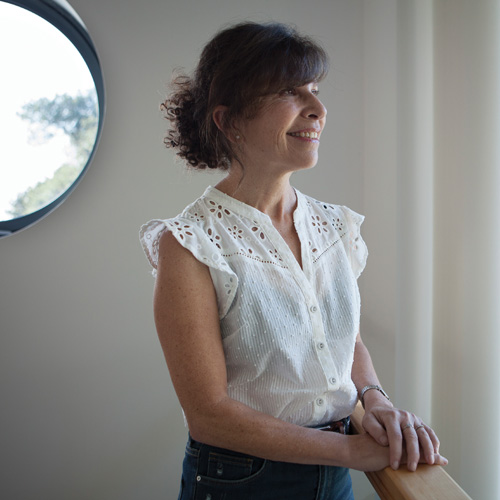
People at Work Lucie Milner

In paint spattered shirt and jeans Lucie Milner spends the daylight hours at the workshop she shares with husband Phil; together they are Fresh Face.

Located in picturesque Littlebredy, Fresh Face is a furniture restyling and renovation business. Lucie and Phil started it 10 years ago in the New Forest, wanting a business they could do together. Lucie uses her artistic skills to paint and create beautiful pieces of art on the furniture, while Phil, who used to be an aircraft engineer as well as singing and playing percussion in a rock band, uses his carpentry skills to transform and give new life to the pieces they work on.

It was when Lucie met Phil, at a gig he was playing in, that their lives took a different direction. Now married for 22 years, Lucie was working for a London Estate Agency in the New Forest when they met. Acknowledging encouragement from her artist and novelist mother, Lucie turned her painting hobby into a business. They relocated to Burton Bradstock and then to Portesham, a workshop in Littlebredy giving them an enviable work life balance. Their house is now decorated the way Lucie likes it. However the odd bit of furniture she takes a particular liking to does find its way there as a temporary home from time to time – a “perk of the job”.

The couple are now re-landscaping their garden, which is more Phil’s domain. Lucie enjoys gardening and hosting dinner parties and although there is a clear differentiation between work and home, she can still be found working into the evening on emails and other admin. Lucie loves what she does. However, “When I retire, I’d like to be an artist”, she jokes, well, part joke, part truth.