Monday, March 23, 2026
Home Blog Page 50

Vegetables in February

What can I write about in February? The winter is such a difficult time for leaves to grow or look happy, and if they do then wildlife moves in and eats them.

Yet there are still many good harvests of below and above ground roots (above ground being swede, turnip, beetroot) and leaf crops such as leek, kale and cabbage. The savoy cabbage seems to be the only cabbage not attacked by birds in our garden—I don’t know the reason but I’m very happy about it. The curly kale has netting over it and looks beautiful and prosperous. We pick the kale about three times, harvesting mid-sized leaves, leaving the bottom ones and also the top ones to grow, ready for the next pick. Then when sprouting flower buds arrive these are delicious too.

Red Drumhead cabbage is still under its Enviromesh, but being eaten by rats, which isn’t an appetising thought. If we cut and store them, they lose their taste, sometimes rot and start sprouting. This is the case with most stored veg, and so we leave most outside, even the celeriac if the woodlice problem isn’t too bad.

Has anyone noticed that Red Drumhead seed has been variable of late—we sowed two different packets last year, and some are dark red and cook crisp and crunchy, the others are almost variegated and have an unexciting texture. The reason we used two different packets is because we noticed it the previous year, and are wondering what’s going on. This is the ‘fun’ with buying seed at all times!

Where we have garlic growing since November in between salad, such as true spinach, there are no slug holes in the leaves. Finding this, we have ‘planted’ bits of garlic from the kitchen waste all around the salad crops, especially near lawn edging.

This time of year is no joke in the garden, so no joke this month, readers—sorry!


What to sow this month

Late in the month you can sow broad beans variety Aquadulce, and early and second early potatoes. Put fleece over both to warm soil which will also keep birds from eating the beans. Potatoes shoots should emerge in about a month, and keep well fleeced until the last frost. In return for this extra effort you should get an earlier and bigger crop.

Indoors or in a heated greenhouse you can sow quite a few crops, so long as you have somewhere warm enough to transplant them when they outgrow their modules. Beetroot, lettuce, true spinach, summer cabbage and parsley are examples, only sow peppers and tomatoes if you have a heated greenhouse.

Becky Groves

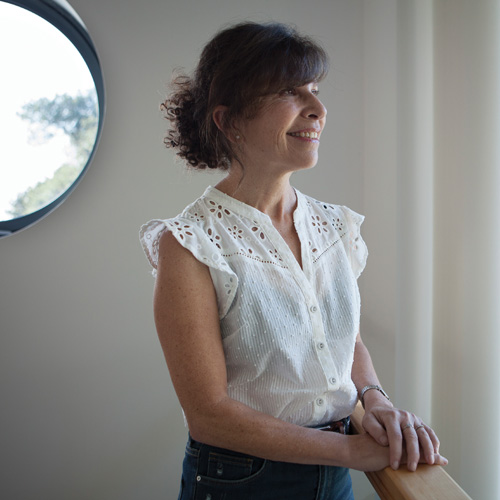
Green fingers seem to run in the family, as Becky Groves, who runs Little Groves in Beaminster can ascertain. One of three, her older brother Charlie manages Groves (aka Big Groves) in Bridport and her younger brother, Chris is a Garden Designer who works for the National Trust. And although Becky has her feet planted firmly in Dorset soil, growing up and going to school in Bridport, she hasn’t always lived here.

For 10 years Becky lived in Wales. She completed a Degree in Ecology in Bangor, North Wales and then did a Masters in Countryside Management. She became Conwy’s BioDiversity officer and also worked for Snowdonia National Park as an Ecological Consultant. However, the opportunity to open Little Groves arose, so following a long-planned extended holiday to the Galapagos Islands, Becky hit the ground running, with only two weeks to set up before opening the gates to the public.

Little Groves is a delight to walk round. The beds are themed into Summer, Autumn, Winter and Spring, with a dedicated scent section for the different times of year. There is also the cottage garden, shade, wildlife, rose and edible sections. Becky specialises in herbs and aromatic plants. Growing all the vegetables and herbs on site she can ensure minimal amounts of chemicals are used. Also labelled for easy picking, there are herbs for chicken, fish, salads and red meat, spicy herbs, herbs for tea and even herbs for cocktails.

In addition to Little Groves, Becky is also Nursery Manager at Big Groves, spending time each week with her team there. With management also comes spreadsheets, so when she gets home Becky is still keen to get stuck into her garden. She grows lots of vegetables and uses a large herb bed just outside the kitchen when cooking for her family; husband Lee and daughter Mia, who is nearly two.

The Year Ahead

After the shocks and excesses of last year with Trump and Brexit, what we really need in 2017 is a period of calm and peaceful stability. I can however safely predict that we’re not going to get it. With a brand sparkly new Power Ranger in the White House, it’ll be a roller coaster sort of ride where virtual reality may seem more real than the real thing.

Technology itself may move faster and faster but it never moves in a straight line. It wiggles and jumps about in unpredictable patterns. By the end of this year, you may be asking your iPhone10 to help you with the washing up but don’t be surprised if it descends into a teenage strop and sulks all day by refusing to power up. Your car may be able to teach you fluent Chinese while it drives itself (and you) to work but you’ll get increasingly annoyed with the constant health and safety videos that pop up whenever you turn on the ignition. Techie science may finally discover Life on Mars and a new cure for the common cold but meanwhile—back on planet Earth—I guarantee that mobile reception will still be rubbish throughout much of the south west and digital radio will remain a non-obtainable pie in my west Dorset sky.

In the sporting year ahead, we’ll have one of those occasional summers when not much happens. There’s no World Cup and no Olympic Games, so you don’t need to sit in a cardboard box in June and July to avoid the wall to wall sports TV coverage. Instead 2017 is a Ladies’ year with the Women’s Cricket World Cup followed by the female Rugby World Cup in August. So, it’ll still be wall to wall TV but the language will be more refined. Maybe…

On February 26th, the Oscars rear their glitter-balled heads again so you can discover all the films you should have seen in 2016 and somehow missed—which in my case is nearly all of them. This is great because one year later you can now rent them or view them all on Netflix or Amazon Prime. However, I can guarantee that you’ll still miss them because you’ll be just too busy feeding the cat or brushing up on your Chinese before tomorrow’s test (organised by your car).

Key new movies to look out for include a new version of Alien in May (start screaming now) and you won’t be able to avoid the tons of hype for the blockbusters Power Rangers and Beauty and the Beast—both in March and both obviously about Donald Trump (joined presumably by Melania in the latter). And then, just when you thought it was safe to go to the cinema again, you’ll be hit by the latest Star Wars in December. Star Wars 8—you know, the one before the other prequel that’s actually shown second to last but happens after the next one. And then we’ll have to suffer the next Sherlock series on TV. Hopefully, somebody will leak the final episode to YouTube just like they did in the last series. That way I can cut straight to the final denouement without needing to sit through the totally confusing dog’s dinner of the first two episodes.

I’ve already briefly mentioned technology, but I can predict a couple more advancements if I just remove my Virtual Reality headset for a moment… You see, while I’ve been writing this article I’ve been playing ‘super Mario VR’ at the same time and have just jumped into a boiling cauldron of digital tiramisu, so it’s probably a good idea to stop. Anyway, by the end of 2017 I predict that Bristol Zoo will celebrate the birth of a baby drone from a breeding pair—see picture of “mother and baby doing well” on this page. Also, I predict Amazon will deliver my Christmas shopping before I even realise I want it, let alone order it. But why wait? I think this is already happening and it’s only February. My personal shopping habits have already been monitored, copied, cloned and put on order 10 months beforehand. Creepy—but probably true.

In the real global world, it’ll be an even busier year. Mrs May’s already said Brexit will become more than a virtual reality by the end of March when (or even ‘if’) she summons Article 50. But we’re not alone… France holds its own elections in April and May (‘Frexit’) and so does Germany in September (‘Germexit’ or maybe ‘Merkelexit’) and Holland in March (‘Netherlexit’ or I prefer the simpler ‘’Hexit’). Next month sees the 60th anniversary of the original Treaty of Rome so it’s a good time to see if anyone else is likely to leave the club along with the UK.

And then there’s Trump again. Who knows? So unpredictable… he could start World War Three before lunch or visit Yeovil and go shopping for Melania at Laura Ashley next Thursday afternoon. Nobody knows—not even he does, which could make life very exciting if only it wasn’t so scary.

It’s quite a year for dates… Next month sees the 100th anniversary of the start of the Russian Revolution, so watch out for further invasive moves in various bits of the world like the Ukraine or Syria. And then it’s the Nobel Peace Prize in December—awarded to those who have “…done the most or the best work for fraternity between nations”. Obviously that must be the peace loving Mr Putin. President Trump probably the year after. I simply don’t know… it could be so exciting, but I think I’ll hide in a cardboard box till it’s all over. Unfortunately cardboard is not very effective insulation against nuclear fallout.

February in the Garden

There’s been a bit of a cold snap recently which doesn’t suit my ‘luxury’ hound (being half Italian Greyhound he’s prone to shivering) but is pretty good for getting on with things in the garden and properly cold weather is exactly what we should be getting around now. I remember that in the warmer, wetter, winter last year I got behind with my tasks because there were so many days when I couldn’t get onto the soil.

To a certain extent decently cold temperatures reduce the number of pests overwintering in the myriad cracks and crevices that a garden provides. I help this along by clearing up the leaf litter and associated detritus that gets trapped amongst the stems in the borders. This tends to coincide with the removal of leaves from winter flowering hellebores and Epimedium varieties where the flowers only show if last year’s foliage is removed.

The downside to this is that it removes one of the food sources for the birdlife that frequent the garden but at least it’s preferable to doing a complete ‘bare earth’ border annihilation in the autumn. It’s funny how gardening practices evolve over time. When I worked in large country house gardens, as a student, it was common for the ‘herbaceous border’ to be completely cleaned bare before winter.

That was the tradition in gardens which covered many acres because it was possible to develop different areas of the garden to peak at different times and the owners merely planned their promenades avoiding the sections which were not at their best. For most people that is a luxury they cannot afford so having areas of the garden which are just flat earth, for half the year, doesn’t make sense. Also, very few domestic scale gardens have strictly ‘herbaceous’ borders these days. Instead they have ‘mixed’ planting schemes with trees, shrubs, bulbs, evergreens and every other sort of plant material, including herbaceous perennials, jostling ‘cheek by jowl’.

Having said that, now’s the time to clean up the borders if weather conditions allow. It’s not a good idea to be tramping all over the soil when it is very wet, due to the damage you will do to the soil structure by compacting it, and you won’t be able to work it if it’s frozen solid. During dry, but not completely frosty, spells you can go through the borders cutting down dead stems and removing last year’s decaying leaves from herbaceous plants and weeding out anything that you don’t want in the border—not just ‘proper’ weeds but the self-sown progeny of ornamental plants which can begin to take over; forget-me-nots for example.

I’m at a bit of a dilemma here because usually I would try to do all my tidying, chopping and weeding along with a gentle forking, feeding and mulching. I’ll still do that towards the end of the month, when spring is a little closer, but I’d not want to add any fertiliser, even the comparatively low nitrogen ‘fish, blood and bone’, when it’s not going to do the plants any good. It’s best to ‘play it by ear’ and add the feed, followed by your chosen mulch (garden compost in my case) if you know you won’t get another chance or if the weather is mild and plant growth is underway. If not used by growing plants, then any feed you add now will get washed though the soil before it can be utilised for plant growth.

A very timely task is the pruning of wisteria to encourage bigger and better blooms. Ideally you will have shortened all the long, whippy, growths towards the end of the summer to prevent them from being ripped off in autumn gales. These can now be shortened to just a couple of buds, or leaf joints if no buds are visible yet. This does mean that you are removing a fair proportion of flower buds, remember “you can’t make an omelette without breaking eggs”, but the ones left behind will produce bigger and better blooms which is, with a showy plant like wisteria, the name of the game. Regular pruning keeps this vigorous climber within bounds and under control That’s what gardening is all about; nature “whipped into shape”.

As I write, I am rather behind with planting bare-rooted trees and hedging. In fact, I haven’t even ordered what I intend to plant—mostly ‘wood fuel mix’ trees to expand my ‘mini wood’. Unless spring starts with a heatwave you can assume it’s safe to plant bare-rooted material up until the end of March so I’ll hold off panicking just yet. I can’t resist bare-root plants because they establish quickly and are the cheapest way of obtaining common varieties of deciduous trees and hedging plants.

Due to the ease of sending bare-root plants through the post there is healthy competition amongst suppliers so it’s sensible to do an online search to see who offers exactly what you want and for the best price. Having said that, it’s worth checking to see if you have a local supplier because collecting in person is always preferable. It saves on subjecting your chosen specimens to an unnecessary postal experience and you may get a cheaper price without the cost of delivery. You’ll need to check with the local supplier, don’t just turn up, as most plants are lifted ‘to order’ and may not be available for days, possibly weeks, after your initial enquiry. The nursery won’t be able to dig up any stock in very wet or completely freezing weather.

On a different tack, after last year’s successes with growing random perennials, half-hardy and tender annuals from seed, I must get going with some more for this year. I started some too late so, this year, I’ll be sowing as many as possible now. Tricky when they’ll be vying for space in the greenhouse with veg seedlings, the overwintering tender perennials plus the cases of freesias and pots of arums being forced for early cut flowers. The sooner the weather warms up enough to decant a lot of the smaller pots into the cold frames the better!

Who Am I?

My surname was a puzzle to me from an early age until I discovered there were several families of the same name in two separate villages in Wiltshire. But why? When I started to investigate my family history I found the family had been in the same village for 300 years. A possible connection in another village was found, about ten miles away, less as the crow flies, which if proved would take us back another 100 years. Family historians are never satisfied.

Television programmes by archaeologists or scientists, like Sir David Attenborough, have told us that we all are descended from early man in Africa, who presumably made his way into Europe perhaps 100,000 years ago. His skin and eye colour occurred lighter over time. It has been said that the only flaw in the disguise of Lawrence of Arabia was the colour of his eyes. More recently Attenborough has argued that homo erectus first evolved from apes standing erect in water to harvest fish and mussels, etc. Fossil remains of catfish have shown signs of butchery from stone tools. The addition of Omega 3 from the fish may have aided brain evolution. He cited two marine biologists who posited this theory, suggesting that the apes lived in trees near the waterside. If I become unsure of my footing I find that sometimes I involuntarily move my toes, as if I am clutching onto the branch of a tree, perhaps a throwback to early ancestry! Recently on Radio 4 on the BBC’s the Life Scientific Jim Al-Khalili with a Dutch Behavioural Biologist, Frans de Waal, said that we share 99% of our DNA with the chimpanzee, who have most of our attributes, except perhaps speech.

In 1953 Jim Watson and Francis Crick working in the Cavendish Laboratory in Cambridge published their work on DNA (Deoxyribonucleic Acid). They showed that from four bases there are long chains twisted into a double helix, which we regularly hear about on radio or TV. This research has led to advances in genetics, medical work, criminal investigations and family history. So becoming “stuck” with conventional family history I started saying to my immediate family that I needed to investigate my DNA. When they chorused “why?”, I replied that I would like to know which of the apes hanging from the branch I am descended from. Eventually our son called my bluff by giving me a kit from a well known multinational company as a birthday present. The kit contained a plastic test tube into which I had to introduce my saliva, close the tube and shake it, to mix in a chemical stabiliser and then send it by post in the packaging supplied. It was sent to Ireland, but I believe the parent co. is in the USA. Eventually we received the results, after a delay by our misquoting our post code.

When the results (An Ethnicity Estimate) arrived I was surprised. I am 99% European, with 32% from Scandinavia and 22% from Ireland, with 19% belonging to Great Britain. Western Europe produced 11% and the Iberian Peninsula only 5%, which was a surprise as with my surname I had expected more Latin connections, and we had found the name in Italy, Portugal and France. Italy and Greece showed 4%, with Finland and Northwest Russia 3%, which was the same as Eastern Europe. Western Asia and the Middle East were both less than 1% and the African countries were all zero. So presumably this is why my eyes are blue/grey, not brown and the survey must have been long after the migration from Africa and there were no apes to be found!

If I paid a subscription to the company which provided the DNA I could be sent details of others with the same DNA and name, but have not done so, as moving house recently has been time-consuming.

We understand that no one in England had a surname before 1066, although some used personal names and some nicknames. The Normans introduced surnames with their aristocracy, but ordinary people still used personal or occupational names. By the early 14th century most people had surnames which were still changing and evolving. The Black Death in the mid 14th century wiped out some names. It has been said that we are all descended from Richard III, but I have not found him on my family tree so far!

Recently on TV the attractive Professor Alice Roberts told us that many of us are descended from Neanderthals, themselves descended from apes. She said her DNA showed 2% Neanderthal, so her test was more detailed and searching than mine.

On February 14th Bridport History Society will learn about “Mining in Cornwall after the First World War” from Prof. Roger Burt in the United Church Main Hall, East Street at 2.30 pm. All welcome, non-members entrance £2.50.

Cecil Amor,  Hon. President Bridport History Society.

Broadchurch – a personal reflection

Margery Hookings looks forward to the new—and final—series of Broadchurch, coming to a television screen near you this month.


When the first series of Broadchurch was broadcast on ITV in early 2013, I was away in Greece, having exchanged my life in west Dorset for a year in Corfu, just because I could.

With my newly-retired husband by my side, we let our cottage near Beaminster and rented a house in the heart of a village in Corfu’s north-west corner. I’d given up work and hoped to find inspiration to write fiction to my heart’s content.

I knuckled down and got on with it, but something very strange happened. I was incredibly, tremendously, homesick. Here I was, doing something many people can only dream about and all I wanted to do was go home and run in the fields and take a stroll along a windswept beach. I was astonished I felt like that—I knew I loved my part of Dorset and the West Country with all my heart but being away from it for twelve months made me physically sick.

It didn’t help seeing friends’ posts on social media of photographs of Dorset and Somerset, where I have lived all my life. And then learning that a new show called Broadchurch, which was set in West Bay, was going to be on and I was going to miss it. I felt disconnected and rootless. I wanted to be there in Bridport, to be a part of all the excitement.

I avoided looking at any spoilers which is just as well because before returning from our year away, my son sent me a boxed set of Broadchurch on DVD.  In the heat of our Greek living room, my husband and I were glued to it, sometimes watching two or three episodes at a time. It was the countryside that grabbed at my heart the most: those beautiful shots of East Cliff in all its glory, the slow, lapping waves on the shore, the sweeping vistas of the hinterland beyond. The wonderful, haunting score by Icelandic composer Ólafur Arnalds underlined the melancholy melodrama being played out in front of us.

Writer Chris Chibnall, who lives in Bridport, has described Broadchurch as his love letter to the place, an area he says he has felt more at home in that any time his life. And it showed.

The series’ backdrop was as familiar to us as the backs of our hands, although the magic of television spliced the geographical areas of North Somerset and West Dorset with surgical precision, so that the dramatic East Cliff on the south coast suddenly loomed on the distant skyline beyond Clevedon and the Bristol Channel.

And then there were the locations that were so familiar—the local newsagents’ on the corner at West Bay, the ‘police station’ in one of those new buildings overlooking the west beach, and the huts beside the Riverside Restaurant. It was must-see television as far as this local was concerned.

The story itself—the script, the characters, the actors—was one to which I could relate very well, having seen my fair share of tragedy in this corner of Dorset since arriving here as a young reporter in 1982. There were chilling echoes of past cases I had written about, ones involving the whole community coming together, in a supportive chorus to the main players.

Unlike Harbour Lights, its West Bay predecessor, Broadchurch was a series of many layers, with lots of shade and not much light. As with any good whodunnit, every character seemed to have a secret to keep the audience guessing right up until the end. And they all had a depth to make you care about what happened to them next.

As the first female editor of the Bridport News back in 1999, I was pleased to see the Broadchurch Echo editor was a woman with a conscience, someone who worked at the heart of the community and never took that position for granted.

And then we rolled on to series two. It wasn’t as good as the first one but it was good, nonetheless. I was pleased to have had a hand in helping organise the public screening of the finale at Bridport Electric Palace after a chance conversation on Twitter with Chibnall and composer Ólafur Arnalds, who just happened to be playing there that night. He brought his concert forward an hour, filling the quirky venue with loops and refrains, seemingly simple piano and ethereal violins.

And after ninety minutes and a standing ovation, the curtains were drawn, the roadies moved in and the stage was set for the finale of the second series of this show, as the audience, which included Chibnall and actor Jodie Whittaker, who plays Beth Latimer, settled down to watch the big screen and find out what really happened.

There were gasps in the audience as the verdict was announced. Surely not? And then the programme went on, with twists and turns, including the unexpected and the entirely predictable. Anyone would think Broadchurch was for real. Well, for those of us who live here, it’s felt a part of everyday life.

It was a magical evening, and a very Bridport one. It was the sort of thing the town does very well.

As the end credits rolled, there were cheers when it was announced that Broadchurch would be back. The third and final series is now within watching distance. At the time of writing, the ITV teasers tell us it’s going to be this month, although we don’t yet know the date. Here in west Dorset, we wait with bated breath.


Arboreal

James Crowden sees the ‘sparkle and shimmer’ of a collection of Woodland writings

Just imagine a world without wood and woods. Where would we be? Imagine a world without the texture of wood, the sight of grain, end on and elliptical. No bark, no spalt, no planks, no quarter sawn, no furniture, no tables, no chairs, no beams, no roof trusses, no windows, no floor boards, no wooden boats, no houses even. No woodpeckers hammering away, no wooden coffins. We would be stuffed to put it mildly.

The value of woods and woodland as a cultural and economic resource is immense. Yet all too often we take them for granted. We sail by in our motor vehicles, we take the dog for a walk in the woods. We picnic there, we hunt for butterflies, deer and fungi. We comment on the autumn colours. Yet rarely give a thought to the timber. Forests, native, ancient hunted, pollarded or deliberately planted, all have an atmosphere of their own. Many forests aren’t even forests at all: take Dartmoor and Exmoor, hardly a tree in sight except for the odd ancient grove of sheep grazed oak. Yet they are all under Forest Law.

Working in the woods month after month is hard work but also a great privilege. For 20 years, on and off, I worked in woods, starting on the edge of Cranborne Chase that straddles Dorset and Wiltshire. I learnt an enormous amount about the customs and ways of old woodlanders, the hurdle makers who learnt their craft before the war, before the tractor age when horses were king. Men like Cecil Coombs of Ashmore who often worked in a coppice called ‘heaven’, which in bluebell time was an apt description. But extracting timber and driving old blue Fordsons down steep slopes covered in a sea of bluebells has its own peculiar problems. You can easily slide right down the hill with a full load pushing you on behind. Bluebells can be very dangerous at certain times of year. A pretty, dangerous job…

So it was a great pleasure when I was asked to review a new book of essays about woodland called Arboreal in memory of that great lover and observer of woodlands, the ecologist and natural historian Oliver Rackham. These essays, nearly forty in all, with a scattering of poems thrown in for good measure, all sparkle and shimmer in their own way.

There are some wonderful writers. Jay Griffiths for instance entrances us with her analysis of  birdsong in a Welsh wood, an essay I have read several times and savoured long and hard as if listening to the birdsong itself. Other essays are by good  friends such as Sue Clifford of ‘Old’ common ground who, back in the 1980s with Angela King, started a project called ‘Trees, Wood and Green Man’. Here Sue talks about Nottingham Forest in all its incarnations. Here also is Paul Evans with whom I made some radio 4 Landline programmes. Paul meditates about woodlands and extols the virtue of an old oak tree whilst stuck on the 7.46 from Shrewsbury to Crewe. Then there is an essay by Philip Marsden, another favourite writer of mine, talking about a small remote tangled, oak wood running down to the Helford estuary. Then Robin Walter, one of the few writers who has actually worked in the woods, debates the dilemmas that all woodman face when they mark up trees for felling or thinning and this is in a steep ‘lookout’ wood near Shaftesbury called Kingsettle.

Helen Dunmore writes about Bristol docks and the Avon Gorge and mentions all the varieties of white beam that live there and the birds gorging themselves on silence. Her writing brought back many memories. Back in the 1970s I knew the Docks and the Avon Gorge very well and worked as a boatman on the Bristol Packet. I often climbed under the Clifton Suspension Bridge and once fell fifty feet. Tree roots can sometimes be a matter of life and death. I also knew some of the old tramps who lived in Leigh woods like Reg who suffered from shellshock. Now his story would have been interesting. Arboreal in the true sense of the word—living in the woods.

Then there are other essays by excellent writers as diverse as Fiona Reynolds and Germaine Greer. Thrown into the clearings between essays are poems by Kathleen Jamie, Simon Armitage, Jackie Kay, Adam Thorpe, Richard Skelton as well as photographs by James Ravilious and Kathleen Basford, charcoal sketches by David Nash and historic images of Andy Goldsworthy constructing enigmatic sculptures for Hooke Park, near Beaminster.

This is a book with something for everybody with resonances which remind me very much of Roger Deakin and Wildwood. Well edited and chosen. A forest of its own words which will no doubt grow in importance as the years progress. As it happens the word book derives from Old English boc meaning a ‘writing tablet’ which derives from bece or bok meaning beech.

Yes—Arboreal—an excellent ‘bok’ but I would have liked one or two more essays from those that have actually worked in the woods: underwoodsmen, sparmakers, hurdlemakers, bodgers, shipwrights, gamekeepers and even poachers. But then very often those that have worked longest in woods, have very little to say: they have become part of the woods and merge into the undergrowth. They have become like the Green Man. You have to look out from the wood as well as looking in…


Arboreal, edited by Adrian Cooper,

is published by

Little Toller Books, Dorset £20


ISBN

978-1-908213-41-9

Up Front 2/17

I was about ten years old when I overheard my father explaining to someone that he was an atheist. ‘When you die, you die’ he told her. As one of his business activities was organising funerals, I had to assume he knew what he was talking about. However, his conclusion was a huge surprise to me. My mother had been a devout Christian and it seemed that many of those around me were also set on a fervent religious path. It was amusing to later discover that many of the people drinking coffee with ‘just a drop’ of whisky whilst waiting for the pub to open on a Sunday morning, were also waiting for someone to tell them the subject of the priest’s sermon so they could pretend they had been to Church. But the biggest surprise about my father’s statement was the fact that he was one of the most Christian men I knew—yet he didn’t believe there was a God. Until that day I had lived under the illusion that anyone who didn’t believe in God was a potentially bad person. Yet here was a man that people travelled the length of the country to come and talk to, whose kindness and generosity was discussed in hushed tones and who believed that all people were created equal and should be treated as such. In time I realised that the practice of kindness and caring wasn’t solely the domain of the religious. Indeed there were times when it seemed to act as a mask for the very opposite. But 2016 must have challenged the core beliefs of many, and I’m sure it would have challenged my father’s beliefs. What would he have made of seismic events such as the EU referendum and the election of Donald Trump? Would he have seen Brexit as a solution to overbearing interference in a sovereign state or would he have believed that trying to somehow hold the EU together would stave off potential conflict in the long term? Would he have thought that Donald Trump’s two-dimensional world view might bypass unwieldy efforts to solve some of the world’s problems? Or would he have thought that 140 character communication, an alternative view of facts and, as New York Times columnist Thomas Friedman put it, ‘an attention deficit President’ might stir up a hornet’s nest? Who knows? One thing I might hazard a guess at is whether, if he were alive today, my father would be moved to prayer, and looking at the possibilities for 2017… I think he just might.

Ian Scott

‘I came to work in Dorset in April 1974, on a community development project funded by the Department of the Environment. I was working in London and quite keen to get out; I had failed three interviews already for related projects, so perhaps the practice helped and they offered me a contract. The scheme was called ‘Community Initiatives in the Countryside’, and really set the tone for all my time in Dorset.

For the first couple of months I lived in a caravan in a slightly out of season campsite at Owermoigne which I shared with a tethered goat and a few glow worms. I had little knowledge of the countryside then, but from the campsite one could easily walk out to the coast, which I loved. Maybe one reason I came to Dorset was memories of childhood holidays. My father was an electrical engineer; we lived at Farnborough, where he worked, practically under the flightpath, but his passion was mountaineering and sea swimming, so holidays in wild places like Snowdonia provided a complete contrast to life in the Home Counties. Also I was lucky then to go to the University of Kent where I met up with a good friend, Howard Williams, some of whose family lived in Torridon on the West Coast of Scotland. Spending time there and soaking up the culture of that area gave me a taste for life in the countryside and being part of a small community.

At university in Canterbury, with people from all walks of life, there was a sense of optimism. It was a modernist campus, set on a hilltop above the city, and some mornings especially I felt quite blessed to be there. I was strongly influenced musically there, for example discovering Miles Davis’ work. I remember listening to the whole of In a Silent Way in a record shop booth in one take! This was ‘69 to ’72, very full-on years in musical terms; Kevin Ayers and the band Soft Machine lived locally, and the city seemed quite a cultural honeypot. I remember seeing a production of Waiting for Godot and, to my great shame, leaving at the interval thinking it had finished! I also saw a show called Corunna, which combined actors from the Royal Court, like Brian Glover and Jack Shepherd, with live music from Steeleye Span. This was a very powerful mix of folk song and narrative, an innovative attempt to make high quality, distinctive popular work. Looking back now, after many years’ working in arts promotion, I realise how influential, in different ways, that period was.

My early days in Dorset were with the Rural Community Council, which introduced me to many aspects of rural life. I was working with Village Halls, Parish Councils, playgroups—communities wanting to get projects off the ground. There was also a rural film circuit, which we called ‘Reels on Wheels’. Film rather than discs in those days of course, which gave plenty of scope for disaster. I remember a spool coming off during a Robert Redford film. The film melted in the projector giving the audience an unplanned but memorable psychedelic experience! What stuck with me was how crucial to small communities the village hall was, and still is. This is not an accident; it’s to do with their charitable structure, whereby local people can work together, contribute and get things done, combined with targeted help from charitable foundations, supportive councils and of course masses of voluntary input.

After 9 years of working happily in Dorset I was lucky enough to be offered a travelling fellowship by the Arkleton Trust, a sabbatical during the winter of 1983/84 to the West of Ireland. It was a fantastic opportunity, a broad brief, looking at forms of community development practice in the Irish speaking areas, the Gaeltacht. I was based in Connemara, but travelled up and down the West Coast, looking at how people were tackling quite fundamental issues of infrastructure provision and social and economic deprivation. This was before the Eighties boom, and there was talk again of emigration. But the interesting thing was that teachers, and to some extent priests, were staying put in communities, becoming leaders, trying different ways of working, for example forming all-embracing ‘community co-ops’, confronting economic, social and cultural challenges. In this way they were building community self-confidence, often subverting normal political channels, and negotiating directly with EU funding sources. This seems to me to be what successful community development is all about, the encouragement of communities to speak up for themselves as people with first-hand knowledge of what needs to done locally. There were remarkable things happening at the time, such as a project in West Kerry enabling agriculture on impossibly unproductive bog land, and using early computing technology, seemingly moving from a pre-industrial to post-industrial world in one jump. Local cultural imperatives were also clear, for example via their commitment to popular Irish language courses. The chairman of that project said: “It all comes back to man’s creativity. Once he starts, well, it’s very hard to say where he’ll end up. The hardest thing is to start”. The experience was confirmation for me that culture is far more important than is presented professionally; it’s an expression of life.

Coming back to England was a culture shock; struggling to adjust I found myself best man at my friends Laurie and Deidre Baines’ wedding and thankfully there I met Katharine, who would become the light of my life, and her two children Aaron and Jessica. My spell in Ireland led to a period of unemployment back in England, so I had time to write up my experiences properly. During that period, in the mid ‘80s, I was asked to help find locations for the film ‘Comrades’, the story of the Tolpuddle Martyrs. I remember reading Bill Douglas’ brilliant script early on—the funding took at least 3 years to get sorted—which absolutely captured the power of what the film could be, making it very easy to find possible locations. Involvement with that film helped me see the way creative artists need to work in an environment where they’re not constantly worried about logistics and so forth, so that they can concentrate on what they’re good at.

I also did some work for the Gulbenkian Foundation, meeting Dorchester Arts Centre members who I remember had an interest in outreach. In January of 1990 I took over the co-ordination for them of what had become Artsreach from Debbie Rigg who had brilliantly designed the scheme essentially as it is today, booking artists and events in village halls, particularly then in West Dorset.

Throughout my time at Artsreach I have been priviliged to work with remarkable people, colleagues, volunteer promoters in village communities and of course some extraordinary artists and performers. The Arts Council nationally began to see ‘rural touring’ as a very efficient way of delivering high quality arts to rural communities, combining eventually with all Dorset’s rural district councils and Dorset County Council to form a sustainable basis for Artsreach’s funding. The key point, looking back, was that right from the start audiences were good, the resulting earned box office income becoming money to re-invest in artists and performers. Recently, at the grand old age of 66 I felt the time was right to stop, and I’m very happy that the organisation is carrying on in such great shape.

At the core of a great performance in a village hall is the transformation of the familiar space. I think that’s what great art does; it transforms the moment you’re experiencing so that you find yourself ‘somewhere else’. Afterwards of course the hall returns to its former glory! An added bonus is that village halls benefit financially, and local people have a chance to see great performances they might not otherwise have gone to. For artists, it’s a special thing to work so closely with their audiences.’

Considered, Combined and Elegant

In Timaeus, Plato wrote, “anything good is beautiful”. This philosophy was interpreted by his student Aristotle as a remark on goodness of character and the harmony it entailed. Running with Plato’s idea, Aristotle probably pictured the kind of people who wake up at six-thirty to blend a kale smoothie, do Pilates on the roof and accomplish twice as much as the average snoozer. Aristotle then summarised it simply: “if our acts are to be perfect, many purely external conditions must be fulfilled, and these will be all the more numerous in proportion as our acts are grander and fairer.”

If that sounds reasonable to you, it certainly also makes sense that this can be applied to something as small but pleasing as the cultivation of your own habitat. When you’re happy with your surroundings, things seem to run more smoothly. The outside affects the inside, and to explore the extent of this relationship between a person and their external life, where better to start than in the home of an artist? Designers, stylists, writers, all of that. If goodness is beauty and we strive to be surrounded by good, then in the fortress of a creator we have the perfect case study.

Julia Rapson de Pauley grew up in London and worked for the Station House Opera where she designed costumes of the French Revolution. Today, she lives with her family in Bridport. Moved on from costume, Julia now designs artisanal necklaces and leather belts with eye-catching buckles which are all available in Lyme Regis’ shop, Ryder & Hinks. Seeing the gallery-like interior of her lovely Georgian house, confirms that the precision of her designs is not by chance, but maybe even a product of her environment.

In the name of discovery, I was invited in. All walls inside are white, only one stands out as it’s marked with little red flowers, messily drawn in crayon by one of Julia’s daughters years ago and now treated like a framed painting itself. The floor is either bare wood or stone, speckled with collected sculptures, and there are tiny ceramic figurines balanced at unpredictable intervals on the dado rails of each room. When I ask about the figures as she leads me around the house, Julia laughs that ‘proportion and elegance’ are things she seeks to surround herself with. This is quite evident in her impressive collection of curios.

As my eyes sweep the rooms, I spot a variety of peculiar objects such as an antique container shaped like a walnut and filled with seeds, an array of colourful stone eggs huddled together next to a sculpture of a horse’s leg, and a collection of pottery figures stylishly decorated by actual bracelets—also made by Julia. As I prepare to ask the creator whether she sees a connection between what she collects and what she makes, bizarrely I end up answering it myself. The house is full of eclectic and timeless beauty.

We talk about the necklaces. For Julia, the glass beads—handcrafted in India—represent fluidity on their silk strings. Her necklaces are ‘incredibly simple’ in her words, and I begin to understand that it must be quite brave to entrust one’s aesthetic to an accessory as beautifully understated as these. Describing her jewellery, Julia says: ‘I love the idea of human activity imbued in an object’, and that movement is crucial. Maybe that’s why she loves giving them as gifts—alongside her freshly baked cupcakes, she’s locally renowned for.

It seems that she wishes to be strong enough to allow life to flow and fluctuate, to come and go, and I ask her if this applies to her antique belongings. She says: ‘I should be able to give anything away’ with a grit to her tone, suggesting the zen mindset might still be a work in progress. The jewellery, like her bakery, is more perfectly Aristotelian and Platonic than one may think. The same ethos of thoughtfulness and perfection that she approaches work with fulfils the philosophy. Cultivate fine things to experience fine things.

The fact that items disappear makes them all the more special and worth keeping. This is exemplified as Julia explains how the same glass beads bedecking her wrist would in the past have been a currency. Claiming not to like fashion in the traditional sense, she cherishes the anachronistic collection of curiosities that make her house a treasure trove. It does indeed seem as if the designer prioritises simple constants of life such as ephemerality, unconfined beauty and wisdom, to name a few. When she mutters about interest in ‘human form and wearable emotion’ I think Plato would be proud. Markers of life and vitality are everywhere in this building—figurines of animals, horseshoes, even the dried pink flowers kept in a surprisingly cute makeshift vase of silver wellies… Everything points to movement, pleasure and health.

Something that strikes me as brilliant, as she brings out a glass-topped case full of her necklaces, is their similarity to the decoration of the house. Those white walls and colourful stone eggs mentioned earlier? The beads work the exact same way. These necklaces of the rainbow are powerful bursts of colour against a stark white background in the box.

Everything indoors, including Julia’s outfit, is monochrome with a splash of brightness. I can see that these necklaces are purchasable gifts, ways of decorating yourself in the thoughtful, confident technique that Julia has applied to the cultivation of her environment and herself. The care and precision she makes her necklaces and belts with puts goodness into beauty and beauty into goodness. Big up Plato.

At the end of our visit, she likens her home to the shell of a snail which I’d argue is very apt. I start thinking that this may apply more so to creative minds, and Julia is quick to remind me that we are all artists in our own rights. She has found a balance in her life, and her collections and inspirations are based on “contemplation rather than appetite and consumption”, as David Pugh puts it in The Dialect of Love.

The care that this creator takes in choosing her belongings seeps into her work; she’s not just hoarding or indulging in what’s funky at the moment—she really loves what she keeps and what she creates. There’s a lot our external worlds can mean for us, and hopefully, we can all work towards those grand acts of personal goodness that Aristotle wrote about.