Sunday, March 22, 2026
Home Blog Page 49

Zoë Marshall

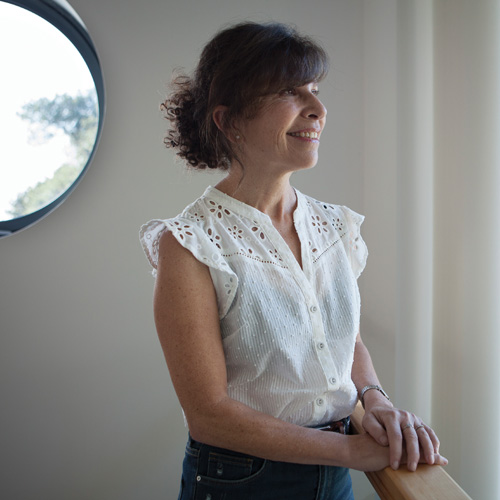
Kingston Black, Ellis Bitter, Tremletts Bitter, Browns, Somerset Redstreak and Major; those in the know will recognise these as varieties of cider apple trees. All can be found in Zoë Marshall’s 10 acre orchard in Netherhay, which she has planted and nurtured alongside her Garden Designer husband, Duncan. Together they shared a dream and bought a field in 2001 wanting something for their future. Now the couple are ready to share the fruits of their labour under the apt name of The Gardener’s Orchard.

Always intended to be a cyclical enterprise, the orchard works for itself. Sheep graze under the boughs, horses munch the hay, the trees benefit from the horse manure and chickens wander round pecking away, scratching at the weeds. As for the fruit, this is transformed into traditional farmhouse cider, which in turn is used to make cider cake. Zoë uses her family’s secret recipe to make speciality fudge and sells it, with the cider cake and cider, at local stores, fairs and markets, as well as through their website.

Zoë grew up on a farm near Crewkerne. She has idyllic memories of hauling bales and riding around on a tractor, sat next to her father. Working for years as a farm secretary, she met Duncan at agricultural college. Zoë maintains strong links with the farming community, still working one day a week for a local farming family. She helps Duncan with his garden design business and makes fudge or cake two days a week. The couple work together in their orchard, all while raising their two girls, who have just about flown the nest.

Now, Zoë is happy doing what she loves every day, and by her side, is the man who declares he “knew within two seconds, she was the woman” for him. In amongst the cider, cake and fudge emerges a true love story.

Take Care

This phrase is now frequently used by people taking their leave, an alternative to “Good Bye”, (or as older people might remember “TTFN”, a catch phrase from “ITMA” on wartime “wireless”). My thoughts have taken a different turn today.

As a young man in the Round Table, with winter approaching it was agreed that we should purchase coal and kindling wood to distribute around the town to the poor and needy. We used a list from the local authority and bagged up the fuel. On my list was an elderly man and the other members, said “he won’t accept charity and is very cantankerous”. I took our five year old daughter with me and knocked on the door with trepidation, but when he saw the child he said “Hello little girl, would you like a sweet”, offering a grubby paper bag containing sticky sweets. She took one and he then accepted our gifts with thanks.

Looking back in history around the Norman period we can find no lists of poor and needy. If they were lucky their families might help them or possibly some wealthy individual might give them a helping hand. Hospitals, like St John’s on East Bridge, Bridport are recorded from 1200 to 1300, but seem to have taken in travellers like Richard III, en route to Exeter and not paupers. The Church was mainly responsible for providing help. Leper Hospitals occurred around the same time, but are likely to have helped only lepers until the Dissolution of Monasteries when the Magdalen Lane Almshouses took over from the leper hospital, to the west of Bridport. In 1536 there were so many poor people roaming the streets that a Beggars Act was passed. Apart from straight begging there were so called priests selling “pardons” and pieces of the “real Cross” as described in Chaucer’s Canterbury Pilgrims. Some pretended to be ill or lame, despised by “Sturdy Rogues”. However at times “The Plague,” other epidemics and wars reduced the population and there was more work than workers! Generally almshouses appeared in the 1600s, for example Napper’s Mite in South Street, Dorchester established in 1616 by Robert Napier for 10 poor people and the Quaker Daniel Taylor gave dwellings adjacent to the Meeting House in South Street, Bridport in 1696 for the poor of Bridport. However they could not have catered for more than a few of the needy. The problem became worse, with more vagrants on the road and destitute old sailors and soldiers. Migration was proposed as a solution, but could only absorb a relatively small number.

The Elizabethan Poor Law Act of 1601 had 3 categories, the first for the able and deserving out of work were given paid outdoor relief, i.e. they could still live at home. The second, the idle or unwilling, might be whipped(!) but the third category, the sick, old or very young could be given indoor relief, e.g. live in the Poor House. This relief was paid for by the parish, hence the expression “On the Parish” which is the way we seem to be going again now. The system became unworkable and in 1834 a New Poor Law Act was passed enabling parishes to form “Unions” and build, rent or buy “Workhouses”. Dorset established 12 Unions, locally Dorchester, Beaminster and Bridport, building in each area. Dorchester Workhouse was built in the shape of a cross, of stone and brick and later became Damer’s Hospital in 1948. Bridport Workhouse was built of local stone in Barrack Street, again a cruciform, in 1837 for 200 paupers and it should not be confused with the Cavalry Barracks, a little further north. The workhouse later became an Infirmary and then Port Bredy Geriatric Hospital in 1948. Beaminster Union Workhouse was built at Stoke Water, half a mile from Beaminster town, “Y” shaped of stone and brick, for up to 230 people. Completed in 1838 it contained a tailor’s shop and oakum picking for the occupation of inmates. Both Bridport and Beaminster have been converted into private flats, since closure. Many poor people were assisted by “Poor Relief” outside the workhouses. There was considerable stigma associated with “The Workhouse”, as Thomas Hardy recognised in Far From The Madding Crowd.

Latterly elderly folk moved into private Care or Residential Homes, paying for the privilege. In recent years we have heard of at least two of these being closed locally as they were not making a sufficient return and the residents were forced to find another home. We also know of an elderly resident being hospitalised for a major operation and then contracting two infections, which left her very weak only to be visited by her Home Manager and told “You cannot come back to the Home”. This was without the next of kin of the patient, or a nurse, being present. The hospital had hoped to pass the patient on to another hospital nearer her home, for rehabilitation, but found she had effectively been made homeless and could not qualify. Having to explain this situation to another home was difficult for the relatives. So the days of the overbearing manager described by Hardy and Dickens are still with us, but luckily we hope restricted to only one or two isolated cases. That patient has since been rehoused in another caring home and is happy and comfortable. Most Care Homes are just that, caring.

Bridport History Society meets on Tuesday 14th March. Eric Galvin will talk about “Joseph Clark – a popular Victorian Artist and his World” at 2.30 pm in the United Church, Main Hall, East Street, Bridport. All welcome.


Cecil Amor,  Hon. President Bridport History Society.

Bridport’s Cough Medicine

Runny nose, sore throat, hacking cough? Do you run to the pharmacy for a cough medicine that may or may not help? Many Bridport people remember the days when the remedy of choice was Fudge’s Mentholated Honey Syrup, or as the locals christened it, Fudge’s Firewater. How did this potent potion come about and why is it no longer available?

The story begins in the 1950s when Ken Fudge moved from London to Bridport to open his pharmacy in West Allington, next door to Balsons Butchers. For Mr Fudge, trained in London but born in Blandford, this was something of a return to his roots. At that time, many pharmacists devised their own remedies, often to secret recipes, and Mr Fudge was no exception.  He made several nostrums, as these remedies are called, but the most popular and enduring was his Mentholated Honey Syrup (Fudge’s Firewater) which, long after Mr Fudge retired, was sold at the East Street Pharmacy in Bridport, for much of that time under the supervision of Mr Morrish. Even now, the mere mention of the Fudge’s name evokes a warm wave of nostalgia and longing in many Bridport people.


The medicine

Fudge’s Firewater was an old-style cough medicine recommended for common winter ailments: coughs, colds, influenza, loss of voice, hoarseness, sore throat and catarrh.  The dose was one teaspoon every four hours and the label warned ominously that each spoonful should be “taken very slowly”. It was sold “over the counter” without prescription but strictly under the control of the pharmacist. Fudge’s Firewater was immensely popular and many people have told me how much they trusted it to help their symptoms: “Brilliant cough mixture, couldn’t beat it”, “Amazing medicine for coughs and sore throats”, “Never bought anything else”, “Please, if there is a god, bring back Fudge’s Firewater”. People travelled long distances to purchase the medicine, holiday makers often went home with supplies and, during some winters, as many as 250 bottles of Firewater were sold each week at the East Street Pharmacy.

The medicine also had a formidable reputation: “It nearly blew your head off but by golly it did the trick”, “Tasted like red diesel mixed with the finest brandy, lovely”, “The menthol really took your breath away” “It was a trial to take but you knew it would make you better” and several people spoke of “the Fudge’s shudder”.

As Mr Fudge himself said: “Some do swear by it, some do swear at it”.


Unconventional uses of Fudge’s Firewater

The medicine was also a voice-saver for some professional singers and I heard about one well-known entertainer who would regularly send a friend to buy Firewater from Mr Morrish to help lubricate her vocal cords. Similarly, Marco Rossi told me that, in the 1990s, when he was part of local band, Stocky Lamaar, performing in smoke-filled pubs around Dorset, he and Al, the other vocalist, each had a bottle of the potion by them on stage. With the occasional swig of Firewater, they could sing all evening without sounding like “Madge from Neighbours at a Bonnie Tyler tribute karaoke night”.


What was Fudge’s Firewater and how did it work?

Mr Fudge’s medicine was a dark brown syrupy liquid made by mixing menthol crystals and a little fudgy flavouring into Gee’s Linctus, itself an old-fashioned cough remedy dating from the Victorian era. Gee’s linctus, or to give it its proper name, squill linctus opiate, contains several potentially active ingredients. Morphine, a substance with an established effect on cough, but also a well-known drug of abuse, is present but at low levels. Squill, a plant extract, is another potentially active component that, paradoxically, encourages coughing and mucus removal. The medicine also contains alcohol at similar levels to a fortified wine and this may have contributed to the Firewater experience. Mr Fudge’s masterstroke was to boost the effects of the Gee’s linctus by adding menthol, a remedy used for many years to help with symptoms of coughs and colds; it may also act as an oral anaesthetic helping with sore throats and may relieve nasal congestion.

Although cough medicines cannot alter the course of viral infections, they may help you feel better and Mr Fudge’s medicine attacked symptoms in several ways which is perhaps why it was so popular and so successful. It was the menthol, however, that made the potion so memorable, justifying the Firewater nickname and establishing a shared experience among those who used it, believed in it and benefitted from it.


Abuse of Fudge’s Firewater

Non-prescription medicines such as Gee’s linctus, and Fudge’s Firewater, have been abused by people trying to access even the small amounts of morphine they contain. For example, Gee’s linctus is reported to induce a “lovely euphoria and dreaminess”, but only if you are prepared to drink 50ml or more of the medicine! Local pharmacists were aware of the problem and tried to control it: Mr Morrish monitored all sales personally and Mr Conroy (manager during the Moss era) restricted sales to one bottle per person, with a signature.


The end of Fudge’s Firewater

Gee’s linctus gradually fell out of favour as a cough medicine because of the problem of abuse. Finding commercial sources of the linctus became more difficult and temporary interruptions to the availability of Fudge’s Firewater occurred early in the 21st century.  Then, in January 2006, a notice appeared on the window of Moss’s East Street Pharmacy announcing that the medicine would be discontinued because of “problems with the supply of ingredients”. Around this time, however, there had also been a change in the pharmacy regulations. Nostrums containing even small amounts of morphine, like Fudge’s Firewater, now required a prescription and this change must have contributed to Moss’s decision.

That wasn’t quite the end, though, because a modified Firewater was available for a few years from the St John’s Pharmacy in Weymouth. Because of the change in pharmacy regulations, people needed to persuade their doctor to issue a private prescription if they wanted the medicine; this severely affected sales and by 2009 production finally ceased. The change in regulations also means that Fudge’s Firewater is very unlikely ever to reappear.

Fudge’s Firewater served Bridport well for 50 years. The medicine is now just a memory but one that should be preserved as an important part of Bridport’s history.

I should like to thank Angela Alexander, Stuart Anderson, Richard Balson, David Conroy, Richard Cooper, Margery Hookings, Diana Leake, Kevin Morrish, Caroline Morrish-Banham, Dipan Shah, Elizabeth Williamson, Joy Wingfield, The Bridport Museum and the many commenters on social media who generously helped me in preparing this article.


Philip Strange is Emeritus Professor of Pharmacology at the University of Reading. 

He writes about science and about nature with a particular focus on how science fits in to society.  His work may be read at http://philipstrange.wordpress.com/

Fake News

There’s been a lot of trumpeting recently about so-called ‘fake news’ – disinformation and spoof stories which purport to be real news stories when they are in effect anything but…

Mr Donald Trump (the new US President—you may have heard of him) considers most American TV and newspapers to be guilty of fake news, but this is simply because he doesn’t like what they write or say about him. We get quite a bit of fake news here in the UK too. Even some of our local south west news can be somewhat suspect. Yes really! Here’s a small sample of some recent stories that might have to be investigated further…

Woolly Jumpers: Following an increase in sheep rustling, Somerset farmers are painting their sheep in different colours to make it harder for thieves to sell their stolen flocks. Chard sheep will be sunny yellow while Crewkerne livestock will be easy to spot in their fluorescent pink coats. If you see a field full of day-glow orange sheep, they will be from the Martock area whereas Taunton farmers prefer a bright sky-blue. Yeovil has yet to decide on its chosen colour but is currently experimenting with a rather sickly puce green. Unfortunately, after a spell of rain, this shade of green fades into a dull khaki which makes the animals almost impossible to spot in their fields. A farmer from Mudford (two miles to the north of Yeovil) says this has already halved the number of reported sheep thefts since thieves cannot find anything to steal. He has no idea how many sheep he has in his fields since he can’t see them to count them.

Air Mail: The Marshwood Vale area has been chosen as a test site for a new postal service to start this summer. All mail deliveries will be transported by high speed drone from the new drone airbase currently being built next to the school in Bettiscombe. If you live in the area, you’ll find that local post will now arrive almost instantly – within about 2 minutes of its launch if you’re downwind. You are advised to look up when opening your front door to avoid being hit on the head by a falling package from Amazon.

Cheap Pound: After the news that animal fat is incorporated in the new five pound note, the Royal Mint has announced that, as from June, all new one pound coins will be made from recycled plastic with added vitamin D. According to experts, these coins will be much cheaper to produce as they will be moulded from the contents of local waste bins and will bring extra health benefits should you feel tempted to consume them. People are advised to thoroughly wash any coins intended for the dinner table before eating them. Waitrose’s new range of ‘Coin Risotto with Green Basil Pesto’ will be absolutely delicious but rather expensive. It’s unlikely that seaside kiosks selling ‘Quid and Chips’ will be commercially successful.

VIP Arrival: To launch the brand new international marina in West Bay, The USS Trumperama will visit the port to help publicise the six new 5 star hotels being constructed in 2017 and 2018 as well as the new slipway development with mooring for one thousand luxury yachts. It is anticipated that the owner of this new complex will make a state visit to the area next year along with most of the US Sixth Fleet. The owner is a certain Mr Trump who also happens to be the President of the United States in his spare time. It is thought that the accompanying 3 aircraft carriers and 45 missile cruisers will be ‘parked’ nose to tail along the Chesil bank. Local dog walking and swimming and boating activities off Chesil beach will be curtailed during this time for security reasons.

Local Fund Raising: To make up any financial shortfall, Seaton town council is to introduce a local shoe tax. “If you drive a car, you pay road tax” said a local councillor, “so if you walk on one of our pavements, you can pay a shoe tax.” It’s uncertain whether this idea will catch on in other towns. Tourists visiting Weymouth are reported to be unhappy about the proposed new ‘water tax’ to be charged for the use of seawater when anyone dives in from the beach. Other local fund raising plans include ‘a fresh air’ tax (difficult to enforce without suffocating the local inhabitants) and a ‘local bus tax’. This latter suggestion is particularly stupid since there will be no local buses running by 2018 and therefore no money will be collected.

Brexit Tax: Since everybody is by now completely fed up with all the arguments and angst and talk about Brexit, anyone mentioning the B word in public will face an on-the-spot fine of £100. Repeat offenders will help to build a 300 mile wall along the whole of the south coast. Mr Trump will advise on who pays for it.

Holly Neil

‘My family’s all Dorset born and bred, I’ve lived here in this house all my life, and my Mum and Dad come from round here too. Mum works at Beaminster School as a teaching assistant for SEN children, and my Dad has his own business providing hoof care for cattle. I have two younger brothers, one working in a hospital in Southampton and the other living in London.

Growing up round here my first school was at Evershot, which was tiny with about 10 of us in a class, and then I went to Beaminster comprehensive. Living in the country meant I was very much into horses from a young age. I did all the usual pony club things, and then in about 2007 took up lessons in equestrianism. That really opened up another dimension for me, the para-equestrian world. It introduced me for the first time to competitive sport, and I was being trained and competing in dressage, which is basically getting the horse to perform a kind of ballet in an arena. Obviously on a horse the challenge for me is my height, being 4ft 6in, and my last horse was 17.2h. Staying on is tricky when your legs barely reach below the saddle, but I had a specially adapted saddle, a very tame and willing horse, and plenty of people to help me overcome the difficulties. So when after a few years of competing in dressage I had to give it up – it was becoming too expensive – it was a bit of a shock having been involved with horses since I was about 5 with my first Shetland pony. And now I have no contact with horses at all, but that’s because athletics took over.

As an equestrian I was put on to the Talented Athletic Scholarship Scheme which helped with funding, access to physiotherapy and other resources I might need to help with my performance. That was based in Yeovil, with a man called Andrew Roda from Yeovil College. He’s an athletics coach, so he helped me make the transition from equestrianism to the world of throwing in athletics, where there is a competitive pathway that can lead to the Paralympics. I took to it straight away, mainly doing shot put, and in my first year I competed locally at Yeovil, and Millfield School. I soon progressed from junior level to international, and then was selected for a junior world championship in the Czech Republic, at which I was lucky enough to win gold. There was then only 2 years in which to build up to the London 2012 Paralympics, and despite earlier successes I sadly wasn’t selected, which was a bit of a disappointment. But in sport you have to accept both sides of fortune, and get back to working for the next opportunity. So I knuckled down and started training 6 times a week for the senior level and the 2016 Rio Paralympics.

Back in Yeovil College I trained on the athletics track and in the gym. The selection process for the Paralympics is all based on your competition performance in the world ranking, so you have 4 years to get to the top 8 in the world. That means you have to compete in the European championships which is every 2 years, and the World championships which are also every 2 years, and achieve a potential medal or finish in the top eight. In 2013 I made my senior debut at the World Athletics Championships in Lyon, where I took bronze, after which I was put on the World Class Performance Programme, which is funded by the National Lottery. That gives us a small salary every month which helps with training and expenses such as travel. Things went pretty well for me during that time, and I was selected for the 2016 Rio Paralympics.

There are all sorts of categories for the competitors so that as far as possible there’s a level playing field for everyone according to their disability. In my class for instance I compete in class F40 or F41 which is for people of short stature, and in my category in the discus, which is now my sport, I was competing against 14 people from around the world. Everyone gets 3 throws, and after 3 rounds the top 8 get another 3 throws, which is the final. My coach and I decided that my target was to make the final, and despite my throws not being my absolute best, I made the top 8. It was of course a very different and massively overwhelming experience for me, so I was really pleased to reach that target. The best competitors in my event are the Tunisians, who are the ones to beat. One thinks of throwing as being an event dominated by Eastern Europeans, but the number one is a Tunisian girl and if she doesn’t win there’s usually something wrong. And there were quite a few new entrants who popped up and turned out to be very good too.

We were in Rio for 3 weeks. The first 10 days was for acclimatisation and training with our GB coaches at a camp about an hour’s flight from Rio, and then we moved to the Olympic Village. I went to Rio on my own, as I usually do at big competitions. I just prefer to have no one around me, even family; that way I can be more focussed. You get a lot of support out there from the team, and I already knew all the GB team members in my event, but as a multidisciplinary sport it was good to get to know the many I didn’t. And it was amazing to be able to see all the other sports and watch the world’s best competitors. We weren’t allowed to go to the opening ceremony – it’s British Athletic protocol – because there’s hours and hours of standing around which is very tiring. We watched it on the big screen and had a celebration at our house, but after the competition we went to the closing ceremony which was indeed amazing.

This year there’s the World Championship in London to be held at the Olympic Stadium, so I’m hoping that after my disappointment at the 2012 event I’ll get my chance to compete there. It’s combined with the able-bodied Athletic World Championship, so all the top athletes like Usain Bolt will be there. I had a 2-week break from training after Rio, but I’m back into it now. In the winter it’s mainly strength and conditioning work, then it’ll be work on technique in the spring. They say that throwers can be more lenient with their diet than sprinters, but I’ve always been pretty careful with what I eat. Before Rio I had no time for anything else, but now that I’ve hit my main goal in life I’m starting to plan ahead for the future beyond athletics. I’m doing a degree in Primary teaching at the Open University, and I work part-time at Birchfield Community Primary School in Yeovil.

I’ve always taken a very positive approach to life, I really love a challenge and I’m not afraid to push myself to higher levels if I can, in life in general as well as in sport. One never knows what’s round the next corner, but this seems to me to be the best way to find out.’

Heather Upham

Around nine years ago, Heather Upham made a birthday cake in the shape of a horse’s head for her boss as he enjoyed hunting. The boss’s mum was so impressed with Heather’s work she invited her to come along to the Bridport group of the British Sugarcraft Guild (BSG). And Heather has never looked back, as she now owns Fancy That Cake Company in Beaminster and is a demonstrator and assessor for the Guild.

In 2012, Heather was made redundant from her job at Hi Ho Silver, so used her severance pay to start her own cake company. She had been making cakes for friends and family for a while but saw the opportunity to take the plunge and push her business full time. As her mum and step-dad live above the shop where she now operates and were looking for a tenant to take on the unit, Heather put all her eggs in one basket and went for it.

Presiding centre stage when entering the picturesque shop are her current Gold, Silver and Bronze awarded masterpieces; a set of intricate Steam Punk cupcakes, a beguiling  witch and a cat with a ball of string. However, in addition to the elaborate, Heather also produces beautiful standard birthday cakes, occasion cupcakes and wedding cakes. From Harry Potter creations to an iced Victoria Sponge, this lady can do it all. She works in the kitchen next to the shop, so customers are met by Heather wearing an apron, a smile and notepad at the ready.

Heather lives at Forde Abbey with her husband and two sons. She trained and worked as a Make-Up Artist at Bournemouth University as well as a hairdresser. Her obvious artistic talents are also put to use outside the kitchen as she does face paints at parties with a friend. Where she finds the time though, is another question entirely. 

Up Front 3/17

Echoing the theory expounded by Ray Kurzweil in his book, The Singularity is Near, Microsoft’s Bill Gates recently pointed out that change in the coming decades will come faster than the automation that transformed production lines during the 20th century. One only has to look at the rate of change and advances in technology in the last ten years to see that they are both on the right track. However, one of the central points in Gates’ interview was the need to tax robots that take jobs that humans would have done. He pointed out that if a human did $50K worth of work they would be taxed on that salary and the money would be used to fund public services. If we don’t tax the technology that replaces human beings we quickly lose vital tax revenue. Obviously that means we need a new way of taxing automated production but the business community will no doubt fight any new taxes and has already been asking where do we draw the line? Businesses have been using automation for decades and any effort to tax it would be very complex. To start with what is a robot? Professor of Robot Ethics, Alan Winfield, talking on The Life Scientific program on BBC Radio 4 recently defined a robot as something that ‘embodies AI’ or ‘Artificial Intelligence in a physical body’. He admitted that every roboticist has their own definition. But even if a definition could one day be agreed on, the questions still come thick and fast. To the point where they are so exasperating they become ridiculous. How do you determine the correct value for an automated job? How far back do you go to recover back tax? How often should a robot get a raise? Should a robot qualify for a pension, annual holiday and maternity/paternity leave? Can we expect a robot union fighting for equal rights and threatening to strike for equal pay? And how about this—if an American soldier is serving in a designated tax-free combat zone they don’t pay tax, so does that mean that a drone should be taxed for the period where it is in the air outside of the ‘designated tax-free combat zone’? And then there’s the argument that a human couldn’t have done the job in the first place? Some of these questions might be seen as at the lighter end of the scale and obviously only scratch the surface of the problems that a robotic future offers. But the worrying truth is that it may have to be artificial intelligence that answers them.

March in the Garden

The weekend on which I happen to be writing this, I’ve also been celebrating my Mother’s 90th Birthday. Being a rather special milestone I wanted to buy her the sort of plant which you wouldn’t find in the average garden centre. To this end, I arranged to visit a specialist nursery whose list includes many specimen plants not usually offered in the general horticultural trade.

During my visit to this nursery, being shown round by its hugely impressive owner, I was reminded that at the ‘top’ of hobby gardening is a very rarefied world which you can only partake in if your level of horticultural interest is bordering slightly towards the obsessive. It reminded me that, as a degree student, I spent many happy hours in the nurseries of such luminaries as Christopher Lloyd, Beth Chatto, Liz Strangman and John Coke.

The last credit in that list should really read ‘Marina Christopher’; she was the little dynamo behind ‘Green Farm Plants’ and perhaps the best propagator I’ve ever had the pleasure of knowing. Marina’s still going strong as ‘Phoenix Perennial Plants’—look it up on ‘RHS Nursery Finder’.

Even now, almost three decades later, I only comprehend a tiny fraction of what these plant collectors, propagators and nursery owners hold in their horticultural memory banks. The whole point of spending time amongst their plants is that a little of it rubs off and, over time, your own knowledge and inherent understanding increases practically subconsciously.

I’m not going to name the nursery I visited because I don’t think they’d thank me for it. Looking at their website, before sending an email requesting to visit ‘by appointment’, you don’t have to be very good at reading between the lines to realise that the owners are probably not the sort to be messed with!

‘Any road up for a packet of fags’; the plant I opted to buy, for my Mother, was a very sweet scented, relatively fast growing, free-flowering, Daphne : Daphne ‘Spring Beauty’. Obviously I couldn’t resist a little something for myself too, so I purchased the most wonderful, highly scented, season extending ‘sweet box’ : Sarcococca hookeriana var. digyna ‘Tony Schilling’.

This plant seemed most fitting because not only does it have attributes making it different, possibly better, than the straightforward species, but the plant collector it is named after, Tony Schilling, brings this personal story full circle for me. When I first visited Elizabeth Strangman at ‘Washfield Nursery’, all those years ago, she was busy bulking up and naming plants that had come from one of Tony’s collecting trips in the late 1980’s or early 1990’s.

From memory, it was the same trip that brought back exciting new species and forms of such excellent plants as euphorbias, Omphalodes and, of course, hellebores. To feel the buzz surrounding these newly collected plants, before they entered commercial horticulture, years before they could be planted in the ‘average’ garden, was truly inspiring. Once experienced, never forgotten, so that every time I come across one of those plants, however many years later, I immediately get a glimpse of Liz, in my mind’s eye, shuffling amongst her, as yet unnamed, babies.

Anyway, this most recent trip fired my resolve to do more nursery visiting this year. Due to ‘stuff’ that’s gone on over the last decade, I’ve got out of the habit of actually enjoying my plants and getting a kick out of noticing the funny little foibles that sets one species, or selection, apart from another. Just now I’m enjoying pots of naked-flowering hellebores, dug up from the garden of a house I cannot live in anymore, as some of them date back to the originals I bought in the early 1990’s—fresh from Liz’s original hybridising experiments.

And now it’s ‘March in the Garden’: time to be planting such creatures out into beds and borders, giving then a good feed with blood, fish and bone plus some garden compost, where they will establish well as the weather warms and in plenty of time to withstand summer droughts. Bare-root plants, or plants that have been moved from elsewhere in the garden, will need plenty of water in their first year, at least, because, unlike container-grown plants, they are likely to have more ‘top growth’ than their root systems can support when lack of moisture threatens.

The same factors that make March a good time to plant out newly acquired plants, abundant soil moisture and warming weather, also allow weeds to expand rapidly in a rush to flower and set seed before you’ve even noticed them. Chief amongst these, for me, are ‘hairy bitter cress’ and groundsel. They’ve been biding their time, since germinating, but longer day lengths give them all the encouragement they need to romp away, stealing a march on their prettier rivals. Hand weed where you can but use a glyphosate based weed killer on large expanses, such as in gravel drives or beds which are due to be planted later, as glyphosate weed killers are non-specific (they kill all green things) but also non-persistent (they don’t kill the next plants to germinate or that get planted in the same soil).

How busy you will get in the garden this month will be dictated by just how warm / dry it is. If conditions allow then the first, high, cut of the lawn might be possible. Similarly, sowing seeds in situ and planting out young, but hardy, plants could be possible where emergency frost protection is feasible. I tend to move some newly raised plants out of the luxury of the greenhouse, into coldframes, with the aim that the frames are opened at every opportunity, during the day, but are closed at night. Other seedlings are pricked out of trays into small pots which in turn fill the space vacated by the plants that have gone into coldframes, and so the cycle continues.

One final tip; last year I experimented by performing an earlier version of what has become known as the ‘Chelsea Chop’. This is the process by which summer flowering herbaceous perennials are cut down around the time of the ‘Chelsea Flower Show’. This encourages bushier growth, controls their eventual height and also delays flowering a little bit so that you can extend the season of your herbaceous border, which might otherwise ‘peak too soon’.

My version, by dint of the time of year I have christened it the ‘Lamb Chop’, applies specifically to the pulmonarias in my garden. I guess it could also be applied to similarly early flowering ground cover—persicarias come to mind, maybe periwinkles too. Anyway, it is a very brutal, almost counter-intuitive, hack right back to soil level using sharp secateurs.

Pulmonarias are already producing new flower stems at this point but, I find, they get mixed up with last year’s brown leaves and so the display is somewhat diluted. Also, they get rather big, rather ‘out of hand’, very quickly—razing them to the ground checks their growth, removes old foliage and the first flush of flowers. The result is that flowering is delayed (coinciding better with the main flush of spring flowers) and the lungwort is bushier, ‘cleaner’ and altogether more manageable. A handful of ‘fish, blood and bone’, worked into the soil at the same time that the ‘Lamb Chop’ is carried out, ensures that they bounce back with a vengeance.

…and so the headlong rush into spring begins. Hold on tight it’s going to be a bumpy ride!

Vegetables in March

Venturing into the garden on a sunny March afternoon fills us with thoughts of sowing our first outdoor crops, such as broad beans, peas and early potatoes.

These crops all have large ‘seeds’ with stored energy to get them going.  Small seeds such as salads and carrots struggle in cold soil – later in the month you can have a go if you enjoy living dangerously.  My best friend at this time of year is fleece, which goes over all early sowings to keep the soil warm and moist.

A compost mulch on the surface last year has created an ideal medium for sowing small seeds, with fine crumby texture and rich feed just where small seeds need it.  There is an endlessly repeated myth that carrots and parsnips fang in compost, but year after year I find this not to be the case.  The main cause of fanging for me is tiny shards of stone, which always end up in the soil somehow.

Weed free status is important, especially at times of slow germination and crops like carrots and parsnips.  Weeds keep slugs economically active and hungry for green shoots.

Indoor sowing in modules over a soil warming cable is perfect for a strong, early start to most crops.  My lettuce and true spinach have all come up within a week in mid February without being attacked by wildlife, and will be ready for transplant by the end of the month.  Transplanting salads in the polytunnel will provide rich pickings by mid April for my Farmers Market, whereas outdoor transplants, kept under fleece at first, should be ready to pick by late April.

Tomatoes and peppers have also germinated in this warmth, the early start will give a longer picking season.  They will be transplanted twice into bigger pots, each time sinking the little plants as deep as I dare to make a stronger plant.  Even on their ‘hot bed’, these will still get fleeced on frosty nights, so there is definitely extra work with early sowings.

And what do you call a camel with three humps?  Humphrey.


What to sow this month

Broad beans, early potatoes, peas.  It is better to wait for warmth later on to plant onion sets, as a cold snap will induce flowering later, especially red onions.  Carrots, spinach, lettuce, beetroot and radish can be worth a go under fleece, but are quicker and easier to establish in April.


Shared Future

The importance of family planning in an African village may seem a long way from the fertile fields of the South West, but a Somerset charity is working to help mitigate a problem that could have far-reaching consequences. Fergus Byrne has been talking to CHASE Africa’s Rory Macdiarmid.

Family planning is very much ‘the elephant in the room’ in Kenya according to Rory Macdiarmid, part-time Corporate Fundraising Coordinator with Somerset-based charity CHASE Africa. Short for Community Health and Sustainable Environment, CHASE has been working in Kenya since 2012 helping to address the complex and related issues of poverty, ill-health, population pressure and environmental degradation. They provide access to free, voluntary family planning and basic healthcare services using mobile clinics. They also support a programme of tree planting in schools and forest restoration projects.

However, the key to real change for those living in areas where infrastructure or rural conditions simply cannot support expanded population is to offer family planning services. Rory is quick to point out that supporting wonderful charities dealing with water shortages, famine and poverty as well as supporting schools and wildlife projects is making a huge difference to many lives. However, he is also keen to highlight the long term future. ‘We think if you step back and look at the whole picture the biggest driver of the problem and the easiest to tackle is the surging population. Without contraception couples have more children than they want and are unable to feed and educate them as well as they would like to.’ he says. He explained that the world’s population is growing at an alarming rate. Africa had about half a billion people in 1980 and has about 1.2bn today. ‘Much of this growth’ he says ‘is down to a lack of education and poor access to contraception. We are not on a crusade promoting birth control, there is nothing wrong with large families provided they are planned and can be supported. Its giving people the choice that is so important.’

Rory’s involvement in the charity came after he and his wife set off to drive from Somerset to South Africa five years ago. ‘We witnessed the Arab spring revolutions in Northern Africa and the split of North and South Sudan. It was a life changing experience of nearly 2 years, which led on to a 3-year involvement in building refugee camps in Eastern Africa. Dadaab on the Somali border is home to about 330,000 people and Kakuma on the border between Kenya and South Sudan will have a capacity of half a million people when it’s completed! The size of these camps and the grinding poverty that we witnessed across Africa is heartbreaking and sadly there is no quick fix.’

On his return to Somerset, he began working with CHASE Africa to try and address the complex and related issues of environmental degradation, population pressure, poverty and ill-health in Eastern Africa.
CHASE Africa is working hard to deal with a population explosion that Joseph J Bish, Director of Issue Advocacy at the Population Media Center in Vermont recently described as ‘the opposite of a virtuous circle’. Rapid population growth creates an enormous strain on educational systems and local economies, and in areas where there is no ability to build the infrastructure to cope ‘unemployment, instability and entrenched poverty follow suit.’

To date, CHASE Africa’s mobile family planning and health clinics have provided family planning services to about 70,000 women and their education and basic healthcare program has now reached over 230,000 women. The hope is that more of those will continue to take up the charity’s family planning offering.
However, like all charitable work CHASE Africa needs funds to carry on and despite individuals such as Rory Macdiarmid eschewing a salary and the support of high profile individuals like Sir David Attenborough, Ben Goldsmith and Kevin McCloud they need donations. Just £7.50 is all it costs to transform the life of one mother and her family in East Africa by giving her access to family planning for up to 5 years. Giving £5 a month would enable 8 women to make this choice in a year. You can give via MyDonate for one-off and regular donations.

If you would like to know more about the work Somerset charity CHASE Africa is doing or would like to offer financial support visit www.chaseafrica.org.uk.