
Sunday, March 22, 2026
Home Blog Page 48

A Man Ahead of his Time

Margery Hookings visits Chard Museum to find out more about James Gillingham, surgical mechanist and manufacturer of artificial limbs. He was a contemporary and fellow townsman of aviation pioneer John Stringfellow in Chard during the 19th century. Both were ahead of their time in their thinking and technology.


I’m at Chard Museum, surrounded by artificial limbs, glass eyes and various pieces of equipment.

It’s an incredible collection. Even more impressive is the fact that the reason all this is here, out in a large outbuilding at the rear of the premises, along with farm implements, a funeral bier and a display of wedding dresses through the ages, is because of a man called James Gillingham.

He was a pioneer in the making of artificial limbs and surgical implements and was born in Chard in 1838. By the end of the century, the lives of thousands of people had been transformed because of Gillingham’s work. And, after the horror of two world wars in the 20th century, his family business helped even more people get back onto an even keel.

Gillingham was a contemporary of another Chard resident, John Stringfellow, who invented powered flight. Gillingham admired the inventor greatly. Both of them were way ahead of their time. Each one is the subject of large, permanent exhibitions at one of the most interesting local museums I’ve ever visited.

Museum chairman Vince Lean takes up the story: “In the mid-1800s, James Gillingham was a boot manufacturer. This was not the same as a cobbler—he was an artisan workman and he used the methodology for bending leather in his work of making artificial limbs.

”Just imagine this man—he had no medical training but to his credit, he persevered and probably came in for a fair bit of criticism from the medical profession. In Victorian times, a lot of people were born deformed or had accidents at work. Whilst Gillingham didn’t do things for free, he had a series of charges so people could pay so much a month, so he was something of a philanthropist. He was helping anyone who needed his assistance.”

This classic Victorian entrepreneur not only found his niche, he carried on developing his products to continually improve people’s lot. He kept copious records featuring ‘before and after’ photographs of his patients, many of which form part of the museum’s display. “He had a fantastic, lateral mind,” Mr Lean says.

James Gillingham died in 1924 and the firm closed in the late 1950s.

Gillingham’s father, David, was born in Cerne Abbas, Dorset, and was sent to London at the age of 12 to learn the trade of cordwainer. When he came back, he lived with his uncle, William Gillingham, who lived in Thorncombe, before marrying Mary Stoodley in 1835. By then, he was running a successful shoe and boot business, The Golden Boot, where he employed workmen in his shop at the bottom of Chard High Street.

David’s son, James, joined the family business and went to London at the age of 21 as an ‘improver’ with one of the best bootmakers in the city. He was fascinated by shops displaying surgical appliances.

When he returned, he was asked by a local doctor to make a moulded, leather splint for a patient with hip disease. He went on to make a spine support for his sister, Susan, who had injured her back in a fall.

But it was following the wedding of The Prince of Wales to Princess Alexandra in 1863 that James Gillingham went on to make his mark on the world.  Chard, like the rest of the country, celebrated the event with great gusto, including a spectacular fireworks display organised by Gillingham.

Earlier, the day had been marred by a terrible accident in which William Singleton, a gamekeeper who worked for Lord Bridport of Cricket St Thomas, lost an arm. He was loading a cannon when it was fired prematurely. He had to have his arm amputated at the shoulder by Dr N Spicer, the same man who had asked Gillingham to make him the leather splint for a patient.

Two years after losing his arm, Singleton went into The Golden Boot and told Gillingham that, despite Lord Bridport sending him ‘to all the best people’ in London, nothing could be done for him. Gillingham made Singleton take off his coat and shirt there and then and vowed to make him an arm without charge.

The new limb and how it was fitted was a huge success and Gillingham’s fame spread far and wide. His advice on prostheses and operations was sought out by the medical profession, who visited him at his premises at Prospect House in Combe Street. In 1866 he set up J Gillingham & Son with his son, Sidney. By the end of the century, they had treated more than 7,000 patients.

He made mechanisms for dealing with curvature of the spine, paralysed limbs and fractures and dislocations as well as knee caps and artificial eyes. The firm was so successful, it was appointed principal fitter to the Admiralty and opened a branch in Plymouth.

In World War One, demand for artificial limbs rose rapidly. Chard Hospital was the only Voluntary Aid Detachment institution allowed to admit and fit patients for lost limbs, which was directly attributable to the Gillinghams.

James Gillingham was a town councillor, a campaigner for temperance and a strong supporter of charitable causes. His inventions included a lifejacket, a range of heaters, an anti-pick pocket device, a barbed wire cutter and a tool to stop the operator’s hands going near the revolving blades in powered chaffcutters, having seen so many farmworkers lose their fingers.

He also made a lifeboat which he had fitted with rescue apparatus following a double tragedy at Chard Reservoir.

A book by Derek Warren entitled James Gillingham, Surgical Mechanist & Manufacturer of Artificial Limbs goes into detail about many of the people whose lives were transformed by Gillingham’s skill.

During the bitter January of 1881, Sidney Bishop was walking from Bristol to his home in Bridport. At Misterton, he found an open shed where he stood all night. On numbed legs, he walked through deep snow. By the time he got to Bridport, it was found that both his legs were severely frostbitten, as were the tips of several fingers. Both his legs had to be amputated below the knee.

The people of Bridport subscribed to buy him a pair of legs and Gillingham’s advice was sought. The patient later wrote to Gillingham to thank him for his new legs, telling him that he was able to walk to the harbour and back, with a stick in one hand and a basket in the other. Some months later, he walked back to Bristol, averaging 14 miles a day.

Gillingham was touched by the gratitude of working people. Alfred Woodbury, a farm labourer from near Bridgwater, sent him a letter in 1880: “I should be able to scarce do anything without it [an arm]. I can shear 37 sheep a day, for which I get 9s. I can reap the corn with a machine, thatch and rick, pitch hay and corn. I pitched a load of corn from two until six o’clock, 40 stiches on each load, my master gave me 4s for my day’s work. I cannot be too thankful.”

The letter is one of many Gillingham received from ordinary people whose lives he changed.

Writes Derek Warren: “The hands he made, with wooden, articulating fingers—mainly for cosmetic purposes—were of exquisite craftsmanship, and even if they were of little practical use, restored the sense of normality to the user, especially women, and gave back their looks as Jane French of North Petherton, wrote in 1880: ‘I can now go to church on Sundays and hold my books without covering my arm as before.’.”

For those not in genteel occupations, Gillingham created various attachments for arms, such as hooks, rings, knives and forks, spring clips and even knitting and crochet needles.

Gillingham was a man of principle and, for the first 20 years, did not charge anyone, however wealthy, for consultations or fitting, only for the instrument or limb itself. He continued to give the poor special treatment, allowing them to pay in instalments.

One of his most famous patients was Chang Wood Gow (Chang the Giant) who was 8ft tall and suffered from curvature of the spine. Outside Chang’s own family—he had a brother of 9ft who was a general in the Chinese army and a sister of 8ft 6ins—he was the tallest person in the world. He toured Europe, appearing before all the crowned heads, including Queen Victoria.
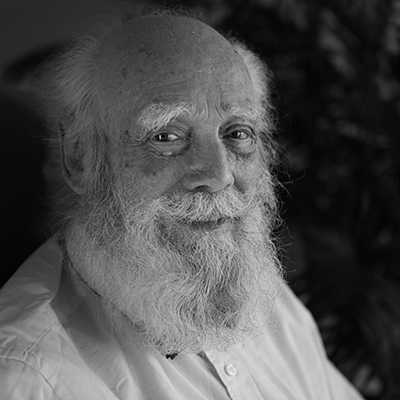
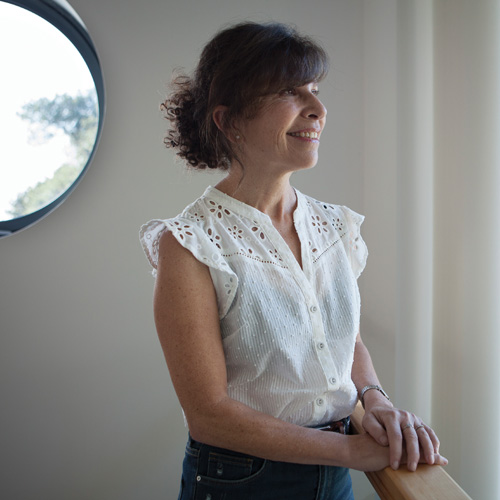
 

Alan Pearce

Robin Mills met Alan Pearce in Bridport, Dorset

‘I was born at 9 o’clock in the evening on the 28th November 1932, in Morden in Surrey. My father was born in Wandsworth, my mother in Battersea; my father worked at the Seamen’s National Insurance Society. When my parents bought the house in Morden you could see across fields to the underground station, but of course that view’s gone now. I went to the local LCC schools, passed a scholarship in about 1943 and started at Mitcham secondary school for boys in 1944. That was upgraded by Rab Butler in the 1944 Education Act to a Grammar School, but it made very little difference—the pupils were just as daft and the teachers just as egotistical.
Although that part of London avoided the worst of the blitz, I can remember the doodle-bugs, the German V-1 flying bombs. One landed behind the houses opposite. Fortunately my father was there, and he shoved us all into the cupboard under the stairs when he heard it coming. There was an enormous bang and everything jumped; all you could see was dust and a light patch where the front door had been. My father got us—my mother, brother, and myself—installed in the Anderson shelter, and went off to help pull people out of the wreckage. I think 7 people were killed there. The neighbours had family in Northamptonshire, and they offered to take us in for a while. So we stayed there, and although there were no air raids, there were several American bases so we’d see the Flying Fortresses coming and going. I remember seeing one crash; the pilot managed to keep it airborne long enough for the crew to parachute to safety, but there was quite a firework display when the incendiaries and flares went up when it hit the ground.
Back in London, after school I decided to go into printing, and went to the Croydon School of Art for a pre-printing course. In 1948, at the age of 16, I started a 6-year apprenticeship with a firm in London. I worked another 4 years as a journeyman, and was then offered a job as a night overseer with a firm in Caterham, which I did for 5 years, all night work. I worked in Canterbury for a while, which didn’t work out, and then in the printing department of Scotland Yard. I got married in 1956, and my wife and I moved to Gloucestershire, where I first worked in Stroud, then in Cheltenham. We lived at first in a mobile home, then we managed to buy a bungalow. After my father died in 1968 we started moving from place to place, working at different jobs all over the country. I had a job in Exeter, living in Exmouth, then Shrewsbury; we lived as far north as Berwick-on-Tweed, as far east as Great Yarmouth, and as far west as Conwy in Wales. I think I had about 20 jobs, and the last few years it was trying to keep one jump ahead of redundancy because of how the printing world was changing. Most of my working life it was all hot metal printing and that was coming to an end with computerisation, although I learned monotype printing at the keyboard towards the end of my working life. I was always an avid reader, and loved books; my father had suggested I’d be good as a compositor because I was good at spelling, and I enjoyed my work, although was quite hard physically, 8 hours of standing a day. And in London on the Northern line it was all standing going to work and standing going home again. Most of the printed products were trade journals, but they were such high quality, something you wouldn’t find today.
My friend’s firm in Exeter where I was working went bankrupt, and then I was made redundant from my next job 2 years before retirement, which was a bit of a bind. We knew about Hanover Housing, a housing association designed for older people, because my mother had been in one in Norwich, and when a new one became available in Charmouth we went there. And then in 1997 we managed to get this flat in Bridport at Hanover Court. My wife and I separated in 1998, and in 2009 she sadly died of cancer, so I’ve been on my own ever since. Although, that isn’t really true, with the number of friends I’ve now got.
When Gaby was the manager at the Electric Palace, and Jess the assistant manager, I used to go there for a coffee. I said to Gaby how expensive it would be to watch all the opera they show on screen there, and she suggested I could go along as a steward, and  I’ve been doing it ever since. So then I offered to steward there as often as I could, and helped out during the day a bit as well. I managed to go along nearly every time there was a gig, and it’s been a wonderful life.
I started at the Palace in 2010, and a year later Claire Shilton persuaded me to go as the bouncer at the Frolic Disco. I also do a couple of hours as a steward at the Town Hall for the Hat Festival. It’s just greeting people and showing them where to go if they’re new, helping people in wheelchairs, etc. Basically I just stand there looking pretty. I quite often dress up, once as a pirate when they had the Swallows and Amazons pantomime, and I dressed as a carrot when we had the Wurzels on. I’ve got a Father Christmas outfit for the late-night Christmas shopping, and the Christmas Frolics. I love the pantomimes, seeing the kids of all different ages enjoying it in different ways. And people like to see me there somehow, it’s nice. It’s been an amazing education for me.
Opera and ballet are my favourite things, but I enjoy all the music gigs because I can mix with people, and I’ll try anything once so I’m open to all sorts of music. Plays, too, and films I’ll go in and watch. And I go to the Arts Centre to watch ballet and opera on screen there too. I still listen to jazz at home sometimes; I used to be a big jazz fan, from the days when you could buy a 78rpm gramophone record for 4s4d. I must admit I do miss going to the Royal Opera House in Covent Garden. I saw Margot Fonteyn there once, who’d been away for a while recovering from an injury, and despite her appearing on stage  discreetly there was a huge roar from the audience when they caught sight of her, quite an emotional moment.
But we’re so lucky with all the wonderful music we can see here. I went to a concert at the Arts Centre a couple of years ago, Tamsin Waley-Cohen playing a Beethoven violin and piano sonata. The second movement was one of the most moving things I’d ever heard, one of those things you’d never forget, and when it finished I couldn’t help myself, I just said softly “that’s beautiful”. I haven’t got any money, but I think I’m the richest man in Bridport. People come up to me in the street and say “hello Allan, it was good last night, wasn’t it”, and I’m sure I’ve never seen them before, but that’s so great. I see so many people, and I’m sure when my wife died if anyone had told me what my life was going to be like now, I would have just laughed.’

Vegetables in April

April is a big sowing month, the sun rising ever higher with life and energy on the soil increasing and making it easier for strong germination.

April is traditionally fickle, with warm spells and then cold ones.  So try and sow when the BBC forecast a few warm days so the seeds start their life before the next cold snap. While it is easier to sow in the warmth of May, you then have nothing to eat until July, when everything is ready at the same time. In other words it’s worth the extra effort now.

Work up a good soil tilth with a rake. You should soon have a good crumby seedbed—if not, your soil needs attention! Scattering compost on the surface in autumn lets it break down over the winter, and if you don’t dig your soil you then have a good tilth ready when you need it. Using well rotted compost is important as bits of straw and unrotted plant matter are slug food.

A major hindrance is the slug. There are lots hatching out now, and it’s best to deny them any food from the beginning. Most slugs live under the surface, invisibly gnawing at roots. By the time you see a weed, it and several failed weeds have fed your slimy friends, and so try and weed all the time, before the weeds are visible. It is quick to hoe or rake gently over the top surface regularly.

Sadly many people prefer deluging the ground with slug pellets. Remember it is not only slugs you are killing, and that prevention is always better than a cure. My carrot seedbed is being fed with water steeped with rotting garlic, hoping the smell will encourage slugs to go the other way.

As we enter the Spring Gap, birds get puckish and so even my chard has fleece over it. Fleece is good all round, it keeps a seedbed warm and moist, and birds and rabbits off. Mice and rats love our peas each spring so we mostly sow them in modules.

We have been finding our new left-hand hoe works really well, because weeds come up anti-clockwise in the northern hemisphere. Hoe! Hoe!


What to sow this month

Outdoors: all the English favourites, such as maincrop peas and potatoes, leek, beetroot, calabrese/sprouting, radish, onion sets,  lettuce, carrots & parsnips.

Indoors: early in the month celeriac, mid month: courgettes, basil, sweetcorn and early May: cucumber, French and runner beans. Transplanting any of these outdoors before the weather is seriously warm is risky, so it may be better to sow later than this.


Richard Payne-Withers

Richard Payne-Withers, owner of The Alleyways Antique Centre in The Art and Vintage Quarter of Bridport, first met his wife, Sam, disguised as a character from the Rocky Horror Picture Show. It was Halloween, she was dressed as a devil, and said yes to a date not knowing what he actually looked like. Two days later, one surmises she was impressed with the dapper figure in a suit with a carnation on his lapel, as 23 years on they are still together. They get on so well they now both run the emporium in St. Michael’s Trading Estate, working seven days a week, with only two Sundays off a month.

But as Richard points out, it’s fun and not like normal work as they love doing it. Whether at The Alleyways, doing paperwork in the office in North Mills Trading Estate, completing a house clearance or buying from an auction or sales room anywhere in the South, Richard is generally working. He bought The Alleyways in 2011, building the number of traders operating under one roof from 18 to 50. “It’s like one big family, we all help each other and have a laugh at the same time. People come here for the shopping experience we offer, along with the friendly service”, says Richard.

So successful are the couple at working as a team, they are opening a new venture at the end of April; Bridport Antiques. 3,000 square feet of space located in the old Amsafe Building, on West Street, the new shop is a culmination of six years hard work.

A great socialite, Richard loves his friends and enjoys a pint or two down the Tiger Pub, dabbling in a game of crib on a Tuesday night. And when not squeezing in a bit of time on his allotment, you’ll find Richard obsessing about penguins…but that’s another story entirely.


Mind your language

I had thought that the local dialect (or as some used to say “lingo”) had disappeared until one day we were lunching in a local hostelry and a young lad, of about 8 or 9 years, entered looked around and said “Wheres our table to?” This is certainly not “East Enders” language learnt from the TV. Since then my ear must have become attuned for it, as I have frequently heard “Wheres it to?” since. If “gone” is inserted before “to” the phrase is perhaps improved?

Years ago I remember a song performed on the radio which from memory went “Wur be thick blackbird to? Fur I be atter ‘e”. This is all I can remember, except a suggestion that it was from Hampshire, but it could as easily have originated anywhere in the West Country. When we were in Sussex we had a regular caller, a poultry farmer who sold us eggs and his local speech could easily have passed for West Country.

John le Carre (David Cornwall) in his book The Pigeon Tunnel refers to his father Ronnie’s voice “when I was young it was still Dorset, with his “r’s” and long “a’s”. By the time I was an adolescent he was almost—but never quite—well spoken”. My son often asks me “how many “rr’s” did you say then?”, when he catches me in an unguarded moment. Even our top people have these, for Prime Minister Margaret Thatcher once reverted to what I assume was her native tongue when she rebuked an opponent as being “frightened” and then said “frit”. An elderly Yorkshireman once told me about people being badly “treated” as “tret”, which I assume is a similar part of speech.

In recent years we have had three west country musical groups. Acker Bilk MBE, came from Pensford, North Somerset and became nationally known with his Paramount Jazz Band and his own clarinet. You may remember his goatee beard, bowler hat and striped waistcoat, singing with a west country “burr”. He died in 2014. One of his tunes was That’s My Home which I find emotional, and his hit Stranger On The Shore which he called “strangler”. His nickname “Acker” is sometimes used in the west country for “mate” or “friend”.

Another Somerset group “The Wurzels”, was originated by Adge Cutler, who unfortunately died in a road accident. The group was reformed and has produced Drink Up Thy Zider and the Combine Harvester song. They also revived “Wur be thick blackbird to?” in 1976.

Our own Dorset group, “The Yetties” from Yetminster have recently retired, but Bonny Sartin, the lead singer has given solo performances locally, combining history and song. Their repertoire included Dorset Is Beautiful, “Buttercup Joe and the music of Thomas Hardy.

Over the border the Wiltshire Regiment marching song is The Vly Be On The Turmot (the fly is on the turnip).

Our two local writers, Thomas Hardy and William Barnes were familiar with much of our local dialect and used it particularly in their poetry. William Barnes’ Poems of Rural Life in the Dorset Dialect written in 1879 includes A List of Some Dorset Words, from which I have selected a few, as follows: Axan = ashes of a fire. Backbran’ = block of wood at the back of a fire.

Barton = stack or cow yard, probably familiar to most of us still.

Beae’nhan’ = maintain, e.g. an opinion—this recalls a friend of my father who occasionally visited to discuss a Parish Meeting he had attended and said once “them as don’t come to the Meeting should’nt criti-kise”, regularly emphasised by tapping his walking stick on the floor.

Bissen = thou bist not. I have often wondered if this is the same word as the German, in “Du bist”.

Bluevinny = blue mouldy, which we all recognise as the local cheese.

Caddle = a muddle, when one knows not what to do first.

Cassen = canst not. Charm = a noise of many voices.

Coossen = couldest not. Didden = did not.

Drong = narrow way. Duck, or Didden = dusk.

Dunch = dead nettle. Eltroot = cowparsley. Emmet  = ant.

Evet, or Eft = newt. Flag = water plant. Giddy Gander = meadow orchid.

Girt = great. Goodnow = good neighbour.

More for another time!

Bridport History Society meets on Tuesday April 11th at 2.30 pm in the Main Hall, The United Church, East Street to learn about “The Dorsets in 1917” from Chris Copson. All welcome, visitors fee £2-50.

Cecil Amor,  Hon. President Bridport History Society.


Disneyfication

I read that trouble continues to bubble in Cornwall where English Heritage is accused of commercialising Tintagel Castle, the legendary birthplace of King Arthur. In recent months they’ve commissioned a sculpture of Merlin carved into the rock face plus an eight foot high bronze statue of King Arthur plonked on top of the nearby cliffs. According to some, this is crass commercialism or ‘Disneyfication’ but I can’t see a problem if it’s a sympathetic design (which I think it is) and it also brings in much needed tourist loot to help with conservation. Since English Heritage completed their Arthurian Art, Tingtagel castle is now one of their biggest money-spinners with its gift shop selling ‘sword in the stone snow globes’ (bargain at £15 a shake) and a full-sized “Excalibur” sword at a Guinevere-weeping price of £250.

However, the whole Arthurian thing is still pure fiction. King Arthur (if he existed at all) might be buried in Glastonbury, on top of Pilsden Pen or under the traffic lights in Chard for all we know. For Camelot, read Colyton or Cattistock. The Arthurian Legend could have happened anywhere in the Marshwood Vale. There’s no need to be restricted by historical fact. Invent a good story, put up a statue and open a gift shop – that’s the way to boost our summer visitors. Here are some Disneyfication ideas for west country tourism:

Christmas: According to legend, the famous Devon Saint Boniface was the creator of the very first Christmas tree (yes really) and he was apparently born in Crediton. So, where’s the Christmas Tree museum, giant 200 foot Tree Statue or Total Tree Party? I gather Crediton Parish Church already puts on a nice little show each year but we need global coverage and events. The good townsfolk could dress in green and put fairies on their heads every Thursday before Christmas. Monty Don launches the BBC’s Festival of Trees while the gift shop (of course, there’s a gift shop!) sells tree decorations, tinsel and ‘Ho-Ho-Ho’ crying plastic Father Christmases. Incidentally, make sure the shop sells every known spare Christmas light bulb. No one else sells all the spares, which means you have to buy a complete new set of lights when just one bulb breaks! Maddening! Last Christmas I had to throw away six old sets of lights. Anyway, the shop will make a fortune. Expand the legend and commercialise the opportunity. Be shameless. Be Trump-like. Go for it.

Teddies: There’s already a fine Teddy Bear Museum in Dorchester, but I’m sure this only scratches the bear skin of a massive global Hub of Teddies. We need a leap of imagination here… perhaps Rupert Bear was born near the Corn Exchange? Was Yogi ever spotted in Kingston Maurward? Photo opportunities include being hugged by various celebrity teddies, make a bear competitions, teddy recipes and all types of bear necessities for sale in a new Bear Hypermarket and online Bear-Mart. Road signs in the new Brewery Square can be renamed as ‘Grizzly Gardens’, ‘Panda Place’ and ‘Koala Korner’ while you can drink at the new Baloo Jungle Book Bar which serves real ale and ‘…every type of Bear’. Winnie the Pooh has already been Disneyfied, but perhaps Michael Bond (Paddington Bear’s author, now aged 91) could be persuaded to write a new story ‘Paddington Goes To Poundbury’? Anything’s possible. There’s always a fine line between taste and tat but in this case you could really make commercial vulgarity fashionable.

Cakes: Athelney in Somerset is famous as the place where King Alfred burnt the cakes in the ninth century. What better venue for the new TV ‘Bake Off’ series! Paul Hollywood could ride through Bridgwater wearing a crown as the team bakes Alfred’s Exotic Fruit Babas in a dung fuelled Aga. Or something…

This whole medieval period in history is so topical that it loudly screams ‘Disney Theme Park’ as a commercial opportunity. Not only do we have King Arthur as already mentioned, but we also have BBC TV’s latest blockbuster ‘The Last Kingdom’ plus the endless ‘Game of Thrones’, ‘Lord of the Rings’ and other sword slashing myth and legend epics. So, where’s our national Sword and Sorcery Theme Park? Obviously Somerset’s the place for a new Camelot style Disneyland complete with virtual reality jousting (with Health and Safety bendable lances and CGI horses) and Lancelot Knight rides etc. Fun for all the family, provided you don’t mind being scorched by dragon’s breath. Arthur and Alfred – both begin with the same letter, so mix them up a bit and nobody will know. Never let the Truth get in the way of a good concept.

Marriage: You may know that the hilltop chapel overlooking Abbotsbury in Dorset is named after St Catherine, the patron saint of spinsters. In olden days, young women used to climb up there to pray for a husband, so it’s absolutely perfect as the site for a new online dating agency—Swan Match Makers. The chapel would also double as a speed dating venue at 10am every Saturday (£20 per half hour for ladies, free for men). If queues were too long, they could visit the sub-Tropical gardens and practice wearing fig leaves.

Unfulfilled regular visitors who had yet to find a mate, would be taken by coach to the nearby new Cerne Abbas Giant Sex Shop sponsored by Ann Summers (not sponsored by Disney who probably wouldn’t approve). Situated at the bottom of the hill, this Giant Sex-o-Market would feature various huge artistic objects and inflatable members. The venture will be a gigantic success until closed down by West Dorset District Council following complaints of indecent exposure by a group of jealous visiting tourists from London.


Flea! is coming

Margery Hookings has had a look at the Ukulele Opera that nearly wasn’t


You can always rely on Bridport to come up with something completely different. And this year is no exception.

More than 120 ukulele players, dancers, singers, actors and other performers are taking to the Electric Palace stage for five days in May for the UkuleleOpera, FLEA!, a big and bold, all-singing, all-dancing musical show about a little flea circus.

From small beginnings, this show looks set to be huge, with fantastic stage sets and marvellous costumes in the pipeline and music from start to finish.

It’s a community production, with Hester Goodman from The Ukulele Orchestra of Great Britain as its star and local people at its heart. It’s been written by composer Andrew Dickson, well known for his work with film maker Mike Leigh and winner of the European Composer Award for his score for the 1988 film High Hopes.

Andrew has been at the forefront of the Community Play movement as part of the Colway Theatre Trust, writing the music for many productions, including The Poor Man’s Friend at Bridport in 1981 and five community plays at Dorchester.

Former primary school teacher Sally Vaughan, the show’s producer, first came up with the idea four years ago.

“At that time I was doing a lot of ukulele teaching and community group performances,” she recalls. “I started to think it would be great if the instrument were combined with other forms of performance.

“For me, the ukulele is a special tool—not just for making music but for bringing people together. It’s not ‘complicated’ so you can’t hide behind it. It’s just a very honest instrument, I think.”

The word ‘ukulele’ means ‘jumping flea’ in Hawaiian, because the fingers are said to look like little fleas jumping when they pluck the strings. This made Sally think about doing a ‘Dance of the Jumping Flea’.

She approached her friend Andrew Dickson, who liked the idea so much, he decided to write a community play based on it. The ukulele was the first instrument he learned, at the age of 11, and, for him, the circus is by far his favourite form of entertainment.

“When I came to Bridport in 1981, within a month I knew most of the population through working on the community play,” he says. “It was like being part of a big family and this is how FLEA! feels.”

He stresses that, despite its UkuleleOpera title, the show will ‘not be at all grand’.

“The term UkuleleOpera I like because it’s paradoxical—‘opera’ being big and ‘ukulele’ being small. And my main justification for doing it is fun.”

With Andrew Dickson on board, it just so happened that then Hester Goodman came to live in Bridport. She is a member of the musical ensemble, The Ukulele Orchestra of Great Britain, whose repertoire ranges from Tchaikovsky’s Sugar Plum Fairy and Ennio Morricone’s music for The Good, The Bad and The Ugly to Kate Bush’s Wuthering Heights, the theme from Shaft and Anarchy in the UK in the style of Simon and Garfunkel.

Hester is originally from South Devon, but has spent most of her adult life in London until she moved to Bridport three years ago.

“I got to know Sally when I first moved here and she and Andrew were talking about the idea and asked me if I’d be interested,” Hester says.

“I had a look at the script and heard some of the music and I thought it seemed like a really exciting project to be a part of. It involves lots of people from the community and that’s really exciting.

“I started out as an actress originally so it’s really nice to get back to do some theatrical performing so close to home.”

Sally says: “Before long, the whole idea had grown into a story about a flea circus with dancers and acrobats and singing and music and even dogs. It’s an absurd and whacky story with something for everyone—not just ukulele players. The music is original and very beautiful and visually it promises to be vivid and quite a spectacle.”

FLEA!, which runs from 23 – 27 May, will be directed by Niki McCretton from Bridport’s Lyric Theatre in Bridport, who also runs BACstage theatre group at Bridport Arts Centre. The show will feature beautiful costumes and a wonderful stage set.

Choreographer Anna Golding was an early contributor and a big influence on the project—Sally says her work with the No Limits dance group was a huge inspiration.

“It’s taken over three years to get the project off the ground because we needed to raise funds but we have now managed to do that and we can finally get the show on the road,” she says. And she paid tribute to Bridport Electric Palace, Arts Council England, West Dorset District Council and Bridport Town Council for their financial support.

“Without their generosity, it wouldn’t be happening,” she says. “There were times along the way when it was looking impossible that we’d raise enough to fully realise the project.

“On those occasions, we did consider scaling it down and doing a professional version. But that never really felt right to me. I always wanted it to be a production involving the community. So we put it on ice and, in time, the funds were raised and we were able to get back to Plan A.”

The production has captured the imagination of local people, who queued up to be a part of it.

Sally says: “The show was originally designed to have about 60 performers. When we auditioned we ended up seeing over 120 ukulele players, dancers, singer actors and other performers. We soon realised that the main thing people want is to sing, and to dance—together. As a result, Andrew very cleverly expanded some of the elements of the show so we could include more people. We have really tried to include everyone who auditioned.”

The story revolves around the central character, Madame Celine, the devious and rather exotic ringmistress of an extraordinary circus, which begins with human performers who turn out to be not very good. She recruits a circus full of fleas to tempt the punters in and ultimately make the loads of money.

But the flea circus is cruel and exploitative and eventually the fleas rebel and uncover the cheating and manipulation.

“Amidst this thread of the plot is, believe it or not, carefully woven the history of the ukulele, its origins, ethos, simplicity and sound becoming the core musical and theatrical backdrop to the show,” Sally says.

But, like a parable for a modern age, FLEA! is a story about the power of small over huge, of simplicity over celebrity.

“It proves that musicality is in all of us and that the so called X Factor is available to everyone,” Sally says. “Overall, it draws attention to the notion that it is often the little things in life that turn out to be the big things.”

Sally believes FLEA! will resonate with audiences, being original, written for the instrument and very carefully worked on so there is continuous music and song from start to finish—as you would expect in an opera but without the pomp.

“I hope too that they will love the venue—the Electric Palace was always our venue of choice and is suited to it in every way. In fact, it was originally an opera house, before it became a cinema.”

For Sally, UkuleleOpera is an entirely new venture, which involves so many strands of the arts and community.

“I’ve worked in the education and health professions all my life and have always had an appetite for the arts and culture and I suppose this really does bring all that together. I’ve done a lot of volunteering in community organisation too over the years—everything from sport to mental health, and I do tend to be drawn to projects when they are in their infancy—I find that phase particularly exciting—‘getting things off the ground’ so to speak.”

It’s a great feeling to see the idea she had four years ago shaping up in real life.

“It’s also made my life incredibly busy—at least for the time between auditions and performances, there is little else I’ll be doing or thinking about. Watching people ‘get it’ and finding the characters interesting, or funny, or loving the music or enjoying the sight of the set, seeing people get enthusiastic about the prospect of bringing a character to life or enjoying the chance to bring their family along to see the show, the show that they will have helped create.

There are now around 170 people actively involved in performing or helping produce FLEA!

“This little thing has become quite a big thing—and that’s very much what the production is about—the appreciation and realisation that we all play a small part in the bigger picture but that every part is important. Whether that’s a part in the show or, indeed, whether that is life in a small community—or globally—there are so many ways to look at it.”

Tickets for FLEA!, 23 – 27 May, are available from www.bridportelectricpalace.org.uk or from Bridport Tourist Information Centre on 01308 424901.


April in the Garden

At the point of writing, I have yet to complete the planting of my own bare-root trees. For some reason, I succumbed to the worst cold I’ve had in years and, foolishly, instead of taking the necessary time off, to fully recuperate, I worked while ill only to collapse at the weekends.

Having lost three weekends, when I should have been getting on with my own garden, I am selfishly praying that April does not heat up too quickly and that a cool month will buy me some time to complete winter gardening tasks, despite it being well into the ‘official’ spring. If the weather does prove to be warm and dry, with fewer than usual April showers, then all my late-planted, bare-root, specimens will require some careful coaxing, with supplementary watering, until I’m sure they have established.

With rising average temperatures and a diminishing risk of hard frost there’s more opportunity to sow hardy annuals this month than there was last. Also, sowing lawns from scratch can take place now, following rigorous seedbed preparation, as long as you can provide some sort of protection from heavy downpours which would otherwise wash the seed and fine tilth away.

Despite completing a degree in Horticulture, I must confess that lawn care is not something I’ve ever been taught ‘academically’. It’s generally seen as such a specialist vocation that it is lifted out of general horticultural education and treated as something akin to a ‘Dark Art’. If you do enter the murky world of ‘grounds keeping’ or, the possibly even more suspect, ‘golf course management’, then you must do courses aimed specifically at how to achieve the perfect turf.

In the ‘bad old days’, which, curiously, many ‘environmental types’ like to think of as the ‘good old days’, a lot of lawn care relied on pouring all manner of toxic, but naturally derived (by which I mean not ‘synthesised’), chemical preparations onto lawns. The idea was to kill worms because worm casts were the enemy of a perfectly smooth green.

The lack of worms to aerate the soil, beneath the grass, caused poor root growth due to the lack of oxygen in the now worm-free subsoil. To alleviate, the groundsman would have to expend a lot of time and energy ‘spiking’ the lawn areas in order to artificially add the air holes which the worms used to do naturally. This is a special sort of madness! Fortunately, nowadays, we are much more savvy to the need for soils to be ‘living’, to be healthy, so the widespread use of ‘vermicides’ has died out.

As far as amateur lawn care is concerned, the main area of improvement, which should be done soon, is a ‘weed and feed’ preparation. As long as you follow the instructions, on whichever product you have chosen, then it’s pretty fool-proof as they tend to do ‘exactly what they say on the tin’—not that they come in a tin, of course, more likely to be a sack or bottle.

The ‘feed’ element will cause rapid grass growth, of course, so cutting a little more often, but not too short, will be necessary to encourage more lateral growth, of individual grass plants, which is desirable if they are to take full advantage of any gaps in the sward left by the, hopefully, dying weeds. Be careful what you do the clippings as most lawn treatments containing selective weed killers specify that a certain time must elapse before treated lawns can have their cuttings used for composting. You may have to bag up the first few cuts and take them to the recycling centre—formerly known as ‘the dump’.

Away from lawns, plants which have been wrapped up in fleece, to fend off the worst of the winter cold, can be unwrapped during mild spells. Keep the fleece close at hand for rapid deployment when frost threatens. Open cold frames, greenhouses and conservatories, whenever it is sunny, to encourage ventilation and assist the hardening off process. If you took tender perennial cuttings in the autumn, and they are still in pots or seed trays, then these should be separated out and potted up as soon as growth resumes.

Herbaceous perennials can be propagated easily, before they are too advanced in growth, simply by chopping sections out of the clump while they are still in the ground or by lifting the whole stool and carving it up with a sharp spade. Pot up some sections into fresh compost, creating new plants, then replant the remaining third, or so, incorporating a handful of general feed into the planting hole. Remember to water in well, to settle the roots, even if the ground is already wet.

If you are anything like me, especially if you have a similarly ‘claggy’ soil, then you may yet to set foot on your herbaceous, or mixed, borders. My absolute bugbear is compacted soil (see earlier) and the more the borders are stepped on during the dormant months the deeper they should be forked, come the spring, to get air back into them. If there have been sufficient periods of dry, warm, weather, before now, then I may have stolen a march (no pun intended) and already done my major border spruce up.

Chances are, I’ll be doing it at the start of April when at least it’s easier to see where my precious herbaceous perennial are and so avoid trampling them. It’s also time efficient because I can go through the borders like a dose of salt; weeding, feeding (‘fish, blood & bone’), pea-sticking and, to lock in moisture and suppress weeds, ending with a ‘skin’ of organic mulch on top of the aerated, weeded and fed, soil.

I still rely on the local ‘Komit Kompost’ for bulk mulch, for extra jobs, but, in the garden I work in, we produce enough homemade compost for the veg beds and main herbaceous border plus a bit held back for planting container grown plants as the need arises. By the time it get used in the garden, it’s had two whole years to rot down so, on the whole, it’s pretty free from viable weed seeds.

If I require completely sterile, homemade, organic matter then I can always sterilise a batch myself but my soil steriliser only handles about half a barrow at a time—not really cost effective if lots is needed. The main reason for buying in bags of compost is that it should be completely sterile, if not then you have cause to complain, and complying to certain industry standards. As ever, if I need to check whether a particular brand is any good, I refer back to the last ‘Which?’ report.

Old habits die hard and I do owe them for my initial training as a ‘Researcher / Writer’!!!

Ann Jellicoe – A lifelong knack for reinvention

The trail-blazing dramatist Ann Jellicoe will be 90 this year. Drawing on a candid interview Jellicoe gave to the British Library in 2005, Ines Cavill looks back at a rich creative life characterised by bold innovation and canny reinvention—an imaginative capacity to adapt to changing personal and professional circumstances that would forge new theatrical forms in the process.


Born in Middlesborough in 1927, Jellicoe loved performance and writing from a young age. She adored her junior dance class and creating charades at school. ‘From when I was four years old I wanted to go into the theatre, I didn’t have an easy childhood, my parents separated and the world of fantasy struck me early—that you could go into another situation….I would lie awake the day before a charade had to be put on at school and in my head I would write everything, the whole dialogue’.

She went on to the Central School of Speech and Drama where a key stimulus was improvisation, ‘there was a remarkable teacher—I remember seeing another student improvising a dream where he was playing a trumpet that turned into a bird and flew away… improvisation was the start of something quite new, it was like a door—an opening into a cavern you could explore’.

Despite having been a star student first acting jobs eluded her till friends got her a place in repertory in Aberystwyth, ‘I came out with Central’s chief prize but not being a pretty girl—in an age when we hadn’t had the Berliner Ensemble where plain girls were allowed to be interesting—I didn’t immediately get work’. But Jellicoe was just plain passionate about all aspects of theatre and would soon be more involved in creating plays than acting in them. In 1949 she was commissioned to make a fascinating study of the relationship between acting and the theatre’s architecture. Unconscious Influences on the Theatre led her to work with ‘Open Stage’ and at the Sunday (Cockpit) Theatre Club she would produce and direct plays that explored this form, including a first one-act play of her own.

Jellicoe’s big career breakthrough came in 1955 when she was the runner up in The Observer’s playwriting competition—a search for new talent by their acclaimed theatre critic Kenneth Tynan. ‘It was wonderful! The phone rang and within 24 hours you were having lunch with the directors of the Royal Court Theatre and their designer is coming round to your room with a model… it was unbelievable’. At The Royal Court she would be the only woman in its innovative Writers’ Workshop.

Her radical winning play The Sport of My Mad Mother took its title from the Hindu religious saying ‘All creation is the sport of my mad mother Kali’. Set in Cockney London it used absurdist dialogue and physical theatre to weave a fantastical tale of young misfits. Initially a commercial failure that lasted only 14 performances, it was later performed around the world in many languages and is now considered ripe for a British revival. The Guardian theatre critic Michael Billington wrote in March 2014, ‘it’s a mind-blowing piece that combines social anarchy with verbal jazz and ends with a triumphant hymn to female fertility… The Knack also deserves another look, but it is this one that showed her to be a radical theatrical pioneer’.

With typical responsiveness Jellicoe changed tack in the face of this initial blow to her confidence—with starry Sixties results. ‘The reception of that play was like being cannoned into a brick wall, so I thought I better write a comedy’. That 1962 comedy, The Knack, was a massive hit at The Royal Court and Off Broadway where it would play 685 shows under the direction of Mike Nichols.  ‘Without doubt it was the most exciting time of my life. The 60s were beginning to swing and anything seemed possible at The Court. I wrote The Knack whose characters all grew from people I knew. Rita Tushingham was wonderful, she could mime anything, just do it off the top of her head. George Devine, the artistic director, was an extraordinary man—referring to the title of my first play he once said “I regard myself as your mad uncle”’. The Knack also gave her a memorable telephonic run-in with The Lord Chamberlain looking to exercise the last reprimands of the dying censorship powers from the 1843 Theatres Act; ‘Oh haw haw haw Miss Jellicoe I’m afraid this is going to be a rather difficult conversation’, so it went something along the lines of ‘If I take out “bum” will you allow so and so?’ Occasionally somebody did walk out of The Knack and they were heard to say in the foyer ‘But mother, I can’t hear anything dirty!’. And although the play’s focus is the sexual competition among three roommates when a provincial young woman enters their London world, Jellicoe insists ‘it seems to be about sex—what it’s really about is how people should treat other people’.

The Knack’s star continued to rise with its successful adaptation to the big screen in 1965, winning the Palme D’Or at that year’s Cannes Film Festival. Director Richard Lester was between making A Hard Day’s Night and Help, putting The Knack in a pivotal Sixties stylistic spot—it’s full of French New Wave influences and Lester’s visual trademarks like subtitles and shot repetition. It even features three icons—Jane Birkin, Jacqueline Bisset and Charlotte Rampling—making their cinematic debuts as extras. Rita Tushingham revives her central role as Nancy, the contemporary young woman whose wit and warmth would chime with 1966’s Georgy Girl. The shy schoolteacher Colin, so desperate to gain his lodger’s ‘knack’ with the opposite sex, is played by a young Michael Crawford honing the accident-prone persona that would become Frank Spencer in the BBC sitcom Some Mothers Do ‘Ave ‘Em.

The Knack was partly based on Jellicoe’s second husband Roger Mayne, whose stunning street photography mirrored her ‘theatre of demonstration’; a shared intention to show not tell. ‘Roger had a house like Colin’s, I was living with him and he had a lodger like Tom and a hilarious character just like Tolen who obviously tried to make a pass at me and he got nowhere! We moved from ‘The Knack’ house on Addison Ave to a very nice house in Richmond because you couldn’t have brought a child up there. We also had a cottage in Dorset, an absolutely idyllic place with roses round the door and thatch—we would pile everything into the car at any opportunity and we so hated going back to London. I just got fed up with London and I assumed I would just go on writing plays…’

They made the permanent move to Colway Manor in Lyme in 1975 after her last role at The Royal Court as literary manager promoting women playwrights including Caryl Churchill. But how was Jellicoe to go on writing plays? She enjoyed creating dramas for younger children (a series of ‘Jelliplays’) that were attuned to the ages of their son and daughter, Tom and Katkin, and as they settled in school in Lyme she imagined a much more ambitious production, The Reckoning. It proved too big for a secondary school to stage and as it grew to involve an eighty-strong local cast of all ages a powerful template emerged from this first Community Play: an original work written for and about a particular community, performed in shared space for audience and cast and staged by a professional production team. Jellicoe went on to form the Colway Theatre Trust and produce two decades of work exploring this form from Dorset to Denmark.

‘And so I lived happily ever after and did I don’t know how many plays…’

As part of the Sixties theme within this year’s From Page to Screen Film Festival in Bridport there will be a screening of The Knack at the Bridport Arts Centre at 2pm on Sunday April 23. Ann Jellicoe will reflect on the original play and its adaptation with her daughter Katkin Tremayne and there will be a display of her late husband Roger Mayne’s photographs from the play—retrospectives of his work are also currently on show at the Photographers’ Gallery in London and at the Thelma Hulbert Gallery in Honiton.

But looking forward, it is the spirit of community theatre that Jellicoe nurtured in West Dorset which continues to thrive. The Dorchester Community Plays Association have announced that their 7th play will be a new commission by the playwright Stephanie Dale. In Lyme Regis the Monmouth Community Play will be staged at the Marine Theatre and seafront in July. Bridport is producing the very next piece of community theatre, FLEA! at The Electric Palace 23-27 May—written by Andrew Dickson who first encountered the town through the early Community Play The Poor Man’s Friend.

These three current local productions reflect the enduring influence of a creative visionary who has enabled so many to see differently.

‘That white horse you see in the park could be a zebra synchronised with the railings….’

Up Front 4/17

Despite a lifelong interest in sport and an enthusiasm for international competition, be it rugby, football, tennis, Olympics or even the ‘Sport of Kings’, I was surprised at my level of excitement to find out the result of an altogether different competition recently. The winner of the European Tree of the Year contest was announced in Brussels on March 21st, coinciding with this year’s International Day of Forests. The competition is not exactly a spectator sport and the rate of growth of trees makes it unlikely to be something to watch on a Saturday afternoon, but it is a unique event. It was launched in 2011 with the hope of highlighting the significance of trees and how much they deserve our care and protection. But unlike other contests, it doesn’t focus on beauty, size or age, rather on the tree’s story and its connection to people. Since the competition’s inception there has never been a British tree in the top three of the European Tree of the Year, but with entries from England, Scotland, Wales and Northern Ireland shortlisted, there were high hopes that at last a tree from the UK might win. It wasn’t to be, however. The favourite, an English oak from Poland that housed a Jewish family hiding from the Nazis during the second World War, whose image was printed on the Polish 100 złoty bill, received the most votes. But there was some consolation for the UK. A tree from Wales took second place. The Brimmon Oak from Newtown, Poweys has been looked after by the same family for generations. There are family wedding photographs from 1901 taken beneath its majestic canopy. However, its main claim to fame is the fact that in 2015 when it was threatened with destruction because of a new bypass, a community petition launched to save the tree resulted in the new road being rerouted. Rob McBride, a campaigner for historic trees who is also known as ‘Treehunter’, described the tree as a symbol of hope. He said it shows how we can live with nature, with just tiny adjustments to our thinking and our planning. A poignant comment at a time when major environmental decisions taken for short term gain might have enormous medium to long-term negative effects. A tree of the year competition may not generate the same excitement as The Grand National or the World Cup Final but, without any pun intended, it is a grounding initiative that should be encouraged.