Sunday, March 22, 2026
Home Blog Page 43

Up Front 10/17

I looked up the definition of ‘internet troll’ recently, (people who post inflammatory or hateful comments online) after the Electoral Commission suggested that banning them from voting could help reduce the amount of abuse faced by politicians. The commission’s comments came after the Prime Minister had called for an enquiry over complaints by MPs about online death threats and harassment. Some MPs had called for an end to internet anonymity—a call popular with many people targeted by internet trolls. However, it’s likely that the idea of banning online anonymity is a non-starter and even if it were technically possible, there would be outrage in the name of free speech and freedom of expression. The ability to be hurtful without responsibility is here to stay for as long as the internet is—and besides, it exists outside the internet too and has done since people could send an unsigned letter or leave an anonymous phone message. Nevertheless, it is fair to say the problem has become substantially worse. Writing in the Telegraph this week, Tarang Chawla, whose sister was murdered in 2015, explained how unprepared he and his family were for the backlash of victim blaming that followed his sister’s death. They were the subject of threats and abuse as well as postings of hateful, sexist, and uninformed information. It is hard for most of us to understand what motivates someone to be so unkind and often the first thought is that the troll does not experience sympathy, let alone empathy. However, it appears that one type of empathy is part of the problem. In an Australian study on cyber trolls for the journal, Personality and Individual Differences, researchers pointed out that Cognitive Empathy—the ability to understand how someone will feel in certain situations—simply means that internet trolls have a form of empathy that helps them to know how to inflict pain. This is unlike Affective Empathy, where the depth of our understanding of other people’s pain and suffering physically and emotionally upsets us. The conclusion of the study is, that alongside their knowledge of what hurts people, internet trolls are also likely to display ‘psychopathy’ and ‘sadism’. No surprise there. I suspect politicians will always face abuse and banning internet trolls from voting is unlikely to help. But when it comes to vacuous, insensitive or hateful comments, on or offline, there are more important things deserving of our energy.


Colin ‘Hoppy’ Hopkins

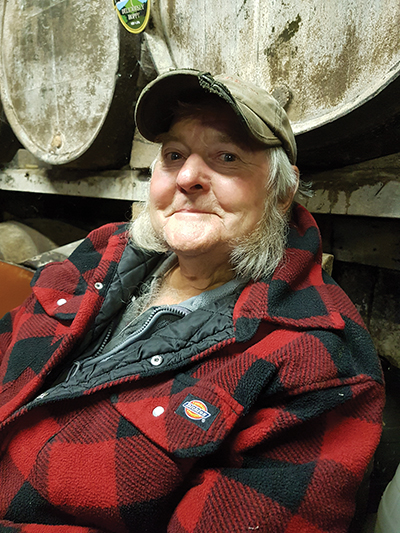
Should you veer off the A35 towards North Chideock, leaving the main village of Chideock behind, you’ll meander down a tree-lined road, passing picture-perfect wheat fields, lampposts heralding an ancient church, slices of sky glimpsed through trees and pass a farm with horses and ducks paddling in the stream. If you turn left into a working yard, take a sharp right and push through the corrugated iron doorway, following the smell of apples, you may well come face to face with ‘Hoppy’, head of Chideock Cider Shed and local legend.

Colin Hopkins, or Hoppy as he is known, started coming down to the cider shed when he moved to Chideock aged 18. He learnt “off the old blokes” about making traditional farmhouse cider. The method involves handpicking windfall cider apples between October and December. All the cider shed members gather together, generally on a Tuesday evening. First, the apples are pulped, then cakes are made from this (pulp pressed into rounds between hessian cloth) and put into the ancient 125 year old cider press. The result is called a cider cheese. This is left overnight, then the cheese is folded and pressed down again. The resulting cider is kept in black tanks before being pumped into wonderfully characteristic old oak barrels, and drunk.

Every year the Chideock Cider Shed holds a Pumpkin Competition, this year on 15 October, at 4pm in the George Pub, Chideock. Competition is rife amongst the locals, who all gather to watch the pumpkin weighing take place, discussing the summer’s harvest. Naturally, as Hoppy spends much of his time tending to his vegetables and pruning local fruit trees, he knows a thing or two about growing pumpkins.

Beware though, if you do venture down to the Chideock Cider Shed in search of Hoppy, cider, pumpkin growing tips and tales of yesteryear…it’s a very local, traditional tipple, not for the faint hearted!


Penny Callaghan

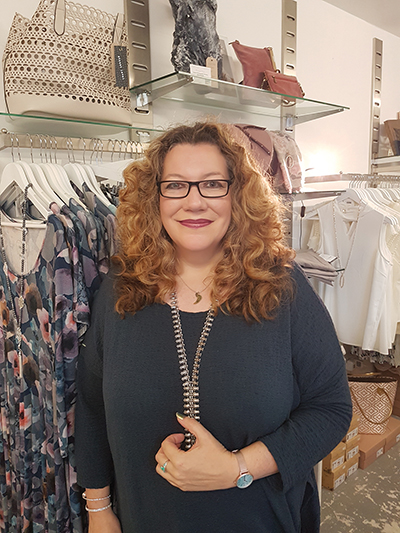
Inspiration, aspiration and hard work combined has helped to produce a local clothes shop that has just been awarded Best UK Online Boutique. No small feat for Penny Callaghan, owner of Colmers Hill Fashion, located in Symondsbury’s Manor Yard. It is a gem of a place that stocks ladies fashion where customers are looked after by Penny, who has an eye for detail and what suits.

For 12 years Penny ran The Terrace in Lyme Regis, a café and clothing shop combined. It was a complete change for her from the London based PR job she had previously, but one that she threw herself into completely, making a name for herself in the seaside town. Realising that she had had enough of the whirlwind days of running the café and shop, and that she found the clothing and accessory side of the business more favourable, Penny looked to do something else.

Sitting in Manor Yard one morning with a coffee a couple of years ago, appreciating the wonderful setting, it occurred to her it would be a lovely place for a fashion boutique. It turns out she was right. Visitors can park easily, visit the café, have a beauty treatment if they wish, browse the local shops and also leisurely look for their next outfit with ease. Penny now has more time to build up personal relationships with her customers and help them find exactly what they need. There have been more than a few relieved ‘Mothers of the Bride’ who have relied on Penny to find their perfect outfit.

And when not working on the back end of the shop; paperwork, website and orders, Penny enjoys eating out and entertaining at home. Never phased, she can rustle up a dinner party, even when she’s forgotten she’s got one that evening. Turns out she made lamb ribs with black garlic sticky sauce. Sounds like she got that right too.


Are we nearly there at the end yet?

As another North Korean missile soars high over Japan and plops somewhere into the Pacific amid a global chorus of anger, I take a quick look at the calendar. My-oh-my! The Cuban Missile Crisis took place exactly 55 years ago this month! I was only fourteen years old back in October 1962 and I remember it well because our headmaster put on a very serious face and made the whole school sit down and actually watch the news on the telly. This was unheard of at the time—obviously something awful must have happened. I thought that the Queen might be ill or that Chelsea had lost the FA cup, but no—it was only maybe World War Three. Or something…

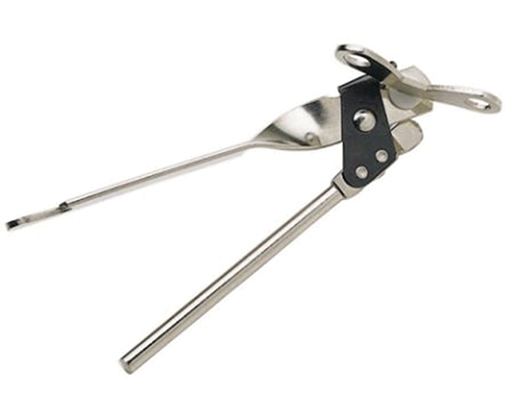
My mother thought about building a nuclear fallout shelter at the bottom of the garden and putting some stuff in it—just in case. My sister built a bed for our cat under the stairs “so at least Kitty will be safe” while my father and I made lists of useful things like spare batteries, bottles of water, rubber gloves, boxes of loo paper and tins of corned beef, baked beans and mandarin oranges. Unfortunately I forgot to include ‘tin opener’, so it was perhaps just as well that nothing happened, otherwise our family would have cut themselves to ribbons trying to open months of canned food in the dark with only a penknife! A BBC programme at the time told us ‘not to panic’ but this wasn’t helped by a newspaper article telling us we’d have to wait for up to three months until the radiation level had dropped and it was safe to go outside again. Quick! ‘Better buy some more cans of condensed milk…

55 years on, it still all seems a bit silly, particularly as both the main protagonists in 2017 have such appalling hair styles. Kim Jong-un has a thick cliff edge of a hedge while Mr Trump sports a calamity quiff of a blond explosion. Both of these creations are capable of causing nuclear fallout by themselves without the need for any missiles. However, am I the only one to laugh nervously when their talk is about ‘fire and fury like the world has never seen’ and Trump describes the USA’s nuclear arsenal as being ‘locked and loaded’? I suspect not. These are two leaders of their countries on a world stage, for goodness sake! Aren’t they supposed to be grown up and sensible and not shout like ten-year olds in a school playground?

I suppose we’ve all become rather too blasé over the years about the whole subject of nuclear war. The Bomb’s been around for so long, it’s become part of the establishment—if not the family. Banning the Bomb and Nuclear Armageddon is so yesterday, so sixties, so uncool… We hardly ever talk about it and the news rarely mentions it anymore, and yet it’s still there.

All the time, every hour of every day, there are submarines from Russia, China, the UK, France and the USA crisscrossing the world’s oceans crammed full of ICBMs and nuclear missiles. It’s a surprise they don’t bump into each other. In one, there’s a bunch of boys and girls from Nebraska and New Hampshire drinking Coca Cola and watching ‘Mad Max’ on video, and onboard another one—only a few kilometres away under the blue Atlantic—there’s a crew from Moscow and Murmansk drinking orange Marengo and watching ‘Mad Max’ with Russian subtitles. And they’re both probably telling the same Kim Jong-un jokes, and they’re both definitely telling the same Donald Trump jokes. And both of them are intent on keeping the peace of course, and there is an argument that says they’ve succeeded in doing so to date.

But I suspect the current news has made us all catch our breaths for a little moment or two. It’s as if a huge atomic elephant in the room has woken itself up after decades of lying quietly in the corner.

But enough of all this nuclear nasal pondering and gloom… We’ve got lots more immediate things to worry about such as rescuing a Taunton polecat that’s unfortunately fallen down a drain and the shocking news that Torquay United have appointed a new head coach. In any event, here in the southwest I don’t think it’ll matter very much because we won’t know much about it. It’ll just happen quite suddenly in a big white flash of light and then the rest of the world (if there’s anybody left out there) can argue about who fired the first missile and whose fault it was. Not that I will care. I’ll still be sitting under the stairs with the cat on my knee, calmly opening up mandarin oranges with my tin opener while I think how lucky I am not to have to do lots of Christmas shopping for all the family.

Get me the Urgent Biscuits

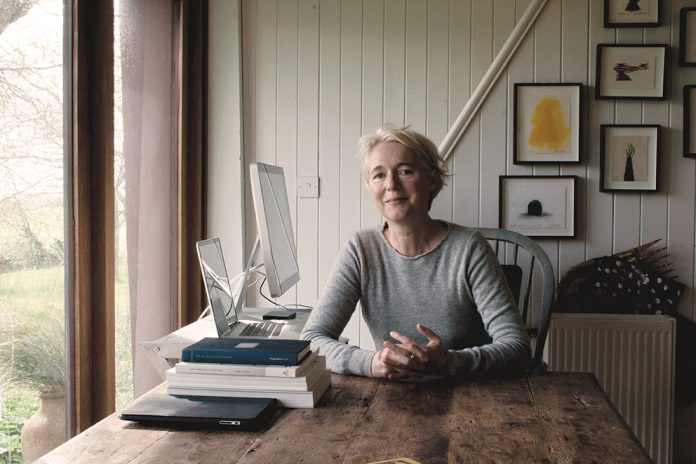
In a story that starts with an ending, Sweetpea Slight has written a keenly observed memoir about the vanishing world of London’s West End in the 1980s and 1990s. Katherine Locke talked to her about the changing times and her life working with theatre producer Thelma Holt.

Sweetpea Slight has written a witty, rollicking account of growing up in the Eighties, set against a colourful, eccentric, theatrical backdrop. She takes us by the hand and leads us through a grimy London and reminds us what it was like to be young, impressionable and keen as mustard in an era where the art was edgy, housing was frequently substandard and to work in the creative industries meant giving it everything you had.

The story starts with the ending—Slight leaving Thelma Holt, the theatrical producer she had worked with for twenty years. In characteristic form, the parting was unsentimental (brutal, even), but underpinned with huge affection. Sweetpea portrays Thelma as her mentor and describes how mesmerised she was with the larger than life character throughout their time together.

‘Thelma had a way of getting the most out of everyone’, says Sweetpea, ‘She could summon up the extra mile needed to put on the best productions with the best people for the lowest budgets’. Slight recalls her paltry starting wage and being told by Thelma ‘You don’t need much for food, darling, just don’t eat’.

Thelma Holt is an ex actress (‘I am never going to be as good as Vanessa Redgrave, darling, so why compete?’), turned theatre producer. Working at the highest end of the business, Thelma was instrumental in bringing productions from Russia to London and worked with some of the most respected actors of the time. ‘In some ways, the book is love letter to Thelma’, says Slight, ‘Or perhaps a break up note’.

However, Bring Me the Urgent Biscuits, is not just a roll call of luvvies’ anecdotes, but equally a coming of age story about a young girl fresh from the Dorset countryside. Slight grew up in West Dorset and was educated at Powerstock Primary School, followed by Beaminster Secondary. ‘Dorset was very different then’, she recalls, ‘the lanes were narrower, there was very little culture readily available and it felt like a long way from anywhere’. Her parents, both artists working hard at their own practise, whilst simultaneously teaching at local colleges, were a rarity in those days. Blown in from London seeking a simpler life and wanting to give their children a rural upbringing. ‘In some ways, it was an idyllic childhood’, she says, ‘but being the child of artists, with our funny clothes and strange London ways, really did set us children apart’.

In a way that probably isn’t possible now, Sweetpea travelled to London in her parents Saab at the age of eighteen with a vague idea of trying to get into drama school (RADA). ‘I had always been fascinated with theatre’, she says, ‘I would spend long hours as a teenager listening to plays on the radio and being transported from my Dorset bedroom’. However, she didn’t make it to college, instead a chance meeting turned into a life changing choice.

Thelma Holt had obviously spotted something in Slight (or ‘the child’, as she frequently referred to her) that made her the perfect assistant. Loyal, hardworking and dizzy with the magic of the theatre, Sweetpea gave her heart and soul to the job.

‘I had no concept of not working hard for a living’, she says, ‘perhaps that is because I grew up with parents who were always working and still are. There is no such thing as retirement for artists’. Slight was no Trustafarian, the work ethic was firmly embedded in her, which suited Holt perfectly. ‘Work was everything for Thelma’, she says, ‘it was all consuming and she expected the same level of dedication from her staff’.

Above all,  Bring Me the Urgent Biscuits—a reference to Thelma’s request for biscuits when the going got tough—is laugh out loud funny. Often reading like a Carry On script, the theatrical shenanigans are recalled with a keen sense of the ridiculous and a fantastic ear for dialogue. The stories of both Sweetpea’s home and working life are captivating and keep the reader turning the pages long after it should be lights out.

She recalls a time that has past. At 52, Slight says it feels very odd to be old enough to be writing about history, but nevertheless she writes about a pre-digital London, which would be very hard for the younger generation to recognise. ‘Life was not the same then’, she affirms, ‘for one thing drinking and drug taking were considered normal’. Although she didn’t indulge herself, the theatre was fuelled on Green Room drinking and her home life was made chaotic by the casual drug taking and partying of her flatmates.

‘In those days, it wasn’t at all unusual to see actors in costume propping up the bar and technicians, who were working with hugely complicated equipment, sinking pints was commonplace. That just wouldn’t be acceptable these days’.

Slight also notes that there are far fewer opportunities for actors from less than privileged backgrounds now. ‘University was free then and if your parents weren’t well off, you got a grant on top’. This brought a diversity to the theatre that appears to be lacking today, she thinks, ‘the acting world is dominated by the likes of Benedict Cumberbatch now. It is a shame, because the theatre needs a variety of experience to bring it alive’.

The process of writing the book also required hard work and dedication, as it had to be fitted in around her full time job (she now works as a PA for Anne Robinson). ‘The book was written at weekends’ she explains. This is her first attempt at writing anything ‘that wasn’t embarrassing poetry’. Originally, the book was written as a series of vignettes that gradually morphed into book shape. ‘My agent was incredibly encouraging’, she says, ‘she told me I could write, kept the deadlines rolling in and the enthusiasm high’.

‘It was hard’, she says, ‘mainly just getting into the right headspace for it’.

The book has received glowing national reviews and Sweetpea is inspired to think about her next project. She isn’t ready to reveal anything yet, but thinks it will be another non-fiction piece. However, her natural ability to tell a thumping good story means she could probably choose any medium she likes and make a great success of it.

Sweetpea clearly understands the business of story telling. Perhaps it was her years in theatre, or maybe long evenings listening to plays in her teenage bedroom, but she fully understands the form and is able to inhabit it with ease. In fact, one of her favourite quotes is from the inimitable Joan Didion, ‘We tell ourselves stories in order to live’. With that in mind, we very much look forward to the next one.


 

From Dorset village to Government Minister

In the 19th century Bradpole could reasonably be called a “sleepy Dorset village”, but now it is virtually connected to Bridport by ribbon development.

William Edward Forster was born in Bradpole in 1818, the only child of William and Anna Forster, both Quakers. Their house now carries their name as does the small lane where it is situated. His father was known as “Dr”, but this is believed to have been a courtesy title. He was frequently absent, travelling to America and Europe as a travelling minister concerned with relief from poverty and the abolition of slavery. When at home they all attended the Quaker Meeting in South Street, Bridport. “Dr” Forster was the first President of the Bridport Mechanics Institute in 1830. It was shortly to become The Literary and Scientific Institute, which is now in the process of renovation. The building had been provided by the local MP, Henry Warburton, its first patron. He laid its foundation stone in 1832.

Anna Forster is said to have been beautiful and vivacious and before marriage was on friendly terms with the Royal Family during their frequent visits to Weymouth. Her brother Sir Thomas F. Buxton was Member of Parliament for Weymouth for 19 years and often visited the family in Bradpole. His wife was a sister-in-law of Elizabeth Fry and Anna visited prison with her. Anna also travelled to Ireland to preach, so young William had a nurse, Maria.

As a child, young William had a part time tutor, the Rev Thomas Taylor and was an attentive scholar, with his parents’ views on the world. Sometimes described as sober, he was also light hearted at times. He was very tall, and his “party piece” when he rode his pony was to put his feet to the ground and stand, allowing the animal to walk on.  The mother of the artist Francis Newbery, remembers him as a “long legged lanky lad”. The Forsters had a Newfoundland dog which collected their mail from Bridport in a basket tied to his collar, bearing the inscription “Stop me not, but let me jog\ for I am Dr Forster’s dog”. At the age of 13 in 1831 William Edward was sent away to school in Bristol for just over a year. It was run by Joel Lean, another member of the Society of Friends (Quakers). In 1832 he moved to a school in Tottenham, Grove House. Meantime, his parents left Bradpole to live in Norfolk in 1837. So ended their time in Dorset.

William was at first keen to study law with a view to becoming a parliamentarian, inspired by his uncle. However, his father vetoed this, insisting on a career in business and so William worked for a short time in Norwich. He travelled to Darlington to visit friends and in 1838 he started work in a woollen mill owned by the Pease family, who were Quakers. At 23 he moved to Bradford to join the firm of T S Fisons and within a year in 1842 he and William Fison took over a disused cotton mill and set up a wool business. In 1847 he went with his father to Connemara, Ireland to distribute food, clothing and money as failure of the potato crop had produced famine. This visit affected him considerably and influenced his future career.

In 1850 William married Jane Arnold, daughter of Dr Arnold the noted headmaster of Rugby School. Since he was marrying an Anglican, known to Quakers as “marrying out”, he presumably became a member of the established Church, which would have facilitated his later entry into parliament. By this time he had given up the Quaker form of dress, but continued with Quaker form of speech, always addressing his wife as “thou”. Jane’s brother was Matthew Arnold, the writer and poet.

Forster became Liberal MP for Bradford in 1861 and became Under Secretary for the Colonies in 1865. In 1868 Gladstone was again Prime Minister and made Forster Vice President of the Privy Council, which administered grants to schools. William was tasked with designing “a national system of education” at a time when estimates suggested that one and a half million children did not attend school. Many of them were working up to 11 hours daily in factories. However many people were against any change. The Church of England did not want their church schools changed and some dissenting religions, including Quakers, were also opposed to change. Some thought it would be wrong to educate the labouring classes! Forster’s 1870 Elementary Education Act was a compromise, with elementary education still not compulsory, but with local school boards elected by ratepayers including women. He has been called “Father of Elementary Education”.

In 1880 Forster became Chief Secretary for Ireland, a dangerous position, but when violence threatened he ordered the English soldiers to load with buckshot which is not as lethal as bullets, leading to the nickname of “Buckshot Forster”. He had attempted to provide compensation for victims of evictions, but the Bill was rejected by the House of Lords. Parnell and the leaders of the revolt in Ireland were imprisoned, but when the majority of Gladstone’s cabinet voted in 1882 for their release, Forster resigned.

Forster died in 1886 and is buried at Burley-in-Wharfdale.

Three years later his birthplace, Bradpole, commemorated him by building a memorial hall, the William Forster Institute, later to become the village hall, used for many social functions. My wife and I were pleased to celebrate our Golden Wedding there!

I have relied on two references, A Fine Meeting There is There by Suzanne Finch and This Good Work by Fiona Taplin for much of this article.


Carnival Time

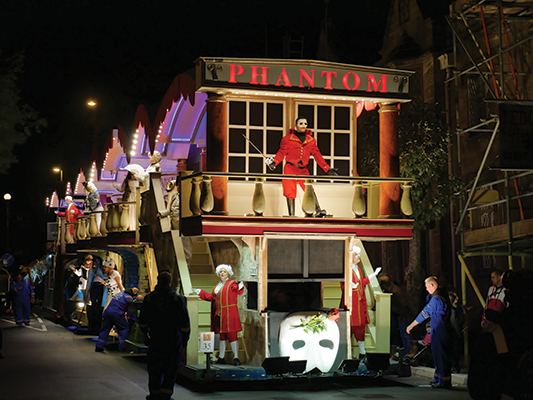
Chard Carnival celebrates its 50th birthday on Saturday 14 October with a cavalcade of colour, lights and action. If you’ve never been to any of the carnivals on the Somerset carnival circuit, make a date now.

You’ll not be disappointed, says Margery Hookings

I’ve always been immensely proud of the carnival traditions in my home towns of Ilminster and Chard. The carnival clubs and individuals put in so much effort, so much hard work. The results are spectacular, even though the parades are not as big as they once were.

Standing in the crowd as huge, illuminated floats trundle past, it feels like Mardi Gras descending on my little bit of rural Somerset. Awesome is such an overused word these days, but it’s such an accurate description of the things going by, whether they be inter-connected trailers with gravity-defying moving parts, or incredibly imaginative walking entries, all processing to a range of loud music blasted through powerful speakers.

I remember being on a carnival float once, in the late 1960s or early 1970s. It wasn’t very sophisticated, compared with the other entries in an era which was something of a carnival heyday in my neck of the woods. We were Snow White and the Seven Dwarfs. I magnanimously offered to take the part of Grumpy, because I knew none of my friends wanted to do it. And, besides, I thought, this was a dwarf with great character. Mind you, keeping a miserable face all around Ilminster was quite a tall order, although the role of Happy, with a silly, fixed grin, might have been marginally more difficult.

I am recalling my first and only taste of being in a carnival parade as Doreen Toms and Gwyneth Jackson show me around the wonderful costumes on show at Chard Museum.  Many of the costumes were donated by the Toms family, and celebrate four decades of carnival.

This year, the museum is putting on a special display in the big barn at the rear of the main building to mark 50 years of carnival. The exhibition will run until the museum closes for the season at the end of October. Shops and businesses are being asked to get into the carnival spirit by dressing their windows along the route. On the Monday of carnival week, the beacon in Mitchell Gardens (near Sainsbury’s) will be lit and local youth groups will be able to enjoy hot chocolate and marshmallows.

All past carnival royalty—queens and princesses—have been invited to afternoon tea in the Guildhall and will ride around the route in an open-top bus.

Last year could have been Chard Carnival’s last. The future of the event was in doubt after a large number of committee members stood down all at once. Doreen, who has been involved with Chard carnival from the outset (she was Tawny Owl when the Brownies’ entry was Puppet on a String in 1967), was almost one of them, but she decided to stay on and fight to save it from dying.

“Most of the B&Bs are full,” she says. “The carnival is great for young and old alike. It’s a community event and everyone can take part, watch or collect along the way.”

The carnival has raised more than £100,000 for local charities and organisations including Chard Christmas Lights, Children’s Hospice South West, Chard Hospital and all the local schools. Carnival is a huge night for the town. People of all ages look forward to it with great glee.

Chard’s current carnival started in 1967 when representatives from the League of Friends and Chard Youth Centre met to discuss ways in which to raise money for the respective groups. Gerald Quick, Mervyn Ball, Tom Miller and Wendy Clulow decided that the best option would be to revive Chard Carnival, after a break of 13 years.

In the early 1970s, Chard, Ilminster, Wellington and Taunton formed the South Somerset Federation of Carnivals, with Yeovil joining at a later date. This provided a competition for the best entries from the five towns taking part. Yeovil Carnival has since ceased to exist, but the federation of four towns remains. It’s the sterling work of the carnival clubs that lead to some pretty spectacular floats which would not look out of place in Rio.

Chard Carnival Committee is made up of several volunteers who meet every month. Some are very actively involved, others help when and if they can, but all work very much as a team, and are all enthusiastic about staging the carnival,

It costs about £6,000 to put on Chard Carnival. The committee raises funds throughout the year to cover these costs, so that everything raised on carnival night can be donated back into the local community.

The Somerset Carnivals, of which Chard is one, are highly regarded as the largest illuminated procession in the world.

The carnival season takes in the Wessex Grand Prix circuit, the South Somerset Federation Carnivals circuit, and ends on the largest Somerset County Guy Fawkes Carnival Association circuit.

The carnival floats are designed and built by dedicated carnival clubs around the West Country. These clubs have many members who raise money throughout the year, and work relentlessly to achieve the spectacular carnival entries. Each club’s entry then takes part in the carnival parade along with many others, putting on a show to the public, and competing with each other to impress the judges. The illuminated floats can be up to 100ft in length, 16ft high, and 11ft wide, and some have 20-30,000 light bulbs.

Donald Campbell

donald chapman 13 finalb for web Julia Mear met Donald Campbell in Colyton
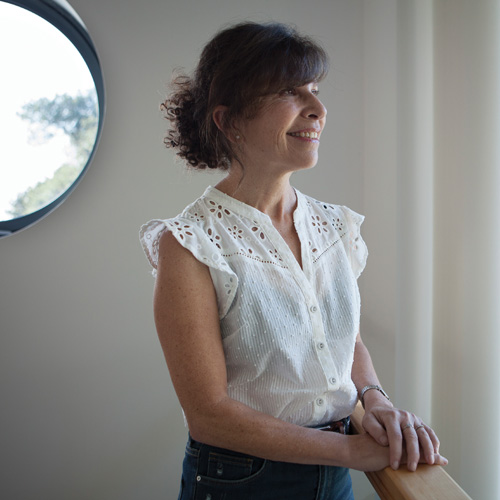

‘I was born in London and a lot of my growing up there involved birdwatching on Hampstead Heath, watching cricket at Lords, football at Spurs and Arsenal. We were a big family, five children and I was the youngest. During the war, a rocket landed across the road from us and buried us all in our beds. Of course, at eight years old I thought this was very exciting. I was at prep school in Buckinghamshire, I always played lots of sport and did rather less work. I later boarded at public school in Hampshire, in a lovely part of Winchester, by the river Itchen; one of my favourite rivers. Lovely clear water with lots of fish. I went on to read medicine at Oxford. My father wanted all five of us to read medicine but one by one we all pulled out of this idea. I had special permission to swap to Biochemistry but then I swapped again to my real passion—Zoology. I was a natural biologist, I’d always loved my birds, plus I broadened out to ecology and evolution. So, I spent five summers at Oxford all in all. My father had been the last of a long line of doctors but he accepted my change and we continued to watch birds together.

This led me into teaching. I was approached by my headmaster, which was good for morale to be searched out. My first teaching post was in Salisbury. I had a lovely, very small, flat looking out onto the cathedral, where I paid just £1 a week. It was available for bachelor teachers and no others appeared so I kept it. I taught Biology in Salisbury for seven years plus I coached cricket, squash, cross country and set up a subversive football team. Although a rugby school it soon became more popular than the rugby.

Then I had a rather strange interlude of three years where I had no full-time work. I did a lot of birdwatching. I did surveying work for the BTO (British Trust for Ornithology) atlas in the Welsh hills and Wiltshire. I also worked at the Natural History Museum in London working on bird skulls mainly—some which had been classified 100 years before and no-one had looked at them since.

During this time, I had by chance acquired a cottage in Snowdonia. This changed my life rather a lot as I re-centred in Wales. I couldn’t speak Welsh so taught as near as I could in Worcestershire. Soon after moving there I married a farmer’s daughter in Wiltshire, whose brother I’d taught in Salisbury. King Edward VI in Stourbridge later became a 6th form college which suited me down to the ground as I was just teaching A-level then and still plenty of sport. I was there for 21 years. I had two children with my first wife and I maintain close contact with them. Nancy lives on the west coast of Scotland and Duncan is in the Peak District both these areas are well worth visiting. Not long after my first wife had left the home and returned to Wiltshire I was in contact with Nicky, an old family friend, and we began to get together in a more serious form. Our two families had known each other in the last century, through our grandparents. We’ve been to each other’s first weddings as family friends and then our own. We married in 1979. Nicky already had two girls, Kate and Sarah, who were nine and eleven at the time. We lived in Stourbridge but went back to Snowdonia most weekends and during the holidays.

I started suffering from Trigeminal neuralgia, an extremely painful condition affecting my face and amongst other reasons I decided to take early retirement. It affected my speech, especially on the telephone, and I was taking pretty strong pain killers until, after seven years of living with the pain, I had an operation in Plymouth. It was totally successful and I’ve never had a twinge since. By this time, we had moved to Devon; around 1993. Nicky’s father was born in Devon, I didn’t really know this area but we both loved the West Country. The theory was we’d search an area between Exeter, Dorchester and Taunton and ended up in Combpyne which happened to be central to all three places. We acquired a lovely manor house there with three acres of garden. Living in this location led to various things and I started to get involved in the undercliffs and Nicky got involved in researching the history of the Rousdon Estate. She wrote a book ‘To Buy a Whole Parish—Rousdon and the Peek Family’ which was published in 2015 and I started writing a book on the undercliffs. I was also invited to produce ‘The Encyclopedia of British Birds’. Originally it was supposed to be 30,000 words and on the day I completed it they said they wanted 150,000 words, which I managed to do in just three months, with the help of Nicky’s daughter. That was 1999 and my ‘Exploring the Undercliffs’ book would have been 2006 which was the 50th anniversary of the Axmouth to Lyme Regis nature reserve, so it also became a souvenir as it were.

By this time I’d become chair of Axe Vale and District Conservation Society, of which I am now president, but this had also led to other things. Very early on I got involved with the Wetlands Bird survey which led me to join the East Devon AONB Partnership of which I later became chairman. Already by 1999 we were thinking of some sort of visitor centre in Seaton which has now come to fruition as Seaton Jurassic Visitor Centre. Originally it was an idea of the Seaton Development Trust and by 2007 it became a separate organisation called Seaton Visitor Centre Trust which I became a trustee of. Then came a time when Tesco or Sainsbury was going to move in and this came with an amount of money which helped move the project forward. Now run by Devon Wildlife Trust, it seems to be going pretty well and visitor numbers are often helped by wet weather. There is so much diversity of geology and wildlife in a very small area—we live in such a unique location. There are a series of talks on local geology and natural history and at times I do some of the talks and guides. I manage to spend about 3-4 hours a week in the Jurassic garden to help maintain this.

I’m also a Jurassic Coast Ambassador, part of a group that tries to raise money for the coast. The ambassadors lead walks and talks, in my case particularly on the undercliffs, but also around Beer and Lyme Regis. I continue to lead bird-watching tours and off-piste walks, often to the more inaccessible and hazardous parts. We work together to develop work parties to maintain the few remaining areas of flower rich chalk grasslands, where for instance, there are nine species of orchids and 30,000 Autumn Gentian. Beer Head is just about the westernmost exposure of chalk in the country. I often go out to the undercliffs with just my two dogs Otter and Fuggles and once, when I’d just finished my picnic on Goat Island, Fuggles had suddenly disappeared. I spent hours looking for him and eventually I phoned the Coastguard. Fourteen of them came to rescue Fuggles who had fallen onto a precipice below and couldn’t get out. He’d been there for seven hours and we thought he’d have major injuries but, after the coastguards abseiled down, he came up on his rescuers shoulders and started playing as if nothing had happened. So many coastguards had come out as they were in the process of reorganisation but it was a good exercise for them and all went happily to the pub afterwards.

I’m hoping a new book of mine will come out soon about the wildlife, geology and history within five miles of Axmouth bridge. Depending on persuading Devon Wildlife Trust and East Devon Countryside Services to work together in supporting it, with further help from the Conservation Society and Seaton Visitor Centre. I am always working on putting something together like this to share my findings. It can mean other things get forgotten though, simple things like taxing the car!

There are those that think that retirement is a chance to sit down and do very little whereas for me it is an opportunity to do all the things I’ve wanted to do with my life. But I never thought I’d do them in Devon.’

October in the Garden

“Season of mellow fruitfulness, close bosom friend of the maturing sun, conspiring with him how to load and bless and fill all fruit with ripeness to the core.”

I originally used that opening, for this October’s article, a decade ago. It’s a good reminder that not a lot changes, when it comes to growing and harvesting stuff, as those words, by Keats, stare down from an ‘Arts and Crafts’ Sunday school poster, which must be getting on for 125 years old.

Gardening has been a constant in my life since I was a small child. Sometimes it is a rock to cling to, when all else is turmoil, sometimes it is a weight around my neck, threatening to drag me down further, when other external influences are already weighing heavy on my mind.

I guess that that’s the downside of having what is merely a ‘hobby’, for others, as both a passion and a means of earning a living for myself. If gardening for ‘pay and pleasure’, there’s an added pain when Mother Nature, relentlessly churning her seasons, dictates that tasks need doing just when you don’t have the will or ability to get on with them.

Lately, I’ve been working in a new garden which was laid out relatively recently by a high-end garden designer. I’m used to seeing such gardens when they are mere ‘show’ exhibits—working with one which exists in ‘reality’ is something of a learning curve.

Such gardens are usually ‘over planted’, when first laid out, because a client that is paying thousands of pounds for a new garden expects to have at least something to see from the very start. It’s somewhere between the complete ‘fantasy’ of a show garden and the relative paucity of a ‘normal’ garden.

Now, as herbaceous plants begin to die down, there can be a feeling of doom and gloom hanging around the borders. My job, especially in a garden which I am looking after for someone else, is to try and ‘edit’ out the worst of the collapsed foliage and decaying mush.

In truth, gardening is largely a process of choreographing nature. Intervening, to remove anything too unsightly, is part of that manipulation. The horticultural skill, which only comes with time and experience, is to know how much intervention is necessary, to keep the ‘show on the road’, without detrimentally affecting the plants under your care. There’s a fine line between ‘reining in’ a bully of a herbaceous thug and completely killing it.

For example, the very useful ‘Bugle’ (Ajuga reptans), in its various bronze leaved forms, is excellent ground cover but, it may be obvious right now if you analyse your own garden, it can be an invasive thug. In the scheme I’m thinking of now, the Bugle has been romping around and trampling all over the, much slower to establish, lavender plants which are required to grow up into a ‘mesh’ of short, silvery, hedges outlining the design.

To restore horticultural balance, I have had to dig out a large proportion of the Bugle in order to release the tiny lavender plants from its smothering embrace. I now have scores of new Bugle offsets to pot up and replant in the woodland areas of the garden where it can roam around, unfettered, without doing any harm.

Back to the month in hand; lawns can be repaired with turf or, if the weather is suitably clement, a late sowing of lawn seed. Existing lawns can be cut less often and the grass left a little longer so that they are less likely to be damaged in wet weather. Mowing also has the added bonus of removing the odd fallen leaf (assuming you have a mower that collects the clippings). With luck the mass autumn leaf drop is still a little time away.

Tender perennials and dubiously hardy border plants, like cannas, should be brought under cover towards the end of the month when the risk of overnight frost becomes too great. Cannas need to be kept in large pots, or boxes, of barely moist compost in a light but frost free place. If it never gets really cold, they may well stay in leaf all winter. Dahlias will probably stay outside until next month because it’s traditional to let them get blackened by the first frost before digging them up to store over winter.

Don’t forget to keep on planting bulbs for spring flowering. Hold off planting tulips until next month because, and it’s worth saying again, they are less likely to be affected by ‘tulip fire’ (a nasty fungal disease). I’m not sure why this is, considering the spores are spread by rain splashing on infected leaves, but that is the received wisdom. I’m happy to go along with it because there are more than enough other species which really do need to be planted now or never (I’m always behind with bulb planting but have learned to be a bit more relaxed about it).

Alas, we’ve already missed the boat for winter flowering types and those which have very small, easily desiccated, perennating organs (root, tuber, rhizome, bulb, or corm) but don’t worry—there’s always next year.

Of course, if you had them delivered but didn’t plant them, bung them into pots of fresh multipurpose compost NOW and the chances are they’ll burst into life if they’re not too far gone. Even if they don’t flower properly this season at least they’ll get a chance to grow foliage, you can feed them gently while in leaf, which should ensure that they will build up enough stored energy to flower successfully next year—which is their simple aim in life.

That is one of the most positive things about gardening; no matter how nasty external forces may become in your own life, plants are non-judgmental and fundamentally honest in all they do. If only Human Society was similarly trustworthy!

Vegetables in October

This is a gorgeous time of year, harvesting the fruits of your labours.

Apples and pears are often confused by a hot few summer months, and some have dropped early while the rest of the crop is still on the tree.

We favour late maturing varieties because they store better into the winter. To eat straight away, pick when they have a yellowish hue. To store, pick when still green and the stalk snaps easily when you lift the fruit. All fruit tastes best when freshly picked, as the blackbirds will tell you, but storage saves you having to scoff the lot now.

Professional pear growers store their crop using expensive and precisely controlled climate control, which we amateurs don’t have. Generally, the colder your store, the better. We have a tree in an exposed spot that produces small pears  ripe to eat much later, whereas our cordons trained against a hot wall are ripe much earlier.

Apples are a big subject, with so many varieties, all of which do better on different soils and store differently. The really late apples, which keep until spring, never seem to taste so good. Spartan is my favourite with white and sweet flesh that keeps crunchy until February in a cold winter. Kidds Orange, as with many cox types, has great flavours until Hogmanay.

Before the first frost bring winter squash indoors to decorate your house until eaten by next May. They are best kept dry and cool, like onions and garlic.

Some people store winter cabbage, carrots and celeriac indoors. This is horses for courses, as they definitely lose taste, but if left outdoors they get eaten by the same wildlife that are then in prime condition ready to eat next spring’s plantings.

Garlic, onions and broad beans seem to grow best for us from a late October or November sowing, but if your garden is in a cold spot, earlier may be better. Indoors you can sow carrots to harvest next spring—keep the soil moist.  Autumn King does us well in spite of its name, and tastes so good. And why did the fortune teller give up his job?  Because he could see no future in it.