
Friday, March 20, 2026
Home Blog Page 39

A West India Fortune

Margery Hookings finds herself in the Caribbean where one of the Monmouth Rebels was transported after the Battle of Sedgemoor in 1685. Azariah Pinney, who was meant to have been hanged for his part in the West Country rebellion, was instead shipped to the island of Nevis, where he made his fortune.
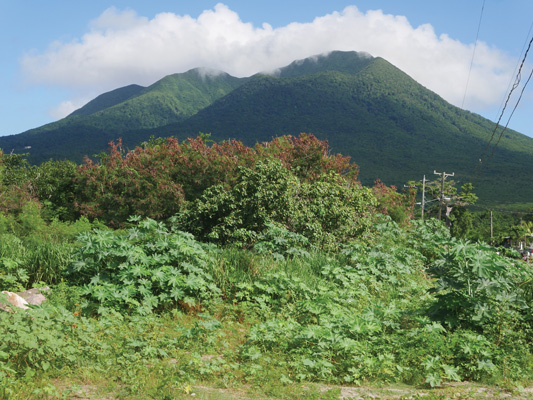
Nevis Peakfor web


I’m standing on the palm-fringed Pinney’s Beach on the island of Nevis, far away from the West Country, in the Caribbean.

It’s not hard to imagine how it might have looked more than three hundred years ago when Azariah Pinney first set foot here. His father, John was, at one time, the vicar of Broadwindsor, Dorset. Azariah had been transported to the West Indies in 1685 aboard the ketch, The Rose Pink, for his part in the Monmouth Rebellion.

The smaller sister island of St Kitts, Nevis is a green and pleasant land, dominated by a high peak, which is often covered by cloud. Today, it’s an island of high-end tourism. No over-development here, thank goodness.

As well as being where Pinney made his home and subsequent family fortune, it’s also the birthplace and childhood home of Alexander Hamilton, one of the founding fathers of the United States, whose story forms the basis of the hit rap-musical, Hamilton. Nevis is also where Horatio Nelson was stationed as young sea captain and where he met and married Frances Nisbet, the young widow of a plantation owner.

There are two museums to both Hamilton and Nelson on Nevis as well as a fascinating museum in St Kitts, which focuses largely on the slave trade. Like so much of the Caribbean, the fortunes of Nevis and St Kitts were made on the back of this cruel part of our history.

One of the most fascinating Monmouth Rebellion stories is that of Azariah Pinney, who is described by the late historian W. McD. Wigfield, in his roll call of rebels, as a young, married yeoman from Axminster.

Azariah’s father, the Rev John Pinney, succeeded Thomas Fuller, the church historian and author of The Worthies of England, as Vicar of Broadwindsor. Pinney was ejected from his living at the time of the Restoration and preached in Ireland and at his own house in Bettiscombe and in the district, living the life of a gentleman farmer. His family had a thriving lacemaking business.

In June 1685, Azariah, like so many non-conformists in this part of the world, was caught up in the Duke of Monmouth’s rebellion, which saw 300 rebels and 200 Royalists die on the battlefield at Sedgemoor, Somerset, and a further 1,000 rebels killed as they fled. Some 320 rebels were executed and 750 were transported to the West Indies as bonded slaves.

According to Wigfield in his extensive research for the roll call of men listed in his book, The Monmouth Rebels, Azariah reached London after Sedgemoor but was arrested and sent to Dorchester for trial, at first to be hanged at Bridport but then transported to the West Indies after his sister, Hester, paid a ransom of £65.

His family’s anguish at his fate up until that point is clear from The Letters of John Pinney 1679-1699, (edited by Geoffrey F Nuttall).

In a letter dated 26 July 1685, to his daughter, Rachel, John Pinney says: “This fortnight I have languished with sorrow, weakness, griefe, feare, yet my knees shake, my eyes faile, my sleep gon.

“But for poor Az. My eyes have not bin void of teares night & day these fortnight for him: nor have I ceased to beg of God night nor day yet he may finde mercy.”

Azariah did indeed find mercy. His brother, Nathaniel, paid his £5 passage to Nevis and provided him with clothes, ‘equipment’ and a Bible to set him up as a factor. In May 1687 Azariah was pardoned.

He went on to become a Lieutenant in the Defence Force on Nevis, a Member of the Assembly and Treasurer of the Island.

The island prospered through its sugar plantations and Azariah, who had initially been supported by his family, acquired an estate of his own. ‘By shrewd business ability, as commission merchant and agent for absentee planters, he accumulated a small fortune.’ (A West-India Fortune by Richard Pares).

One’s admiration for Pinney’s tenacity and recovery from his formerly dire situation back in England is tempered by the fact that his fortune was achieved at the expense of enslaved Africans.

According to discoveringbristol.org.uk/slavery, “Pinney may appear to have treated his slaves less brutally than other plantation owners but his primary aim was to grow and sell sugar at a competitive price.

“Pinney wrote that managers ‘must not use severity, for I will not suffer any human being, committed by providence to my care, to be treated with cruelty’.

Azariah visited England twice and died in London in 1720.

His son, John, died a year later and the estate passed to Azariah’s grandson, John Frederick, who grew up in England and spent only a few years on Nevis. When he died in 1762, his Nevis property was passed to John Pretor, a distant cousin, who became John Pinney as a condition of the inheritance.

Today, The Pinney Papers are in the library of the University of Bristol. They are a valuable resource to historians and represent one of the most comprehensive family collections in the country. For more information, follow this link: http://www.bris.ac.uk/library/special-collections/strengths/pinney/

John Pretor Pinney’s house in Bristol is now the Georgian House Museum, an 18th century, six-storey townhouse just off Park Street. It is a step back in time in which you can imagine what life was like in this affluent area of the city in the 18th century. For more information, follow this link: https://visitbristol.co.uk/things-to-do/the-georgian-house-museum-p26101


I

n 1910, Dorset folklorist and historian John Symonds Udal wrote a long article in which he presented his research into the ‘screaming skull’ of Bettiscombe Manor, a large house of Tudor origin at the western end of the Marshwood Vale which was extended by Nathaniel Pinney in 1694.

At a farmhouse in Dorsetshire at the present time, is carefully preserved a human skull, which has been there for a period long antecedent to the present tenancy. The peculiar superstition attaching to it is that if it be brought out of the house the house itself would rock to its foundations, whilst the person by whom such an act of desecration was committed would certainly die within the year. It is strangely suggestive of the power of this superstition that through many changes of tenancy and furniture the skull still holds its accustomed place “unmoved and unremoved!”

Udal had first brought the skull legend to the world’s attention in 1872. Years later, he was Chief Justice of the Leeward Islands and came across the story of Azariah Pinney. The skull was said to have belonged to a black slave called Bettiscombe who had been brought to Dorset and whose dying wish was to be buried in his native land.

Forensic analysis in 1963 showed, though that the skull belonged to a 25 to 30 year old female of European origin and was probably many thousands of years old.

I vividly recall sitting in the kitchen at the manor in June 1985. I was returning a reference book to the late Michael Pinney in connection with an article I had written for The Bridport News on the 300th anniversary of The Monmouth Rebellion.

As we sat at a large pine table, enjoying a glass of red wine from his cellar, Mr Pinney asked if I would like to see the skull. He left the room and then returned with a large hat box, containing the yellowing skull, minus the lower jaw. He promptly took it out and passed it to me to hold. In turn, I passed it to my daughter, who was eight that day. She has never forgotten it.

Udal’s article for the Proceedings of the Dorset Natural History and Archaeological Society Volume 31 can be found here: https://dorsetcountymuseum.wordpress.com/2013/10/31/a-dorset-ghost-story-the-skull-of-bettiscombe-manor/
Vegetables in February

Coke of Norfolk made a big name for himself in the 18th century through doubling the production and profit on his 44,000 acre farm.  His trick was to sow stubble turnips after wheat, so growing two crops a year, feeding his livestock in the winter, manuring where they fed and swelling his profits.

While few of us have a vegetable garden this big, turnips are a worthwhile crop to grow through the dead of winter.

We have two beds here, one sown late July, the other late August, all started in modules and six weeks later transplanted after basil and runner beans respectively. Some leaves were nibbled by slugs and flea beetle at first, but the plants all survived and we have been picking them steadily since October.

They were planted at 8” spacings, we started picking the biggest in October, leaving smaller ones to fill the space until March. If allowed to get too big, or if they grow slowly, they can become woody, it helps to give them richly composted soil so they grow fast and sweet—as with most vegetables.

Unusually for a vegetable, bought turnip seed germinates well. Our local store sells Snowball—89p for 1,000 seeds, which is true to its name and very sweet. There are plenty of colourful varieties out there such as yellow Golden Ball or the many pink to red ones.

We add them to casseroles, root roasts or even just boil them as a vegetable, as they are very sweet. And how much money does a pirate pay for each ear piercing? A buck an ear.

What to sow this month

Late in the month you can sow broad beans variety Aquadulce, although in this cold winter the ones I sowed in October are being eaten by all and sundry. My Little Nipper mousetrap has been busy and fleece seems to keep the birds and squirrels at bay.

If you enjoy living dangerously, you can plant early and second early potatoes this month. Put fleece over to warm the soil. First shoots should emerge in about a month. In return for this extra effort you should get an earlier and bigger crop.

Indoors or in a heated greenhouse you can sow quite a few crops, so long as you have somewhere warm enough to transplant them when they outgrow their modules. Beetroot, radish, lettuce, spinach, summer cabbage, parsley, peppers and tomatoes are examples. Again, only sow this early if you are extremely competitive!

Up Front 02/18

Depending on whether or not you gain financially or through an efficiency that makes your life easier, you may or may not be a big fan of algorithms. For some they are an intrusion into our privacy and for others they are a time-saving development, whose use has been so cleverly crafted they can affect elections and influence business and global trends. Algorithms have been around for some time and are increasingly determining our collective future. So much so that a friend joked recently that he might name his child Al—not short for Alexander, Albert or Allan, but for Algorithm. I am not aware of anyone who has named their child Google or Instagram yet, but give it time. The thing that bothers many people is the ubiquitous use of algorithms to evaluate individuals and place them into neat little social boxes, or to pass judgement on what they might do in the future. However they have also been used to help re-analyse the past. Modern mathematical techniques, used to analyse social media networks and connections, have recently allowed academics to shed new light on a centuries-old debate surrounding the Viking age in Ireland, specifically the Battle of Clontarf in 1014. There has been disagreement between historians on whether the battle was fought between the native Irish and the Vikings, or whether it was, in fact, a civil war with Vikings on both sides. Texts exist that point to both arguments. But now researchers at Coventry, Oxford and Sheffield Universities have analysed the most extensive of these medieval texts. They considered how all the Irish and Viking characters in the narrative fit together in a network, monitoring whether the interactions between them were benign or hostile. Lead author, Professor Ralph Kenna, a theoretical physicist at Coventry University, explained that analysis of all the connections within the medieval texts revealed an unintended message. Although those writing the history of the era, and specifically the Battle of Clontarf, may have had their own agenda, this modern form of analysis has allowed for a fresh interpretation—in this case that it was indeed a battle between the Irish and the Vikings. PhD student, Joseph Yose, who analysed the data, admitted that it doesn’t decisively resolve the question, but it does offer aggregate characteristics from largely biased accounts. However, the research does highlight another issue. Whilst our modern world is being created by manipulating data, it may be that our history could be rewritten using the very same process.

People in Food

Being creative is at the essence of Jolly Carter’s core. It has taken him to Chelsea School of Art in New York and back home to Dorset to start Dorshi, one of the county’s most progressive restaurants. Neither Jolly, whose full name in Jollyon, nor his business partner Radhika Mohendas can remember quite how the business came about, but it involved a lack of sushi to be found in the area and the idea of creating their own Asian inspired eating experience using local ingredients. Pop-up evenings led on to street food and the festival circuit, which then morphed through great demand from their customers into Dorshi restaurant.

Jolly grew up in Symondsbury, although went to school at the Old Malthouse in Langton Matravers, which left him with memories of climbing trees, finding dinosaur footprints in local quarries and feeling like one of the Famous Five. Then it was off on to Canford School in Wimborne, followed by London and New York.

It was in New York Jolly met his husband Nico, in Karl Lagerfeld’s office no less. They dated and eventually moved back to England, sharing a studio in St Michael’s Trading Estate, as Nico is also an artist, specialising in scarf design. The friendship with Radhika and her husband developed, meeting up, enjoying drinks and making delicious food together, leading them to where they are today.

The pair work creatively across the board with Radhika kitchen focused, building flavour and technique, while Jolly works on Front of House development. They aspire to build a creative environment through food, music, personality and experience. Jolly does hope to return to his art once again, with possibilities of an exhibition being nurtured. First though, there are covers to set, dumplings to create, noodles to make and saké to serve.

People at Work

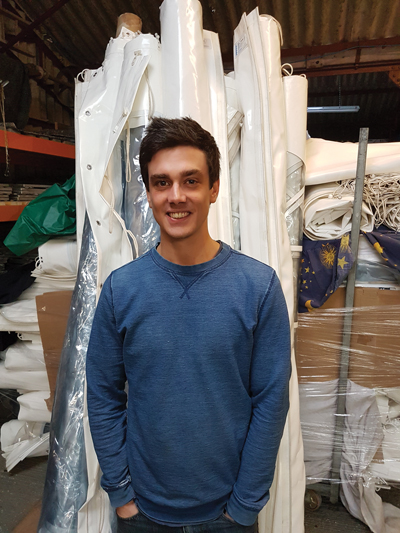
Brothers, business partners, travelling buddies, drinking cohorts and general muckers, the Ironmonger brothers Charlie and John do a lot of things together. Four years ago they set up Taddle Farm Tents, a marquee hire company which is expanding year on year, much in line with the size of their constructions. Based in South West Dorset they cover the surrounding areas, supplying and erecting marquees for events with furniture, lighting and flooring hire too.

Charlie explains the business was set up when he was working for a local pub that was closing for a few months, and John was unhappy with his office job in Bristol. They decided that if they didn’t go for their business idea at that time, then they simply had to stop talking about it forever more. Inspired by a friend’s wedding reception which took place on the field next to their home, they watched the marquee go up and thought it looked like good fun, something they could do themselves. So they each invested their personal savings, starting with a few modest tents, quickly followed by a large-scale marquee after the first year. Now, they have a number of different marquees, a seasonal staff of nine working for them, and some very popular on-trend lighting, furniture and flooring for their clients to choose from.

Working hard, with up to 15 hour days in the busy months, Charlie has put his bar training to good practice and has a personal licence to sell alcohol, adding to the repertoire the business offers. When he has time, he likes to walk the countryside he knows so well, having grown up on Taddle Farm itself. Often his steps end with a pint or two in a local pub, where Charlie can be found chatting and joking, thick as thieves with his mates and near-doppelganger, elder brother John.

Oh! The Grand Old Duke of York

One day some years ago when our son was at primary school he came home one day brimming with excitement. Later we all sat down to listen and he recited:


“Oh! The Gwand Old Duke of York

He had ten thousand men, He marched them up to the top of the hill

 And he marched them down again. Now when they were up, they were up

And when they were down, they were down

And when they were only half way up, they were neither up nor down”.


He was word perfect, apart from the substitution of “w” for “r”, and we all applauded. His face was jubilant, displaying a toothy grin. The recitation was repeated at each meal time for several weeks, until something else caught his fancy.

I had forgotten about this until last year when I received a kind present of Jurassic Coastline and Dorset Verse written by John Snook, with a different look at the verse, as follows :


“Most Dorset boys at sometime will have heard

Of Weymouth visits made by George the Third

When he was King of England – and moreover – Elector Imperial of Hanover.

But when the German state incurred defeat – At Napoleon’s hands, soldiers in retreat,

As Hanovarian subjects under fire – Escaped to join their king in Dorsetshire.

There hussars, dragoons and a German band – Recruited to the Duke of York’s command

 Marched up the Bincombe Hill and down again – As chorused in a jingled rhyme refrain,

Detailing how ten thousand men and more

Were drilled and trained to guard the Dorset shore.       

When King George fell ill as a mad buffoon – The jingle-rhyme was written to lampoon,

His Duke of York son – calling men to arms, – When confused by false invasion alarms,

He feared could bode ill for the British Crown –

Where Bincombe Hill declines from Bincombe Down

Through Littlemoor and Lodmoor to a strand –

Where Weymouth thought the French would land! –

The many French invasion rumours led –

To Grenadier Guards dressed in scarlet red,

Escorting German Hussar Cavalry – To Bincome Down where Dorset Yeomanry –

Eclipsed the Germans on occasions when –

Duke Frederick’s army topped ten thousand men:

And he moreover, in his father’s reign – Marched his men up the hill – and down again”.


Is this rhyme true or did author John Snook have his tongue firmly in his cheek?

Thomas Hardy in The Trumpet Major describes how “King Jarge” drove up to Bincombe Down to review his troops, which were 10,000 strong. He was escorted by his German Legion and the Dukes of Cambridge and Cumberland, but not the Duke of York. King George III stayed at Gloucester Lodge, Melcombe and was always accompanied by a contingent of his German Legion since he and the surrounding people expected a French invasion. He is depicted on the downs above Weymouth on horseback, cut into the chalk by his soldiers in 1808.

The Duke of York was the second child of King George III and Queen Charlotte, born in 1763. He was made Field Marshal in 1795 and Commander in Chief of the Army in 1798. His portrait was painted by Sir Thomas Lawrence and his statue stands in London, just off Trafalgar Square. He was a good organiser and reformed the British Army, founding Sandhurst College. However, leading the British Army against the French in 1794 at Tourcoing in Flanders he suffered a surprising defeat which it has been said led to the rhyme of The Grand Old Duke of York.

An article in The Independent by Andy McSmith in 2009 says that The Duke could not stand his wife and took a Mary Clarke as his mistress in 1803, setting her up in a luxurious house in London. When he tired of her he promised her an annuity for life of £400 per annum, but unfortunately it is said that because of his drinking and gambling he could not maintain the payments. She met Col. Gwyllym Wardle, MP for Okehampton and told him she had sold commissions to would be officers, which the Duke would endorse. Wardle raised this in the Commons in 1809, accusing the King’s son of corruption, to which Mary Clarke testified. It was also suggested that the Duke of Kent was in a conspiracy against his brother the Duke of York. The Duke of York resigned his post as Commander in Chief of the Army, but was reinstated two years later. This scandal provided further reason for the ridicule and popularity of the well-known rhyme, probably not known to Primary School teachers.

Bridport History Society meets on Tuesday 13th February at 2.30 pm in the United Church, Main Hall, East Street, Bridport. All welcome, visitors fee £3. Lucy Goodison will talk about “Sacred Trees: from the South West to Prehistory”.

Cecil Amor, Hon. President, Bridport History Society.

Jamie Turner

‘I’m quite proud of my palindrome birth date, 5/4/45. We were in Rochester, where my Dad was in the Navy at Chatham Barracks, but the next year we moved to Dormans Park near Lingfield. I have an elder brother, Charlie, and a younger one, Hughie. We had a wonderful upbringing with freedom to explore and have adventures, and we rode horses. As a boy I soon got into racing because we could hide our bikes in the woods and watch the action at Lingfield. They filmed The Rainbow Jacket there in 1953, which was a big inspiration to me.

Everything was wonderful until I went to prep school, which wasn’t good. Like a lot of boys in those regimes, I was beaten a lot. The ‘character building’ process was also added to by being told one would never amount to anything which, after a while, one was in danger of believing. After that I went to school in Ardingly in Sussex, which was altogether more enjoyable, although I was academically weak; really I was into rock ‘n roll, motorbikes and all that. I left school at 17, before A levels, and went to work in the family wine business.

My father had cellars in the City of London and on the Kent coast. I was the only one of us three brothers who agreed to join. My father agreed to a merger with a big wine group just before he died in 1963, my mother sold the shares and I left soon after.

I didn’t have much idea about what I wanted to do with my life. Looking at it, I have the CV from hell, but after driving a delivery van for a while in London, I got a map of England, and with my eyes shut, stuck a pin in it and came up with Nottingham. So I packed a bag, went there and got a job selling internal phone systems, which came with a car and £25 a week. Then I met a guy in the next bedsit to me, who came in to borrow sixpence for the meter and spotted my guitar. I told him I wasn’t a guitarist but was more of a drummer, and he offered me a place in his band. We called ourselves These Times, and played local gigs, The Kinks, The Who, Wilson Pickett, Robert Parker, stuff like that, and we did all right. We played a lot of deb parties in London and the country, which were good fun, but driving up and down the motorways sitting on amplifiers in an old Transit wasn’t, and was just a bit dangerous. I remember we played a coming out dance for the Weld family at Lulworth Castle in 1966, and the van broke down. We arrived at 2am, but played through until 6am, which everyone thought was just fine.

In April 1967 I took a job in Mallorca, playing guitar and singing in a bar at night and working as a waiter during the day. That was hard work with long hours, so when I was offered a job as a tour company courier I jumped at it and had a very busy but amazing summer. Mallorca at that time was our own mini San Francisco, as downtime was spent partying and enjoying the amazing music mix of the time, led by the Beatles’ incredible Sgt Pepper album which arrived at the beginning of June. That November, I came back to London and got a job in an antique jewellery shop in the West End, which I loved, but I was a rotten dealer, and found a job in entertainment.

Initially I worked for GTO, a firm that managed a number of successful acts at the time. I assisted Lawrence Myers who produced a film called Remember Me This Way starring he who has been obliterated from pop history. I then became an A&R man for Firefly Records, a subsidiary of A&M records. This was run by Miles Copeland (Police etc.) and John Sherry who ran a successful agency with a roster of bands that were constantly touring the UK, Europe and the US, like Wishbone Ash, Climax Blues Band, Renaissance and Curved Air. I listened to thousands of demo tapes sent in by hopefuls. You’d listen to the first few bars then discard or, rarely, keep going. I eventually found a band called Jet, featuring talented musicians who’d played with the likes of Sparks, John’s Children, Nice, and Roxy Music, but they self-destructed after we had obtained recording and publishing deals and a support spot on tour with Ian Hunter and Mick Ronson.

It was time to regroup, so in the winter of 1975/6 I drove a minicab at night which covered the West End. It was a fascinating time with a varied clientele. That led into the hot summer of ’76, and enjoying the wonderful weather that summer I quit work, lived with my brother Hughie in Pimlico, and played a lot of cricket for a music business team. In September, an Australian guy in our team asked me if I’d like to work for him in his employment agency in London, placing Aussies and Kiwis in temporary secretarial jobs. That seemed like a sensible thing to do; then three years later I started on my own, accidentally expanding into a nanny agency when friends asked for help with their young families. Thanks to the booming economy of those years the business was surprisingly successful.

In 1981 I met Baffy at a friend’s wedding, and we married in 1985. She had a son, Marcus, who was 8 when we met and is now an electrician in London. We added two more, Rupert, who’s a guitarist with Palace who will be recording their second album in 2018, and Rory, who’s in commercial property, both also in London. We moved here in 1993 and love being right next to the farm and living next to the Fooks family, who are delightful.

On meeting up with an old friend, Derek Fitzgerald, when we arrived in Dorset, we started a band, which is now a six-piece. There have been a few personnel changes but Rupert plays bass with us when he’s free, as does, occasionally, Rory on drums. We play ‘50s rock ‘n roll, Carl Perkins, and Chuck Berry etc, at weddings, birthdays, and parties, and at occasional public gigs like a festival at Sherborne last summer. Luckily, Dorset is full of really good musicians.

When Rory was about 3, the funding for his playgroup in Powerstock disappeared. Baffy suggested holding a kite festival on Eggardon Hill to raise money. It’s a perfect situation for kite flying; she asked Sarah Harris who owns the land around it and the National Trust who own the hill fort for permission, which was generously given. The first one was in 1996; there was a kite shop, BBQ and cider and tea tent. People came from far and wide to fly their kites, and much money was raised for local charities. Baffy and award-winning West Milton cider man, Nick Poole, ran it for many years, but when she became ill with a cancer she had to stop. The Round Table then took it on for a year, but very sadly it finished last year after 20 years.

Baffy made a complete recovery from her cancer, thanks to wonderful treatment at Yeovil hospital, and life has taken on a slightly different hue as a result. She enjoys painting and is really quite successful. I play real tennis at the Hyde in Walditch, a beautiful old court which belonged to the Gundry family

I am involved with racing with Harry Fry who’s family have been friends since we met at Perrott Hill. I ran his successful racing club for two years, and when that stopped I’ve happily continued to look after a few syndicates for him. I have been a keen motorcyclist since I was sixteen and love to ride in Europe whenever possible. Baffy and I feel blessed to have taken the correct forks in the roads to end up here in Dorset, with our valuable mix of family, neighbours and friends.’

February in the Garden

Gardening is a funny mix of certainty and uncertainty—if I were feeling glib I’d add “much like life in general”. Some tasks are firmly fixed in the schedule, like doing the second shortening of wisteria shoots (round about now, I guess), while others are more random and totally reliant upon the state of the season.

Even before the onset of global warming, the vagaries of the British climate have always ensured that no two years follow precisely the same pattern. The comparative ‘earliness’ or ‘lateness’ of the season gives gardeners plenty to chat about and, as always, there are pluses and minuses to each scenario.

In the autumn, having left my ‘live-in’ gardening job, which was draining the joy out of life, I spent a temporary, ‘relief’ head gardener, stint in a (gorgeous) garden near Wincanton. Even though I knew I wasn’t going to be there long enough to plant them, let alone see them bloom, I spent £100’s of the client’s money on early spring bulbs—such a refreshing change to find that an owner actually wants you to improve their garden.

I imagine that the squills are beginning to show, Crocus tommasinianus already blooming and the ‘Pheasant’s Eye’ daffodils (Narcissus poeticus var. recurvus) still weeks away from their appearance on the main stage.

With bulbs emerging ‘left, right and centre’, this may be your last chance to add a good layer of humus rich mulch, well-rotted horse manure or whatever, to your beds. I always find it hard to get the timing right for this particular task. I don’t like to add a thick layer of organic matter right at the onset of winter where it will then sit, in a soggy mess, rotting the crowns of slumbering herbaceous perennials.

I may be worrying needlessly but I fear, in the wetness of West Dorset, that this suppurating carpet of decaying matter could do more harm than good. If a cold, dry, winter could be guaranteed then the protective properties of a mulch would offset any potential rotting drawbacks—but how often do we get really cold, dry, winters these days?

Adding your mulch now, just as plants begin to break out of dormancy, means that it still traps winter rainfall yet the plants will be active enough to fight off any potential ‘smothering’ implications. Forking a generous quantity of your chosen fertiliser, I still rely on ‘fish, blood and bone’, into the bare soil between plants, ensures that the fertiliser is protected somewhat against being washed straight through the soil.

This ‘fork / weed / feed / mulch’ process continues until all my planted areas are reinvigorated in readiness for the seasons ahead. It’s amazing how plants can practically double in size overnight, once they sense the onset of spring, given a little TLC now. I firmly believe that the biggest crime against gardening is, maybe second to ‘trampling on beds’, lack of soil care—it’s all basic stuff.

Other tasks will become apparent as you go along and that’s why it’s a pleasing thing to undertake at this, comparatively ‘nude’, time of year.

For example; Oriental hellebores really benefit from having their old leaves removed both to show off their fabulous flowers but also to break the cycle of fungal re-infection, from the old leaves to the new, would otherwise take place. Epimediums are even better candidates for leaf removal as the leathery leaves can totally obscure their exquisite blooms.

This may be a bit extreme but, as I sit here contemplating ‘mad gardening’, I wonder how fantastic it could look if a mahoosive bed of bergenia were treated in the same way? I’m sure these Jekyll favourites are only out of fashion because ‘decent’ folk (decency is, I’ve discovered, only a wafer-thin veneer!) find their ‘Elephant Ears’ foliage just too “coarse” to feature in ‘polite’ little gardens…

Anyway, back to practicalities: getting a head start with a few propagating tasks, undercover, is always a good idea. Slow growing annuals can be sown towards the end of the month, if you can provide them with supplementary heat and a bright, not direct sun, position.

Also, a timely tidy-up and stock-take, in readiness for the main seed sowing, makes sense. Re-pot tender perennials cuttings, which have been overwintering, but only into marginally bigger pots or they could rot off. Keep everything else merely ‘ticking over’ because there’s still at least a couple of months of potential frostiness ahead.

I’m sure I’ve forgotten stuff that could be done now (have I mentioned ‘bare-rooted’ planting season recently?!) but, at this relatively slow time of year, there’s nothing that can’t wait until next month because plants don’t keep diaries and they have a cheerful habit of doing all they can to catch up—even if you are a bit slow off the mark.

I’m hugely behind with my plans to reinvigorate my own small-holding—starting with making a proper veggie patch—but that’s the least of my worries, at this precise point in time, and, as my friends keep telling me, “sometimes you’ve got to choose which battles to fight”!

All Wrapped Up

We all know by now that there’s just too much plastic thrown away every day. As the great David Attenborough showed us with dying albatross chicks and turtles, our oceans are becoming a huge polystyrene soup with added floating plastic bottles. You’ve only got to look at the lines of empty cups, coffee mugs and plastic bottles washed up on the beach at Charmouth or Monmouth to know we’ve got a global plethora of plastic.

Did you know that every second of every day, 20,000 plastic bottles are purchased throughout the world! True. That’s a shocking statistic— all the more so when you realise that most of these are for bottled water. It’s really a sort of sick ecological joke: for years everyone was told to stay healthy and drink more mineral water and we’ve helped kill the planet at the same time. It’s all because of the world’s rapidly growing ‘drink and go’ throwaway society—a society that would rather buy a new bottle than re-fill the old one. I’m guilty too. We all are. So, next time you want a bottle of water, fill your old one up from your kitchen tap and you’ll help save a whale calf. Thank you…

It’s not just the bottles—it’s all that plastic wrapping that envelops everything we buy. Nearly every item in the supermarket is enclosed in shiny plastic to keep it safe, to stop bits of it falling out and to stop other people nibbling it. I suppose it might be preferable to have an apple that doesn’t have dirty fingers all over it, but some of the packaging is tough enough to resist a nuclear blast. Last week I bought a simple packet of smoked haddock which was encased in a super-hard perspex shell.  For nearly an hour I fought the packaging using two knives, a screwdriver and even a tin opener before finally surrendering when I sliced my hand open and raw fish flew all over the table. Perhaps super hard wrapping (for example with packs of razor blades) could in future also contain the phone number of the nearest A&E department…

Another pet hate is packaging that contains those maddening tiny bits of polystyrene foam. This is modern day soft torture like the sound of a dripping tap or Bruno Mars on the radio. Oh, how I loathe this stuff… iddly fiddly squeaky little nodules of white nothingness that weigh practically zero and yet stick like magic to the carpet, the table and especially to each one of your fingers. You finally succeed in getting one piece off only to find it stuck permanently to the new finger that just picked it! Banning all foam stuff would be a positive step in saving dolphins as well as my patience in hoovering my floor.

There are so many excellent and innovative companies in the South West. Perhaps they can come up with some unusual and lateral packaging ideas? How about organic filler? I’ve read somewhere that there’s a biodegradable fungus that might grow inside your box and become its own wrapping. This would not only replace the dreaded packing foam, but could also be used as garden fertilizer when you’re done with it. Likewise, I reckon there’s a good commercial possibility for dried compacted horse manure which could also be removed afterwards and placed over your crop of mushrooms as a lateral benefit. Don’t worry, it’s OK—there’s no smell at all when dehydrated. Some desert tribes use desiccated manure to build their houses, so you can certainly push some manure back to Amazon the next time you want to return a package.

Another suggestion is seaweed. We’ve got lots of it on Dorset and Devon beaches. It can be squashed flat and dried and would make excellent cheap packaging. It’s also extremely nourishing and forms the basis for Sushi and healthy Japanese soups so this gives it a unique selling point:  the product’s packaging tastes as good as the actual product itself—genuinely better for the environment and for you too with added vitamin B-12.

And then how about thin plates of local Portland and Purbeck slate and stone? The extra weight might make the postage more expensive, but at least your package would be completely secure. Not even knives or tin openers would get inside this baby… half an hour with a pneumatic drill might do it. There wouldn’t be much left of your original package, but at least you can rest content in the knowledge that you’ve saved a turtle or two.

A Place of Enlightenment

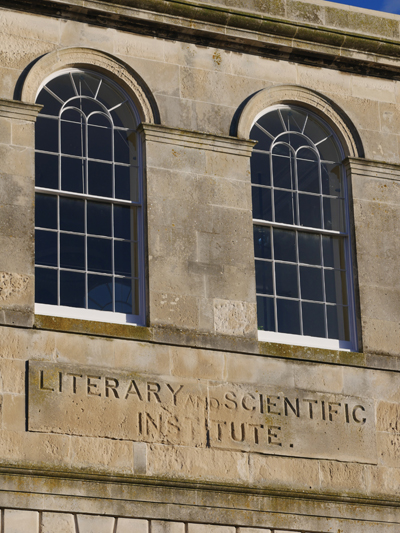
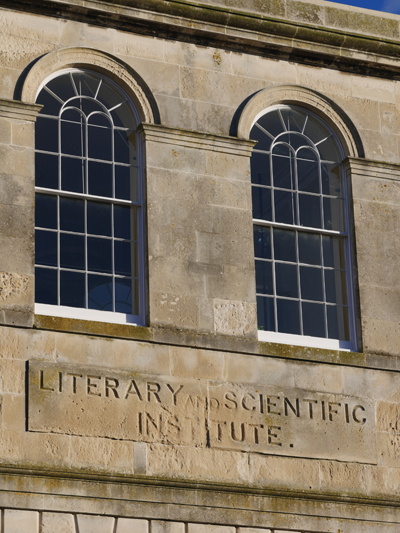
literary and scientificExcitement is mounting in Bridport as the public prepares for its first view of the restored Literary and Scientific Institute in East Street. It’s been empty for nearly twenty years. Remembered by many locals simply as the old library, the Grade II* listed building is about to take on a new lease of life.
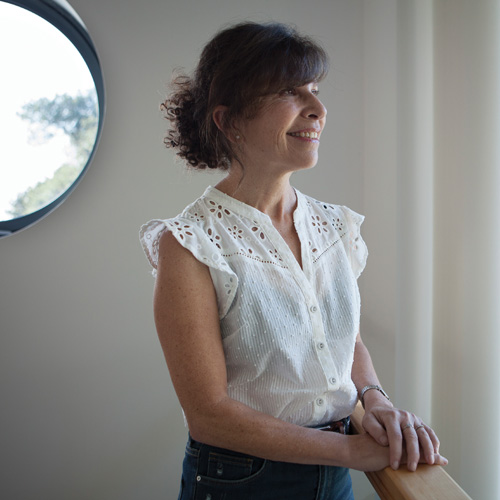

 

The winter sun was making its mark on the lovely façade of Bridport Literary and Scientific Institute, as I met up with manager Michele Morgan at the front steps.

This is a place cherished by locals of long standing, who recall strolling around the shelves in its main room, looking at row upon row of library books. With its iconic period lettering on its façade, which proudly proclaims its purpose – complete with obligatory full stop after the words LITERARY AND SCIENTIFIC INSTITUTE.—the building has always reminded me of the old library in the small town Illinois of one of my favourite books, the lyrical and fantastical Something Wicked This Way Comes by Ray Bradbury.

There is something about its solid yet welcoming face, punctuated by seven glorious tall arched windows, that shouts to the world that this is a wondrous place of knowledge and illumination.

The LSI was founded in 1834 as a Mechanics’ Institute to provide education for working men. The building was given to the town by the Liberal MP for the Borough, Henry Warburton. A few years later, it also became home to the Bridport School of Art in 1865. One of its most famous students was Fra Newbery, whose paintings and murals adorn the inside of Bridport Town Hall. He went on to become director of Glasgow School of Art and is credited with bringing Charles Rennie Mackintosh and a number of his contemporaries to international fame and recognition.

During the Second World War, it was temporarily used by American troops stationed in Bridport before the Normandy landings in 1944, including the Medical Detachment of the 2nd Battalion of the 16th Infantry.  The Reading Room was used as a Red Cross Recreational Centre for the American soldiers and the first floor was for a time used as a Quartermaster’s Store for the Borough Evacuation Scheme.

From 1952 to 1997, the building served as the town’s public library before the library service moved to new premises in South Street, which had been home to the town’s fire station.

The future of the building was then uncertain, and various groups occupied parts of it until 2002 when the building was declared unsafe.

And from then it remained empty and slowly decaying—it was on the national At Risk register—as local authorities and the community debated its future. But with the support of the Heritage Lottery Fund, Historic England and a range of other funders, the Bridport Area Development Trust—a group of local volunteers—have worked hard to bring it back to life.

For the past year or more, the building has been covered in scaffolding and sheeting. No-one, apart from those in the LSI’s inner circle, have had much of a clue about what’s been going on inside. Motorists and pedestrians have cursed at the temporary narrowing of the road and the possible effect on nearby businesses.

According to its website, LSI Bridport will be ‘a centre for creativity, enterprise and growth.  Collaborative and flexible workspaces will be hosted within this unique, historic building.

‘Supporting our community will be event, training and meeting space alongside a café which will have local food at its core. The heritage of the building will be at the heart of the restoration, it will celebrate our town’s strong local history of innovation and be a focus for our future growth.’

Some of us have wondered about how on earth the business space element within the building can possibly relate to yet another café in town, in the room where the library books once took pride of place.

But when the LSI opens to the public later this month, all will be revealed. Having had a sneak preview of the premises, I can see now how its various functions fit brilliantly well together. It’s a real credit to Bridport and those who have doggedly been involved in the project, day in day out, over the years.

I am utterly in love with the work that’s gone into bringing this wonderful building back to life.

On my tour, I can smell paint, hear the buzz of workmen and feel the brushed steel bannisters in the covered courtyard at the back. Beyond this space is a large ‘work hub’ room set up for people who wish to rent office space by the hour. It is light and airy and will soon reverberate to the creative hum of people at work.

There will be 10 hot-desks available here and hirers will have access to lockable storage and a high-quality copier, which will print, scan and fax.

Downstairs, there is a training room and a meeting room, both with 65” interactive screens, teleconferencing facilities, audiovisual equipment and high-speed broadband. The larger room seats up to 30 people and is suitable for training, workshops and presentations. The smaller room is for 10 people and useful for all types of meeting.

Upstairs, on the first and mezzanine are the tenanted offices, the first occupants of which are crowdfunder.co.uk, an established Bridport business as well as being the UK’s leading crowdfunding platform.

On the stairwell, the statue of Minerva, the Roman goddess of wisdom, gazes down from an alcove. The owl which accompanies her provides a recurring motif for the LSI.

In what was the old library, the light streams in through those lovely arched windows, illuminating and enlightening all at once. This will be the café, which will be open to people working in the building and the wider public.

Throughout, the attention to detail, the colours, the marrying of old features and new, industrial-style elements are a triumph.  It’s a dynamic, heady concoction which marries the architectural heritage of the building with its modern-day purpose.

To find out more about Bridport LSI, visit lsibridport.co.uk