Thursday, March 19, 2026
Home Blog Page 34

People in Food Jon Corpe

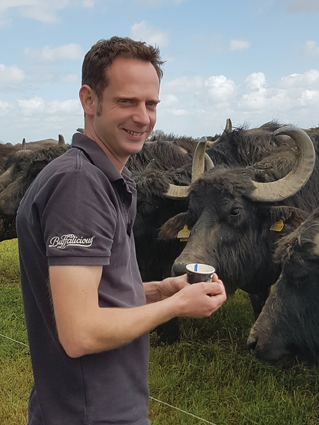
Driving along the A37 towards Chilthorne Dormer, if you glanced out the window you may see a herd of large dark brown majestic shapes huddled together, grazing and taking in the sun. Upon closer inspection, their horns will alert you to the fact this is no ordinary bovine herd, as they are the superb water buffalo that Jon Corpe nurtures on the farm.

One of three sons to Tony and Jane Corpe, Jon took over the running of the farm with the intention of growing and expanding the business. Originally, Tony was a dairy farmer, who then moved into free-range chickens. Wanting to diversify and after reading several farming articles on water buffalo he took a punt and bought 23, when out on a scouting visit. He was unable to leave the large brown-eyed beauties behind. Now there are 260 water buffalo.

Jon lives in one of the farmhouses with his wife and three sons. They sell the water buffalo meat from their onsite farm shop and local farmers markets. In addition to this Jon has transformed the business by milking the herd, offering raw milk from a dispenser in the shop and using it to make silky smooth ice cream. Jon also packages up litres of the milk each week to send to London where it’s health benefits and compatibility with those who are dairy intolerant are in great demand.

The newest product Jon is working on is buffalo mozzarella. Constructing a new dairy and cheese making shed for the purpose, he demonstrates his dedication to the herd by sourcing the best teacher available, learning how to make the most delicious mozzarella. Passionate about food, Jon enjoys the produce he has helped to develop and is proud that together with the help of his parents and dedicated workforce, he is ensuring the future of the family farm.

People at Work Ben Davis

As a seven-year-old, Ben Davis spent his Saturdays lacing shoes, earning some pocket money from his parents who owned Douglas Reads shoe shop on South Street in Bridport.

Ben took on the shop when his father became ill, over 10 years ago. He felt it would be a shame if the family business disappeared, as it was originally bought by his grandfather from Douglas Read himself. Foregoing his business running a swimming, lifeguard and first aid training school, Ben strode back into the family firm. Stepping into his father’s shoes, he discovered all those Saturdays working in the storeroom, picking up how his parents ran the business, had prepared him well.

At Ben’s right hand is his manager Lucy. She helps with the buying and is often the face you’ll see, along with a handful of other assistants, available to advise customers on the shop floor. Ben is proud of running an independent shop in a bustling market town like Bridport. Honesty plays a large part in how his team operate, preferring to tell their customers if an item doesn’t fit, so they can find the right item that does. It’s a philosophy that has earnt the shop a reputation of trust from their loyal customers. Footwear orientated with an injection of clothing and accessories, the shop specialises in items for the comfort lifestyle.

Constantly evolving and thinking of ways to improve, Ben finds it difficult to turn off from the business, as he lives above the shop with his family and beloved black Labrador. He moved back to Bridport a few years ago, happily dispensing with his commute from Milton-on-Stour.

Spending his weekends taking the dog for long walks, he also enjoys shooting and is teaching himself fly fishing. This summer, with a new tent at the ready, he’s off to Cornwall to pursue a love of bodyboarding.

High on Hardown Hill

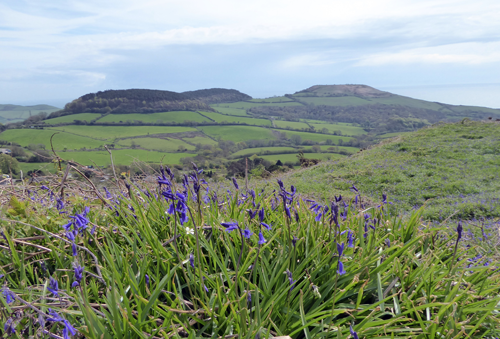
It was a luminous spring morning in early May when I trekked up Hardown Hill in west Dorset. Hardown rises steeply above Morcombelake and the surrounding countryside affording fine views of the coast and of the Marshwood Vale. Compared with its well-known cousin, Golden Cap, across the valley, this flat-topped hill is unjustly ignored but its heathland summit boasts a rich ecology supporting several rare species and, for many years, Hardown Hill was a busy semi-industrial site where building stone was mined.

It’s a steep climb to the top of Hardown Hill but finally, the stony track flattens out and I enter a heathland landscape, rare in this part of Dorset. The summit is broad and flat and typical low-growing heathland plants such as gorse and several species of heather flourish here on the acid soil. Pale sandy tracks cut swathes across the heath but, even on a sunny morning in springtime, the feeling is sombre, dominated by dark browns and greens. A few mature birch trees and a small copse of pine trees provide relief and I come across a pond surrounded by tall clumps of pale, dried grass and a struggling sallow. This heath habitat is also the home of rare nightjars, sand lizards and Dartford warblers.

Standing on the Hardown summit is an elemental experience. Today, a moderate wind blows from the west, rising and falling like the sound of surf on the strand. The heath vegetation rustles and fidgets in response, accompanied by skylarks trilling high overhead. I watch a spirited storm tracking across Lyme Bay and prepare to shelter but, in the end, it mostly avoids the land leaving the sun to return. All of this is overlaid on the southern side by the ebb and flow of traffic noise from the busy A35 some distance below.

The heath may look uninviting and barren, but this is springtime and there are many signs of renewal. A few clumps of yellow gorse stand out above fresh grey-green growth and heathers push feathery green and red shoots upwards. Submerged in the thick heath vegetation are the small bright blue and white flowers of heath milkwort piercing the darkness like stars in the night sky. In the past, the flowers were thought to resemble small udders and this may account for the plant’s name as well as its administration to nursing mothers by medieval herbalists. Along path edges on the northern side of the heath, I find several generous clumps of a shrub with pale fleshy leaves, green with a tinge of pink. This is bilberry, covered at this time of year with delicate, almost transparent, pale red, lantern-shaped flowers looking out of place in this harsh environment but proving popular with bumblebees and hoverflies. Late summer will see the plants covered with succulent black fruits.

I encounter only one other person on the heath but it hasn’t always been such a quiet place. From medieval times, Hardown Hill would have resounded to the clash of picks and shovels wielded by men mining the landscape for building materials. Beneath the thin layer of soil that covers the summit, there are layers of clay and a yellow/brown sandy material containing substantial lumps of flint-like, hard rock, the chert cobs. A mixture of clay, stone and sand was taken for road construction and the chert cobs were used for building. Mining occurred on the southern slopes of the Hill, either in open pits or in adits (mine shafts) cut into the hillside. Nowadays there are few traces of this busy activity. The mining area has mostly been colonised by rough grass and bracken, brightened today by a haze of bluebells. One open pit has been preserved near the top of Love’s Lane displaying the layers of rock and the chert cobs. The adits are inaccessible for safety reasons but one serves an important role as a hibernation area for the rare lesser horseshoe bat.

The chert cobs were split using a small hammer on a long handle, the Hardown hammer. Cobs were held on an iron bar with three claws and covered in damp hessian to protect the eyes of workmen who also wore wire goggles. Split cobs were used to provide a tough outer surface, silvery-blue or yellowish, on domestic and farm buildings around the Marshwood Vale. Good examples of the use of Hardown chert can also be found on the 14th century abandoned chapel at Stanton St Gabriel beneath Golden Cap and on the tiny 19th century church at Catherston Leweston.

But it is to the height of Hardown Hill that I want to return. Its prominence above the surrounding countryside gives spectacular views with new perspectives on some of west Dorset’s notable landmarks. Looking southwards, we see Golden Cap and the darkly-wooded Langdon Hill rising steeply across the valley with a backdrop of the waters of Lyme Bay. Towards the east, Portland floats unsettlingly as if cast adrift. To the north, especially from Hardown’s rough grassy flanks, we look across the patchwork of fields and the ring of hills that make up the Marshwood Vale with the village of Whitchurch Canonicorum cradled in its green embrace. New perspectives challenge us to think differently and the relative isolation of Hardown fosters quiet contemplation away from the cares of everyday life.

Perhaps that’s what Thomas Hardy meant when he wrote in his poem Wessex Heights:

“There are some heights in Wessex, shaped as if by a kindly hand

For thinking, dreaming, dying on, …”


Philip Strange is Emeritus Professor of Pharmacology at the University of Reading.  He writes about science and about nature with a particular focus on how science fits into society.  His work may be read at http://philipstrange.wordpress.com/


Father’s Day

So that’s another Father’s Day come and gone. The only reason I know it happened is because I got a card from our dog. At least I think he wrote it, but his handwriting is somewhat similar to my wife’s. But that’s the only one. No card or tweet or What’s Ap from anyone else and—more particularly—nothing from my own children this year. Why does this happen? Do children get to a certain age (sort of 30/40-ish) when fathers somehow cease to exist? Or perhaps they’re too busy changing nappies and being parents themselves. Yes, I admit it. I’ve got a slight attack of grand-paternal neglect.

Of course, nobody ever forgets Mothers’ Day. If you do, that’s it—you’ll never be forgiven. It’s hugely central and all wrapped up with Mother Earth, Love, Warmth, the Family and Maternal Bosoms or something. Mothering Sunday is at the heart of every civilisation and has been celebrated for squillions of years, and rightly so. But in the current spirit of #MeToo and equal opportunities for both sexes, why is Father’s Day so relatively low key?

Naturally all such days are mostly commercial fictions of Clinton’s and the gift-wrap fraternity who have made a parcel of days in order to sell us more greeting cards. I haven’t checked recently but I assume you can easily buy cards for Cousins’ Day, Brother’s Day, Sister’s Day, Step Offspring’s Day as well as Groundhog Day (again and again of course). What about Cat Day? We already have Dog Days to mark the so-called hottest days of summer, so we surely need Family Pet Day (wagon wheel treats for your hamster and rum flavoured millet seed to make your budgie fall off its perch in a drunken stupor).

Hats off especially to the USA who already celebrate such delights as Patriot’s Day, Memorial Day, Independence Day (boundless Trumpeted patriotism and not just the movie) and Grandparent’s Day on September 8th (hurrah—well done!). Americans are world leaders when it comes to celebrating individual days. They’re entirely responsible for bringing us Halloween and even Thanksgiving. I know this is true because I was invited to a Thanksgiving party last year. In Bournemouth.

The more the merrier I say… we’re obviously way behind over here. Let’s have a different holiday one day each week in the UK to help keep our gift-wrap industry afloat. Here’s my personal lateral list of new UK holidays starting with…

County Day: fly the Dorset flag on Dorset Day and dance a little pirouette on Chesil Beach. Amazingly, I discover that this day already exists! It’s officially on June 1st—three days before the official Devon Day which is the feast day of Saint Petroc on June 4th. And Somerset Day is on May 11th. I don’t know about you, but I was not aware of these, so where’s all the publicity? How come we don’t celebrate all three days with great joy and feastings throughout the Southwest? If we were in the States, we’d have bunting and flags lining every avenue and all-day street parties. In the UK we only seem to do this when it’s a Royal Celebration or a Wedding.

Letter Day: we all know about D-Day, but what about the first three letters of the alphabet? I propose that ‘A Day’ (otherwise known as Hay Day) is a September party to take the place of Harvest Festival. Lots of other countries venerate the collection of fruits and crops from the fields. It’d be pretty easy to get sponsorship in these days of fashionable green fingers (garden centres, seed companies and organic foods) and we could all eat freshly picked green veg for lunch and nibble on home-spiralized carrots for supper. ‘A Day’ is also known as Bunny Rabbit Day.

The next letter day is easy… ‘B Day’ is clearly a day to celebrate bathrooms and loos and pipes and plumbers. Sponsorship comes from B&Q or Wickes. Make sure you’ve put the hot water on to all-day at home before the day starts.

‘C Day’: I thought about this but it’s pretty obvious really. The ‘C’ stands for vitamin C, so the day is marked by sucking oranges and lemons and attending anti-scurvy classes. Boring Marshwood Fact of the Day: Did you know that in addition to all citrus fruits, it’s broccoli and Brussels sprouts that contain the most vitamin C. This might go some way to explaining why children traditionally don’t like them.

Then, please don’t forget ‘Robin Day’: a day to write to the BBC complaining about the fall in broadcasting standards and media political bias and how ‘Disgusted’ doesn’t only live in Tunbridge Wells and why Hedgehogs should be better protected and how the Archers has completely lost the plot on Radio 4.

And I haven’t yet mentioned ‘Doris Day’: a day to celebrate the glories of old movies and reminisce about the times when singers could actually sing rather than be retuned electronically to be teeth shatteringly pitch perfect with automatic robot-like voices. Perfectly in tune, but perfectly inhuman.

That’s enough of a rant for today. And it all started with Father’s Day… My sons, I forgive you. But don’t anyone dare forget next year!

Janet Gleeson

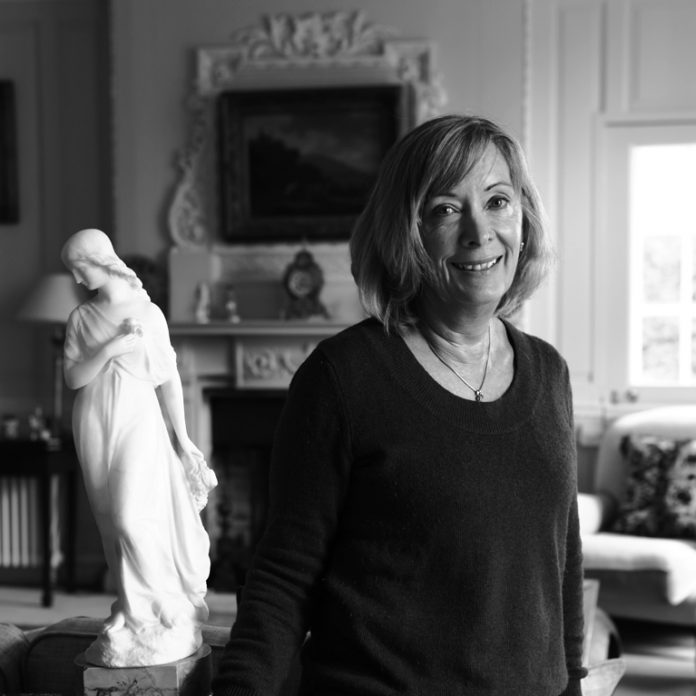
‘I was born in Sri Lanka—then called Ceylon—and spent my early childhood on a remote tea plantation. The bungalow where we lived was surrounded by fields of immaculately kept tea, shaded by jacaranda trees. It had been built in the late 19th century in the grand colonial style with a veranda over-looking a canna-fringed lawn, the Horton Plains rising above and a panoramic view over distant mountains and the valley below.

It was an exotic, isolated but privileged existence. We had a nanny, a cook and several other servants in the house. My twin brother and I didn’t go to school, our mother taught us to read and write, we could ride our tricycles down the bungalow’s vast central corridor and we had a mongoose for a pet. I vividly remember the fragrant smell of fresh tea as I walked into the tea factory, and watching my father tea tasting, walking down a row of identical cups, taking a mouthful and then spitting it out. When the road, leading from the bungalow to the factory was tarmacked, my father hired an elephant to pull the roller. The elephant worked every morning under direction from his mahout and spent the afternoons relaxing in the river. There’s a photo of me riding on him, taken on his last day—my brother was too frightened to join me.

In 1963, when I was seven, we were on leave, staying with my grandmother in London when my father decided that the time had come to leave Ceylon for good. He returned alone to close things down, leaving my mother, my brothers and I in a rented house. After so much freedom school came as a terrible shock. Arithmetic was baffling—I had no comprehension of what a halfpenny or a shilling was, or why twenty of them should make a pound. I remember hiding under my grandmother’s dining table begging to be allowed to stay there all day rather than go to school.

‘It’s the law,’ my mother insisted.

‘But how will they know I’m here,’ I replied.

When my father returned the following year, we moved back to London, and then to another rented house. Eventually he found a job in London and bought a house near the Surrey Sussex border. He missed his former life and rather than melting into home county convention, he kept the colonial flame burning. He nurtured exotic plants in the garden, and the house was filled with Ceylonese mementoes: paintings of picturesque views, Kandian silver boxes, chests made from tropical woods with elaborate brass mounts. We often ate Sri Lankan curries, which are quite different, and in my opinion infinitely more delicious than Indian varieties. Gertie, our old nanny used to come and stay, and gave my mother detailed instructions on how to make them.

Moving around as we did meant frequent changes of school. I went to 10 schools in the space of ten years. Soon after we settled in Surrey, my brothers were sent away to school, while I was educated locally, ending up at Horsham High School for the sixth form. Twins nearly always have a special bond, and I remember the acute pain of separation from my brother for the first time.  In his absence, I filled much of my time drawing and painting and reading. My grandmother encouraged me, taking me to the theatre, giving me books and introducing me to the National Gallery and the Tate. She always insisted that we never stay longer than an hour so we didn’t overload our senses.

The love of art and books has stayed with me all my life. I went to Nottingham University to read History of Art and English, and after I graduated, my first job was as a junior secretary in the Impressionist Department at Sotheby’s. I had never been to an auction before, but working in an office surrounded by Renoirs, Picassos and Monets, was wonderful, although I was hopeless at shorthand.

I married soon after joining Sotheby’s,  and after a break for the birth of my daughters Lucy and Annabel, I started to work part time at Bonhams, eventually becoming head of Old Master Paintings. Three months after the birth of our son James, in 1987, my husband Paul accepted a job with Shearson Lehman brothers and we moved to Sydney, intending to stay for two years.  I was full of enthusiasm but found it far more difficult than I’d expected to settle, mainly because I wanted to work. One day I visited the National Gallery in Sydney, where there was a loan exhibition from the Hermitage, St Petersburg: the first time its works of art had been seen in the west.  I decided to try and write about the exhibition, and contacted Apollo Magazine, an academic journal I had read at university, offering to review it. They accepted, and on the strength of this, when we returned to the UK some months later (Shearsons closed after the crash) I started writing for House & Garden and the Antique Collector Magazine.

Writing was a stimulating career easily combined with family life. I took a job as a freelance editor with Reed Books,  editing the Miller’s collectors’ guides. While there I was also commissioned to ghost two books for David Linley, who was a delight  to work with. For his first book, Extraordinary Furniture, we went to Buckingham Palace, to examine an unusual clock that we wanted to feature. The clock was in a back corridor, and I was on the floor, looking at a compartment in its base, when an equerry came out of an office and seeing me crouching on the floor, turned to Lord Linley and said ‘David, I know you believe in protocol but this is ridiculous.’

Sometimes life changes because of a succession of coincidences. One day, by chance, an agent called Christopher Little, who was a friend of a friend, phoned me asking if I had any ideas for books. I had just read Dava Sobel’s book Longitude, which had been a huge best-seller, and was working on a Miller’s guide to ceramics. The invention of porcelain in Europe, wrapped up as it is with alchemy, avarice and espionage, struck me as a compelling story that wasn’t widely known, and could be told in a similar way. Christopher was encouraging and on a visit to a prospective publisher I asked him who else he represented. ‘Last night I sold a children’s book about a wizard to an American publisher,’ he told me. I hadn’t heard of J K Rowling at the time.

When my book The Arcanum, The Extraordinary True Story was published in 1998, it didn’t quite match Harry Potter, but it took off in a way I could never have expected. The book was serialised on Radio 4, became a Sunday Times # I bestseller and sold in a dozen or so different countries. I found myself invited to America for a two week book tour that ended with me talking about my book to a packed auditorium in Sotheby’s New York.

Finding an equally gripping subject for my next book was a daunting task but again luck played a part. My husband worked in the financial world and research into financial history led me to discover the Scottish financier John Law and to write The Moneymaker, the story of how he introduced paper money to France and instigated the Mississippi Bubble, the first stock market bubble. The book was unexpectedly topical because of financial market turmoil at the time, and each time financial crises replay it has a new lease of life.

We left London and moved to Dorset in 2005. By then I had written three historical novels and another biography, and decided to take time out to do an MA in History at Birkbeck.  I was also working as a volunteer in the RNLI Heritage Department, in Poole, transcribing letters written by Sir William Hillary the charity’s founder. The letters were full of tales of intrepid rescues as well as the difficulties of founding the charity. With a little digging I also discovered Hillary’s darker side, all of which inspired me to write his biography, The Lifeboat Baronet.

Around the same time I also began working on the BBC Antiques Roadshow. As a member of the reception team, I look at the objects people have brought and decide who should value them. It is a fascinating role as you never know what you will see and I have visited some wonderful locations. Through Antiques Roadshow I became friendly with Paul Atterbury, one of the miscellaneous experts who lives locally. He had written a book on World War I treasures, and finding ourselves both promoting our books at literary festivals gave us the idea of starting a literary festival in Dorchester. Neither of us had any idea what we were taking on but we have learned on the job, and thanks to much help from our respective partners, a team of volunteers, and support from the local business community, it is going from strength to strength. Last year we had around 3500 visitors, and this year, our fourth festival, already has a great line up of speakers and we hope will be bigger and better than ever.’


Bridport’s Time to Decide

It’s ‘make your mind up time’ as Bridport and the surrounding area maps out what the future might look like in the next eighteen years. Margery Hookings speaks to Phyllida Culpin about the Bridport Area Neighbourhood Plan, one of the most important initiatives the town and surrounding parishes have seen for years.


If you’re out and about in Bridport over the next six weeks, your attention is likely to be grabbed by an unusual poster campaign.

Designed by a local company, it’s deliberately eye-catching. It wants to be noticed, to make people find out more.

The campaign is just one of the weapons in the armoury for final public consultation on the Bridport Area Neighbourhood Plan. This is not just a dry document with a boring name. This is important stuff. It’s Bridport’s future we’re talking out.

The plan is destined to have a huge impact on what happens in the town and the neighbouring parishes of Allington, Symondsbury, Bradpole, Bothenhampton and Walditch. So it’s vital that local people decide if they like the policies contained within it before the plan is submitted to the planning authorities.

These cover climate change, housing, economy and employment, the town centre, landscape and heritage, community facilities and access and movement.

Bridport and its environs are special. But the area can’t afford to stand still or preserve itself in a gentrified aspic. It needs to hang on to what makes it stand out from the crowd but, at the same time, it has to live and breathe and continue to thrive.

The neighbourhood planning system was introduced by the Localism Act of 2011.

According to the Ministry of Housing, Communities & Local Government, neighbourhood planning gives communities direct power to develop a shared vision for their neighbourhood and shape the development and growth of their local area.

They are able to choose where they want new homes, shops and offices to be built, have their say on what those new buildings should look like and what infrastructure should be provided, and grant planning permission for the new buildings they want to see go ahead.

Neighbourhood planning provides a powerful set of tools for local people to ensure that they get the right types of development for their community where the ambition of the neighbourhood is aligned with the strategic needs and priorities of the wider local area.

“What’s good about ours is that it covers a logical, geographical area,” says Phyllida Culpin, who chairs the Bridport Area Neighbourhood Plan steering group, which is made up of people from the five parishes.

She’s lived in Bridport for seven years and has 20 years’ experience as a housing professional with a background in regeneration of large estates, community development, social cohesion and development of employment and training for residents.

The skills of all those involved in the plan are wide-ranging. Working together, more than 100 volunteers on six working groups have developed a blueprint which is community-led, rather than something imposed by a faceless committee.

Since January 2015 when the original steering group was formed, word of the evolving plan has been spread through attendance at, for example, village fetes, stands in Bucky Doo Square and leaflets to every household in the area.

An ‘intentions document’ was produced last summer and more than 20 per cent of the community responded, highlighting the importance of affordable housing and safeguarding the independent, special character of the parishes and town

“The Bridport Area Neighbourhood Plan is really the only way that our community can have a say on future development in the area,” Phyllida says.

“Yes, we can go along to planning meetings and say what we think but, in many ways, that’s too late. The neighbourhood plan, however, can reflect the needs of the parishes and the community.”

The Bridport Area Neighbourhood Plan represents the locals’ best chance of getting what they want for the town and its surrounds. Once such plans are adopted, local councils and government take notice. An approved neighbourhood plan will influence decisions about future development in the Bridport area.

Back to the Ministry of Housing, Communities & Local Government:

Neighbourhood planning enables communities to play a much stronger role in shaping the areas in which they live and work and in supporting new development proposals. This is because unlike the parish, village or town plans that communities may have prepared, a neighbourhood plan forms part of the development plan and sits alongside the Local Plan prepared by the local planning authority.

Decisions on planning applications will be made using both the Local Plan and the neighbourhood plan, and any other material considerations.

Neighbourhood planning provides the opportunity for communities to set out a positive vision for how they want their community to develop over the next 10, 15, 20 years in ways that meet identified local need and make sense for local people.

They can put in place planning policies that will help deliver that vision or grant planning permission for the development they want to see.

“We’re trying to reach as many people as we can,” Phyllida Culpin says. “Everyone is being told what is happening—that’s it’s time to decide. Have we got it right? Are these the right things for the area? Once we have people’s feedback, we can amend the plan in line with what people say.”

The final plan is due to be submitted to West Dorset District Council by November this year. This will be followed by a public referendum in the spring of 2019. If 50 per cent of those who vote are in favour, the Bridport Area Neighbourhood Plan will be approved.


Summary of Policies

Climate change

  • Monitoring carbon footprint
  • Energy efficiency for new developments
  • Energy generation to offset predicted energy requirements
  • Neighbourhood renewable energy schemes
  • Flood risk assessment to remain valid for the lifetime of developments

Housing

  • General affordable housing policy (minimum of 35 per cent)
  • Design of affordable housing fully integrated into all developments
  • Affordable housing and phased development
  • Housing mix and balanced community
  • Housing design
  • Custom build and self-build homes
  • Community-led housing development (release of sites not normally permitted)
  • Principal residence requirement (to control growth of holiday homes)

Economy & employment

  • Protection of existing employment land and uses
  • Provision for new and small businesses
  • Sustainable tourism that demonstrate a positive impact

Town centre

  • Retail, high street and food/drink uses
  • Developments fostering small business activity
  • Support for creative industries
  • Support for development proposals that improve the public realm across the plan area
  • Town centre renewal and rejuvenation
  • Shopfront design

Landscape and heritage

  • Green corridors, footpaths, surrounding hills and skylines
  • Biodiversity and wildlife
  • Anti-coalescence measures to retain character and setting of settlements
  • Local green spaces of community value protected from built development

Community facilities

  • Protection of existing and new community infrastructure
  • New community services and facilities supported where need is identified

Access and movement

  • Promotion of active travel modes, priority to pedestrians movements
  • Streets for all
  • Connections to sustainable transport
  • Footpath and cycle networks
  • Contributions from community infrastructure levy to go towards maintaining and improving

footpaths and cycle network

  • Retain and enhance Bridport bus station and surrounding land as local transport hub

Look – Heap Big Smoke

This phrase comes back to me from films of “Cowboys and Indians” and childhood comics and refers to the method of sending messages by smoke signals, used by the native Americans. However, we all need to send messages, some more frequently than others!

The late Bill Putnam said he believed the Romans used Iron Age hill forts here as a chain of relay stations, from Maiden Castle to Eggardon and on to Waddon Hill near Beaminster. The local Iron Age people are known as the Durotridges and they were conquered by the Roman general, later Emperor, Vespasion in the 50s AD. The relay stations relied on line of sight and probably used reflected sunlight, so only possible in daylight. The only other possibility is similar to the native Americans, but using beacons with flames at night.

Beacons were used at the time of the Spanish Armada, in a chain around the south coast. Transfer of information was limited to little more than “fire seen” meaning “Armada sighted”.  Beacons were still used early in the Napoleonic Wars on hilltops, locally at Orchard Hill (near Chideock), Pilsdon and Shipton Gorge. Another at Golden Cap was recorded as being a cylinder on a braced post with ladder access, adjacent to a signal station. The signal station was a two-roomed building with a canvas roof and equipped with a stove or grate. Signals were carried on a 50 ft topmast and a 30 ft flagstaff and comprised a red flag, a blue pennant and four 3 ft diameter black painted balls. These coastal signal stations were manned in 1798 by “Sea Fencibles”,  a volunteer force of sea and fishermen. They also patrolled the coast by boat. They were armed with hand pikes, a spyglass and flag. At one period the Golden Cap Station was in the charge of Lt. John Twisden and a rent of £5 was paid to a Mr Roper. Other personnel comprised a Petty Officer and two men. Another signal post was on Abbotsbury Hill.

In April 1799 the  “Western Flying Post” reported that at 10 pm on Monday evening “an enemy actually landing in the west”. The drums “beat to arms” and three Bridport Volunteer Companies quickly assembled, including the local Yeomanry under Captain Travers. A “galloper” roused volunteers at Beaminster but they took time to gather and eventually march towards Bridport. Two troops of the Somerset  Provisional Cavalry followed. At 7 am it was reported that it was “a mistake at the Signal House” and the troops were stood down. This was during the Napoleonic Wars and Thomas Hardy later wrote about similar misinformation from the beacon at “Abbotsea” in the Trumpet Major.

Apparently, Napoleon Bonaparte was using frictional electricity to transmit over 30 wires with a pith ball telegraph display from Paris to Boulogne. He had plans to have a cross-channel telegraph if he invaded. In 1793 a system of visual communication using a mast with signalling arms had been invented in France. The British Admiralty decided that there was a need for a system of fast communication between the coastal stations along the South Coast. They considered several systems and finally decided on one invented by Lord George Murray and paid him £2000 for it. Work began in 1796 on his first shutter telegraph.

A shutter telegraph consisted of a wooden structure on top of a small cottage carrying a frame 20 feet high by 12 feet wide. This contained six 3-foot square shutters arranged two by two vertically, pivoting about their horizontal axis operated from the cottage by ropes and pulleys. Each of the six shutters could be held in open or closed positions, allowing a total of 63 changes, catering for the full alphabet, ten numerals and some selected phrases.

It seems strange to us now that such a crude and apparently complex means of sending messages was considered in 1796, but there were no fluorescent tubes or electronic displays then, like the large displays we are used to seeing at sporting occasions.

Within a year the shutter telegraph lines, consisting of a chain of huts with signalling frames, were built on sites between five and ten miles apart. They were located on three routes from the Admiralty in London to Deal, Sheerness and Portsmouth.

Work was halted by the Peace of Amiens in 1802/3, but recommenced in 1805 with a line to Great Yarmouth and a spur off the London to Portsmouth line which continued to Plymouth.

The line which passed through Dorset had telegraph stations located at: Pistle Down, now known as Telegraph Plantation, Chalbury, a “shoot” to Blandford Racecourse, Bell Hill, Nettlecombe Tout, High Stoy, Toller Down, Lamberts Castle and then on to Devon. The station at Blandford Racecourse was on what is now called “Telegraph Clump”.

The wooden hut or cottage usually had two rooms, an operating room and a general living room. Busy stations near London were operated by a Lieutenant, Midshipman and two assistants. In the line station this was often reduced to three people who might be civilians. Two men acted as “glassmen” who manned the telescopes during the day. The men became expert at receiving and sending messages by the shutter system.

An average message would be passed from London to Portsmouth in fifteen minutes. A prearranged message could be sent and acknowledged between London and Plymouth in three minutes. The performance of the system depended on weather conditions. In 1808 Henry Ward of Blandford was awarded ten guineas from the Society for the Encouragement of Arts for his invention of a crank that helped to overcome the difficulty of moving the shutters in high winds.

The shutter stations were stood down in 1814 on the signing of the Peace of Paris but remained occupied and were reactivated briefly when Napoleon returned to France in 1815. They were closed again after Napoleon’s defeat and exile but most remained occupied, usually by the officer and his family, until 1825 when a new signalling chain using a semaphore system was built along a different route. The Plymouth line station at Saltram in Devon was later incorporated into a larger structure.

Much of this information was supplied by the Royal Signals Museum at Blandford.

In my childhood, books told us a method of sending messages. In these days of the mobile phone, do small boys still use two tin cans and a length of string?

Bridport History Society does not meet in July and August, but suggest a visit to the Bridport Heritage Forum Exhibition in Bridport Town Hall from 1st to 19th August – “War, Peace and New Beginnings.”


Cecil Amor, Hon. President Bridport History Society.

July in the Garden

There can be a bit of a gardening anti-climax in July. All the freshness of early spring, maturing into blowsy June, has passed and there is a danger that the vegetative growth, put on by shrubs and perennials, overwhelms the, less boisterous, plants which have yet to flower. Big, late, summer bloomers, such as Helianthus, Rudbeckia and the ‘back of the border’ Asters, can look after themselves; other border inhabitants may need some refereeing in order to cope.

Look at your borders and assess what has flowered, and may need ‘tidying up’, and what has yet to perform, and may need a little ‘freeing up’, if it is in danger of being swamped by neighbouring plants. However good you were at staking, or pea-sticking, plants at the beginning of the year, there will always be some that require a bit more propping up or tying-in.

Spring and early summer flowering shrubs can have their spent flowering shoots pruned out which maintains their shape and encourages them to produce a flush of new growth. The new growth is important because it is these vigorous shoots, maturing before leaf-fall, that produce the best flowers next year. Removing old shoots and excessive growth now has the advantage that you can properly assess just how big, and what shape, the shrub needs to be—something that isn’t always apparent when you are faced with an unruly mass of bare twigs in the winter.

Single-flowering, rambling / scrambling (as opposed to ‘climbing’), roses should also be subjected to this “cut out the spent – tie in the new” maintenance regime, just as if they were spring flowering shrubs. If the new, easily damaged, extension growths are not tied in there is a danger that they will get broken off, during wet and windy weather, or will whip around causing harm to neighbouring plants. The same rule applies to wisteria which should have the whippy growths shortened to half a dozen or so leaf joints and the faded flowers removed before the wisteria wastes too much energy attempting to set seed.

I find that Penstemons are invaluable for keeping a continuity of bloom from midsummer right through to autumn—even later in mild years. Being a relatively short-lived perennial, it is a prime candidate for propagating now by means of cuttings. In fact, it’s worth experimenting with cuttings from any slightly shrubby, semi-woody, plant at this point when hormone levels are high and their rooting potential at its greatest.

I use the same cuttings technique for practically everything in the garden although, if you invest in a good textbook on the subject, you will find many variations on the theme to fine tune the process. My simplification is to take non-flowering shoots, where possible, thick enough to withstand pushing into loose compost, and then to trim them up so that they are at least finger length, with a couple of leaves at the shoot tip, and denuded from the tip down. Always trim below the lowest leaf joint with a sharp knife, preferably a craft blade, and additionally reduce the remaining leaves too if they are over large.

The reason for removing most of the foliage is to reduce water loss from the cutting because, until it has grown roots, water lost via leaves cannot be replaced by water taken up by roots. This is the same reason why (see later) it is necessary to keep a humid atmosphere around the cuttings. The cuttings are inserted into moist compost, I use a multipurpose compost with added 50% grit / perlite to keep the mixture ‘open’ i.e. aerated and free draining. When filling the pot, take care to ensure that the compost mix is only lightly firmed down, not rammed hard, to ensure that there is still plenty of air left in it and it stays ‘sweet’.

The cuttings are inserted around the outside of the pot, rooting tends to be quicker at the edge of the pot rather than in the middle, and waterer in well using a fine rose fitted to a small watering can. Finally, to maintain a humid atmosphere around the cuttings, place a polythene bag over the whole ensemble and tie at the top. A length of cane pushed into the centre of the pot keeps the bag off the cuttings and gives you something to tie against.

Tender perennials propagated at this time of year should root readily, under their own steam, but hormone rooting powder may assist in slower rooting specimens and can guard against rotting as it also contains fungicide. Place somewhere inside, such as a light windowsill, but not somewhere where they will roast in the sun.

Also on the ‘propagation of plants’ subject; you have up until the end of this month, preferably sooner, to sow biennials for flowering next year. There seems to have been a real resurgence of interest in these ‘old-fashioned’, cottage garden, style plants on the back of trends for ‘cutting gardens’ and home-grown bouquets. You can’t beat pots full of ‘Sweet William’, ‘Honesty’ and ‘Sweet Rocket’—somehow it seems wrong to use Latin nomenclature here—even their names conjure up scenes of scented floral perfection!

Elsewhere in the garden, regular maintenance will be continuing unabated; lawns need mowing, containers need watering and ‘high performance’ bloomers like to be dead-headed and well fed…

Dead-heading of bedding and container plants is essential to keep them flowering right up until the frosts. Adding fertiliser to the watering can, at every other watering, also keeps them performing to the best of their ability. Similarly, dead-heading roses, plus giving them a dose of rose fertiliser forked in around their roots, aids blooming while maintaining healthy growth to maximise flowering potential for next year.

We seem to be having (tempting fate here) a reasonably warm and dry summer, so far. Target your watering only to those plants that really need it, primarily the newly planted and those in containers i.e. without access to ‘true’ garden soil. Resist the urge to use wholesale ‘sprinklers on the lawn’; brown grass always greens up again when the rains return. And, if I’ve learned nothing else (tempting fate again) it’s that, here in West Dorset, the rain will always return!!!


Dub Pistols – Festival Diamonds

The Dub Pistols have built a massive fanbase in the West Country by putting in the hours and respecting their audience. Barry Ashworth talks to Fergus Byrne about energy, music, football and music royalty—and, what could possibly go wrong?


Over the years it’s fair to say that Barry Ashworth, the driving force behind the Dub Pistols, might have owned up to a number of different chemical excuses for his boundless energy, but these days the bulk of his drive and stamina just comes from a natural source—his passion for music. ‘My Mum used to have to give me Valium to go to school to calm me down’ he jokes. ‘I’ve always been bouncing off walls. That’s just naturally in my personality.’

In July Barry brings the Dub Pistols to Bridport to headline at the Jurassic Fields Festival. It’s a gig he’s looking forward to. ‘The West Country seems to be our biggest catchment area in term of fanbase I think. When you go north there’s a lot more house music, but when you go more west, it’s a lot more urban and open-minded. Our sound seems to have connected and resonated with people and it’s been like that for quite a while. We do a lot of shows down that way every year.’

The band originally grew from Barry’s DJ career, which itself grew out of time spent running clubs in Ibiza and London. If it was possible to create an edited version of his life story it would start on a London council estate, take in teenage dreams of a being a footballer, include a broken leg in 1987 and a trip to Ibiza that changed his life. That was eventually followed by a million-dollar contract with Geffen records in America and the heady road to sex, drugs and rock ‘n roll. However, as luck would have it, Barry’s first shot at mega-stardom was interrupted by the attack on the twin towers of 9/11, as the Dub Pistols first album was due to be released there that week. Coincidentally having lyrics like ‘Submarine sinks fall from the sky/tallest buildings burn/oh how the mothers they cry,’ and ‘blowing up the White House like I was an alien in Independence Day’, the album was pulled and it never came out. Barry found himself back in London with an unexpected overdraft and one hell of a ‘what happened last night?’ feeling. He admits it had been some party though. Cut to today and the Dub Pistols have risen from the ashes of those dark days and built up a huge following by being one of the hardest working bands in the industry.

Dub Pistols live performances are all about the crowd. ‘Our show is very much built on energy and crowd participation’ says Barry. ‘We feed off the crowd as much as they feed off us.’ He explained that every band he has ever been into, from punk to ska, is always about energy. But that doesn’t mean it’s not also about the music. ‘For me, music is the soundtrack to life. Whether it takes you up or whether it takes you down, you can always reference different parts of your life through the soundtrack of that time. Making music is something that I love and always have done.’

Although the soundtrack to his early years included people like Elvis Costello, The Clash and Blondie et al, his Dad had different ideas about what he should be listening to. ‘When I’d come home drunk on a Sunday and be upstairs playing reggae, he’d drag me downstairs and play me Lynyrd Skynyrd and Rory Gallagher and say “that’s not music, this is”. My Mum was more into Motown and Soul’. That’s not to say Barry didn’t listen to anything other than punk, reggae and ska, he admits to a very eclectic taste in music. ‘Bob Dylan was a soundtrack for a time’ he says. ‘From that, you learn a lot about songwriting and lyrics and you become a bit more socially aware. And my grandmother was a Scouser, so there’s a heavy influence from there with the Beatles as well. My grandmother was carried down to You’ll Never Walk Alone’.

Talk about his Scouser background and the Liverpool theme tune brings us neatly to the other passion in his life—football. That broken leg in 1987 brought him to Ibiza to recuperate and he readily admits that the drug scene and the fantastic mix of music on the island put an end to his football dreams. However, it didn’t curtail his passion for the beautiful game. He is still a fanatical Liverpool supporter, but when it comes to the organisations that run the industry he practically spits out his views. ‘I hate the FA with a passion’ he says. ‘I hate FIFA with a passion, because they are, to me, so corrupt.’ He believes the teams in the past such as those in the Beckham era and managers like Terry Venables could have kept England as contenders ‘but they just wanted “yes” boys. So it’s just really put me off international football.’

With the 2018 World Cup kicking off as we chat, it’s probably not the best time to be irritated with International football and Barry at least concedes that maybe there could be some hope. ‘I don’t actually think we’ve got the worst team in the world’ he says. ‘I think we’ve got quarter-finals in us. It really depends on what he (Gareth Southgate) sends out and how they decide to play. The good thing is none of them deserves an ego, cos let’s face it, they’ve been shit. The warm-up games they’ve struggled to win by one goal.’

By the time this goes to print we’ll all have a better idea of what England might achieve. However, regardless of the international football scene, Barry can’t help but throw a more amusing aside to the football chat, complaining that ‘every time there’s an international break, Liverpool seem to come back with our best players crocked, so I hate it.’

So, enough about football, but did a shot at mega-stardom in the music industry leave Barry or any other Dub Pistol with an ego the size of, say, Kanya West’s? No, not at all. Barry Ashworth is under no illusions about the slippery slope that fame and stardom offers. This is a hard-working band that pulls it all off by putting in the hours and loving what they do. As to mega-stardom, Barry is often quoted as saying they are ‘successfully unsuccessful’. He points out that the lack of international limelight means ‘you don’t get overkill and it doesn’t let your head get too big, because you have to live it real. The way that we have to travel and play, we’re never the spoilt superstars—we’ve never had people blowing smoke up our arse.’ That’s probably why the fans keep coming back and as he says, ‘the shows just get bigger and bigger—which is unbelievable after twenty years.’

Last year Barry got married, as it happens into music royalty. His wife’s mother, the late June Child was married to Mark Bolan and his wife’s Godfather is Elton John. ‘They were just a little bit more successful than me’ he laughs. So does he fancy the idea of being a bigger star? ‘Would I like to have my life analysed, considering what I’ve been up to?… Probably not’ he says. ‘I think I’d just be banged up. Staying just below the radar suits me just fine.’

Looking at the rest of the year it would seem that the Dub Pistols may be a little too busy to peek over any radar. As well as a seemingly never-ending trail of shows in the UK, there are gigs in Poland, Romania, Italy, the Netherlands and Portugal, and talk of shows in Mexico and New Zealand in the New Year. Not to mention the new album Dark Days, Dark Times, which Barry says is already ten tracks in, though not due out until early next year. Then there is also the band’s documentary What Could Possibly Go Wrong?, a history of the Dub Pistols so far, which, as Barry says, is hard to finish since the band is still going. He has set himself a target of the gig at this year’s Boomtown for the last bit of filming and hopes to get it finished before the end of the year.

In the meantime, there are still songs like Never Never, London Calling, Boom and Rising from the current album Crazy Diamonds that have found their way into the Dub Pistols live set. Simply, not to be missed.

Anyone who hasn’t yet managed to connect with a Dub Pistols gig should remedy that particular hole in their personal ozone as soon as possible. Now fully-fledged ‘festival favourites’ they will play at Jurassic Fields in Bridport on July 13th and Camp Bestival at Lulworth at the end of July, as well as Beautiful Days at Escot Park near Ottery St Mary in August. Find out more at www.dubpistolsmusic.co.uk.

John Fisher

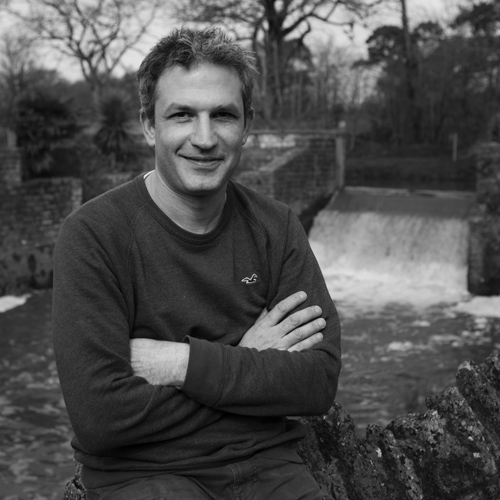
‘I was born in Boston, Lincolnshire, in 1971, but I don’t really feel like I’m from anywhere in England. My father was in the Royal Air Force so we bounced from RAF base to RAF base throughout my childhood. I thought of it as normal but in retrospect, it was quite a weird life because we were in a constant state of motion. I don’t remember being attached to places, or possessions, because our lives were always being boxed up and shipped three months ahead of us. Maybe that’s why I’ve always been able to live out of a rucksack, and why friends remark I’m always wearing the same set of clothes. If I ever fight with my wife, it’s over packing, as I can do it (badly, she says) in less than three minutes.  As children, we lived on bases all over the UK, as well as in Germany where my dad was on an exchange programme with the Luftwaffe, and Maryland where he flew US Naval jets like in Top Gun. He was a test pilot. His speciality was night flying. This was in the Seventies when jets had quite a high casualty rate; over a third of his graduation class died in flying accidents over the years. He left the RAF when I was ten and joined what became British Aerospace. My father was also a scientist. He invented the modern way of flying jets at night—a helmet-mounted image-intensifier system called Cat’s Eyes which remains the industry standard. I remember when he appeared with his invention on the BBC TV programme, Tomorrow’s World. My father still works in the aviation industry but is based in America these days.

After the RAF, my family settled in Kent, where my mother worked as a school teacher. I went to a local school there, then got a scholarship to board at Lancing College, near Brighton, when I was 13. I’ve always had a lot of hobbies, slightly obsessive ones, which usually tend towards the slightly tech-y. When I was small, I designed rabbit traps, which were far too complicated to ever catch anything. When I was at Lancing, I got quite good at home brewing. I sold a lot of homebrew, like three, four gallons a week. Even the teachers were buying it. I then left to study classics at Oxford, where I joined the shooting team and my hobby switched to making bullets. You start with a mould, and pour in molten lead, then clamp it shut. That’s the bullet. You resize a used brass casing, measure in some gunpowder, put the bullet in, crimp it. It’s quite stressful. If you put too much powder in, the gases won’t be able to come out fast enough and the gun will blow up. We never had any accidents at the club, but I saw a guy shoot his finger off like that.

Oxford was a lot of fun. Academically I never quite excelled in the Ancient Greek I signed up for, but I enjoyed Philosophy and Latin, even if it’s never had any impact on my future. Then a job in London with an ad agency, until I started a business called JohnHenry making record covers on an early Macintosh computer. Our first band was called Earthling, an EMI signing, then we got the Prodigy, who became our first big clients. We started doing their T-shirts and ended up naming a few of their records, fifty quid per name. Working in the music industry was carnage: there wasn’t a lot of money, but it was a good laugh.

We gradually shifted from record covers to corporate work, doing TV graphics and CD-ROMs. When the internet came along in 1997, it was a real Wild West. Everyone was blagging their way through. A client would ask if we could do something and we’d think: yeah, why not? They couldn’t ask to see what we’d done before because no-one had a track record. It was interesting, but London wasn’t for me. We sold the company in 2009, on a five-year buyout, which was hard. I was having to spend more time in London than I liked while my family were in Dorset. I was also having to juggle this pressure with my wife’s commitment—she’s often overseas in her work as a journalist. During that buyout, I realised how rooted we really were to Dorset. Her parents and sisters, all local, managed to help us keep the family feeling secure as my wife and I came and went. We perfected ‘the tag marriage’—catching each other at the door as one half arrives and the other leaves. We have two young sons for whom Dorset has only ever been home.

It’s very difficult to leave a company you’ve set up; it’s emotional. I didn’t feel I could just walk out on my colleagues because I’d got a better job in the same industry. Besides, I didn’t want to get on the weekly Axminster-London train line ever again. I thought about starting a brick-oven business, because I’ve made a few in my time for family as well as friends. But I couldn’t make the numbers work. Fortunately, I was offered a job that was beautifully vague, although quite a lot further from Bridport than any of us expected. It was working in Kathmandu and Mongolia, running a cashmere weaving business, renovating Sir Edmund Hillary’s house in the Himalayas, and building a football pitch for Sherpas into the side of a mountain. It was baffling, eccentric and amusing. Each school holidays, we decamped with the whole family. It was never going to be long-term but it was a perfect filler, and a proper adventure my children won’t easily forget. It was during that slightly odd-ball year that I thought about setting up the food business, OutdoorFood, which I now run out of a converted mill in Pymore.

The idea has been brewing since a trip I made to Greenland: a two-week, self-supported hiking expedition with my friend, who is a mountain leader. I ended up making my own dried food because I couldn’t find any hiking rations I liked. It all tasted artificial, cheap, and unhealthy. So I started experimenting with recipes, using a home dehydrator. Fish from Bridport. Vegetables from Bridget’s Market. Lamb from my father-in-law in Broadwindsor. No additives. No palm oil. All natural ingredients. It was a new hobby to obsess over, which got more interesting when I saw how shifts in dehydration technology could change the market. I fiddled with the pipework in the house. I converted part of our kitchen, diverted hot water pipes from our bathroom, and built a prototype commercial dryer out of wood and wire. The whole camping food industry uses freeze-drying technology, which is a different process, relying on vacuum chambers rather than ovens. No one else was making dehydrated meals, which is strange because in simple terms, the process is something like 12,000 years old. Eventually I managed to work out the challenges, and launched FIREPOT—a healthy camping meal in a bag you just add boiling water to. We launched in March 2017 in a barn in Chideock. In January, I moved into bigger premises in a former mill outside Bridport. Our food has already been to the top of Everest and the South Pole.

I married my wife, Sophy, in Stoke Abbott in 2000. Her parents had a farm there at the time. In 2001, we found a place in Marshwood, swapping our one-bed flat in London for a four-bed semi in Dorset with a spectacular view of the Vale. We bought our current home in Ryall in 2009. A total ruin, we couldn’t move in for two years—we camped in the field when my in-laws got fed up with our menagerie—but now it’s home. I spend most weekends taxi-driving the children to various activities around West Dorset. Sophy is coming to the end of a three-year book project in Siberia, so the new business has also allowed me to be flexible around her absences when she isn’t taking us all with her. All of us love travelling, which is perhaps what an RAF childhood gave me at the beginning.’