
Thursday, March 19, 2026
Home Blog Page 33

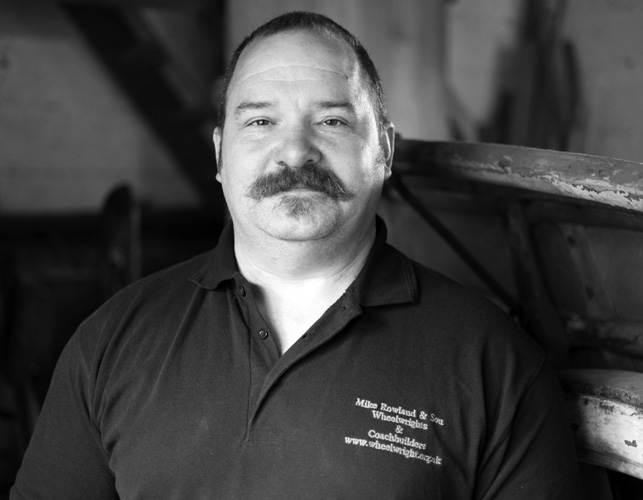
Greg Rowland

‘I live in Honiton now but I was born and bred in Coly View, Colyton and moved to Honiton after I left the army. There’s quite a few generations of us in Colyton. We go back as far as 1331, starting in Upottery as wheelwrights, as they made the carts and wagons that took the stone from Beer Quarry caves to Exeter cathedral. Records were found in the diocese of Exeter, they were called Roland then and a bill was found for making wheels for a Great Wagon for 7 shillings and 10d. There is also mention of a John Rowland in Yarcombe making wheels in 1360.

My dad, Mike Rowland, came from Payhembury but in 1780, at Road End Green in Colyton, my direct fifth great grandad was a wheelwright, just 150 yards from where we are now. He apprenticed in Honiton for Hansfords, a local building company. His dad was at war, so he used to go out and mend the farmers wheels; he basically built half of Honiton’s carpentry after the war. Then, in 1964 he started a timber yard and wheelwright shop at Road Green Dairy. My mum, Doreen, was from the Virgin family at Cadhayne Farm, they met at a Colyford dance, dad was a bit of a rogue! My grandad, Reg Virgin, had, what was once, the oldest house in Colyton, at the yard here, but it was burnt down in 1970. They wanted to build a new house, Coly View, the other side of the yard, but they were told they had to burn the old one down to build the new one. The local fire brigade used it as a drill when it was burnt down, grandad put a haybale inside the house and set light to it. It’s shocking to think that was the rules in those days; burn one down to build another.

I always wanted to join the army, so, after I left Colyton Grammar School at 15, I joined up. I went to Arborfield Garrison in Reading and joined the Royal Electrical and Mechanical Engineers. I wanted to join the Marines but someone advised me not to as it doesn’t get you a decent trade. I left when I was 21 in 1991 and I started up the Forge just over the bridge, it used to be next to the Bear Inn, built in the 15th century. It wasn’t being used so I fired it up, having learnt to be a blacksmith in the army, and I ran a traditional forge there. That was during the heart of the recession so just a few years later, I basically moved my metal shop from there to here—to dad’s wheelwright shop. There wasn’t much work and I needed less overheads. I sort of eased into wheels and carriages, at the time, dad was well known for making brewery drays, and other heavy horse stuff. But, then the 1989 Beer Orders forced breweries to sell off a number of their pubs, and overnight loads of orders were cancelled. What we make is usually a luxury or a piece of history, so when money gets tight, we are the first thing that has to be put on the backburner.

My normal week consists of five days here at the shop plus two day and two night shifts a week, working as a firefighter. I became a retained firefighter in Colyton about 25 years ago, and not long after, I met my wife Nina. She’s a nail technician and has her salon in the garden; it’s a thriving business. She’s very artistic and often paints flowers on the wagons. We have two girls together, Daisy and Lilac. Lilac was named after a lilac bush that grows by the old house. It just stuck in my mind. Both went to school at Honiton; Daisy is a carer/enabler for adults and children with learning disabilities, enabling them to live as normal as possible. Lilac is at Exeter College.

I’m now the Royal Warrant grantee here, and I’m responsible to adhere to the rules of it within the company. So, to gain the warrant you have to work for one of the royal households for five years and then you can apply for the warrant. It goes through a vetting process and if you are granted the warrant it gives you the right to display The Royal Coat of Arms.

I’ve always classed my work here as being halfway through a 50-year apprenticeship. I never stop learning and dad is a font of knowledge still. We’re very rare as we are the only father and son Master Wheelwrights in the whole world. There’s probably only about 25 Wheelwrights in this country, about 10 of which are Master Wheelwrights. Master means working in the trade for 10yrs with excellence and is bestowed by the Lord Mayor of London. I became a Master Wheelwright first in 2014 as I had the apprentice. With over half a century of experience, dad was made a Master Wheelwright in 2016. What it means in historic terms is that we can own and run a company within a square mile of London and employ other wheelwrights.

George Richards, a seventh generation carpenter in the town, came from Axe Valley School. He wanted to do work experience with me and the school wouldn’t let him as I didn’t have the insurances. But George and his parents wrote a disclaimer so he could do it. I’ve had quite a few kids doing work experience since and I like to give them something to make—so it’s usually a mallet—something useful to take home with them. George made his mallet and made a good job of it, so, I got him woodturning on his first day and could see a spark in him. I got him to make a hub for a cartwheel and it was good enough to go out on a job which demonstrated to me that he had something about him. After that he started working Saturdays here for a bit of pocket money. That ended up with Exeter College wanting to do a pre-apprenticeship appraisal which I knew nothing about—George arranged it but forgot to mention it to me! But it worked out well and I’d struggle to function without him now. My turnover now is 80% up.  He’s a definite asset, he’s 21 now and been here about 6 years. He was apprenticed on the Livery Companies Apprenticeship scheme from London, so he’s well known in the city.

Wheelwright groups used to be tight knit. I’d never set foot in another Wheelwright’s shop. George opened it up so a wheelwright came to us, to assess him, to pass him out. It used to be quite insular but social network opens it up a bit now, but still not a lot. We’re probably the biggest, repairing or making about 200 wheels a year. We all do it our own way, you can’t re-invent the wheel but there are different ways of working. We do any kind of wooden wheel—military, canons, guns, we’re quite specialist with guns. Anything horse-drawn, farm carts, trade vehicles, right through to fine horse-drawn carriages.

We did the barrels and buckets for the Gladiator film. Covent Garden was a big one. They re-introduced the barrows to Covent Garden which had long since disappeared and the social network coverage of them is just huge. We are currently making wheels for the Chitty Chitty Bang Bang car. A lot of our work is in London, but I go all over the country picking up and dropping off work.

George is now a Journeyman which means he’s free to develop his trade, journey around other businesses to learn more.

Dad’s slowing down a bit at 81 years, but I don’t think he’ll ever stop. He’ll stay involved for as long as he can.

My little piece of my own time is on my bike, I have a Triumph Sprint GT. Obviously, it helps that I was a bike mechanic in the army so I can look after it myself. It’s my general transport to work but I do a few ride outs. I recently did the Blood Bikes ride out as a charity one.

Family time is important and we try and take a couple of city breaks a year, we’ve done Amsterdam to see Ann Frank’s house recently. Off to Croatia this year. We enjoy soaking up the history of other countries when I’m not re-building history at home.’

Future Shock

We live in troubled times—particularly as there are so many future unknowns. Shock Horror… By the end of 2018, who will be our Prime Minister? Will Trump still be President after the November mid-term elections? Will Brexit happen at all and—if it does—will I recognise it? Will Exeter City finally gain promotion to League Division One? And, after 205 weeks in the Billboard charts, will Ed Sheeran still be in the top ten by Christmas? And—if not—should I care?

Yes indeed. Answers to these and hundreds more vital questions remain hidden in the misty Future. But I can easily give you a clue as to what might happen because I will consult my trusty fortune teller ‘Kipper’. Kipper is not a fish, smoked or otherwise. He’s a beautiful dog—our family forecasting lovely lurcher and he is pretty reliable most of the time. OK, well… for some of the time anyway, when he’s not rootling about in our flower beds.

No doubt you’ve realised I ‘m trying to cash in on the global fame of other well-known prediction experts such as Paul the Octopus, Nelly the Elephant and Achilles the Cat. If these names are unknown to you, let me explain… Paul achieved Global Guestimation Glory eight years ago when he correctly predicted the results of footie matches during the 2010 World Cup. His success rate was reported as 85% which is impressive. Before each match, he was given two glass jars with tasty fishy snippets inside. Each jar was labelled with the opposing teams’ colours and whichever one he opened first was forecast as the winner. His foretelling success brought him fan emails and tweets from around the world but it also brought him hate mail and an outbreak of nasty online trolls. When Paul correctly predicted that Germany would beat Argentina, a top Argentine chef posted an octopus recipe on Facebook. Fans of opposing countries even sent him sushi-related death threats. Sadly, Paul has now passed away from natural causes in his aquarium tank in Germany, but I am paying homage to him here because we desperately need an accurate forecaster like Paul to tell us what’s going to happen in the World and also because (somewhat surprisingly) he was born at Sea Life in Weymouth. So, he’s definitely a local hero.

Nelly the Elephant had a bit of success in Euro 2008 when she kicked a football into labelled goals and she was followed by Predictaroo the Kangaroo who did so well at the fortune hopping game that she ended up with over 16,000 followers on Twitter. Yes, really—it’s true, but neither could match Paul’s celebrity status. And this year’s recent World Cup was disgraced by the arrival of Achilles the Cat, a congenitally deaf white moggy who (according to his Russian owner) was more accurate because his deafness makes him able to concentrate on the match in hand… This (you will be glad to know) was utter rubbish as his success rate plummeted to under 50% after Russia was eliminated.

Frankly, they would have had more accurate forecasts if they’d called me. I offered Kipper two identical bowls of dog food labelled England and Panama and he obliged by scoffing the England one in double quick time. As you may recall, England beat Panama 6-1, so that’s what I call a Result! He had other successes too including a warning that Croatia might be rather better than we were led to believe. I could have made a fortune if I’d listened properly to my dog! Obviously certain animals have a gift of second sight and are able to look into the future, so it’s basically a question of finding out which animals are best at it by a process of trial and error.

I would recommend trying all sorts of local wildlife in a bid to uncover any regional prophet(s). Seagulls landing on different coloured cars, mice nibbling bits of cheese, hamsters on wheels going anti or clockwise, goldfish swimming towards or away from marked labels… any method might work. I tried to ask a sheep’s opinion as to whether Brexit would take place next year, but it got bored and went back to gobbling the grass because it took too long to ask the question. I wondered if a passing chaffinch (very handsome) could choose between labelled sunflower seed or suet on my bird table, but it flew off and never returned which made it statistically unreliable. Maybe a slug would offer more accurate predictions, but I rather doubt it. This morning I offered Kipper a food bowl labelled ‘Donald Trump’ but he went straight out to the garden and did a poo. Perhaps this says it all. Only time will tell.

August in the Garden

In the summer of ’76 I had yet to progress from growing cacti to ‘proper’ gardening. By some strange alignment in the heavens, a few weeks ago, I acquired a collection of mature cacti in a chance encounter.

Having soaked them all in ‘Provado’, to rid them of their (almost mandatory) mealy bug infestation, the hot weather has allowed them to luxuriate outside, sunbathing against a sunny wall. As long as they get plenty of sun, to dry them out afterwards, even the occasional downpour won’t do them any harm. Cacti and succulents need to be kept dry during cold, gloomy, weather but, while they are actively growing in the summer, a degree of watering is required.

If writing about cacti hasn’t initiated an end to the current dry spell, then nothing will.

Without wanting to put a complete ‘damper’ on things; I’d certainly like to see some rain, if only to ensure that my herbaceous perennials stand some chance of staying alive until the autumn. On the watering front: I never irrigate lawns; I try not to water the beds and borders (except where the plants are newly planted); I hand-water my plants in pots and containers or else, even in a wetter summer, they’d die.

Remember—if you are having to keep annuals, tender perennials and bedding plants well-watered, then you will also have to add a balanced fertiliser to the water on a fortnightly, possibly weekly basis. Together with the unavoidable need to dead-head, feeding is important if they are to keep on growing and flowering right up until the first frosts.

Hot, dry, conditions favour weeds in their unquenchable desire to flower / set seed in as short a time as possible. Abundant water slows the actual ‘running to seed’ process, buying you a bit of time, but as soon as there’s a dry spell weeds rapidly flower, get pollinated and set seed before you know it. The trick is to nip in and remove them before they flower. If it’s an annual weed, not bearing seed, it can be added to the compost heap which is at its most active, and therefore hottest, during the summer months.

It is not recommended to apply chemical weed killers during drought conditions because they rely on the weeds being ‘in active growth’ to work. Hopefully, by this time of the year, weeds should be under control so holding off from a chemical attack, if you allow yourself the luxury in the first place, need not be too much of a bind. There is still bound to be time, at some point this month or next, to deal a blow to persistent weeds in order that they do not get a chance to overwinter.

The major task for me to start this month is the annual trimming of yew hedges. By this point in the year they have made a lot of soft ‘extension’ growth and this must be removed if the hedge is to remain a nice tight shape and within bounds. Newly planted yew hedges need to be trimmed, to encourage a dense, solid, hedge, but less drastically. Some new growth needs to be left in order that they grow taller / broader until they reach the planned height and width.

Once yew hedges have reached the desired size then they respond well to being trimmed back to the same height and shape each year. A minimal amount of new growth can be left, literally just a fraction of an inch, but otherwise a single trim around now is all they need. Eventually they will expand to the point where a drastic chop back is necessary but then they really come into their own because, rarely amongst conifers, they retain the ability to sprout afresh from even the oldest, brownest, wood.

I did have to chop back a yew ‘cone’, at the height of our recent spell of hot, sunny, weather, despite knowing that it would end up looking pretty poorly for a while. It was so badly overgrown, untrimmed for at least three years, that whenever it was cut back it would look unsightly for a while. The strong sun, on leaves which had not been subjected to unfiltered light for years, led to the inevitable scorching of the newly exposed foliage.

When trimming smaller specimens, especially if you are forced to trim box bushes during sunny weather, covering them immediately afterwards with sacking, or hessian, can reduce this scorching effect. It is unsightly but I know that the yew will produce new leaves, hopefully before winter is upon us, so living with the sun damage, temporarily, is tolerable.

On the plus side, all this sun has brought on the later summer stalwarts like never before. All the Compositae (daisy flowered) border perennials, such as the asters, heleniums, Helianthus, Inula and rudbeckias, which come into their own after the longest day, are responding to the heat and sunshine with gusto. Many are already coming into flower, much earlier than in a colder, wetter, summer, which is fine as long as a ‘weather eye’ is kept on them in the event that they need cutting back, to encourage a second flush of flowers, when they threaten to run to seed too soon.

Not all border perennials respond to being cut back, after flowering, by producing a second flush of flowers but it’s a good trick that’s always worth trying. You may be able to increase your chances of success by giving them a good soak, applying multiple cans of water, after chopping off the spent blooms. As a final ‘insurance policy’, watering with the same kind of liquid feed that you apply to annuals and bedding plants, does no harm and may be just what a herbaceous perennial requires to produce a fresh flush of flowers rather than begin to die back.

Anything fresh is good, especially now, when the heat and dust threatens to take the shine off even the most well stocked garden.

A Rural Walk Back in Time

A visit to Somerset Rural Life Museum sends Margery Hookings on a nostalgic trip into the past, as it tells the story of how things used to be in the countryside.


Many years ago, I visited Somerset Rural Life Museum as a child.

Or at least I think I did.

I have a vague memory of an enormous tithe barn and rows and rows of dusty, rusty farm implements. Maybe my memory is playing tricks on me. Maybe that’s just an image I have inside my head of what a rural life museum should be like.

Today, I’m heading across country to visit the museum, which reopened in June last year following a £2.4 million redevelopment. I get lost in the lanes around Glastonbury and then emerge on the Levels, the wonderful Tor rising from the mist above a field of grazing cows.

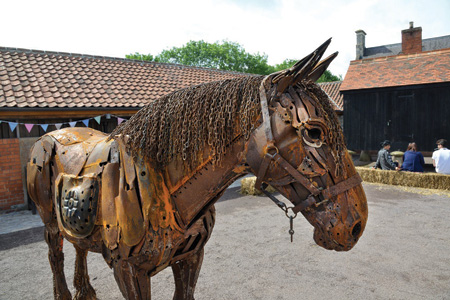
You can see Glastonbury Tor from the museum, where a life-sized horse called Punch, made from reclaimed metal by artist Harriet Mead, stands silently in what used to be the farmyard.

Strictly speaking, the museum is outside the Marshwood Vale Magazine’s patch. But it tells the story of Somerset’s rich rural and social history.  And as a tenant farmer’s daughter from Donyatt, it’s right up my street.

Wandering around this restored gem of a place, I’m transported back into rural life from the 1800s, submerged in the county’s heritage through landscape, food and farming, working life and rural crafts.

I’m struck by a display of wassail cups, one of which bears the words of a poem I know by heart and takes pride of place in many a rural home in this part of the world.

I put on a pair of headphones and listen to a short documentary about Cecil Sharp, the founding father of the folk-song revival in England in the early 20th century. It begins by telling the story of how Sharp and his friend, Charles Marson, the vicar of Hambridge, embarked on a five-year song collecting trip around Somerset after hearing gardener John England singing the folk song, The Seeds of Love.

I hear the voice of my late uncle, George Withers, singing the thwarted lover’s song which set Sharp off on his collection travels.

There are many stories contained within the museum’s rooms. A display on beliefs and superstition is captivating. A walk through rural social history in the new galleries in the former cow stalls reveals the hard life experienced by those who worked the land, in stark contrast to those who owned it.

Outside, there’s a cider orchard and a First World War allotment, fenced off to stop the sheep getting in and wrecking the carefully-planted rows of vegetables.

The museum is housed at Abbey Farm, which was built in 1894 by Stanley Austin, a prominent local landowner whose family made its fortune as sheep farmers in Australia.

From 1917, George Mapstone was tenant of Abbey Farm and lived here with his wife Louisa and their family. As well as dairy cattle he also kept sheep, pigs and hens.

When George retired in 1938 the tenancy passed to his son Bob Mapstone. In 1942, Bob bought the farm outright, together with 160 acres. It was bought by Somerset County Council in the 1970s and now comes under the South West Heritage Trust’s umbrella.

The site is dominated by the Abbey Barn, which was completed in the 1340s to store produce from the Glastonbury Abbey estates. Its stonework, fine carvings and magnificent roof reflect the abbey’s great wealth during the middle ages.

Exterior carvings include the symbols of the four evangelists (St Mathew, St Mark, St Luke and St John). At the gable ends are statues of the Virgin Mary and the figure of an abbot. The barn is mostly built from locally-quarried limestone.

The roof is made of oak, elm and chestnut and is one of the crowning achievements of West Country carpentry. Two tiers of crucks (naturally curved timbers used in pairs) support a covering of heavy stone tiles.

At harvest time the barn was alive with activity. Wagons were brought in for unloading through one of the huge doorways and left by the opposite door. Sheaves were stacked high to the roof, the many holes in the walls providing essential ventilation. During autumn and winter a stone floor that spanned the porches was used for threshing and winnowing the crops.

The abbey was dissolved in 1539, but the barn continued in use as a farm building until 1972.

Today, lighting and sound transforms the barn into a cathedral to rural enterprise. The original Mapstone wagon has been restored and is on display.

For more information, visit swheritage.org.uk/rural-life-museum

Vegetables in the Garden

It looks like this month will again be all about water management, with little rain in sight until at least September.

Crops that need most water are newly sown seeds and transplants, followed closely by leaf crops such as salads every few days, and fruiting crops like courgette and beans weekly. They still look at you asking for more water, but sadly will never look lush until they have natural rain and humid air.

I feel sorry for those of you without access to a tap on your allotments, and hear of gardeners struggling from home with 25-litre kegs in desperation. We have been watering with a hose here rather than a wasteful sprinkler which often gets left on too long when you forget about it.

Winter crops like celeriac and parsnip are not getting watered, as they will make compensatory growth if we finally get rain in the autumn. We have had to water our currant bushes which have shallow roots as some branches have died from drought in spite of a thick mulch.

On the other hand, yields with all this sunshine are high, the broad beans did well, potatoes and carrots are a good size even though it takes a pick axe to dig them out. Our carrots under Enviromesh are much bigger, and I see a day when I grow everything under this ugly stuff.

Outdoor tomatoes are doing really well, and the dry weather has kept blight at bay. They are bonkers plants that can grow 60’ high and keep flowering right through the winter in the right climate. Sadly, this doesn’t work in England and we have to pinch out the tops now and limit them to around 4 trusses—more than this and even a sunny September won’t ripen them.

This month you can sow spring cabbage, lettuce, spinach, dill, coriander, rocket, turnips, and orientals such as pak choi and Mizuna. Timing matters: for outdoor winter cropping of salad leaves sow early in the month. For indoor cultivation later is better or they may rise to seed. The idea is to get them well established before winter sets in, sowing late will mean they aren’t big enough to pick before the spring. Sowing in modules makes it easier to keep the seeds moist. And how do you get a baby to go to sleep? Rocket.

UPFront 08/18

At a small gathering of what one person described as ‘concerned citizens’, West Dorset MP, The Rt Hon Sir Oliver Letwin, suggested that the result of Brexit may well be that everyone will be very disappointed—but that no one will be able to spot much difference. He said that Remainers will be disappointed because the sky hasn’t fallen in and that Brexiteers will be disappointed because we haven’t entered Heaven. In fact, he believed it likely that nothing much will be terribly different from what it was originally—at least in the short term. This is a summary that many people will disagree with, but it highlights, yet again, the waste of time, money and energy spent on something that many suggest was a gamble initiated to try to keep the Conservative party together. It’s increasingly clear that it hasn’t succeeded in that, and many would say that taking a punt on winning a referendum was at the long-term expense of the country, and certainly endangered the Union of Great Britain. Clear-headed thinking might conclude that it’s unlikely that the City of London will become a ghost town after we leave the European Union and it’s also unlikely that hundreds of huge companies will completely relocate leaving an employment and economic wasteland—and it’s true that the sky probably won’t fall in. We are a sophisticated, intelligent race and should find a way to overcome whatever problems come our way. However, clear-headed, results-focused thinking is not what is going on in government—quite the opposite, it seems to be entirely self-focused individuals vying for the power to implement their own agenda. Whilst in the meantime, the real issues that drove so many people to vote for change remain with us. We have done nothing about the housing crisis; nothing to alleviate the problems with the NHS and little to help those who felt they were voting to show their discontent with austerity and the government of the day. It would be understandable to hear people describe current government manoeuvring as a circus but that might be seen as a gross insult to circus performers. Whilst I understand that, for some people, things may not change dramatically whether we leave the European Union with a deal or with no deal, what is worrying  is knowing that, in the context of dealing with the problems that this country faces, Oliver Letwin’s comment is spot on—we will not spot much difference.

Postcards from the 48%

In August, film Director, Producer and Distributor David Nicholas Wilkinson will come to Lyme Regis for a screening and a talk about his new film Postcards from the 48%. He spoke to Fergus Byrne about his motivation, his passion and his fears for the future of those that will live with Brexit.

With such a close margin in the 2016 referendum, the words ‘Brexit’ and ‘turmoil’ were always destined to spend a great deal of time together, and thus, inevitably, dominate this nation’s media headlines for a lot longer than any of us would have liked. For David Wilkinson, Director and Producer of the film Postcards from the 48%, it is precisely the fact that the margin was so small that drove him to try to put the views of the 48% across. He had no interest in trying to produce a balanced view of the different opinions in the debate about whether to leave the European Union, he simply wanted to highlight what he feels is the forgotten opinion.

He believes that the Remain argument has been all but closed down by most media because Brexit is ‘a done deal’. He points out that because news outlets have to report daily on what the Government are doing, ‘every day they’re putting forward the Brexit agenda. The only time we ever get a chance to put our own is in a kind of Question Time situation, and they always descend into arguments and insults.’

With acting credits that go back beyond Z Cars David has also produced and/or distributed over 40 films, TV and theatre productions and Postcards from the 48% is his third as Director. However, he is no stranger to the world of politics and credits his enthusiasm to pursue his need to give Remain a voice to an unusual source. A former business partner, the late Andrew Alexander, often invited David to his house in Sussex where Enoch Powell was also a guest. ‘Enoch and I became friendly’ said David. ‘I don’t think we ever agreed on anything but we always got on. I liked him, he liked me. Enoch was always Eurosceptic and he had the view that: “we live in a democracy, everybody may disagree with me but I’m putting forward my view and I have the right to do that and I will do it daily.” And that’s how David felt about making his Remain view. ‘I get trolled all the time by people saying “this is a democracy we won now f*%# off” and several of them use pictures of Enoch as their photograph. So his thing was; you always fight for what you believe in, and that’s all I’m doing. I’m putting the Remain point of view.’

In fact, so strong was his interest in making the Remain case that he banned anyone who voted Leave from working on the film—an edict that led to one hysterical conversation with a potential collaborator. He explained: ‘One of them came to me and said “David, you can’t do that, there’s a statute in EU law that states…” and he started to quote it and then stopped when he realised that he, as a Leaver, was using EU law to argue why he should work on a film that was supporting the EU. Bonkers! That’s how mad this whole situation is.’

However, that’s not to say that David doesn’t understand how we came to be in this position. ‘A lot of my relations are quite poor and live in the north and are very angry about lots of different things’ he explained. ‘We have seen lots of industry disappear and they’ve not really been replaced with anything. So you do have generations of people in sort of zero-hours contract jobs, where once you had steel and coal and textile manufacturing, and a pottery industry—and you had a job for life. I know people who said they voted to give David Cameron a bloody nose, and they won, they got what they wanted.’

Ironically, it appears that many of those voting to give what they perceived as an elitist government ‘a bloody nose’, may indeed have got what they wanted, but it turns out to be something very different to what they thought they voted for. Not only did many of the promises made by the Leave campaign turn out to be hollow, but the campaign itself was allegedly illegal according to The Electoral Commission.

In Postcards from the 48%, Boris Johnson’s sister, Rachael, makes it clear that a protest vote was an error: ‘They thought that a vote to leave was like giving two fingers up to the rest of the world’ she said. ‘It just showed, I think, unwarranted, cocky, rule-Britannia self-confidence that I didn’t think was justified. I think we’re stronger together.’

Matt Kelly, editor of The New European newspaper agreed. ‘This angry outburst that happened on June the 23rd 2016 had very little, in reality, to do with the European Union’ he said. ‘It had a lot to do with the failure of politics here in the UK.’

In the film, which is also presented by David Wilkinson, he points out, while walking around Stoke on Trent, that ‘when you’ve got very little to lose, voting for change is very attractive’. He highlights the irony that whilst one function of the EU is to redistribute money from wealthy areas to poorer communities, ‘it is likely that the most deprived Leave-voting areas of England will lose out if Brexit happens.’

But the failure of politics is not the only recurring theme for David. He found a deeply unsettling apathy from too many of those that will live through the Brexit aftermath and is frustrated that those people that are inheriting life after Brexit are not standing up to be heard. ‘So many of them just don’t seem to be fighting’ he says. He bemoans the lack of voice especially from those under thirty-five. ‘Very few of them were willing to be in the film. Many of them were just not interested. It will affect them more than anyone. There’s a real attitude there that they can’t do anything anyway.’

The attitude that people ‘can’t do anything anyway’ may well be one of the most worrying trends in youth politics, but another observation that David made, points to a general lack of fight in more liberal and socialist circles. Talking about those that push the hard Brexit agenda, which he believes will make the middle and working classes much worse off in the long run, he says that people have been fooled into supporting those that simply don’t care about them. Nigel Farage, he says, who ‘went to public school’ and ‘worked in the city’ is seen as a man of the people because he ‘drinks a pint in the pub.’ To David, this is simply manipulation of disgruntled voters. And talking about Jacob Rees-Mogg, the Brexiteer who has already moved his hedge fund to Dublin he says: ‘All these working-class leavers are saying “well, good for him, he’s a businessman he’s got to do what’s best for him”’. However, in the ‘not too distant past’ he says ‘that Lord Snooty person would have been an enemy!’

Even more depressing and a sure sign that the ‘divide and conquer’ rule is being cleverly applied to anyone that might stand in the way of Brexit, is what David described as the ‘bickering’ that goes on between the various Remain groups. ‘None of them appears in the film as an entity’ he says ‘but some of them approached me saying “we will happily give you £150,000 to make your film but we must present it”’.

David had hoped that those wishing to put forward the views of the 48% would just get round a table and thrash it out. ‘I come from the theatre originally’ he says ‘and that Esprit de Corps that we all work together I find is lacking in politics, particularly with Remain.’ The fact that some people wouldn’t participate because of conflict with other groups made him fume. ‘For goodness sake—this is about stopping Brexit!’ A point that brings us back to the film and what he hopes to achieve by making it. He and his co-writer, Emlyn Price, trawled through about 65 hours of filmed interviews at Emlyn’s home in Frome in Dorset, to try and decide what not to include—a process known as the ‘paper edit’. That left them with 35 hours of what David described as ‘really good’ interviews which they then had to edit down to just 2 hours.

The list of contributors is impressive. Amongst them, Mark Constantine, the Dorset based co-founder of the British cosmetics retailer LUSH which has revenues approaching £300 million per year, makes the simple but glaringly obvious point that borders are never good for business.

Patience Wheatcroft, the Conservative Party Peer who was editor-in-chief of the Wall Street Journal, editor of the Sunday Telegraph, city editor of The Times and deputy city editor of the Daily Mail admits the EU is a flawed organisation but believes it’s better to reform it than leave it.

Alastair Campbell asks the question: ‘knowing what we know now about the Brexit that people have voted for, is it worth it?’ Because, he goes on to say, the Government don’t want the public to know the impact of Brexit because they know ‘it’s going to be bad!’

Postcards from the 48% obviously makes no effort to look at any arguments other than those that believe we should remain in the European Union. This gives the film a level of honesty and makes it attractive to those that hold a Remain view, but will it make any difference to anyone’s opinion? David believes that by releasing it he can reach a lot of people, especially those that now wonder if they made the right decision. ‘I know if it goes on television that Leavers will watch it. They’ll never admit to watching it and some of them will never change their minds, but others will go “hang on I didn’t know this and I didn’t know that” and some of them may change.’

Regardless of whether your politics lean towards Leave or Remain, Postcards from the 48% represents some of the views of nearly half of the voters in the 2016 referendum and therefore deserves a platform. At the time of writing, the words ‘Brexit’ and ‘turmoil’ are, if anything, more closely aligned than ever. Two cabinet ministers have resigned, the government’s White Paper continues to be a source of major dispute and Theresa May looks increasingly like a frazzled teacher trying to herd an aircraft hanger full of adolescent cats. In the meantime, that other mantra ‘Brexit means Brexit’ thumps out a bass beat that leaves only one question—does anyone really know what this country voted for in June 2016?

The Lyme Bay Marine reserve – a  story of success

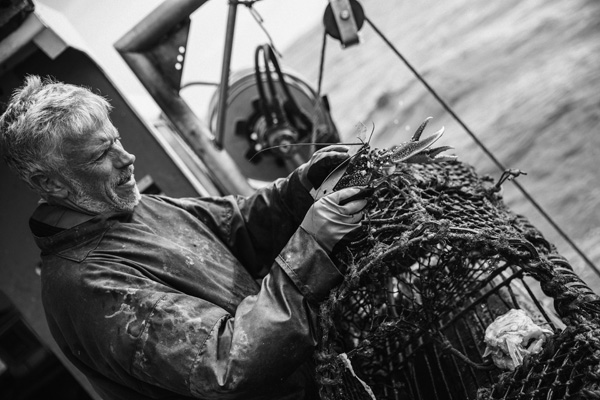
Aubrey Banfield, Lyme Bay Fihserman - photo Saeed Rashid

Amongst all the bad news about the state of the oceans—overfishing, dying coral reefs and plastic pollution—it is a welcome relief to hear of a real conservation success story where fishermen and scientists are working together to protect marine life and the livelihoods of their communities. It is particularly heartening to know that this story is unfolding on our doorstep, in the heart of Lyme Bay.

The Lyme Bay Fisheries and Conservation Reserve straddles the border between Dorset and Devon along the beautiful Jurassic Coast. It was created in 2008 with a Statutory Order that banned fishing with “mobile gear”, such as bottom-trawls and scallop-dredges, in an area of 60 square nautical miles. The reserve was further increased in 2010 to 90 square miles making it the largest of its kind in UK waters. Its aim was primarily to stop the destruction of nationally significant marine species, like the ross corals and Pink Sea Fans that are a particular feature of Lyme Bay. The ban on trawling and scallop-dredging not only allowed these and other delicate organisms to recover, but also led to a rapid increase in the number of lobsters, crabs, cuttlefish, sole and plaice that rely on a stable and structured seabed for food and shelter. News of the good catches in Lyme Bay quickly spread and attracted more fishermen from as far as Cornwall and the Solent. By 2012 the use of “static gear”, such as pots and nets, had increased to unsustainable levels, reducing catches and threatening further damage to the protected reefs inside the Reserve. The challenges for the Lyme Bay Reserve had in some ways just began.

To help address these management problems, DEFRA asked the Blue Marine Foundation to establish a multi-stakeholder working group in Lyme Bay. A working group was formed in 2012 of scientists, fisheries managers and fishermen from the 42 small boats (under 10 metres) that operate out of the four ports in the Reserve—Beer, Axmouth, Lyme Regis and West Bay. The initial meetings were challenging to say the least, as many fishers were still aggrieved by the Statutory Order of 2008 that they felt had been imposed on them by the Government. With the Blue Marine Foundation acting as facilitator, the working group managed to overcome these past conflicts and developed the Lyme Bay Fishermen’s Voluntary Code of Conduct.

This code of conduct includes restrictions on the number of pots and the length of nets that a fisherman can use, and also requires special tracking devices to be fitted to their boats to monitor where fishing occurs so that the fish can be labelled as ‘fully traceable’ under the Responsible Fishing Scheme. The code also requires that lobster pots be fitted with small hatches to ensure undersized lobsters can escape, and that cuttlefish eggs, which are often laid on pots and other gear, be allowed to hatch before the pots are cleaned.

Angus Walker, a long-standing fisherman from Axmouth and Vice-Chairman of the East Devon Fishermen’s Association (Seaton and Axmouth Branch) was originally opposed to the Statutory Order, which forced him to sell his trawler and buy a smaller boat. He now acknowledges the benefits that the reserve and the code of conduct are generating. “The fish in the reserve are of better quality, the sole and plaice are fatter and in better condition, and can fetch a higher price” he told me. He believes the “lack of disturbance of the seabed is helping to sustain a healthy food chain. The catches of lobster and crab have also improved, and this is helping to sustain the livelihoods of local fisherman”. John Worswick, a scallop diver who has been operating out of West Bay for the past 20 years, has also seen his catch increase—“Had the reserve not come in, I would not be in business as a scallop diver” he said with confidence. Nigel Birt, who fishes from Lyme Regis and runs the “Lyme Bay Fish Shack” also supports the Reserve: “It is helping to support our inshore fishing industry and hopefully attract younger fishermen into the sector. There is no doubt it is sustaining our fish stocks and increasing the diversity of species we can catch”. Angus, John and Nigel are confident that almost all the fishermen in Lyme Bay adhere to the voluntary code of conduct, because they understand the importance of conservation and have a vested interest in the future of their local inshore fishery.

Marine biologists from Plymouth University have been monitoring the Lyme Bay Reserve for 10 years, the longest dataset for any marine protected area in the UK. Their results show that the combined effects of the ban on mobile gear and the voluntary code of conduct have led to an impressive increase in the flora and fauna of reef species. There was an eightfold increase in the number of pink sea fans, with anemones, corals and sponges also recovering. These delicate animals are critically important in providing habitat for fish and shellfish. King scallops were estimated to be seven times more abundant inside the Reserve compared with areas still open to dredgers. Landings of scallops from inside the Reserve more than doubled between 2008 and 2014, and these fetch a 20% premium as they can be guaranteed “hand-dived”. In 2014, average monthly landings of edible crab were approximately 450 kilos—more than two and a half times those in 2008. Juvenile lobsters have increased fourfold inside the Reserve, and a recent report by CEFAS said “current voluntary measures are better than those in place in other areas of the country” and will “ensure the sustainability of the lobster fishery in the long term”.

These results are very impressive in themselves but to help fishermen further, the Blue Marine Foundation provided chiller units, cold rooms and ice making machines in the Reserve’s four ports.  The high quality and traceability of the catch from the Lyme Bay Reserve have allowed a new food quality label to be developed called “Reserve Seafood”. Wholesalers in London now pay a 10% premium for “Reserve Seafood” and provide a market for a wider range of finfish such as sole, plaice, pollack, mackerel and skate.

The Blue Marine Foundation is now looking to use the Lyme Bay model in other parts of the UK. Its success is due to wide a range of factors but central among them is the backing and engagement of local fishermen in all aspects of management. As Angus told me “scientific monitoring is very important and we are using an ecosystem-based approach, not simply focusing on single species…. In the future I would like to see the Reserve expanded as far as Portland Bill to the East and for us to have our own Reserve manager.”

While the future of fisheries management is full of uncertainties, one thing is clear, the inshore fishermen of Lyme Bay have taken control over the marine resources on which they depend and established their own successful model of collaborative management. The Reserve has become a flagship of which we can all be proud and should be replicated around our coasts.


Thanks to Angus Walker, John Worswick and Nigel Birt for sharing their insights and experience. Thanks also to Adam Rees from Plymouth University and Morven Robertson from the Blue Marine Foundation for scientific reports and photos. 


Owen Day, PhD. is a coastal scientist with over 20 years’ experience in fisheries, marine protected areas and ecosystem-based adaptation to climate change.


References:


http://www.lymebayreserve.co.uk/


https://www.facebook.com/LymeBayReserve/


Lyme Bay Fisheries and Conservation Reserve Ecological and Fisheries Data

https://www.dropbox.com/s/xbqewhyi1cxgwlv/Lyme-Bay-ecology-and-fisheries-data-2016-%20%281%29.pdf?dl=0


Lyme Bay – A case study: measuring recovery of benthic species, assessing potential spill-over effects and socio- economic changes

https://www.dropbox.com/s/hg2sxiec1nexvzy/Lyme_Bay_Closed_Area_Monitoring_2008-2010_MBI.pdf?dl=0


An evaluation framework to determine the impact of the Lyme Bay Fisheries and Conservation Reserve and the activities of the Lyme Bay Consultative Committee on ecosystem services and human wellbeing.
https://pearl.plymouth.ac.uk/bitstream/handle/10026.1/6742/Evaluation%20framework%20to%20determine%20the%20impact%20of%20the%20Lyme%20Bay%20Fisheries%20and%20Conservation%20Reserve%20on%20ecosystem%20services%20and%20human%20wellbeing_Final.pdf?sequence=1&isAllowed=y


Recovery of a Temperate Reef Assemblage in a Marine Protected Area following the Exclusion of Towed Demersal Fishing

http://journals.plos.org/plosone/article?id=10.1371/journal.pone.0083883
Lyme Bay Fully Documented Fisheries Trial

https://www.dropbox.com/s/l778kbgo1ozci58/Lyme_Bay_Fully_Documented_Fisheries_Trial_Final_Report%202.pdf?dl=0


Vegetables in July

Intercropping is a great way of boosting the amount you get off your ground, especially in the valuable but limited ‘hot space’ of a polytunnel.

Examples outdoors are to sow lines of carrots or parsnips between lines of established crops such as cut and come again lettuce as they slowly rise to flower. Mid-July is the latest for new sowings of these two, but if we have a mild autumn they’ll grow to a good size.

For most other crops we favour transplanting ready-grown module or plug plants, either shortly before removing broad beans and summer cabbage, or the day we lift the crop. Squash plants went into deliberate slender gaps in our rows of early potatoes in May and are ready to take over the space, their main growth being in July and even more in August.

In the polytunnel and greenhouse you can sow winter salads in August, or transplant in September, right underneath tomatoes. Then in October, you can sow carrots in between these new salad plants, cutting the tomatoes at ground level when they are done. That way you will be picking tomatoes all summer, salads from autumn till spring and sizeable carrots from April, all from the same space.

After the cold spring, it is remarkable how most crops have made up for lost time with excellent growth and yield. There was an awful moment when slugs went rampant after a good rainfall on 1st June, but strong plants somehow escaped damage.

By keeping weeds at bay, partly by not digging, party by compost mulching and partly by hoeing, you should only have a few small weeds after rain which are easy to hoe out. When the cucumber walked into the cafe, the waitress said: “Sorry, we don’t serve food in here”.

What to sow in July

As early as possible transplant or sow French beans, bulb fennel, beetroot, carrots, chard and salads such as lettuce, radicchio, endive and orientals like pak choi for hearting. Also winter brassicas—late calabrese, winter cabbage, spring cauliflower, sprouts, kale, purple sprouting, swede and Pak Choi for hearting. Growing in seed trays or modules gains you an extra month of growing time. By the end of July, you can start sowing outdoor overwintering salads such as rocket and dill.

Dib winter leeks if not already done.

Up Front 7/18

According to the Vegan Society, evidence of people choosing to avoid animal products can be traced back over 2,000 years. As early as 500 BC, Greek philosopher and mathematician, Pythagoras, is said to have promoted ‘benevolence among all species’ whilst following a vegetarian diet. However, it wasn’t until 1944 that Vegan Society founder, Donald Watson, gathered together a few like-minded individuals to discuss non-dairy vegetarian diets and formed The Vegan Society. These days it appears to be one of the most popular environmentally-initiated decisions taken by people who wish to contribute positively towards their planet. A recent survey by comparethemarket.com suggests that more than 3.5 million British people are now identifying as vegan. Although these figures are disputed by The Vegan Society as being a bit high, there is no doubt that many people are changing dietary habits because of concerns about the damage to the environment caused by meat farming. According to Gresham College professor, Carolyn Roberts, ‘from farm to fork and beyond, food accounts for about 20% of all our greenhouse emissions’ and she points to estimates suggesting that if all of our meat eaters switched to a vegan diet, it would roughly halve total greenhouse gas emissions associated with food. However, changing the world’s diet overnight is a little unlikely, but as Monkton Wyld’s Simon Fairlie, author of Meat: A Benign Extravagance, recently suggested, taxing meat as a luxury item may have a positive impact. His suggestion, published in an article in the Guardian last year, included an exemption for small livestock farms and options that might help reverse the drastic decline in the number of small family farms. Science has a role to play also, with recent research showing that the addition of seaweed to livestock feed could reduce emissions from cattle dramatically, by as much as 90%. But new research suggesting that root vegetables, such as sugar beet—a popular ingredient in cattle feed—could be the key to making stronger and greener buildings, is truly intriguing. The suggestion is that concrete mixtures can be strengthened and made more environmentally friendly by adding ‘nano platelets’ extracted from the fibres of root vegetables such as sugar beet.  Lead researcher, Professor Mohamed Saafi, from Lancaster University, believes root vegetable concrete could go a long way to reducing construction carbon emissions. This may have the makings of a virtuous circle—or at least a virtuous ampersand.