
Monday, December 22, 2025
Home Blog Page 32

Blimey it ain’t half hot Mum

After several weeks of blistering heat, our green and pleasant land has been transformed into a Saharan desert of brown and parched yellow. The sitting room and kitchen are too hot to enter and the previously cool larder is now a laboratory test area for huge clumps of rotten potato tubers and green shoots on deformed ancient veg. I’ve given up sleeping upstairs because of the heat and now sleep in a garden tent with both sides rolled up and a damp towel draped over my head. Everything is half-baked—even our southwest news which has been depressingly unimaginative. Where have all those silly summer headlines gone that we used to enjoy in past years? Where can I read such creative stories as ‘Local Alpacas Destroy Bridport’ or ‘Yeovil To Host World Cup’? I’ve been digging through the local newspapers and have now found several lateral items of local news that you may have missed during our long and glorious summer:

Sunburnt Sheep Treated Near Crewkerne: Local vets and volunteers have been called to Upper Sun Bake farm close to Misterton in south Somerset to administer sun cream to over 1,000 sheep suffering from severe sunburn. If you live in the area and would like to help, the advice is to first grab the sheep (easier said than done) and rub generous handfuls of the lotion into the wool and skin. Avoid the eyes and horns if possible. To avoid duplication, the sun cream is coloured with a scarlet dye so if you see a field covered with pink sheep, you’ll know that they have already been anointed.

Predator Fish In River Exe: Following record high temperatures, local residents suspect that a shoal of tropical piranhas has taken up residence in East Devon just north of Exmouth. A German family on holiday in the area told reporters they nearly lost several fingers and toes to the voracious fish while bathing near Dawlish Warren. Police have advised tourists not to swim in the estuary until the temperature returns to near normal. In the meantime, a Danish tourist has offered a reward to anyone finding her pet poodle ‘Twinkel’ which went missing near Starcross two days ago. It’s possible that the two events are connected.

Killer Courgette Attacks Dorset Housewife: Mrs Eileen Garden-Scenter had just turned her back on the rows of homegrown vegetables in her Dorchester allotment when a trailing courgette tendril reached out to trip her up. “It lunged out at me”, she reported nervously to a passing journalist. “We’ve grown and eaten so many of them this year, I reckon it wanted to take revenge upon me!” Police issued a number of warnings to amateur gardeners during the long hot dry spell. “Tomatoes and runner beans can be quite sneaky at this time of year” said PC Terry Triffid of Dorset Police. “However, courgettes are becoming very vindictive now that the season is nearly over. The lack of rain in July kept most of them in check, but following last week’s downpour, they’re on the rampage again with a vengeance. I advise everyone to pull up their courgettes immediately and burn them.” Our neighbour’s cat has been reported missing since Tuesday. It’s possible, as before, that the two events are connected.

Shark Attack in Weymouth Marina: A family of four from Nottingham plus their smart blue motor yacht (‘Dawn Daze’) with twin outboards plus sailing dinghy, oars and life vests have apparently all been swallowed whole by a gigantic shark in the harbour. The hot summer has produced a number of similar reported incidents from suspected tropical invaders including ‘Huge Crocodile Eats Seaton Tram’ and ‘200 Foot Sea Monster Devours Isle of Wight Ferry’. Of course, not all of these news stories are necessarily true. However, given the numerous international outbreaks of ‘fake news’, the authorities are worried that foreign tourists might become confused as to what is true and what is not. Hopefully last week’s news story of an assault by a heat crazed pterodactyl on a picnic party near Swanage may now be considered to be ‘fake news’, although I have to report that my grand-daughter’s pet hamster (‘Pinky’) went missing last Thursday and it’s just possible that both events are connected…

New Abbotsbury Tropical Gardens: Previously renowned as ‘sub-tropical’, the summer heat wave has transformed these gardens into a fully tropical rain forest with citrus groves, mango and pawpaw growing on the Dorset hillside. The accompanying gift shop now sells fresh tropical fruit instead of strawberries (‘Local Abbotsbury Bananas—only £1 a bunch’). The nearby Abbotsbury Swannery has lost its swans because they’ve flown north to Norway and Greenland to keep cool, but visiting tourists are rushing to view flocks of African pink flamingos gathered in the Fleet. Visitors can also feed the blue macaws and beautiful birds of paradise in the newly renamed Tropical Tarzan Toucan Walkway. Follow the new signs for “Baby Parrots Hatching”.

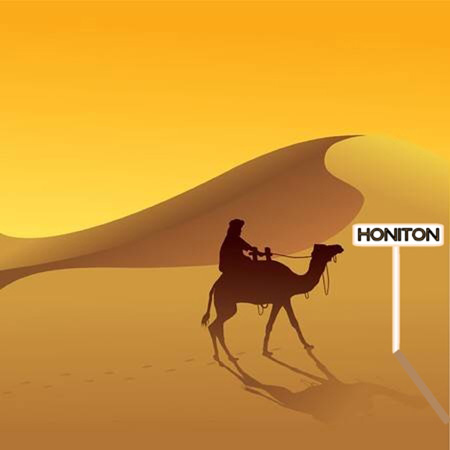
New Desert Camel Transport for Honiton: Mr Al Packer of Ottery St Mary has been training a herd of camels to safely carry passengers from Honiton to Exeter every Tuesday and Friday. “They are so much more comfortable to ride than llamas” he told reporters, “besides which, camels don’t spit at the customers anything like as much as llamas. They are also very low maintenance and don’t need any water all day. The only downside is that camels do bite if they get upset, so I advise passengers to just sit tight and not move around too much in their saddles.”

Other lateral and entirely fake news stories include the Marshwood Vale being officially renamed ‘the Marshwood Desert’ and its relaunch as a huge children’s sandpit. And you can also read about “Heat Crazed Hamster Swims Channel” and “Angry Camel Bites Exeter Bus Driver”, although none of these events are connected.
Eco homes project a first for Bridport

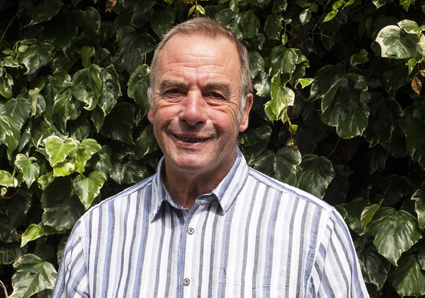
In early August, representatives from ‘Smart Communities’ presented a proposal for a new Eco homes development at a Bradpole Parish Council meeting. Focusing on offering affordable housing to people from in and around Bridport, the proposal includes building 215 rental homes at the base of Watton Hill. Leader of the project and founder of ‘Afford a Home West Dorset’, Roy Mathisen explained to Fergus Byrne how the project could be yet another first for Bridport.


On Radio 4’s Any Questions recently, the Rt. Hon James Brokenshire MP, Secretary of State for Housing, Communities and Local Government, reiterated his claim that the government has allocated £9 billion in investment for affordable homes. He admitted that there had been a ‘lack of focus’ on affordable homes over ‘many many decades’ but claimed that over the course of the current government, 1.1 million homes have been built and that 378,000 of them have been ‘affordable’.

It is the word ‘affordable’ that makes Roy Mathisen, from ‘Afford a Home West Dorset’, fume. The government’s definition of affordable rented housing is ‘80% of private rents’ he explains. However, a quick calculation around median income in West Dorset and the rise in house values shows that the government’s definition simply does not apply here. What Roy describes as ‘Generation Rent’ is unable to buy or rent a home because house prices and rents have outstripped wages. According to the Office for National Statistics, he explained, in the south-west, median house prices were 3.5 times earnings in 1997 but by 2016 were 8.5 times earnings, meaning that buying property is well beyond the means of many of those who need housing. West Dorset District Council figures show that over 400 households in the Bridport area are either homeless or unsuitably housed.

Roy moved to Bridport in 2013 and was appalled by how difficult it was for people on lower incomes to get onto the housing ladder. ‘I just couldn’t believe how much housing poverty there is in West Dorset and indeed in Bridport’ he says. ‘Everybody in Bridport who can afford to buy a house has already got one’ he claims.

He explained that in 1919 the Addison government built houses under a programme called ‘Homes for Heroes’ which made local councils responsible for delivering subsidised affordable housing— ‘Council Houses’. But when the 1980 housing act gave people the right to buy their houses, the programme of building social housing simply stopped. ‘When Margaret Thatcher announced a programme of letting people buy their council houses, I thought “That’s good”’ said Roy. ‘But after researching the matter I realised that there were two other things in play: one was that she stopped councils from building new council houses and two, she didn’t replace those that had been sold to tenants.’

Successive governments continued championing a programme of home ownership whilst ignoring the fact that loose money supply through Quantitative Easing led to increased house prices whilst incomes were almost stagnant, particularly among the lower paid. If wages didn’t go up at the same rate as house values, then large amounts of people couldn’t afford to buy a home. ‘All of the housing initiatives that you see that the government’s come up with,’ says Roy ‘are all aimed at people buying. It’s all about home ownership when the great need is affordable rented and shared ownership.’

On Any Questions, the Liberal Democrat MP, Norman Lamb, pointed out that the number of social houses being built is at a ‘scandalously low level’ saying that there was ‘no new money for social housing’ in the government’s announcement. ‘There is genuinely a housing crisis in our country’ he said. ‘Many of us aspire to home ownership and rightly so, but there are some people who can’t afford it who need a good home to live in and we should provide for them as well.’

Roy Mathisen’s frustration led him to found ‘Afford a Home West Dorset’ and along with colleague Vince Adams, they launched the project at Bridport’s Electric Palace in May last year. Their initial goal was to create a fund that might help grow the amount of affordable housing in the area.

Little did they know that what they started may become an initiative that could be replicated throughout the country to help alleviate the housing crisis.

Roy realised that the two key problems are obviously money and land. ‘We are in times of low-interest rates’ he said ‘and I thought to myself “there must be billions of pounds just sloshing around looking for a home that will give a reasonable return and security.” So I had this idea of setting up a West Dorset affordable housing fund.’

He took his proposal to Rt Hon Sir Oliver Letwin MP who encouraged him to pursue it and wrote to the CEO of a  major city institution who agreed to set up a meeting. Vince Adams, a retired marketing and international food businessman who had chaired Sturminster Newton’s Transition Town committee, and Roy travelled to London and had a very fruitful meeting at which they discovered the possibility of obtaining private finance for affordable rented homes. Vince introduced architect Jonathan Lovett to the project.  Between them, they developed an Eco model of house building to make home development more sustainable, as well as affordable. Thus the idea for an Ecovillage was born.

The city institution expressed their support in principle for a venture that might help alleviate the need for affordable housing. Soon afterwards, inspired by the launch of the project at the Electric Palace, representatives of the Watton Hill Trust offered land on which to build the first Eco and affordable project and thus the Watton Village Smart Community concept began to develop.

Roy explained how it will work. The institution financing the project leases the land from the Trust for a period of 40 years and builds the homes. Two key points here, he says, are that the land is not sold and that the homes will retain their affordable tenures in perpetuity. Roy explained that the first call for the rented homes will be those people that are on the Bridport Housing Register.

On the surface, there is little doubt that this appears to be a project which could be replicated around the country to help alleviate our affordable housing crisis. However, Roy is keen to ensure that the Bridport proposal is fully understood before thinking beyond the Watton Village Smart Community project.

As it stands, the proposal is to build 215 homes for affordable rental, 44 shared ownership homes and 26 homes for sale. The location is land around the base of Watton Hill which is in the parish of Bradpole. The houses, all the same design regardless of whether for rent, shared ownership or sale, will include compressed straw-filled timber panels with a zero carbon rating. The design is such that, using photovoltaic cells, the properties will generate more energy than they use and excess energy may be sold to help keep rents low.

Architect Jonathan Lovett says: ‘Watton Village is an opportunity to build a real community, using simple, traditional materials, beautiful landscaping and the best renewable energy systems, in a development that will put Bridport at the forefront of affordable housing provision in the UK.’

It is hoped that Watton Hill itself will become a public recreational space, with wildlife protected and enhanced in partnership with the RSPB.

Energy consultant, Keith Wheaton-Green, believes the project has the potential to influence how developments could be undertaken in the future. ‘The Watton Village Smart Communities Project is—as far as we know—the first housing development that will generate considerably more electricity than it uses’ he says. ‘It’s a solar farm on rooftops, which is probably where most new solar farms should be from now on. There will be battery storage and electric car charging to time shift the solar generation. The dwellings will be so well insulated, and with minimal heat loss due to the mechanical heat recovery ventilation, that the latest generation air source heat pumps will provide all the hot water and space heat required. The site will have no gas connection and heat recovery from shower waste, energy efficient electrical devices and led lighting will mean very low energy bills for the occupants. All new housing developments should be like this.’

Like many proposals in their infancy, this all sounds perfect and although there will always be those whose questions on the validity of new initiatives come from a knee-jerk reaction to change, there are legitimate questions about the detail that have to be answered.

For example, where would the access to the development be? This is a potentially difficult issue that Roy explained has been fully investigated. The only access will be from a new traffic light system and pedestrian crossing near the Kings Head on the Beaminster Road out of Bridport. Roy says that a professional survey has been done which concluded that it is ‘perfectly feasible and will have minimal effect on traffic flow.’ In fact, the new traffic system would include a ‘green man pedestrian crossing’ says Roy, ‘which should enhance road safety.’

This access, he says, is not using Dodhams Lane but another access just south of it. He stresses that there will be no vehicular access to Pymore Road from the development. There will only be pedestrian and cycle access from the Pymore Road end and Roy hopes that many people will travel into town on foot or bicycle.

The question of whether this development will bring more families into Bridport, with extra cars and increased strain on the town’s infrastructure, elicits a simple answer from Roy. ‘The point of this development’ he says ‘is to properly house people who are already here.’

Although this project only affects an area at the base of the hill, will this lead to more development on Watton Hill? ‘Not at all’ says Roy. ‘However, we are interested in working with the local community if they wish to develop it to become more of a local amenity.’

Like any new initiative or development, there is likely to be a constant stream of questions that will arise as more details of the Watton Village Smart Community are announced. However, initially, this is an idea that appears to be born from a genuine wish to offer affordable homes in an area that badly needs them.

A development whose prime goal is 90% affordable housing as opposed to those that put affordable housing as a much smaller percentage of the proposal, is unusual, and in this case, it is one that has clearly been looked at from an environmental standpoint.

Roy Mathisen never dreamed that his small fund to help affect change to housing problems in Bridport might grow to something that could be replicated throughout the rest of the country but he is hopeful that it might.

‘Smart Communities’ is presenting its proposals to Bridport Town Council on September 24th. For more information about the project visit

http://smart-communities.co.uk/wattonvillage/

Dorset’s Tropical Rainforest

Chalk grassland, with its colourful wildflowers and multitude of insects was once a common sight in a Dorset summer. It is the landscape defended by the Cerne Giant and where, in Far from the Madding Crowd, we first meet sheep farmer Gabriel Oak. In the 20th century, however, much of Dorset’s chalk grassland disappeared following changes in farming practice, although small areas survived, usually where ploughing was too difficult. So, when I heard about the visit to Higher Coombe, an area of chalk grassland above Litton Cheney, as part of the South Dorset Ridgeway Festival of Discovery, I jumped at the chance to see this ancient landscape and its exuberant floral displays.


We gathered near the entrance to Coombe Farm just off the busy A35. Despite this being only a few days away from the summer solstice, the sky was overcast and a cold, blustery wind cut across the ridge sending many of us to grab warmer clothing. The coombe fell away to the south, a deep gash in the chalk with precipitous grassy sides and extra folds and creases giving the landscapwe the look of a rumpled duvet. A farm track clung to the eastern side of the coombe and higher up, near Coombe Coppice, sheep dotted the hillside. Beyond the coombe, occasional shafts of sunlight illuminated the Bride Valley and its patchwork of green fields. The sea should have been visible but a distant mist had taken its place.

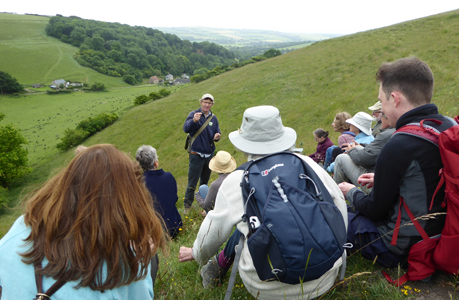
Local expert Nick Gray, from the Dorset Wildlife Trust, was our guide for the afternoon. He began by shepherding us through a farm gate on to the western slope of Higher Coombe to follow a rough contour along the hillside. Walking was difficult, there was no distinct path in the long, thick grass and the steepness of the hillside made it awkward to pause to observe. But there was plenty to see: architectural clumps of thistles with their purple mop heads, many different species of grasses and, where the turf became shorter, a mosaic of colourful wild flowers lighting up the hillside. My attention was drawn by the violet-purple splashes of wild thyme with its distinctive tubular flowers but Nick made sure we also noticed the tiny white trumpet flowers of squinancywort with their delicate pink stripes. The buttery yellow flowers of bird’s foot trefoil were also scattered about the hillside together with frothy lemon-yellow clumps of lady’s bedstraw and the delicate golden globes of black medic. A few lilac-mauve discs of scabious and pink-purple pyramidal orchids added to the display. These were just a few of the diverse plants growing here and it has been estimated that chalk grassland can support up to 40 different species of flowering plant per square metre. It is one of Europe’s most diverse habitats, the European equivalent of the tropical rain forest.

So, why is chalk grassland such a rich habitat? The soil that covers the underlying chalk hills is a great influence, as Nick explained to us. Thin, lime rich and nutrient poor, it holds little water especially on steep slopes and dries out quickly in the summer.  These stressed conditions mean that lush grasses cannot dominate and a wide range of chalk loving species can flourish. Good management with controlled grazing is also essential to keep the turf short, stop scrub developing and at the same time allow chalk grassland plants to grow. The land on both sides of Higher Coombe is managed through a stewardship agreement with the farmer whereby, for about six months each year, grazing animals are excluded on one side. When grazing stops, the grassland explodes into flower and this year the western side is getting its chance. Next summer it will be the turn of the eastern side which will be ablaze with orchids.

With this profusion of flowers, I had expected to see many invertebrates but, that afternoon, there were very few flying. Bees in particular were scarce and we saw only two bumblebees all afternoon. Perhaps the cool air, the lack of sunshine and the encroaching sea mist were restricting their activity?  We came across two large golden-ringed dragonflies resting among the vegetation on the hillside, unable to fly in these weather conditions. This did, however, give us the chance to examine these normally mobile creatures with their striking yellow bands on a black background. Later on, as we walked through another field on the eastern side of the coombe, we disturbed many small butterflies which seemed to be sheltering in the long grass. In part compensation for the lack of flying insects, there were some beautiful bee orchids and common spotted orchids on this second chalk hillside.

But should we care about the decline of this special and once common habitat? The loss of wild flowers will certainly have affected the beauty of our countryside, as well as contributing to the well-documented decline in insects and farmland birds. There is also evidence that florally-rich chalk grassland provides healthier forage for grazing animals as compared to contemporary feeding on heavily fertilised rye grass. Perhaps, had we been aware of the importance of the chalk grassland landscape, we might have valued it more?

If you want to see some of the remaining pockets of this special landscape then try Eggardon Hill or Maiden Castle or the Cerne and Sydling Downs or, further afield, visit Ballard Down in the Purbecks or Hambledon Hill and Hod Hill north of Blandford. Chalk grassland is glorious at any time of year but the best time for flowers is from spring until early autumn.


Philip Strange is Emeritus Professor of Pharmacology at the University of Reading.  He writes about science and about nature with a particular focus on how science fits in to society. His work may be read at http://philipstrange.wordpress.com/


The Dog Rose

Recently my attention was drawn to a line of poetry about the Dog Rose which we may not often see in these days when hedgerows are cut back by equipment on a tractor, but was more common in my younger days when a farm worker cut the hedges into shape with hand tools. The short reference is: “Unkempt about those hedges blows, an unofficial English rose” by Rupert Brooke.

The Dog Rose has a scientific name “Rosa Canina”. It grows naturally in hedge rows with delicate pink and white blooms which result in rosehips. In wartime children were exhorted to collect the ripe hips to be converted into rosehip syrup as it has a high vitamin C content which is beneficial for the skin and to help arthritis etc. I believe it may still be available at chemists counters, although vitamin tablets are now common.

In the days before the NHS our village, in common with others, annually held a “Hospital Sunday” when the grounds of a large house owned by two spinster ladies, the Misses St George were opened to all and the nearby town silver band played, “followed by a silver collection” in aid of the local Cottage Hospital. When very young  I was confused as the nearby public house was the “St George and the Dragon”. Other villages and towns had flag days for the same purpose.

Many people joined a Friendly Society, paying a regular membership fee in case they became ill and required a doctor or hospital visit, which would be paid at least in part by the society.

All of this changed 70 years ago when the National Health Service came into being, the subject of recent celebrations. The then Health Secretary, Aneurin Bevan introduced the scheme in July 1948 which he launched from Park Hospital, Manchester, now known as Trafford General Hospital. It has been said that he was influenced by his younger memories of Tredegar. We all know and are grateful for the NHS as it has become. But what was it like before the NHS?

To examine the changes in our hospitals before and after I visited the Local History Centre of Bridport Museum and looked at the files for hospitals  in Bridport , as an example of one local town.

The first general assistance for poor people was the Poor Law Institution, known as the “Workhouse” following the Poor Law Amendment Act of 1834. Bridport Institution was opened in 1837 in No 1 Bedford Place, Barrack Street to house 250 inmates. From 1929 it became an infirmary for 114 inmates until the NHS, when it became the “Port Bredy” geriatric hospital, so named after the description of Bridport  in several books by Thomas Hardy. It has since become private flats.

The Isolation Hospital was built near Allington Hill and looked after tuberculosis and diptheria patients. It was probably much needed in its day as earlier Bridport had also suffered an epidemic of Cholera in the early 1800s with 30 people dying  in South Street in five weeks, as noted by the Rector. It later became a Geriatric Hospital and in the mid 1980s housed Vietnamese Boat people.

In 1870 St Thomas’ Cottage Hospital and Dispensary was opened in North Allington following donations, it was suggested people could “buy a brick”. It closed in 1915 and has since been demolished and succeeded by private housing.

Bridport General Hospital was built off Park Road in 1912 on land given by Colonel Thomas and Mrs Colfox. It took the place of the smaller St Thomas’ Hospital and opened in 1915 with beds for 18, later 30 patients and two private wards in 1931, when children’s  and maternity wards and an operating theatre were provided.  A Hospital League was formed in 1928 and continued until 1949. The General Hospital was transferred to Hospital Lane, North Allington in 1992 to the site of the old Isolation Hospital which was demolished in 1989. Its title became Bridport Community Hospital and was opened officially in April 1996 by Baroness Cumberlege.

A new Medical Centre was opened in West Allington in June 2007 by Oliver Letwin, our local MP and superseded the previous centre in North Allington. So the health care in Bridport developed within the National Health Service.

Before the Reformation by King Henry VIII and his son, some aid had been provided by religious “hospitals” from which the modern title descends. There were two in or just outside Bridport. The Hospital of St John the Baptist was just across East Bridge, inside East Gate on the town side of the River Asker, south of the road. Its main purpose was as a place of reception for guests, pilgrims, travellers and strangers, but probably they could help the sick. Records are mainly wills, the earliest of AD1209 in which Christine de Stikelane left a bequest to “the church of the Blessed John”. Other wills refer to the brethren and sisters there serving God and request that they pray for the soul of the person making the bequest, some of which were substantial. The wills were witnessed by up to 8 local dignitaries. The deeds referred to the Master or Prior, or Brother of the Priory, which became a private dwelling house after the Dissolution of the Monasteries. Before the Dissolution it is interesting to note that the Prior was fined 6d for taking a larger than lawful toll for grinding corn and apparently Killings Mill had been gifted to the hospital. In 1769 the hospital was rebuilt as the “Marquis of Granby” coaching inn and in the 19th century  it became the Granby Works, a leather shoe upper factory.

The other Bridport Hospital of the time was a Leper House of St Mary Magdaline, or Priory in West Allington, just west of the present Medical Centre. King Henry III granted protection to lepers in a Patent Roll of 1232 and it was endowed by John de Holteby, Canon of Salisbury in 1247. Once again there were bequests to the Leper House with requests to the Chaplain to say special prayers for the souls of the persons making the bequests. Also there were references to the brethren and sisters and “good doers” of the Leper House. In 1535 the Priory was valued at £6 plus the value of candle sticks and bells. At the Dissolution Henry’s son, King Edward VI granted the Leper House and lands to Sir Michael Stanhope and John Bellow in 1549. In 2003 local mason Karl Dixon produced a sculpture which the West Allington Residents Association erected adjacent to Magdalen Lane. It portrays a leper boy holding a begging bowl and bell.

Lyme Regis also had a leper hospital, founded by Carmelite monks, also known as White Friars because of the colour of their habits. Their Friary was founded in 1246 and was on the hill above the hospital, which was built around the Leper’s Well. A leper’s chapel of the Blessed Virgin and Holy Spirit was built nearby in 1336, as lepers were not allowed in public churches.

From the Middle Ages the only other aid was from local “Wise Women and Men” who produced medication from herbs and acted as unofficial midwives.

If you are unable to place the short extract about the “English unofficial rose” it is from “The Old Vicarage, Grandchester” by Rupert Brooke, 1887 to 1915. The poem ends with “Stands the church clock at ten to three ? And is there honey still for tea ?”, which may be more familiar.


Bridport History Society reopens for the Autumn on Tuesday September 11th in the Bridport United Church, Main Hall, East Street at 2.30 pm with a Programme change. Pat Hase is unable to attend, so Jane Ferentzi-Shepard   will talk about “Workhouses in Dorset”. All welcome, visitors entrance fee £3.

Cecil Amor, Hon. President Bridport History Society.

Alex Beer

‘From quite a young age, and throughout growing up, my Mum has always been a big influence on my view of life, particularly with regard to health and nutrition. I suffered badly from eczema as a child, and Mum would take me to a masseuse for treatment with all sorts of lotions and potions, so from the age of 6 I was introduced to the world of alternative and holistic treatments. I loved it, and more to the point, it worked.

Ours was a slightly mad household, with 4 young children. I have 2 older sisters, Victoria who’s now teaching, and then Gemma, who’s like the rock of the family. Having 2 older sisters when I was growing up was just fab; I also have a younger brother, Nick. We grew up in Dorchester, my early years at school there being quite troubled because we didn’t find out until I was about 5 that I was actually deaf. I had become quite good at lip reading and copying people, but I was really struggling with aspects of school, especially reading and writing, and I couldn’t understand why. But when one day my Mum asked me to do something and I completely blanked her, she realised something was amiss, and tests revealed the problem. After Damers First School, where I clearly wasn’t progressing, my parents sent me to Leweston, a private school, where the classes were much smaller, and with a lot of extra one-to-one teaching I was able to make up for lost time. My spelling is still fairly iffy, and I get really nervous if I have to read anything out loud in front of people, but my prep school years at Leweston, a bit reminiscent of Famous Five stories, were lovely. When the teenage years came along, things weren’t so great. I didn’t enjoy the sometimes hurtful gossip that girls of a certain age seem to find important, and developed an anxiety problem which turned into an eating disorder, one reason why I’m a bit obsessed with keeping myself healthy nowadays. I couldn’t wait to leave after GCSE’s, and went to Thomas Hardye School in Dorchester, which were the best 2 years of my school life. Everyone seemed so grounded, I made friends for life, and enjoyed being in the company of boys!

I was studying textiles, photography and art, and my goal was to get into Central St Martins in London. I was art obsessed, went to all the exhibitions I could, dressed really funky, and after a summer course there, I got a place on a foundation year. But London wasn’t what I thought it would be, neither in fact was the course, and I basically couldn’t afford to live there. My unhappiness led to the eating disorder returning, so I decided to leave, and study for an art degree in Bristol, where I had a good friend already, and felt more at home there. However, I seemed to have lost some confidence in my art; by now, yoga had become a big part of my life, which awoke my curiosity about different aspects of health.

My other passion, as a vegetarian, was making food. I was working in a bakery, making huge numbers of cakes then delivering them all round Bristol in a van. Providing food for people seemed to be fulfilling something in me I craved: it was both rewarding and creative, so I came back home and did a 2 year cooking apprenticeship in Dorchester, which taught me masses of invaluable knowledge, especially about flavour. But I was suffering from stomach problems, so I went to a nutritionist whose advice was to cut out dairy (I so loved my cheddar) and gluten (no more mushrooms on toast), and to consider trying a vegan diet. The effect on my health was immediate, and I took to it straight away.

My brother Nick and I then went to India for 3 months, both wanting to experience and learn about alternative cultures and spiritual ways of life. We went to ashrams, on yoga retreats, travelled and soaked up as much of India and its people, colours and excitement as was possible in the time. We ate in all sorts of amazing places, but I remember saying to Nick, we could do something like this. We both had skills—his were more to do with drinks, mine with food—and India had shown us, for example through Ayurvedic practice, how food could be healing as well as nutritious.

When we came home I decided to go on a completely raw food only diet. I learned a lot from that. I’d probably never been healthier, but I was maybe a bit too strict with myself. And the diet was a bit restrictive, especially socially, when going out for dinner, but I was determined to stick to it, and loved it so much that I kept thinking how do I share this with other people. I started making cakes and desserts with raw ingredients, and realising that no one else in Dorset was supplying food like this, I set up a little stall in Dorchester and started selling. I built up a small regular clientele, and would sell at small events and venues too. In London, a few people were doing this, but in America and Australia there seemed to be a growing culture of raw food, and I felt I needed to learn more about the whole subject. So on an impulse, I bought a one-way flight to Australia.

I went first to the Gold Coast, staying with friends of friends, and researching where might be best to live and find a job which would teach me the skills I needed. I lived with some Hare Krishnas for a while, then decided to go to Sydney, mainly because I knew about one café there where I could really see myself working. I got a job in a health food shop first, but spent all my spare time pestering the café to give me job. Eventually, they noticed my persistence, gave me only a couple of shifts at the café, then told me they were opening a new venue at Bondi and did I want to work there. So very quickly I had to move, find a place to live, and become a Bondi babe. The work was hard and long hours, but it was all health foods and completely vegan. The head chef was from a famous raw food culinary school in America, who taught me a massive amount, and I made great friends with many lovely people there.

I think maybe I’d gone to Australia with the intention of living there for good, and there was no doubt I loved it. But it’s a completely different culture, and after a while I realised how much I was missing my brother, my friends at home, and Dorset. My eczema was flaring up again, maybe a result of underlying unhappiness, so I came back home, and got my old job back in Dorchester. I was feeling a bit deflated, Dorchester not having quite as much panache as Bondi, but my Mum and Nick were reassuring me I’d soon re-establish friendships and find a worthwhile job. Nick and I were pinging out loads of ideas about working together, selling healthy dishes at festivals and food stalls in Bristol, but we weren’t really getting anywhere. Since going vegan, we’d always come here to Longmeadow to buy our organic veg, and one day my Mum said that they were looking for someone to take over the shop and café. I wasn’t keen to start with, reluctant to settle in Dorset and to commit to running our own business. But Nick thought it was a great opportunity, with the freedom to create something we both wanted to do, and friends encouraged me to go for it. So we went to the Princes Trust, put together a business plan, did an intensive business course, and were awarded a loan which enabled us to start our café, Feed the Soul, here at Godmanstone. We’ve worked hard to get here, but I feel so lucky to be creating food which inspires people, is good for them and the planet, and above all, looks and tastes great.’

Vegetables in September

Tomato maintenance this month is brinkmanship with blight about, although at the time of writing we have had less rain than most and there is no blight, even on potatoes, and what a pleasure that is.

Blight strikes tomatoes just when they are under maximum strain ripening sweet fruits. If you can bear to, reduce the number of trusses, especially on outdoor plants, as they need a lot of sun and heat to ripen. Watering the soil less helps, too.

We have had plenty of ripe peppers since mid-July in the greenhouses off plants germinated in high heat in February, as length of growing season is the deciding factor for both peppers and aubergines.

Establishing winter salads is another September task. From an early August sowing, outdoor transplants of spinach (varieties Lazio or Medania), Little Gem lettuce and orientals will see a plant large enough to be picked into late Autumn and survive most winter weather for more picking in the spring. Success doing this hinges on the plants being strong by the onset of winter.

Sowing rocket and Mizuna outdoors now should be productive right through the winter. If it’s mild then you may succeed with other orientals, slugs are the issue and mustards are fairly slug proof.

If you have a tunnel then winter salads are easier and more productive, the leaves more tender too. Good lettuce varieties are Little Gem, Arctic King and Red Grenoble, and for spinach try Medania and Lazio. Many people like to spice the flavour with the decorative Red Frills mustard, chervil, Tatsoi and the fastest growing of all, rocket and mizuna. And why can’t you grow fungi in a small garden? Because they take up too mushroom.

September in the Garden

Writing about the my cacti last month, regarding how they were luxuriating, outdoors, may have tempted fate a little because we have had a fair amount of rain since then. Having said that, we really did need it and it’s gratifying to see just how quickly  the dust dry land has turned back to a much healthier shade of green. I do get a bit bored with my annual, early summer, warning “not to water the lawn, however dry it gets” but irrigating grass really is a luxury our environment cannot afford.

One advantage of just how exceptionally dry it became was that, at the height of the drought, the grass wasn’t growing at all—which saved loads of grass-cutting time!

Now that we’ve had some rain, and assuming we continue to have regular downpours, it makes autumn planting even more important this year when it really has been too dry, from late spring onwards, to do any planting. If, unluckily, you did do a lot of spring planting then, unless you have been able to water it frantically, there is a good chance that those new plants have failed to thrive and some replanting may now be required.

Autumn was always the traditional time to make new plantings, especially before the advent of container grown plants, and a dry summer just serves to remind us that some old gardening practices still make a lot of sense. September will, hopefully, still be too warm and dry for planting ‘bare-root’ herbaceous plants, trees and shrubs but it’s a good time to plant pot grown plants as they will establish quickly, in the warm soil, and keeping them well-watered shouldn’t be a problem.

Something else I ‘bang on’ about every single year (writing about gardening is, by definition, fairly repetitive) is that it’s a really good idea to plant your spring flowering, autumn planted, bulbs as early as possible. This is because, like fresh veg in the supermarket, flower bulbs will deteriorate the longer they are out of the ground so it makes sense to buy them as soon as they become available in garden centres / mail order etc. and then plant them as soon as soil conditions allow.

The general rule is that the later they flower in the spring / summer the later you can get away with planting them but, on the whole, just obtaining your bulbs as soon as possible and getting them into the ground is recommended. There are always exceptions to every rule and, for me, ‘Foxtail Lilies’ (Eremurus) are the autumn planted ‘bulb’ exception—due mainly to the fact that they are not the ‘standard’ sort of bulb (don’t get me started on the botany perennating organs) but are actually dormant, swollen, shoot / root bases.

Eremurus are much more prone to drying out than more ‘normal’ bulbs due to the starfish shaped structure of their dormant rhizomes with a central, easily damaged, growth point. Some references suggest that they should be planted in the spring, just as they are coming into growth, but, in my experience, they are easier to obtain, and are therefore available at lower prices and in greater variety, at this time of year. Having said that, they are relatively expensive, compared to more common flower bulbs, so getting hold of them as fresh as possible and then planting them immediately (in a sunny, sheltered, well-drained, yet nutrient-rich, soil) is paramount.

On a completely different tack; September tends to be the last month when foliar applied herbicides are, according to their label recommendations, able to be applied. No doubt you’ll have seen that ‘Round-Up’, the trade name of the chemical weedkiller ‘glyphosate’, has been ruled, in the United States, to be carcinogenic and the manufacturer, ‘Monsanto’, ordered to pay £millions to the plaintiff.

My understanding is that the very nature of the way glyphosate acts to kill green plant material, by disrupting the chlorophyll making process in plants, means that its toxicity is very clearly linked to organisms that contain chlorophyll. The ruling in the States was made by a non-expert jury and not by scientists. Despite rigorous, long-term, studies by numerous bodies around the world, it has not yet been proven that glyphosate is harmful to humans when used as prescribed.

The oft repeated ‘factoid’ is that glyphosate, when subjected to ‘lethal dose’ trials, is less toxic than sugar… I’m not sure I’ll be putting that to the test any time soon but, in pure scientific terms, it does make sense based on the knowledge of how it acts on plants.

I completely understand that, if you are organic, then you may not want to use any chemical control at all. I, myself, use very few chemicals in my garden, as far as is practicable, but my choice to use a glyphosate based weedkiller is based on the fact that it is a lot less harmful to the environment than many of the broad spectrum herbicides that have been available previously. I still hold that to be correct and, as a scientifically trained horticulturist, I shall continue to use glyphosate until it is scientifically proven to be ‘dangerous’.

Back to less contentious matters; this summer, especially now we’ve had the return of slightly wetter conditions, has proved the value of ‘naturalistic’ planting schemes which have  been in the ascendant over at least the last twenty years. I remember visiting Piet Oudolf’s nursery, in Holland, in 1995 and being blown away by how fantastic his planting schemes were with their subtly different plant palette compared to the more traditional ‘English Country Gardens’ style.

It must have been around then that I bought my first Miscanthus varieties, mostly from ‘Green Farm Plants’ (John Coke and Marina Christopher), and I still have those huge, prairie style, grasses now. I must admit that they’ve mostly lost their variety names these days, because seedlings and divisions of the original plants are all mixed up together, but the three varieties of Miscanthus sinensis that I started with, and which are still identifiable, were; ‘Silberfeder’, ‘Strictus’ and ‘Malepartus’.

They get so huge that they are the backdrop to many areas of my ‘wider’ garden and are much less hassle than the shrubs which, in the past, would have performed a similar role. As a foil to huge, late summer, Compositae (daisies), Miscanthus are hard to beat. I especially like the clear-yellow, simple, elegance of Rudbeckia laciniata against a stand of Miscanthus sinensis ‘Morning Light’. This tall grass has a fountain shape and fine foliage with white, central, variegation to the leaves.

The great thing about this time of year is that it’s generally a pretty relaxed time, as far as gardening is concerned, as there isn’t anything that absolutely, without fail, on pain of death, has to be done right now………..make the most of it!!!

The Circus is 250 Years Old

Hurray—The circus is coming!

Yes, the circus more or less as we know it was first created in 1768. Philip Astley a retired cavalryman and war hero was its creator and he marked out a ring on an abandoned piece of land in Waterloo, London. Previously most horse acts had been in a straight line. He experimented with different sizes of ring to determine the best diameter for standing on horseback while riding around in a circle. Finally, he decided on a diameter of 42 ft (12.8 m) and this has remained the standard size of a circus ring since then. It is said that he decided this diameter as being best for centrifugal forces produced, but whether he had much scientific knowledge is not known. Presumably, as an ex-cavalryman he rode his horse around the ring and certainly his wife Patty did so, as one of her acts was to ride round covered in a swarm of bees. No doubt part of the acts included bareback riding.

Astley went on to find a number of acts to supplement the horse acts, acrobats, clowns, jugglers and strongmen. The advertisements for his shows were eye-catching describing “never before attempted” and similar claims. This information has been taken from an article by Dea Birkett of Circus250, now digital. Originally the performances were known as “Hippodramas” and Astley went on to create the Amphitheatre Anglais in Paris and the Royal Amphitheatre in 1795. As time went on circus included music in the shape of a mini-orchestra, even if it comprised only two or three instruments. Later, in 1825, the canvas tent, known as the Big Top was introduced by Purdy Brown. In living memory steam traction engines provided transport and generated electrical power for lighting the big top. These “showmans engines” provided additional colour with polished brass fittings and bright red, gold and black paint. Nowadays railway transport may be used between cities, or large diesel-powered lorries and trailers.

I was a very keen circus goer as a child and asked to go every time they appeared in our rural town. In those days many “wild” animals were involved including an intrepid lady in fishnet tights entering a lion’s cage and making it perform several tricks including showing its teeth in a roar with only a small whip for defence. I also remember a man putting his head in a lion’s mouth, but my father said it had probably lost all its teeth. The lady on the flying trapeze looked glamorous in her sequined costume, and there were always elephants, as well as horses and the smell of sawdust. There were two circus companies which come to mind and they usually had booklets describing their circuses for sale at about one shilling (12 old pence). One was Sir Robert Fossett’s and the other Lord George Sanger and I believe both had adopted their titles. They, or a stand-in, acted as Ring Masters, resplendent in scarlet tailcoats, striped trousers, cravat and black shiny top hat and the obligatory whip. I am surprised that Astley did not adopt the title of Major at least.

Clowns go back into history, long before the circus. The ancient Egyptians had a form of clown. Today we usually see two types, the White Face and the Auguste, or grotesque in a variety of costumes. The white face is normally the top clown, like the famous of recent past Pierrot, Joseph Grimaldi, Charlie Cairoli, and Grock while the Auguste is like a tramp in an overlarge suit who falls about and is a master of slapstick. Some clowns are musical, playing a number of instruments, frequently a clown playing the big bass drum leading the procession. Another clown act is an old motor car from which the doors fall off at intervals, as it is driven around the ring.

Locally there are old photographs of elephants processing along the streets of Bridport, without a car in sight, but plenty of happy onlookers. For example “Sally and Leila visiting West Bay”—did they go for a paddle? Bridport Museum in its Local History Centre has a photograph of four elephants being taken from the railway at Bridport Station to the circus in South Street, each ridden by its Mahout. The circus has changed significantly in recent years in respecting animal rights and we no longer see caged animals made to perform tricks or in a menagerie. But the circus continues to entertain us.

The Museum Centre Staff kindly found copies of advertisements for example “May 1892 Farewell Tour of E H Bostock’s Grand Star Menagerie and Circus of Varieties. Three Great Animal Trainers. The Young Cardono with four monster performing lions with the untameable Lion Wallace. Applaud the young Hero as he emerges from the Den. Fair Field, St Michael’s Lane, Bridport”. Another of April 1895 advertises “Prof. E K Crocker’s 30 marvellously educated horses, ponies, donkeys and mules—endorsed by popular praises the most Unique Exhibition of the Age. An entirely New and Novel Act entitled “Le Carouselle”, a Unique Act by 10 Beautiful Ponies at the Drill Hall Bridport”. Finally I found “Fourpawr’s Gigantic Circus & Hippodrome combined with Anderton & Haslam’s Monster Double Menagerie & Museum September 1896 with 150 horses, ponies and mules, 50 carriages and wagons, 40 star artistes, 300 beasts, birds and reptiles, 8 funny clowns, two distinct bands, a herd of camels and dromedaries, wonderful performing elephants—Special engagement of Captain Rowland the most daring lion tamer will perform with 5 distinct groups of savage animals”.

If you are not amazed by all the capital letters and claims, just note the following: Admission 3s, 2s, 1s, and 6d (This is the standard charge for all these shows at the time.)

You may question if the Romans had invented the circus? They had contests between gladiators and possibly wild animal shows and acrobats etc., with the public seated approximately in a circle in their amphitheatres, but were not performing in a circus ring. We may recall Maumbury Rings just on the outskirts of Dorchester, towards Weymouth. This is believed to have been a Neolithic Henge originally, with ramparts of earth and modified by the Romans as an open-air amphitheatre for shows of some sort. Later it was fortified by the Parliamentarians during the Civil War and more recently equipped with anti-aircraft guns in World War II, according to Bill Putnam in Roman Dorset. It has subsequently been used as an open-air theatre but after its modifications throughout history it is a far cry from the “Big Top”.

If a circus comes to a field near you, go along and recapture the atmosphere of the old shows and think of the daring Mr Astley.

Bridport History Society does not meet in August, but there is an exhibition in Bridport Town Hall by Bridport Heritage Forum from 1st to 19th August—“War, Peace and New Beginnings”.


Cecil Amor, Hon. President Bridport History Society.

People at Work Robert Mühl

“Follow the bubbles” to find Ocean Bathrooms in Bridport where Robert and Sharon Mühl are celebrating 25 years of trading in Bridport. No small feat for a business that was started with £2000 and a friend’s help. Last year, Robert was proud to welcome his two sons as Directors into Ocean Bathrooms, helping him open up another showroom in Islington, London recently. This showroom is going from strength to strength as Robert’s family become more involved.

Born in Bridport to a Hungarian father and East German mother, Robert was taught that true, steady, hard work and perseverance would prevail. Taking this approach, he spent weekends and school holidays working in Curry’s in Bridport selling televisions and washing machines, learning how to communicate and talk to customers. After leaving Colfox School he then honed his skills working for a company selling bathrooms and heating products to builders in West Dorset. Robert then spent the next few years repping for Grays Plumbing and Heating Merchants in Bournemouth specialising in the bathroom and heating arena. Until one day he took a punt in the on setting recession and set up his own company in St Andrew’s Trading Estate. Bolstered by his father who often helped him with deliveries and with Sharon’s support, he worked 7 days a week until the business slowly but surely started to grow.

His dedication paid off, so much so that years later he was able to move the business to  St Michael’s Lane, converting the former snooker hall to a modern bathroom showroom full of cutting-edge, innovative designs and working products. He is still full of enthusiasm for the bathroom industry saying “I have seen some amazing changes over 25years from avocado green, shell suites to cutting-edge wet floor shower rooms and beautifully designed freestanding baths, it’s changing all the time and I look forward to seeing more exciting products coming through to the showroom in the future”

When the bubble machine is switched off, Robert can be found relaxing with a sword fencing lesson or chairing a meeting of the Bridport Business Chamber, looking to ensure the future of businesses in Bridport and also taking Ocean Bathrooms into the next 25 years.

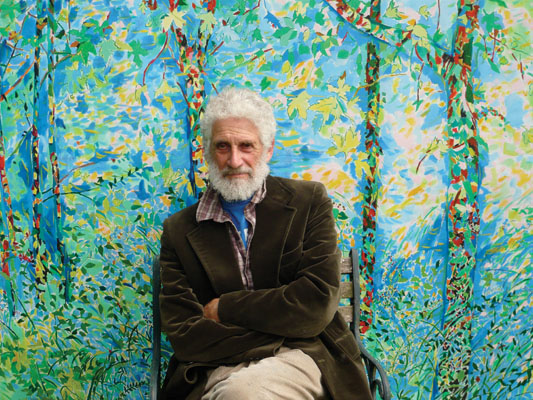
Philip Sutton at 90

‘I work in metaphors’, says Philip Sutton surrounded by his colourful, vibrant work in his West Bay home. He is eager to tell the story. ‘I saw something the other day, which I thought was a perfect metaphor for creativity’, he continues, ‘I often go for a walk around the harbour and on a busy, sunny Saturday a few weeks ago the whole place was filled with families, flags, sunshine, ice cream and chips, but amongst the chaos a small girl of about two years old was riding a bike with no pedals. She was flying, weaving between adult giants and completely lost in the activity, mastering the skill. No one noticed her, but I noticed her. Her bike wasn’t real, it was a toy, but she rode it as if it was real. She was totally absorbed in her task and her belief in what she was doing. For her, it was completely credible and engrossing and this, for me, is similar to the creative process. We are children of what we do’.

Philip Sutton is about to celebrate his 90th birthday and is as energetic and engaged in his work as a man half his age. His long career, spanning nearly seven decades, has seen many changes in the art world. He started working in the 1950s and paints large, lively, joyful works based on nature and portraiture. ‘My work hasn’t always been fashionable’, he concedes. As Abstract, Pop Art and installation grew in popularity, Philip continued to work from observation.

The sense of being an outsider has informed his working practice from very early on ‘I was a London child, so spent a large part of the war as an evacuee’, he says. Although he remembers only kindness from the people he stayed with, he was moved on frequently and developed an acute sense of loneliness. He has carried this feeling with him throughout his life and it is part of the reason he continues to paint.

‘Making work has always been about compensating for that sense of loneliness’ he says, ‘being completely captivated by the task in hand’. Despite being married for sixty-four years (his wife Heather died in 2017) with four children and an assortment of grandchildren, the sense of being an outsider is apparent. He found recognition very early on in his career, being accepted into the London Group in 1956 and elected as an Associate Royal Academician in 1977, he felt out of step with the art world. So much so, that in 1963 he decamped the whole family and went to live and work in Fiji for three years. ‘It was a particularly happy time for our family’, he recalls. It took six weeks by boat to reach Fiji in those days and cost £4000—a huge sum of money (a quick Google revealed it to have the spending power equivalent £79,000 today!). ‘I had a successful exhibition the year before’, he recalls, ‘many people advised me to pay off the mortgage, but we went on an adventure instead. It was money well spent’.

Time to paint in the way he wanted, free from the vagaries of the fashionable London art scene, was time to immerse himself in the business of painting, of training his eye. ‘Ultimately, it all comes down to trusting the eye’, he says.  ‘It is about taking the brain out of the equation and letting the eye do its job’. He describes trusting the eye as being like a child holding its mother’s hand—complete in the knowledge of being cared for—or treating the eye as like a camera with no one behind it. ‘I never know what is going to take my eye’, he says. ‘If I go for a walk around the harbour, I don’t go searching for an interesting piece of rope; however that is exactly what catches my eye that day, and I just need to be open to it’.

His lifelong journey has been about learning to trust the eye and the hand. The book Zen and the Art of Archery by the German philosopher Eugan Herrigel, has been a significant influence on him. The book, published in 1948, explores the concept of cultivating effortless physical skill through years of practice and letting go of conscious control of the mind. It is something to do with getting out of the way of the self (ego) and allowing the body to become at one with achieving a physical prowess. Philip concedes that, even at ninety, he is still in training. ‘There is no destination’, he says, ‘It is all about the journey’.

He believes it is a fatal mistake for an artist to succumb to the idea of talent. ‘Painting is all about listening to the heart’, he says. ‘Talent is something unquantifiable, like the taste of an apple. We all know what an apple tastes like, but it is impossible to describe’. Subscribing to the idea of being a talented artist takes away from the goal of allowing the hand and the eye to do their work. The concept of talent is all about ego and can only obstruct the artistic process in his view.

Philip studied at the Slade and went on to teach there for almost a decade. He describes the experience as overly academic.  ‘I couldn’t relate to the Great Masters’, he says. Art school, in his opinion, can derail young artists. ‘It is human nature to want to belong to a group’, he thinks, ‘and that can disrupt the creative process. Wanting to be part of something that everyone else thinks is a good idea is only natural, but the eye doesn’t understand what contemporary means’. If he were to offer any advice to a young artist, he says this—‘Find your language—a language you are comfortable with and practise it. All art forms have a language’, he says, ‘try and invent your own’.