
Monday, December 22, 2025
Home Blog Page 30

Arcadia – Interview with Adrian Cooper from Little Toller Books

What was the starting point for the film?

The past is another country, so people say. This was certainly a prominent thought when I first sat down to watch the old clips and lost films from the archives of the British Film Institute.

Towards the end of 2015, I first heard about the BFI’s plans to make digital the many thousands of hours of footage that made up what they called ‘the rural collection’. I got in touch with their head curator, Robin Baker, who was wonderfully supportive of a very vague notion of making a film from the material. It was almost a year later when Paul Wright, a young filmmaker from Glasgow), came to stay with us at Toller Fratrum. We shared the sense of alienation that came over us while watching these old, flickering images of Britain, particularly the scenes of folk festivals and celebrations.

Watching these old moving images is time travelling. And this idea become the centre of gravity for Arcadia. Being alien what we were watching seemed to speak not only of a personal response but also a generational disconnect from the land and the rural cultural that once thrived within it.


Was it challenging, going through all those hundreds of hours of archive film?

The challenge was less the physical act watching. The curators at the BFI are brilliant: they know their material. And we also hired somebody to watch the footage – there was simply so much of it! The real challenge was how to shape the archive footage into a film that could resonate audiences of today.

Meeting this challenge took us back to those early, personal reactions to watching old films. We tried to say No, the past is not another country. The past is always relevant, and perhaps always present. By taking lost and old footage, even if the subject matter contains things we may know little or nothing about, how we respond and give them a new context makes them relevant. By taking them out of the archive, dusting them off, and putting them together in sequences with other images that prompt different emotional responses: there is a kind of alchemy in this that cinema allows. Through the prism of the rural archive, Arcadia has also become a visceral commentary on our shifting – and contradictory – relationship with the land.


Was the original musical score an important part of this?

We didn’t want the film to have one particular voice, telling us a story or making an argument. There are no actors, either. So you need something to bind the images and moods together, to accompany and enhance the contrasting emotions and ideas that the images trigger. Music was essential to this, and I worked initially with Colin Greenwood from Radiohead to explore different approaches and genres.

From the start, it was clear that the idea of folk music could be problematic put alongside images of the countryside and folk culture – it could create a parade of nostalgia rather than allowing for the stranger, darker aspects of the film to unravel. Folk was still important, but there needed to be a blend of genres – soundtrack that melts across genres, from folk and hymnal to punk, acid house and rave. Once we had a rough first edit, Adrian Utley (Portishead) and Will Gregory (Goldfrapp) agreed to watch a cut – their influence on British music is huge and exactly the kind of genre-melting that the film needed. They loved what they saw (even if some of what they saw put them on edge!) and agreed to start writing for it.

Adrian and Will are the kind of composers who throw themselves in deeply, and they worked intensely together writing and playing and recording while the editing was finished. Arcadia also uses ‘natural’ sound: the wind in the trees, the pitter‐patter of rain, the mechanical changes in agriculture and our re-modelling of the land. Using these sounds sparingly and at the right time, the soundtrack worked with these moments to vary the pace and energy, balancing music, silence and sound around the broader themes and moods throughout the film.


How does the film reflect the historic and future work of Common Ground?

Founded in 1983 by Sue Clifford, Angela King and the writer Roger Deakin, it has become well-known and well-loved for initiating projects like Apple Day, New Milestones, Local Distinctiveness and Parish Maps. Common Ground is not a think tank or political pressure group. It’s a very small, grassroots organisation that collaborates openly to reconnect people with nature and inspire communities to become responsible for their local environment. Enjoying where you live and celebrating the connections you have with the wildlife and landscape on your doorstep, is at the heat of this work. In uncertain times, this kind of enjoyment and resolve strengthens community resilience and cohesion.

Cinema is just one way of celebrating, questioning and bringing people together. Not only is the process of making films collaborative, but the screening of films creates a community event, a coming together which is becoming harder and harder to do, especially in the countryside. With Arcadia complete, taking us on a journey through the contradictory ideas and images of the land we live in, Common Ground is encouraging communities to host screenings of the film to widen conversations about nature and the land. It is also working on new film project and exploring the imaginative use of archives and storytelling in education and conservation.
November in the Garden

Even if, up to now, it’s been possible to pretend that winter is ‘a long way off’, now that the clocks have gone back it really does feel that the garden has entered a new phase. Time is running out for planting spring flowering bulbs, the majority should already be safely interred, with the exception of the, ever popular, tulip. Tulips are best planted late, even into December, in an attempt to reduce the occurrence of the dreaded ‘tulip fire’ disease.
Anyone with half an eye on gardening trends, especially if you have an ‘Instagram’ account, can’t help but notice that home-grown cut flowers are ‘all the rage’. Tulips, like dahlias, are very photogenic and, come the spring, will feature strongly on every social media savvy gardener’s profile. If you want a guaranteed display then newly bought tulip bulbs, planted in fresh compost in an attractive container (preferably an antique copper washtub—a la Sissinghurst), topped off with spring flowering wallflowers, or vibrant violas, will provide plenty of photo opportunities come next April / May.
Ever since I used them ‘en masse’, when I worked for a garden landscape company, I’ve had a soft spot for lily-flowered tulips because they have an elegance of form which, whatever the situation they are used in, lends them an air of sophistication. Dark tulips, such as the ever popular ‘Queen of Night’, can be dramatically teamed with a white variety, my default is still ‘White Triumphator’, for a classic contrasting display. For many years now the bronze / gold, sumptuous, saturated, colours of ‘Abu Hassan’ have been sought after to the point where I am yet to grow it as it’s always sold out by the time I get around to placing my bulb order!
Now is the best time to get on with any gardening projects which require wholesale digging up and moving of established plants. With the exception of evergreen specimens, which are best moved in the spring as they begin into active growth, most herbaceous perennials and deciduous shrubs can be dug up now and moved around. This is because, this season, they are able to withstand the shock of being dug up, their roots disturbed and damaged, just in time to recover during their winter dormancy.
The soil is still warm enough that they can begin to repair and regrow, having been dug up and moved, and the lack of leaves, or top-growth, means that there is no demand to replace transpired water (moisture evaporated from the leaves and stems) so the displaced plant does not become desiccated. Also, from a practical point of view, the increased rainfall in the autumn and winter months ensures that your newly planted specimens will not suffer from drought.
It is these same factors which provide the ‘window of opportunity’, opening now, for the procurement, and planting, of bare-root trees, hedging and fruit bushes—so get your orders in now and I’ll come back to these at a later date.
Of course, if you are lifting herbaceous perennials, the good old ‘border’ plants, then now is the time to ‘go forth and multiply’ by chopping up any large clumps and replanting the divisions into freshly dug, and manured, soil. If you have more divisions than you have room for, bearing in mind that the whole point of lifting them is to reduce congestion in the border, then these can be potted up, using fresh potting compost, for use elsewhere or to be traded / donated to other gardeners; remembering the old adage that “the best way to keep a plant is to give it away”.
The arrival of proper overnight frosts is the signal that most ‘fiddling’ maintenance jobs can cease. Frosty nights will accelerate leaf fall, which has started already, but, fingers crossed, there will be a gradual slide into complete denudement because that’s the best way of enjoying all the autumnal hues which this year’s sunny summer should have precipitated.
Fallen leaves should not be allowed to lay on the lawn for too long as they will shade out the grass beneath and lead to bald spots. If dry enough an easy way to remove them, assuming you have a ‘collecting’ lawnmower, is to continue cutting the lawn, on a high blade setting, even though the lawn is barely growing. Cease mowing if it becomes clear that it is too soggy underfoot and that using machinery will do more harm than good.
On the subject of ‘more harm than good’; if you were intending to use a lawn ‘feed and weed’ preparation on your lawn, but have yet to complete the task, then it is almost too late. In warm, southern, areas of the country, such as the Marshwood Vale, it might still be possible to apply a proprietary ‘feed and weed’ (following the guidelines on the packaging) but only if the weather is mild and not too wet.
The ‘feed’ (nitrogenous) aspect of the treatment will promote grass growth but only if the soil temperatures are still warm enough that the grass is actively growing. If average temperatures fall below something like 7°C, the grass will stop growing and any nitrogenous ‘feed’ is likely to get washed straight through the turf and could, possibly, enter nearby watercourses. If in doubt; wait until the spring to apply any such treatments.
With all the digging up, planting, planning and ordering, there is plenty to keep you busy, if you want to be, during these shortening days – Happy Gardening!

Vegetables in November

Growing salads is easy in the spring when their leaves are at their most tasty and sweet, but needs more thought and effort at other times.
Lettuce are the backbone of our salads throughout the year. They are tricky in the autumn, often rising to flower and attacked by an invisible root aphid, at which time radicchio and endive come into their own. In the winter a few lettuce varieties can survive outdoors if well established by winter, from an August sowing.
With all salads it is best to pick smallish leaves on a regular basis before slugs start chewing holes.
In the winter the best place to grow is indoors. We love Little Gem lettuce for its crispy leaf and strong winter hardiness, and get much better results from our own saved seed. Little Gem is sold by so many companies that there is now considerable variation in its leaves, so we have been saving seeds from plants with the crispy crinkly leaf we prefer.
True spinach is a favourite for its thick and meaty leaf, and varieties Lazio and Medania are good through the winter, particularly tasty in April, best sown in July for outdoor and August for indoor growth.
Rocket and Mizuna are productive, and further flavours come from chervil, dill, coriander and the pretty red frills mustard. Swiss chard also grows fast although with a coarser flavour. All these will survive outdoors, but more productive indoors.
There are many other mustards to grow indoors or out, but the leaves can get a bit hot, especially when big. Mibuna, pak choi and Tatsoi are productive, but their flavour too cabbagey for us.
The RHS recently proved that the use of coffee grinds, copper tape etc to keep slugs at bay doesn’t work. Well most of us knew that already, it simply emphasises the fact that certain plants grow in certain seasons. Growing salads in the winter is tricky—I wouldn’t want to grow at this dull and dark time of year, so planting times and soil health are critical. And how many tickles does it take to make an octopus laugh? Ten tickles.

What to sow this month
Aquadulce broad beans are the main outdoor crop this month, for harvesting next June. Our feathered and furry friends love them, so we sow them indoors and transplant later.
Indoors we will be sowing lots of early Douce Provence peas for harvesting next April and May.

Kirsty Allison at BridLit fringe

There is a quote by the Argentinian writer, Jorge Luis Borges that often comes up when there is debate about the respective merits of lyrics and poetry: “Truly fine poetry must be read aloud” it reads. “A good poem does not allow itself to be read in a low voice or silently. If we can read it silently, it is not a valid poem: a poem demands pronunciation. Poetry always remembers that it was an oral art before it was a written art. It remembers that it was first song.”
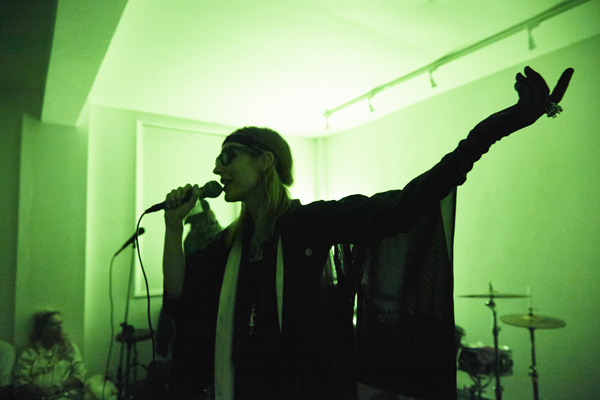
This is a quote that may be pertinent for those venturing along to one of the events at the inaugural BridLit Fringe, which surfaces around Bridport from Monday 12th to Friday 16th November. Organiser Roy Gregory, from Clock Tower music, explained that the event was born out of a conversation with the poet Kirsty Allison, who felt that her particular performances were not an ideal fit for more traditional literary festivals. On November 14th at the Lyric Theatre Kirsty will be exploring the dappled light that lies somewhere between lyrics and poetry.
Billed as ‘Kirsty Allison and the Children of the Midnight Sun’ the evening at the Lyric is a collaboration between Kirsty and musical artist Gil De Ray. It follows on from their absorbing and engrossing film Double Play which was shot partly in New Orleans and partly in the Hellfire Caves. Kirsty chalked up a graffiti poem around New Orleans’ industrial Crescent Park which she then recited in a haunting monotone over Gil’s musical accompaniment.
The format of the evening’s performance stems from Kirsty’s infamous ‘Sylvia Plath fan club’ nights in Shoreditch, where different musicians and writers were invited to come and perform their work. ‘There’s complications between what is poetry and people being snotty about what is poetry on the page’ explains Kirsty. ‘The whole Sylvia Plath fan club thing that I did was exploring the difference between lyrics and poetry and getting different musicians to come down and perform. That was part of the thesis of running that night.’
Currently working on the final edit of her first novel Vagrant Lovers which is published by Wrecking Ball Press next year, Kirsty explained that her performances with Gil are part experiment and part exploration. ‘There needs to be room for that’ she says. ‘It’s kind of storytelling and proposition. There’s different styles within it. One piece was written as a folk song and it’s transposed into more of a soul piece. There’s some more upbeat, party hip-hop and there’s a really gothic piece that I call “‘super gothic”. It’s my Frankenstein story about East London called Ghosts of St Leonards.’
After an early stint as a DJ Kirsty began her writing career as a music journalist and has since written for Vogue, Dazed, Elle and a wide range of other magazines, including her own Cold Lips. She didn’t start performing until 2009. ‘I needed to break up the style of commercial writing’ she says. ‘I needed to break out of the confines of commercial writing, which is when I started performing poetry.’
At times compared to Pattie Smith, Kirsty says John Cooper Clarke was a big influence. But she also cites what she calls the Soho Poets; Jock Scott, Phil Dirtbox and Gary Fairfull whom she used to run a club with. ‘They’re very much people that you have to have an ear to the ground to know of’ she says. ‘For some reason, they’ve kind of guided me into whatever I’m doing now.’ She gets associated with punk. ‘It’s the attitude of trying to instil that kind of subcultural thing that I was part of, growing up in London.’ Although there has always been subculture, Kirsty sees it changing. She sees it as being a lot harder to be involved in ‘because the hegemonic, demonic society has just increased to such a degree that kids supporting themselves outside of capitalism is very, very difficult.’ She believes that the club culture has become such an industry now that ‘it’s more rebellious to go to Weatherspoon’s and to shop in Primark. It’s almost like a badge of honour. I certainly see that in Peckham where I live now.’
Though living in Peckham she is no stranger to Lyme Bay. Her parents live in Lyme Regis and when she’s not involved in exploring the boundaries of lyrical communion in London’s subterranean East End, she can be found holed up in the relative peace of her parents’ home where she can write, edit and breathe air shared more by seagulls than a cacophony of cultural envelope stretching.
Despite the prominence of her part in experimenting with words aloud, Kirsty is strangely reserved about her role in Children of the Midnight Sun. She is working towards an album that’s a mixture of short stories, ‘an attempt to find a balance between hip-hop and lyric’ but is keen to point to the importance of Gil De Ray’s role. ‘I’m just a poet—where he’s an artist in music.’ If Gil brings music then Kirsty’s poetry, writing, fashion design, DJing, publishing and infectious entrepreneurial initiative must count for a huge chunk of balance.
Kirsty Allison and the Children of the Midnight Sun appear at the Lyric Theatre, Bridport on November 14th.
For more information visit www.bridlitfringe.co.uk.

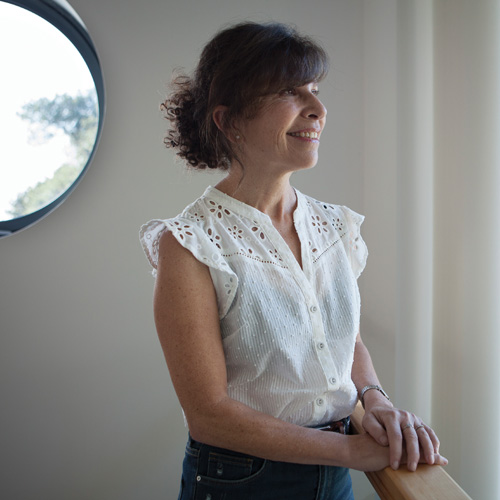
Anna Ledgard

‘I grew up in Yorkshire where my father was a vicar in a small market town. Vicarage children learn early on that you share your parents, they are not your own because your house is open to everybody day and night. I particularly loved the monthly visits of 12 local clergy, all dressed in long black cassocks, who would come to cooked breakfast before morning communion. Another abiding memory was playing with friends from primary school in the graveyard, we’d bring the dead alive making up their life stories, taking hints from the graveyard inscriptions. It wasn’t that we were disrespectful, graves are an irresistible playground for a child’s imagination.
It was a lucky childhood full of exposure to all types of people and circumstances and one in which we learned to share—these principles have been very important to me ever since. I went to Rome when I was 18 to study Italian for a year and learnt the joy of speaking another language fluently and being able to disappear into another culture. After university I spent my early 20’s in various research or administrative jobs, but I knew I wanted to do something that would make a difference somehow, I was also curious to understand more about other cultures. So I travelled to a small village near Bandung in Indonesia and spent three months studying Wayang Golek puppetry. We’d go up into the hills on a lorry with Gamelan orchestra, puppets and puppeteers to celebrate the rituals of everyday life, births, marriages, deaths. This wasn’t just culture as entertainment, but culture as completely essential to the marking of time, the passing of the seasons, the rituals of life. It wasn’t a religion but a cultural and spiritual coming-together.
During that time I’d made a decision to become a teacher. I did a PGCE and then applied for a job at a pioneering 70’s comprehensive school called Stantonbury Campus in Milton Keynes. I joined a highly motivated group of young teachers, led by inspirational education leaders—determined to make secondary education relevant to even the most reluctant learners. I spent six years totally immersed in this school. I studied Drama in Education and then adapted these principles to teaching English and Humanities—it was a way of creating entry points, drawing out students, finding the thing in the curriculum that would get them excited and curious first, then following up with the detail. The 1988 Education Reform Act changed everything in education. The curriculum became much more formal and inflexible. At the time I didn’t want to spend my life sorting exciting learning into the boxes of a prescribed curriculum or GCSE syllabus.
I went to work for London International Festival of Theatre (LIFT), an international theatre festival working with the big venues bringing shows to London from all over the world, shows which questioned what theatre could be and grappled with big ideas, global politics, the environment, human rights. My role was to make connections with the experiences of young people living in this incredibly diverse city, for example, we brought Balinese villagers together with children from Charlton Manor primary school on the stage of the South Bank Centre. Realising that if we could inspire the teachers, we would reach even more young people, we set up courses specifically for them. A mix of primary and secondary teachers would be partnered with artists exploring creativity together alongside the evolving festival, eventually accredited at the Institute of Education.
In the meantime, I had met my partner Nic and we have two children Jesse and Tilly. After living in London we decided to move to Dorset. I had big reservations about moving. I thought it might threaten my work somehow by being perceived to be outside London, which of course was nonsense. But it was down on those millstones at the end of Eype Beach when we just knew “Yeah, we should do this.” We moved into a house which needed renovation, living in one bedroom with Nic going off to work and me going up to London for half the week.
When I came here I contacted Alex Coulter who was then the Arts and Health manager at Dorset County Hospital. We applied for one of the first Wellcome Trust arts grants for ‘Visiting Time’ a performance project which aimed to make a connection between the hospital and local schools working with children with cystic fibrosis and led by artist Mark Storor. We followed that with another, ‘Boy Child’ exploring masculinity with boys and men aged 7 – 70 and performed on Portland. Since then we have had 6 Wellcome Trust awards and Arts Council funding and a decade of pioneering projects, bringing artists, patients and clinicians together often in acute health settings. Today there is a growing understanding of the importance of bringing the arts into hospitals and health settings to complement the medical and give voice to patients’ experiences.
A current project is ‘The Heart of the Matter’ working with cardiologists and patients at Great Ormond Street, Bristol Cardiac Institute and the Freeman Hospital, Newcastle. Sofie Layton, lead artist, a bio-medical engineer, animators, digital and sound artists have created an exhibition which explores the heart both medically and metaphorically, using the narratives given by patients as a basis for beautiful works of art. The exhibition interweaves the languages of medicine and patient experience—it opens in London in November www.insidetheheart.org.
All our projects are 2 – 3 years in length because it takes that time to build relationships with big institutions like hospitals. In an early project at Guy’s and St Thomas’ Hospital, ‘For the Best’ with Mark Storor, we realised that what some of the children wanted to express in the work was that they might not survive. For me this was the beginning of something which I’ve now taken on in different ways. In our society we don’t like to talk about death, we surround it with euphemism, but actually we need to be clear about how we want to live this part of our lives, as someone once said, it takes 30 seconds to die, the rest is living.
In 2009 I was nursing my best friend who died in her own home with her children and her husband. Being there with them was a privilege, sad, yet sweet too, and I learned much about how possible it can be for people to die well at home (most of us die in hospital whether we want to or not). So I looked for training that might give me more practical skills in end of life care, I wanted to understand the physical process of dying, the grief process. I have since trained with ‘Living Well, Dying Well’ as a ‘Doula for the Dying’. Hermione Elliot who set up this course had in the first part of her career been a midwife and later a palliative care nurse. She realised that the same attention that we pay to birth in the home could be paid to death in the home.
I feel strongly about every child’s right to a good education so I’ve always been a school governor, here at The Sir John Colfox Academy and I’m also a trustee of the Minerva Learning Trust. I enjoy the rigour and discipline of good governance motivated by doing the best for all children in this town. We are lucky to have great teaching staff and governors which is vital in today’s tough education climate.
Last year I was diagnosed with a quite serious illness myself. After successful treatment in the NHS I was introduced to The Living Tree, www.thelivingtree.org.uk/ a cancer support group, which was initiated with others by Jo O’Farrell MBE who died in July. Living Tree is a really interesting model, alongside Stepping Out (exercise on prescription). We meet weekly for creative writing, exercise, arts workshops, talks on nutrition and therapies. It is what is called ‘social prescribing’ in health circles and complements medical care offering a holistic and positive approach to living well with illness. Living Tree is supported with the generosity, creativity and innovation which characterise this unique community of Bridport.’

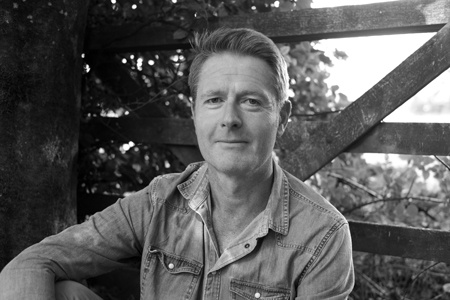
Paddy Magrane

‘Until I moved to East Devon with my wife and two daughters in 2006, I’d been a bit of a wanderer. I think this restless nature stemmed from being an army child. I was born in 1968 in Bahrain, and moved every two years from then on. We lived in Germany, Northern Ireland, London and Yorkshire, where I went to school.

It’s fair to say my A Levels didn’t go quite to plan and, as a result, the university course in history that I’d applied for fell through. As luck would have it, a friend was leaving a job and offered to put in a good word for me. The role was at a gallery in Knightsbridge called Crane Kalman. I was 17 and completely clueless about being an art gallery assistant but was somehow trusted by the owner, a Hungarian called André Kalman, to handle paintings by, among others, Monet, L.S. Lowry and Ben Nicholson. I wasn’t quite the replacement that Kalman had in mind. Although he was very gentle most of the time, he would occasionally lose his rag, berating my incompetence with a stream of heavily accented expletives.

After six months, another opportunity presented itself, working in the garden of a palazzo in Florence. Torre di Bellosguardo operated as a grand bed & breakfast, taking in paying guests to fund its restoration. Opening my shutters every morning, I was greeted by church bells and the rooftops and domes of the city, a scene straight out of A Room with a View. I spent eight months in Florence, trying and failing to learn Italian, picking up instead a rich vocabulary of filthy words from the head gardener, Nello.

Returning to London, I moved through a series of jobs—builder, decorator, toy maker—gradually developing a chaotic CV. Finally, after a stint as the barman of a swanky restaurant called Wodka, where I helped media types and celebs get legless on Polish spirits, I began heading in a more fruitful direction. I’d loved art at school and still painted, which is how I managed to persuade a family in Scotland to employ me to paint murals in their home.

The eccentric couple who’d engaged me were keen to ensure I had a social life when I wasn’t decorating their walls. One day, I was invited out for lunch and found myself in a castle and, to my slight horror, sitting opposite Barbara Cartland. Plastered in makeup and dressed in vivid pink, the world’s most prolific writer lectured me about etiquette and encouraged me to take up designing the covers of romantic novels. I soon discovered that painting pictures of partially clad women gazing adoringly at partially clad men wasn’t for me, but Babs did at least do me a favour. I realised that illustration, and murals for that matter, were not my thing, so I applied to study painting at art school. I gained a place at City & Guilds in Kennington, London, where I spent three happy, productive years.

After graduating with a first, I moved to New York because I’d become obsessed with 20th Century American art. I worked as a waiter and an assistant to an Abstract Expressionist artist, spending my spare time soaking up the city’s galleries and concentrating on my own paintings. I absolutely loved New York. I was in my early 20s and couldn’t have had a more intoxicating experience. My flatmate’s father was a friend of Quentin Crisp and one day we had lunch with him in an East Village diner. He arrived wearing a dusting of make-up, a wide-brimmed, purple felt hat and a silk scarf. He was witty, melancholic and fairly disparaging about the UK, which he’d left after suffering horrendous homophobia.

At the restaurant where I waitered, I was taken under the wing of the slightly sociopathic maître d’, a Sicilian called Sal. One evening he invited me to a party at his apartment in Brooklyn’s Carroll Gardens, where I was introduced to his pal, George. Sal intimated that George, a childlike giant, was a hitman who worked for the Gambino crime family. For some reason, George seemed to like me—possibly because he’d never met an Englishman before—and I cannot tell you how relieved that made me.

Much as I would have loved to stay in New York, I had friends and connections back in London so I returned, moving on to a houseboat by Battersea Bridge. This was such a happy period. It’s hard to describe the slightly weird sensation of being in a bath when the tide comes in and your home begins to float, or waking up to see the Thames a foot below your bedroom window. Summers were the best, with huge parties that spilled out on to the deck, our ‘back garden’ the Thames, the lights of Battersea reflected in its dark surface. Winters weren’t so glam. There was no central heating so we spent evenings stuffing our faces with huge portions of warming cottage pie while huddled around a gas fire watching the telly.

Being an artist was tough. I sold work but it was never anything close to a living. To boost the coffers, I launched a hand-painted silk tie business. I thought I’d hit the big time when Jeremy Paxman, who I bumped into while selling door-to-door in Notting Hill, bought twelve of my designs. For weeks the phone would ring at around 8pm or 10.30pm with friends telling me that they’d seen Paxman on University Challenge or Newsnight wearing my ties, but sadly this amazing free PR didn’t lead to a viable occupation.

It was around this time—the early 1990s—that I met my wife, Di, in the Stockpot, a cheap student café on the King’s Road. It was a chance encounter—she happened to be with someone I knew—and I like to think that the stars were aligned over London that day. She wisely saw that being an artist and tie designer, solitary activities that weren’t delivering an income, was not great for my mental health. My first proper job was at a marketing agency in Soho, as a copywriter—a role I have more or less been doing since, mostly in the charity sector. I have also written journalism, mainly travel pieces for the Guardian and Observer on places like Antrim, Ibiza and Eritrea. My last far-flung journey was in the company of my father, to Syria. It was an amazing trip, made all the more memorable by the kindness of the Syrian people. It’s heart-breaking to think how their lives have been torn apart since.

Words and narrative have become increasingly important to me. Over the years, I’ve developed a deep interest in talking therapies and in 2005, I retrained as a psychotherapist at university. I volunteered with Arc in Axminster for some years and now run my own practice.

In addition to the counselling, I also write fiction and have published two thrillers, Disorder and Denial. A passion for the written word is also behind my involvement in Shute Festival, which I co-direct with Samantha Knights QC. Now in its third year, the event has brought Sir Anthony Seldon, Esther Freud, Sophie Hannah and other leading speakers to our hamlet.

At the end of 2016, my friend Laurence Anholt suggested that we join forces, co-writing a rather unusual crime fiction series that he’d envisaged. The Mindful Detective books feature a Buddhist policeman, DI Vincent Caine, who lives off-grid on the Undercliff near Lyme, eschewing modern life for a solitary, meditative existence. But police work beckons when, in the wake of a very strange murder, he is enlisted by the altogether more frenetic DI Shanti Joyce, recently relocated to the West Country from Camden. The first in the series, Art of Death, will be published next year and we have just heard that World Productions, the people behind Line of Duty and Bodyguard, have optioned the first title. It’s incredibly exciting.

Writing has brought me another precious gift—the chance to work from home. I get to walk the beautiful paths of the Devon countryside with Di and our labrador, Lola. I regularly see my parents in Colyton. And every day I watch my amazing girls, Ella and Tara, grow up and find their own paths.’

Vegetables in October

Every year is different. After a hot and dry June and July, we expected the usual wet and dismal school holidays. But no, you can never gainsay the weather.

This year we have been scrabbling around for tomato recipes, as the yield, especially from outdoor plants, has been great – and no blight on them yet. No blight! Amazing!

All the late summer fruits from perennial plants are in abundance, such as blackberries and figs. Apples haven’t done so well, partly due to the freezing winds in late March.

So long as you have had access to water, most vegetable crops have done well this summer, although many plants would have preferred rain to applied water. The same goes for the vermin, which have been attacking unexpected crops.

Now we’ve passed the Equinox light levels and soil warmth are falling fast, and we look to our winter vegetables. These still look a little small, but will swell now there is less evaporation.

Brassica have done well from a mid-June sowing in modules. It was a job to keep the modules wet enough, twice daily watering needed, but this allowed us to pick broad beans and peas before transplanting the winter cabbage and sprouts. Cabbages are good at getting enough water out of dry soil, the transplants were watered in thoroughly and nothing since, Enviromesh helped.

There is the question of whether to lift crops or leave them in the soil. We prefer leaving them in, as the taste is always better, but you must expect wildlife to take its toll. We are hoping that our root-fly-free carrots, grown under Enviromesh for the first time, will have less slugs and earwigs going in where the root fly has broken the skin. Time will tell.  And how does an elephant get out of a tree? It sits on a leaf and waits till Autumn.


What to sow now:

If it stays mild, outdoors you can still risk sowing hardy crops of rocket, Mizuna and mustards—even turnips. Plant your garlic and overwintering onion sets as usual, as they work on day length. Aquadulce broad beans should grow too big before midwinter or the stems rot, so we will wait until November to plant. Or rather, we will plant in modules in the greenhouse and transplant later to avoid rodent attack.

In the polytunnel you can sow carrots for April/May cropping, and a variety of salad crops, which will grow faster and crop more heavily than outdoors. Spinach Lazio and lettuce Little Gem and Red Grenoble sown in modules in early August, then transplanted under tomatoes, have been yielding heavy crops of leaves already. Until the hens got in, that is! Sowing salads in early October is late, but you should be able to start picking by next February.

Up Front 10/18

September has traditionally been a good month for highlighting environmental issues. Wikipedia lists no less than ten special days throughout the month from ‘International Day for the Preservation of the Ozone Layer’ to ‘World Environmental Health Day’. In the past we have had ‘Zero Emissions Day’; ‘Car Free Day’; ’ Ecological Debt Day’ and even ‘World Rivers Day’. But what a month it’s been for environmental housekeeping this year. On September 8th a Dutch student saw the launch in California of his idea for taking rubbish out of the ocean. 24-year-old Boyan Slat managed to raise more than $30 million to build a machine that he hopes will collect some of the plastic that is clogging up our oceans. The ‘Ocean Cleanup’ system, known as ‘System 001’, headed offshore for a two-week trial before continuing its journey toward the Great Pacific Garbage Patch. The team behind the project hope that the first plastic will be collected and returned to land within 6 months. ‘Ocean Cleanup’ was soon followed by the ‘RemoveDEBRIS’ project to clean up space junk. From James Bond movies to news coverage, most of us have seen satellites used to monitor movements or pin-point targets for military manoeuvres. But now they are making headlines for cleaning up their own mess. A satellite recently deployed a net to capture a shoebox-sized object that the vehicle had released a few seconds earlier. Built by the Surrey Space Centre at the University of Surrey, the satellite also has a harpoon that can spear objects, as well as a drag sail to help slow down debris and make them fall to Earth faster. Back here on earth, on September 22nd, the Co-op announced an end to single-use plastic. The company will see around 60 million plastic carrier bags removed in a phased rollout and replaced with an environmentally-friendly compostable alternative. Explaining the launch, Jo Whitfield, Retail Chief Executive at Co-op, said: ‘The price of food wrapped in plastic has become too much to swallow.’ She went on to explain that the Co-op had been founded on the concept of righting wrongs and that we currently face huge global challenges. With huge initiatives such as this, it might be easy to forget that we can all peck away at global challenges. In Bridport, businesses such as Waste Not Want Not and The Green Weigh offer alternatives to some of the ridiculous packaging that comes from many of our shopping options—just two of the many local initiatives that deserve support, whatever the month.


Pumpkin Pie

I suppose that all good things must eventually come to an end. I’m talking about this year’s wonderful hot summer which this morning finally turned into Autumn. The trees are showing tinges of gold and I, at last, succumbed to the temptation of putting on my trusty dusty red sweater. It’s like being reunited with an old winter friend. Crikey—how times flies. It’s been the best part of a year since I last wore it. Sleeves too short… perhaps my body stretched during the summer…

Welcome to the season of mists and mellow fruitfulness, of Autumn gales and swirling leaves, of chestnuts and conkers and an extra hour in bed when the clocks go back (Sunday, 28th October if you were wondering). And yes, welcome to Pumpkin Pie—the most visible and all-pervasive evidence of onrushing Halloween. I am not really a fan of pumpkin pie. I like to look at pumpkins, hollow them out, put candles in them or use them as door stops. But never do I try to eat them as I find them completely inedible and hard as concrete unless you bake them for three hours. And then they’re just soft orange mush and equally inedible. Perhaps I should carve one of them into the shape of a certain President’s head and call it Trumpkin Pie, and then set fire to it for a laugh?

The annual arrival of pumpkins in shops is like an outbreak of mad vegetable disease. It’s an advert for ‘Trick or Treat’ time and Halloween is just one of Autumn’s many festivities and parties. It really is the party season. Other celebrations around this time include Diwali, Bonfire night, Hanukkah and of course Christmas. And I mustn’t forget ‘Thanksgiving’ (November 22) because it’s only a matter of time before it wings its way to the UK, just like Halloween gradually oozed across the Atlantic during the 1970s. I can remember a time when Halloween hardly featured in the UK. I can even recall Dorchester without any bats or spiders or skeletons and certainly no shop windows flushed with orange and black. All of that arrived along with Disney and Dallas and hamburgers and other American imports.

Anyway, ‘Thanksgiving’ is a good thing and we should adopt it because it’s now the only festive occasion that truly celebrates the family. I know that Christmas is also supposed to be a family event, but over the years it’s become saturated with too much ‘Ho Ho Ho-ing’ and Frosty the Snowman and plastic Rudolph reindeers glowing in windows. There’s no longer any time to relax with the family at Christmas. I’m too busy replacing broken Christmas tree light bulbs, stopping the dog from eating the mistletoe and worrying if the turkey is big enough now that Uncle John is coming with his appallingly loud kids. Yes, I know I’m being ‘Bah Humbug’ but it’s already October and I have to get into practice before December.

Then there’s bonfire night: the most singularly English of all festivals. It’s as eccentric as a Monty Python history lesson and as odd as the European Song Contest. Only the English would celebrate failing to blow up their own Parliament and ritually setting fire to a mock-up of the would-be assassin! Of course, we all enjoy the fireworks (except for our dog who goes mental at any boom or bang), but personally I much prefer setting them off myself. It’s a boyhood thing I’m sure, but I like regressing back to childhood. However, the only problem with lighting them is you never get a chance to actually see them, because you’re too busy trying to set off the next one to ensure a seamless display. And videos are a waste of screen time. Fireworks on the screen look like boring white dots moving against a black background, and you really miss the sound, the shrieks and bangs and the whiff of gunpowder. But I am never entirely sure about the ethical purity of Guy Fawkes and bonfire night. Is it a celebration of escape from danger, a patriotic call to arms and revenge, or is it perhaps a warning to ourselves and to others of what nearly might have happened back in 1605? Rather than get too excited over a failed seventeenth-century act of terrorism in London, let’s commemorate some south-west regional events. Historically, we should observe such events as Monmouth’s failed rebellion (summer of 1685) or the Tolpuddle Martyrs (March 1834). Let’s let off a banger or two every year for a couple of excellent locals: Mary Anning of fossil fame (birthday on May 21st 1799) and Sir Francis Drake (Tavistock, sometime in 1540) who circumnavigated the globe and was good at bashing up Europeans, or more accurately, the Spanish.

When we either crash or slide out of Europe next year, will we have an annual firework display in celebration or sad remembrance every 29th March? Quite possibly but I can only suggest we light the blue touch paper and retire gracefully. Incidentally, why is touch paper always blue? Is this a political firework? And if the Labour party should win an election, would the touch paper be red?


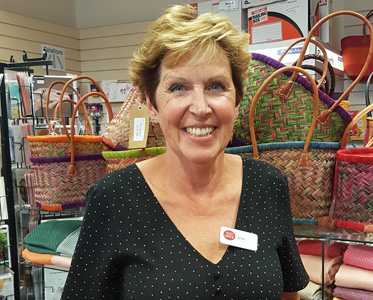
People at Work – Sylvia Ainley

Five years ago Sylvia Ainley became Postmistress of the Bridport Post Office. She shares the license with her life and business partner Paul, who does work out front but is often found in the back office with their ‘Postdog’ Hubble, a gorgeous rescue dog who knows he’s landed on his feet. Award winners for the last four years running at the annual Post Office Awards, Sylvia is proud of the business she runs with Paul and her fantastic workforce, who are all as professional, friendly and personable as their boss. It’s a close-knit team, who work hard, together amassing on average three and a half thousand transactions per week.

Always aware of daily cut off times for banking and mail, Sylvia is constantly under pressure, never able to let things slip. ‘Part and parcel of the job’, she smiles, whilst breezing around the office getting everything done. Sylvia used to run training courses on leadership, time management and customer service, which shows in the manner all her staff conduct themselves, always going the extra mile for their customers. Sylvia is particularly knowledgeable about finance and so finds the Post Office a good fit, combining the front-facing customer service skills required with the financial products she is able to offer.

Brightening the shelves among the cards, stationery and parcel paper, great swathes of patterned hammams charm the Post Office customers. These are cotton stretches of material from France, used as towels and shawls, rugs and covers. Trading under the name of BBQplus these, alongside bags and quilts, are what Paul is busy selling and sending out from the back office to customers nationwide. Their online based business is a perfect partner to the Post Office out front.

The couple met at a Salsa dancing class in London. Now, working together in Bridport they still dance most weeks. Sylvia also swims regularly, plays badminton each week and walks Hubble to work from their home in Symondsbury each day. She is also involved in the Chamber of Commerce and is a local Parish Councillor. Always with a smile on her face, whoever is lucky enough to bump into Sylvia, will no doubt part from her with a similar one on theirs.