
Happy New Year to all. The Christmas festivities may be over, but there should be a pantomime somewhere nearby to soften the blows of the bills, etc.
January is the first month of the New Year when by tradition we all make good resolutions, turn over a new leaf and start a new page—that is start our new diary. That is if you have bought the diary, or had it given to you. I already have mine and inscribed my name on the first page, but I did not buy it. It arrived from the institution I have belonged to for many years, together with the latest journal. The front cover carries the year “2019” in silver on the front cover and also “Fellow”, which leaves no doubt of my gender! My usual entries are prosaic including meetings I expect to attend and other appointments, such as dentist, doctor, hairdresser, etc. As it is a pocket size, there is little room for more information unlike the diarists of days gone by, such as Samuel Pepys and George Fox.
George Fox, a Quaker came to Bridport in 1657 to speak to those of his movement and perhaps enrol others. In his diary he told of religious persecution writing “a shopkeeper, not of our religion stirred up the priest and magistrates and laid a snare”. But they caught by mistake a local man Thomas Curtiss and “they boasted they had catched George Fox and were in a great rage when they found it was not me”. Fox managed to get away from the neighbourhood safely.
Samuel Pepys wrote in his diary on 15th February 1665 that “With Creed to Gresham College—where I had been by Mr Povy the last week proposed to be admitted a member; and was this day admitted, by signing a book and being taken by the hand by the President, my Lord Brunkard and some words of admittance said to me. But it is a most acceptable thing to hear their discourses and see their experiments; which was this day upon the nature of fire, and how it goes out in a place where the ayre is not free, and sooner out where the ayre is exhausted; which they showed by an engine on purpose… Above all, Mr Boyle today was at the meeting, and above him Mr Hooke”. Hooke became famous for his microscope and his work with springs and forces. Robert Boyle who lived for some time at Stalbridge Manor, in north Dorset, produced the air pump to create a vacuum and enunciated “Boyle’s Law”.
Pepys also wrote about Stonehenge and Avebury as well as the return of King Charles II, but he does not seem to have mentioned our local rope industry, although he must have been aware of it, from his position as Clerk to the Navy Board. He also wrote about the threat from the Dutch, the Plague and the Great Fire of London.
In 1754 a Richard Pococke wrote of a visit to Abbotsbury where he saw “the Abby and a very large barn. On a hill to the south is a beautiful chapel of St Catherine and then a large bay into the land call’d the West Fleet. This swannery belongs to Mrs Horner, the lady of the manor. In severe weather a sort of swan comes, call’d a Hooper. “Tis supposed they come from the north”. Do they still?
Then in 1774, John Hutchins tells how in “June 1757 a mermaid was thrown up by the sea, between Burton and Swyre, thirteen feet long. The upper part of it had some resemblance to human form, the lower was like that of a fish: the head was partly like that of a man, and partly like that of a hog. Its fins resembled hands: it had forty-eight large teeth in each jaw, not unlike those in the jaw-bone of a man”.
A Dorset diarist, Mary Frampton, who was the sister of Squire Frampton of Moreton, wrote in 1830 that “The months of January and February were very severe—much suffering attended the state of the poor from the previous summer, having been too wet to enable them to get in their turf for fuel; the villages in these districts, where turf constitutes the common fuel, were particularly ill off”.
Later that year there was unrest which made many people think of the French Revolution. Squire Frampton took the lead in suppressing any English Riots and Mary Frampton wrote in November 1830 “Incendiaries rapidly spread from Kent and there were riotous mobs, breaking and destroying machinery used in husbandry and also surrounding gentlemen’s houses, extorting money and demanding an increase of wages… My brother Frampton harangued the people at Bere Regis… This spirited conduct caused to be very unpopular, and threats were issued against him and his house”
Frampton joined a large number of farmers, all special constables upwards of 150 against a mob urged on by women behind hedges and the Riot Act was read. It was reported that threats were made against Mr Frampton, but no fire took place on his estate. Moreton House was not attacked. But Mary Frampton wrote that “Most of the threshing machines in this (Dorchester) neighbourhood were either laid aside or destroyed by the farmers themselves and no rising occurred very near Dorchester”.
Another Dorset Diarist of the time, Fanny Burney, was a correspondent of Mary Frampton and commiserated with her over her worries about the rioters. Soon after, in 1834 the attention of Squire Frampton was drawn to the “Tolpuddle Friendly Society”, an embryo trade union whose members had sworn an oath at initiation which contravened an Act of 1797. Six members were tried at Dorchester and found guilty and sentenced to transportation for seven years. I am sure the readers will know this story which is retold every year in Tolpuddle. Fanny Burney was also acquainted with Mrs Fitzherbert, a Catholic and a widow of Edward Weld of Lulworth, who later secretly married George, Prince of Wales contrary to the Royal Marriage Act. He left her, to marry Princess Caroline of Brunswick, but was believed to still love Mrs Fitzherbert and fathered several children by her.
Fanny Burney also chronicled her memories of the holidays of King George III in Weymouth in the 1790s, writing that every street, shop, bathing machine window and hat was labelled “God save the King”, also around the waists of the royal dippers. “Flannel dresses, tucked up, no shoes or stockings, with bandeaux and singular appearance”. All the men were expected to kneel before the King, but Fanny revealed that the Mayor could not, as he had a wooden leg!
In August 1867 William Allington met Alfred, Lord Tennyson, on the Isle of Wight to travel to Dorchester, where they talked to William Barnes about Maiden Castle. They travelled first by steamer and then railway (second class) via Maiden Newton to Bridport. He wrote that from Bridport they walked “along the dusty road to Martin’s Lake and on to Charmouth, where we had beer and cheese in a little inn…Down into Lyme Regis, narrow streets and modest little Marine Parade”. On the Cobb, they read “Persuasion” by Jane Austen.
You may think little has changed in Lyme Regis, but you cannot get a train from Dorchester to Bridport now, even via Maiden Newton.
It is fascinating to learn details of social history from personal diaries. Perhaps now you could emulate these diarists and start your stories today for the interest of future readers. Once more Happy New Year to you all.
Bridport History Society sees in the New Year on Tuesday 8th January 2019 at 2.30 pm in Bridport United Church Main Hall, East Street. The programme will include WWI army uniform and music. All welcome, Visitors entrance fee £3.
Cecil Amor, Hon President, Bridport History Society.
Diary Matters
Bachelor’s Buttons meets Granny’s Toenails in the Marshwood Vale
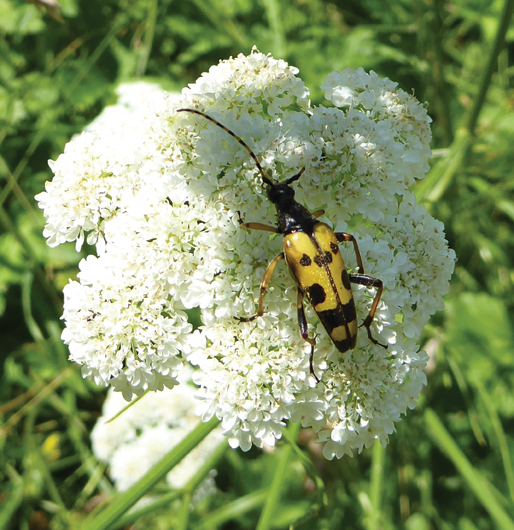
Last summer, on one of the hottest days of the year, I joined a walk led by Nick Gray of the Dorset Wildlife Trust through some traditionally managed meadows in Dorset’s western Vale. We found fields filled with lush grasses, colourful wildflowers and a profusion of insects. This outpouring of joyous, exuberant growth seemed to embody the essence of high summer and the walk turned out to be one of my wildlife highlights of 2018.
We started from Babers Farm below the village of Marshwood and, after a short walk across several fields clad only in a veneer of golden stubble, we crossed a field boundary to enter another world. Here a thick carpet of knee-high grasses dominated the sward, still green despite the long spell of hot weather. Richly coloured flowers were woven into the grassy fabric and many small brown butterflies danced among the seed heads. A transient flash of orange was probably a silver-washed fritillary butterfly. Grasshoppers leapt from the grass in broad arcs as we walked and brightly coloured insects fed from the flowers. As I looked up at the bowl of hills surrounding the Vale, a kestrel, pale brown in this brash light, swept silently across the field. It was the perfect summer moment.
Perhaps it was a reaction to all the doom and gloom I had been hearing about our treatment of the environment and the resulting loss of wildlife? Perhaps it was a deeply buried childhood memory of family picnics among flowers on Dorset hills? Perhaps it was simply all the natural beauty around me? Whatever the reason, it felt, for a few moments, as though this was the only place in the world I wanted to be.
These meadows are managed under a higher-level stewardship scheme which pays for the loss of income incurred through traditional, less intensive land cultivation. The meadow flowers and grasses grow during the warmth and wet of spring and summer and hay is cut and removed in mid-July when flowers have mostly set seed. The aftermath growth is grazed by animals in the autumn after which the land is left until the following spring. It was the last day of June when we visited and high summer sees these meadows liberally studded with the flattened white umbels of corky-fruited water dropwort, a member of the carrot family and a Dorset speciality but rare elsewhere. The flowers were very popular with insects, especially hoverflies which buzzed loudly in small groups while hovering by the flowers in a courtship display. A female would sit on a flower head while a male hovered above her; sometimes another male would hover above the first in a “stack”.
The bright yellow slipper-like flowers of bird’s foot trefoil were also very common in the meadows, sometimes growing so prolifically that the flowers merged into drifts of sunny colour. This is such a common flower that we tend to overlook it but perhaps its very familiarity leads to the many popular names attached to the plant such as eggs and bacon, hen and chickens or granny’s toenails. Nick also told us that the plant may have useful anti-worming properties if consumed by sheep.
Dotted around the meadows, sometimes in large clumps, were the unruly purple flowers of knapweed. These are popular with nectaring insects and I saw a colourful burnet moth and several marbled white butterflies. Knapweed is also one of the plants with the popular name of Bachelor’s Buttons and Nick told us how, in the past, young women played a love-divination game with the flower heads. A young woman wanting to know if her affections would be returned took a knapweed flower head and plucked off the open florets. She placed the flower head inside her blouse and if, after an hour, new florets had opened, then her love would be reciprocated.
Here is the story told by John Clare in his poem May from the Shepherd’s Calendar:
They pull the little blossom threads
From out the knapweeds button heads
And put the husk wi many a smile
In their white bosoms for awhile
Who if they guess aright the swain
That loves sweet fancys trys to gain
Tis said that ere its lain an hour
Twill blossom wi a second flower
And from her white breasts hankerchief
Bloom as they ne’er had lost a leaf
A short walk across open countryside took us southwards towards the centre of the Vale, where we found another large traditionally managed meadow. As before, a rich mixture of thick grasses and colourful flowers dominated but I was surprised to find drifts of yellow rattle and a few orchids, looking rather the worse for wear. I began to realise that each meadow has its own character, its own flora, its own colours reflecting the underlying geology and dampness.
Several recent studies have highlighted the decline of insect and bird life in the UK. Factors contributing to this decline include climate change, habitat loss, pollution and pesticide use. For example, the 97% loss of flower-rich hay meadows in the UK during the 20th century linked to agricultural intensification must have seriously affected insect populations as well as birds dependent on insects for food. Some have gone so far as to suggest that unless we modify farming methods, we shall face “Insect Armageddon”. This needs to be taken seriously owing to the important role insects play in, for example, maintaining soil health, digesting waste and pollinating our fruit and flowers.
The meadows that I visited last summer in the Marshwood Vale send a positive message showing that, with careful management, these important habitats can be restored to their former glory, supporting insects and providing food for birds. In more good news, the Magical Marshwood Vale Project (funded by National Grid and coordinated by Dorset AONB and Dorset Wildlife Trust) started in 2018 with the aim of enhancing traditional landscape features and helping to reinstate ecologically important wildlife habitats. This includes the restoration of more wildflower meadows.
I should like to thank Nick Gray for his advice and enthusiasm.
Philip Strange is Emeritus Professor of Pharmacology at the University of Reading. He writes about science and about nature with a particular focus on how science fits in to society.
His work may be read at http://philipstrange.wordpress.com/
Rowing Back the years
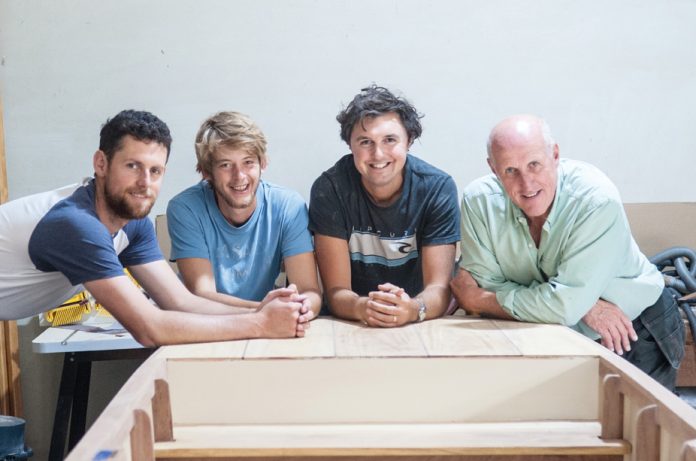
Margery Hookings is invited along to the launch of a very special boat at Hestercombe House and Gardens, near Taunton, where she meets the West Dorset team who created it.
The punt glides through the calm water of a lake deep in the Somerset countryside.
There’s a television camera focused on the punt and the men who made her. All is going swimmingly. Which is just as well, because it’s a bit of a first for The Beautiful Boat Company, which was formed in March 2018 by four men who met while studying at The Boat Building Academy in Lyme Regis.
They’ve been asked to recreate an Edwardian punt for the pear-shaped lake at Hestercombe, using photographs from the 1900s as their template. They’ve fashioned the vessel out of floorboards salvaged from the old East Reach Hospital in Taunton. The wood includes iroko, sapele and teak and was reclaimed by Hestercombe Gardens Trust chief executive Philip White from East Reach Hospital in Taunton, where the Portman ward was sponsored by the house’s last private owners.
There is quite a gathering here on the side of the lake. A lady in Edwardian dress, complete with flouncy hat and cocker spaniel, is on board, with Beautiful Boat Company director Sam Smith playing the part of Mr Miller, who, in the old photographs, was the punter. They are accompanied by fellow directors Sam Shepherd and Jamie Chitty, while the fourth member of the team, Simon Olszowski, stays on dry land to be interviewed by a reporter from ITV.
Run by a charitable trust, Hestercombe is undergoing a continual process of restoration, maintenance and development of the gardens, which span three centuries of garden history and design.
After the speeches, the boat is officially launched and given the name of Constance, in honour of the lady of the house who lived at Hestercombe for 60 years. It is Constance Portman who is being portrayed in period costume on the punt.
“It’s just as well the naming of the boat didn’t go out to public vote,” Mr White says. “Otherwise it could have been called ‘Punty McPuntface’.
The punt flows across the lake as it if were made for this day, which indeed it was. Gazing across Pear Pond, with the house and the hills in the distance, the scene could be straight from Edwardian England, which is very much the point.
The painstaking process of returning a punt to the lake began when Philip White discovered six photographs of a punt from about 1904.
As he explains: “I asked a boatbuilder about these photographs some years ago who said it was an unusual punt; shorter and deeper than most estate or lake punts and finely built in the Thames tradition. Ever since I have wanted to see a punt back on the Pear Pond as we suspect the one in the photographs was sold at the estate sale in 1951.”
Few visitors will know that Hestercombe has the remains of a boathouse on another, currently unrestored, lake, which suggests there may originally have been two punts on the estate. The boathouse provided crucial evidence about the length of the punt and suggested that it had a maximum length of about 18 feet. Armed with this information and his passion to see a boat afloat again at Hestercombe, a chance meeting between Philip and The Beautiful Boat Company’s Simon Olszowski led to the punt commission.
Says Sam Smith: “We were thrilled to be shown these intriguing photographs, and be asked if we could start from scratch, piecing together as much information as possible about design from historic plans, drawings and photographs. We then worked with Philip to agree specification and hull colour and set to work sourcing beautiful wood for the boat’s interior and trim. We used a mix of modern and traditional skills to create a punt in keeping with its heritage and with a traditional look and feel.”
He describes the whole process as a ‘joy’.
“We thought it was lovely to bring back some wood with a historic link to Hestercombe, and we have also enjoyed replicating the pole, oars and a paddle, all of which are clearly visible in the original photographs.”
The team also worked with a foundry to recreate the very unusual square rowlocks visible in the original pictures.
Says Philip White: “We’re delighted to be bringing back the Hestercombe punt, after 110 years. We hope it will allow the gardens to be seen from a different perspective, as those in the 18th century would have been able to enjoy it. This offers a new and exciting way to view Hestercombe’s unique landscape.”
Cathy Anholt
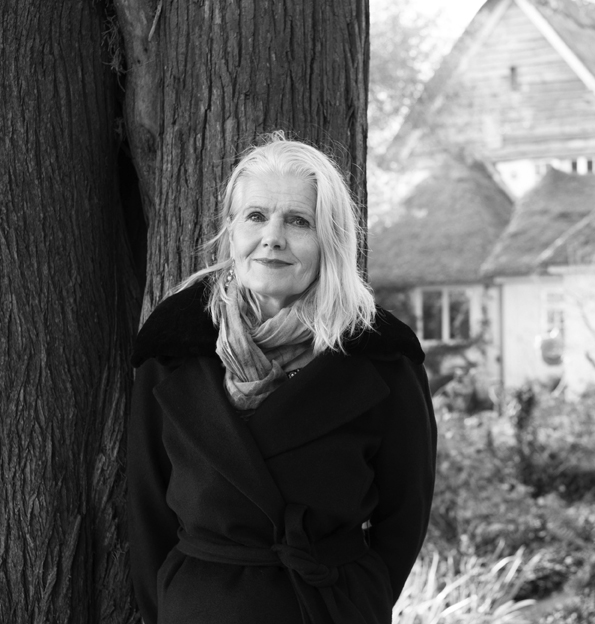
‘I have an unusual, and possibly rather annoying gift known as ‘total recall’. This means that I can remember virtually every detail of my life, beginning with a vivid recollection of being swaddled in a tight blanket in my pram.
The pram was parked under an apple tree in the garden of our family cottage, where I was born in 1958, the third of eight siblings in an Irish Catholic family. If this all sounds a bit ‘Cider with Rosie’, that’s because we lived just a few miles from Laurie Lee’s home in the rolling Slad Valley in Gloucestershire. My father was a potter and my mother, a nurse. Unlike children today, we had limitless freedom and any spare time after school was spent wandering the countryside with my sisters. This allowed me to develop my imagination and inner resources. I was never bored, and I began to develop a passion for drawing and painting in dozens of visual diaries—a habit that continues to the present day.
The original plan was to follow my mother and older sister into a career in nursing. I trained as a State Registered Nurse at the John Radcliffe Hospital in Oxford, sharing a tiny house with half a dozen fellow nurses. However, on one particular night, everything went catastrophically wrong—Together with another trainee, I found myself in charge of a children’s cancer ward in which many terminally ill children were being treated. Why they left two unqualified girls in charge, I will never know, but to my utter dismay, three children passed away that night, and by the following morning I had resolved that this was not the career for me. I have the greatest respect for everyone who works in the NHS, but I was too young and too sensitive to deal with that situation.
Having no income and no real plans, I instinctively returned to the one constant factor in my life—those visual diaries and sketchbooks, which have always been my contact with my inner life. On a whim I applied to take a Foundation Course in Fine Art in Oxford, and here I had a first glimpse of what the future might hold.
It was at a drawing group in Oxford that I bumped into another creative soul, searching for his path. His name was Laurence, and forty years later, we remain soul mates on this strange and fascinating journey through life. With not a penny between us, the two of us hitchhiked to Cornwall and managed to get places at Falmouth School of Art; which was then a legendary hothouse of creativity and experimentation. I chose to spend my three years in the printmaking studios, working on etchings and lithographs. What I produced were peculiar, dreamlike compositions, but someone must have liked them because I left with a First Class Honours Degree and a place on the Postgraduate Course at the Royal College of Art.
We rented a shabby, sunny flat above an Israeli Restaurant in Camden Town. Whilst Laurence studied Painting at the Royal Academy; I set off on my bicycle through Regents Park to spend my days exploring line, colour and composition. I worked hard and was offered the Rome Scholarship, and at this time, Laurence and I discovered a passion for travel, which took us to many incredible destinations, such as a five-week trip to India; always returning with inspiration for new work.
In 1984, our first daughter, Claire was born—a golden-haired child, who we adored. Almost overnight, we realised that a flat in North London was not the best place to raise a child and we moved, first to Bath, then to Wantage in Oxfordshire, where Laurence was teaching Art at a school. It seemed natural to have another child, and to our delight and amazement, we were blessed with twins, Tom and Maddy.
We began to talk a lot about life/work balance. Surely there must be a way in which Laurence and I could make a living from our creativity, whilst being available for our family? We had always loved sharing picture books with our little ones, and it seemed only natural to have a go at making some ourselves. Our first books were made quite literally at the kitchen table of our terraced house, surrounded by Tippee cups and half eaten rusks. To our amazement, a publisher liked what she saw, and we signed our very first contract with Methuen, not realising that children’s books would consume our lives for decades to come.
Laurence’s parents lived near Lyme Regis, and each time we visited, we saw how our three children came alive on the beaches and amongst the trees. One of the great benefits of being self employed is that you can live anywhere, and probably our greatest stroke of fortune was to discover, in 1992, a huge abandoned semi-derelict country house in Uplyme, with leaking roofs and five acres of jungle. It took us nearly ten years to renovate that house, which overlooked the sea in one direction, and Cannington viaduct in the other. This is where our family spent sixteen blissful years. The children went to Mrs Ethelston’s Primary School and then to Colyton Grammar, where I became a governor for eight years.
By this time, our career in children’s books was well established and over the next thirty years, Laurence and I wrote and illustrated more than 200 titles, which were translated into 30 or more languages around the world. At a later stage, we bought a tiny shop in Lyme Regis and established ‘Chimp and Zee, Bookshop by the Sea’, the world’s first author-owned bookshop, selling nothing but our own signed books. It was a magical place, but when, after a few years we sailed headlong into a retail recession; we let it go with some sadness, but also a sense of freedom at having more time on our hands.
No one goes through life without difficulties, but I have always maintained that, with a degree of courage and tenacity it’s possible to make a decent living, whilst doing something of integrity, that brings pleasure to others. Alongside my creative work, my greatest joy has been my family, and I couldn’t be more proud of our children. Claire studied Anthropology at Cambridge and went on to work with the UN Secretariat, first in New York and now in Geneva, where she lives with her French husband, Adrien. In a peculiar duplication of my experience, Claire also has girl/boy twins: our gorgeous two-year-old grandchildren, Nina and Felix. Our second daughter, Maddy is an actor, writer and comedian, living in Brixton and loving her career. Our son, Tom is a truly gifted painter, based in Berlin with his Turkish partner, Yildiz, and their baby daughter, Ada. Tom’s stunning paintings are exhibited all over the world, most recently at the Saatchi Gallery in London. With my Irish background, Laurence’s Anglo/Dutch/Persian roots and our international grandchildren, I am a great believer in multiculturalism, and I deeply regret the current trend of nationalism. I love what the Pope said about building bridges, not walls. This has been a fundamental principle of our children’s books and of my current work. I am a globalist in every way.
So what do two family-orientated arty types do when their children spread their wings and fly? Eight years ago, Laurence and I were fortunate enough to find another luminous but neglected house on top of a hill overlooking the sea, outside Colyton. And in recent years, our careers have taken another exciting turn. Laurence began writing full-length novels, including The Hypnotist, his first book for Young Adults. Now he is co-writing a series of brilliantly funny adult crime novels called The Mindful Detective series. The first of which will be published in May 2019 and TV rights are already sold. As for me… I have returned to my first true love—every day I go into my studio, pick up my brushes and paint. Nothing makes me happier. My quirky dreamlike images about motherhood, family, birth and death, are currently selling in Denmark, Australia and Canada. In the UK, I am represented by Arundel Contemporary, and recent work can be seen on my Instagram page or www.catherineanholt.com
Now in my 60th year, I value my time more than ever. I feel so privileged to spend my days in the beautiful Devon countryside, in the company of my family, making stories with paint, as I did when I was a tiny girl. The future is never certain, but if you can follow your dreams, and do no harm, then you have lived well.’
Up Front 01/19
Hearing Boris Johnson’s comment that ‘It’s not over ‘til it’s over’ when discussing Brexit with Andrew Marr recently, reminded me of the classic line delivered by Dev Patel in The Best Exotic Marigold Hotel: ‘Everything will be all right in the end—so if it’s not all right, it is not yet the end’. In the case of the current political meltdown, there is clearly no end in sight. Writing this before the Christmas break, with backstop or no backstop; Brexit or no Brexit; deal or no deal; people’s vote or no people’s vote; election or no election—and the question of how many long knives can be produced on any given day—there appears to be no happy outcome. Watching the many factions as they poured scorn on those that disagreed with them over the last few weeks has made for a miserable run up to the ‘festive’ season—the season of ‘peace and goodwill’. It doesn’t bode well for the coming New Year either, and it’s hard not to agree with those who suggest that many in our political world, whether in government or opposition, ‘remain’ or ‘leave’, are simply jostling for position rather than serving those that elected them. I know it is pantomime season, where the story is generally about good triumphing over evil, but this is more like horror. Every morning we seem to wake up to another twist, and the nightmare starts all over again. It reminds me of the film Groundhog Day where Bill Murray begins each day to the sound of the Sonny & Cher’s I Got You Babe and the day is repeated over and over. In one scene he explains to Andie MacDowell that he has been ‘stabbed, shot, poisoned, frozen, hung, electrocuted and burned’, something I imagine Theresa May could relate to. It is all part of the process of Murray’s character seeing the error of his ways, and of course, as it is a traditional story, there is a satisfactory ending. One key difference is there is humour. While there have been a few interesting quotes about Brexit, most of the comedy has been more cutting than funny. So when Brexit the Movie is eventually written, the scriptwriter may have to come up with some pretty spectacular lines. He or she could always steal one from the nimble-fingered computer whizz who asked: “Have we tried unplugging 2016, waiting ten seconds and plugging it back in?” Or they could use another Bill Murray classic: “A few decades ago we had Johnny Cash, Bob Hope and Steve Jobs. Now we have no Hope, no Cash and no Jobs—please don’t let Kevin Bacon die!” (Or, for a vegan alternative, try Sean Bean or Halle Berry).
People at Work
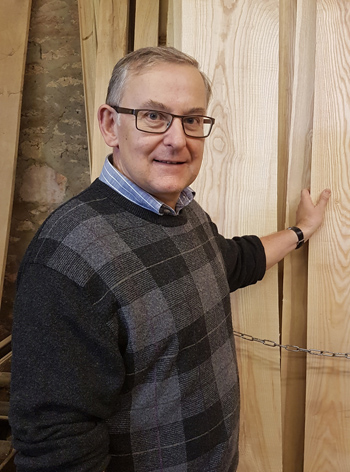
David Mounstephen has been working at Yandle & Sons Ltd in Martock since he was 18 years old. Straight from college he already had a love for the company that he would come to run as Managing Director, following on from his father, and his grandfather before that. Today, the original sawmill has diversified under David’s management and includes a timber shop, a woodworking centre selling all and any tool conceivable that a woodworker may need and a café which the locals love. There is also a store selling haberdashery, paints and craft materials and a gallery which stocks an impressive array of different pieces from local artists as well as a learning hub. It is this expansion from the still operating sawmill that has kept Yandle and Sons Ltd a thriving business.
Originally, Yandle & Sons Ltd only dealt with English Elm and made coffins which were sold wholesale. But with the onslaught of Dutch Elm disease, the business was under threat almost overnight. David and his father looked to put the sawmill to use in other ways and found a gap in the market for oak caskets to house ashes from cremations. These caskets also led to making the handles for coffins which, until then, had been made from non-biodegradable materials. David’s love for retail gave him the confidence to introduce the craft shop, somewhere which could entice anyone visiting whose head wasn’t turned by the woodworking emporium. The café was a natural progression after that, providing somewhere for people to meet, with the recent addition of a table for anyone who would like company to sit at and meet others.
Decidedly a family business, David still meets with his father at his parents’ house every lunch time. They are joined by David’s nephew, his designated heir to the business. Together, the three generations around the table discuss business and new ideas, all while enjoying mother’s cooking; her roasts are top of the wish list. And when evenings and weekends allow, David retires to his farmhouse in Martock which he moved to in January, after a long spell commuting from Bristol. Back in the village where he was born, he allows himself time to explore his love of painting. Possibly one day we may spy one for sale in the gallery if his humility would allow it.
People in Food
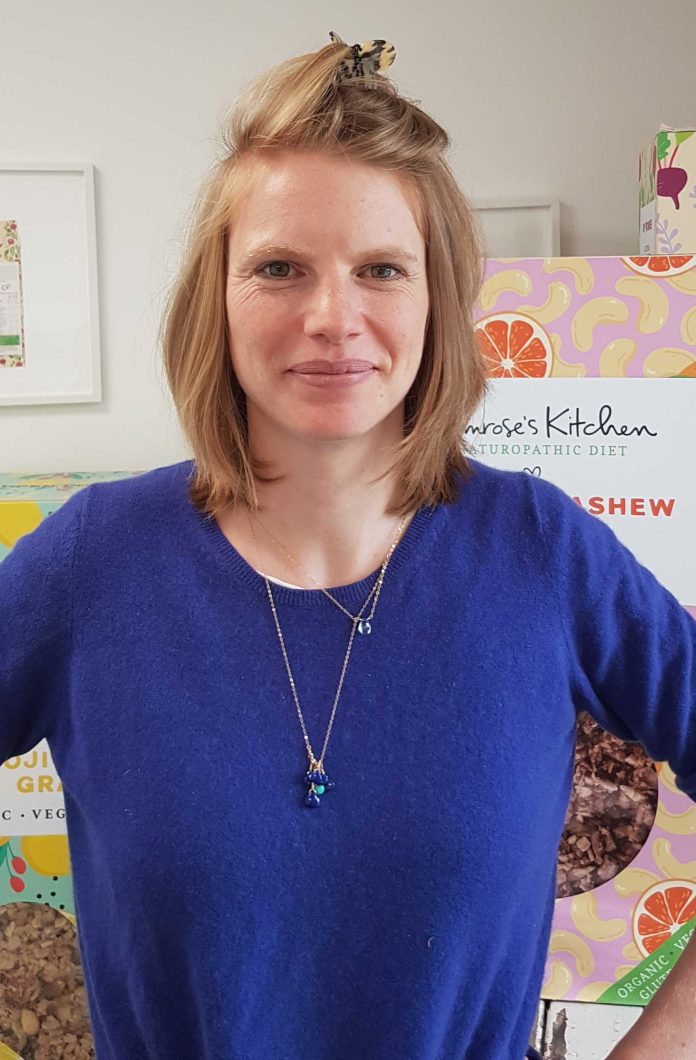
Owner and creator of Primrose’s Kitchen, Primrose Matheson lives her life by the philosophy behind her range of organic, vegan and gluten-free muesli and granola. She uses wholefood ingredients, including fresh vegetables and fruit that have been air dried at low temperatures to create delicious, healthy superfood that nurtures the soul. This is paired with a passion to respect the planet; all packaging is home-compostable and ingredients are sourced from British farmers, where possible.
Set up five years ago from her kitchen, when she was living in Rampisham, Primrose originally created the muesli for her own use, using her background in naturopathy and homoeopathy, believing what you get out of your body reflects what you put into it. She then started to sell at farmers markets and supplying local delis and shops. However, a turning point in the business was when Primrose’s Kitchen appeared on the shelves of Waitrose. She now has a team sending her range of products, in their colourful packaging, all over the UK and even to France, Spain, Finland and Canada. As Primrose feels your working environment should be a reflection of what’s important to you, she took her time to find her HQ. At Eden Park, outside Buckland Newton, the workspaces are light and airy, in a rural location, with greenery and room to grow. And Isla, Primrose’s dog is in charge of general zen in the office.
Commuting from her cottage just outside of Bridport, Primrose grows as many vegetables as she can in her garden and lives as self-sufficiently as possible. From a childhood in Guernsey, she picked up some fishing skills, and can often be found with her rod on Cogden beach. If she’s not on the beach, she’ll be in the sea, as a daily swim in the summer and autumn months is a must for Primrose. With a keen interest in wanting to know more about what surrounds her and live in line with nature, Primrose has learnt about foraging, willow weaving, natural plant dyes and plans to go on a hemp weaving course next year. Based on her philosophy that you get out what you put into life, this bubbly ‘tour de force’ is an inspiration to all who taste her products.
Tales of Witches

We wish you a Happy Christmas and a peaceful year to follow.
As the nights grew darker people used to sit around the fire and roast chestnuts and tell each other old chestnuts! Some may like to tell stories of witches but do not expect to encounter a witch. Some twenty years ago I was investigating the Nine Stones Circle just before Winterbourne Abbas, between Bridport and Dorchester on the right-hand side of the road. I needed to take measurements as I had been unable to find a reliable plan and so enlisted the help of a fellow committee member of Bridport History Society, Marilyn Sealy, who is also skilled with a camera. On entering the circle we discovered a short branch of a tree on top of one stone. It was possibly willow with all leaves and side shoots removed and had been carefully dressed with coloured wool and beads and some ribbon. We thought it was some sort of witchcraft and left it there. The next time I went to the circle the wand had miraculously disappeared.
Witches have been talked of since very early times. In the Bible there is a description of the Witch of Endor with Samuel and Saul. Witches came to prominence in Britain after the reformation when Puritans appear to have associated witchcraft with the Catholic church.
Matthew Hopkins (c.1620 to 1647) son of a Protestant minister appointed himself as “Witchfinder General” in Essex, but this was not a legal post. Nevertheless, he and John Sterne caused havoc among the populace by their witch trials. People would report their neighbours for possible signs of witchcraft, usually, an elderly woman living alone who was unfriendly and had a pet, e.g. a black cat, a ferret, frog and toad, who fed hedgehogs. Hedgehogs are nocturnal and therefore were considered to be evil. Such animals were described as a witches “familiars” and witches were said to be able to turn herself into her familiar. Another familiar was believed to be a hare, and it was believed the only way to shoot a hare was with a bullet made from silver. Women are more likely to be considered evil, like Eve in the Old Testament. The usual check to determine if a woman was a witch was to cast her into the local pond and if she floated she must be a witch, but if she sank then she was not, but if she drowned that was too bad. In the years 1645 to 1647 it is said that 100 women were hanged for witchcraft.
Reverting to the willow, it often grows near water, which was thought to be suspicious. Green willow taken into a sick room will cool it and the sick person. A witches wand is about an arm’s length with the leaves removed. Willow was also reputed to be used for the witches broomstick, and with other types to form the broom. Trees are said to creep about at night. A song includes “All around my hat I will weave the green willow”. Bats are also thought to be connected with witches as they fly at night. Bats are now said to be plentiful on Golden Cap.
You will surely recall the three witches in Macbeth by William Shakespeare (born 1564) who entered a dark cave with a central boiling cauldron, saying “thrice the brindled cat hath mew’d”, “thrice and once the hedge-pig whin’d” and then all three witches said “Double, double toil and trouble; Fire burn, and cauldron bubble”. They threw poison’d entrails into the cauldron, fillet of a fenny snake, eye of newt, toe of frog, wool of bat, adder’s fork , howlet’s wing, root of hemlock and so on. Another phrase is “By the pricking of my thumbs, something wicked this way comes”. Macbeth calls them “secret, black and midnight hags” and finally they dance and vanish.
The male equivalent of the witch was the “Cunning Man”. In Netherbury lived John (or James) Walsh, said to be “a servant and pupil of a popish priest Robert Drayton for seven years who had taught him physics and surgery and much else of a less praiseworthy nature”. He confessed to the Commissary of the Bishop of Exeter in 1566 that he employed a “familiar”, sometimes a dog, a pigeon, “a gray blackish bird”, or a cloven-footed man to discover lost or stolen goods. He was under suspicion of divination and sorcery and said he had his master’s book with “great circles in it” which he used with two wax candles and a wax crucifix to raise the familiar spirit. He rewarded his familiars with a gift of a chicken or a cat and pleaded that he had never harmed anyone. He would climb to the top of high hills between midnight and dawn to meet fairies in a fairy hut and said that “fairies” came as white, green or black the latter meaning death. After his book was taken away by the Constable of Crewkerne, Walsh said he could no longer raise the spirit and perform. Walsh declared that daily recitation of the Lord’s Prayer and Creed would protect from harm by witchcraft. The results of the investigation are not known, but at the time could have resulted in his execution for witchcraft. In this century he might have been given tranquilisers. As time went on a Cunning Man was also known as a Conjurer or “White Witch” and frequently referred to for curing illnesses of man or beast.
Eventually, these Cunning Men and White Witches became herbalists and made up potions to cure some illnesses. Thomas Hardy has a short story in his Wessex Tales—The Withered Arm—about a young wife who has an increasing problem with one arm. She is directed to a Cunning Man, Conjuror Trendle, who sold furze, turf and sharp sand and plays down his magic accomplishments saying that when he is said to have cured warts that they may have gone naturally. He broke an egg so that only the white fell into a glass of water and she saw the face of her husband’s discarded mistress in the glass. The story ends in a very sad way which I will not relate here but leave you to read for yourself if you wish.
Locally Elizabeth Gale in her book about Burton Bradstock says that fishermen in years past who believed their boats were bewitched would nail a mackerel stuck with pins to the stern. For luck, they might carry a pebble with a hole right through it, a “Holy Stone”.
In 1687 in Lyme Regis the wife of Deanes Grimmerton was alleged to have bewitched 18-year-old Nathaniel Scorch by sharing her tobacco pipe with him. He had fits and then a rusty nail and brass pins were taken from his body, with no trace of blood and then he saw an apparition of Grimmerton. Similar finds were found from Elizabeth Tillman, who died at 18, after fits and also saying she had seen the apparition of Grimmerton. In 1700 widow Margaret Way and Anne Traul were charged with witchcraft after Frances Callway had fits which doctors said were unnatural. Several months later she improved until she saw Anne Traull again in the bakehouse, where they had an argument and the fits returned. She claimed that Traull and Way were pinching and pricking her, then she vomited pins and a broken needle. In both cases brought before Lyme Mayors Standerwicke and Burridge, and then tried at Dorchester the alleged witches were found not guilty.
William Barnes has a poem “A Witch” which says :
“There’s thik wold hag, Moll Brown, look zee, jus’ past! I wish the ugly sly wold witch,
would tumble over into the ditch…. She did, woone time, a dreadful deal o’ harm
To Farmer Gruff’s vo’k, down at Lower Farm.”
Briefly he tells the full story, including ways to combat witches with horse shoes nailed over the door and the farmer’s wife trying to draw blood from the witch with a pin, which snapped against her skin.
I hope these stories have not worried you and you sleep well. Meanwhile, we wish you again a very happy Christmas.
Bridport History Society meets on Tuesday December 11th at 2.30 pm in the United Church Main Hall, East Street, Bridport to hear from John Willows about “Water for a West Dorset Quartet : public water supplies from 1797 to present day”. All welcome, visitors entrance fee £3.
With Christmas Cheer, Cecil Amor, Hon President, Bridport History Society.
2018 Lateral Christmas Catalogue

As December 25th is fast approaching, it’s time once again to hunt down some lovely gifts for your nearest and dearest. But let’s please have some originality this Christmas. You should be fondly remembered by your loved ones for your creative spark and inspiring ingenuity at choosing presents. Be brave, be imaginative, be lateral! No more boring old socks or handkerchiefs, strangely branded eau-de-toilette or bath salts smelling of formaldehyde. If you wouldn’t really appreciate receiving a book on ‘Famous Cats of the World’, then there’s every chance that Uncle Jack wouldn’t want it either. Last year’s fluorescent reindeer hat (so cute when first worn) is no longer a ‘must-have’ fashion accessory and meercats are so desperately LAST year, darlings…
So, here’s my list of lateral gift suggestions for 2018. I’d love to buy some of them for myself if anyone decided to make them available.
Smart Noise Cancelling Headphones: Of course, these exist already but they’re not selective. They may lower the volume of some unwanted background noises (cars, washing machine, annoying music from next door etc) but I’m talking here about special headphones that can be programmed in advance to remove 100% of particular sounds. For example, I never ever want to hear again the ‘Go Compare’ commercial, Justin Bieber’s song “Baby” nor the immortal self-service check out refrain of “Unexpected item in the bagging area”. My special headphones would selectively remove these and only these sounds, leaving me to enjoy the rest of my life in relative peace and calm. I could also programme it to erase the sound of dripping taps, chainsaws (but only on Sunday afternoons), the squeak of squeezed polystyrene and all crying babies. And if it ever picks up the word ‘Brexit’, it instantly eliminates all conversation and plays me a soothing Bach symphony to ease my furrowed European brow. I would be prepared to really pay a lot of money for these headphones if only somebody would invent them.
iBus: After the iPhone and the iPad, comes the iBus app. With existing rural bus services being slimmed down and under threat, it’s increasingly difficult to get anywhere without a car. So here comes iBus—a free app downloadable to your mobile. Tired of waiting for the next X53 from Axminster to Bridport or the 96A from Yeovil to Crewkerne? You will feel much more relaxed when you use this App and see pictures of the bus than might be on its way to you. Watch the film of it arriving and listen to the sound of the approaching bus to calm your frazzled nerves. You will feel instant karma at the mere thought of the bus’ arrival. IMPORTANT: Please note that the buses seen on this app are entirely fictional and virtual. No real bus may actually arrive, but you might feel a bit better for a minute or two.
European Experience: Instead of a box of chocs or a gift set of nice smelly soap, why not take your family abroad on an adventure of a lifetime? Visit beautiful Strasbourg and historic Brussels. Your children will gasp in awe at the Council of Europe and your partner will dribble with sheer joy at the complexity of Luxembourg’s European Stability Mechanism. Fun For All The Family? Well, not really if I’m honest… Margate or Manchester might be just as good, and very much cheaper.
Gin Joint: After last year’s alcoholic hit of Prosecco, 2018 is the year of Gin. Buy your family our do-it-yourself Gin Joint Kit so you can make ever more adventurous flavoured gin cocktails such as Jurassic Coast dinosaur flavour or organic rustic drain with diesel-oil aroma. You can even sample our new Gin Jam on a hot buttered crumpet.
BrainStick TV: Do you gasp in wonder at the huge proliferation of TV channels and programmes? Confused by Netflix and Amazon Prime and digital downloads? Are you screaming at Streaming ‘cos you don’t know how to watch whatever it is? Well, worry no more. A small operation will take only five minutes and you can watch any TV programme at any time without even opening your eyes (pain-free and only £9,999 per insertion). Smaller than a grain of wheat, the BrainStick is implanted just behind your right ear (almost invisible) and streams every known TV programme in the world for free straight into your brain! Watch last week’s Apprentice on BBC while reviewing The Crown and Fargo simultaneously. No point in wasting time catching up on missed episodes when you can watch everything at once. What’s the point in sleeping when you could be part of The Walking Dead for real? WARNING: May cause brain overload, epilepsy and seizures. Do not drive while using BrainStick.
New Train Set: Model trains are always a favourite gift and the 2018 Xmas Train is no exception. Unfortunately this one’s either running late or it’s been delayed because of engineering works near Surbiton. The service to and from Waterloo has unfortunately left quite a bit to be desired and has finally been cancelled for Christmas. Out of stock. Also out of patience.
Recycling—the Game: Family card and board games are perennial favourites at Christmas time. After the turkey and Xmas Pud, clear the table and put away your mobile phones and have fun playing one of these new games! Try your hand at ‘the Recycling Game’ in which players draw cards at random depicting various festive items. The object is to guess where they will go when it’s time to throw them away. Does gift wrapping paper go into recycling or rubbish? Does mistletoe go into the food compost? Try and catch Grandad as he attempts to slip some metallic tinsel off the tree into the wrong bin! Naughty Grandad! And where do you put the Christmas tree itself? Surely not into organic recycling? Fun For All the Family! Well, it was fun until Auntie Jean had a serious sense of humour failure about whether the sprig of holly on the Christmas pudding should go into garden waste!
Brexit—the Game: Yup, it’s another game and I’m sorry but this one’s a must because whatever you do there’s no avoiding it. At a restaurant, the players all sit round the table having a nice time. Then, one of them announces they’re going to get up and leave. The object is for all of them to agree on why, how and when the leaving takes place and how much they will pay each other for the lunch bill. Suitable for up to 27 players, this game can last several decades, so it’s not really suitable for one afternoon over Christmas. Fun For All the Family? Absolutely not.
An Oasis for Learning
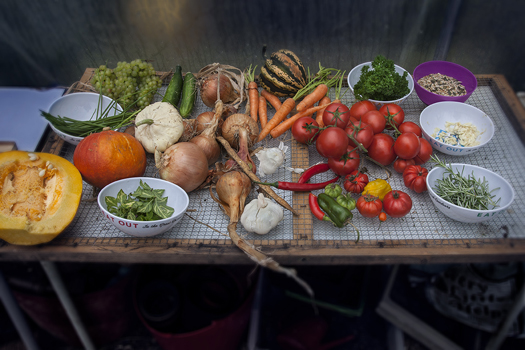
A school garden project in the heart of Bridport won a special award this year at the Melplash Show. Margery Hookings visited the edible garden to find out more about it. She was very taken with what she saw. Photographs by Robert Golden.
I’d read about the garden project at St Mary’s School, Bridport, but it was not until actually seeing it, smelling it and just being there that I grasped the importance of this little oasis on the edge of a large housing estate.
Poly-tunnels, hens, carefully labelled fruit and vegetable plants jostle for position in this green sanctuary, as pupils tear around in the playground during the break.
A clay pizza oven, made and used by the children, sits under a shelter and is used for baking. Up in the school kitchen, Amanda Downes and Mel Hayter turn out healthy and interesting meals using produce from the abundant garden.
Children learn how things grow and then how they’re cooked before tucking into them. In this fast-paced world where convenience food can often be king and some people forget or never know where their food comes from, such a project, which includes family cookery workshops, is a real tonic, a great add-on to everyday school life.
The garden and food growing work at the school in Skilling was started by Home in Bridport, a community organisation which became a charity over a year ago, founded by Robert Golden.
It’s just one of the strands of Home in Bridport, which aims to help create local employment while celebrating local life in a beautiful rural land and seascape. According to the charity, its beginning point is always within building trust and friendship through cultural work—film, photography, music, literature, theatre, fine arts, agriculture, growing food and helping people to learn about preparing healthy inexpensive meals.
The school fruit and vegetable garden was revived with the help of a privately-donated poly-tunnel and help from Groves Nurseries, Modbury Farm, and J C Phillips.
Cookery classes, under the direction of Amanda and Mel, and for children and their parents take place every other week. Two teachers and two part-time gardeners, Tia Perella and Mitch Burt, were sponsored by Home in Bridport to attend a Royal Horticultural Society course at Bath City Farm where they learned about ideas for children’s gardening clubs.
Back in 2014, a group of volunteers from Transition Town Bridport and Home in Bridport installed a poly-tunnel in St Mary’s Primary School in response to the national and local concern about childhood obesity. The school is in the catchment area of the Skilling estate, and the project was aimed at tackling food poverty and supporting an increase in the take-up of free school meals. The food grown is used in the school kitchen and fruit tuck.
In the four years since the garden has been in operation, school meals have become more popular but there were concerns about waste, especially vegetables. With a grant from Awards for All, the team planned a project, linking up with Peas Please, to start promoting vegetables through growing, preparing and eating together.
In April 2018, the project was launched at a whole school assembly.
A nutritionist ran a series of workshops with the older pupils, which involved basic food choices for health and pleasure. Fun tasks were created to discover different tastes and to understand the role of all the senses in eating. Head cook Amanda and two food educators led a five-week cookery course for parents and children using only fresh vegetables. Participants were then given a recipe book containing all the dishes from the course. The two part-time gardeners worked with pupils to grow legumes from seed. A ‘Legume Castle’ was planted and harvested throughout the summer.
In June, an open afternoon showcased the edible garden. The cooks also led workshops in the children’s marquee at Bridport Food Festival.
The project culminated with a harvest celebration in September, where the whole school picked and podded dried beans, made pumpkin soup, baked bread and shared a meal together.
Tina Ellen Lee, who works alongside Sarah Wilberforce of Transition Town Bridport in fundraising for the garden project, said future development plans included a woodland garden, designed by Key Stage 2 pupils, which incorporated a pond enclosure near the school.
“This would be a reflective garden for reading, which would also be a resource for some of the forest school activities.”
“We will also be growing more woodland fruits and produce and there will be some artwork, possibly a mosaic which the children will design.”
To find out more about project, visit home-in-bridport.weebly.com