
Monday, December 22, 2025
Home Blog Page 26

Beside the Sea

‘Oh I Do Like to be Beside the Seaside’

This was a popular song between the Wars in music halls. It went on to repeat “I do like to be beside the Sea” and then “I do like to stroll upon the Prom, Prom, Prom, where the brass bands play Tiddly Om Pom Pom, Tiddly Om Pom Pom, Tiddly Om Pom Pom.”

Many people at the time this song was popular only saw the sea once a year, and then for a day trip, if at all. So they looked forward to the trip through the winter and subsequent months, thinking of the sun and freedom. My village choir had an annual outing to the seaside, on a Saturday, which probably meant the men lost a half day’s pay. We went on a “charabanc” which was not very comfortable and of course the first venue was the sand, to build castles. Then lunch included sandwiches, which always seemed gritty with sand! Perhaps I had dropped mine. Later we would have a “stroll upon the prom” or maybe along the pier. This was always a thrill, to look down and see the waves below, or dream we were on the deck of a ship. Occasionally we might see a paddle steamer passing off shore, a most unusual sight for “land lubbers” like us. On the shore line we might find some sea weed, which was carried home to hang up in the hope that it would forecast the weather, before we had television reporters to advise us. And of course there was always a Punch and Judy show and ice cream sellers. There were shops selling postcards to send to relatives with the familiar message “Wish you were Here”. Later I was to discover that some cards were not what my parents would wish to send or receive, as they carried a slightly naughty message. In later years a friend used to collect these and sometimes send a choice one to me.

Nowadays we only see paddle steamers once or twice a year when the Waverley, the largest ocean going paddle steamer still in existence, built on the Clyde in 1946, makes its way down from its home port near Glasgow. It is interesting to see it, with its two funnels. On board one can go down stairs to see the engine room, with massive connecting rods which operate the twin paddles for propulsion. Some people say “I am going to see the engines” as a euphanism for visiting the Public Bar nearby. The top section of the paddles are housed in semi-circular covers for safety and to avoid splashing the decks. The paddles are mounted either side of the hull and can operate separately and reverse, for steering or reversing. The Waverley can now dock alongside the main pier at West Bay. The Waverley was bought for £1 from the breakers yard by the Paddle Steamer Preservation Society. If not the Waverley, one may see its sister ship the Balmoral which is smaller and is screw driven, perhaps not as interesting as a paddle steamer.

Some years ago we went on board one of these ships in a trip from West Bay around the Isle of Wight and back to Poole, where we had to come “down to earth” and board a coach to transport us back home. Unfortunately the weather was poor, initially very windy, so that it was difficult to hear the running commentary describing the onshore sights. Then approaching the island, rain started and we were confined to the cabin to peer from rain spotted windows. Perhaps we shall be luckier on another occasion.

In days gone by, paddle steamers were much more common around our coast, but smaller than the Waverley. Paul Atterbury in his book Just a line from West Bay has two postcards showing the paddle steamer Victoria at West Bay loading and unloading passengers with her bow run up to East Beach via a rather flimsy looking plank gangplank and hand rail. First the steamer would drop an anchor astern and then gently nose into the beach for about an hour ashore. The Victoria was operated by the Bournemouth, Swanage & Poole Shipping Co. in the Edwardian era before the First World War and  called at Lyme Regis, Sidmouth, Torquay and Dartmouth. There were circular evening trips to Weymouth, returning by train. John Sales in A Bridport Camera writes that it called every alternate Thursday through the summer, with sixpenny trips round the bay. Other paddle steamers were the Alexandria and the Monarch calling into West Bay less frequently.

Some years ago Bridport History Society had a talk from Roger Whyte about Lyme Bay paddle steamers. Captain Joseph Cosens had set up a company in 1848 to service warships at Portland and provide ferries and harbour construction. By 1900 Cosens and Co. had eight or nine paddle steamers in their Buff Funnel Fleet, one of which the Premier lasted ninety years. A number of ships became mine sweepers during the First World War and one The Duke of Devonshire was purchased by Cosens in 1938, and renamed Consul became the last addition to the fleet. She was modernised and used into the 1960s. There were regular trips from piers at Bournemouth and Swanage to the Isle of Wight and across the Channel to Cherbourg. Victoria, Alexandria and the Monarch were all regulars between the South Coast resorts. Lulworth Cove was a popular destination, landing passengers over the bow onto the beach, more sheltered than some further west.

World War II again took the ships for minesweeping and anti-aircraft vessels and despite refitting, trade did not return to pre-war levels. Holidays abroad and increasing car ownership reduced the appeal of a trip on an ageing paddle steamer. The Majestic had been sunk on war service. Cosens purchased the Duchess of Norfolk in 1937 and renamed her the Embassy. She became very popular but had to go to the breakers yard in 1966. The Consul made her final journey in 1968 to a sailing school on the River Dart. Paddle steamers took trade from local boatmen at Torquay and Lyme Regis and when difficulty occurred in using piers and arguments about damage, the boatmen refused to ferry passengers to the steamers moored offshore. The paddle steamers paid no harbour dues if they moored offshore, unlike the local boatmen.

The local newspaper Bridport News of 30th July 1937 advertised trips from West Bay by the steamer Victoria at 12 noon to Lyme Regis with an hour at Lyme returning at 4.10 pm fare 2 shillings. Also a circular trip to Weymouth 5.15 pm, up by steamer, home by rail. An hour at Weymouth and return by 9 pm train to Bridport Station, for a fare of 3 shillings.

Now we no longer have regular paddle steamers or a railway station at Bridport. However we can look forward to summer and trips to the sea, and paddle our feet, like our predecessors between the wars.

However we still have a Bridport History Society meeting on Tuesday 12th March at 2.30 pm when Prof. Karen Hunt will talk about women and food on the Bridport home front, 1914 – 1919, The Kitchen is the key to Victory. All welcome, visitors entrance fee £3.


Cecil Amor, Hon President, Bridport History Society.

 

Augmented Reality at Shire Hall

Jason Wilsher-Mills’ artwork for George Loveless, the leader of the Tolpuddle Martyrs. Please credit: Jason Wilsher-Mills

Artist Jason Wilsher-Mills talks to Fergus Byrne about his upcoming exhibition in Dorchester

As a youngster, Jason Wilsher-Mills was a keen rugby league player. So keen, and also so talented, that he had scouts from some of the big league clubs taking an interest in his future. Little did any of them imagine that that future would go in a completely different direction. Captain of his team, already over five foot tall and broad-shouldered, Jason contracted chicken pox at 11 years of age. It developed into chronic Polyneuropathy and left him paralysed from the neck down. ‘I didn’t grow much after that’ quips Jason, ‘but I would probably have been well over six foot.’

He was in hospital for over a year, and while doctors came and went, suggesting polio and various other possible diagnoses for his condition, there was never a definitive conclusion. ‘Even the Polyneuropathy is like the nearest thing they could get to’ he explains. From 11 to 16 he was in full-time care, reliant on his parents for everything. The rest of his life was a slow battle to recover what movement he could and claw back as much use of his limbs as possible. ‘But I recovered’ he says. ‘I say “recovered” in inverted commas because I never really recovered. The fact that I’m using a wheelchair now tells its own story really.’

The process took him on a career path he hadn’t imagined initially. In March he will be unveiling an exhibition of his new augmented reality artwork, bringing the story of the Tolpuddle Martyrs to life like never before. The exhibition is the next step in a career as an artist that has seen him exhibit with Grayson Perry at the V&A; show art in the Tate Modern; create a banner for display in the Houses of Parliament and have work commissioned to exhibit at the Museum of Islamic Art in Qatar. Something he described as ‘like being asked to play for England!’

This year he has also been shortlisted for Unlimited Art Funding; an initiative that supports disabled artists who are in mid-career, to help them get to the next level. ‘Fingers crossed I might be creating permanent art for Finsbury Park, the National Children’s Museum and many other places that will all connect using technology. I’m also doing work commissioned for the International Freedom Festival,’ says Jason.

The Shire Hall exhibition came about because of a chance meeting with members of the Shire Hall project at the unveiling of his banner created for the Disability Discrimination Act at the Houses of Parliament. He will be using augmented reality technology to superimpose computer-generated films, images and interactive components on what someone is seeing in the real world. This could be by using a tablet or mobile phone to view the original artwork and then ‘seeing’ the augmented part as 3D on the screen. The exhibition, called Tolpuddle Martyrs Remixed: Six Dorset men who changed the world, is something that Jason is very excited about. It is the initial step in an augmented reality project that he plans to develop further in the coming years. ‘It’s absolute cutting-edge technology’, says Jason. ‘There’s no other museum that’s using that technology.’

The technological advance is a long way from his initial sketches while recovering from his illness. One of eight children, Jason came from a very working-class background, but he was encouraged by his parents to draw. When he became disabled, the doctors suggested he probably wouldn’t live beyond seventeen. ‘I’m fifty next week!’ he laughs. But his parents were very supportive of his doing what he wanted to do. ‘I went on to University and was really quite passionate about art.’ After graduating, he took up teaching, unsure about whether he should paint. He explained: ‘I definitely wasn’t ready to do what I do now when I was in my twenties. I felt I had to do other things like teaching. I taught art in a prison for many years. Art has always been there, but it’s having the courage to make the step.’

About ten years ago he was in a slump, feeling he couldn’t achieve anything when one of his friends told him he should paint his way out of it and suggested using an iPad. This was something Jason had never heard of. ‘And literally within three months of getting one, I had work on show in San Francisco. That quick it was bonkers.’ He explained that he felt he had to mature a bit before taking the step to being a professional artist. ‘But I worked really hard, and I’m really ambitious in what I do, and it’s sort of paid off.’

He sees a strong relationship between his work on the Tolpuddle Martyrs and his background. ‘I’m a northerner from Wakefield in Yorkshire’ he says. ‘My Dad was a coal miner, and I have really vivid memories of the miner’s strike. I grew up seeing lots of trade union banners. We were brought up going to coal miner’s galas. It was a really important part of our lives, but we didn’t know that it was to do with being socialist or left wing. It was just part of our lives.’

He can remember arguing with his Dad about the miner’s strike. ‘Like all teenager’s I thought I knew better’ he says. He saw ‘highly edited’ pictures on television of violent protest and asked his Dad why they were fighting. “Well, they’re fighting for their jobs lad”, replied his father. Later in life, he did work for the coal miner’s industry and remembers meeting people that had been on the front lines of the miner’s strike. He met people who recalled being bundled into the back of a police van only to find that underneath the police uniform many of them had army uniforms on. ‘One guy recognised his own Sergeant from when he’d been in the army.’ The sergeant warned the man that as he had signed the Official Secrets Act, he mustn’t tell anyone.

Jason points out that his upbringing, surrounded by the area and people where the trade union movement started, informed his own political beliefs. Although he understands that the men that went on to become known as the Tolpuddle Martyrs had their own brotherhood based on their religious beliefs, he could see the injustice of them being punished for considering forming a trade union. ‘With my own political beliefs and being a disabled artist in contemporary times, I use my voice to campaign and describe and deal with what it is to be a disabled person. I kind of felt there was an affinity there.’

He came to Dorset last year to spend a few weeks doing workshops in schools and talking about the Tolpuddle Martyrs. ‘It was amazing how many kids had family members that were connected in some way to the story.’ He carried on gathering information and putting together ideas for the commission, which required an individual piece about each martyr, or “Dorsetshire labourer” as they are called. ‘Which is quite an important definition’ he explains, ‘because, at the end of the day, they were just ordinary men who were caught up in an extraordinary story. First and foremost they were passionate about their beliefs. They actually built the chapel in Tolpuddle, and they were committed Methodists. The work I wanted to do was about that and returning them to the land and showing how important the church and Dorset was to them. It was also about how important they were as individuals. Because it’s almost as if the Tolpuddle Martyrs have become a mythology, so the work is trying to get back to the real men and the families. They were all passionate about their families, and that’s what kept them going.’

His plans for the future include taking the idea of people like the martyrs and bringing it into the discussion about disability. ‘In terms of disability we’re not that different to those guys meeting round the tree’ he says. ‘It’s an understanding that it’s a real fight. I think George Loveless—one of the martyrs—he was an ordinary guy, he was a passionate speaker and was very charismatic. I’ve tried to make him look like an old-time prophet from the Old Testament. Almost like Charlton Heston with the crazy hair, coming down from the mountain, inspiring these men to do something that would transform their lives. They were ordinary guys that had to do something because they were left with no choice. I can recognise that in my own situation.’

There is a strong thread running through the work that Jason Wilsher-Mills pursues. He takes the battle forward for those with any kind of disability and shows a vital awareness of injustice, especially for those that have to rely on the state to help them survive. ‘I have a friend who is an ex-Paralympian’ he says. ‘She’s never walked. She never will walk. She’s been in a wheelchair all her life but had her disability benefits taken away because the doctor didn’t give a detailed enough explanation of her condition.’

He points out that it’s hard enough for people with autistic disorders, mental health issues or ‘invisible illnesses’ to get help. ‘Although you’d think that if you had a leg missing or were using a wheelchair, they’d figure out there was a problem.’

He also works with adults with learning disabilities. ‘It’s about telling their stories and using the tools that I have to do that.’ One of his current projects is producing a sculpture at the University of Hull which is all about the disabled people in Hull, ‘the communities, the hidden stories and quiet voices—and giving them a platform to express themselves—it needs doing as well.’

Jason Wilsher-Mills’ exhibition Tolpuddle Martyrs Remixed: Six Dorset men who changed the world will be open to the public at the Shire Hall Historic Courthouse Museum in Dorchester from March 19th to June 14th.


For more information visit shirehalldorset.org.


Up Front 03/19

I’m sure I’m not the only person who, contemplating possible technological advances twenty or thirty years ago thought, ‘yes that might happen, but not in my lifetime.’ How wrong we were. It’s a misjudgement that I’ve learned to be aware of when looking at scenarios that today might seem outlandish. When the philosopher, Yuval Noah Harari, in his book Homo Deus, touched on the potential for biological inequality due to medical advances switching from healing the sick to upgrading the healthy, I thought, ‘yes, but not in my lifetime.’ His theory is that methods used to repair medical or even cognitive problems could easily be used to enhance people who don’t have a problem but would like to improve perhaps their memory, brain power, fitness or physical strength. He suggested that initially, the research, development and implementation would be expensive, and therefore only available to the wealthy. But that this could potentially create a super race whose ability to take advantage of these advances meant that they would always be a step ahead, and consequently unstoppable. In many ways, it’s an old cyborg science fiction story, but one that is now being taken seriously. This week’s news stories included one about a lady undergoing gene therapy treatment to halt a common form of blindness. Another highlighted an International Association of Athletics Federations ruling that a female athlete should take medication to lower her testosterone level or be forced to compete with men: while another story, from Pablo Uchoa at the BBC World Service, asked whether we should be worried about hackers taking control of brain implants. He pointed out that advances in neurotechnology mean that brain implants are being investigated for treating depression, dementia, Tourette’s syndrome and other psychiatric conditions, possibly even memory loss. Laurie Pycroft, a researcher with the Nuffield Department of Surgical Sciences at the University of Oxford, commented that she wouldn’t be surprised if there was a memory implant available within the next ten years. The timeframe for these human enhancement technologies is no longer measured in decades and centuries, so much so that the current debate is not if or when things might happen, it’s how can we deal with the ethical questions of human enhancement, and how can we stop them being manipulated by those with the power to do so? It’s tempting to say that those are questions that won’t be resolved in my lifetime.

Vegetables in March

It takes unbearably long for the soil to warm up in the Spring, but as the Equinox looms there is often a warm spell when you can risk an early sowing of some outdoor seeds. With all small seeds, warmth is key for germination, sowing early is a risky business.

Carrot germination is the supreme challenge. We discussed last month the idea of sowing indoors in pots, gel or damp paper towels. You then transplant into the growing bed the moment you see any sign of life—before the roots are more than a nanometre long. This is not an option for my sausage-fingered self, we sow outdoors in damp soil warmed by a layer of fleece.

Large seeds such as peas, broad beans and well chatted early potatoes do well from a March sowing. With all soil sown crops, growth is stronger and faster under fleece. You may have to put some netting over the fleece to keep birds and badgers at bay, jackdaws like fleece for their nests. We start peas and beans in seed trays indoors to get around the mouse problem. And do you like what mechanics and gardeners wear? Overall.


Cheap seeds!

This year we have bought nearly all our seed online from Premier Seeds in Salisbury. The seed packets are mostly 69 or 99p and no postage, and you get masses of seeds. They say they were fed up with the price of seeds and thought they should be cheaper. Suits me! They buy bulk seed from big companies and trial them in their Salisbury garden—which is just what the likes of Kings and Suttons do.


March in the Garden

I remember how much snow and low temperatures we were still enduring at this stage last year. As I write, we are enjoying a, jet-stream powered, unseasonably mild spell. It’s easy to be lulled into a false sense of security so, although comparatively warm days should be on the increase this month, it’s always worth remembering that we are not ‘out of the woods’ yet.

In fact, March is the last month that the traditional ‘winter tasks’ need to be completed. I often don’t tackle rose pruning until now because I’m always more afraid of promoting early bud break, whenever a mild spell follows a good pruning, than the risk of removing a few already growing shoots by leaving it until the end of winter.

If a severe frost kills all the breaking buds, on roses that have already been shortened by the maximum amount, then pruning them back even further, to remove the blackened shoots, will inevitably leave them pruned back more than you originally intended.

Having said that, most gardeners are too afraid to commit to a really hard prune so a further shortening may actually do a power of good. As long as the rose is still vigorous, a good rose fertiliser and organic mulch applied now helps maintain vigour, then the chances are it will bounce back from a hard prune to flower better than it ever did before.

Roses are, when all is said and done, just a special type of shrub and there are other shrubs in the garden which benefit from a really hard prune right now. Shrubs grown for their winter stems should be stooled (cut almost to the ground) now and given a feed with something like ‘fish, blood and bone’ to encourage strong new growth, in the summer, which will provide the brightest colour next winter.

If you have really thick, tangled, shrubs, of any persuasion, then getting in now and removing the oldest stems, in their entirety, will cheer them up no end. Airy shrubs with good space between the branches are healthier and more graceful than dumpy, congested, old lumps. Take a look at what you’ve got and remove anything that you can easily identify as being dead, weedy or overgrown. The worst you can do is to lose a season’s flowering, or weed out an ornamental plant which has become rampant, but neither of those is disastrous.

If the mild weather has initiated lawn growth, average temperatures above about 7°C will suffice, then it might even be necessary to cut the lawn this month, on a high blade setting, if it’s dry enough to undertake without damaging the ground. I always try to cut the meadow grass short this month, in many years it’s just too wet to get the topper onto it, because it helps to maintain the diversity of the sward and prevents the coarser grass species from taking over.

Shortening the meadow grass now allows more light to reach the soil surface, promoting the germination of annual meadow species which need to get established before the perennial components shade them out. ‘Yellow Rattle’ is the most important annual that needs to gain a foothold in newly created meadows. It is semi-parasitic on grass species which would otherwise prove too vigorous in an establishing meadow, especially one that is not on an impoverished soil. By keeping the more bullying grass species under control, the rattle allows the finer species to compete on a more level playing field—hence leading to a greater plant diversity and that’s the name of the game when it comes to supporting the largest number of other wildlife.

It’s still too early for direct sowing, outdoors, but there’s plenty of perennials, annuals and half-hardy bedding plants that can be started off now on windowsills or in the greenhouse (as long as it can be kept frost-free). In an unheated greenhouse it’s worth experimenting with heated propagators because then it’s possible to supply gentle heat for germination even if it’s uneconomical to heat the whole space. By the time the seedlings are large enough to prick out the season will have advanced by a few weeks and the unheated greenhouse will be warm enough to sustain them.

Raising plants from seed can be a little hit or miss. One sure way to propagate extra plants, which is almost foolproof, is to dig up large clumps of herbaceous perennials, before their growth is too far advanced, and then divide them into smaller ‘offsets’. Species such as perennial geraniums are easy to tease apart with ‘back-to-back’ forks or simply by brute strength. Perennials which form woody bases, I find phlox fall into this category, may need to be chopped into smaller pieces with a spade. Really congested, or tough, specimens may be sawn into submission with an old woodworking saw kept specially for the purpose.

Plant a few of the newly divided portions back where the original clump was growing, incorporating organic matter and some ‘fish, blood and bone’ fertiliser into the planting hole, and pot up the rest of the divisions using new compost. If you have other spaces in the garden, which require new plants, then the divisions can be planted directly, improving the soil as before, which will save on pots and aftercare. Always water in new plants, with a can of water, in order to settle the soil around their roots and ensure that they do not dry out—rain alone is seldom enough during establishment.

Of course plant lifting, dividing and replanting all depend on decent weather conditions, mild and dry being preferable, so, at this point, I shall hope and pray that winter does not linger too long and that March yields plenty of days which veer more towards ‘balmy’ than ‘arctic’!


Vegetables in February

One of the few things I’ve learnt in my vegetable career is that plants germinate better, stronger and faster when it’s warm.

Our 2019  new year’s resolution is to put all module trays in the airing cupboard this spring: a tricky pastime, but it worked well last year. After 3-4 days—about the time it takes to get 100 junk calls—and before the seedling emerge we’ll move them onto a soil warming cable in the greenhouse. They need less heat to grow on, but the cable warmth does help.

This is only for the extreme grower, who wants the first tomato in their village, but as all sports seem to be extreme these days why not vegetables? Last year we sowed f1 Sungold tomatoes mid-February, transplanted them to bigger pots, then into the greenhouse soil beds in early April. It was a really cold spring, but no frost and they kept growing. We had the first ripe fruit on 3rd June. Lucky I’m not competitive!

For soil sowing, it’s easiest to wait until April or even May. On an accurate weather forecast look out for a four-day warm spell, and sow then. The trickiest crops are the slow-germinating umbels such as carrots and parsnips. As readers keep telling me, you can germinate them indoors in a pot with warm soil or on moist paper towels, but you have to forensically transplant them as soon as you see the first signs of life to avoid multi-fanged roots.

Large ‘seeds’ such as 2nd early potatoes (more tasty than 1st earlies) and Aquadulce broad beans can be planted in late February, best results by far when covered with a thick fleece. In the airing cupboard mid-month we’ll be sowing salad crops, beetroot, tomatoes and peppers, but leave it for another month if you have no greenhouse to transfer the seedlings to.

The full-on sunshine last year was so good for growth if you had access to water, well proving how most crops do better with sun and warmth. Even better, it was bad for slugs and carrot root fly, and there is very little damage on celeriac and carrots we are lifting from the soil now. Hope you enjoyed your Christmas crackers as much as we did, what happened to the hyena who swallowed a stock cube? He made a laughing stock of himself.

Peter J W Noble

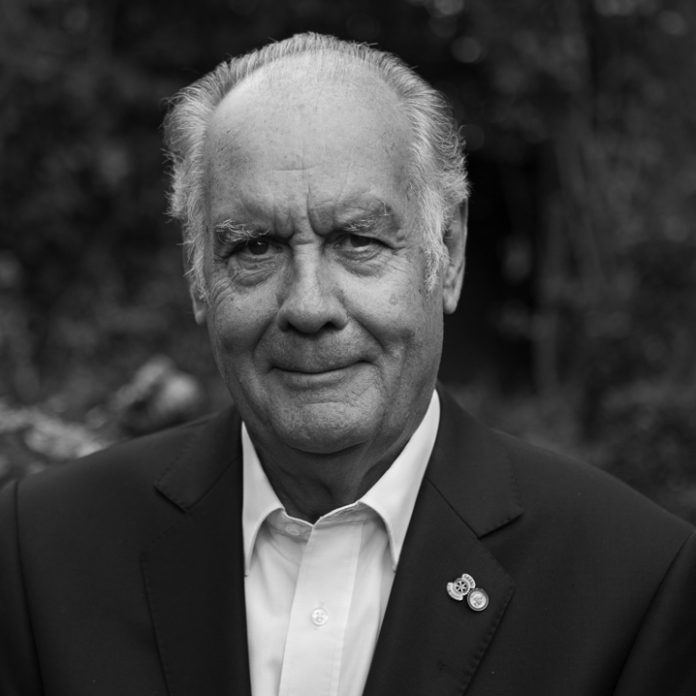
‘My grandparents were White Russian and Irish Catholic on one side and mainly English on the other. And although I’ll never really know the truth, that might account for why my parents decided to marry in secret. They married in March 1939, went home to their respective parents’ homes afterwards and didn’t tell anyone. They obviously managed to see each other at some point because in November the following year I appeared. My father, after working for the Hong Kong and Shanghai Banking Corporation joined the RAF and I never saw him until I was four years old. We lived in a flat in Reading but at some point moved to a prisoner of war camp in East Anglia where my father was commandant of the camp. I spent a lot of the time there being looked after by a German prisoner of war called Curly.

After that, we moved to a small hill farm in west Wales with my brother Jeremy (now Jerry) who had been born about six weeks before. For me, it was like arriving on another planet. The population seemed to be mainly sheep, and our home had no running water, electricity or drains. We later moved to a smaller farm before my father, deciding that he didn’t like what I was being taught in Wales, had me shipped off to stay with my grandparents in Reading. Being taught in Welsh, I had become fluent but lost it fairly quickly.

Whilst in Reading I discovered I was a Catholic, which was news to me as I don’t recall going to church much in Wales. Then I was taken ill. Seriously ill. I remember lying down and feeling that my pillow was made of wood. It turned out I had Pneumonia and Meningitis, and my parents were told I might not survive more than 10 hours. What made the whole episode very strange was that, after I recovered, my academic abilities seemed to have miraculously increased.

I joined the Air Training Corps (ATC) Squadron at 13, became a sergeant, then flight sergeant, and flew gliders from about the age of 16. At 17 I was promoted to the rank of cadet warrant officer and had my photograph published in The Aeroplane magazine.

Prior to this, not knowing what to do when I finished school, someone suggested I do an apprenticeship at Aldermaston Court, a research facility operated by Associated Electrical Industries (AEI). That got me through an Ordinary National Certificate then a Higher National Certificate and eventually degrees in Physics and Electronics aged 19, at what has now become City University. During this time, I also managed to spend two years teaching mathematics a couple of evenings a week at the local technical college.

It was during my time at AEI that I met my wife, Barbara. I took her out on my Lambretta for our first date. However on Valentine’s Day 1963, a few months before we were to marry, the company suddenly announced that it was closing the operation and most people were made redundant. I was lucky enough to be transferred to another facility in Rugby, working with silicon-based semiconductor technology.

Now married, Barbara and I moved to AEI in Lincoln and bought our first house in 1963, a bungalow which cost us £2,450 and that was when my income was £14 per week. That was followed by a move to a job with Texas Instruments (TI) in Bedford. TI had a good social side, and at one point a few of us started a gliding club and convinced the company to buy us a glider. Both Barbara and I flew it, and we had our share of excitement. On one occasion, caught in front of a storm, I had the choice of landing in the sea or on the nearest land. I ended up landing amongst an airfield full of V Bombers!

In 1966, aged 25, I started a new job at Plessey where I led a team of scientists and technologists and had the use of various departments. The company had been trying to make a machine which could read the numbers on a bank cheque, so as to automate banking processes. This entailed finding a way of sensing images. I’ve written many papers and a book (published in 1974) which describe the science and technology of my career but, in short, at this time I found myself responsible for the invention of the world’s first image sensor based on the ‘active pixel’. It is now used in everything from movie cameras to mobile phones. One day I presented a paper at a conference in Eastbourne which was highlighted by an article in the Observer. The headline was “TV camera smaller than this headline”. So I was suddenly famous—for a day or so.

Despite the exposure, what we had invented wasn’t what the company was interested in, so a few of us left and started our own business to enter the world of semiconductor products. At this point, Barbara and I had a small baby, our son Mark, so it was quite a risk. But in time the first products came off the production line and were used for inspection and measurement in a wide range of industries such as banknote inspection, checking glass bottles for faults, jet engine manufacture and many more—they were exciting times! I went to America to look at opportunities for the company and was offered a job at Fairchild that was ten times my salary at the time, but I turned it down to concentrate on the new business and family. For anyone that might be interested, I’ve very recently written a book entitled My Imageination which gives a lot more detail about those days.

It was a busy and challenging time which included much commuting to America as we had a business there also. We won the Queen’s Award for Technology for making the first solid-state image sensor that produced an image of a recognisable face. I joined the Dorchester Round Table and our second son Christopher was born on our eighth wedding anniversary in 1971. Throughout this time the company had its fair share of success and difficult times, and for a number of reasons, I eventually jumped ship to be CEO and take a shareholding in a new company based in Weymouth. It was a successful venture, and after a time I sold my share back to the original owners. By then my ability and experience to run companies allowed me to set myself up as a consultant.

As the boys grew up, they both became good BMX riders and began to compete in races. After organising a BMX freestyle contest as part of the local carnival, I found myself becoming the founding chairman of the United Kingdom Bicycle Freestyle Association (UKBFA). So began another sector of my life that lasted until around my 75th birthday! Another parent, retired teacher Colin Kefford, was the driving force behind the organisation while we organised competitions around the country and even took over Freestyle BMX magazine and organised a TV programme BMX Beat for a couple of years. An effort to create a BMX ‘touring world championships’ ran up a huge debt which I paid off in return for the rights to the magazine. Later I resigned from UKBFA and put together a show team which helped some of the top riders expand their horizons. I also got involved in a business creating skatepark equipment which sadly had to close as most of our customers were councils, many of whom lacked the structures and in some cases the integrity necessary to work with commercial enterprises.

Throughout this time, I carried on with my consultancy work, doing research to help other companies guide their future strategy, and after about a decade in the Round Table joined the Rotary Club of Dorchester where I was president for the years 1991-92. One of the busiest times was whilst I was having radiation treatment for prostate cancer, we managed to raise over £102,000 for the victims of the Sri Lankan tsunami. In July 2012 I became a District Governor and later, after 33 years, left the Dorchester club to join the Poundbury club which I had founded a couple of years previously. Barbara and I had lived in a farmhouse rented from the Duchy so were there at the very first public meetings about the building of Poundbury. Over 2,500 people live here now, and I have been chairman of one of the management companies running services throughout the estate for the last thirteen years.

Life often takes unexpected turns, and one day in early 2013 I got an email asking if I was the Peter Noble that invented the ‘active pixel’ and if I was still alive. I replied “yes”. I didn’t see much point in replying to both questions. This resulted in my being invited to give a keynote speech at a conference in the Netherlands where I received an award for the research work that had led to the active pixel and later that year at NASA. Then in 2018, I was awarded an MBE for services to photography and charity.

Technology and our future continue to fascinate me. One of my unfulfilled ambitions was to use what I had invented to help give blind people sight. We have the image sensors, but the snag has always been how to connect them to the brain—perhaps a stem cell interface. Maybe it will happen one day. It’s been an interesting life so far, and if I’ve made a good difference, that is all I could ask for.’

People in Food Chris Gasson

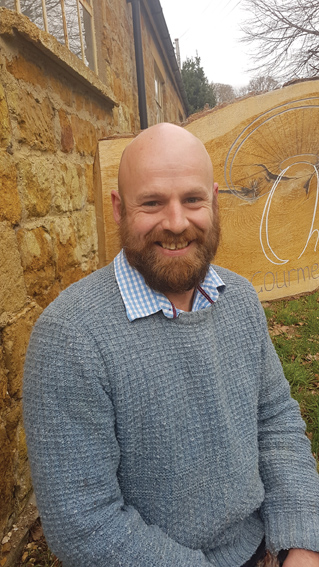
Not many business plans put together in a local pub grow to fruition, but that’s not the case with Chideock Champignons. Over a pint, Chris Gasson listened to Nick Phillips wax lyrical about mushrooms, the different types, and how much he enjoys foraging for them. They went on to share many a foraging fungi tale. But when Chris saw the Kate Humble television programme ‘Back to the Land’ featuring a mushroom grower, it gave him the confidence to take the leap with Nick and start their own Shroomery. “Together”, Chris says, “two dreams have become one reality”. Nestled in an old barn in North Chideock, the pair are making an impact in the underground world of fungi.

In their heated growing room, they produce Pink, Yellow, Blue Grey, King, Elm, Indian and Pearl Oyster mushrooms, with more on the horizon. There is also a dark room to transform the mushroom spawn into mycelium, which are then transported into the growing rooms when ready. Supplying local restaurants, farm shops and speciality food suppliers, nothing goes to waste. The mushrooms are fed by local spring water and grown using substrates from the surrounding land alongside hay, untreated pallets and old thatching straw. Any surplus mushrooms are dried for further sales. After the process, all the growing materials are recycled and used as compost to grow vegetables. Chris and Nick also have plans to grow mushrooms for pharmaceutical companies, due to the beneficial properties these fungi have.

When not in the Shroomery, Chris is busy running his floor and wall tiling company, Urban Improvements. He loves being outdoors and gets out as much as he can, either fishing from his boat out of Seatown, catching crabs and prawns on Monmouth Beach or out foraging. But he’s not alone. His partner Kerry, with their three young children, join in, enjoying bringing their haul home for Dad to cook up a storm. They moved from East Sussex five years ago to bring up their children in “the wide-open expanses of West Dorset” Chris beams. As Chris has spent 33 years holidaying in Seatown, before deciding to move from East Sussex, there wasn’t much contest as to where he wanted to relocate to. Today, Chris and his family enjoy his holiday escapades year round.

People at Work Barbara Proctor

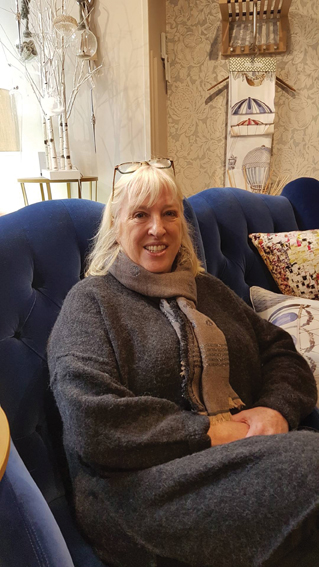
Some people have the skill to make a success of things, whatever they chose to do, no matter where they are. Barbara Proctor, owner of the interior design, build and project management company, Partners in Design, is one of these people. Working in London after leaving university, she ran a successful recruitment company before selling it and moving to the Far East. Settling in Hong Kong, Thailand and Singapore in successive years, Barbara was not one to sit back after having her twins. She started to import furniture from America to sell to clients in the Far East, growing the business, and delving into the world of interior design.

When she did return to the UK, she had gathered a wealth of experience in importing furniture and helping expats set up home in unfamiliar surroundings. She expanded this knowledge, creating West Country Property Solutions; a company that searched for properties on behalf of expats who were yet to move to the UK. Following on from this she set up a sister company; Partners in Design, which could provide a full refurbishment and interior design service for those recently purchased properties. However, Partners in Design proved so successful that Barbara now concentrates her time towards growing and expanding that company.

Establishing the company in Bath nearly 16 years ago, Barbara was eventually able to move closer to the sea and chose Beaminster. She spent a year refurbishing her property, whilst continuing to commute to Bath. But when the lease of a local shop came up nearly four years ago, Barbara moved her business to Beaminster and set up another showroom in Sherborne last year. Working with her team of designers, Barbara delivers a complete design and build package. Providing designs and liaising with clients for the finished result, the company works with their in house trades and craftspeople, enabling them to oversee the project from start to finish.

Energised by what she does every day, Barbara takes her enthusiasm with her wherever she goes. She enjoys amateur theatre, socialising with friends, cooking dinner parties as well as eating out. Inspired by her work and always striving to take her business in new directions, Barbara is a funhouse of ideas, creating fresh new looks wherever she goes.

Mike Leigh and Andrew Dickson in Bridport

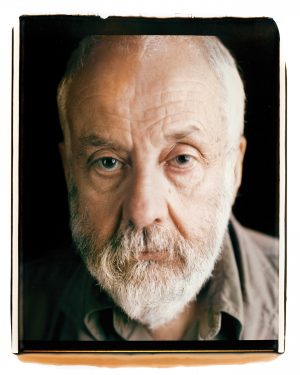
Film director Mike Leigh and composer Andrew Dickson talked to Fergus Byrne ahead of the Mike Leigh Film Festival coming to the Electric Palace in Bridport at the end of February.


For writer and film director Mike Leigh, one of the benefits of the convention of how he makes his films is that, alongside the collaboration of the team he works closely with, he is able to conjure up the finished product through his own imagination. Nothing is determined by outside commercial influences, where, as he puts it, ‘a whole load of producers and people are all interfering and have to check it out.’ The result has been a body of work that is totally unique. From his first feature-length movie, Bleak Moments, in 1971, to this year’s Peterloo—his epic portrayal of the events surrounding the infamous 1819 Peterloo massacre—his films have a unique insignia, a marker that sets them in a league of their own while ensuring the complete individuality of each.

In February, he is coming to Bridport to support a mini Mike Leigh Film Festival at The Electric Palace, which will focus on those films where Bridport’s Andrew Dickson wrote the score. The four-day festival will finish with a showing of Peterloo and will feature a Q&A session with Mike and Andrew each evening. The films to be screened are: Meantime, High Hopes, Naked, Secrets & Lies, All or Nothing and Vera Drake. Although quick to point out that these films are linked only by the composer of the score, he agrees that Andrew Dickson’s work has its own distinctive nature. ‘The scores that he did for my films are quite particular’ he says. ‘The great thing about Andrew is that he is a very idiosyncratic and original musician and composer.’ A talent that fits perfectly with Mike’s way of working. ‘The general convention, in ordinary film making’ he says, ‘is that there is a script kicking around and a composer can read a script before anybody shoots anything and will already have ideas before anything really exists in any proper organic sense. Whereas with my films, there isn’t a script, and having spent a lot of time preparing to do it, we make the film up as we go.’

One of the unique features and challenges for actors that work with Mike Leigh is his insistence that there is no discussion between participants about their parts or their characters until it’s time to begin rehearsals. Even then they will improvise and hone the scenes, rehearsing without full knowledge of the final story. Very often they won’t even meet all of the other actors until the wrap party. He works closely with each actor to develop their character, and a plot gradually emerges. While there is always a film running in his head throughout the process, it is organic and constantly changing and evolving. As he puts it, ‘the film in your head has to be able to grow and expand and contract and develop.’

For the composer, the process is slightly different in that they get sight of a rough cut from which to gather ideas for their score. ‘Even in its roughest form it can be assembled for the composer’ says Mike, ‘so they can start thinking about what they want to do with it. The creative process starts.’ Talking about Andrew, he explains that the most important thing about working with him is that it has to start with Andrew’s emotional response to the film. ‘And that’s why we click because we’re on the same page, the same wavelength, emotionally and in terms of ideas and feelings about life and all the rest of it. Andrew is obviously a purist, as I am. It’s all about working with the material in a completely uninhibited and uninterfered with environment, and arriving at something which is—without being self-indulgent about it—is kind of pure really.’

The process of independent development worked well for Andrew also. The inspiration would come from that first rough cut that he saw. ‘It’s really the overall atmosphere of the film, and the characters’ Andrew explains. ‘Initially, I’d get a few tunes in my head that seemed to fit the atmosphere of the film. I’d play Mike half a dozen different tunes. He might pick one he might pick none. Out of that, I’d develop variations. It’s always a process of eliminating, peeling away—creating an overall theme or feel.’ The tunes themselves were sometimes influenced by work that may have had an earlier incarnation. For example, the opening tune in Vera Drake was one that he had worked on in a band that a then fifteen-year-old PJ Harvey had been in with him. The tune was a song she sang about a goose fair that, as he put it, had the feel of ‘being simple but slightly sinister’. There followed a process of further development which often included rehearsing with whatever band or choir he was working with at the time. Again, in Vera Drake, the professional soprano voices that hint at an eerie memory of lost souls was originally rehearsed by a choir that Andrew worked with in Bridport.

The actual writing of the tunes, however, was the easy bit, according to Andrew. The real work began as the rough cuts came closer to the final film. Getting the timing right was always the hardest. In the days when he wrote those scores, everything was done mechanically, and there were no computer programmes to help tie the music to the film. ‘The way I did it was watching and counting’ he explains. ‘Watching timecode and marking where important pieces of dialogue were. It’s very very precise—in theory to the 25th of a second. Endlessly counting and watching’. For Andrew, the effort was worth it. ‘I loved working with Mike, partly because we became really good friends, but he got stuff out of me that I didn’t know was there. He made me work harder than I’ve ever worked before.’ A comment echoed by many of those that have acted in his films.

There is much fascinating detail about each individual film, from sticking drawing pins onto piano hammers to Mike’s suggestion of playing a tune backwards, that Andrew and Mike will discuss in question and answer sessions at the end of each evening. And there is also no shortage of entertaining, thought-provoking and emotional revelation within the body of work that Mike Leigh has contributed to theatre, television and film over his career—a career that so far spans more than half a century.

From Abigail’s Party to Peterloo Mike Leigh has had an impact on many of our lives and the films being shown at the Electric Palace are a small but powerful selection from his career. The chance to see them and then listen to the director and the composer’s insight is a rare opportunity not to be missed.