
Sunday, December 21, 2025
Home Blog Page 19

Land fit for Heroes

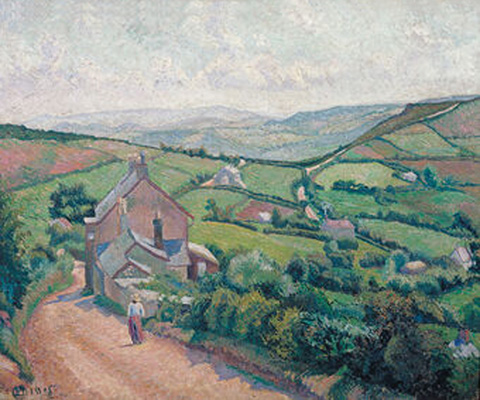
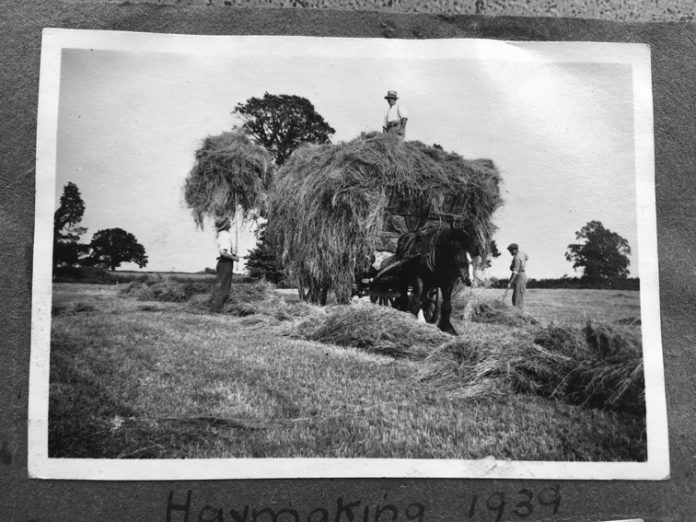
In 1882, legislation was started to enable Somerset County Council to acquire land for smallholdings. But it was not until the passing of the Smallholdings and Allotments Act of 1908 that Somerset began to create a smallholdings estate. Margery Hookings’ grandparents were tenants of neighbouring farms in Donyatt. The council bought the village in 1918 for £100,000.


I was born and brought up at Park Farm, Donyatt, in the house where my father was born in 1925.
It was part of an estate of smallholdings set up by Somerset County Council for men who had served honourably in the First World War.
My paternal grandfather, Arthur Hull, was among the first Donyatt tenants. He had enlisted with the Australian Imperial Force at Sydney Showground in 1914, just a few years after leaving England with his friend, Ernest Hoare for a new life Down Under. Arthur fought at Gallipoli and Delville Wood, France, and never returned to Australia. He came back to Blighty, wounded, on a hospital ship, just as Armistice was declared.
Ernest never returned. He died in action in 1916 and is buried at Courcellette Cemetery.
My maternal grandfather, William Percy Withers, was the tenant of Coldharbour Farm, the next one on from Park. Percy, as he was known, was a veteran of The Somme where he served with the North Somerset Yeomanry. A keen observer of everyday life, he kept a record of those terrible times in his journals, which are astonishing in the matter-of-fact way he deals with death and destruction. What comes through in his memoirs, and the poems he wrote subsequently, is the extraordinary sense of camaraderie in the face of such adversity.
In 1918, Somerset County Council bought the Donyatt Estate from Mr R T Combe of Earnshill, for £100,000. This family had owned the land and had been the Lords of the Manor since 1755. Additionally, further land was bought from the Dowlish Manor Estate, owned by the Speke family, and the land was carved up into parcels of between one to fifty acres. The number of agricultural labourers dropped considerably.
My mother has a newspaper cutting from 8 May 1920. We don’t know which paper it was from or the name of the correspondent, but, under the heading ‘Village bought for ex-soldiers’, the following picture emerges.
“What do you think of Somerset?” asked mine host at Ilminster.
“It looks a county fit for heroes to live in,” I said, looking across a golden valley where the cattle waded knee-deep in buttercups.
“Aye, and we’re making it one,” he replied. “Do you see the church tower among the trees? That’s Donyatt Village: Church, School, Inn, houses and shops complete, with the surrounding estate, it has been bought outright for ex-servicemen who wish to settle on the land.” As this sounded more like a politician’s promise, I decided to investigate.
Donyatt was only a mile away through the fields and here I found a score or two of sturdy stone houses, some with bonnets of thatch pulled low on their brows and diamond lattices winking drowsily in the sun, all shaded under the great elms.
At the estate office in the village I met Colonel Locke Blake, a member of the Somerset Land Settlement Committee, who assured me not only was the story of purchase of the village was correct, but also that the scheme of establishing ex-soldiers on the land was in operation.
“Somerset is the leading county in this work,” he said. “It has acquired 11,459 acres. On this estate we have purchased 2,230 acres and have divided it into smallholdings. We have taken over the whole village, which lies at the centre of our property. With the exception of the rectory, the rectory cottages and the almshouses, everything is ours. The living (responsibility to elect the Parson) of the church belongs to us. The village school, the post office, a fully licensed inn, a baker and provision dealer’s shop, a smithy, the businesses of wheelwright, cobbler and ropemakers, potteries, grist mills and a quarry are included in our purchase.
“The school will be resold to the county education authorities, and instead of being a church school it will be a council school. The inn will be let to the Western Counties Public House Trust and the Bakery, Blacksmiths and Wheelwrights’ shops will be given to ex-servicemen. We hope in time that the whole community will consist of such. All available cottages with a small piece of land have been allocated to demobilised soldiers, who will assist in running the estate. The rope-workers will be allowed to stay, but the potteries may not continue. Our quarry ought to prove a valuable asset.
“The colony is split up into some eighty agricultural holdings varying from one to fifty acres, and so far we have settled about one hundred ex-servicemen either as smallholders or estate workers. We have a market town and railway station at Ilminster, only a mile away. The River Isle runs through the centre of our property, and generally speaking the land is well watered for cattle, while homesteads have ample resources for drinking purposes. The majority of the land is mostly what we call two-horse land. A drawback is that a good deal of the arable land is hilly, but it can be grassed down. Our estate is exceptionally well wooded and the timber is very valuable. A lot of it has been ‘thrown’ and will be converted into gates and posts. At the estate office we are setting up carpenter and painter’s shops, sawing and drying sheds and a timber yard. All the holdings have been let an economic rent and we mean to keep strict supervision over our people to ensure they farm the land to the best advantage. There is bound to be a loss on the scheme at first, owing to the enormous cost of building and repairs, but in time the colony ought to be a paying concern.”
Cupid has been busy down Donyatt way. Since the estate was opened between ten and twelve of the newcomers have married and, as the housing problem will soon disappear, the parson will look forward to a lively season.
In the years that followed, there was much activity on the estate, through lean periods as well as the golden times. Sadly, in recent years the county council has sold off many of the farms.

• I am indebted to my mother, Pamela Hull, for the information she has compiled over the years, some of which appeared in The Story of Donyatt, a book brought out in 2000 to celebrate the millennium, and for the family photographs. The pictures of present-day Donyatt were taken by my brother, Andrew Hull. Destination Unknown, the memoirs of Percy Withers, was published in 2015 through FeedARead.com
Up Front 09/19

As a youngster, I was what my mother described as ‘soccer-mad’. I’d wake in the morning wishing I could dribble like George Best and shoot like Bobby Charlton. And by the time I got to bed in the evening—after a full day practising my world cup-winning skills on a patch of grass at the edge of the village—I’d sleep surrounded by my vast collection of Shoot magazines and dream of football glory on the pristine turf of Wembley stadium. On a wall by the side of our house, I had painted the shape of football goalposts and circled numbers in different parts of the net area. When I had no one else to play with, I set myself a target of a certain amount of points before I was allowed to rest, and as I became more proficient, I rewarded myself with lemonade. Those were glorious days. Like the summers we remember from our childhood they did indeed seem perennially sunny and endless. Until one day I discovered rugby. There wasn’t an immediate change, and I didn’t turn my back on football completely, but I soon developed a love-hate relationship with the oval-shaped ball. The hate part was struggling to catch and hold a greasy ball in mucky fields on a stormy winter’s day or trying not to show how painful a grazed leg felt after a tumble on an icy pitch. But the love part was the appreciation of a complex game played with a level of mutual respect that, considering the physicality of it, was always surprising. That appreciation stayed with me long after it became impossible to continue to participate, and like many others, I look forward to the Rugby World Cup in September. But I still enjoy the ‘beautiful game’ and I was recently reminded of a piece of soccer research announced by scientists at Ghent University in Belgium last year. The study was inspired by a slightly tongue-in-cheek quote by ex-footballer, now TV personality, Gary Linaker, who said: ‘Soccer is a simple game: twenty-two men chase a ball for 90 minutes and at the end, the Germans always win.’ As it happens, the research findings proved that the Germans didn’t always win. But in Gary’s day, and mine, it did seem that way. It’s not something the average rugby fan has had to deal with since German rugby hasn’t yet brought their national team to prominence. Looking at the fixture list for the upcoming Rugby World Cup, the only European teams outside the United Kingdom are Italy, Ireland and France, all countries with whom we have friendly relations—at the time of writing. It’ll be fun to see who we’re cheering for in the final on November 2nd.

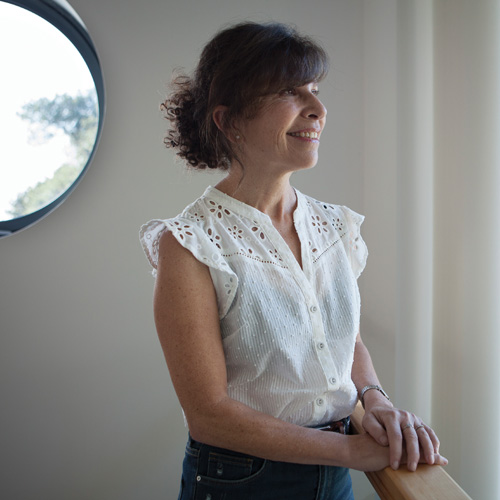
Margie Barbour

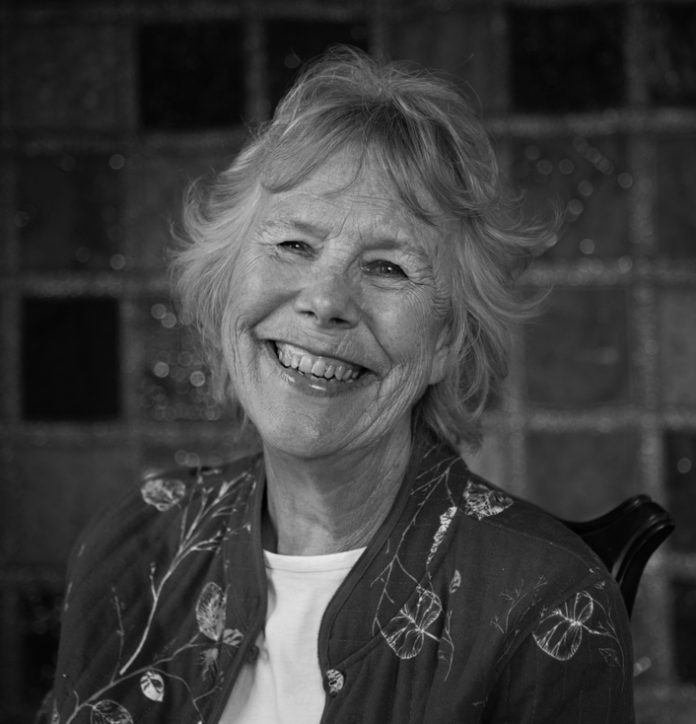
‘My parents, Jane Galbraith and Michael Barbour, were born in the early ‘20s and joined the services when war came. My mother became a meteorologist in the WAAF, and my father a submariner in the Navy. They were both keenly academic, and immediately after the war, went up to Oxford University where they met and married in ’46, and a year later had a baby, my sister Rosalind. My father became a lecturer in Geography at the University of Khartoum in Sudan and two years later I was born in Oxford while they were home on leave. During my early years, we spent the summers in England and the academic year in the Sudan. I remember sleeping on the flat roof in Khartoum under the brilliance of the stars with Dad pointing out the constellations.
In ’53, my mother, six months pregnant, my sister and I were on a flight to the Sudan across the Mediterranean when one of the engines caught fire. My mother heard we were going to ditch and knew from her Air Force days that the plane could flip and break up on hitting the water. Nevertheless, she got us all safely strapped into our seats, and the pilot, a WW2 veteran, managed to sit the plane on the surface of the sea, in the pitch dark, long enough for us to get out with our lifejackets on. We were picked up by Sicilian fishermen, and we may be some of the few people whose lives have been saved by the whistle and little light on lifejackets. Eventually, we made our way to Khartoum by boat where my brother David was safely delivered. Unsurprisingly, my mother wasn’t keen on flying after that so my father looked for a lectureship in the UK. He regretted leaving Africa as he had loved going off on treks across the Sahara researching his books, some of which became standard academic works.
My father was appointed to University College, London and we returned to England, to Wimbledon. My two younger sisters Katherine and Sarah were born. Family life of five children was lively, with a Mum who loved us but really wanted to be following her academic interests. After Dad died, I found some magical film he had shot of our wild camping holidays in Africa and Europe, which was a wonderful reminder of their shared sense of adventure.
In 1961 my father became Professor of Geography in Nigeria at the University of Ibadan, so schooling arrangements had to be made for us older ones who were staying in Britain, and at Christmas and Easter, we would fly out on our own. The University was an international campus, and we made friends from all over the world. Later I went there to study French and Drama, relishing the diversity. As part of my course, I was sent to Paris for a year to the Université International du Théâtre. It was 1968 and the May riots meant that everything was still in turmoil and the university didn’t start till after Christmas. However, directed by Andre Perinetti, we produced an inventive version of Madame de Sade by Yukio Mishima.
All through my childhood, I’d made little cardboard box theatres and at school got involved with any production going. By the time I left university, I knew I wanted to direct. And I was accepted on the Bristol Old Vic Theatre School’s Postgraduate drama directors’ course.
Just before I started at Bristol, when I was 21, my brother’s best friend committed suicide while they were taking their A levels at Charterhouse. It was a terribly painful time for my brother David, and we didn’t support him by talking about his friend’s death nearly enough. My parents were away on holiday and I was alone at home with him when tragically he took his own life too. It was a shattering event in all our lives and the silent misery of my parents in the following years meant as a family we never reached a place of peace and healing.
I threw myself into the world of the theatre, a place to escape reality. On leaving Bristol I went to the Kings Head Theatre Club in Islington as assistant stage manager. I loved it, but it was hard work, sometimes finishing the “get out” at 2 am before starting the “get in” at 3 am. But it taught me a lot about the business and led me to a job at the Citizen’s Theatre in Glasgow where I got my precious Equity Card. I was still keen to direct, and I applied for a job as Floor Assistant at the BBC, hoping there might be more opportunities in television. That was in 1974, and I would work at the BBC for 22 years. At first, I was just calling performers like Eric Morecambe and Prunella Scales to the studio, but then I stage-managed dramas, such as the first series of Angels. In my spare time, I directed plays in pub theatres, including a lunchtime show about Greenham Common at the Kings Head. Then the BBC gave me a chance to direct: Playschool, Jackanory, Grange Hill, Tucker’s Luck and Bodger and Badger. I learnt so much working with the actors, scriptwriters, camera crews and designers, and I was tremendously aware how lucky I was to have a career I loved and which chimed with my feelings about the world. Central to our work in children’s television was the Reithian ethos of inform, educate and entertain.
Working in Glasgow I had seen the terrible deprivation in the Gorbals, which led me to join the Labour party, becoming union rep for Children’s TV. Following John Birt’s shake-up at the BBC in 1996 I took redundancy along with many other creatives, but soon returned to train people to direct EastEnders.
My mother turned to the Quakers after my brother’s death, and like her, I experienced a sense of homecoming attending my first Quaker Meeting. It was there I met a fellow Quaker, we made a life together, and to our mutual joy had a son, Richard. We had a spare room in our house and were able to take in a young person from Ealing on the assisted lodging scheme. Marian arrived when she was seventeen and remains very much part of our family. These days Richard works in financial services in the City, specialising in International Development, and Marian is vice-principal of a sixth-form college in Bristol. Sadly, my relationship with Richard’s father didn’t last, although he remained a great father.
But through the Quakers, I then met the person who would change my life, Chris Savory. We fell in love and married at the Hammersmith Quaker Meeting House. Chris became a wonderful stepfather to Richard, took Marian under his wing and has been the most fantastic support for me. We moved to Thame near Oxford, and, inspired by working with Rik Mayall on storytelling programmes, I started telling stories in schools and at festivals. Chris and I and our neighbours began a film society, booking actors or directors to talk after the screenings.
Having had many holidays in Dorset in Uploders, and at Tamarisk Farm in West Bexington, when a job as director at the Marine Theatre in Lyme Regis came up I jumped at it, and was lucky to work there for two years. Then Lindsay Brooks, director of the Bridport Arts Centre, asked me to join her there. On holiday I had always thought I would love to work at the Arts Centre, and now I had the chance! I became one of the many people who holidayed in Dorset for 30-odd years before coming to live here. I was programme manager for 5 years, and our vision was to find creatively challenging, interesting work, to show music and performance from all over the world, and to give everyone in the town a reason to come through the door. I set out to maximise the use of the venue, using the café at the back for comedy, jazz and storytelling. Huge highlights were inviting Dire Straits’ Mark Knopfler to play a fundraiser for us, squeezing Shaffer’s Equus onto our stage, and Imagined Village’s barnstorming performance. After five exciting years, I left for London to programme the little theatre inside the Cutty Sark.
Now I’m back in Dorset, I’m involved with the Friends of the Dorset Women’s Refuge and support the Youth Centre. I’m learning to play the saxophone, and I’m passionate about dance; my family are always first on the dance floor! I’m a member of Grace and Growl, a contemporary dance company for older dancers. I attend classes in ballet and musical theatre and have tried Morris dancing. In the future, I’d like more opportunities to be creative as a dancer, get better at the saxophone (for my neighbours’ sake) but make sure I find time for my family and to be a bit less busy!’

People at Work – Chris Chapman

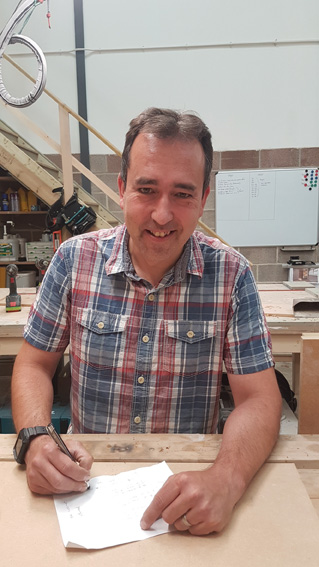
On Chris Chapman’s 40th birthday he handed in his notice at work and returned home to his wife Steff. Cheerfully walking in through the door, he called out, “I’m home, 40 and unemployed”. He had been wanting to set up his own business for a while and finally took the plunge. So, phoenix-like Chris Chapman Ltd emerged, a bespoke kitchen and design company operating from Beaminster. Today, Chris has five carpenters and fitters working for him while he designs and liaises with clients. Steff is at his side “doing all the bits I don’t want to – and can’t. This business wouldn’t run without her”, he smiles. Translated, Steff does all the number crunching, payroll, tax and bookkeeping for the business.
At work by 7.30am, Chris is there ready to send the fitters out in their vans at 8 am, giving them their jobs for the day. He sits at his mezzanine level desk, with huge screens in front of him, designing away for his clients. Conscious the buck stops with him, and to keep all the cogs turning, Chris often doesn’t leave till around 7 pm, working on Saturdays and even the odd Sunday. He is adamant that the finished result for his clients should be perfect. Chris enjoys what he does, transforming tired spaces, creating new storage solutions and levels of functionality for previously disused corners.
Chris moved to Bridport 15 years ago, then bought a run-down house in Broadwindsor seven years ago where he lives with Steff, daughter Tabitha and their three dogs. Although the kitchen is fantastic, the rest of the house is still in need of his attention, vying with the demands of the business. When Chris does return home, Steff, a keen cook, has usually prepared something delicious, which is gratefully received.
One indulgence that Chris does have, and which takes him away the odd Sunday or for a few days, is his motorbike. Recently having returned from a trip across the Pyrennees with some mates, he now has his eyes set on a wild camping trip in Scotland next year. Having to make do with the Jurassic Coast as a backdrop to his Sunday ride is no hardship though, something Chris takes advantage of, as often as he can.

People in Food – James Brigden French

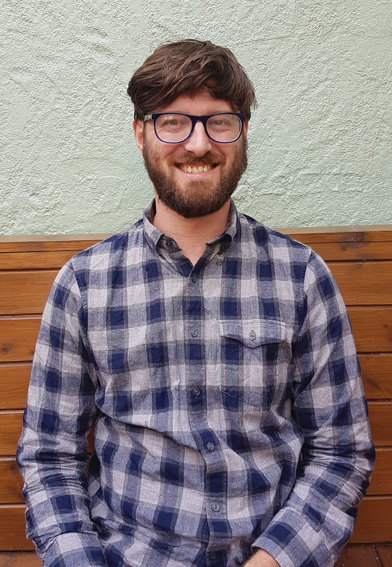
‘Frenchie’ has never been called James, he’s been Frenchie from the start, as long as he can remember. A local lad, who grew up in Litton Cheney, he has lived in Bath for a bit and Italy for a while, but mainly has made his way in hostelries in or around Bridport, working hard to now be General Manager of The Stable in Bridport. He was one of the original recruits when The Stable first opened its doors 10 years ago and although he has worked at other places in the last few years, including helping open up The Stable in Bristol, Bath, Newquay and Weymouth, has now returned to take the Bridport cider and pizza establishment through to the next decade.
Passionate about what he does, Frenchie is proud to work for a company that celebrates and showcases local producers. He is keen to introduce more community links between The Stable and Bridport, demonstrated so far by inviting local artists to exhibit their art, installing soft furnishings on the ground floor, and showcasing live local music four nights of the week. Happy to be celebrating 10 years since they opened their doors Frenchie is looking forward to thanking the town for their continued support with a big showdown party in October.
When Frenchie does manage to get home, it’s often late at night. The first thing he does is go upstairs to say hello to his young baby daughter, who greets him with a large gurgling smile when she sees him, before falling to sleep once more. Then he puts all the animals to bed; two dogs, five rabbits, three chickens, two pigs and a cat, before collapsing next to his partner Zoë. Pregnant with their second child, Zoe is long accustomed to the hours Frenchie works and takes it in her stride.
On Frenchie’s day off you will find him rummaging around the charity shops and antique stalls in Bridport. He loves a good vintage find. Taking the chance to cook for Zoë, Frenchie will often produce exotic vegetarian food incorporating a fruit twist, such as jerk watermelon steaks or pineapple curry. Trying to avoid too much screen time for themselves and their children, the couple don’t have a television. However, it’s unlikely, with all those mouths to feed, that Frenchie would have much chance to watch one anyway.

Jasper Conran and Sibyl Fine to select 2019 ‘Collector’s Choice’ in Marshwood Arts Awards

This year The Marshwood Arts Awards & John Hubbard Prize is again being brought to the attention of Art collectors who will look at the exhibited work and award a prize to their chosen winners.
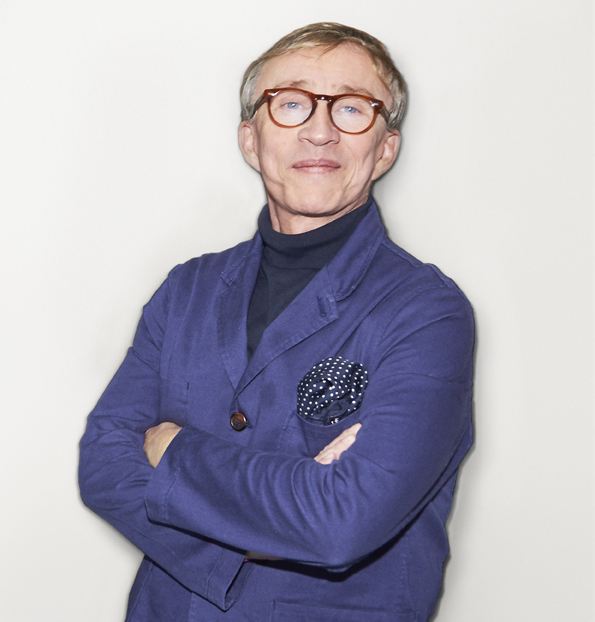
Jasper Conran, OBE, will be choosing a ‘Collector’s Choice’ winner from the 2019 exhibition. Having trained at Parson’s School of Design in New York, he was a founding member of the London Designer Collections—subsequently renamed London Fashion Week. From ‘Designer of the Year’ in 1986 to ‘Retailer of the Year’ in 2013 he is no stranger to awards and commendations and is looking forward to seeing the 2019 exhibition. ‘I am honoured to have been asked to help judge this year’s Marshwood Arts Awards & John Hubbard Prize’ he said. ‘The work is always of an exceptionally high standard, and I look forward to seeing 2019’s entries.’
Sibyl Fine, Director of the Fine Family Foundation which supports Dorset-based charities working in the environment, arts, health and the community will also be selecting a ‘Collector’s Choice’ award from the exhibition. Sibyl was involved in setting up the KUBE Gallery in Poole and chaired it from 2000 to 2010.
As well as being a keen art collector, she has, through her work with the Foundation, been able to actively participate in projects which add to the quality of our environment and our lives, including numerous visitor centres, commissioning public art, and most recently establishing a charity called ParkYoga.
Over the past ten years many selectors have commented that artists often work in isolation, and that the opportunity presented by joining a group show can be of great benefit.
In 2017, Laura Cockett, the then Director of Bridport Arts Centre said that it is ‘aspirational for the artists to be able to share the same space as the judges who have been involved in the selection process.’
Furniture maker Rupert Senior agreed that while working in isolation it is hard for an artist to know where they stand in their world without engaging with exhibition selectors and curators. Whilst John Makepeace, who along with ceramicist Kate Malone is selecting for the Applied Arts category this year, believes that artists working in isolation often don’t have the opportunity to communicate with other artists in varying fields, so an initiative that brings their work to public attention, as well as the attention of other artists, is hugely beneficial.
As the Marshwood Arts Awards has grown and encompassed the John Hubbard Prize the value of developing a venture such as this has become more apparent, as both selectors and artists make their views clear about how important public and private support is to the future of our artistic culture.
Kate Malone, always captivated and emotionally involved in her role as a judge on The Great Pottery Throw Down, is excited by the work that artists are involved in. ‘How wonderful it is that all these artists and people are being brought together to see and experience the joy of art for all’ she said. ‘A piece of craft, a piece of art, however one would refer to it, is never quite complete until it has been viewed by others. How can it otherwise exist? So this fabulous competition and exhibition bring alive and together a wonderful group. It is art fulfilling its reason to be. I am very much looking forward to being one of the judges in this event.’
Once quoted as someone who ‘let instinct fly’ Kate has said that she trusts her subconscious. She described her method of working as summed up in a comment that she once heard from Grayson Perry when he said that artists should trust their ability and feed their ideas ‘like little pets, stroking them from time to time and trusting that they will turn into something.’
It is that emotional connection to art that so often stands out in a mixed exhibition. In the Applied Arts category which includes: ‘furniture & works in wood, ceramics & glass, fashion & textiles, jewellery, metalwork or decorative arts’ both selectors Kate Malone and John Makepeace have enormous experience to guide them.
That same experience and passion for his craft apply to Dave White, who is selecting painting & drawing. He believes that to be a good judge; you have to be quite eclectic. ‘I would be looking for quality, individualism, a uniqueness and a spark—something that shows passion, integrity and honesty—people who enjoy what they do and love what they do’ he says.
Brian Griffin, who is selecting photography, points out that the process of just looking at work to send in can take a photographer on an unexpected and often gratifying journey.
While Tania Kovats, who is selecting sculpture, explained that becoming visible is very important. ‘They call it an artwork and some of that work happens in the studio with just you and the object, but so much of it happens beyond that. Engaging with the world, being present, making the work present, that’s all part of the artwork.’

The Marshwood Arts Awards is an open competition and the deadline for submissions is the 19th September 2019. For full entry information, visit www.marshwoodawards.com.

Vegetables in September

September is the real beginning of summer handing over to autumn, and although it is still a time of harvest, the cooler temperatures, shorter days and damper soils bring a different feel to work in the garden. It is a sort of second spring with new plantings and sowings in August (such as salads, turnips, winter radish, fennel, chicory, chard, pak choi, Chinese cabbage, kohl rabi and kale) putting on lots of lush growth.
It is a good idea to try and keep as much of the soil covered as possible over winter and September is the right time to start thinking about this (I know it feels too soon to be thinking about winter…). There is still time to sow green manures if you have areas that are bare after harvesting summer crops. Ideally sowing a good mix of green manures will ensure different root depths and provide the diversity of roots in the soil that will lead to higher levels of microbial activity and in turn more organic matter and better drainage and nutrient retention. We usually sow phacelia, cereal rye, vetch and sometimes oats and mustard or fodder radish. Phacelia is not hardy unless it is sown in September, in which case it grows only a few centimetres tall and is not damaged by the frosts, but instead covers the ground and helps to reduce compaction from winter rains and maintain a healthy soil. We then mow these green manures down in the spring a few weeks before we need to plant in them, we cover with black plastic after mowing and this kills off the green manure and any other weeds.
Another technique to make sure that there is crop cover overwinter is to undersow vegetable crops with green manures which will slowly grow through the summer and then get going in the autumn once the crop is taken out. We undersow our squash plants with red and white clover along with yellow trefoil and maybe a few wildflowers soon after planting the squash (once they have about 5 true leaves). Ideally hoe the ground two or three times before broadcasting the green manure seed, this will knock back the weed burden and create a tilth for the green manure seed to germinate. If conditions are dry then water the seed in. Once the squash are harvested in autumn we flail mow the beds, rake off the debris and then oversow with rye and vetch. This germinates in fairly low temperatures and puts some growth on before winter giving a good ground cover.
If crops are still in the ground until November time then beds can be mulched with compost or even straw overwinter (as it will be too late to sow most green manures) to lessen the impact of the rain on the soil and to feed soil life through the winter. The only thing to watch out for when covering the soil overwinter like this is slugs, so be prepared to squish a few in the spring once the plastic has been taken off or straw has been raked off.
Anyway, enough of this winter talk—let’s hope that September provides us with the Indian summer that we are always after!

WHAT TO SOW THIS MONTH: Direct sown outside: turnip greens, leaf radish, red Russian kale as salad leaf. Sow in trays: overwintering salad leaves for cloches or polytunnel/glasshouse such as winter purslane, landcress, rocket, mustards, corn salad, endive, chervil, lettuce. Also spring onions for overwintering in a cloche or tunnel/glasshouse
WHAT TO PLANT THIS MONTH:
OUTSIDE: salad leaves: leaf radish, winter purslane, landcress, rocket, mustards, overwintering spring onions, spinach and spring cabbage.
INSIDE: overwintering salad leaves (at the end of the month and into October), chard, coriander, chervil and parsley.
OTHER IMPORTANT TASKS THIS MONTH: Get your squash in by the end of the month and cure them either in a glasshouse, polytunnel or ideally in your house—this will make sure that the skins are hard and will last through the winter.

September in the Garden

At the time of writing, we are having a wet end to the summer, although I’m hoping that, just by stating that, the weather Gods will wake up and deliver us an ‘Indian Summer’ to balance out all the August rain…
In the ‘old days’, September was perceived as more colourful than the parched (!) weeks of August. The cooler, damper, conditions encourage bright, fresh, flowers on all those plants which are genetically programmed to perform during shortening day lengths. The evolution of garden styles away from high summer, peakiness, of herbaceous borders towards, what has become known as, ‘New Perennial’ plants has blurred this line somewhat.
Pre-dating the ‘New Perennial’ trend; Japanese anemones are a real treat at this time of year. When creating London gardens, my first job after graduating, the pure white Anemone x hybrida ‘Honorine Jobert’ was a mainstay of border designs. It copes well with shady conditions and, in my experience, flowers better when treated a little ‘mean’ and not grown with too much food and water. Newly planted specimens may take a few years to settle into a decent flowering pattern, I suspect they like to ‘get the measure’ of their plot before committing to making blooms, but, once happy, they are as tough as old boots. Strangely I don’t have it in my current garden because I chose a double, pink, form (A. huphensis var. japonica ‘Pamina’) when I should have planted ‘Honorine Jobert’’. One day I’ll correct that mistake…
Spiky flowering plants seem to hold sway this month. Persicaria, in all its varieties, continues to excite me and is peaking around now despite having been in flower for months already. My current favourite is the wiry beauty and simple charm of Persicaria amplexicaulis ‘Alba’; less boisterous than some of the larger leaved varieties and worth a place in any garden. Tall perennial grasses are the natural backdrop to all the late flowering, spiky, herbaceous perennials but I mention Miscanthus so often, in these musings, that I’ll not ‘big them up’ yet again.
Where would we be without Rudbeckia fulgida var. deamii (or its commercially available close substitute ‘Goldsturm’) in the late summer palette? It’s one of those foolproof herbaceous perennials that is just so hugely generous in every department (except scent). If it threatens to take over an allotted space, dig it up after flowering, replant one third and pot the rest up to plant elsewhere or give the divisions to friends who need cheering up. If it proves too floppy for your style of gardening then hem it in between shrubs or, those natural bedfellows, the perennial grasses such as Miscanthus (damn, I mentioned them again!).
It’s all the myriad species and varieties of the ‘daisy tribe’ (Compositae) that add so much vibrancy to the garden at this slide into autumn. I’m afraid that I’ve given up trying to keep on top of all the Latin name changes in the ‘daisy’ genera; it was pretty complicated three decades ago when I had to learn them first time around. I think if I just point you in the direction of ‘Asters’, ‘Heleniums’, ‘Rudbeckias’, ‘Echinacea’, ‘Helianthus’ et al then you can’t go far wrong. If in doubt take a look at what’s being posted on ‘Instagram’ for inspiration and then check for nurseries that stock them—they should have both the old and new names.
Social media will be awash with the favourite ‘comeback kid’ of the gardening world, the dreaded dahlia, but if you can wade through all the images of them (I guess they’re OK if you love staking and earwigs) then there will be plenty of even more colourful, not to mention perennial, members of the Compositae to inspire you as we leave summer behind and look forward to the planting opportunities that autumn affords.
On the shrub front hydrangeas must be the main group peaking around now. Even the big mop-head forms, which have been in flower for some time already, seem to swell and refresh with the added mistiness of lengthening nights and cooler days. The tall and graceful Hydrangea villosa is my favourite but I’ve noticed that the stonkingly confident blooms of Hydrangea arborescens ‘Annabelle’ have done particularly well this year. There is a pink form with a terrible name, ‘Tinky-Winky’, or somesuch nonesense, which has taken my fancy (if I was in the market for a new one).
……STOP PRESS………STOP PRESS……… I’ve just Googled it and discovered that it’s Hydrangea paniculata ‘Pinky Winky’ (told you it was a stupid name) so please don’t write in to our illustrious Editor complaining that I’ve given up totally on correctly naming plants (having been ‘let go’, by the BBC, for standing up for correct nomenclature, I think I’ve earned my stripes where using Latin names is concerned!).
On a maintenance note cutting hedges continues as does looking after the lawn with regular cutting and an autumn feed, towards the end of the month, to pep it up before winter. Now’s a good time to sow new lawns although if you are clearing the ground first, with glyphosate weed killer, it’s worth noting that September is getting towards the end of the period when these non-persistent herbicides will be effective.
I like to apply glyphosate to all visible bindweed growth as it will begin to die down soon and I like to get as much treated as possible in the hope that the underground portions will shrivel away over winter. At the time of writing I’m pretty sure glyphosate is still legal—but the debate over it’s safety (it’s safer than many chemicals you come across in everyday life) continues to blow hot and cold.
Planting bulbs should be a priority, as is preparing tender plants for coming under cover before the nights become too chill. I tend to take a few cuttings from them too, even though it’s getting a bit late for successful rooting; ‘nothing ventured, nothing gained’ and all that. Fingers crossed for a period of decent sunshine and warmth to aid rooting and also to give us time to actually get out and enjoy blooming September and all its charms.
Happy Gardening, y’all…

Ron Frampton 1940 – 2019

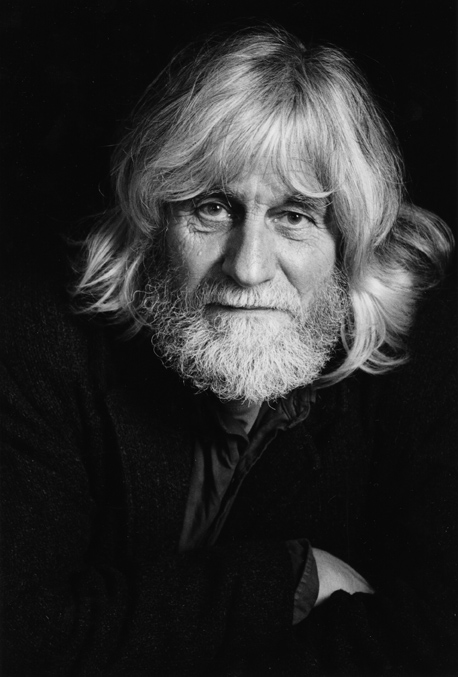
A regular contributor to The Marshwood Vale Magazine, Ron Frampton’s contribution to recording the social history of the South West community was enormous. His son Magnus Frampton recalls Ron’s life and work.

Marshwood Vale readers will be familiar with the photographs and stories of regular contributor Ron Frampton. Ron passed away in June this year. In this piece, we will be recalling his life and work, and his interests in photography, local and personal histories, and the preservation of local culture.
Ron was born in Courshay Cottage, on the edge of Hawkchurch in 1940. Thoroughly a local man, he never left the area: living in Holdich, Tatworth, Thorncombe, and Churchill, he managed to stay within 6 miles of his place of birth. Apart from a year exploring the British Isles in his twenties, he hardly travelled, rarely holidaying outside his beloved West Country and seldom leaving the country.
Ron’s parents were locals. His mother, Dorothy Frampton (née Churchill) was a professional cook, his father Arthur Frampton a chauffeur and gardener. Ron was not only aware of his family’s social history at a young age, he was fascinated by it his whole life long. His paternal grandfather, whom he remembered well from his early childhood, was born in Chard Union Workhouse; he later discovered that his paternal great-grandmother had experienced a similar fate in Beaminster. Ron attempted to research these family histories in his late teens, approaching his grandfather’s brother but found him closed and taciturn. Perhaps this disappointing personal experience shaped his later interest and skill in eliciting valuable personal life stories from family, friends, and local people.
The primary interest of Ron’s youth was a quite different one though. Being a child of the golden age of the British motor industry led to Ron pursuing an ambitious career choice: motor engineering. Both Ron and his brother Brian Frampton completed this extensive practice and college-based training at a remarkably young age. Ron and Brian quickly established a highly successful and well-regarded motorcycle business. Within a few years of their 1960 start, Frampton Bros quickly built up a customer base of over 400, building and repairing the British motorbikes. Their passion was clear to all. In their free time Ron and Brian competed in off-road motorcycle scrambling events. The British motorcycle industry entered a crisis period in the mid-1960s, but Ron and Brian were able to quickly shift their focus to auto engineering, and thus remained a successful economic unit.
Ron enjoyed his work in motor engineering, but the coming decades saw him developing new interests. His childhood fascination with photography had developed. By the late 1960s he was regularly giving well-attended slideshows. Friendships with local people who had received the privilege of a wider education than his own expanded his experiences: the Pinney family, museum curator John Sales, and West Country author Monika Hutchings for instance. Parallel to this, Ron deepened his knowledge of nature and wildlife with the Somerset natural history group, where he made some lifelong friends. Ron had always been interested in his environment, in the broad sense of the term: geographical, natural, social, and cultural. By the 1970s, this interest in social and natural history had evolved into keen and clear political and ecological views. Ron attended and photographed demonstrations on a variety of social, political, peace, and environmental issues. In the 1980s he was keenly involved in environmental activism. He became area coordinator for the environmental pressure group Friends of the Earth. Ron organised campaigns, coordinated media coverage, and learnt to sell his cause with passion and conviction.
In the 1980s Ron left motor engineering for good, pursuing his lifelong passion by retraining as a photography teacher. He successively picked up qualifications at the Licentiate, Associate, and Fellowship levels, parallel to developing his college photography courses into exciting degree-level programmes. He did this in beautiful and inspiring locations such as Symondsbury College and Dillington House. Ron was proud of his awards and achievements: receiving the Fenton Medal, being a Royal Photographic Society Fellowship assessor, and managing to find his way into Debrett’s People of Today. His students, however, will probably instead recall his passion and commitment to helping them learn and qualify. He was an able teacher, fostering the technical skill-base of his students, whilst infusing them with his passions: both for the art of monochrome photography (with the specialisation of the fine silver gelatin print), and for the subjects (whether people, architecture or landscapes), and the subjects’ stories.
In the course of his publications Shadows in Time, Beyond the Vale, and Images in Time, Ron pursued a parallel activity: conserving the past. Perhaps this was to be expected, as preserving records of an endangered culture and environment in the face of its demise and disappearance had always been his key concern. He left the Axminster Heritige Centre an archive of his local and family history research. In his monthly assignments for the Marshwood Vale he typically gave his students the job of portrait photographer, whilst training them parallel to this as life-story researchers, piecing together and recording a life, and often a way of life that was either in danger of disappearing, or had already disappeared. The articles which resulted from this work captured not just West Country people’s faces, but the rich and unique human stories behind them. For this, we at the Marshwood Vale and our readers will remember Ron Frampton fondly.

Text by Magnus Frampton, July 2019. A celebration of Ron’s life and work will be held at the Bradshaw Meeting Room, Axminster Heritage Centre, on Saturday 7 September 2019, 2.00-3.30pm. Further information, or if you wish to attend or contribute please contact Magnus via info@marshwoodvale.com

People at Work – Jake Lanning

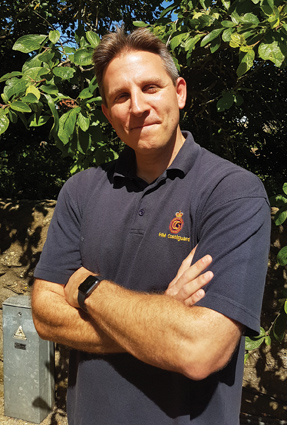
Second in command of a team of 12 volunteers that live and work in the local community, Jake Lanning is Deputy Station Officer of the West Bay Coastguard Rescue Team. A volunteer himself, he fits his commitments to the Coastguard around working full time as TV and Film Producer at Underground Media. Attending on average one to two call outs a week, 50 to 70 a year, as well as training every couple of weeks and attending PR events, the role is not for the faint-hearted. Never knowing what situation he is going to face when the alert goes out, being a Coastguard is exciting, operating where ambulances can’t go, but also extremely demanding. Often members of the community are unaware of the sacrifices made by Jake and his peers in order to help those in need.
As a child he spent all his holidays around West Bay, always out on the beach and swimming in the sea. Jake then became a member of the beach lifeguard team at Weymouth, enjoying helping keep people safe and coming to the aid of those in trouble. Finding it humbling to be able to help and make a difference, the first thing Jake did when he and his wife decided to move to Bridport was apply to join the Coastguard.
They met in London, where Jake worked for many years. A professional dancer, Dee was being filmed for a programme and decided the cameraman, Jake, looked like someone she wanted to get to know better. Things worked out well for the couple and after years of eating out whenever they liked, enjoying all that’s on offer in central London, when Dee became pregnant they decided to move out. Now living in Bridport with Dee and his two young boys, Jake is able to work from home most of the time, juggling his company with local commitments, when he’s not travelling for work.
He looks after the children in the evenings when Dee is teaching a dance class, reserving Friday nights for the two of them. Date Friday is always something they look forward to, curled up on the sofa together, possibly with a Chinese takeaway, and some gritty TV series on the screen. But if the pager goes off, no matter how comfortable Jake is, he’ll be up and away, off to help someone he’s likely to have never met before, or indeed again.