

Sunday, December 21, 2025
Home Blog Page 18

Poet Laureate coming to Bridport

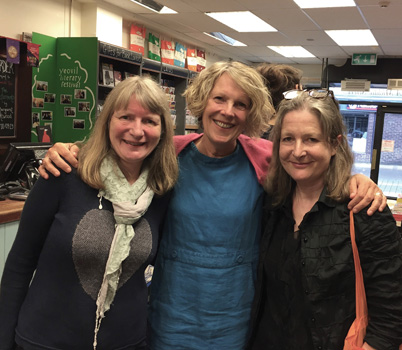
Photo copyright Peter James Millson 2016. Phone 07768 077353.

As they say ‘any port in a storm’. And when you are under sail in Lyme Bay and a South Westerly gale drives you towards THE ROCKS BELOW Golden Cap, that only leaves Brid Port and West Bay for shelter before the terrors of being wrecked on Chesil Beach. Writing poetry is not dissimilar and rarely if ever plain sailing. The other thing about writing poetry is that if you are rather good at it, port is often involved. As every school child knows the poet laureate gets rewarded with a pipe of port or is it a butt of Canary wine? A butt is fair amount of port, sherry, Madeira, Canary or Malmsey. One Butt equals two pipes or four hogsheads and as all Dorset cidermakers know, a hogshead is 64 gallons. There are of course kilderkins, firkins and puncheons which like rods, perches and chains have mysteriously gone out of fashion.
Put very simply a pipe of port is 2 hogsheads which is 128 gallons which in ‘continental’ terms is 582 litres or 720 bottles of sherry. This sherry perk for the poet laureate was re-instated by John Betjeman in the 1970s. Dryden the first official poet Laureate received a butt of Canary wine and £200. Simon Armitage, our current poet Laureate also receives an honorarium of £5,750 which is not a lot these days. It means you still have to sing for your supper.
Since Charles II’s time there have been 21 poet laureates. Queen Elizabeth II has had six poet laureates in her reign as opposed to seventeen Prime Ministers. It is the prime ministers and their minions who choose the Poet Laureates. Maybe it should be the other way round? Where poets choose the Prime Ministers? Now that would be interesting. The Queen of course has the last Word. Ma’am. Quite a choice. The post of poet laureate used to be for life but is now for ten years. That is 72 bottles of sherry per year. More than one a week…
Simon Armitage, a remarkable and well known poet, was appointed in May this year and follows in the footsteps of Ted Hughes, Alfred Lord Tennyson and William Wordsworth. Wordsworth was no stranger to Dorset. As a young man fresh from Revolutionary France he lived with his sister Dorothy in a fine house overlooking the Marshwood Vale. He once had to go to Lyme Regis on a horse to order coal and when he came back his sister said, “Eh William where’s the ‘Oss?’ ? William had left it tied to a lamp post down on the Cobb. He must have been dreaming about poetry… or the sherry was better than normal.
As for the present Poet Laureate, I have known Simon for over 20 years and have heard him wax lyrical in Oxford, Devon, London and Yorkshire. His formal lectures in Oxford as professor of poetry were exceptionally well crafted and unusually for Oxford, very humorous. Simon’s father was a stand up comedian and writing pantomimes when he wasn’t being a probation officer or selling old tyres to farmers for their silage clamps to keep the polythene down in a storm. Simon studied Geography in Portsmouth. Another Port. And then became a probation officer in Manchester.
Simon is very down to earth which is his enduring and endearing charm. And that is why his poetry appeals to such a broad cross section of readers. His latest volume of poetry Sandettie Light Vessel Automatic is a collection of waifs and strays, odd poems, odd commissions, poems written walking on the hoof, Pennine Way and SW Coast Path, poems about war, poems on sculpture, poems on rocks, on paintings and within plays, playing with words, poems for sculpture parks and park benches. Bronte sisters, Henry Moore, even an apple poem—Apple Cemetery. The joke is that Simon does not like apples but he has not been averse to a drop of cider over the years, even in a Devon barn.
In Brid Port we are very lucky indeed to be able to welcome Simon Armitage as part of the opening day of the 2019 Bridport Literary Festival. First Appeasement, then Max Hastings & the Dam Busters, not a rock band, and then Simon Armitage and Sandettie Light Vessel Automatic. They will all be performing in the Electric Palace.
Simon’s readings will be accompanied by a strange eclectic raft of slides: Old Shanghai, Zodiac T shirts, David Bowie, The Bronte sisters, Hayle and hearty, the Lelant Saltings, the odd purse and typewriter. Poet Laureates like poems come in all shapes and sizes. It promises to be a very memorable evening. When I introduce Simon I will ask him a few questions about his poetry, probation work, sherry and the Queen…

Sunday November 3rd 6.30pm Electric Palace, 35 South Street, Bridport. DT6 3NY . Tickets £10 www.bridlit.com or Tel: 01308 424901 bridport.tic@bridport-tc.gov.uk


People in Food – Tim Edwards

Scraping himself out of bed at 4.15am each morning, Tim Edwards is away from his house in Bothenhampton and at work, just outside Weymouth, by 5am. He owns West Country Catch, with his wife Lou. They supply the best fresh fish to restaurants and wholesalers in and around Dorset, Devon and Somerset. They source their fish from Weymouth, Portland and Lyme Regis boats, as well as from Brixham, Plymouth and Newlyn day boats. Tim works ‘on the knives’ preparing and filleting the fish for their clients, to order. Lou organises everyone and manages the office, also greeting the customers buying direct from them on-site.
By 6am, Tim has sent the delivery team out on their routes and the fish arrives from the markets and off the boats by around 7.30am. Ninety percent of their fish and shellfish comes from the South West and could appear on your plate at restaurants such as Hix Oyster House in Lyme Regis or at pubs like The Three Horseshoes in Burton Bradstock. Tim and his team ensure they get it right for their customers, working hard to establish their business which has been running for six years.
Tim usually works till 3pm each day, but during busy summer months he can be filleting for 14 hours. Easy it isn’t, but Tim is used to working hard. And with Lou at his side they are proud to be working together, building a future for themselves and their two children. Both have a background in the food industry, Tim as a chef and Lou front of house. They have learnt the ropes a few times over.
Lou jokes that Tim could be mistaken for a pirate with his muscly tattooed arms, West Country accent and hard stare as he rushes around during the dark early hours of the morning. However, his physique is a reminder of one of the other great loves of his life; rugby. Tim used to play for Bridport and still follows the game religiously. He ensures he is in the pub for every England game, enjoying the camaraderie with other current and veteran players. At home, Lou handles the cooking, creating restaurant quality food for the family. However, with a new enormous Braai BBQ in the garden, there is a rumour circulating about Tim dusting off his chef skills once more… it will have to wait though, until after the rugby season is over.

October in the Garden

All things being equal, now is the time that any last vestiges of summer turn into autumn and the change of season brings with it new opportunities. Cooling temperatures will elicit the appearance of autumn flowering bulbs, chiefly autumn crocus and colchicums, with their very welcome, spring-like, blooms. A gentle reminder that planting spring flowering bulbs should be in full swing and goes hand in hand with a good amount of garden ‘editing’.
Editing the borders makes the most of any remaining blooms and prevents the whole lot from becoming a brown ‘mush’, as the herbaceous constituents die-down completely. I used to subscribe, out of laziness more than anything else, to leaving all the border clearance until very late winter / early spring but now I compromise somewhere between the two extremes.
Use your common sense to determine which stems and seed-heads are sturdy enough to resist turning to mush and whose skeletal remains are worth leaving in the hope of achieving lovely frost effects. Add the collapsing herbaceous foliage to the compost heap but, as you are adding mostly non-green material at this time of year, a compost activator may be required to boost the breaking down process. Fresh leafy material is the best thing to add so layers of grass clippings between the dead stuff will help.
As the grass is growing more slowly now, and you shouldn’t be cutting it so short anyway, grass clippings may be in short supply. Growing an area of comfrey, which has big, nitrogen rich, leaves is one solution. I keep a patch of a purple flowered comfrey clone, usefully sterile, in a shady part of the garden solely for the purpose of adding to the compost heap. I chop the leaves off every time I need to speed up the compost heap and, during the growing season, they soon bounce back bigger and better than before. Peeing on the compost heap is another way of aiding the breakdown process, thanks to the nitrogen component of urine, but this may depend on where your compost heap is and how squeamish you are about such things!
Traditionally this is the time to make new beds and borders as practically every type of plant will move well at this time of year. Reshaping lawns is timely too as it’s still, just about, warm enough to sow new areas, during clement weather, and there’s usually enough dry weather to facilitate the laying of new turf. Attempting major planting, or remodelling, during very wet weather will result in a quagmire so keep everything on hand, to tackle the job, but be prepared to pause operations if common sense dictates that ‘discretion is the better part of valour’.
With frosts looming; sort out your greenhouse, windowsills, porch, or any other space you have, in readiness for the influx of plants which need to be kept frost-free over winter. These plants will also need to be checked over and gathered close to the house where they can be whipped indoors as soon as overnight frost is forecast. Tidy up these tender perennials and remove any damaged or diseased foliage so that they stand the best chance of surviving their time ‘ticking over’ during the cold weather.
Approaching cold weather does have some positive advantages for the garden especially when this change in season brings with it spectacular autumn colour. The best autumn colouring needs a good preceding growing season, which I think we have had, and a slow descent into cooler weather, without too much wind, to ensure that the leaves actually remain attached long enough for the autumn colour to develop. A sharpish frost, at the end of the initial cooling, can kick-start the colouring process so that the blaze of glory appears almost overnight in the best years.
The reason why the best autumn colour is reliant on deciduous plants having had a good summer is because the fiery reds, oranges and yellows, are the result of the breakdown processes acting upon the chemical compounds made during the vital, energy capturing, photosynthesis that plants do best during warm, sunny, weather. The better the growing season has been, the higher the concentration of these complex compounds, the more spectacular the autumnal fireworks will be.
Choosing specimens for autumn colour is, obviously, best carried out during this comparatively tiny window of opportunity – a wander around an established arboretum, ‘Westonbirt’ comes to mind, would be time well spent. Even better if you can find a tree nursery with a good choice of classic autumn colour species, maples being chief amongst these, so that you can pick out the best forms for your garden. It is a happy coincidence that now is a propitious time to plant such specimens and the upcoming months, November to March, are recommended for planting bare-root trees and hedging if you need to have something sent from a remote, specialist, nursery.
With the current trend for demonising the use of plastic, the usual ‘posturing’ response having turned a blind eye all these years, I think it’s safe to predict that we will rediscover some of the traditional horticultural practices that pre-date the invention of plastic plant pots. I’ve already noted some mail-order specialists making a fuss about sending out wallflowers in their naked, bare-root, state (personally I’ve always obtained mine from ‘Groves’) as opposed to plastic packaged plug plants or potted specimens. This is akin to ‘reinventing the wheel’ because it was only the convenience of plants being offered in plastic pots, a much more profitable commodity for suppliers and growers, that saw the demise of the, plastic pot free, bare-rooted offerings.
Plastic packaging is not the demon here. It is our constant desire for things to be ‘easy’, ‘long lasting’, ‘available on demand’ that has led us to using plastics as the mechanism for supplying our greed. A large amount of our convenience culture is only possible due to the widespread use of plastics. They protect practically every consumer product and foodstuff.
I almost feel sorry for plastics because they have served us well, perhaps too well, for practically a century and only now are we suddenly noticing that their very best attribute of being durable is actually a ticking time-bomb for our planet.
At least in gardening we can look back on what we were doing only a couple of generations ago and, just like returning to chemical-free horticulture, there were always plastic-free methods of growing and supplying plants. They may require more skill, timeliness and effort, than the plastic-potted approach, but they are not beyond the wit of man / woman / non-gender specific person.
Removing plastics from the supply chain of the rest of our, convenience driven, lives will not be so easy – but we only have ourselves to blame for that. Happy gardening !!!

Vegetables in October

Although October feels like it should be a time when work in the garden slows down, we find that there is still a lot to be done, especially with changing over summer polytunnel crops to winter salads and herbs. Also getting beds prepared and mulched or covered with black plastic before the winter rains come and compact the ground can take a fair amount of time.
As we clear crops from the polytunnels at this time of year there is one in particular that we are keen to save seed from, as the seed that you can buy is so often poor quality. Agretti (Salsola soda) also known as Barbe dei Frati (Monksbeard) or Saltwort seems to love being grown beneath our tomatoes in the polytunnels. It is a tasty vegetable, usually blanched or steamed and then dressed with lemon and olive oil and either eaten on its own as a green or run through pasta dishes, or when young and tender eaten raw in salads. It has a slightly salty flavour and a bit of a crunch, a little like samphire.
Once germinated it is an easy crop to grow and seems to benefit from the slight shade offered by the tomatoes, growing slightly finer and more tender than when grown in direct sunlight. We start sowing the seed in January and sow successionally through to April, after which germination rates tend to tail off. We sow into module trays—two or three seeds per module and cover with vermiculite. After germinating the plants hold well in the modules so they can be planted once the ground is ready (covering with fleece if growing outside until the threat of frost has passed). We grow some outside and some under the tomatoes in the polytunnels, all at 20cm apart. After a few weeks the tips can be cut which encourages sideshooting and a bushier plant. Subsequent cuts can be made every couple of weeks through the summer until early autumn when the plant becomes a little woodier. We mark some plants in early summer to leave and save seed from. We do not harvest from these, but let them grow and produce the unusual “seed” later in the season. The seed is actually a tiny rolled up plant rather than a seed and we find that after leaving it to mature until around October on the plants it keeps well if hung up in a polytunnel (see picture) and threshed when needed from January, rather than drying them further and keeping them in an airtight container which would be the normal way to treat seeds. Bought seed often gives very poor germination rates, and is rarely viable for more than three or so months, whereas our own saved seed usually gives us around 100% germination for the first couple of sowings and then slowly declines over the next few months.
If you are interested in starting to save seed then I would say that agretti is as good a crop as any to start saving from as the results are always so much better than bought seed (I would recommend buying the starter seed from Real Seeds), and the process is so simple.

WHAT TO SOW THIS MONTH: Spring onions (for polytunnel/glasshouse), broad beans, garlic, peas, sugarsnaps and peashoots (all for overwintering in the polytunnel/glasshouse), mustards, rocket, leaf radish (last chance for sowing these for overwintering in polytunnel/glasshouse)

WHAT TO PLANT THIS MONTH:
OUTSIDE: overwintering spring onions (if not before), direct broad beans and garlic.
INSIDE: overwintering salad leaves, coriander, chervil, parsley, spring onions, overwintering peas.

OTHER IMPORTANT TASKS THIS MONTH: continue mulching beds for the winter, and it is probably your last chance to sow cereal rye as an overwintering green manure in any bare ground

Rivers of Dorset

“See you later alligator—in a while crocodile”. This was a common exchange or song some years ago. But neither of these creatures inhabit the rivers of Dorset.
The rain falls on our land and permeates the chalk until it reaches an impermeable layer when it eventually emerges as a small spring. Other springs coincide as a stream and finally become a river which runs down to the sea. Sea water is evaporated by the sun and moved by the wind to form clouds, until it eventually falls as rain to complete the cycle.
We are blessed with many small rivers in Dorset. If the water falls over stones as a small waterfall, it gurgles and glistens like silver even from a dirty slow river. Look carefully and you may see a flash of silver in the water, this time it is a fish. If the river is large enough you may see swans paddling majestically along and perhaps a heron, looking for fish in the shallows. Fussing around the rivers’ edge there could be a moorhen or a coot and less frequently a water mammal. All are maintained by the river which provides food and some shelter by the growth on its banks.
The origin of local river names is shown in Cullingford’s book History of Dorset. From west to east Celtic river names are, Lym, Char, Bride, Toller, Cerne, Frome, Lydden, Divelish, Stour, Iwerne. Then Saxon names are Piddle, Trent, Winterborne (and I infer Crane). The river Brit is named after Bridport, not the other way round, according to Marie Eedle in A History of Beaminster. The Lym exits to the sea at Lyme Regis, the Char at Charmouth, the Bride (pronounced Briddy) at Burton Bradstock, or Burton Freshwater. The Toller and Cerne join the Frome to exit near Wareham, as does the Trent. The Lydden, Divelish, Iwerne and Winterborne join the Stour to leave at Christchurch. The Brit exits into Bridport Harbour, now known as West Bay.
Already we have so many rivers that the picture is becoming confused, so let us look more closely at West Dorset. In the Marshwood Vale a stream started on Sliding Hill in the Bettiscombe area, to eventually join the river Char. Moving east, the river Winniford passes Chideock to emerge at Seatown. The Brit starts above Beaminster in Fullers earth clay in several streams which combine at Beaminster to flow through the grounds of Parnham House, recently subject to a disastrous fire and on to Netherbury, once known for cheese and cider, where it passes under a 17th-century bridge of three spans. It flows on to Oxbridge and Pymore, where it runs under Watford Bridge via a weir.
The Brit passes West Mill in Bridport under West Street. The river Simene rises west of Bridport in Filford and down the valley to Symondsbury past 16th-century cottages, through fields and Skilling to join the Brit northwest of the parish church of St Mary. The combined river passes the Chantry, the oldest non-religious building in Bridport, although it once housed a priest who said prayers for his landlord and supplied him with pigeons from the Chantry loft. In olden times the river was navigable from the sea to past the Chantry which has a possible fixing for a beacon, so it may have acted as a lighthouse or customs house.
The river Asker takes its name from Askerswell, which is said to be 1000 years older than the Domesday book and the river flows through the valley to Uploders and then Loders. It is joined just east of Bradpole by the Mangerton river, which passes Mangerton Mill, known now for cream teas. The combination is then again called the Asker. It passes under a stone road bridge in Lee Lane from the Dorchester road, close to the disused Bradpole railway halt. The bridge is also over an old sheep dip. The river continues near a field lane from Bradpole towards Bridport under an attractive stone footbridge near a bay in the river enclosing a sand island, known as Happy Island, a favourite haunt for children and earlier for Victorian Sunday School tea parties. The Asker reaches the east end of Bridport to flow under East Bridge and on down to join the Brit just above the brewery, which is thought to be the only thatched brewery in the country. The Brit then carries on down to the sea at West Bay. In 1774 the river entered the sea near East Cliff but its course was altered when a new harbour was built and the piers were erected changing the course of the river. In the past the river has flooded, causing considerable problems in Bridport and a road near the brewery is named Flood Lane. At West Bay the river has sluice gates which control the flow into the bay at low tide and enables a broadening of the river mouth so that boats may be rowed upriver towards the brewery and an annual raft race is organised with crews in carnival costumes.
Moving east to Burton Bradstock we find that the river Bride springs from chalk hills above Bridehead, Little Bredy which at first seems surprising as one might expect it to have run off to the sea earlier and flooding has been a frequent problem in Burton. Elizabeth Gale tells us that it is often after an accumulation of heavy rain and a rough sea causing Freshwater to “bay up”, when the shingle bar at Freshwater builds up and blocks up the river mouth. I have frequently seen Bredy Road flooded near to where it joins the main road to Abbotsbury, but this may be the result of water runoff from the fields.
Next to Abbotsbury which has the Fleet, partly salt and partly fresh water. The Fleet has a hidden causeway where it narrows to about 100 metres just south of the Abbotsbury Swannery which has been known from the 1600s. Gordon Le Pard calls it a “wadeway” almost permanently under water and it was possibly used for waggons to collect fish directly from boats on the Chesil Beach back to dry land. It has a rubble base topped by rough cobbles, but it has passed the test of time.
This practically finishes the West Dorset rivers.
Some readers of my age may recall a song on the radio sung by Donald Peers many years ago which goes :
“In a shady nook, By a babbling brook, Mid the flowers, I spend hours, Every day”. Another verse is:
“Rippling waters call me far away, to a shady nook – I’d be more than satisfied, if I could hide away,
beside a babbling brook”.
This seems to be a pleasant ending to this piece about rivers, streams and brooks.
Bridport History Society meets again on Tuesday 8th October in the United Church Main Hall, East Street, Bridport at 2.30 pm for a short AGM, followed by Lady Sandwich with a talk entitled “Inside and Out”. All welcome, visitor entrance £3.

Cecil Amor, Hon President, Bridport History Society.

Mediterranean Divorce

You might have noticed that I wasn’t here last month. This was owing to our summer hols driving around bits of France and Spain to (a) check if they were still there and (b) to remind myself of some of the quirkier good things about Europe before all hell breaks loose on October 31st. After which date it may (or still may not) be more difficult or even impossible to travel across borders without at least a passport, separate driving license and insurance certificates and other forms of identification including DNA print out and a list of various tattoos and their exact locations on my body.
No, it’s OK. I promised our editor that this article would NOT be about Brexit and it’s not! You can vote for whomever and what-so-ever you prefer! It is however about some of my personal thoughts and even regrets on what looks a bit like a forthcoming European divorce. Let’s start with travel.
Quite apart from the obvious benefit of hassle-free transit, the first thing that strikes you is how good the French and Spanish roads are. No potholes, no bumps or heavy road noise—just a relaxingly smooth glide over the tarmac. Of course, continental roads have probably been mostly paid for by us and our contributions to the EC budget over the years, but if they could prioritise making their roads nice, why couldn’t we have done the same? On the same subject of travel, I prefer kilometres to miles mostly because they go down so much faster. I If you’re on a motorway and you see ‘Madrid 250 kms’ it sounds a lot, but in next to no time it’s 100 and then 50 and then you’ve arrived. Miles seem to take so much longer to cover than they should. Perhaps this is just me or I’m being a grumpy old continentalist. And French motorways have lots of rest stops too. They’re called ‘Aires de Repos’ and you find them every 20 kms or so with grass and green trees and places to sit and unwind without being bombarded by noise and adverts for burgers and chips and ice-creams. How much more civilised and relaxing than a typical UK Motorway Service Station. And don’t even start on me about continental trains. They are so much quicker, quieter and nicer than ours. And a journey from—say—Paris to Bordeaux will not only arrive on time but will get you there at one third of the UK price for the distance!
OK. There are plenty of other things that the French and Spanish do NOT get right. For a start, they like to think of themselves as great lovers. This is total and utter rubbish. Many of them also have horrid yappy small dogs and some have a revolting habit of shooting, trapping and eating many small things like skylarks and turtledoves. However, apart from that, I have to admit their food habits are pretty good. Only the French would make bread so delicious it’s a spiritual creed in itself. Collecting the morning fresh ‘Pains de Campagne’ from the bakery is a semi-religious experience. Why is it that so-called ‘French bread’ sticks or baguettes in English supermarkets taste so boringly of sawdust and nothing? Is it our flour or our water or the English air or something? And yet, in France why are they always so yummy? And another thing that we could do better… supermarket fruit and veg. When I do the shopping in Europe, I often discover that the pile of fruit is an art display and the veg is arranged with flair and style. Over here, the fruit is stacked in their boxes and racks as it arrives and without any great thought for panache or attention to detail. I don’t know, but over there they seem to be prouder of what they are selling and want to show it off to you. And this is a purely personal food comment, but being a lover of squid and calamari and octopus and all fishy squiggly things that come from the sea, I was totally spoilt for choice. Rows and rows of cuttlefish and squid—chopped into batons, rings or strips, frozen or fresh or marinated. Even whole cooked baby octopus… I know, I know… It was heaven! This one’s obviously just me… In UK fish departments, you’ll be lucky to find a few rather tired old rings of calamari and that’s your lot. And supermarket trolleys are better over there too—they run easier and the brakes actually work rather than squeak and jam and you’ve got more space with much wider aisles. It’s just an overall nicer shopping experience…
What else? Well I haven’t mentioned healthy things like the ‘Mediterranean Diet’ which means less coronary heart disease from loads of batter and chips and the simple fact that Mediterranean weather is much warmer than ours because it’s further South. I realise this is particularly pertinent as we are about to descend into another English wet and blowy winter once again. Oh, to be on The Côte d’Azur next January! I wish…
But there is one more thing we could learn a bit from Europe before we cut the rope and drift off to our own windswept shores. Like it or not, but the majority of Spaniards or French walk about their streets with a sense of style and the ‘chic’. Compared to—say—the grey streets of Bristol or Barnstable or Bridport where many of us look so gloomy, European men and women seem to dress better and just look cheerier. It’s probably because (unlike us) they haven’t had to worry themselves sick over Brexit. Call me “Continental”, but I’d love it if we could just be a bit more stylish sometimes and smiley and—dare I say it—look happier? Anyway, I’m off to read a good funny book in my favourite Dorset pub with a roaring log fire and I’ll smile a lot as I down some excellent West Country cider. I shall share a few ribald anti-French jokes and then I’ll order a proper full English breakfast (two eggs, fried bread and bacon and a huge traditional pork sausage). Now, that’s a real breakfast! None of your so-called continental brekkie rubbish with namby-pamby little brioche rolls and no decent marmalade either…

Spirit of Place

Why is that some locations have a special place in our hearts?
Is it the landscape, the people, the personal connection or the way some places can literally ground you to the here and now and also to the past and future?
Margery Hookings meets three Dorset writers for whom ‘place’ is all important.

Growing up as a farmer’s daughter in rural south Somerset, I know that the landscape, the fields, trees, animals and the seasons have a profound effect on me. I remember as a child of about six years old being taken by my mother with my siblings to Tarr Steps on Exmoor. I imagined a film shot of this ancient clapper bridge across the burbling River Barle panning out to the trees, the moor and a big open sky, all to the I Vow to Thee My Country melody in Jupiter from Gustav Holst’s Planet Suite. In my head, Tarr Steps will always be like this. Places evoke certain feelings and memories.
I feel similarly connected to Lewesdon Hill, especially at sunrise before the day really begins and no-one else is about.
Three writers from Dorset will be leading the discussion on ‘Spirit of Place’ at Bridport Literary Festival this year. They are Gail Aldwin, whose debut novel, The String Games, is longlisted in the fiction category of The People’s Book Prize 2019, Maria Donovan, whose debut novel, The Chicken Soup Murder, has been shortlisted for the Dorchester Literary Festival Local Writing Prize 2019, and Rosanna Ley, published by Quercus Books, whose latest novel, The Lemon Tree Hotel, is set in Italy.
The three of them have formed a writing triangle to discuss their work-in-progress and are looking forward to being part of the festival. It will be the first time they will have taken to the stage together.

Maria Donovan
I’m a native of Bridport. As an adult I have gone away and been drawn back many times. I lived in the Netherlands and trained as a nurse there. Back in the UK I gave lessons in juggling and travelled around Europe as a performer and musician. For many years I was in Wales, first as a student and then as a lecturer in creative writing. On a trip to Dorset, I met my husband when the wheel fell off my car outside his house in Melplash. We moved to a smallholding near Aberystwyth but after he died I came back to Bridport, where I now live and work full time as a writer.
The love of a town or a landscape can get right into your bones. That’s how I feel about Bridport and West Dorset. For me the spirit of a place is affected by its present, past and future. People and other creatures matter too, and the knowledge and associations we bring from memory. It’s always dynamic.
In my debut novel, The Chicken Soup Murder, I combine observations of Bridport and Cardiff, as they were in 2012, with memories and invention. It begins with a sense of a childhood paradise that is lost when loved ones die and new, disruptive characters move in. The place is not outwardly much changed but its spirit is altered.
Even unhappy experience is useful in fiction. For instance, in the short story Transit of Moira from my collection, Pumping Up Napoleon, the many times I took the bus from Yeovil at 6pm in the 1990s inform the feeling of what it might be like to be a cleaner on a run-down space ferry trundling between Earth and Moon. The ‘ferryman’ no longer sees the wonder of it all: writing and reading can help connect us with a sense of the strange in the familiar and the familiar in the strange.
Leaving a place we love can feel like a tearing away that is troubling to our own spirit, while the spirit of the place itself continues quite well without us. Rejoining with the spirit of a place feels like healing. Now that I’m in Bridport again, I miss the quiet fields and pine woods near Aberystwyth, the mountains behind, the kites overhead and not a house in sight between me and the sea four miles away. When I go back to the Netherlands I get excited about windmills, bicycles and storks. But every time I walk through Bridport I feel the thrill of being back where I grew up. I love to experience it as it is now and at the same time memories are stirred at every step.

Rosanna Ley
Place has always inspired me—to travel, to explore, to write—and it may be that hard to define ‘spirit of place’ that ignites the inspiration. It’s partly the landscape, but also the culture, the people, the atmosphere and the sense of history that makes up this ‘spirit’ that can be such a seductive draw.
Certain places have seduced me into wanting to move there (West Dorset is the best example of this), into travelling there as much as possible (Italy is my favourite; I can’t keep away) and of course into writing about them. I have set books in Spain, France, Italy, Morocco, Cuba, Sicily, Fuerteventura, Burma and West Dorset. Every place brings something different to the party.
For me, the sense of place in my novels is as important as any other element—for example that of plot or characterisation. In fact, it’s integral and intertwined with both. Place can even be the original seed from which the rest of the novel grows.
West Dorset’s unique spirit of place drew me here some years ago and I worked to make it my home. It inspires me—I love it.
We are fortunate, in Bridport, to have our own literary festival and I’m delighted to be part of it this year. As a panel, we will be discussing how we use sense of place in our writing and what spirit of place means to us. We look forward to discussing this with anyone who would like to come along to listen and hopefully join in—whether they are writers or readers or both.

Gail Aldwin
There is a quality about place that is absorbed in a sensory way. When I think about living in Papua New Guinea, I listen to the rain plinking on the corrugated iron roof and wait a few seconds for the deluge of the wet season to begin. I watch the earth turn to the colour of cocoa and I remember stepping outside and being drenched by rain that turned my hair to string and gushed over my eyelids and lips. I use what I learnt about living near the equator to write about other countries with similar weather patterns and climate.
Something about the spirit of place gets under the skin of my characters and sinks into their bones. They become the essence of where they’re from, where they’ve been and where the action of the story takes place. This inheritance of the places they’ve known informs their reactions to the obstacles I present to them through the plot.
I moved to Dorset in 2006, somewhat reluctantly. I had an interesting job in London, my children were settled in good schools and I loved my suburban home but when my husband was offered a new post, we moved. It didn’t take long for the spirit of Dorset to do its work. I secured a job on a teaching service that required me to visit schools across the county. There isn’t a better commute in the world than driving through the Dorset countryside.
I am so looking forward to joining Maria and Rosanna as chair of the Spirit of Place panel discussion. We three have made Dorset our home and between us we have substantial experience of locations that are remote and beautiful, surprising and sensuous, accessible and exciting.

• Gail Aldwin, Rosanna Ley and Maria Donovan discuss ‘Spirit of Place’ on Sunday 3 November at Bridport Library, South Street, at 3pm. Tickets, at £7, can be obtained from Bridport Tourist Information Centre, 01308 424901, bridport.tic@bridport-tc.gov.uk
The Maer: One of Exmouth’s Hidden Gems

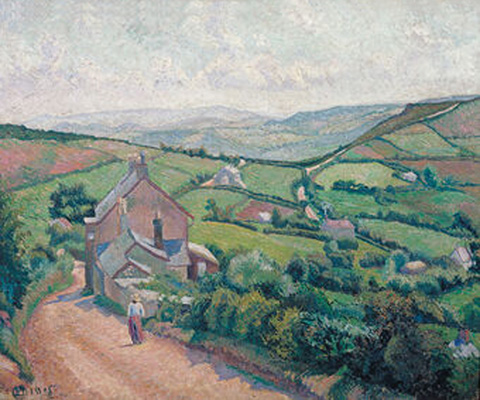
Towards the end of July, I visited the Maer, a nature reserve situated at the eastern end of the promenade in Exmouth. With its sand dunes and sandy grassland, the Maer is a remnant of a much larger dune system that once stretched down to the beach. Nowadays, it provides an oasis of calm close to the busy seafront as well as a habitat for special plants and insects.

A slight mist softened the long views as I walked eastwards along Exmouth seafront. Some warmth penetrated the cloud and a few people were already enjoying the beach on this late summer morning. The sandy tip of Dawlish Warren lay tantalisingly close across the water and further on, the Ness at Shaldon lurked in the mist like a gigantic wedge of cheese. The commercial area with its big wheel, pubs and cafes was busy but eventually I reached a quieter part where sand and scrub tumbled downwards at the side of the beach road. This is the edge of the Maer, a local nature reserve and one of Exmouth’s hidden gems. Superficially, the Maer is a large grassy, sandy space sandwiched between the beach road and Exmouth Cricket Club but it conceals a mosaic of different environments with unusual flora and fauna.
A substantial sandy dune ridge forms the southern border of the Maer giving views across the reserve on one side and towards the beach on the other. Marram grass grows thickly giving the sand stability but there are also areas of bare sand and areas of scrub, reminders of the dune system that must have occupied this area before the beach road was built. Restharrow with its pink and white pea-type flowers and a few residual yellow evening primrose provided some colour but it was the sea holly that surprised. This is an unusual and unexpected plant that grows extensively along the first part of the ridge. Its spiky greenish-grey leaves with white margins and veins and its powder-blue flowers light up the sand as though someone had spilt pale paint. Sea holly flourishes in these arid conditions by having leaves covered in a waxy cuticle to help retain water and through its deep roots. Although sea holly has some visual resemblance to our Christmas greenery, it is a relative of the carrot; in the past it was employed as an aphrodisiac.
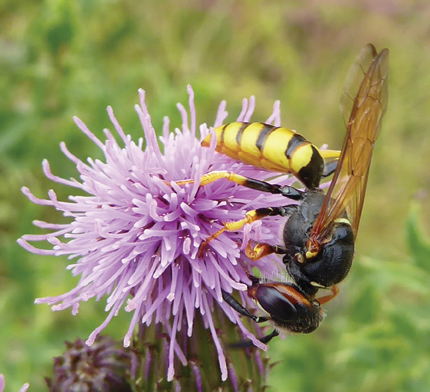
Several large insects with bold black and yellow markings crawled about the bright blue sea holly flowers collecting nectar. These are beewolves, some of our most spectacular solitary wasps, that nest in sandy places and specialise in catching honeybees. Both male and female beewolves were feeding that day but it is the larger female (up to about 2cm long) that catches and paralyses honeybees and may be seen flying back to the nest carrying a quiescent honeybee beneath her. She digs a nest tunnel in sandy soil up to a metre long with multiple terminal branches where she lays eggs and provides honeybees as food for the developing larvae. These once rare insects have expanded their UK range since the 1980s, possibly in response to climate change and I saw them in several places on the reserve notably on a stand of mauve thistles. They are not aggressive towards humans.
Further along the ridge, before it is colonised by brambles, scrub and low trees, I found a large clump of an unruly scrambling plant covered in pea-type flowers of an impressive reddish-pink colour. This is broad-leaved everlasting pea, a perennial relative of our annual sweet pea, growing through the grasses on the Maer ridge holding on via thin tendrils. A chunky dark bee was feeding from the flowers, apparently undeterred by their jerky movements in the breeze. This was a leafcutter bee, most likely the Coast Leafcutter Bee that favours sandy habitats near the sea. They nest in burrows in vegetated sand lined with pieces of leaf cut from trees and plants. Later, when the sun came out, I saw several of these bees chasing one another around the bright pink flowers like children in a playground.
The large central part of the reserve was coated with golden brown grass criss-crossed with paths for walkers and looking very dry, a reflection of the recent lack of rain. Within the grass were mats of restharrow and many of the yellow dandelion-like flowers of catsear. One area resembled a lunar landscape with many small craters where the surface had been dug out exposing the sand. Solitary wasps and small leafcutter bees had happily nested here.
Tall clumps of ragwort with bright yellow daisy-like flowers and deeply lobed green leaves were dotted around the central area. This plant provides valuable habitat and food for invertebrates and I found one clump that had been appropriated by black caterpillars with prominent yellow bands. They were moving about, eating the leaves of the ragwort, voraciously consuming the greenery and destroying the upper parts of the plant. These are caterpillars of the cinnabar moth and as they feed, they assimilate some of the toxic alkaloids contained in ragwort, rendering themselves unpalatable to birds and other predators. It is said that their yellow stripes act as a warning to birds. Once fed and mature, the caterpillars dig themselves into the ground to spend 12 months or so as pupae before emerging as beautiful day-flying red and black moths. The adult moths live for a few weeks, feeding on nectar before mating and laying eggs on the ragwort leaves. The eggs grow into caterpillars and the cycle starts all over again. The cinnabar moth is entirely dependent on ragwort for its survival.
Towards the western end of the reserve, I found a large colony of flowering plants, perhaps suggesting damper conditions. Clumps of common mallow up to a metre tall dominated with their trumpet flowers composed of five deep pink petals each with purple stripes. At the centre of each flower was a mass of grey pollen-covered stamens emanating from a single stalk like a miniature bunch of flowers. Near the mallow, large areas were covered by a sprawling, scrambling plant richly covered with pea-like flowers above many small, spear-shaped, mid-green leaves. Flower colours varied from very pale to light blue, mauve and deep purple with some plants having several of these colour variants. One plant even had bright yellow flowers. This is Sand Lucerne, a fertile hybrid of lucerne and sickle medic, naturalised in East Anglia, where its two parents grow together, but now transplanted elsewhere.
There’s so much to see at the Maer and I could easily have spent several more hours looking about. But I had a train to catch so I headed back along the promenade and across the town towards the station.


Philip Strange is Emeritus Professor of Pharmacology at the University of Reading. He writes about science and about nature with a particular focus on how science fits in to society. His work may be read at http://philipstrange.wordpress.com/

UpFront 10/19

Many decades ago, I started a small company with a couple of friends. We had become tired of clocking on for someone else’s benefit and decided to launch ourselves into the world of corporate video production. To begin with, our main clients were book publishers. The issue for them in those days was the fact that their sales reps never had the time to read all the books they were selling. So they were often unable to offer a juicy story that might tempt a bookshop owner to order a large number of new titles. Consequently, our job was to make 2 or 3-minute videos about the books for the reps to watch. We would be given an outline story and would then create an audio-visual preview of the book—a bit like a film trailer. In some cases, the book hadn’t even been finished before we got to work. But whether it was a new Dick Francis novel or a book of David Bailey photographs, our job was to make it interesting in less than 3 minutes. Other than the occasional mishap, like nearly burning down a studio while setting fire to an artificial spider web for Iain Banks’ Wasp Factory, or falling out with a very grumpy Spike Milligan on an early morning shoot, it was an interesting and educational time. Today publishing has changed and the need for sales reps to visit individual bookshops equipped with knowledge of every book they are selling (or at least the story gained from a 3-minute video) is rare. But what surprised me recently was a comment from a video producer that the average time he had to get a message across was between 20 and 30 seconds. Marketers using social media have long been involved in a discussion about attention span, or the dwindling rate of it, while sociologists, psychologists, and teachers have talked about a developing problem caused by the ‘fear of missing out’ (FOMO). A study, conducted by a team of European scientists earlier this year, concluded that social media now produces so much competition for our attention that our mental resources have become too densely packed. This has made it hard to retain and process information, let alone take in news and cultural messages. An article published in 2015 suggested that we now have a shorter attention span than a goldfish, and while that claim was unsubstantiated and probably designed to get attention, there is little doubt that to focus properly we need to pull back from our use of information tech. So with such a fantastic line-up of literary events around the local area over the next few months, perhaps the answer is to switch off the phone and read a book.

“If You Don’t Go To Chapel You Will Never Get On Here”

When I was 16 I took up a General Engineering apprenticeship with a large manufacturing company and was placed with a foundryman for a few months. The Works Manager, an impressive figure, processed through the factory, rotund with a prominent watch chain proudly displayed over his waistcoat and was also apparently a pillar of the local chapel. My mentor said “Unless you are seen attending chapel you will never have promotion here”. This may have been said partly in joke, “tongue in cheek”. It was my first lesson, which I disregarded as my home was nine miles away.
However this advice could have applied in Bridport from the time of King James II.
Protestantism began to be established in this country at the time of King Henry VIII when he broke with the Pope, followed by dissolution of the monasteries. When Oliver Cromwell came to power the Puritans disagreed with the decorations and idolatry remaining in the Church of England. Queen Elizabeth I also broke with Rome causing problems with Roman Catholics. This is a broad brush consideration of the religious issues of the time, but shows people moving from the established church and forming independent meetings. However the move led to many problems, bruising encounters and sometimes jail.
A Cromwellian Act of 1654 set up “Triers” to approve preachers in the Established Church, including “trying” clergy in office. Local Triers were Robin Tuchin or Touchen of Chideock and John Hardy of Symondsbury. Touchen was admitted in 1646 presumably as priest at Bridport parish church. About this time only one or two people were listed as Roman Catholics in the town, but there may have been a few more under cover and in surrounding villages.
In 1672 an ejected clergyman, Rev. Richard Downe was licensed to preach at a private dwelling of John Golding as an “Independent Dissenting or Congregational Teacher”. This was allowed under an Indulgence from King Charles II. However in 1680 Downe and “his people were imprisoned for nonconformity”. In July 1683 Mr Strode of Parnham broke into the Independent Meeting House and broke up all the seats and pulpit and then continued with the same destruction in other places in Bridport.
A letter of June 1698 to “Mr Pinny minister of the Gospel living at Betcombe” from “the Church at Bridport” asking Pinny to assist in the ordination of Samuel Baker, a member of the congregation at Axminster. It was signed by Math. Gollop, John Sissons, Tho. Ridgway, John Hardy, Will Lush, John Stone, Will Picher, John Stevens, Tho. Goudge, William Stevens and William Bishop. It seems that this group first met just off East Street and Stake Lane, now Barrack Street, probably in a hay loft. Shortly after the group moved up to what is now known as the Lyric Theatre.
By 1696 the Society of Friends, commonly called Quakers, had converted a barn belonging to Quaker Daniel Taylor in South Street, Bridport, opposite the parish church as their meeting house. In those days the Quakers were more confrontational than the other independent groups, when attendance at the parish church was compulsory, and they chose to meet almost opposite the church. They also refused to “doff their hats” to anyone. Their meeting house was frequently broken into by local authorities and the members taken out roughly and thrown into jail for non-attendance at the parish church. The Quakers had their own burial ground in South Street from about 1659, whereas the other nonconformist groups continued to use the parish church for burials.
By 1676 Bridport had a higher percentage of “Dissenters” than the rest of Dorset.
In 1735 the Independent Congregation had grown to about 500 and the meeting split over a confrontation with the minister over the question of the Trinity. What then became the Unitarians were about 300 and the remaining 200 became Congregationalists. The Unitarian Chapel was built in 1794 in East Street Bridport, commonly known as “The Chapel in the Garden”. Later in 1859 the United Reform Church was built almost opposite the Unitarian Chapel.
A Wesleyan Chapel was built in 1837 (now the Arts Centre) with an attendance of 843 in 1851 and the Baptists erected their chapel in 1842 with 215 attenders.
Basil Short in his small book A Respectable Society – Bridport 1593 – 1835, wrote that in 1692 and 1695 two Dissenters were appointed to the town Corporation, Thomas Way and Samuel Gundry. By 1708 there were 5 Dissenters: Samuel Gundry, Robert Bull, Thomas, Joseph and Benjamin Way. As time passed Andrew Way and Joseph Gundry joined so that by 1720 the council was firmly in the hands of the Dissenters. One of their first actions was to remove the toll on wheat, reducing the price of bread. The Dissenters attended the parish church once a year for Holy Communion which was the minimum requirement for official office. Dissenters were frequently church wardens and overseers of the poor. Quakers would not enter a “steeple house”, as they called the parish church and so barred themselves from public office.
Short quotes Hutchins, the Dorset historian, “Since the year 1720 a great many brick houses have been built here and the streets well paved”. The better fortunes of the town were based on local industry and most of this was owned by Dissenters including some Quakers. Some of the owners of business were the Gundrys, Hounsells, Downes, Colfoxes, Ewens, Bools all possibly coming under a blanket title as “Chapel”.
So perhaps the warning I received at age 16 was relevant in Bridport years ago!
The first meeting of the autumn season for Bridport History Society is on Tuesday 10th September at 2.30 pm in the United Church Main Hall, East Street, Bridport when Prof. Colin Divall will ask “Do you really call that progress Mr. Marples?” and talk about the closure of local railway lines. All welcome, non members entrance fee £3.
Cecil Amor, Hon President, Bridport History Society.