


Up Front 11/07
Back in the days when nothing much else mattered, other than work and work colleagues, I remember how enjoyable it was to go out for a drink with my workmates and chat about the day’s events. Spending time with like-minded people, who know the business I spent 8 or 9 hours a day in, was fun. There was a camaraderie and security in knowing that we all understood one another. Eventually I, like many of my colleagues, had a family, and began to mix career with family life. Career became just one part of the life balance. However that isn’t so simple for everyone. Some careers aren’t so easy to move on from. A recent study by researchers at the University of Leeds has found that many former MPs struggled to cope with life outside their career after leaving office. Some could not find work and many earned less after leaving the House of Commons. Around half of those who did not retire voluntarily from the Commons said it had taken three to six months to find a new job. Just one fifth said they were able to find work immediately, or almost immediately, and one in seven took over a year to find employment. The one shocking finding, however, was that nobody wanted to listen to them anymore. Many former MPs missed not being at the centre of British politics. One said: “I would wake up in the morning, listen to the radio and form views on the issues of the day, and then I realised that no one wanted to know what I thought.” Now what career advisor could have predicted that?
Wild Willy Barrett – Call of the Wild

Wild Willy Barrett talks to Fergus Byrne
Wild Willy Barrett tells me he doesn’t beat John Otway’s head against the microphone for percussive effect on their song ‘Headbutts’ any more. He mutters something about Otway getting old and how it isn’t good for his health.
For many loyal fans that might signal the end of an era, but as it happens the dynamic duo still play occasional gigs together and stalwart followers and new fans are never disappointed. Anyone who saw the on-stage anarchy created by the relationship between Otway and Barrett in the late 70s witnessed something unforgettable. Headbutts was one of the many highlights from the duo’s ever inventive and far from predictable show. Their antics on stage, which inevitably included Otway having to extricate himself from rafters or nearby scaffolding, while Barrett alternated between musical genius and sawing an instrument in half – again purely in the interests of percussive effect – left enduring memories. It would be hard to find another musical duo that commanded such loyalty. One biker club has called themselves, The Beware of the Flowers Motorcycle Club after an Otway and Barrett song.
Today Wild Willy Barrett, a talented multi-instrumentalist, still with an eye for the wacky side of performance, produces much of his musical output in the folk circuit which shows off his talents so well. Taught to play as a toddler by his father, who played in a Hawaiian band, Barrett proved capable of learning any instrument he could get his hands on. Soon Willy’s music anthology, a 2 CD package covering recordings from 1968 to the present day (40 tracks), is to be released.
Apart from sporadic musical mayhem with John Otway, he also plays in a band called Sleeping Dogz with cellist Mary Holland and uilleann pipe player John Devine. Between them they play guitar, fiddle, cello, banjo, balalaika, uilleann pipes, whistles, harmonium and djembe, and that may be leaving out a few. The result is a fantastic and diverse blend of music from English, Cajun, Celtic and Moorish influences.
What many people don’t realise however is that Barrett is also an accomplished furniture maker. Before a recent gig in Glastonbury I helped him carry the harmonium into the pub and asked him about his musical beginnings. “Apparently I started when I was about three, on the ukulele”, he said. “My old man used to play in a Hawaiian band and I used to sit in on their rehearsals. That is how I got started – went on to guitar and fiddle, banjo, keyboards.” Exposure to Hawaiian music doesn’t seem to have stuck. Barrett remembers his early influences coming from an altogether different direction. “My dad had a very diverse collection, big-band stuff, country and western, jazz – all that sort of thing. When I was about 14 or so I discovered Delta Blues, which was unheard of in this country in the early 60s. And I was amazed that my old man had never come across it. People of his generation had never listened to it.”
Leaving the blues aside his musical development went the way of many budding performers – leaving school at 15 and playing the local folk circuit. He said “I had moved on to guitar by the age of 12 and I was in a band at school at 15, we used to do weddings and that sort of thing. I ran a club in Aylesbury for a while and Otway came to the club and sang a song. Eventually we recorded some songs in a studio near Maidenhead and it went from there.”
The Wild Willy Barrett produced ‘Cor baby That’s Really Free’ was the hit single that propelled Otway and Barrett into the limelight in the late 70s, and appearances on Top of the Pops and The Old Gray Whistle Test showed Barrett playing the first of the many unusual instruments that have become part of his repertoire. It was a guitar that had been made by his father. Barrett explained “That first song we recorded was with a guitar I called ‘the Les Dawson’. My dad had made it from an old scaffold plank. I came home one day and found this guitar hanging on the washing line. Funny old thing it was. He made another one, a slide guitar. He likes pedal steel and this was without the pedals. And that became the shitstick, me and Otway recorded Racing Cars with it. Dad’s 85 now and last year he made another one, another electric steel which I use with Otway. He’s like me, he likes making things rather than spend money buying them.”
Barrett’s introduction to making things didn’t come directly through his father’s influence though. Bizarrely it came about because he couldn’t afford to make sleeves for one of his albums. “I recorded an album called Organic Bondage. It was with a load of sculptured instruments made for me by some guys in Bristol. Unfortunately, we didn’t have enough money to make record sleeves. So I got all these sheets of plywood, made them into the album covers, and that’s how I got hooked on the woodwork.” One of his signature themes is to inlay unusual items into the wood, as Otway famously found to his chagrin one evening at the local pub. “Years ago, Otway left a Gibson Sg round at my place and it was kicking around for ages just getting in the way” remembers Barrett. “It was about six or eight hundred quid’s worth – so I inlaid it into a table. There was a pub asked me to make a table, so I inlaid this Gibson into it. I took Otway round for a drink there one night and he went ‘you b******!’ So that’s what started me using guitars in furniture. Now I saw guitars while I’m playing and that started with one of Otway’s guitars at Bray studios. So now I have these wrecked guitars that I can put into furniture. I had one commission from someone whose Dad was a musician, he used to play the trumpet and she had me make a lamp out of his old trumpet.”
These days Wild Willy Barrett’s life may appear to have a certain air of gentility. He lives on a barge on the Grand Union canal where communication comes through a postbox he made and stuck to a fence near where he is moored. I wondered how the word ‘wild’ came into his name. He said “The full story is that my name is actually Roger, and my English teacher, ‘Mr Spall’, called me a silly Willy in 1963, when I was messing around in school and it stuck, you know what kids are like. The ‘wild’ came later when I started working with Otway as a stage name due to a slightly misspent/educational period as a teenager.”
Uniquely talented and still wild, Willy Barrett has a wonderfully idiosyncratic view of the world and his wry humour is underpinned by a masterful musical ability.
Visit www.sleepingdogz.co.uk to find tour dates and purchase CDs. He and Otway will be playing a special one-off, ‘up close and personal’, gig at the Hawthorns in Glastonbury on 30 November. Tickets, which include a curry dinner, are limited so telephone 01458 831255 for reservations.

Up Front 10/07
As debate trundles on between those that believe technology is the only way to beat climate change and those that believe we need to fundamentally change how we live, stories about new research and initiatives reach news desks every day. In one story, researchers at Bristol University have recently found that National and international policies restricting the pesticides that are most toxic to humans, have resulted in a reduction in suicides. Whilst in another, members of The Trust for Public Land in America have proved very creative in highlighting the need to conserve green space. Parking spaces scattered across US cities were occupied by potted trees, expanses of lawn and garden furniture in an effort to transform asphalt into green space – until the meter ran out. The organisers called it Park(ing) Day, as it turned out that by putting a coin in a parking meter you are leasing the space for any legal purpose. At least fifty parking spaces in San Francisco were ‘leased’ for themed mini-parks ranging from a ‘muscle plaza’ built by the owners of a sex shop, specialising in leather gear, to an urban agriculture park with a chicken run. Photographs showed stretches of downtown parking spaces occupied by flower pots and beautifully mown lawns, with people seated on park benches reading newspapers while taxis and trucks thundered past. It must have been nice for traffic wardens who could sit on a nice park bench waiting for a lessee’s late return to the meter – a nice break from hiding in a nearby doorway.
Ann Jellicoe – The Play’s the Thing
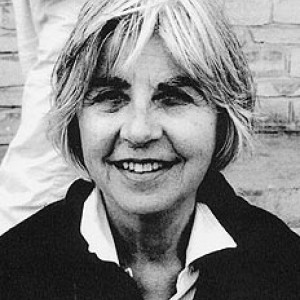
It is often said that fate can turn lives upside down. In the case of Lyme Regis based playwright Ann Jellicoe, it could be said that fate played a hand in helping her to affect the lives of many people. One day, she and a friend decided to jump in the car and head west. They hadn’t decided where they were going, just simply that they were going west. As it happened they ended up in Dorset, staying for a week in a quiet hotel in Charmouth. Although that wasn’t where she eventually came to live, it was the beginning of an interaction with Dorset community that was to touch the lives of a great many people. Ann eventually moved to Lyme Regis and introduced the idea of what is now called the Community Play. She went on to produce more than a dozen plays for different communities across the South West. In September she will be recreating some of the excitement and drama of one of those plays The Western Women at the Marine Theatre in Lyme Regis.
She remembers how the whole idea nearly didn’t even get off the ground. “I was getting very fed up with theatre, it just seemed to be a peripatetic audience of perhaps half a million, but nevertheless not really touching anybody very much. And I thought I’d love to work with kids in schools. So I went to a school in London but very wisely they wouldn’t let me in. You know it was a tough London school, and I’m very glad they didn’t, because I think it would have killed everything for me and for the form.”
For many the rebuff may have killed off the idea altogether but not long afterwards Ann moved to Dorset and introduced the play to the Woodroffe School in Lyme Regis. Here the idea again very nearly floundered. It was initially met with enthusiasm but faltered with a mixture of internal politics and the fear that the school might find it too big a project. Ann persevered and remembers how she generated interested in the project from further afield. “One day I picked up the script again and said this is ridiculous,” she says. “This is a very good play! At that time I was chair of South West Arts Drama so I had a lot of contacts throughout the South West. I went to Medium Fair and they said they would help with lights; they would help with stage management; they would even help with an actor if I wanted one and the University of Exeter said their students would help with the stage management. I got a designer who had just finished her course; I got a little bit of money from South West Arts and the Lyme Regis Amateur Dramatic society agreed to help. So I went back to the school and said look we’ve got all this help it’ll be great!” This was the point where a school production began to reach out to the community and the concept of community play was born. Ann says “The great thing about a school is that it reaches into an enormous number of households, so it was extraordinarily easy to get help. And the Mayor and corporation backed it. They lent chairs from the Town Council etcetera and a local builder lent a lorry. We delved right into the community. And all the time I was learning the principle and then somebody at Medium Fair said, well you must have an interval, because that will mean coffee, and then you’ll involve more people. And I suddenly realised – we are on the role of creating jobs. But the community involvement was huge and that was when I coined the term Community Play.” The play was an enormous success and the principal has been copied many times since. Ann afterwards wrote a book that has helped others take the concept forward Community Plays: How to put them On published by Methuen in 1987.
Although her career in the theatre shone long before she began doing Community Plays, her affection for the project is enormous. “It was more fulfiling than anything I’ve ever done in my life” she says. “And one really has a feeling that you are stretched just as far as you could be. And it’s a wonderful feeling.”
Born in Yorkshire Ann remembers wanting to work in theatre from the age of four. She trained as an actor, worked as a theatre director and during her association with the English Stage Company at the Royal Court wrote her first commercial success The Sport of my Mad Mother in 1958. This was followed by The Knack in 1961, a comedy centred about the sexual competition between three flatmates. The Knack was hugely successful in many countries as well as America
Up Front 09/07
I was reading a posting that a cousin had written on her Blog (web log) recently. It was about her memories of the day a bomb went off in her home town of Omagh in Northern Ireland. She was shocked to realise that last month was the ninth anniversary of the incident. As she was carrying her daughter across the yard she heard the bang. She felt the tremor, saw the smoke from the bomb rise above the town and for a full two minutes there was complete and absolute silence. No birds sang and as she put it ‘nature seemed to hold its breath’. Apart from the horrors she described, she also jotted down some random thoughts; remembering for example the man who ferried the dead and dying to the hospital in the back of his van. And the nurse working in emergency who saw her daughter blinded. She wondered about the mothers of the bombers and remembered the three little girls that left their Daddy’s shop that day to go home, heard the bomb go off and got such a fright that they hid in a shed for hours and hours, only turning up way after midnight when everyone was resigned to the fact that they were probably dead. It was hard to suppress tears reading such poignant memories but also hard to believe that only a few years later the incident was eclipsed by an equally horrifying event in New York. This year is the sixth anniversary of 9/11 and for some it will be a powerful reminder of why we went to war in Afghanistan and Iraq. For others, however, the detail in their random thoughts will be a reminder that there must be a better way.

Clive Stafford Smith – Rough Justice
The idea that we can somehow turn the clocks back and create peace between the western coalition that went to war in Afghanistan and Iraq, and the people whose lives were decimated by those decisions, does seem somehow ludicrous. The collateral of sympathy for the west, banked by the horrors of 9/11, has long since been cashed in and the increasing death toll of innocent people has helped to create a growing army of people determined to take life for life. Over the years, efforts to stamp out those that perpetrated the horrors at the World Trade Center and bring terrorists to justice have meant that many innocent people have been imprisoned as well as killed.
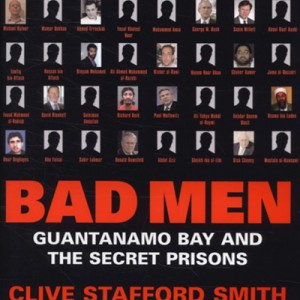
In a new book, Dorset based lawyer Clive Stafford Smith paints a bleak picture of how justice has been handled under the guise of western democracy. He offers an insight into some of the abuses suffered by prisoners in Guantanamo Bay as well as the many other prisons used by coalition forces. However, he also offers a message of hope for the future.
In the book, Bad Men: Guantánamo Bay and the Secret Prisons he recounts some of the details given by his clients about their treatment, both during the time prior to being flown to Cuba, as well as after their arrival there. It is a horrifying tale of first-hand accounts from one of the few individuals who has had independent access to the prisoners. However, Clive explained that much of what he has learned is classified. “I have to sign an agreement that everything my clients tell me is classified and I have to get the permission of the American military to write about it” he said. “And I really can’t talk about those things that they don’t want me to.” However, he did find a way to bring some of his knowledge to light. He explained how his efforts with a British client, Mozzam Begg who was later released, paved the way for change. “It was a big battle. In Mozzam’s case, they classified every word about how he had been tortured – and their rationale was bizarre. They said, these are the methods of interrogation that we use and therefore you can’t reveal them because they are classified. And what I had to do with that was absurd. I ended up sitting in their little secure facility writing a letter to Tony Blair – the theory being that I would write it to Tony and I would challenge them to censor it. And of course, they did censor it all. But you were then allowed to reveal this to the world, which was so embarrassing that they had to change the rules, and now they will let out evidence of abuse of prisoners – for the most part.”
Horrifying as torture may be, there will be many who believe it to be a necessary tool in the fight against global terrorism. Clive admits in his book, that in 2002 he could never have believed the US government could be in the business of torture. Remembering his naivety he says “You have rogue people in America, there are sheriffs who have done some pretty bad things in my time but I would never have thought that, as a systematic policy, the American government was engaging in torture.” In 2004 he was asked by Channel 4 to present a documentary with the somewhat bizarre title Is Torture a Good Idea? It gave him an opportunity to meet and try to understand some of those that saw value in it. He interviewed academics such as Professors Michael Levin and Alan Dershowitz as well as Bush administration heavyweights including Richard Perle. Whilst the ticking-time-bomb-scenario, where the need to extract information to save lives in imminent danger, could be forcefully argued, the need to use torture for other reasons seemed far more flimsy. And when many of those that suffer are likely to be innocent, it seems morality has taken a back seat.
Explaining that the military system of justice is not exactly open to scrutiny, he said, “In Guantanamo, there is a closed system, a secret system where there is no review at all. When I first went down there I thought I was going to have some difficult explaining to do as to why they [his clients] had been in Afghanistan. We’ve done a study now based on the Federal Government’s own figures and 95% of the prisoners there were not captured by the Americans at all – contrary to what Donald Rumsfeld said. And seriously, I had a hard time coming across anybody who was a terrorist. It’s hard to say how many had been bought by bounty but fortunately, President Musharraf published his autobiography and boasted about how many people Pakistanis sold for bounties, and it correlates fairly well. Out of my clients, I couldn’t put a figure on it, but I would say that a majority were sold.” According to Musharraf’s memoirs, the bounty figure was millions of dollars.
Clive was honoured with an OBE for ‘humanitarian services in the legal field’ in 2002. For over 25 years he has represented inmates on death row in America, many of whom have been proven innocent, and today he works as Legal Director of the charity Reprieve which he founded in 1999. It represents prisoners facing execution at the hands of the state in the conventional criminal justice system. Since taking on the might of the American military justice system, by representing ‘enemy combatants’ incarcerated at Guantanamo Bay in Cuba, he has returned to the UK and his book was published in June.
His introduction to law came in a very roundabout way. After growing up in England, the son of a Newmarket Stud owner, he travelled to America to study journalism after the family business ran into difficulties. As part of his University course, he visited death row inmate Jack Potts in Georgia to write a profile on him. “I first went there for a summer because my programme at University paid me to do that,” he said. “I met this guy Jack who was constantly dropping his appeals and trying to get executed, so I became friends with him. He ended up being on death row for 34 years and eventually died of old age in December 2005. It was during that time I realised that these guys needed lawyers more than they needed journalists”.
He was shocked to find that people on death row weren’t allowed legal aid after their appeal has been denied – a law that also applies to those serving life. Although this lack of rights may seem shocking to many, there are those that will argue that guilty people don’t deserve much sympathy. The question is, however, how many really are guilty? Stafford Smith says that guilty or innocent everyone deserves a defence. He says “Most of the people you represent are not innocent but there’s a fairly shocking number who are. I’ve never had a guilty person get acquitted in a death penalty case but the issue is preventing them getting executed. So that’s easy for me, it’s black and white. I don’t care who you are, you shouldn’t get the death penalty. I think everyone deserves a defence. The American judicial system is in many ways a good system but it just does the most bizarre things. The number of innocent people that I have ended up representing is quite scary.”
Clive maintains that unjust practices are not the way forward if we are to untangle ourselves from the web of violence that governments have helped to spin. It is clear that the world is an infinitely more dangerous place since the wars in Afghanistan and Iraq, and the many thousands of prisoners held in Guantanamo Bay and other secret prisons are simply potential new recruits for the future. The correlation between the propaganda power of the Maze prison in Belfast in the 70s and its effect on IRA recruitment, and the effect the current prisons have on al-Qaeda terrorist recruitment is a lesson we should by now have learned. In his book, Clive cites ways in which we can try to come back from the madness that is fuelling the violence. These may revolve around the clichéd terms of common decency and honest standards but they are the very cornerstones of social stability that can also help beat those that are beyond reason. There are many more people in the world that want peace than don’t; there is surely no sense in empowering those that thrive on conflict.