
One of my pet hates is food waste. Although I’m sure it plays a major role in adding to my middle-age spread, my need to hoover up children’s leftover bread crusts, bacon rinds, vegetables and other discarded titbits is as much thanks to an urge to ensure that nothing is thrown away, as it is to gluttony. Which is why I’m naturally drawn to articles such as one in the Guardian recently which highlighted a local pub in Norfolk, where customers are greeted with a sign that reads: ‘If you breed, grow, shoot or steal anything you feel may be at home on our menu, ask at the bar. Let’s do a deal.’ The pub landlord has a system of swapping pints for food. Although I’m not condoning the idea of stealing to supply the local pub, the concept of moving surplus food from allotments, private gardens or smallholdings to local outlets is surely something that should benefit all local communities, especially at a time when most of us are dealing with tighter budgets. Between organised food swaps, surplus produce market stalls and ‘farm gate sales’ a lot of hidden food waste could be eliminated. One of the problems with end of summer vegetable and fruit gluts is that many simply don’t have the time to collect and deliver their surplus to someone who can use it. These are the sorts of projects that local volunteer organisations are so good at, so it’s worth a call to local food groups to find out who might help. In the meantime, whilst writing this, I have demolished the best part of a packet of chocolate fingers … all thanks to another pet hate of mine … giving unhealthy food to my children.

Up Front 08/08
A new welcome pack for Polish migrant workers coming to Devon offers lots of helpful advice on subjects such as driving, education, health, family matters and community life. As welcome packs go it does seem to have its finger on the pulse of the British psyche, and even advises visitors to start a conversation by remarking on the weather. It’s somehow inevitable that people will find some of the advice humorous but at the same time it does show great insight into how we cope with day to day life. The pack, which was produced by the Devon Strategic Partnership, boasts one section that is headed ‘Useful tips to get on with the locals’. This includes such gems as; ‘How are you?’ is not really a question, but part of the greeting. Don’t respond with the details of your health. Better to answer with a brief ‘ok’, ‘fine, thank you’ or at the worst ‘so-so’.’ On the subject of starting a conversation it advises the following; ‘As in many parts of the world, talking (mostly complaining) about the weather is a good way of starting a conversation. It is a useful way of agreeing with someone first, especially if you then need to talk about a more difficult subject.’ One of the final offerings in the ‘Welcome to Devon’ section is something that sums up the stoic stiff upper lip that surely must impress every visitor; ‘Humour is often used to overcome uneasy or difficult situations. This can be a bit confusing, so it’s important to understand that telling a joke is just the English way of coping.’ I just wish Spike Milligan was still around to appreciate it.

Up Front 07/08
New plans to encourage more people to take part in elections include the suggestion of weekend voting. Instead of the traditional Thursday vote, we would be able to vote over a 48-hour period on a Saturday and Sunday. Apparently up to 6% more people vote when elections are held on Sundays. Unsurprisingly, a consultation document on the issue has already sparked debate on whether this might be a bad idea, due in part to possible conflict with religious beliefs, as well as the extra costs incurred by weekend voting – an estimated £58M from taxpayers. This comes at a time when the democratic voting process seems to be failing. In Zimbabwe the ruling Zanu-PF party have perpetrated so much violence and intimidation that the opposition party have decided it is too dangerous to stand for election. A recent Commons vote in the UK to approve 42-days detention for suspected terrorists, only squeezed through when the Government promised favours to some of those that voted with them – as a result one MP resigned in protest. In Ireland, a no vote on the EU treaty so infuriated Europhiles that many suggested the vote be run again until the answer is yes. And after the Florida debacle, when George Bush was elected on questionable recounts in 2001, it is anyone’s guess what might happen if a black democrat looks like being elected in the coming US election. Freedom to vote may be one of the basic principles of democracy but lately it’s hard to believe it’s worth getting out of bed at the weekend for.
Michael Dobbs – Breach of Security
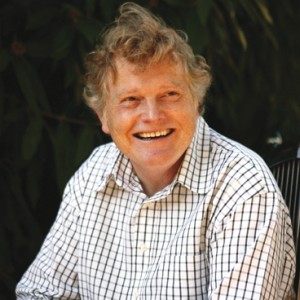
Michael Dobbs talks to Fergus Byrne
IF anybody might have a right to smugly say ‘I told you so’, about significant political events over the last twenty years, it is Michael Dobbs. His past novels have foretold the downfall of Margaret Thatcher, the fall of the Berlin Wall and, well before 9/11, spelt out how a small group of dedicated attackers could bring an entire city to a standstill.
Although much of his output in recent years has used Winston Churchill as it’s central character, his latest contemporary thriller, The Lords’ Day, has caused a bit of a stir in Westminster. In the book, the Queen, Prince Charles, the Prime Minister, most of the cabinet and the Prime Minister’s son, along with the son of the US President are taken hostage inside the House of Lords.
Readers are introduced to gaping holes in safety procedures for the state opening of Parliament that allow the ensuing siege to unfold. Although he made every effort to highlight what he saw as flaws in the security of the event before publication, he was accused of major breaches of security after the book was published. “It’s caused rather a lot of fluttering in the dovecotes at Westminster,” says Michael. “The security services counted what they claimed to be 82 separate breaches of security in the book.” However, they took a more positive approach when it was pointed out that everything they had highlighted was from information available in the public domain. Some of the detail even came from observations made while on a tour of the House of Lords – tours available to anyone who wishes to pay for them.
In the darkest hours of the siege, he sees those with the most to prove. Those, as he puts it, that are ‘driven by some inner sense of failure that requires redemption’
Michael Dobbs is very aware of the fact that fiction can occasionally be the inspiration and catalyst for action. He says “If I can come up with these conclusions so can others that have a much darker intent than me.” However, he was understandably irritated at how slow the wheels of establishment change can be. “I did my best before the book was published to make sure that it remained a clear work of fiction by getting the security holes plugged. But sadly nudging the establishment into change, I found very frustrating. I had this idea in the back of my mind that what Guy Fawkes had done all those hundreds of years ago could be perhaps looked at again. I had no idea that I would be able to find out so much and spot so many weaknesses. Frankly, I was rather shocked.”
Like all novels that weave the lives of real people into a story of fiction, The Lords’ Day offers its fair share of character insights. The siege is an ideal platform, as relationships between different individuals under hijack situations are undoubtedly raw, and conversations will likely be charged with an emotion that would otherwise be subdued. In the case of the royal family, restraint is part of their day to day package, so in this case, the power of fiction not only shows Michael Dobbs’ fondness for the royals involved but also allows them a tenderness that could never be tolerated by the press. “All we see are the cardboard cutouts, but behind them, they are people with emotions much the same as anybody’s, although in very difficult circumstances,” he says. “I’m not the greatest defender of the royal family, I think they have made many mistakes but I certainly understand some of the personal anxieties and challenges that they face. At the end of the day I’m a firm believer that if they are not allowed a happy and fulfilled private life, there is no way that they can fulfil their public duties.”
Public duty is something Michael Dobbs knows a little about. He has spent much of his life in and on the edges of politics. He has a doctorate in nuclear defence studies, was Chief of Staff and later Deputy Chairman of the Conservative Party, and has been an advisor to both Margaret Thatcher and John Major. Although he has also been a journalist, Deputy Chairman of Saatchi & Saatchi and a BBC television presenter, it is his closeness to some of the world’s most powerful people that has given him a privileged insight into how the world turns. Uniquely aware of the difference between what the public sees and what goes on behind closed doors, he can be both cynical and sympathetic about the foibles of ambitious people. He says, “I’ve been at very close quarters, in my time in and around politics, that the public image is so often very different from the private image – even the most powerful people. Maggie Thatcher, for example, the iron lady, but many of us remember the occasion on the television when she was asked about her father, she simply burst into tears.”
The Lords’ Day affords Michael the opportunity to observe what drives some of his characters. In the darkest hours of the siege, he sees those with the most to prove. Those, as he puts it, that are ‘driven by some inner sense of failure that requires redemption’. Whilst others spend their lives annoying enough people to get their way but then plod home to a cold and empty home. As a writer, he skillfully draws out the inner workings of the minds of those trapped in their turmoil. Getting inside the characters is important to him. “And quite clearly there are agendas,” he says. “There are stories behind even the most powerful people which cause them great pain and are part of their makeup.”
These stories include those he has written in a series of historical novels about Winston Churchill, a man that Michael Dobbs feels had a better understanding of the reasons for war, certainly better than those that have led us to potential threats such as the subject of The Lords’ Day. He says, “I’m not a great enthusiast for our adventure in Iraq, never have been and haven’t found any reason to change that view. A lot of this flows from my work with Winston Churchill. A man who, yes, of course, was a great war leader, but of course he knew about war because he fought in many wars.
He knew what suffering was involved and that war wasn’t simply a meeting of military might. That it was also an attempt to find a solution to whatever caused the problem. That’s why, for instance, after the end of WWII, he fought so desperately hard to ensure that the political outcome was a sensible one. Whereas we seem to have gone into Iraq without any real concept of what was going to come out of it. That is something which Winston Churchill would not have done. That’s why he is such a source of inspiration. Not because he was always right but because he had a depth of perspective which is sometimes lacking.”
Perhaps as voters we need to be more aware of what drives our politicians. Whether decisions that have been made in our name involve us in war, educational initiatives or new energy projects, are driven by a sincere effort to make the world a better place, or by an inner turmoil, perhaps caused by an unhappy childhood or an inner sense of failure, we may never know. In the meantime, it is left to the skillfully crafted novel to help us probe and question the wisdom of those in whose hands we leave the fate of our world.
The Lords’ Day is published in hardback by Headline Books.
ISBN 978 0 7553 2686 0 and is available in good bookshops.
Up Front 06/08
Thanks to a completely incorrect weather forecast, I had a chance to sit in the garden with a book briefly last weekend. The book I grabbed off the shelf was a tattered copy of George Orwell’s Ninety Eighty Four. How life changes… As far back as 1949 Big Brother was a term used to describe some of the more sinister aspects of government control. Orwell painted a terrifying vision of a totalitarian future, where government controlled the population whilst fighting a foreign war. Today, Big Brother is a television programme, showing the inhabitants of a house under the constant gaze of TV cameras. Oddly enough the flood of reality television has helped to make this sort of intrusion more acceptable, and many have learned to live with cctv, webcams and the ‘nanny state’. I have a sceptical friend, however, who thinks that recent government initiatives, including noise mapping and flood mapping, are also sinister attempts to control our lives. Last month Gordon Brown launched Climate Change in Our World, which is the product of collaboration that includes Google and the Met Office Hadley Centre, to provide animations of how climate change might affect temperatures. It’s a laudable concept but one which will help sceptics fuel the debate on what and who to believe. The problem remains – thanks to the baffling science of weather forecasting and scepticism of government motivation, there may well be many who are still sitting in the garden reading a book when the flood comes.


Up Front 05/08
For most of us, age and forgetfulness tend to go hand in hand. So much so that we sometimes even forget our age. Which is why it’s always refreshing to be surrounded by young people; especially those whose razor sharp wit and uncanny ability to confidently know everything, can be so enlightening. It’s already been quite some time since policemen began to look so young that they looked like little boys in party costume. These days many politicians look so fresh faced that it can be hard to take them seriously. I was fortunate to be in the company of some of them recently (young people who are not yet politicians or policemen that is). In a short time I learned many fascinating things that I’m sure will help craft the world into a better place for all of us. One young man managed to quote Nietzsche, Friedman, Thatcher and Gordon Brown, and confidently explained how developments in the world’s economy will cause shortages and price hikes for fuel, food and other commodities, and will exacerbate the world’s environmental problems. He didn’t come up with any particularly new solutions or strategies, but he spoke with such conviction and assurance that as far as he was concerned, he was undoubtedly right. It left me with some hope that the next generation can make a better fist of the world than we have. What’s infuriating about much of what he said though, is that he was right. I know, because at about the same age, I was right too. I just can’t seem to remember what it was I was right about.