

Up Front 01/09
About 25 years ago, the then chairman of one of the world’s largest investment banks explained to me that the world was run by banks, not by governments. I spent the next six months repeating this to anyone that would listen, but for some reason, I then promptly forgot. Unsurprisingly the conversation came to mind recently when the ‘credit crunch’ began to take effect. Over the last few years high street banks and credit card companies have been taken to task about unfair charges and increasing interest rates, and I doubt I’m the only one staggered by their continued ability to apply outrageous fees for paltry overdrafts, while giving credit cards to people who can’t pay their debts and providing mortgages to homeowners who couldn’t afford them. Then recently there was the news that credit card issuers could take away a person’s home even if the debt wasn’t secured by a property in the first place. Apparently the lender could apply to the courts to get a charging order placed on the home, turning the debts into secured loans. Now, after billions of dollars of bank bailouts around the world, it looks like the US government might be about to flex some muscle. New rules proposed by the Federal Reserve may curtail lenders’ ability to raise interest rates on current balances and require them to extend the time customers have to pay bills before incurring late fees. After weeks of hearing the British Government telling banks to lower their mortgage interest rates, it will be interesting to see whether the US government can show who really runs things.

Up Front 12/08
On 6th December the first Marshwood Vale Magazine Arts Awards exhibition opens at the Bridport Arts Centre. It is the third in a series of awards that this magazine set up in 2006. The first, the Marshwood Vale Food Awards, went a little way towards highlighting some of the people that are helping to build a future for our community in food and farming. The second, the Marshwood Vale Community Awards, in 2007, highlighted some of those that, in a variety of different ways, have contributed to the enhancement of the community in which we live. This year, with our Marshwood Vale Arts Awards, we are trying to highlight a section of the community that, not only contributes hugely to the area’s GDP, but also contributes on many other levels. There has been much debate over the centuries about the value of art and its role in society. Can that value only be measured in monetary terms or are there higher, more sophisticated values that are not easily apparent to most of us? The answer is of course, yes. But for most of us, the value of art is personal and yet strangely incomprehensible. That is part of what makes it so important. Whatever the level at which we appreciate it, art plays a role in all of our lives and if we have any opportunity to interact with it, even by visiting an exhibition or an artist’s open studio, we should embrace that opportunity. Alan Davey, chief executive of the Arts Council said recently that great art inspires us, brings us together and teaches us about ourselves and the world around us. He also said something that’s even easier to relate to; that great art makes life better.
Bill Oddie – Recovery Happens
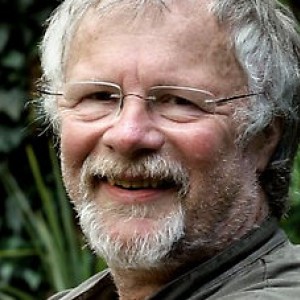
Bill Oddie talks to Fergus Byrne
In the 1970s Bill Oddie filmed a Christmas special for the TV series The Goodies at Parnham House outside Beaminster. In those days the property was owned by the Mental Health Association, an irony that would probably make Bill smile if he knew. I say irony because in his recently published autobiography One Flew into the Cuckoo’s Egg, Bill reveals not only a history of mental illness in his family but also the fact that he himself has suffered dreadfully from clinical depression in recent years.
Born in Rochdale in 1941 he has few memories of his mother, other than as a young lad, a vivid image of her being taken away in what could have been an ambulance, but in his mind could equally have been a Black Maria. He also remembers the state of the kitchen after what he later learned was a violent attack on his father. His next clear memory is of visiting her in a place known as Barnsley Hall, a mental institution that he remembers could easily have been used for scenes from the movie One Flew over the Cuckoo’s Nest, which was made many years later.
The title of Bill’s autobiography, One Flew into the Cuckoo’s Egg, cleverly highlights his comedy genius, his expertise on wildlife and birds, and the force that has dominated much of his personal life in the last eight years. Although the book deals with many of the different aspects of his life, from The Goodies through birding, marriage, children and work, the deepest thread is of mental anguish. His experiences are not only remembered and honestly written but there are moments when the reader actually lives through the horrors of deep depression as they happen – during the writing of the book he experienced a bout of depression that could have derailed the whole project.
When I began to point out to him that, although he doesn’t want to be seen as yet another celebrity depressive, (I was about to say that he is in a position to help others) he interrupts with his wonderfully infectious wheezing laughter and says “…but I am!” His ability to lighten the subject enough to make it easier to talk about is one of the benefits he can bring to discussion, a talent he has also brought to his birding and wildlife observations, making them more available to a wider audience. In his book, he remembers how one journalist likened him to David Attenborough, except that where Attenborough’s work was the equivalent of showing the Playboy version of wildlife, Oddie brought the viewers Reader’s Wives, which was much more accessible. However, he is quick to point out that there is a difference between lightening a subject and trivialising it, something he feels the tabloid and certain TV media do. “I’m capable of being incredibly trivial about things,” he says. “But at the same time, there is a difference between being facetious and dismissive about something and having a sense of humour about it.”
An only child, it has taken him many years to begin to understand why, as far as he could remember, he never had a mother. Before he was born she had lost one baby late in pregnancy and another just a few days after it was born. (Bill puts his own survival down to the fact that he was born in a hospital.) Now he believes his mother was suffering from massive postnatal depression, which was simply not understood. He says, “They simply didn’t have any facilities for recognising such things existed, let alone any sympathy or treatment in those days. Not at all, there’s any amount of people who got incarcerated when they were depressed and that’s what happened to her. It’s incredibly sad.” The ensuing relationship with his mother, up until she died in 1990, is detailed in the book.
He is quite aware that in the case of mental illness, he has been much luckier than many. “There’s no question whatsoever in my mind that I managed to, not only get through three bouts of clinical depression in the last eight years or so, but to actually come out the end of each one in a higher gear – I don’t mean bi-polar – but having learnt more, coped with it better, and in general become a lot better and healthier person than I was. This, unfortunately, like it or not, is because I could afford a great deal of therapy. The NHS simply doesn’t provide enough mental health help and never will. London is knee-deep in people with clinical depression and god knows what else.”
Growing up an only child may well have contributed to his interest in birds. Not only did he disappear off for days on end to local wildlife habitats when he was a lad, but his father would often take him on holiday to places that most parents wouldn’t consider exactly a holiday location, just so he could watch birds. Even during those good old Goodie days, he engineered filming locations because he knew good bird-watching spots. “Because we were often filming in September and October,” he says, “I used to suggest, and quite successfully and validly, that there were some fantastic film areas in the West Country. The others never knew what to do if we had half an hour off, or we finished early or took a break at lunchtime. But for me it was great, I just said ‘right see you, tell me when I’m needed again’. I would get up early and go down to Portland Bill bird observatory and the same thing lunchtimes, evenings whatever. So I was never at a loss to run the two things at the same time.”
In his book, Bill points out that, ‘recovery happens’, and we can be thankful for that because his experience and knowledge of birding and wildlife, let alone his life experience from the Cambridge Footlights, through the ‘swinging sixties’ with the likes of Peter Cook, Dudley Moore, Tommy Cooper, Ronnie Barker, Rick Wakeman, John Paul Jones and John Cleese, means he will be able to entertain and educate audiences and readers for a long time to come.
His autobiography One Flew into the Cuckoo’s Egg is published by Hodder & Stoughton.
Up Front 11/08
A recent news item prompted me to do an internet search for daft laws and silly government initiatives. As anyone who has done this will know, there are many. Well known ones include the fact that until 1976, all cab drivers were required by law to carry a bale of hay to feed a horse. Or that eating mince pies on Christmas Day is banned. Other countries have some even sillier laws. For example in Alabama it is illegal for a driver to be blindfolded while operating a vehicle. In Florida, if an elephant is left tied to a parking meter, the parking fee has to be paid, just as it would for a vehicle. In Tennessee it is illegal to lasso a catfish, while in West Virginia children may not attend school with their breath smelling of wild onions. The item that prompted my search was the news that a ‘senior government source’ had suggested there should be a separate checkout lane in supermarkets for people buying alcohol. The idea is to shame binge drinkers into cutting down. Apparently other shoppers will stare at the ‘booze lane’ and eventually everyone will become t-total and the problem of binge drinking will be solved. It’s a barking mad idea. Often these stories are leaked in order to gauge public reaction before a serious suggestion is made. Apart from the bemusement of the voting public this idea will likely elicit the usual response from supermarket chains that have previously had government making suggestions on how they should behave. I can hear them in the boardrooms now singing ‘Oh how we laughed’. It will surely remain much easier for government to put the boot into small business.


Up Front 10/08
Recently it’s been hard to find a silver lining on the clouds of near financial meltdown that rocked the world. Our dependency on global markets for finance, food and energy has shown us to be very vulnerable. But there is a silver lining in Greenland at the moment. The ‘greening’ of Greenland, because of global warming, has meant that vegetables are being grown commercially for the first time. Three pioneering farmers have produced cabbages, cauliflowers and even strawberries. On the front line of climate change, just a couple of degrees change can make the difference between sustainable food production and exorbitantly priced imports for Greenland. According to a spokesman from the Upernaviarsuk agricultural research station, Greenland could be self-sufficient in vegetables within ten years. Earlier springs and later autumns also means more grazing for sheep farmers and recent warming has meant the return of cod to the waters off southern Greenland. In her column this month, Rosie Boycott also sees a possible silver lining in the hope that the credit crunch might ‘kick start a new way of life: one based on resilience, self sufficiency, community and localisation – rather than on biggest is best and a life time dependency on the global markets.’ However this week the French company EDF Energy agreed to buy British Energy, the firm which operates the UK’s eight nuclear power plants, thus taking control of yet more of Britain’s resources. There is no doubt that the world needs a wake up call but I can’t help thinking we just keep hitting the snooze button.