
Sunday, March 22, 2026
Home Blog Page 107

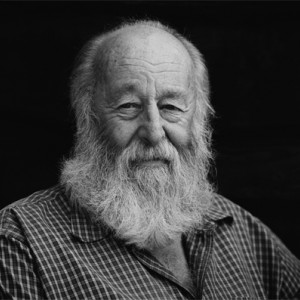
Peter Thomas

Robin Mills went to Rampisham, in West Dorset, to meet Peter Thomas, wood-turner and stick-maker. This is Peter’s story.

‘I’m a Wiltshire moonraker: born between Calne and Marlborough on the Wiltshire downs, and I grew up in a small village very much like Rampisham is today. Father was one of thirteen children: every one of his brothers and sisters farmed except him. So, sadly I was unable to inherit a farm, but there’s no doubt farming is in my genes. From a very early age I spent all my time on my uncle’s farm, and I can remember that all I ever wanted to do was farm.

I think I soon realised that peer pressure and job competition meant that I should get as good an education as possible, so I finished up going to Wye College and got a degree in agriculture. I’m not sure it did me a lot of good. I didn’t have the capital to farm on my own account, so I went into farm management. The first couple of jobs I went for, I never even mentioned the degree as it would probably have been seen as a hindrance. In those days in farming, education meant you probably weren’t much good at the practical stuff. I’ve had the beard since then: people reckoned I was too young for the job, so I grew a beard, stuck ten years on my age and got the first job I went for. That was in about 1958.

That farm was in Gloucestershire, near Stow on the Wold. We were there in 1963, all through the hard winter. We had our first child then, Wendy, and couldn’t get off the farm for eight weeks, snowed in. The dairy had just gone over from churns to bulk milk then, and obviously you couldn’t get milk out what with the 20ft snow drifts. So we got some churns dropped by helicopter, filled them from our new bulk tank and then I’d dig my way to Stow on the Wold, 5 miles away, to unload the milk, and often have to dig my way home again. That took all day, on a Fordson Major, no cab: in those days you didn’t know any different. The snow that year was still lying in the quarries up on the hills when we were haymaking in June.

I worked in Warwickshire, and in Dorset, then it was back to Gloucestershire, where we were during the two drought years of 1975 and 1976. That farm went from 400 acres when I started, to 4000 acres during the next 18 months. They had land in Scotland, in Dumfries and Galloway, and I used to drive up there once a month to look after it. If the locals chose to lay on the Scots accent a bit thick, I couldn’t make out a word of it. In’76 we finished combining in the middle of July: the crop had just died. We tried to make second cut silage, mowing grass in the morning then baling it as hay in the afternoon.

My last job came about in 1985, when I saw it advertised in the Farmer’s Weekly, managing a farm back in Dorset, and we’ve been here ever since. I’ve had to change jobs in the past quite a lot: you have to, to make any progress up the farming ladder. The main attraction to the job here was the opportunity to run our own enterprise, in this case sheep. My son Simon left college to come and run the sheep flock, and a year later my daughter Wendy and her husband joined us, so we were running it as a family business. Simon later fell in love with Australia, backpacking there in 1991, and then emigrated there with an Australian girl he’d met on our neighbour’s farm. Wendy and her husband now have a National Trust farm down in Devon. That was all about the time when things in farming were starting to get a bit sticky. We went from lambing 1200 ewes, a dairy herd, and 400 acres of arable, to just me on my own buying in ewe lambs and selling them a year later as two-tooths, with the arable land put out to contract.

By then we’d fallen in love with the area, especially Rampisham. Here, nothing changes, and that’s by virtue of the fact it’s an estate owned village. What we all value and love remains the same. So, I retired early. I was 61, the children had left, my legs weren’t too good and I needed a knee operation, and to be quite honest, I was disillusioned with farming. When I started, I never thought for one moment I’d be saying that. But everything coming from government seemed anti-rural, and to me the fun had gone out of the farming life.

I’d always liked woodwork, and if a tree blew down on the farm we always kept the trunk rather than cut it up for fire wood. I started making little coffee tables and suchlike, but it never quite filled the gap. One day I saw a second-hand lathe advertised, so I bought it without seeing it. There was no point in going to look at it: never having seen a lathe working, I wouldn’t have known what I was looking at. I got it home, set it up, and spent the next few weeks really just making a mess of pieces of wood and tools. But I became absolutely hooked. And that’s how it all started: I never had any lessons, just learned by my mistakes I suppose. I built bigger lathes: the one I’ve got now will take blanks up to about 7cwt, but I had to buy an engine hoist to lift them into place! When we moved up here, I built the shed, deliberately quite small. I thought it might stay tidier that way, but that didn’t work. At first I was just making stuff to give to friends and family, and was really amazed when I took work to village shows to find people would buy it.

At one stage we were doing about 30 shows a year. I insist on selling locally, though of course it goes all over the place afterwards. Nowadays I always do Dorset Art Weeks, and maybe 6 shows a year. I’ve got a tiny gallery here at home, and people come to me. I’ll probably spend 6 or 7 hours a day in here, turning wood, I just love it. All my wood is sourced locally, off the estate or farms nearby. There’s no need to travel far or import exotic timber, it’s all around us.

When I started doing the shows, I was shocked at people’s ignorance of the countryside. Then the Dorset Coppice Group was formed, and I joined because I thought I could help educate the public about our woodland heritage, and about the fact that of all the imported rainforest timbers, none was more attractive than our own indigenous wood.

Most of what I use would normally finish up as firewood, or rot, and we have all this wonderful resource in our woods and hedgerows not appreciated. So, as much as anything now I’m on a bit of a crusade, to try and make people aware of this. I’d never dream of cutting down a healthy living tree. Last year I was given 5 walnut trees that blew down: that’s a huge amount of timber. I’ve been at shows where people looking at my work don’t even know it’s made of wood: or, that the oak, beech or whatever species it’s made of, comes from here. I find that quite sad: also that nowadays it’s so rare for people to make things with their hands. When they do, and I teach people occasionally, they love it, and it can be very therapeutic. All this mass-produced stuff, there’s no life or soul to it: if what I do helps spread the word about the countryside a bit, I’m happy.’


Old Fossil – or the back of a 10 Quid Note

One of my childhood friends had been orphaned and came down from London to be ‘adopted’ by relatives living in rural Wiltshire. As I was also an only child and my parents were regular churchgoers, it was considered that I might be suitable to play with him. He was a year or so older and from more affluent parents, and was able to teach me to roller skate and to build Meccano, (which may be why we both went on to qualify as engineers). He would cycle a mile or so to the nearby chalk downs to  collect fossils, which resulted in another boy cruelly dubbing him ‘Old Fossil’. This was my early introduction to fossils, but I think they were generally smaller than on our Jurassic Coast!

You must have noticed that this is the year in which the bicentenary of Darwin’s birth is commemorated, as the programmes on TV and Radio have told us. It is also the 150th anniversary of the publication of his great work “On the Origin of Species by means of Natural Selection” which caused some controversy.

Darwin found fossils of marine fish high up in the Andes and he recorded differences between mocking birds and giant tortoises on different Galapogos islands. He found petrified trees in South America, which remind us of  our ‘fossil forest’ at Lulworth and fossil wood on Portland.  All of this helped him to produce his great work. He would have rejoiced that our coast has been named “Jurassic” and the great interest in local fossils now, which go to reinforce part of his theory.

Whilst much of Darwin’s work seems to have been based on his voyage on the ‘Beagle’, he was in consultation with several men who had local contacts and would have known of the fossils found here by Mary Anning and family. A man born in Lyme Regis, John Gould FRS, helped Darwin identify some of his finds and named an ostrich ‘darwinii’. They jointly read a paper to the Zoological Society in 1837. Darwin had a trip to Wales with Professor Adam Sedgwick of Cambridge, who had praised Darwin’s collections and his voyages. Sedgwick came to Lyme and bought fossils from Mary Anning. Sir Henry de la Beche, founder of the British Geological Survey, had moved to Lyme and became a great friend of  Mary and produced ‘Duria Antiquior’, a reconstruction of  Dorset before the creatures became fossils, in the Jurassic period. Darwin asked him about the domestic animals in Jamaica. Professor Richard Owen, of the Natural History Museum, had written about the early mammals of Purbeck and produced the name ‘Dinosaur’, so Darwin asked him to describe his fossils in his work. Darwin hoped for the approval of the Swiss Professor Louis Agassiz who had been to Lyme and named two fossil fish after Mary Anning. No wonder the area is a world Heritage Site.

At a talk in March about ‘Where do you think you are?’  Julian Richards stated that the whole of our landscape is man made, for example Dartmoor was once nothing like the bleak open country we now see. Its trees were cut down by early man, so that he could till the soil, until it became worked out and only suitable to grow scrub. This is some several hundred million years later than the Jurassic. Given a modern haircut, a shave and dress, these prehistoric men would be very much like us!

Around Stonehenge, (Julian’s favourite too!) it was once wooded and again, early man cut the trees down. But during and after the building of the stone monument it became a sacred site and a number of burials took place around it. In more recent times the area has not been held in the same reverence and when it was owned by the Antrobus family they planted a number of beech trees, to commemorate a son lost during the Battle of the Nile, the trees representing where the 11 ships were deployed. Some of these trees are now encroaching on once sacred Bronze Age burial mounds. Whilst they protected the stones, ploughing went on all around the area.

Now we hear that National Trust archaeologists have excavated on Doghouse Hill, overlooking Seatown and found remains of  man living there about 5,000 years ago. This was as a result of a local man walking the cliff path and discovering finds. We should all keep our eyes open whilst walking in the countryside!

Oh –  the ‘back of the 10 quid note’?  – It shows Darwin and some images relating to his work.

Bridport History Society does not officially meet in August, but we may take a walk up West Cliff from the Esplanade at West Bay on Tuesday    August 11th at 2.30pm, to look at the disused lime kiln, weather willing.

Cecil Amor, Chairman, Bridport History Society, telephone 01308 456876.

August in the Garden 2009

Oh dear! I really shouldn’t have tempted fate, last month, by suggesting that July might actually be warm and sunny; cue Biblical deluge. It has meant that I’ve saved loads of time in not having to water my remaining containers so often and everything in the ground has romped away.

Firmly believing that ‘every silver lining has a cloud’, the downside of all this rain is that I haven’t been able to keep on top of the mowing. My lovely tractor, 50 years old and usually going strong, has decided to burst some sort of gland and, as a consequence, I’ve had to strim huge areas of grass instead of running the topper over them. Fortunately I only have about 5 square metres of ‘proper’ lawn so mowing in the ‘pleasure ground’ is minimal.

Weeds can also get the upper hand this month as warm temperatures and abundant moisture give them the best conditions to grow rapidly to flowering size and hence spawn another invasive generation. Abundant water slows the actual ‘running to seed’ process, buying you a bit of time, but as soon as there’s a dry spell weeds rapidly flower, get pollinated and set seed before you know it. The trick is to nip in and remove them before they flower. As long as it’s an annual weed, and not bearing seed, it can be added to the compost heap which is at its most active, and therefore hottest, during the summer.

If you have large areas of paving, gravel or other prime weed infestation area, and do not have strong organic principles, then the application of a long-lasting chemical weed control will save you a lot of future weeding time. Since the withdrawal of many of the weed controlling chemicals, I won’t bore you with the political details of these chemical bans, I find that the effect is not as long lasting as it used to be (“in the good old days”!).

Having said that, if you apply on a dry day, at the suggested application rate, a path clearing type weedkiller wipes out whatever weeds are currently growing and prevents any subsequent germination for a few months – thus breaking the cycle of growth, flowering and seed setting. Apply with a watering can equipped with a fine rose, or weedkiller application bar, on a still day. Wind carrying the droplets onto adjoining beds and borders can cause, occasionally baffling, weedkiller induced plant deformities and death.

I don’t use many chemicals in the garden, especially now that all the best ones have been banned (!), but I think it’s important to weigh up exactly how harmful you are being against the general environmental enrichment of a diverse garden. My garden buzzes with insect life on late summer days. The extension of the peak flowering season, by planting vibrant Compositae (helenium, rudbeckia, echinacea, aster, helianthus, inula etc.), more than makes up for the occasional use of chemical control; “you pays your money and you takes your choice”.

This advice is getting a bit repetitive, sorry but that’s the nature of gardening tasks, but you should continue dead-heading, feeding and chopping back this month in order to extract the longest flowering potential from your beds, borders and containers. If vine weevils have proved a problem in the past then a timely application of ‘vine weevil killer’ should break their life cycle – especially if followed by a second application in the autumn. As ever; follow the instructions on the pack.

The major task for me to start this month is the annual trimming of yew hedges. By this point in the year they have made a lot of soft ‘extension’ growth and this has to be removed if the hedge is to remain a nice tight shape and within bounds. Newly planted yew hedges need to be trimmed, to encourage a dense, solid, hedge, but less drastically. Some new growth needs to be left in order that they grow taller / broader until they reach the planned height and width.

Once yew hedges have reached the desired size then they respond really well to being trimmed back to the same height and shape each year. A minimal amount of new growth can be left, literally just a fraction of an inch, but otherwise a single trim at this time of year is all they need. Eventually they will expand to the point where a drastic chop back is necessary but then they really come into their own because, rarely amongst conifers, they retain the ability to sprout afresh from even the oldest, brownest, wood.

I remember, many moons ago, seeing the yew hedges at ‘Sissinghurst’ cut right back to their central trunks, all down one side, reducing their width by many feet. Once this side had reclothed itself, a process which took many years, the other side was given the same treatment. If both sides had been done at once, bearing in mind the hedges were at least fifty years old, the plants could have been severely weakened and would have taken much longer to recover. Feeding and watering during the growing season will speed up the recovery process.

Fresh growth, recovery and recuperation are all things which the garden can do and so can you. Get out there and enjoy it, even if you haven’t don’t know your Compositae from your Fordsonia power-majorus.

Derek Stevens 07/09

On D-Day plus one allied soldiers in Normandy, exhausted by their first day of battle, turned on battery operated radios supplied to their units, to hear the first sounds of the Allied Forces Network. Introduced by a recorded message from the supreme commander, General Dwight Eisenhower, the AEF comprised American and Canadian broadcasting services, together with and the services of the BBC to bring to the troops the comfort of popular music and news from home. The first broadcast was at 6 o’clock on the morning of June 7, introduced by the tune ‘Rise and Shine’, the first record was that of Artie Shaw’s orchestra playing ‘Begin the Beguine’, followed by Glen Miller’s  ‘Chatanooga Choo Choo’, songs by Deanna Durbin, Vera Lynn and our very own George Formby singing “When I’m Cleaning Windows”.

The program’s presentation was shared between an airman of the United States Army Air Force and an airman of the RAF and introduced to this side of the Atlantic American radio shows which included the Jack Benny Show. The AEF network  gave entertainment and comfort to both servicemen and a strong civilian following until a few days after victory.

The programme gave us kids more songs to sing along to on the school bus, so we would belt out “Give me land, lots of land, under starry skies above,’’ as we sang ‘Don’t fence me in’  on the way home from school, and other diities like ‘Beat me Daddy, Eight to the Bar’.

School children were still very active in contributing to the war effort. Summer days were spent pulling flax for a tanner a day. The flax went off to make linen thread, camouflage nets, fire hose pipes and aircraft fabric.

“An impromptu party of about 100 people was held in a meadow at Nossiters farm, Broadoak near Bridport,”  it was reported, “ near a magnificent field of golden flax with the lovely hills of Marshwood Vale around us. Country dances, reels and polkas were danced, charades were played and music was made by a small band consisting of a fiddler, accordions and a drum. This was a fitting end to a week of hard work in which the girls from Dorchester High School, Lyme Regis Grammar School and Sherborne had helped the local farmers in pulling the flax crop.”

Book recovery drives were another task children were involved in. Local authorities were allotted targets, in the case of Devon one and a half million books were to be collected. Scrutiny committees were to ensure the proper segregation into classes required, for members of the armed services and the merchant navy, for the replenishment of libraries blitzed by enemy action, for pulping for the use in the manufacture of weapons of war. Children were drafted into an army of book collectors and could earn their way up through a military ranking system according to the number of books collected. We were awarded paper armbands carrying pips or stripes displaying the rank we had achieved. The highest rank achievable, with 250 books plus, being Field Marshall. Being stuck in the sticks somewhere beyond Rousdon I did not get beyond sergeant, and that was only because my mum was  a great reader. A 9-year-old lad from Broadclyst near Exeter trounced us all by hauling to school 1,260 books, obviously a member of a well-read family.

Five thousand scrutineers examined the fifty million books collected nationally by the Ministry of Supply and many rare and interesting books were rescued for the national archives. They included a first edition of Kipling’s  ‘Letters of Marque’, of which a thousand had been published and all but 100 had been destroyed: a first edition of Bernard Shaw’s ‘My Answers’, of which only 62 were printed for Jerome Kern, composer of the musical ‘Showboat’: and British secret service records of the Napoleonic wars, including a report of the retreat from Moscow in 1812. In Exeter “A Shakespeare of considerable value” was rescued. A similar copy a few years previously was sold for more than £200, big bucks in those days.

As the Allies strengthened their hold within Europe with the use of greatly superior airpower, the growing sense of security from Nazi air attack was shattered by the arrival in south east England of the pilotless flying bomb, the V1, later followed by the even more terrifying V2 rocket. Targets were indiscriminate and the number of deaths began to accumulate rapidly.

One afternoon, whilst awaiting the school bus from Axminster to take us home, we looked down from the playground onto Uplyme village hall below us and witnessed the arrival of a fleet of Royal Blue coaches. Crowds of children were getting off and filing into the village hall as our bus arrived. Next morning we arrived at school to find it full of new faces. There seemed to be children sitting in the windows, down the aisles and in any other spare space that could be found. Another wave of evacuees had arrived, this time from Kent. We dubbed them ‘the buzz-bomb kids’.

A day or two later they had disappeared, I believe to improvised classrooms at Woodmead Hall in  Lyme Regis. When we had recovered from the short term invasion I felt a prod in my back. I turned and faced my pal Roy Crabbe who had done the prodding. “Hey Derek,” he said “I’ve just seen something walk out of your head and walk back in again”. It seemed that the buzz bomb kids had brought some unwelcome livestock with them. My gran knew what to do however, and for the next several  days my head and its contents were thoroughly examined with the use of a fine tooth comb over a looking glass.

Official suggestion for  treatment of head lice at the time was that paraffin and petrol should not be used, preferred treatment being Jeyes Fluid. I am glad my gran just stuck to the comb!

As with the first waves of evacuees at the start of the war youngsters were found en route to their homes having become disenchanted with their new foster homes. Five young lads, aged twelve to fourteen, were found near Crewkerne having walked from their billets at Exmouth. They were intending to walk back to their homes in Wandsworth, Balham and Tooting in south west London. They were gathered up and sent back to Exmouth where a sixth lad had already returned having felt too tired to go any further. He had reached Lympstone, two miles away.

Letter home from an evacuee;-  Dear mum and dad, I do not like the look of the lady here and I don’t like the look of the man either. Perhaps they will look better in the morning. I do like the look of the dog though!

Up Front 07/09

I was neither big enough nor angry enough to be a bully in school, but I still harbour a feeling of guilt at the memory of laughing when a chap called Ian was taunted about his weight. He and I became friends afterwards, and though I don’t know where he is now, I remember how frightened and miserable he was, often feeling that his life wasn’t worth living. I thought of him recently when I read about a research project that began in 2006. An EU-funded project called eCIRCUS, is developing two computer software programs to help deal with bullying and stereotyping. Researchers set out to create virtual worlds with characters that children could interact and empathise with, in such a way that the experience could change their own attitudes and behaviour. The theory is that education about human social interaction must include feelings. If the research could find a way to get children to empathise with and try to help victims of bullying in a virtual world, the children could try out different strategies, experience the results, and develop better ways to deal with bullying in their own lives. Though still in development the two new programs – one targeting younger children and the other an older age range – have shown promising results. It is hoped that they may help solve a major social problem. It’s obviously too late to help Ian but there are no doubt thousands of children whose lives could be a lot less miserable if it is even marginally successful.

Moonraker

I am a ‘Moonraker’, born in Wiltshire, but with a Dorset Mother and grew up a couple of miles from the supposed Moonrakers site, a large pond at Devizes. The story is that about 200 years ago, smugglers were there at night with their contraband when they heard that the Excise Officers were hard on their heels. The smugglers threw their barrels of  goods in the pond and held them under the surface with hayrakes. The Officers said “What are you doing ?” and the smugglers replied that the full moon had fallen in the pond (where could be seen its reflection) and they were trying to rake it out to restore it to the sky. The Excise men rode off, saying “You silly lot of … Moonrakers”, but the smugglers raked out their contraband and had the last laugh. Since then we have been known as Moonrakers.

In earlier times many of the early Wiltshire monuments, like Avebury and Stonehenge are thought to be related to the positions of the moon, as well as the sun.

Some months ago a TV programme ‘Pagans’ described a bronze disc, 12 inches (about 30 cm.) in diameter, 3,500 to 3,800 years old, found at Nebra in Saxony-Anholt, East Germany in a Bronze Age tomb in a forest. The disc was inlaid in gold with images of the sun, a crescent moon, and stars, including seven believed to represent the Pleiades, or Seven Sisters. The Pleiades set in the west at dawn about 10th March and in the east about 15th October, which coincides with the periods of sowing and harvesting. The disc was edged with a segment of gold around 82 degrees of the rim, suggested to represent the way in which the sunrise point on the horizon moves from midsummer to midwinter. So the disc could be a solstice indicator. On the opposite side the centre of the segments indicate the equinoxes. It must have resulted from observations over many days and nights. (At the latitude of Stonehenge the solar swing is between 80 and 81 degrees). The significance of the ‘Sky Disc’ is that it shows the celestial knowledge in Central Europe in the Bronze Age,  earlier than the astronomical images in Egypt and about the same time as the Heel Stone and Station Stones of Stonehenge, probably our first indicators of the solstice.

The same programme also described a gold “Wizards Hat” found in Berlin dating from about 1,000 BC. The hat had depictions of the sun and moon and a calendar covering 19 years.

Sir Patrick Moore writes that Sun worship goes back a long way, because we depend on what it sends us. He says that between 1387 and 1366 BC the Egyptian Pharaoh, Amenophis IV changed his name to Akhenaten and built a new capital city. Apparently, he or one of his minions wrote his ’Hymn to the Sun’. But obviously interest in the Sun went back further to Neolithic and Bronze Age times, perhaps associated with the beginning of agriculture.

The star cluster in Taurus the Bull, the Pleiades, is called the Seven Sisters because the average person can see 7 stars with the naked eye, although there are more to be seen by telescope. This group has been known from early times and was mentioned in Homer’s Odyssey and there is a legend in mythology that the seven beautiful sisters, strolling in a forest, were pursued by the hunter Orion. The gods placed them in the sky for safety, but they are still not far from Orion!

In a Radio 4 programme last year the astronomer Heather Couper described a bronze box, containing gears and believed to be an early mechanical computer, to determine the movements of  the moon, sun and planets. It was suggested that it may have been designed by Archimedes, or copied from Rhodes in about 200 BC. This is even more amazing than the ’Sky Disc’ or the film ‘The Golden Compass‘.

Years ago we always looked for the Man in the Moon, but now we all know the name of the first man on the moon – Neil Armstrong, followed by Edwin Aldrin, in 1969. But, as mentioned earlier, interest in the moon predates the written word and we have to look at the stone monuments to understand how our ancestors viewed it.

It is far easier now for us to look at and understand the heavens, with modern telescopes and television images from Hubble and so on. Also, we can see the whole of our stars in daylight, or on a cloudy night, by going to a planetarium. Telescopes and a planetarium are available at the Norman Lockyer Observatory at Sidmouth, which Bridport History Society will visit on 14th July. Pre-booking essential, contact 01308  488034.

Cecil Amor, Chairman, Bridport History Society, tel : 01308 456876

July in the Garden 2009

The garden show season continues; Last month I was at the ‘Gardeners’ World Live’ show at the NEC in Birmingham. I hadn’t set foot in the place since I’d last filmed there in 1995. To begin with the scale of the thing was really off-putting and my natural reluctance to treat gardening as a retail experience stopped me from buying anything. As the days wore on I got swept up in the whole thing and realised that in fact these big gardening shows, where you can actually buy plants and products, are a great way of supporting small nurseries and big businesses alike. I wasn’t alone in giving in to this impulse; Alys Fowler, “Gardeners’ World’s” titian-haired beauty, expressed a similar surprise in finding she was beginning to lose her usual thrifty resolve.

My own acquisitive side got the better of me on the Friday and I ended up with six random cacti, a ‘Show Special’, to resume my childhood hobby of growing succulents. Also, I couldn’t resist splashing out on three cloches (“£10 each; £25 after the show”!) to use as ‘sun frames’ for my high summer foray into striking cuttings. I used to do this under upturned aquaria, another abandoned childhood hobby, but my new, plastic glazed, Victorian style, ‘leaded light’ cloches will do the trick even if they are hardly things of beauty.

Now that we are past the longest day there is a subtle change in the flowering palette in the garden. Some plants are switched into flower production by the turnaround in the daylength compared to the ‘period of darkness’ (aka ‘night’). Traditional high summer herbaceous borders reach their absolute peak, although these days the addition of spring flowering plants and late season perennials means that herbaceous and mixed borders need not be so ‘peaky’.

I guess my own signifier plant, which pinpoints this particular moment in the flowering year, is the fabulously cottagey, and highly scented, Lilium regale (Regal Lily). Although these continue to flower for many years, when planted out in beds and borders, it’s always good to plant a few new bulbs, in autumn or spring, in containers to guarantee the best blooms exactly where you want them. Watch out for the dreaded lily beetle and, in pots at least, vine weevils.

Lilies may be ‘old hat’ but a plant which has been flowering now for many weeks, and which still has plenty of life left in it, is Dianthus cruentus; a ‘species’, wild relative, of the garden pink or carnation. It needs good drainage and full sun but, given these conditions, seems easy enough. It has quite the most saturated, piercingly strong, vivid, crimson flowers held on airy stems in starry profusion. It’s a knockout and currently the jewel in my blooming crown. Mine came from ‘Phoenix Perennial Plants’ which is a specialist nursery belonging to one of this country’s most respected ‘plants people’ – the sparkly Marina Christopher.

Not sure that I want to bore you with lists of maintenance tasks for this, hopefully sunny, month. It’s mostly commonsense stuff like watering plants in pots and containers with added feed every other week. Cutting the grass, but not too short. Keep deadheading everything from roses to bedding plants in order to encourage the longest possible flowering period. On hot days use a hoe to clear more open areas of ground because the heat of the sun will ensure that any weeds dislodged by the hoe will die rapidly and not have a chance to regrow.

I did promise, last month, to mention my favourite little pond fish; the impossibly named ‘White Cloud Mountain Minnow’ – ‘WCMM’ for short! In small ponds, barrel water features and those tiny ‘pre-formed’ aquatic doo-dahs, WCMMs are perfect for keeping them free from mosquito larvae and the like. Although erroneously sold as tropical fish they are, in fact, hardy enough to survive the rigours of a southwest winter. When buying them ensure you source them from a stockist who has kept them as coldwater fish and not at tropical temperatures. My ‘tin bath’ pond froze almost solid, in the -11°C night last winter, yet the little fish emerged unscathed to flit around for another year. They used to breed successfully but now the offspring get eaten by dragonfly larvae before they get the chance to grow up into adults. Hence occasional ‘topping up’ with adults may be necessary in a small pond where natural predators reach unnaturally high numbers.

While we are on the subject of ponds it’s worth remembering that now is a good time to seek out water lilies to add a touch of glamour to even the tiniest pond. For small water features choose ‘pygmy’ varieties and take care to plant them at the depth suggested on the label – usually no deeper than 18”. It may be necessary to start them off at a shallower depth, by balancing the planting basket on a brick or two, before lowering them to the bottom of the pond over a couple of weeks as the lily pads extend on longer stalks. Do not be tempted to plant a ‘standard’ water lily variety in a small pond as it will rapidly outgrow its home and shade out the entire water surface. Ideally only about a third of the surface area of any pond should be shaded by vegetation; maybe a bit more in full sun but even less if the pond is already shaded by overhanging foliage.

After that suitably cooling, refreshing, topic I’ll let you get on with what will hopefully prove to be a warm and sunny month.

Greenfly & Other Pests

It’s a good year for greenfly, blackfly and aphids.  The real answer is to grow strong, healthy plants, and encourage as many natural predators as possible. We’ll look at why spraying works against you in the long run.

The trouble starts when you have a delicate and extravagant plant growing in your herbaceous border, bred without regard to natural strength. Or with vegetables, susceptible plants are fast growing ones with thin, speedily growing stems that are under strain of carrying a heavy crop. In my garden, my main fly problem is blackfly on broad beans.  The risk is worse on spring sown beans than on the Aquadulce variety, which we sow in October and finished harvesting this year in early June. Spring sown beans are more susceptible because they grow more quickly in the warmth of June, when the likelihood of attack is greatest.

An almost daily inspection is useful in early summer. As soon as you see them, you should pinch off the top 2” of your plants, or more if the individual plant is badly infested. It is better to pinch the tops out before you get blackfly, when there are already plenty of flowers on the stem. In mid June, I have so far found two infected plants. One of them had several ants on them, and many dead blackfly. Note here that you shouldn’t plant your beans too close together, or they’ll set less beans from their flowers.

Many people remember the TV programme that showed ants holding aphids while sucking the sap out of them, without killing the aphid. However, there are only a few species of ant, uncommon in the garden, that do this. Most kill the aphid. This happened last year, when a bad attack of blackfly soon turned into an awe-inspiring sight of black skeletons which impressed my children.

Whitefly on cabbage can  also helped by encouragement of predators, a strong plant and choice of variety.  Keeping the plant watered, but not over watered, helps in dry periods. A thick coating of compost on the soil slows water evaporating out of the soil. It is said that marigolds can help by attracting hoverfly, whose larvae eat aphids, mealy bugs and thrips. I have not noticed any difference, but the marigolds look good!

Try not to use artificial fertiliser. This leads to unbalanced, speedy growth, whereas compost gives a balanced uptake of  nutrients that make a thicker stem. This is too tough for most aphids to penetrate.

Natural predators. The less fungicides and insecticides you use, the more specialist aphid eating species there will be in your garden, such as ladybirds, midges, parasitic wasps, hoverfly larvae, crab spiders and lacewings, not to mention certain fungi that kill them as well. So, try not to spray.

Last winter I used a few slug pellets in my greenhouse to try and stop an annoying slug eating my pak choi in the greenhouse. Immediately the pak choi was covered in greenfly.  A few weeks later, after throwing the slug pellets away, the greenfly started to disappear again. It just shows that once you treat one problem with chemicals, you create another.

Some people spray naturally occurring pyrethrins, extracted from African chrysanthemum, to combat greenfly. To make the compound store well, chemical companies have altered them, and they now result in a variety of symptoms, especially in pets, including drooling, lethargy, muscle tremors, vomiting, seizures and death, not to mention the effects on humans.

If you have time, wiping affected areas with a soft, soapy brush will eventually knock them all off for good.

To sum up, if you have an aphid problem, think about how you are looking after your plant first and foremost. And look after your wildlife.

Big fleas have little fleas on their backs to bite them. And little fleas have other fleas And so on, ad infinitum.

And if you want more wit, come to our garden  opening at Yews Farm in Martock for charity on Monday 13th & Tuesday 14th July, 2-6 pm.

Christopher Roper

When I left West Dorset to go to university in 1959, I never expected to return to live here.  I grew up in Forde Abbey, where I was born in December 1939, and my earliest memories are of the War, with the house full of displaced relatives, many knitting sweaters for seamen in the evenings, the lawns given over to grazing rabbits; and as D-Day approached, the lanes blocked by trucks full of gum-chewing American soldiers.

Although we lived in a large and ancient house, my father was at heart a peasant farmer, who grew trees, milked three cows, kept ducks and bees, and enjoyed fishing, ferreting and rough shooting; my brothers and sister were all involved, and our childhood left us with an embedded love of the natural world. My brother and his family still live there, so there are many threads of continuity; my grandmother, who inherited the house in 1903 and died there 40 years later, would be quite surprised — and pleased  — to see it as it is today.

I hated school and, after university, wanted to travel; so spent a year teaching in West Africa; then joined Reuters News Agency, unable to believe my luck at being paid to do what I enjoyed so much. I reported on three military coups, in Algeria (1965), Argentina (1966) and Peru (1968); and had a ringside seat on history. As the Reuters correspondent in Lima, my territory also covered Bolivia, where Che Guevara launched his final revolutionary enterprise in 1966. Through a mixture of outrageously good luck and youthful opportunism, I was in Vallegrande, when his body was brought in strapped to the landing gear of a helicopter; it was 24 hours before rivals from AP and AFP caught up.

My career as a foreign correspondent was brought to an untimely end by the ill-health of my then wife. By 1970, however, I was part of a two-man band, publishing the Latin American Newsletter, a weekly publication that attempted to keep the world informed about the politics and economics of Latin America. Our readership was global, and we had influence out of all proportion to our size, and when asked how many people we had in our Research Department; I never dared give a truthful answer.

This was a turbulent decade in Latin America, with popular governments and brutal military dictatorships succeeding one another with bewildering speed. Our house in London was filled with refugees, and many of our correspondents lived in fear of censorship, exile, imprisonment or, in one terrible case, death, thrown out of a helicopter — as we later discovered — by the Argentine military. However, demand for our service grew and the two-man band ended the ‘80s with around 30 employees. I was exhausted and burnt out, however, and fled London in 1981.

I spent two depressed years in rural Leicestershire trying to write a book, and was wondering what to do next, as the book was going nowhere, when a cover story I wrote for New Scientist changed my life. The story was built around an interview with Seymour Papert, a charismatic computer scientist and educational theorist, who had invented Logo — a computer programming language for children. Teachers wrote to me, wanting to know why they couldn’t have Logo on the BBC Microcomputer that was just then finding its way into schools. Why not?

As with many of my initiatives, had I known what was involved, I wouldn’t have started. However, Logotron was born and it was the perfect antidote to 12 years of thinking, dreaming and worrying about events on the other side of the world. Within three years, Logotron was the UK’s leading supplier of software to primary schools. Peter Hunter, a primary school teacher in Yeovil, came up with our second bestseller, PenDown, a word processor for primary schools. It was a novel idea in 1985 when only a quarter of all primary schools had a printer.

But it fitted our goal of combatting the prevailing orthodoxy in Government, which held that computers in schools were essentially “teaching machines” that would reduce the need for specialized (i.e. expensive) maths and science teachers. Papert had said; “The big question is whether children are going to control computers; or are computers going to control children?” Our job, he said, was to provide the tools that enabled and empowered children to do useful and interesting things with computers. Fortunately, we and those who thought like us won the argument.

For a series of reasons, too boring to mention, we ended by selling Logotron to the Longman Publishing Group, and I was off on my next mini-career. With new more powerful computers coming onto the market in 1990, I believed the next big thing was to provide maps on microcomputers — commonplace today, but on the bleeding edge then. Geographical Information Systems were already available, but only to those with large computers and even larger budgets. Longmans backed my idea, but wouldn’t allow me to run the new business in tandem with Logotron; it didn’t fit the corporate organigram.

So, I stayed with the new business only long enough to get it on its feet, and my thoughts were already turning westwards. For more than ten years we had been borrowing Sundial House on Marine Parade in Lyme Regis for holidays, and when our friends wanted to move on in 1993, we didn’t hesitate and never regretted the move. The small matter of making a living and paying the mortgage loomed. My brother Mark warned me that no one gave jobs to people in their mid-fifties, and cautioned me to stay put at Longmans. I barely know how to spell ‘cautious’.

My wife, Janie Prince is a long-established acupuncturist, but we had a small son, and something had to be done quite quickly. Her optimism and good management generally carry us through the storms, while I plunge into unknown waters. For a time I commuted weekly back to Cambridge, but in March 1995, I and four associates started the Landmark information Group in Exeter, with £2 million of other people’s money, raised on the back of our business plan.

The idea was to build a database of information to enable environmental consultants and other professionals to determine whether a given plot of land was subject to historical contamination, or other environmental risks, like flooding or subsidence. Once again, if we had known what we were doing, we wouldn’t have started. The project involved licensing a large scale map of the whole of mainland Britain from Ordnance Survey; scanning every historical map in Ordnance Survey’s reference library (roughly a million sheets); and replicating all the Environment Agency’s statutory registers.

By 1997, we had spent twice as much money as we had raised initially and needed more; the venture capitalists were desperate to staunch the outflow by closing us down, but a corner had been turned and Landmark finally prospered. Any reader, who has bought a house in recent years, is likely to have had one of Landmark’s environmental reports. I retired as a full-time employee in 2002, but remain a director of the business. I now fill my time — not always profitably — trying to help people who are younger, more energetic and often smarter than me, to start and manage their own businesses. This keeps me young and, sometimes, awake at night.

Two years ago, Janie and I joined forces with James and Emma Verner to buy Tempest House, perched on the western slope of Lambert’s Castle, looking down a long wooded valley to Charmouth. Janie’s daughter Lucy and her family have bought our house in Lyme Regis.  So the wheel has turned a full 360 degrees and, after a very eventful life, I am back where I started, seven miles from the house in which I was born, with a wonderful family, a vegetable garden, a few sheep and a few hens, trying to be a good peasant farmer. As I grow older, I take great comfort from living in a landscape that I have known all my life, with people I love around me.  I am indeed a fortunate man.

At Home for the Holidays

Because of all the financial gloom and in a bold effort to save money, I have been debating whether to stop going on my traditional summer holiday. Being a keen fisherman in my spare time, this normally involves me on the bank of a lake or river being drenched in drizzle and eaten alive by midges. So, in terms of the pleasure factor let alone the financial savings, it could be argued there might be some benefit in staying at home.

I’m also aware that long-range forecasts predict that this summer will be (and I quote) “…much warmer and sunnier than last year”. I scratch my head but can’t recall having any sort of a summer in 2008. I remember it was rainy and windy and England didn’t qualify for Euro 2008 and our dog ran into a tree and had to have his leg in plaster. Oh, and Aunt Sarah came to stay, had rather too much cooking sherry and fell asleep under the piano. That’s about it.

At the moment I’m still planning to take a last minute holiday – hopefully much cheaper at very short notice. Also cheaper because I am prepared to put up with flying at 4.30am on a delayed charter flight from Birmingham surrounded by screaming babies and their vomiting parents and end up in a damp smelling run down villa sandwiched between a car breakers’ yard and a sewage plant just 10 minutes bus ride from the sea with no running water and diphtheria lurking in the kitchenette. There you go… I’ve just talked myself out of the whole idea.

There are other alternatives to consider. For example, the ‘House Swap’ idea can be a very good value holiday. You advertise online and find a nice looking family with a nice looking house in the Alps. You go there in July at the same time as they come to you. This seems an excellent idea because it doesn’t matter if you don’t get along as you will never actually meet each other. When you arrive, you find their house is rather too near a pig farm for comfort and it’s also on the main ‘Sound of Music’ coach tour route. After being deafened for the hundredth time by ‘Edelweiss’ blaring from the tour bus, you return home to find your house slightly different. The dining room table has a long scratch right down the middle and the washing machine needs replacing after their teenage son had set fire to the kitchen. Apart from that, it was a relatively good experience for both families. Ah yes, silly me. I was forgetting about your car which seems to have had an evil smelling interior spillage next to the driver’s seat. But at least they covered it up with a bottle of powerful antiseptic fragrance (‘alpine flowers’) which was a nice gesture.

Come come now, (I can hear you saying), don’t be an old humbug! Holidays are vital and a well deserved annual break for yourself and the family. Yes, but any change is as good as a rest. You can therefore stay in your own house, make some temporary changes and then imagine you’re on holiday when in fact you’re still at home.

For example, try moving stuff around in the kitchen. If you put all the cutlery into another drawer, hide the salt and pepper and replace your nice dinner glasses with those cheap plastic ones you once bought in Bridport market, it will break the mould of familiarity and cause you much the same degree of uncertainty and stress you might have experienced in a strange holiday villa (i.e. “Where on earth do they keep their spoons in this kitchen?”).

The most effective change of all (and the easiest to put into effect) is to move into the spare room for a week. The view from the window will be new and therefore exciting. The sounds and the smells will be different each night and cause you a mild shock when you wake in the morning. “Where am I?” you will ask as you open your eyes to unfamiliar surroundings. Yes, that’s right – you’re on holiday!

You can make other subtle changes to increase the vacation effect. Retune the TV to different channels, hide the remote and remove the bathroom door and re-hang it opening the opposite way from right to left (this one causes considerable laughs particularly when you’re trying to take a pee at 3am).

Try turning off the electricity for the whole week and you’ll be forced to eat and talk by candlelight – much more romantic and saves you pounds. Change the walls by hanging up all those frightful pictures stored in your attic that you hate but don’t have the heart to throw away for sentimental reasons. Gaze anew at glossy pink sunsets and faded Victorian gardens and then, when the week’s over, you can put everything back as it was. You will then be able to accurately say with a smile: “You know, it’s nice to be away but it’s even nicer to be back home again!”