
I had a nightmare last week. Dark faces hounded me, barking instructions and orders while I twisted and turned in ever more confusing circles. With each turn their voices barked louder while their faces distorted, growing redder and redder. They appeared like demented Sergeant Majors pummelling their troops into line. At times it was like the worst of Winnie the Pooh’s ‘Heffalumps and Woozles’. I woke up and realised what illustrators and film directors must have used as inspiration for the many brilliant nightmare scenes I have seen in the past. It reminded me of one film in particular, and in my hunt to find it I watched a copy of It’s a Wonderful Life, where James Stewart plays the part of George Bailey of Bailey’s Savings & Loan. It was one of the first businesses that accepted cash deposits from customers and made loans to borrowers in the community. A classic story that gets a showing every Christmas, it is a brilliant fantasy about a man on the brink of suicide. His nightmare is a glimpse into the future of a community in which his good deeds are obliterated, because he had taken his life and therefore not been around to help those that he could have. The town that he might have helped to build if he had lived is instead a slum, full of rough bars, pawn shops and run down housing. It is called Pottersville and is mostly owned by a greedy banker named Potter, whose hunger for profit saw him crush the local Savings & Loan business that Bailey would have used to help build affordable homes and a better life for the community. Although it has a happy ending, it is of course all a complete fantasy and thankfully that sort of greed couldn’t exist in a modern civilised society. Neither could Heffalumps and Woozels.
Carole Nevitt

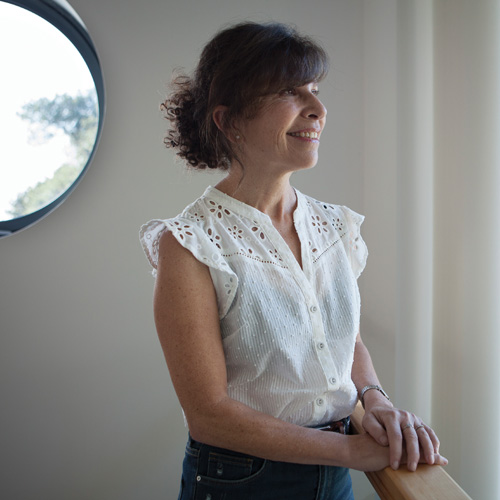
Carole Nevitt has lived in Bridport since she moved to the town in the early 1970s. A hairdresser by trade, Carole and her late husband, Mike, went on to run a successful restaurant business in Beaminster in the 1980s. This is her story, as told to Maddie Grigg.
‘I grew up in south London in the post war years, with rationing, bomb sites and Teddy Boys. My dad was a fishmonger and when I was 10 years old I used to help him with his market stall. It was totally illegal. I used to go in on Saturday mornings and serve fish, weigh up frozen peas in little paper bags and tear up newspapers. I grew up with the work ethic – if you didn’t work you went hungry – which is something I’ve always been quite proud of.
My grandparents were immigrants from Russia and Poland so I always felt I was a bit different because I think I was the only one in my junior school that had grandparents that didn’t speak English very well. In retrospect, I rather enjoyed that but at the time I just thought it was quite funny because they just seemed to shout a lot to make themselves understood. Like my dad, they were hard workers and working has always been important to me. Imagine how they’d feel knowing our cousin is now The Lord Mayor of London, Ian Luder.
I was only the girl in my school to pass the 11+. It wasn’t until I was studying with the Open University and doing an education course that I saw it in black and white that during the era of the 50s and 60s, education authorities would fix the mark so that boys would pass with a lower mark to get a place. It made it all the more remarkable that I was the token girl. I loved it. It was an all girls grammar school and at the time I wanted to be an academic. I enjoyed the whole thing of education but when I became 14 I just hated it, I couldn’t wait to leave. There was a lot of opposition from my parents and teachers. But I just worked it out in my head that I could leave at 15 if I took up an apprenticeship. So I went to a salon in Knightsbridge where I trained to be a hairdresser. I shampooed all day long, learnt everything then about sex and the very wealthy. Fifteen was quite young to go straight into London but it was a great three years. By the end of it, my parents had moved out of south London and went upmarket and had their own fish shops. By the time I was 17, it was too far out of London for me so I was wilful enough to leave home. My dad wouldn’t let me stay out to parties, he was very strict, quite rightly when you think of the dangers.
I was the older of two children. Because my dad was Jewish, my brother was the important one and automatically went into the business. But I was doing all right, I was ambitious. I met my first husband then and it was all part of the leaving home process, it was very impetuous. You couldn’t rent a flat together in those days because you weren’t allowed to have two different names on your tenancy. So you had to get married. It was an escape route and not uncommon for women of my era because there were so many doors closed to you. We rented a little flat in Hammersmith but if I wanted anything on credit for the home, I couldn’t buy it without my husband’s signature, even though I had my own income. I remember thinking that was terribly wrong.
You couldn’t have any form of birth control unless you had evidence you were getting married. When I was doing my apprenticeship, abortions were almost a daily occurrence. They cost twenty five quid, which was a lot of money, and we used to have whip-rounds to help people out. We would take it in turns to go on the bus and keep them company. It’s terrible to think that backstreet abortions using a bit of water and a syringe and carbolic soap were the only answer.
I knew I wanted to have my own little hairdressing business. Between us, my husband and I saved up a thousand pounds. When my daughter Joanne was six months old I bought a hairdressing salon in Surrey. I loved that and took my daughter with me to work every day. She spent the first three years of her life amongst perm lotions, ammonia, hair all over the floor and she ate loads of it. I used to put her in her baby bouncer in the shop window overlooking the high street. She used to bounce and wave to the traffic.
My marriage broke down and then I met Mike who was a brilliant chef. We moved to Dorset to make a new start and I bought a salon in South Street, Bridport opposite the car park. I really wondered what I was doing here. It was weird, Surrey was upmarket and smart but false. The first night Mike gave me a fiver and said ‘go and get a bottle of wine and we’ll have a drink indoors’. South Street had all those pubs then from the Greyhound down to the Five Bells. I went in to about four pubs and ended up at The Volunteer, which was opposite the salon. I remember seeing men drinking pints of cloudy cider and gobbing into the fireplace. Dot Brown was behind the bar and she gave me half a grimy bottle of gin from a cupboard under the stairs and I bought some Palmers tonics. It was brilliant, the best gin I’d ever had.
I loved the salon but after a couple of years Mike needed to cook again so he teamed up with Hamish Maxwell and they started a little firm called Westcountry Kitchen. The business started after all the landladies who used to come into the salon on Fridays found out he was a chef. They asked if he could cook them something for their menus. He started making fresh dishes in our little kitchen that they could heat up. It just got busier and busier. Hamish and Mike got together and rented a unit near Heavers. We were a busy couple and we went through the three-day week, random power cuts and appalling financial times. Inflation was at something like 25 per cent and interest rates were 10 per cent. Businesses in the main streets were dropping like nine-pins. We survived but only just. I was always scared of being poor. If you didn’t work you didn’t earn any money.
In the late 1970s we bought a little cottage in North Allington that had been renovated by Colin Crosby. By that time I was getting tired of hairdressing and fancied running a pub. We thought it was a good way of working and living together. We had our interview with Palmers and took over the Greyhound at Beaminster. I loved the licensees’ life but my daughter didn’t like it so much. She later told me she smelt like an ashtray for most of those four years we were running it. We did really well and got into the Michelin Guide. Lots of fun people came in including Anthony Blunt, Chris Chattaway, Robin Day and John Hurt.
We did not know it then but my husband had a congenital heart condition. He wasn’t very well and we were so busy with food he wanted a restaurant.
So we borrowed heavily and in 1982 left the pub and moved into Hogshill Street where we opened Nevitt’s Eating House. The week before we were due to open Mike had a massive heart attack. There we were with an unopened restaurant fully booked for Christmas and New Year with not a penny coming in. He was only about 43, which is terribly young. But he was strong enough to fight back and we opened up in the New Year but very slowly. We eventually built up to five nights a week but it was curtailed. If it had been now, his life would have been saved with the advancements that have been made in medicine. In the late 1980s he said he couldn’t do it any more. I was anxious knowing he was just one heartbeat away from another heart attack. Fortunately, we sold just before the market crashed so we actually made money on the freehold. We came to live back in our cottage in about 1988 and he had three great years, not going to work. He used to paint up in the attic and cook. When he died in 1991 that was like the end of a whole era, we’d been married about 18 years. With my first husband I made a lovely daughter but he was a bit of a lad. With my second husband I just forged my way business-wise, we were a good team. And then I met Dave and that’s just fun, going travelling together and socialising – avoiding stress and hard work. Mike died when he was 50, my daughter’s dad died at 50 and I had this horrible feeling they didn’t go beyond 50 so I watched Dave like a hawk.
Before my dad died he signed a property over to me and I converted it into flats, which I call working from home. In 2000 I saw an advert for a technology course with the Open University. In 2007 I gained a BSc degree. I have never had so much fun than working in online tutor groups. I loved it, building up web pages with people I’d never met. I thought it was wonderful, being able to study without leaving the house.
It gave me more confidence and I used study to escape from things. I’ve met lots of wonderful people with whom I’m still in contact.”
Tamasin Day-Lewis – Supper for a Song
Tamasin Day-Lewis talks to Fergus Byrne
Tamasin Day-Lewis tells me she wrote her first novel when she was nine. She laughs. It was her first foray into the world of writing and she can’t quite remember much about it. She has just sent the finished manuscript of a new novel to her agent and is inevitably nervous about how it might be received. Tamasin has already made two careers out of words. After spending fifteen years writing and producing films and documentaries she then launched a new career writing about food.
She doesn’t divulge details of the content of her new novel, but if her book, Where Shall We Go For Dinner, published two years ago, was anything to go by, then there is much to look forward to. It was the story of a culinary adventure around the world, a tummy-rumbling blend of travel memoir and recipe book that showed both her sense of humour and adventure, as well as the driving curiosity that has made her one of the foremost cookery writers in the country.
The book came at the end of a long list of successful cookery books which had begun with West Of Ireland Summers: Recipes and Memories from an Irish Childhood. Although she grew up in Greenwich and brought up her children in Somerset, she sees Ireland as her real home. “I wanted to write a memoir about my childhood summers,” she says. “And I suppose having lost a father early in life it was also recapturing all that.” Her memories of Ireland are very powerful. She once called it a place that induces a ‘semi-permanent carbohydrate-crazed appetite’.
Her latest book, Supper For a Song is subtitled ‘For the clever cook in the cost-conscious kitchen’, but Tamasin is quick to point out that it is not about cheap food. She says, “People were starting to write about thrift, and austerity and being frugal, and the ‘three for the price of two’ mentality. That’s not what this is about. This is about having a banquet, about bounty, about doing it cleverly. I just thought that people were going up the wrong track with food. This is about the way that I like to eat.”
She remembers how being in boarding school instilled a need to learn to cook in order to eat well. “I’m really a forager and a hunter-gatherer and I still have a student mentality. I don’t mean getting things cheap. I have never believed in cheap food. But it’s about getting the good ingredients. It’s about getting the flavour of things and not spending the money.”
She rails against the supermarket driven rush to buy food that simply shouldn’t ever have been harvested. She says, “I think people just don’t know how to shop. They buy too much. You’re fighting against the two or three for the price of one offers, and the only reason the shops are selling them at that price is because they have bought too many and they are under-ripe – two of them are never going to ripen anyway. And people think they have got a bargain!” She points out that value and good cooking can come together with a little effort to maximise the wonderful taste produced by well thought out ingredients along with the purchase of just a few special quality products.
She offers a simple philosophy, “The thrift should take care of itself if you really understand what works and what doesn’t.”
Supper for a Song is a beautifully produced dance around the culinary senses with a splash and a dash of clever planning, and it should be a highly prized addition to any kitchen.
Published by Quadrille, ISBN 9781844007431, it is available at £20.
Far from the Maddening Crowd
Most of our towns have a Mayor and Council, although they may not have the powers they once had. We all like to see them in their robes on civic occasions, even if it is the local carnival! We may see the Mayor and Deputy, Town Crier, Mace Bearers, etc. In Bridport the Borough Arms were granted in 1623 and the first mace was made in 1676, the second in 1693 and both bear the initials of the Bailiffs of the time and are carried from time to time.
In the 1960s we were living in Devizes, Wiltshire, an even older Borough than Bridport. I was invited to be one of the Mayor’s two High Constables, for an honorary year of office. At first I almost declined, as I was not sure that I wished to parade in ’top hat’ and tailcoat, carrying a silver topped staff, riding in an open topped carriage in the carnival procession, etc. Then I realised that the opportunity would not arise again and agreed. It was a very rewarding year, we visited the local hospitals on Christmas Day and sat on the Bench at Quarter Sessions, always ’protecting’ the Mayor. Another job was to pour and serve sherry at mayoral events.
During the year a film company came to Devizes, from Dorset, to film a few scenes of Far from the Madding Crowd, by Thomas Hardy. They took over the Market Place, centred around the Market Cross, making it look almost like a Wild West scene, with covered wagons, etc. The Market House, (‘The Shambles’), was converted into the infirmary of the ‘Workhouse’, where Fanny Robin was to give birth and die. The Mayor suggested that we invite the cast to a reception at the Town Hall and we waited for half an hour, until a messenger came to say that filming was running late and could we come to see some ‘shooting’ and then they would entertain the Mayor and party in the Bear Hotel. We proceeded to the Corn Exchange, which surprisingly was being used as just that, for the film. We saw the actress, Julie Christie, playing the part of ‘Bathsheba Everdene‘, examine a handful of corn and toss it to the ground, repeated for several takes. We then retired to the Bear Hotel, where an under Producer entertained us and introduced us to Peter Finch, playing ‘Farmer Boldwood‘, but he was not interested in talking to a small town mayor. We had more response from Prunella Ransome, playing ’Fanny Robin’, an up and coming starlet, whose career was sadly cut short. The other actors, Terence Stamp (‘Sergeant Troy’) and Alan Bates (’Gabriel Oak’), were not present. We knew several local people who had ’bit parts’, one a local farmer was reputed to have had his creaking barn door recorded as the sound of the coffin lid being removed. Before turning Devizes into ’Casterbridge’ they had filmed in Dorset and said they were pleased to be away from mud, as it had been a wet season in farmyards and on cliffs, etc!
Some years later when we moved to Dorset I became acquainted with the late Leonard Studley at West Dorset Family History meetings, always smartly dressed, wearing a bow tie. Leonard, a farmer from Hursey, Broadwindsor, wrote a book “My Story”, which includes his becoming a part time actor, playing a Vicar in the same film of “Far from the Madding Crowd”, but actually in Hardy’s Dorset, before they ventured into Wiltshire. He met John Schlesinger, the Director, who asked him to play a drunken old vicar. His first scene was at Sydling-St-Nicholas Church, where he was to await the wagon bearing the body of Fanny Robin, but Hardy had written of fog and the sun broke through, day after day. In the end they failed to film the episode and it was just suggested. Leonard was befriended by the actor Julian Somers, who played ‘Jan Coggan’, the master-shearer and they often drove together to the site. Leonard officiated at Harvest Thanksgiving at the beautiful old parish church at Puddletown, reading the harvest collect and leading the prayers and hymn, ‘We plough the fields and scatter’. The Harvest Supper and Dance was in the old Abbey Barn at Abbotsbury, with food, drink, fiddlers and an ancient accordion. The first day they drank real Dorset farmhouse cider, but it proved too strong for the real actors! Even ‘the Vicar’ had to snore into a microphone and later stagger unsteadily from the barn. Later the venue was Spire Hill House, Stalbridge, for Farmer Boldwood’s Christmas Party. Leonard stood in front of a mock log fire, raising a glass to Boldwood and Bathsheba, saying ‘A very fine wine’, (actually Ribena and water). In the film Boldwood’s front door was filmed at Friar Waddon, before he entered Spire Hill. In the same way I am sure the entrance to St John’s Church in Devizes was spliced in somewhere! Leonard went to the “Premier” in London, in the presence of Princess Margaret and met all the actors and Schlesinger again, but he found his part in the Church had been cut so that all he said was ‘Let us pray’. If you want to know about the sheep over the cliff and how the blood gushed from the chest of Troy when shot by Boldwood, I must ask you to read Leonard’s delightful book. The film was certainly a grand tour of Hardy’s Wessex!
On Tuesday 13th October Bridport History Society will hold it’s A.G.M. followed by “Just how Hardy are you?” from James Graseby, Curator of the Wessex Region National Trust, about Thomas Hardy and the Wessex landscape at 2.30 pm in the United Church Main Hall, East Street, Bridport. Visitors welcome, £2. Details from 01308 488034 or 456876.
Cecil Amor, Chairman, Bridport History Society. Tel : 01308 456876.
Derek Stevens 10/09
In The Autumn of 1944 the numbers of prisoners of war being brought to the UK was increasing rapidly. Marked with the letter P sewn onto their trouser legs, white, grey and black patches were also added to signify the strength of their Nazi inclinations, white being the goodies, blacks being the baddies. German officers were mainly kept in camps in Scotland and it was the train journey of some which caused great upset to a Somerset peer of the realm, Lord Poulett, whose experience was reported in the local press.
“At a quarter to two on a very cold night I and my wife travelling on a crowded London to Scotland train were wakened up at a Midland station and turned out of our carriage into the corridor by an officer of the Military Police to provide seats for German officer prisoners of war. While the Germans sat in comfort, my wife – Lady Poulett – stood for five hours. When the British officer told us to get out I expostulated, said it was ridiculous and asked for the Station Master to be sent for, but naturally he was in bed. The assistant stationmaster came and said there was nothing he could do. The officer had a sten gun. As a result my wife and I and a naval officer had to squeeze between other passengers on the overcrowded train but my wife found it so uncomfortable she decided to stand in the corridor for the rest of the journey.”
Relating his experience to the House of Lords he added “After Dunkirk British prisoners of war had to march and then were boxed in cattle trucks. We don’t have to imitate the Hun, but it is time that the British people were treated a bit better than this!”
Lord Croft, Under-Secretary of State for War, said the regulations laid down that when prisoners of war were being taken by train accommodation must be reserved in advance. In this case it appears that the reservations were properly carried out, but someone removed the labels from the compartment.
I have experienced that sometimes in recent times when returning to Axminster from Waterloo, although I do believe that the reservation tags had not been slotted into the seats in the first place. South West Trains please note!
As told previously, despite obvious tensions which existed between the civilian population and captured enemy soldiers planted within their midst, many friendly relationships developed between POWs and British families. One such became a story of some poignancy. The story is recorded in the BBC archive, The People’s War.
Three young English speaking POWs, all of junior officer rank, are affectionately remembered by the daughter of a Herefordshire farming family. As in similar records, the Germans having children of their own back in Germany spent their spare time making wooden toys which, in this case, included a pram and a large doll’s house.
These young men remained in this country long after the war until Hans and Max were eventually repatriated leaving Otto behind in England. He, like many who found their homes had become enveloped within the Soviet empire, opted to stay in this country. Having lost contact with his wife he was eventually informed that she had been put in a Russian concentration camp from which she had escaped bur her whereabouts was still unknown. The English farming family paid a search fee to the International Red Cross who traced Otto’s wife. She had escaped to West Berlin, then occupied by the western allies but isolated deep within the Soviet sector of Germany. She had courageously managed her escape by crossing the border clinging to the underside of a train.
Unhappily Otto was informed that his wife had lost all contact with their small son who had been lost within the frantic melee of the thousands of displaced persons now drifting about war-torn central Europe. Otto’s English friends paid another search fee and the International Red Cross, now employed with the massive task – the huge problem of bewildered refugees presented to them – fortunately located the child and reunited him with his mother. They both travelled to England and Otto’s reunited family settled in a cottage in Herefordshire where they became accepted and eventually integrated into the local English community.
There are many records of appreciation for the goodness and kindness of their captors by German POWs. Here is a letter left by two returning POWs from Clifton Maybank near Yeovil dated May, 1946. Published in the local press under the heading BEAUTIFUL PRISONER TIME HERE.
‘Your Dears – Before I begin. I beg your pardon for my English what I am writing in this letter. Therefore I’m writing this letter becouse you was particular very god to us. Here in England I met many English peoples and they are all god to us German POWs. It is a pity that we was in a war against you.
‘Never I forget my prisoner-time here in England, it was more beautiful than the war-time. The war did bring the hatred, the prisoner-time did bring the love. How beautiful it is once all nations perceive that they live without hatred and grudge. Then the world is gay and happy. I will end this letter with the hope that you understand what I mean. We thank you very much for your kindness and particular for your god position of trust in us. Thausent regarts from us. Cherrio! Theo, Rudolph.’
A wonderful and colourful token of thanks for kindness received whilst being held prisoner here in this country was given to the parish church of East Chinnock. Gunter Anton, an 18-year-old Luftwaffe rear gunner shot down in 1944 worked on Somerset farms until his return to Stuttgart in 1948. Together with his father he built up a business making stained glass windows. In 1962 he returned to East Chinnock with the first of a number of windows, the last of which was installed in 1982. These were his gift to the people he had lived and worked with for the kindness he had received and for his safe survival and return to his family in Germany. Sadly he died just six months after the dedication of the windows. However colleagues in Germany said they were sure that he had died with the satisfaction of knowing that he had fully completed his task of conciliation he had set out to do twenty years previously.
Up Front 10/09
Someone asked me recently what was this magazine’s position on a particular local ‘issue’. I explained that as there are plenty of sources of local news, we have always tried to concentrate on simply highlighting the people, the events and the history of the local community. ‘Issues’, we always thought, were best dealt with by people with more resources. But reading Sebastian Barry’s The Secret Scripture recently reminded me of how little we really know about what happens in our world. The book revolves around the story of one woman’s life, as remembered and written by her when nearly 100 years of age, along with another account as researched by a doctor in charge of the mental asylum in which she lives. At all times it is hard to guess what really happened in her life. One of the characters points out that history is not the arrangement of what happens, ‘but a fabulous arrangement of surmises and guesses’. At the end of the book we are presented with what for some will be an obvious revelation, but beyond the plot we are left with niggling concerns. They mostly revolve around what is to be believed and what is not. Like the news. Often international, national and even local news has its own agenda, but once it’s in print it so easily becomes historic fact to all but a small few. Sebastian Barry questions the nature of history. ‘Is it only memory in decent sentences, and if so, how reliable is it?’ He points out that we live our lives and even keep our sanity through unreliability, even building our love of country on what he calls, ‘paper worlds of misapprehension and untruth.’ Maybe, as a magazine, we should throw our oar into local issues. But how can we be sure that what we plant into history isn’t influenced by a hidden agenda, a favour for a friend, a complete misunderstanding of events or even the vagaries of a writer’s ego.
The Invasion of the Snatchers
Last month I mentioned the vast volume of veg grown in the garden and in particular the super abundance of this year’s crop of courgettes. I even offered you some vaguely helpful ideas as to what to do with them. This seems to have touched a raw veggie nerve out there as many of you appear to suffer from the same problem. So, thank you dear readers for your new suggestions telling me what I can do with my unwanted courgettes – some of which are highly original although perhaps physically challenging. However, as this magazine is aimed at a genteel family readership, I can’t really mention any of them right now on this page.
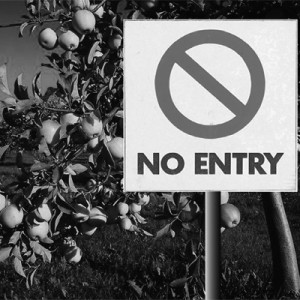
I can however talk about the other unplanned downside of growing fruit and vegetables. It’s the thievery, destruction and sheer meanness of other beings – not so much human beings but the rest of the animal kingdom. For example, I never knew I had a badger problem until I tried to grow sweet corn. Only a few modest plants mind you, tended by me with loving care throughout spring and summer, personally protected from the wind and worshipped by me in keen mouth-watering buttery anticipation. All in vain – they were exhumed and munched overnight without a word of warning or even a badger bark. Where did they come from? Who invited Mr and Mrs Badger to my party? They must have walked for miles along the A35 all for the sake of my mighty crop of just five measly little plants! I hope they were satisfied at the damage they caused. Why not choose the acres of golden maize in the field at the end of the road? I hope my entire badger family suffered from tummy pains afterwards…
And then there were our three small cherry and plum trees which I had planted at considerable expense and then cared for like new born lambs – individually watered and cherished, leaves delicately polished and praised and spoken to softly each morning. We go away for the weekend to find all their lower branches bent and broken off, all the fruit removed and nearly all the leaves missing. It’s chaos. This is too tall to be the work of badgers and too many broken branches for passing birds (unless they happened to be I suppose a flight of giant Andean condor eagles or migrating vultures on their way to Poole Harbour which I think is unlikely). No, this is seriously systematic destruction. The postman nods and sniffs expertly: “You’ve got a problem with deer, mate.”
What… deer? Real live deer in my garden? Doe-eyed deer nestling not so far from the A35? Even to a converted town-to-country boy like me, the amount of wanton destruction caused by wild deer is still surprising. This isn’t a case of gentle Bambi nestling in the bracken – it’s Barbarossa butchering the orchard. I would have been just as prepared to accept that such havoc was caused by a 30 foot Jurassic Iguanodon bending down to sniff my apple blossom. Perhaps it was hiding from a passing T-Rex or just admiring my pruning technique… But no – it’s the Majestic Monarchs of the Glen who are munching my damsons.
No way! How dare they attack my stuff! They’re MY trees – I planted them all. It has nothing to do with any beasts wild or otherwise who, without the hours of labour that I spent on tree care, would have had nothing to even consider eating or trashing like a party of teenage gatecrashers.
And then there’s the family of foxes who regularly remove my precious blueberries. I thought they only went after rabbits, but these must be the eco-conscious variety – a new breed of politically correct vegetarian foxes. They also have an annoying habit of always doing their poo business right in the middle of our driveway. Bold as brass, like an advertising sticker left on a car windscreen, they’re leaving it there deliberately to be noticed. And it works – their foxy ‘calling cards’ are a daily reminder of my failure to drive them away.
And what about the birds, rabbits, moles and mice and the like? This is the countryside after all. Well, I’ve been warned about them, so I’ve been prepared. Netting, wire, buzzing plastic string, balloon bird scarers, dried lion dung (in £4 plastic bags, very smelly) as well as electronic gadgets, ultrasonic alarms, vibrators and owl noise makers. Some of these are moderately useful and some are not.
Incidentally, if you were wondering, lion dung doesn’t really work for me. It certainly seems to put off neighbouring domestic cats who turn white with fear (unless they’re already white I suppose), and slink away looking nervously behind them. But this technique does not work with larger animals such as deer (or dinosaurs). I am thinking of setting up a searchlight, razor wire and a machine gun tower, an alligator trench or a shark pool. A 50 foot brick wall might also work although I wouldn’t be able to see the trees any more which rather kills the object of the exercise. Failing that, next year I will ask a party of Tibetan monks to bang gongs and wail loudly all through the night in a desperate attempt to keep wild beasts away from the orchard. I suspect the neighbours might object…
October in the Garden 2009
Time to take stock; what have you got planned for your garden this month? Yew hedges should have had their annual cut by now; summer borders tidied but not necessarily cut back to nothing (this can wait until spring); too early for blanket mulching; too late for taking cuttings from tender perennials; too late for applying herbicides – what can you do?
All of the above are examples of ‘doing things by the book’. In reality you’ll probably still get away with many of the above, although the optimum time has passed, but there are risks attached to performing them ‘out of season’. It’s the age old homily of “once you’ve learned the rules then you can break them”. For less experienced gardeners it’s always safest to ‘do it by the book’.
In the past it was generally suggested that autumn was the perfect time for lifting and moving shrubs, and for establishing new ones, although the exception to the rule was evergreens; they are “not suited to planting or moving in the autumn”. The reasoning is that evergreens transpire (‘breathe’ out water vapour) constantly, through their leaves, whereas deciduous plants shed their leaves in winter and practically stop transpiring.
This means that if the ground becomes frozen, in a hard winter, plants cannot take water in via their roots and, literally, die of drought as they cannot replace the water lost via their leaves. Newly planted evergreens are at a higher risk because they haven’t grown roots deep enough to be able to extract water from non-frozen ground.
These days we rarely get winters that are so severe, or long-lasting, that an evergreen is likely to suffer this fate so the advice is, in my opinion, something else which has been overtaken by the effects of by global warming.
Having said that, if you do plant evergreens now, to give them the best possible chance they need to be watered in well and mulched thickly with organic matter to prevent the surrounding ground from freezing. In case it gets really cold keep a ready supply of horticultural fleece handy to chuck over your choice specimens as an emergency measure.
The flip side is that now is the optimum time for general replanting, messing around with and restructuring plants in beds and borders. The soil is still warm enough to encourage good root establishment and the promise of increased rainfall means that plants are unlikely to be stressed by heat or drought while they are recuperating from the planting process and finding their feet in their new home.
While getting to grips with planting schemes don’t forget that we are in mid bulb planting season. A bit early still for tulips, which are best planted in November, but just about anything else goes. Not too late to go ‘online’ and order from the numerous suppliers which trade over the internet. Shop around; wholesale businesses can be many times cheaper than the glossier ‘premium’ suppliers and, if they are big enough to be trading wholesale, the chances are their bulbs will be just as good as anyone else’s (almost without exception spring flowering bulbs come from huge Dutch producers). Bulbs are best planted in profusion so don’t be afraid to buy in the hundreds rather than the tens. Distribute them amongst your gardening friends or club together to buy in quantity then share them out. Gardening is a shared experience and in these ‘credit crunch’ times finding ways of buying plants for less makes more sense than ever.
New plants from cutting are the prime example of ‘thriftiness’. If you took tender perennial cuttings throughout the summer then there will probably be some which need potting up, or potting on, now. Do it before the really cold weather arrives and then tidy up the greenhouse / coldframe / porch in readiness for the influx of other tender plants which need to be brought in from the garden soon. Don’t wait until we’ve had the first frost or else you’ll suddenly have a myriad of plants crying out for shelter and no time to prepare it for them.
Don’t forget about autumn colour and autumn flowering bulbs. To make sure that you know what you are getting these are the sorts of plants which is does pay to buy while they are ‘performing’. You can slot them straight into the garden where they’ll have the most impact and you get to enjoy them ‘in situ’ right from the word go. This is particularly true if you are investing in a stunning Acer specifically for autumn colour. Go out now, to a nursery specialising in such beauties, and pick one when it is mid display.
To me they’re a bit like Siamese fighting fish; they look well enough when they’re just swimming around the tank but, when choosing the best, you have to hold a mirror up to the tank and see him in full battle dress. And it will be a ‘him’ because, as in so much of nature, it is the males that have all the good looks (fortunately Acers are, like most of the ornamental plant world, both ‘Arthur and Martha’!).
With that I feel I have excelled myself and need to go for a little nap. I bid you farewell, gentle reader.
PS – if you read Alys Fowler’s “Gardeners’ World” blog then you’ll note that I am now famous………. for buying flaming teacups. I ask you; two decades of professional gardening and I get a mention for the skilful purchasing of crockery from ‘Pams Place’!
George Wright
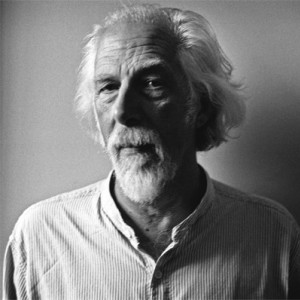
Fergus Byrne met photographer George Wright in Bridport. This is George’s story.
‘I was born in London in 1950 and grew up in a basement in Holland Park Avenue. My grandmother and great grandmother lived above us. It was real old fashioned Kensington but surrounded by, as I recall, bombsites. I remember London in that period as very grey. It lacked colour. I remember the buses were red and the sky blue etcetera, but otherwise it was a very colourless place. I was then dispatched to boarding school in Buckinghamshire at age 7½. Far too young to be sent away I thought, and I remember thinking later that, for eleven years I never spent the months of February, May or October at home. My parents moved to Hampshire around the same time and to me it was very rural. They bought a beautiful old timber framed cottage near Selborne and I remember Tom Chiverton, the gardener, taking his bath in a tin tub outside his back door. You wouldn’t recognise it now for Volvo estates and carriage lamps. So I had a very idyllic childhood really, I was very lucky. I then went on to Stowe where I was in the same class as Richard Branson. He did rather better than me in retrospect. I didn’t get on very well with Stowe and although one was expected to go to University, ideally Oxford or Cambridge, I opted for a few months cruising around Morocco with a friend. It was 1968 after all and having a career wasn’t exactly fashionable at that time.
However I did eventually do an Arts foundation course at Farnham School of Art followed by Graphic Design at Wimbledon. Graphic Design had become rather groovy in the sixties. No longer was it looked down on as ‘commercial art’. And I had always been interested in photography. I remember when I was young discovering my father’s photograph albums and being fascinated by the details in the pictures. At college we had a succession of brilliant visiting lecturers, one of whom was an American photojournalist called John Benton-Harris who introduced me to the work of Tony Ray Jones, the celebrated English documentary photographer and the Americans Garry Winogrand and Robert Frank who had taken black and white photography onto the streets. Like everyone else at that time, I wanted to be Cartier Bresson.
Although Benton-Harris had advised me never to take commissions from newspapers, or from anyone else for that matter – he thought anything commercial was “full of sh*t” – I still had to get a job. So I signed up with a recruitment agency who got me a job as an assistant to a fashion photographer. It was a bit like working in a sweat shop but I did it for a year and got paid twelve pounds a week. I was able to top up with overtime work, taking photographs of wanna-be models, ninety percent of whom had no hope whatsoever of getting any work. It was not my thing at all. I had no interest in fashion photography, nor any interest in clothes, but I had the use of his studio and the use of his darkroom, which meant I could just get on with my own stuff.
After that I went to work for Michael Boys which was working on a whole different level. I learned about sheer professionalism and about working in colour. I went from twelve quid a week to six pounds a day. At weekends Michael would let me use the firm’s car and sometimes he’d say, “George let’s a take a couple of days off and go sailing” and off we’d go. He really looked after people. He fired me in the end because he thought I was nicking some of his clients. However we remained friends and I still worked for him occasionally after that.
So I had accumulated quite a portfolio and one of the models that was looking for work had some of my photographs in her book, so I got commissioned to do a fashion shoot. Suddenly I was on £100 a day instead of £6. So I thought, great I’ll give this a go and I’ll allow myself time off every year to try and do some of the pictures I think I should be doing. I had a tiny studio so decided I would do a lot of location photography and it was fun.
I remember one trip in the mid seventies with a friend called Emma Parsons and her boyfriend, the journalist Roger Cooper, who was later to spend 6 years in solitary confinement in Evin prison in Tehran, (when asked on his release how he survived with the ordeal, ‘Mrs Thatcher’s Spy’ put it down to his time at an English public school!). He decided we should drive his VW camper from Gloucester Road to Kuwait. He was working for the Sunday Times and the idea was that he would interview all sorts of important people and we would submit these stories to the newspaper. So off we went. Fortunately Emma’s father was a diplomat so we had letters of introduction to various embassies and I recall one occasion when we arrived in Damascus and hadn’t yet got visas for Iraq. So we presented our letter to the ambassador and had dinner with him. As the next day was Sunday we invited him to have Sunday lunch with us in our camper van. So we parked up outside the embassy compound, and he took one look at it and suggested we might be more comfortable in the garden. So there was this wonderful scene where these white coated servants came out to collect this unlikely meal we had cooked for the ambassador.
During the same trip we ended up in Djibouti where we came across this extraordinary refugee camp outside a barbed wire fence which the Djiboutians had erected after receiving independence from the French. There were these poor guys who had fled from Addis Ababa and there were qualified doctors, aeronautical engineers, highly intelligent people living in cardboard boxes. It was like a sort of forgotten refugee camp.
It was after that trip that I started to work for the Observer. The picture editor was Colin Jacobson and he sent me all over the place. Jane Grigson was the food writer so when Jane was doing a guide to European food I would go off to Spain, Italy, Ireland, France or wherever. Eric Newby was their travel writer. And Christopher Lloyd was their gardening writer and photographing gardens was one of my big interests. I decided that English gardens should be photographed in English weather so I went for shots of the potting shed and that sort of thing. I was very lucky. I came in at the end of the golden era for the colour supplements – the end of the eighties.
I have photographed so many people over the years. Harold Acton in Florence, Russell Harty in East Berlin. The Observer did a regular feature called Room of my Own and I used to get those to do. I was asked to photograph Ted Hughes, who at first said no because he ‘didn’t believe in the cult of the personality’. It was my job to change his mind and he turned out to be absolutely delightful. Tom Sharpe I photographed in Bridport for an article by Anna Pavord called Disaster in the Deep Bed. I went to his house and he had a lovely garden but he parked his ride-on mower in a dog kennel and it looked like it had just crashed into it. A typical Tom Sharpe scenario. He gave me lunch afterwards which consisted of great huge bulbs of raw garlic.
My career has taken me all over the world from the Yemen to Irian Jaya. I moved to Dorset in the mid eighties and bought what was advertised as ‘a remote farmhouse in need of modernisation’. I bought it at auction for the same amount I had sold my property in London for, so it was a straight swop. That was when I started doing the photographs that were used in Vanishing Dorset. I started photographing my neighbours and began to notice how things were literally vanishing around me. I used to drive past old farmer Wallbridge’s house and could see this amazing interior lit by one naked light bulb. Then when the place was going to be auctioned his sons let me in to photograph it. I hadn’t planned a book, I was just photographing for posterity, but the more I did it the more I could see disappearing. And the boom in DIY stores meant that these individual windows, doors even wallpaper would be gone forever, replaced by plastic. I’m a great fan of rusty corrugated iron.
I have never thrown away a photograph in my life. I probably have between five and ten thousand little Kodachrome boxes, each containing thirty-six slides. I will go through them eventually and maybe I’ll select fifty that have slipped through the net, but the rest, who knows what will happen to them?’
What a Lot I Got
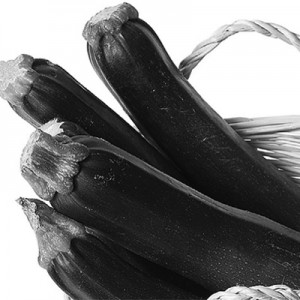
I swear I’ll go mad if anyone offers me any more of them. I can’t go to supper with friends or meet up with family without someone trying to offload them onto me. I’m taking about courgettes. And also rain-soaked beans (French, broad or runner) and soggy spinach – in fact all homegrown green things – but it’s mostly courgettes. I have had complete strangers knock on my door and try to throw them at me for free. I shrink back in horror and try to close the door, but they leave them on my doorstep. Instead of a nice bottle of wine or box of chocs, dinner guests now even bring me their courgettes in plastic bags. “Just thought you might like some lovely fresh veg from our garden…”
Aaagh! No I would not! My own garden is already overrun with the stuff. Of course, I partly blame my good friend Fergus Dowding of the MV magazine (our celebrated ‘King of Veg’) whose monthly articles of wisdom persuaded me to set up my own vegetable plot in the first place. I also blame the sunny spring followed by our appallingly wet summer – damp and depressing conditions for humans, but obviously wonderful for plant life. Everything’s growing. Thistles are blossoming like Triffids while 5 foot nettles spring out from behind hedges and attack passing children. The grass on our lawn may look nice and verdant, but it needs cutting every couple of days.
Moan, moan… Of course, I should be so lucky. I should thank the Powers That Be for soaking my summer holidays and then awarding me a consolation prize of a lifetime’s supply of green stuff. Who needs a barbeque on the beach when you can have free beans and peas by the ton? You may have had 30 degrees in sunny Spain, but I will be eating spinach till Christmas. Literally.
But it’s the humble courgette which has become the most prolific of these green invaders. I’ve got them coming out of my ears, my mouth and nearly everywhere else. I’ve tried them steamed in sections, boiled in batons, curried in quarters, flat fried, grilled, baked in the oven and pounded into zucchini soup. You can’t even freeze them successfully, so I use them as doorstops, paperweights and cricket bats. They float (just about) so I could sell them as biodegradable buoyancy aids. I’ve even thought about using them for treasure hunts or games as in ‘Hunt the Courgette’? Maybe… but given their current all too common availability, any incentive to win the game is removed. I’d rather play ‘Lose the Courgette”.
Poor things. I am launching a charity to help these piles of sad, unwanted courgettes: “Don’t be a Meanie – Adopt a Zucchini”. I’ll give them names to make them feel a bit better (Charlie, Camilla, Candice or Courtney). However, if I miss one, it becomes a vast marrow within seemingly only a few hours and will either need to be scooped out to make a lantern or thick sliced to make tablemats. I’m even thinking of painting some of them to try and pass them off to friends as sausages.
I am desperate to try and constructively use up all this bounteous harvest before it rots into a congealed biomass and becomes recycled as tractor fuel. French beans are small and narrow enough to be dried and used as ‘Pickup-Sticks’ or long toothpicks and I’m told that the silk smooth inner skin of broad bean pods is excellent for rubbing on dry skin and verrucas. Broad beans themselves could become fashionable jewellery items if dried and painted either as necklaces or ‘eco-earrings’. Raw runner beans might also become original bookmarks and conversation points. Your next mobile phone case may well be made from ‘pure, natural spinach leaves’. Not only is this extremely marketable and highly friendly to the environment, it can also be gently chewed (with or without a light balsamic dressing) if you chat for too long on the phone to your mum and get a bit peckish.
In the meantime, it’s back to my courgettes. Do you know? I was in the local supermarket today and there, on a shelf, were packs and packs of courgettes for sale – hundreds of them! Why have they done this? Why have Messrs. Morrisons and Waitrose ordered up even more commercial bulk of the things from farms as far away as Norfolk or Northampton? Don’t they know that I can supply the entire country just by myself from here in West Dorset? And you know the thing that’s even more puzzling to me? Why did I grow them in the first place? I don’t even really like them…