
Sunday, March 22, 2026
Home Blog Page 104

Cole Stacey

A recent piece in the Observer Music Monthly magazine, it’s 76th and final issue was accompanied by an extraordinary photograph of the folk singer-songwriter Pete Seeger. The piece was written by Burton Bradstock’s Billy Bragg, and it showed the 90-year-old American legend photographed in New York last year. Billy said that Seeger ‘towers over folk music like a giant redwood’.

What was really striking was the extraordinary achievement of survival. The sight of a 90-year-old man clutching a guitar and banjo powerfully highlighted the longevity of the music produced by so many singer-songwriters over the years. Over the last fifty or sixty of those, men and women with guitars have travelled the highways and byways, playing their songs to anyone who would listen. If they were lucky they scraped a living, or if very lucky they got a recording contract, and we would buy their LPs and hang onto their every word – because they were the voices of their generation. The sight of Pete Seeger’s ageing limbs and ancient banjo starkly brings home the fact that they appear to be a dying breed. Today the world of music is dominated by X-Factor style commercialism, where the singer-songwriter simply doesn’t bring in the money that the music industry needs.

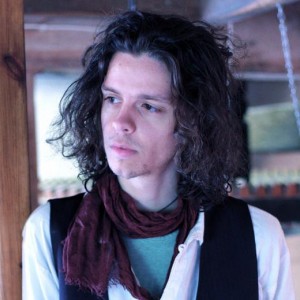
However, a dying breed they may be, but they are not going away. There are folk nights and open mic nights thriving all over the countryside, and as people step up and sing their songs, there are still those with a will to work at it full time. To survive and even thrive, however, they will just have to do it with a bit more understanding of the way things are these days. One such singer-songwriter is East Devon based Cole Stacey. The 24-year-old, who grew up just outside Honiton, has just released his first CD and is currently touring the countryside hoping to build an audience for his work. The days of the lucrative and much sought after ‘record deal’ are no longer the main focus for musicians like Cole. His new CD is, as he puts it, a body of work he just had to get recorded so he could move on to new work. Thankfully it is a body of work that was worth recording because, for Cole, the CD is his bread and butter while touring. Without the backing of a wealthy management or record company, all the expenses fall to him, and a few CD sales can be the difference between paying for the petrol to get to a gig or running on fumes.
The youngest son of a musical family – his Dad owned a music shop in Offwell and still plays locally – Cole couldn’t help but be drawn to music as a profession. He began with drums and took up playing guitar when he was sixteen. That prompted him to take a music A level.

After a trip to India, he decided that music was going to be the source of his living, but it wasn’t a decision taken with stars in his eyes. “You just have to start at the bottom,” he says. “You go round to open mic nights, of which there are a lot in Devon, and just get up and sing.” A leg up from a performance and interview with BBC Radio Devon helped him step up a level, and the comment from Steve Knightley of Show of Hands that Cole is ‘an impassioned and ambitious young songwriter’, hasn’t done any harm either. Lodge Music, who promote a wide variety of established and upcoming artists, has helped Cole put together his CD, and now he has plenty of hard work ahead as he tries to build a solid fan base. And that can take time. Many of the legions of fans of Devon’s current golden boys, Muse, probably aren’t aware that members of the band have been working musicians for the best part of twenty years.
Cole’s CD, Changing faces, contains 10 tracks, nine written by Cole and a beautiful cover version of Elton John’s, Talking Old Soldiers. Cole is accompanied by the incredibly talented and versatile Scott Ward, a percussionist and pianist from Winchester. It was produced partly by Cole and partly by Simon Greenwood and shows a confident songwriter who has quickly built his own style. Speaking of songwriting, which he admits is his real passion, Cole says “I think you have to have a certain blind faith in yourself. I feel like I have something to say – like every songwriter does. When I first started it was a very indulgent thing, but now I accept that you have to make it accessible. You can’t just stay completely inside your bubble.”

With the current trend to download individual songs as opposed to complete albums, Cole is also aware that it is up to the musicians to work hard to get a market for their music. Perhaps that’s the positive that will see a resurgence in good live music. Many people will know about the Facebook effort to ensure that the 2009 Christmas chart number one, wasn’t completely manipulated by Simon Cowell’s X-Factor television show, as it had been for years previously. In that case, just enough people signed up to make the point that contrived music wasn’t what the whole country wanted. But that’s as much a sign of the power of the internet, as it is of people power. What the music industry really needs now, is more people supporting live music in its traditional home of pubs, clubs and village halls. As musicians like Cole Stacey travel from town to town playing their songs and describing the world as they see it, music fans need to be there, to buy the CDs and make sure that the generations of Pete Seeger’s of the future, aren’t lost to the power of a thin widescreen and the Ethernet.

Cole Stacey’s Changing faces is available locally at Axe Music in Axminster and Honiton Music in Honiton or it can be purchased by visiting his website www.colestacey.net. Better still, catch Cole at his next local appearance and buy a copy at the gig. He will be at Kentisbeare Village Hall on April 16th.
Up Front 03/10

Whilst having my car fixed recently the mechanic showed me how a part that was originally a technological bonus, simply made it harder for him to fix something that once would have been relatively easy. As most of us are realising, the same can be said for the internet. It has revolutionised much of how we live and communicate, but many people have been victims of identity theft, had their bank accounts rifled or even made online payments to non-existent businesses. During the recent publicity about bullying in the workplace, the issue of cyberbullying has also been highlighted. It occurs when computers or mobile phones are used to harass or bully somebody. Cyberbullying can be more serious than conventional bullying. The bully often uses SMS, e-mail, chat-rooms or Facebook to spread bile about their victim, and unlike conventional bullying at school, the child isn’t left alone on evenings and weekends. Worse still, in some cases it can be hard to identify the perpetrator and whatever is said spreads very quickly and may be difficult to remove from the internet – in fact, in most cases, it will be impossible. There are various websites offering advice on how children should deal with the problem and most suggest talking to a trusted adult as the first option. Which makes the dialogue in the current public debate about what is and what isn’t bullying, very important. Once upon a time youngsters didn’t get much access to public debate but these days many of the websites they visit offer them plenty of detail on current affairs, including political and corporate comment. Debating the difference then, between bullying in the workplace and ‘spirited management’, needs careful handling, if victims of cyberbullying are going to feel comfortable discussing their problem with an adult.

Maya Kaye

Julia Mear met Maya Kaye at the family home where she grew up; Hinkhams Farm, Whitchurch Canonicorum, Dorset. This is Maya’s story.

“I was born in Andover, Hampshire in the summer of 1975 to Peter and Marion Ray. My Mother had grown up in Weymouth, then Bridport and finally Griddleshay Farm in Whitchurch Canonicorum. Her parents had bought the farm so that they could have ponies, which was a passion of my mum’s and still is to this day. In her teens my mum went to the Norland College, Bath, to study to become a nanny but somewhere along the way she met my dad, Peter Ray, who was working on a farm near Andover. They quickly married; I was born and named Maya Rainbow Ray. At the age of almost four I was presented with a little sister, Sasha Sunshine. Our middle names are only unofficial – my mother didn’t actually have the bottle to put them on our birth certificates. Just before my sixth birthday we moved from Hampshire to Castle View in Whitchurch Canonicorum and I started at Charmouth County Primary school. After Castle View we moved down the road to Hinkhams Farm, where my parents still live now.

At heart my parents have always been hippies, our first cat was called Karma for heaven’s sake and my younger brother, Tom does have a real middle name Joshua because Joshu was a Zen wise man! Their idyllic plan was to be as self sufficient as possible. My early childhood memories are of vegetable gardens, warm buckets of milk (often floating with straw and other bits of inedible matter) and our first house cow; called Goldberry, chickens, warm eggs, home-made bread, jam and other delights. Of course, when you are seven your desire is to be like everyone else, so often I bemoaned the fact that our milk didn’t come from a bottle like everyone else’s. Now I would give anything to taste that rich, creamy nectar and be a child again peeping into the parlour or exploring the vegetable garden on a hot summer’s day with dirty knees and fingers sticky with raspberry juice.

It is true isn’t it that childhood is the best time of your life and looking back now you couldn’t have asked for one better than mine. Those long, hot, summer days spent idling the time away were in fact, full of adventure, mischief and above all freedom. Sasha and I had grown up knowing the grandaughter of a woman in the village for what seemed like forever, but one summer we all really clicked and she became more of a third sister than a friend. So began some of the best years of my life. Every school holiday, Gypsy would be sent down to Whitchurch from London to stay with her granny. Together we would set off on our bicycles through the lanes with a bottle of watery, warm orange squash and a squashed picnic and we wouldn’t come home until the evening. We must have looked a real sight because we only had two big bikes; one unfortunate (as the oldest, I usually nominated Sasha as the unfortunate) would be forced to ride on a tiny red and white miniature bicycle designed for a four year old. I can see Sasha now pedalling like crazy trying to keep up and complaining bitterly the whole while. As a threesome we spent hours roaming the fields, the river and the woodlands.

As we got older we embarked on slightly more risqué games such as going to the churchyard at midnight. We used to wait until my parents had gone to sleep and then creep out of the house, meet up with our co-conspirator, Gypsy, and go to the churchyard. Our plan was to run 12 times around a grave to raise the dead but funnily enough, once we actually arrived, it wouldn’t seem quite such a good idea and we would slink off home again to bed. Once Gypsy’s mum overheard our schemes to creep out at night and told us stories of children being taken by adults, a thought I can honestly say had not crossed our minds, and there begins the loss of innocence I suppose. However, I am not sure how I would feel about my own children getting up to such mischief now.

One of my most prevalent memories is of caravans. The farm seemed to be littered with caravans in various states of dilapidation. Caravans let out to holidaymakers, caravans dragged in by family friends, intending to stay for the summer, after which the friends left but the caravans invariably remained. The empty carcasses becoming a den, a hideout or to store a butterfly rescued from a spider’s web with only one wing. The floors slowly rotted into the mud and the walls became entombed in ivy and brambles. In teenage years, Gypsy, Sasha and myself along with other most privileged friends spent nights sleeping in the caravans. One of our favourite caravan games was ‘tombstones’ and involved folding the caravan bed back into its space against the wall. The unsuspecting sleeper would find themselves suspended upside down, crumpled unceremoniously behind the mattress, their muffled cries for help drowned out by our raucous laughter. My father taught me this game as he himself had played it at public school. It is great that my father has been a respected member of the community; Chairman of the Flower Show Committee and on the Parish Council. However, I have memories of him in a different role, being filmed running around the field herding sheep, naked apart from a pair of wellies, as a favour to a friend who was doing a film studies course.

The Five Bells in Whitchurch is a pub that holds a special place in my heart, particularly during the times when Terry, Melanie and Nigel were running it. They used to hold biker’s conventions, Medieval Fayres and an alternative Flower Show with prizes for the most revolting sandwich. Years before, I remember going to the pub with my dad to help out on Skittles night. I felt incredibly privileged and trusted to be able to ‘stick up’ for the men who were playing; Simmy Symonds, George Barnes etc. ‘Let em roll’ they used to mutter if it looked like I would be too hasty in my lunge for the ball.

I now live in Ottery St Mary, Devon with my wonderful husband, Richard, whom I met years before we actually started dating when his parents moved from Coventry to Lyme Regis. I had moved to London with my sister who was studying International History at the LSE. I was having a wonderful time discovering the wonders of the big city. I got a job at Purves and Purves (a very trendy furniture shop on Tottenham Court Road). I didn’t really know anyone but I discovered that Richard lived only a short bus ride away and being starved of company I gave him a ring. He invited himself around for dinner that very night and never really left again. Shortly after we met Richard started working for Ash as their DJ. It meant that he got to have a great adventure going off around the world with them on tour and I got to swan around backstage at loads of cool gigs and parties.

Together we have a seven year old son, Alfie and a four year old daughter, Rosabelle both of whom are wonderful, adorable creatures who constantly provide me with moments of awe and wonder as I watch them transform into little characters in their own right. We moved back down to Ottery St Mary when Alfie was two because we didn’t want to bring up children in London. I wanted my children to have the same country childhood that I had. We still spend a considerable amount of time at the farm in Whitchurch; my dad is an incredibly good cook and my mum is often the life and soul of the party. Even though I have forged a life for myself in Ottery St Mary, my heart lies in Whitchurch and I would love to return but work dictates that we live closer to Exeter at the moment. Although I did my teacher training at Goldsmiths University and taught in a school in South East London for three years, I now work for Connexions in Exeter, helping young people into work or education.

When we return to the farm and I see my children cast aside the Nintendo Games Console or other such gadgetry and run laughing to the old swing hanging askance from the plum tree, or take up a fishing rod and net and head to the pond, it makes my heart sing. My childhood has been idyllic and to know that my children are growing up in the same magical surroundings and are creating fantastic memories of their own that will be so entwined with my own is something special indeed.”

Up Front 02/10

Last month the BBC’s My Story competition closed for entries and a list of finalists was later announced. It had been launched as a story telling competition with a difference – a competition for ordinary people with extraordinary true stories. According to the launch information, some of the best selling books and Oscar winning films have been inspired by true life stories, and competition finalists would become part of a huge BBC series, with five people to be offered a book deal. The competition had categories such as achievement, charity, bravery, adventure, sadness, romance and tragedy. I’m often asked what are the criteria used for the cover stories in this magazine. The fact is there aren’t any. Every life counts and the list at the moment is endless. One lady, a few years ago, was most upset because she had never heard of the person on the cover, and reading the story she couldn’t see anything that she felt merited the story being published. She had obviously missed the point and no doubt never picked up the magazine again. But I was reminded of it when reading a book published last year by the Village Voices organisation. The book, Who Were We?, delved into the past to highlight the lives of people in the Dorset community around Drimpton. An enormous amount of research was done to remember the ordinary lives of hundreds of people no longer with us, and the unwritten stories of their lives can only be guessed at. Editor, Andrew Pastor, made a telling point at the end of the book saying that knowing who our forebears were, helps us better understand ourselves. Speaking of the census he said, ‘They were all counted every ten years, and they all count.’

John Miles

 Robin Mills went to Bridport to meet photographer John Miles. This is his story.

“My first memories, being born in 1939, are of war damaged Croydon, near where we lived. The aerodrome was heavily bombed by the Luftwaffe, and after our house got hit, my parents felt it was all getting a bit too risky, so I was evacuated to Norfolk to a farm which belonged to a distant relative. Working on the farm were German prisoners of war, and they became my friends. They spoke no English, and obviously at the age of four I had no German, but I can remember really vividly how they looked after me. One of them made me a silver ring, which I lost. He then made me another, which I also lost when I moved back home, and that was the saddest thing. We had a real bond, a friendship that meant a lot to me, and it gave me great insight into relationships between people of different ages, and from different cultures, in later life.

It’s very difficult to say where the photography started, but I was studying painting at Wimbledon Art College. We were all doing large scale figurative stuff; Stanley Spencer was the main man then. All of a sudden, it was like the Americans landed, and abstraction entered the equation; people like Jasper Johns, Josef Albers’ Homage to a Square. Everybody started making these kinds of images without any idea of what it was all about. I struggled with it a bit, and was rather despondently having a coffee in the student bar when a small man with a rather weasely face, dressed in a classically dirty raincoat, came over and said to me: “why so gloomy?” I said something like “I don’t want to talk about it”, but he came and sat down and we talked. He told me he ran the photography department, to which I said I didn’t know there was one; he said, “that’s the way we like it”. I really took to him from the word go, and the conversation ended up with him pulling a little 1950’s Leica camera from his raincoat pocket. He said, “I think you’d better do photography”. I said, “I know absolutely nothing about it”, and he just said, “You don’t need to. There’s a film in the camera, you just press this button here, then you wind it on with this lever, then you press the button again. That’s all there is to it”. This completely non-technical approach really suited me, but of course when we developed the film, there were only two shots on it. In time I began to get better success rates, but once I got in the darkroom I was completely hooked. I carried on trying to do some painting, but I was much more interested in the photography. It was at this time Sally and I met; we married, and here we are together 50 years later.

From Wimbledon I went to Goldsmiths, and by the time I left there I had a family. I tried to get a job in London, teaching. That wasn’t happening, so when I saw an advert for a teaching job at Beaminster School, I applied. I came down for the interview the night before, and met a man in the pub, who found it obvious I wasn’t a local. Wondering what had brought me to Beaminster, I told him I was trying to get a job at the local comprehensive, teaching art. So we had a nice chat that evening, and the next morning, the school secretary told me the headmaster would like to see me before I had the interview with him and the governors. Of course, who should the headmaster turn out to be, but the man I’d unloaded everything to the night before in the pub. He told me he really wanted me to take the job, but warned me not to give vent to the opinions about religion I’d expressed the night before to the governors in the interview, one of whom was a vicar. Interestingly, the headmaster turned out to be a great friend of Michael Duane, who was headmaster of Risinghill School in Islington, a progressive school which pioneered many new ideas in teaching. I got the job, and spent a very exciting two years teaching at Beaminster where we were all trying to apply Duane’s ideas. I thought the school was absolutely brilliant at that time, very unconventional.

When I moved to Dorset in 1967 I was much reminded of childhood in Norfolk, not because of the landscape which is obviously different, but because in ’67 life in the Dorset countryside had the same kind of reality to it as in wartime Norfolk. Lots of folk would go rabbiting, using ferrets: the first pub I went to there were old boys comparing each other’s ferrets round the bar. The pub was actually serving badger dinners, so you had these people with their ferrets out, in the bar, tucking into greasy old Brock. I’d been down to Dorset a couple of times before, with a friend in a motor-bike and side-car. I remember stopping at Worth Matravers, climbing out of the side-car which was full of water from the heavy rain, and getting the camera out. I just thought this part of the world is so amazing, so beautiful; I took to all of it. These days, the countryside’s changed a lot, everything’s been sanitized, tidied up, small farmers disappeared. I’ve been getting wonderful bantam eggs from a local farmer I know, and he said recently he’d have to stop supplying me. He’d been told he had to have a machine to stamp all the eggs: “tis gonna cost I four thousand pound”, he said. “What do I want with a machine that cost four thousand pound?” That sums it up, really.

I had a friend when I moved to Dorset, Val Hennessy, a journalist I liked because she pried into everyone’s business, she’d upset the apple cart, and I did some work with her for the Guardian. I can remember photographing the first riots at Notting Hill, took loads and loads of pictures. I sort of knew the picture editor on the Daily Mirror, Len Greener, so I whizzed round to the Mirror with my pictures, pleased with myself that nobody else could possibly have got there before me. “Too late”, he said, “I’ve just bought a load of stuff off that American, Homer Sykes, have a look”. The pictures were all of black kids throwing rocks at policemen. He asked me what I’d got and I told him they were the complete opposite: all of policemen beating up black kids. “Well”, he said, “our readers aren’t interested in that”. That remark gave me a pretty good insight into how the media works.

When I left Beaminster School, I met Michael Pinney. One evening I came home to find him having a firework party in my garden. He said he’d been writing poetry since he was seven; he liked my pictures and thought we should work together. That party led eventually to Bettiscombe Press, which we decided should publish work in the way that the artist would like it to be published. We did work by Derek Jarman, Ralph Steadman, poets, artists, photographers, a real variety of interesting people. That lasted about eight years, during which I was also doing peripatetic teaching in art colleges all round the country.

I’m very fond of one book I did. We went to a funeral in Bothenhampton, and standing by their garden gate was a lovely old couple. I thought there was something special, and we visited them continuously for the next two years, whilst I documented their lives in photographs and stories. Theirs was a way of life that’s really disappeared now. The house was falling to bits; there were chickens in the kitchen, all this in Bothenhampton which was fast becoming quite a smart village. They told me the most wonderful stories, I wrote them all down, and published a book, which I called Visiting Bob and Evie. I loved being able to combine the creative, the photography, with the journalistic. That book sold out quite quickly, which I considered a success.

Lately I’ve been creating photographic collages, sticking together bits of photographs, text, and so on and re-photographing the results. I did rather well at the Royal Academy summer show, and I’ve had some work in the Discerning Eye exhibition in the Mall in London. Some new work has been hung in the Electric Palace here in Bridport which has gone down quite well. London remains the centre for culture, though. Our three children who were brought up here in Dorset have all left and are now based in London, and that means we spend quite a bit of time up there. My eldest daughter Sarah is an independent film-maker, my son’s a successful fashion photographer, and my younger daughter Emma runs a restaurant in Clerkenwell. My son Edward’s first word was “tractor”, which meant watching him sit on one all day; now he’s flying all over the world photographing rock stars and fashion models. They’re all doing very creative work, and their success is hugely pleasing to me.”

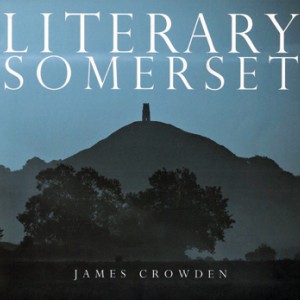
James Crowden – Literary Somerset

In the introduction to his new book, Literary Somerset – A readers’ guide, author James Crowden plays down the significance of his work, calling it a ‘first trawl’ of a county teeming with literary anecdotes. He suggests that his work may be a source for readers to begin their own research. He may be right, there is plenty of room for each reader to do their own further research, but Literary Somerset is quite an extraordinary first trawl.
From Thomas Hardy’s time spent living in Yeovil to John Le Carre’s time spent teaching at Millfield, James Crowden has packed his book full of fascinating facts and anecdotes. Through the highways and byways of Somerset, including the cities of Bath and Bristol, he has created a literary road map from Anglo Saxon times up to the present day.
Who would have guessed, for example, that Johnathan Dimbleby ran an organic farm near Bath for some years or that Thomas Hardy’s former home in Yeovil is now a private car park for a shop that specialises in ‘cheap knickers, blouses and skirts’. What would Hardy have made of that?
Not everyone would have known that JRR Tolkien honeymooned in Clevedon or that Roald Dahl went to boarding school in Weston-super-Mare, the same town in which John Cleese was born and Jeffery Archer grew up. James Crowden recalls spending four weeks in the Himalayas with John Cleese, who fell over and sprained his ankle whilst doing a silly walk over a pass at high altitude.
He devotes five pages to TS Elliot who became a pen pal of the comedian Groucho Marx, even requesting a portrait which he proudly hung in his home.
The book covers more than 300 writers: early chroniclers and opium addicted Romantic poets, philosophers, pirates and playwrights, eccentric clergymen, diarists and herbalists, novelists and historians, travellers, chefs and scientists – from Gildas to George Bernard Shaw, Fay Weldon, Margaret Drabble and Terry Pratchett.
Many of these literary connections are well known: TS Eliot and East Coker, Wordsworth and Coleridge in the Quantocks; but did you know that John Taylor, founder of the Guardian lived in Ilminster; or that Virginia Woolf had her honeymoon in Holford; or that John Steinbeck lived near Bruton to research the Arthurian legends; or that the weird electrical experiments of Andrew Crosse at Fyne Court inspired Frankenstein… or that the vicar of Isle Brewers was once sold for 25/- and then walked naked across Afghanistan; or that Arthur C Clarke was born in Minehead or that Cheddar Gorge inspired Helm’s Deep in Lord of the Rings?
Literary Somerset is broken down into manageable chapters, many with quirky names such as ‘Three Wise Men’, ‘Two Herbalists and a Leg Stretcher’ and ‘Hacks and Scribblers’. One chapter, ‘Four Waugh and a Herbert’ about Arthur, Evelyn, Auberon, and Alexander Waugh, and Aubrey Herbert, has the author remembering how Arthur Waugh became his father’s godfather. He points out that Waugh’s deep interest in books and publishing rubbed off on his own family and how the Waughs all had a great sense of humour – an art that James Crowden has mastered and uses with great effect in this book.
Irrepressible, energetic and passionate about the West Country, James Crowden has produced yet another excellent addition to a library of Somerset literature that is already bursting at the seams.

Up Front 01/10

A former colleague, from so many years ago that I doubt he is still with us, used to often have a look of pain on his face. Although he had one of the best senses of humour of anyone I knew, he suffered a lot from various aches and pains and spent much of his later life swallowing painkillers. One of the things he hated most was when a stranger would quip ‘cheer up it might never happen’. He would cheer himself up by gently explaining to the stranger that his wife had just died or his son had recently perished in a mountain climbing accident. As far as I knew he had never married and had no children, but took some solace from confounding these poor strangers and making them feel slightly awkward about their cheery remarks. Those episodes highlighted how difficult it can be to understand what people are really feeling. So often, we take someone’s mood, stubbornness or even anger as a normal part of their personality, when really it is just a short term physical or emotional cry for help. They simply may not have taken their pain killer that day. Take Santa Claus for instance. He is obviously obese and his red face is a sure sign of an unhealthy lifestyle. He spends the whole year overseeing thousands of elves and planning a major global operation. And then he has the stress of having to visit about 150 million homes to deliver presents. Not delivering to Muslims, Hindus, Jews and Buddhists must be a bit of a time saver, but he’s such an all round nice guy he’s probably consumed with guilt about that. And clambering up and down chimneys carrying millions of presents must play havoc with his back. When you think of the potential for diabetes, heart attack, stroke and back problems he must be pumped full of medication. Imagine if one year he forgot to take his painkillers.

Nonie Dwyer

Robin Mills went to meet Nonie Dwyer in West Bay, Dorset. This is Nonie’s story.

“My life started in rural Australia, on a beautiful 100 acre farm where my Mum bred Welsh Mountain ponies and raised cattle. My brothers like to call me the token Aussie, one of them being born in Tokyo, the other in England. My Dad is English, and my Mum is Australian, and we lived in the Southern Highlands, between Sydney and Canberra. It’s about a two hour drive from Sydney so we weren’t completely in the sticks. It was a lovely place to grow up, quite green, not at all like the dry dusty image most people have of Australia. I used to love working with the horses: I rode all the time and broke them in. That was the side of it I liked, the training rather than the competitive aspect, and it was a very competitive world. Any chance I’d get, I’d be riding a horse: it would be nice to keep my own, but life and work prevent it at the moment.

My Mum and Dad met in Australia. At the time Dad was working in Japan and they met when he was visiting. So they married and Mum went to live in Tokyo with Dad, where my eldest brother was born. They were there a few years, but Dad had had enough of international trade and needed a complete life-change. Abandoning Tokyo and the high pressure world of international business, they moved back to England, to a village in Hampshire, to set up a small hand-made carpet business. It was a brave decision, and despite its humble setting it got a good press, which eventually led to exhibitions throughout Europe and exports worldwide. Mum was one of a team of top international designers involved in the business, but it also gave expert skills and employment to local people in the village. My second brother was born there, and soon after that they moved back to Australia, where in due course I was born.

From about the age of five, I wasn’t very well, so I wasn’t at school very much. When things got to the point where I couldn’t really go at all, I qualified for home schooling. In some ways I feel very lucky to have had most of my education on a one-to-one basis. Most of my teachers were experts in their field, passionate about their subject, and that rubbed off on me. For instance, my music teacher was an opera singer, and her enthusiasm inspired my love of music, especially singing. So later on after I finished school, (the two years I did manage to attend), I moved to Sydney and found an amazing music teacher, who lived on a beautiful beach. It was through her that singing became quite a big part of my life. I was performing, doing solos rather than choral work, sometimes at weddings and events like that, but mainly I sang for the joy of singing – for me really. The confidence to sing in public probably came from also being into drama and the performing arts, from an early age. I began training as a drama teacher when I was only 16, something which I could do at my own pace because my health wasn’t really up to going to university. I then started teaching drama in Sydney. That was a fantastically enjoyable job, in a way which showed the best part of any education process: the students really wanted to learn, and enjoyed the experience, so as the teacher no matter what you do you’re on a winning streak. It was immensely satisfying, for instance seeing the change in a student with learning difficulties, chronically shy, taking tiny steps in building confidence and overcoming the problems – and having huge fun in the process.

Coming to England was for all the usual reasons, I wanted to travel and see some of the world. Of course Dad being English, there were obvious connections, but there was also some family history in Scotland I really wanted to check out, and that led me to find the hill farm where my Mum’s family came from. It had been too small to support the five sons in the family, so two of them had emigrated to Australia. Amazingly it was still a lovely farm and not now a car park as I’d feared. So I went to Edinburgh, completely fell in love with the city and stayed for a year instead of the month or so I had planned. This all coincided with a massive improvement in my health, so I felt able to take on new challenges, and began working in a restaurant. I’d gone for a waitress job, but the head chef said he was off on holiday, and did I have any kitchen experience? Rather rashly I said yes, and found myself covering for him while he was away. I was definitely in at the deep end, but the work was great. A year later I decided to do a 3 month course at Ballymaloe cookery school in Ireland, in a beautiful part of County Cork. It has its own organic farm, and although of course it didn’t really teach me everything about working in a restaurant, I found it fantastic and inspiring. It gave me a sound foundation in cookery and reinforced my appreciation of great food, and I was lucky enough to work for a while back in Hampshire at a restaurant following that. From there, I was offered a job at River Cottage HQ in East Devon, where I’ve worked as a sous-chef for over two years now.

I think a meal in a good restaurant should be a bit like a show, a performance, in which the staff play key roles. For the customer, being welcomed, reassured, made to feel relaxed and comfortable at your table, should all be part of the experience. More importantly, I think a restaurant should have an ethos, an added element of a philosophy behind the food being prepared and eaten, which for me means consideration and respect for the produce used, and how it was grown or raised. In my job, we’re constantly made aware of the care and expertise, and huge amount of time, invested by the producers who supply the ingredients, the vegetables, meat, fish, etc to our kitchen. In many ways, the important stuff has already been done when it arrives at our door. So I’m lucky in my work: there’s a theatrical element to it, I’m involved in cooking great food, and it’s produced locally and sustainably which fits with my environmental concerns. I’m also really excited about running a course next year on cooking for people with food intolerance: I’m a bit of an odd chef as I have food allergies myself.

There are surprising similarities between where I live now in East Devon and where I grew up in Australia, with perhaps just a slight trade in colours. Much of the stone construction where I lived, including the bridges for the roads and railways in my neighbourhood, was built by masons from the West Country: my next village was called Exeter in memory of their home. They even brought acorns from their home county which have grown into wonderful mature trees, thriving in the Aussie basalt soil. I feel I’m thriving here in Devon: maybe I’m beginning to put down roots myself.”

Up Front 12/09

In the society in which we live, Christmas is traditionally a time for peace and reconciliation, and every year we bemoan the fact that the atmosphere of warmth and friendship that is built up over a precious few days in December, is so quickly forgotten. My children, learning about past wars, were completely confused by the fact that at one point soldiers on a front line put down their weapons and played football against their enemies. What the children really couldn’t understand was why afterwards they went back to killing each other. This month the city of Melbourne hosts the Parliament of the World’s Religions, an event that is held every five years in a major international city. The event brings together leaders and followers of the world’s religions and spiritual communities. It seeks to engage worldwide environmental, business and educational leaders also. They meet to discuss peace, diversity, sustainability and more importantly, how the world’s disparate religious groups can work together to combat major issues such as climate change, international conflict and poverty. At the last event in Barcelona in 2004, Thai Buddhist activist, Sulak Sivaraksa, stated that the traditional religious effort of his own religion, to ‘transform greed into generosity, hatred into compassion and ignorance into wisdom’ is today a near impossible task. He said that society is now so much more complex. He cited urbanisation, globalisation, structural violence and what he called the ‘demonic’ religion of ‘consumerism’, saying that we need to challenge our lifestyle and challenge our way of thinking if we are to survive as a race. It may be that the Parliament of the World’s Religions will come up with some useful theories, perhaps they might even warrant a little bit of media attention, but I doubt they’ll be able to explain to my children why we would go back to killing the opposing team after a friendly game of football.

Charlie Holbrow

Julia Mear met Charlie Holbrow at his home in Chard, Somerset. A hard working man with an independent spirit, he truly has a marvellous memory for detail. This is part of Charlie’s story.

“I was born in 1923 and brought up in the foothills of Clee Hill in South Shropshire. Before I was six I’d been choked, strangled and almost drowned. As a baby I nearly choked on a crust of bread. Mother was panicking and I was black in the face, but a great Uncle swung me by the legs up and down until out comes the crust and I’m saved. When I was two I got amongst our two milk goats, got their chain wrapped around my neck and, but for Uncle Bert seeing me, I’d have been strangled. Later on I fell out of a tree into a dam and was saved from drowning by a twelve year-old neighbour that I’d been visiting.

I had to leave school at 13 because of the lack of money. Over a weekend I switched from school to agricultural labourer and worked at the 3,000 acre Kinlet Estate nearby, owned by Squire Childs. I worked as a poultry boy for 15 bob a week for a seven-day week. They employed 40 poultry boys and had over 250,000 hens on free range at three farms. I stayed for 18 months but had enough and in 1938 I went to work in the coal mine – Chorley Pit. The pay and hours were better, 17 shillings and 4 pence a week, that’s the equivalent of 85 pence for 5½ days. Chorley shut so I went onto Highley Pit until 1941 then to Blidworth Pit near Mansfield. Blidworth was 864 yards deep and about 2 miles out to the coalface. The air which was full of dust, would nigh on burn your face – it was very hot and dusty. I stayed there about 18 months then moved onto Blaenaven Pit in South Wales (now turned into a museum). If I didn’t like their set up I always quit, I never was one to stay and moan, I’d rather pack up and move on.

I worked in 21 pits in 11 years. I left South Wales after six months and went to Keresley Pit outside Coventry. This didn’t suit me at all – it was 22ft of coal and it wasn’t the job I’d been promised. I ended up in a tribunal. They decided I should leave Coventry within two days and go to Dunsthorpe Pit, South Derbyshire. I said ‘I don’t need two days – give me two hours and I’ll never step in this city again’. I got on a bus right away. When I arrived at Dunsthorpe Pit, the manager sent for me as he’d heard what had happened and asked if I’d come to work or wreck the place – I told him I was a worker. He sent for me again a month later and told me he wished he had 200 more men like me. In 2½ years I missed only two shifts due to dysentery. The wages were double what they were anywhere else – £3 a shift. I worked 6 nights a week. Saturday night I went to bed – I wasn’t a drinker. When I decided to pack up, the manager, Bill Hunsworth, sent for me and asked why I was quitting. I told him I was going to Canada as soon as I could get transport, I wanted a change. He told me if I was ever looking for a job come back to him. He was the best man I ever met in England – fair, friendly and someone who appreciated an honest workman. After the war he was made general manager for Leicestershire and South Derbyshire coalfield. He lies in Ashby-de-la-Zouch graveyard now.

Three times I’ve had my life saved – by a Welshman, an Irishman and a Japanese man. Once when I was working in Yarn Drift, Blaenavon, I was climbing across a loaded conveyor when somebody started the belt and my head got jammed between a big lump of coal and the roof. I thought my time was up until somebody spotted my lamp and stopped it just in time. They had to break the coal lump to get my head free.

Another time I was working nights at Blidworth Pit and my foot got caught and I was being pulled into the conveyor transmission. The belt was travelling at about 4mph and there were steel joints every so often on it. An Irishman heard me shout and had the sense to grab a steel prop and jam it into the roof and the conveyor to stall it. Luckily I wasn’t badly hurt and carried on with the job.

In July 1947 I went out to Canada. I got a job as a logger up the coast – it was dangerous work. I worked with German, Swedish and Ukrainian nationals. One time I was timber felling alone in Eastern Ontario. The snow was 4ft deep and it was cold, in the dead of winter. Somehow I got a tree across both thighs and was pinned down and freezing. I was helpless. I had been there an hour or two when a Japanese fellow came down the trail and managed to save me. I’ve missed death by inches time and time again. I even had two attempts on my life – once in England and once in Canada. In 1955 I left Canada and came back to England; I’d had enough of frost and snow.

I bought a cottage in Worcestershire. I had plenty of money saved as I never drank or smoked. I went timbering. They’d just opened the Sudbrook pulp mill outside Chepstow and I got a contract with them to supply hardwood. I helped to cut the first 500 cord of birch ever put through to see if it would pulp to make a super map paper. It was the first mill to manufacture hardwood. Turned out such a good paper before long there were six across the world in production. I had the rigging, plenty of experience and had bought my own 7-ton Bedford lorry. I had the first Dolmar chainsaw ever to come into this country. I had to wait three months for it to come off the production line. I got the hardwood from local estates, paid them £1 a ton standing and cleared it. The best pulp would fetch £5 a ton at the mill so I had £4 to produce it and deliver it to the mill – it was hard work.

In 1961 I sold the cottage and went down to New Zealand but came back to England in the hard winter of 1963. It was like walking into a refrigerator, nine weeks of frost that started at Christmas right through to March. I went to Cheltenham – mother had a place there. The only job I could get was with Elliot Brothers who supplied fuel in the areas – they had 36 lorries. They were only too pleased to see me wanting a job shovelling coal off the back of lorries. As the weather got better I went cutting down orchards for Alfred Robertson Company – I had plenty of timber work for a couple of years.

In 1971 I moved to Puriton, near Bridgwater in Somerset and worked on site clearing the run for the M5 motorway. After that I moved nearer to Chard and got a job at a sawmill in Tatworth. It had belonged to Bill Day who’d kept the Dolphin pub. He’d won £30,000 on the pools and bought this site at Tatworth and put in a saw mill – he sold it to Halls Timber Company. There were only three of us at the mill. I was there about 18 months or so. I went on holiday in Kent with my Mrs every September when the fruit was ripe. When I came back the mill was burnt down. I made a good move then.

The old Chard station was a Roads Company owned by Colas, handling bitumen. It was a subsidiary of Shell Oil. I took a job there driving a loader. I’d been with them for nine years. The boss said he’d retire me at 60 but I said I was good for another 10 years. But it was their policy to retire us at 60 and they told me I’d be well looked after. I was not a friendly person – I used to fall out with everybody. But they gave me a retirement party at the pub and a sledgehammer with an inscription on it, which cost £35 to do.

In 1983 I continued with my timbering. I had a lorry and went timbering for orchards and had a yard at West Farm in Cudworth until recently, when I had to pack it up. I was working the timber for a big farm with nine acres of woodland. I worked for the old man for 15 years – it was him that encouraged me to go onto the yard to work their timber. The apple orchard was redundant so I ripped it up for them, had plenty of work there. He died and I gave it all up about 18 months ago.

Throughout my eventful working life, I’ve been married three times. I had a son, Adrian, with my first wife Rosemarie and I now live happily with my third wife Diane. The poor old body that has served me so well over many years, in all sorts of situations, has finally decided to pack up. I got a hip gone, bad legs and white finger from the vibrations of all the machines. I’m on my last legs now, after all I’m 86, and this is where I will stay now.”