
Regardless of England’s performance in this year’s World Cup, a young Irish web-based company, Restored Hearing, is hoping to help alleviate at least one of the possible post competition maladies. The company is offering assistance to sports fans who are suffering from the effects of listening to the Vuvuzela horn at this year’s matches in South Africa. A symbol of South African football, the Vuvuzela horn has already caused controversy and been banned from sporting events at places such as Wimbledon, the Millennium Stadium in Cardiff and even the Yankee Stadium in America. Its intense and monotonous sound has had thousands of TV viewers phoning their suppliers to complain about faults in their televisions, and although its high sound pressure levels at close range can lead to serious hearing loss, one of the main effects is temporary tinnitus. In such noisy environments damage can be done to the sound receptor cells in the cochlea, that part of the ear which converts wave-vibrations into electric signals before sending these signals onto the brain. Restored Hearing has developed and provides a low frequency therapy for people who are suffering from temporary tinnitus and supplies the therapy over the internet. The therapy lasts for approximately one minute and the only requirement is a broadband connection and a pair of outer ear headphones. Restored Hearing claims it has a 99% success rate proven by scientific trials. So it seems despite the hand of Thierry Henry, Ireland will have a hand in the World Cup after all, even if it is only lending an ear – sorry, couldn’t resist that.
Jacy Wall
There is an undeniable eroticism in Jacy Wall’s woven and cut textiles, they speak of concealment, hidden secrets and of a time when garments were not discarded when they became worn. They were patched and darned and repaired until there was almost more added than original left, and the fabric itself developed that wonderful patina of age through handling and wearing and being rubbed against a washing board by coarsened red raw fingers. She treasures her grandmother’s exquisite set of samplers of invisible mending. Virginal morsels of white lawn, linen, fine wool, cut into, ripped and then mended with impossibly tiny stitches using the finest of needles and the thinnest of cotton thread. Wall follows in the footsteps of this tradition of repetition, perceived in the past as ‘woman’s work’. It is slow and time-consuming, slave to the rigidity of the loom, the bobbin echoing the rhythms of darning and mending as it weaves in and out of rows of thread held in tension.
She has always taken risks. At the age of twenty-two she gave up a safe job and set off for an Italian adventure working for the Society Portrait sculptor Fiore de Henriquez in Peralta. She then had the courage, when she found herself making curtains, to admit that this was no longer exciting or an adventure, and returned to London. However one result of the Italian trip was an awakening interest in printmaking. On a trip to Rome with Fiore she had been taken to see an Italian printmaker and was fascinated by the press realising she wanted to “do” things rather than be an observer. On her return, sidetracked by a weekend weaving course, she took a degree in Constructed Textiles at Middlesex Polytechnic, following which she made one off pieces, hangings and rugs to commission. In 1994 an Award by the Theo Moorman Trust enabled her to reassess her working processes, address the areas of work which she felt had got stale and spend more time in the studio. She visited exhibitions of contemporary textiles and painting, studied historical and ethnic pieces at the Museum of Mankind in London and the Holburne Museum of Craft in Bath. She had expected to be drawn back into textile design but her researches led her once more towards weaving, “remembering that for me tapestries are perhaps about aspects of fabric and not about pictures”. She began to realise that the key to moving on was to incorporate simplicity in both design and colour range into her work. The award culminated in a successful exhibition but it was the large piece that she made two years later, in 1996, that really revealed how far she had come in that year of research. The Wall, a huge woven tapestry in wool, linen and silk on cotton warp measures 183 x 244 centimetres and with its abstract design using deliberately unevenly hand-dyed threads it looks like a majestic watercolour with pours and drips of jewelled hues cascading downwards. Technically a masterpiece of improvisation in this medium she acknowledges that, “It was probably the most difficult thing I had ever made”.
In 2001, as a member of the Environmental Arts Group Genus Loci, she participated in a Year of the Artist project at Hestercombe Gardens in Somerset. Fifty metres of hand-dyed silk made a dramatic appearance both in the making and in the installation. During the process of dyeing she wandered into her garden and those few moments of inattention allowed fifty yards of raw silk to act as a siphon for the bubbling red dye, flooding the bathroom and seeping through the floorboards: “Red drips then appeared through the sitting room ceiling below, like some scene out of a horror film! Luckily my sofa at the time was blood red, and so drips didn’t show, and the slow seepage in fact produced fine red lines along the plasterboard joins, which looked rather beautiful”. Finally, the piece was installed in a rill designed by Edwin Lutyens at Hestercombe; a ribbon of red flowing gracefully along the landscaped waterway incised into the soil.
But through the years, the fascination with printmaking lurked in the back of her mind and whilst working on The Wall she had also been studying Printmaking, one day a week. This led into a Masters in Multidisciplinary Print at UWE in Bristol, which she completed in 2002. The processes and time for research fed into her weaving again. The techniques of printmaking, drawing and painting ran parallel to the construction process, feeding into it and imbuing her work with a unique originality. Holding Together, made in 2002, was another seminal piece. A rich creamy length of woven wool, slashed and ripped in places, punctuated with loose-knotted cotton threads, fistfuls of tangled wool and patches of false darning. Thread-thin slits revealed glimpses of scarlet dyed silk beneath the cool cream surface.
Recently, Wall’s dry point etchings and small painted drawings have taken a more central role. The paintings retain a sense of the scale of the mended textiles to which many of them refer, giving them an inherent charm as objects of desire. Pin-pricks pierce the paper in Pierced Field and in Seeds Sown, black untidy marks bleed, suggesting stitches and tears, drawing attention to the fragility of fabric. The increasing paleness of her palette adds a poignant vulnerability. There is a cross-fertilisation of disciplines as one process spills over into the next. The works on paper, occasionally collaged with canvas or fabric, are in the nature of studies, experiments, as she negotiates her way around the impasse, which the rigidity of the weaving technique imposes on her. Using them as a form of sketchbook has allowed her to improvise on the loom, working on different sections of the weaving as the weft climbs upwards through the warp adding colour and marks which echo the freedom of a drawn mark. Combining different strands of colour from her own dyed threads in this free and easy way enables her to produce abstract compositions with swathes of subtle hues.
Tapestry has a long and honourable tradition but Jacy Wall is bent on subverting the process, picking it apart and creating a textile which is much freer in design and conception. William Morris was an early hero and she still “loves things that are handmade, useful, unpretentious”, but she balks at the label of weaver with its suggestion of craft and adherence to rules. I hesitate to say that she is a maverick but in terms of traditional tapestry weaving that is probably what she is. She constantly questions the technique, the process, the purpose and is dragging weaving into the 21st Century.
Jacy Wall was a winner in the 2008 Marshwood Vale Arts Awards
Michael Michaud
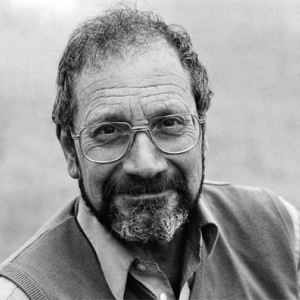
Robin Mills went to West Bexington, Dorset, to meet Michael Michaud. This is his story.
“I was born in 1950 in Maine, USA, which is closer to the UK than it is to California. I always wanted to get away from Maine, but not too far away, which is maybe why I finished up here rather than California. My background, like so many Americans, is multicultural; my mother was Lebanese, and my father French Canadian. I was brought up literally in the backwoods of Maine, which is a paper-making state, so a lot of it’s very heavily wooded. My home town was called East Millinocket, which is really just a clearing in the woods, with a paper mill where much of the population of 2,500 worked. Most of my mates back then were from multicultural backgrounds too, they were Italians, Albanians, Czechs, French Canadians, Greeks, and many of them had at least one grandparent whose English they couldn’t understand. We were only the second generation born in the States, so we had strong cultural connections to the old country, and I think to an extent that fact defines me. I’m not only an immigrant to this country, but my family were immigrants back home.
That background really has shaped me I suppose, because one thing about immigrants is that they go to a new country to better themselves, to try to make a success of their lives. That’s true here in England; they don’t come here to be poor, generally they come here to work and be successful. My grandparents immigrated to improve their situation, and although they didn’t finish school, and their English was poor, my parents had a good education, and then many of my generation of the family went to university. So a bit of that upward mobility and aspiration has filtered through from my multicultural roots.
I did a Bachelors degree in agriculture, and then spent 2 years in Central America with the Peace Corps, which was hugely enjoyable; again, a cross cultural experience, and then I did a Masters degree at the University of Florida, followed by a PhD in Texas, both in agriculture. I suppose that’s quite odd really, because I have no agricultural background, and my parents were what you’d call blue collar, working class immigrants. Originally I was doing biology, but then I discovered agriculture, and soon realised it was just applied biology. I also thought I’d like to help save the world. Studying agriculture seemed to fit with that ambition because it would enable me to go to the third world and help them grow more food. So really I’ve been in agriculture, one way or another, since the 1970’s, and I’ve loved it. It’s been a good career for me; we’ve never got rich, but we’ve always been employed, and that’s been important to us. There’s something fundamental about growing things, and I know it’s a cliché, but I just love whatever it is about sowing seeds, knowing I’m going to harvest a crop a few months later, and I just don’t know why everybody doesn’t do it. It’s a great thrill that hasn’t waned over the 30-odd years I’ve been doing it, but there is a lot of work, which is hard, so we are now part-time producers because you can’t put in those kinds of hours all your life.
We came here, to West Bexington, about 20 years ago. Joy and I met when we were both working for PhD’s in agriculture; I was at university in Texas and she was at Aberystwyth. We met at a forage conference in Kentucky in 1980, conducted a transatlantic romance, and then got married and went to work in the Caribbean. We both worked at the University of the Virgin Islands, where I was in forage research, and Joy was an agricultural advisor. We were there for 5 years, saved up quite a bit of money, and then bought the house and land here and moved back. Our son Ben was born while we were still in the Caribbean and daughter Martha was born when we moved back. Joy’s from West Bexington, her family’s here and this is the village she was brought up in.
One thing I’d always wanted to do, being a child of the sixties, was to grow my own food, to have my own place and be self-sufficient. Joy didn’t, having been brought up on a farm and market garden, and she knew exactly how much hard work was involved. However, my idealism prevailed, and she indulged me: and I think that if I had the opportunity to do it all again I probably wouldn’t. We started out growing vegetables organically, just standard vegetables like cabbages and potatoes, but we found we couldn’t make it pay. We didn’t really have enough land, and it’s too wet. So after about 10 years we were going to give it up. I was doing inspections for the Soil Association to help with the income, and Joy was doing photography successfully at the time, and we thought let’s just give the vegetable growing up. Then we got together with an American friend in London who suggested we try growing chilli peppers and sell them by post. She was already importing dried peppers from the States, but was having trouble sourcing fresh peppers in this country. So we thought we’d give it one last try, and although our first couple of years didn’t work, after that it took off, and we’ve been doing it successfully for 12 years now. The crops are all in polytunnels and greenhouses, and with some help at weekends from school students, Joy and I have been able to keep our work input part-time. We also are involved with breeding new varieties and selling seeds, one of which is Dorset Naga, which currently ranks as one of the hottest chilli varieties in the world.
Living in Britain I began to realise how culturally diverse the population actually was, and although that’s perhaps not immediately apparent in West Dorset, with my background it really interested me. I was lecturing at Bournemouth University, and doing the Soil Association inspections, so my work brought me into contact with people from all over the world. The Metropolitan Borough of Sandwell, a midlands-based local authority, had commissioned the Soil Association and Bournemouth University as consultants to their local health trust to research urban food production, which they wanted to promote. The idea was to encourage people to get out and take more exercise by growing their own vegetables, and of course improve their health by eating them. So they asked me to liaise between the local allotment holders and the consultants. Now Sandwell, at that time had, and probably still does, the largest per capita percentage of ethnic minorities in the population of anywhere in the UK, outside of London. I got up there, after living in West Dorset for 8 years, and I just couldn’t believe it. When I talked to the allotment holders, who were Jamaicans, Indians, Pakistanis, and Bangladeshis, it was like I was home again. It was so exciting, as though the multicultural side of me, lying dormant all those years, had risen again. We got the report finished, but my curiosity made me think I really had to pursue this some more. I managed to get a grant from the Jane Grigson Trust, and I went all over the UK photographing and interviewing immigrant vegetable growers, writing articles and giving talks about them. I visited some of the growers many times over several years, becoming good friends with them and their families. One man, a Punjabi, I had to revisit several times just to try and make sense of his English, a weird combination of Punjabi and Brummie. The point of it all to me, and in the articles I’ve written about the project, is that it’s ok, we are a multicultural community, and there’s nothing to be afraid of: I’m an immigrant too. I also learnt that all these different immigrant communities like their own type of chilli peppers, which you can find in their local shops and markets, and that’s helped us develop our own varieties to supply those markets.
There’s nowhere you can live that’s perfect, but coming back here to West Dorset to live has been close. Our kids Ben and Martha have been to the local schools, and are both now at Bristol University, so we’re really proud of them. As a local town, Bridport is great on so many levels, especially community projects, everybody chipping in to try and make it a better place to live. My Dad was very strong on that kind of thing, and I am too. It was love at first sight when I came here to live, and I still love it.”
Up Front 06/10
Whether we are working in a business or dealing with them as consumers, we are all likely to have opinions on how they should be run. We may even have opinions on how a business affects the community it serves, how its practices affect other businesses in the area, or even what is ethically or morally right for the betterment of the world at large. Over the years I have come across a huge amount of incredibly hard-working, honourable people, who have strived to scrape a living offering products and services to the community in which they live. Many small businesses have struggled valiantly through economic upheaval, ridiculous bureaucracy and the effects of being squeezed by larger companies. I have also come across some thoroughly dishonourable people – but that’s another story. However, it is the all powerful corporate giants that usually make the news, often as a result of the use of marketing techniques such as a ‘loss leader’, the practise of under-pricing some items to increase trade in others. It’s easy to be cynical about what motivates large companies to launch marketing initiatives and it’s laudable that many have said they won’t use loss leader techniques with alcohol for the coming World Cup. But it’s hard to fully appreciate one supermarket’s recent decision to sell cancer treatment drugs at cost price. According to the company, they hope to get other supermarket chains to follow suit, and make cancer treatment available to more people. The fact that they are now offering a drug used to treat lung cancer, at more than £2,000 for thirty tablets, will be applauded, especially by those who can afford it, and we can only hope the cost comes down further. But I can’t help feeling it would make this particular loss leader more palatable if they also stopped selling tobacco.
Eva Harvey
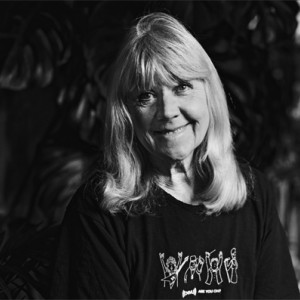
Robin Mills went to Corscombe, West Dorset to meet Eva Harvey. This is her story.
“My memories of wartime Weymouth are quite vivid, where I lived as a child. We were on Wyke Road, and I can remember bombed houses, and American soldiers giving my sister and me chewing gum. My mother worked on the buses, she was a clippie, and I didn’t really know my father, who was in the army. By the time I was 4, I’d had all the diseases around at the time; scarlet fever, pneumonia, diphtheria. I can remember being in hospital, in a cot, looking through the bars waiting for the bedtime sweetie to come round. My mother later married a bus driver, my stepfather, who was a really nice man. They had three boys together, so I’ve got three half-brothers.
Mum’s family came from Wareham, where they had a greengrocer and florist’s shop next to the Black Bear, and one of the joys of my young life was going to stay there. I’d help with wiring the flowers to make the wreaths, and go into the woods to collect moss. We were treated like grown-ups, never being told when to go to bed, always having fun; they’d take us cycling to Arne or Corfe Castle. My parents moved around a lot, always trying to better their lot, which meant I went to seven different junior schools. Then I passed a scholarship and got into Bishop Fox’s school in Taunton as a boarder. I was always a bit short of things I needed, like socks, my parents being rather hard up, but I did enjoy my two years there, and I think it did me quite a lot of good. Then my parents moved to Yeovil, and I went to Yeovil High School where I did my GCE’s. I would have loved to do A levels and go to University, but we were a big family and money was short; we all had to work. Looking back, I wouldn’t change any of my life, but at the time I was quite disappointed. The head teacher at my school actually offered to pay my Mum £1 a week to allow me to stay on, but it wasn’t to be. Then someone at my Youth Club mentioned a job going in the Borough Surveyor’s drawing office. So I just went along, and was offered the job, simple as that. I was tracing plans, and doing lots of lettering, which was all done by hand of course in those days. Women had to wear skirts and nylons to work then, even when we were out on site; when the fashion for thick tights came in, I leapt into those – no more chilblains in winter.
I’m constantly aware of how wonderful a time it was to be growing up. The music, which was so central to our lives, seemed to happen so suddenly, with Elvis, and rock and roll, and I’m still a huge fan; I’ve got all Bob Dylan’s music, even recordings of all his Theme Time radio shows. Fashion designers like Mary Quant, and Foale and Tuffin, were so important to our culture, the culture of young people. You could only buy white tee-shirts then, and I was so excited to get my first tee-shirt with a design on it, the first Rolling Stones one, but that wasn’t until 1966. When Ray and I started going out, he was an apprentice at Westlands. We’d all meet up at the Cadena Café in Yeovil, but one of our friends had a flat in West Bay, on Pier Terrace. He had the most wonderful collection of jazz records, and soon it became the obsession for all of us – to get to West Bay for the weekend. If I couldn’t get a lift there, I’d catch the train down. My mother was disapproving, I think she thought I was going out with all these chaps, but it was just a lovely crowd of people. West Bay was a working port then, there were cargo boats, from Germany, and Norway, and we’d go to parties on board. We had a skiffle group, and we played at the George, the Bridport Arms, and the New Inn at Eype. I didn’t play, but always went along for the ride, and we’d get invited to play at parties. We would spend all day on the beach; thunderstorms were great, everybody wanted to swim in a thunderstorm. I remember one weekend when there were about 30 people sleeping in that tiny flat; on the stairs, under the table, it was crazy. One of those people was Stu, Ian Stewart the pianist, who became a great friend; he was known as the 6th Rolling Stone. Word was beginning to spread, through people like him, of the West Dorset music scene, so we got to know more and more musicians.
Ray and I got married on Boxing Day 1959, at Corscombe Church – and we’ve just celebrated our 50th wedding anniversary. Mother was living in Corscombe at that time, and she knew of a rather dilapidated cottage with four rooms. Being next to the Fox Inn, of course Ray saw the potential. It had been quite a big house but there’d been a fire, and then someone had turned it into a bungalow, so it really wasn’t very inviting. Anyway, it came with an acre and a little stream ran through it, and that gave us lots of scope to turn it into something nice. Then we managed to buy the adjoining four acre field with an old stone farm building, and that really made the place; we eventually converted the building into a house for our son Saul and his family.
I worked in the Borough Surveyors for 5 years, and then a job came up in the planning department. It was amazing the responsibility they gave me in those days. They sent me to Wincanton to plan a bypass route: I walked across fields making notes and sketches, on my own, and there it now is, the Wincanton bypass. It was me who decided where it went! I worked there for 5 years, until Saul was born in 1966. I enjoyed it all, and the fact that I left school early wasn’t bad for me at all because I was determined to keep learning all the time, and went to evening classes, doing geology, archaeology, French, Tai Chi, pottery. I’m still like that, I listen to Radio 4 and read a lot, and every day I hope to learn something new.
Originally we got into the stone business through a friend who was extracting ham stone from Ham Hill, but needed somewhere to saw it up. We got permission to install the equipment here, and over 20 years or so the business grew; we got our own quarry on Ham Hill in 1982, which had been unused for 100 years. It’s such a beautiful place, the biggest Iron Age hill fort in Britain. We were quarrying, sawing and selling ham stone, and then got into building houses. I didn’t start the lettering until about 1984, although I still feel like a beginner. It was a natural progression from the work in drawing offices, but I still use my guide for the proportions of the letters from my school art classes in Yeovil. Ray and I were so busy we sometimes even took separate holidays, but were still very involved with music. The house was always full of musicians at weekends; Stu and his friends, like Alexis Korner and Charlie Watts, would play at Eype and other places, and in the early ‘80s it took off, with bands like Diz and the Doormen, Juice on the Loose, the Balham Alligators, Rocket 88, and Blues’n Trouble, at venues like Evershot Village Hall, West Mead at Bridport, and the Bell Inn at Ash. We were putting the musicians up here and feeding them, so being surrounded by musicians, music, and instruments obviously had a big influence on daughter Polly. She was writing songs right from her early teens, and it fills me with pride to think what she and Saul have achieved in their lives.
It was always our ambition to have our own place on Pier Terrace in West Bay, and 15 years ago we managed to buy a flat there. So we still have our weekends away, and one day we’ll manage to spend 2 nights there instead of just one, when we’re not so busy. But then I’ve always been busy at what I love; rock, and stone, that’s me.”
Up Front 05/10
Sitting in a family restaurant in North Devon recently I noticed a CCTV camera in the corner of the room. As it was just above where my children were sitting I pointed it out to them, joking that it was there to ensure they used their knives and forks properly. Their immediate and predictable reaction was to wave at the camera. Earlier we had seen a sign at the door saying ‘Well behaved children welcome’. As I paid the bill, I was able to watch the streamed images of my children polishing off the last of their ice cream. Disconcerting as they are, the camera and its images are a part of life for future generations, but modern technology, using sound bites, tweets, texts and grainy videos, can obviously only highlight a fraction of an event or thought process. Which is what makes a new software system, currently being researched by representatives from five European countries, even more disconcerting. The software is being designed to predict the actions of people viewed on CCTV. It will track their movement; monitor their behaviour; and, in the case of high quality footage taken at close quarters, it will detect changes in facial expression. The hope is that it will be able to determine, by motion and expression, whether a crime may have been, or may be about to be committed. Researchers are hoping the system will allow a virtual 3D representation of an event to be created, giving operators the opportunity to predict, in real time, what might happen next. Obviously there will be huge benefits and the goal of the project is to help stop crime, prevent injuries and even save lives, but technological advances tend to have many uses. How long before the CCTV operator comes to the table to point out that the children are about to put too much salt on their chips?
Sir Neville Marriner
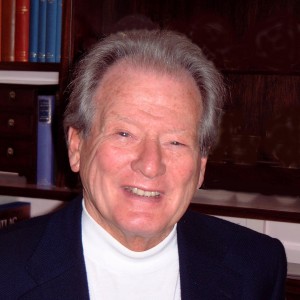
Sir Neville Marriner talks to Fergus Byrne
Sir Neville Marriner is one of those rare men who seem to utterly defy the ageing process. When I met him in April he was about to celebrate his eighty-sixth birthday and his attitude to life was like that of a man half his age. As we strolled around his Somerset home he enthused about his family, his career as a conductor and his collection of contemporary art, with an obviously genuine modesty and an engaging charm.
He cites his home and the county he has chosen to live in, as a major re-energising factor that allows him to travel the world, working at a pace that most of us would find impossible. We’re only in Spring and he rattles off a list of locations where he has conducted this year already – Vienna, Berlin, Paris, Tokyo and Los Angeles – “and of course we spent some time in Australia also” he says as an afterthought. According to his wife Molly, they have been on five continents in five months. He is amused by a booking in the diary for a month in Tokyo in 2012 “I think there’s some fascination about geriatric conductors,” he laughs. “To imagine that at this great age I might still be able to stand up and do a month’s work in some foreign parts is hard to believe”.
Yet for all his high-profile conducting work and travel to exotic locations, he still manages to make time for local engagements. He is proud of his local activities saying, “I’ve conducted the local orchestra in Axminster and one in Seaton and I’m conducting the chorus in Axminster this Summer.” He points out that “being here you don’t get any of the professional pressures, don’t even get a decent signal on the mobile phone, so it’s quite peaceful. It means I can do most of my preparations for concerts and things down here.”
An annual cricket match between Chardstock Cricket Club, of which he is President, and the Academy of St. Martin in the Fields orchestra, is also a highlight of his year. He is also patron and a great supporter of the Beaminster Festival. This year he will discuss his long career in music and the story behind the legendary Academy of St. Martin in the Fields orchestra with Christian Tyler, the journalist and author, whose book Making Music – Neville Marriner and the Academy of St. Martin in the Fields, has recently been published. It should be a discussion that anyone who has read the book or is familiar with Sir Neville’s charm and infectious sense of humour will relish.
Born in Lincoln, the son of a builder who had a passion for music, he remembers live music as a constant in his youth. “Before I ever picked up an instrument at all I don’t think I went to bed without music going on around the house.” He remembers his father as a strong Methodist who played piano and violin, “rather badly” and conducted the church choirs. His father bought him his first violin and taught him until he was about 11, by which time Sir Neville was winning medals at local music competitions. At sixteen he got a scholarship to the Royal College of Music as a violin player. After a short spell in the army, he went to the Conservatoire in Paris, where he admits he may have learned more about life than he did about playing the violin.
Although he never intended to be anything other than a violin player, his conducting career was to change his life completely. He recalls meeting a lady who used to sign his cheques when he did work for the BBC, earlier in his career. She remembered how she wrote them out for four guineas, five guineas, eight, twelve, fifteen and twenty and then said ‘I don’t know if you ever got beyond twenty!’ Contrast this with what Sir Neville describes as his ‘fantasy life’ when he was first flown over to California to become musical director of the Los Angeles Chamber Orchestra. “I remember thinking how very extravagant it was to be sent on an aeroplane,” he says. “When we got there we were met by a limousine about as long as a bus and driven into this palatial establishment in Beverley Hills. I remember it was evening time and there were blue lights over the swimming pool and recorded music coming out of the trees. And the house was completely made of glass. It was where one of the Marx Brothers had lived I think. There were all sorts of strange film people in the houses around us.” He recalls how his next-door neighbour’s monkey got loose one day and was chased through the garden by assorted gardeners, a little girl and a butler, fully clothed in butlers uniform.
Last year Sir Neville and his fellow musicians in the Academy of St. Martin in the Fields orchestra celebrated 50 years together. Their story, and that of Sir Neville’s extraordinary life, are well documented and celebrated in various publications, as well as in an excellent book by his daughter Susie Harries and her husband Merion, and now in a new book by Christian Tyler.
However, the story carries on. His son Andrew is principal clarinet in the London Symphony Orchestra and as Sir Neville puts it, “He has a crazier life than me! Today he is in Dubai for two concerts and then the day after tomorrow he is in Bombay – it’s quite extraordinary to be able to do that.” Sir Neville was recently commissioned by the 76-year-old billionaire American composer Gordon Getty to conduct a piece of music he had written. “He flew over in his private plane with his guests for the recording and afterwards gave a grand dinner party in a hotel for everyone involved. We got past the first course and suddenly he called ‘silence, silence, silence…’ and he stood up and started singing an aria from one of the better known Italian operas. So he sat down and we all clapped. That was all fine until then he stood up and did it again before the pudding!”
One suspects that Sir Neville Marriner’s ability to see and enjoy humour throughout his life has armed him with endless anecdotes from what one might call the classical equivalent of a rock and roll lifestyle. Gentler perhaps, compared to more modern excesses, but like the music it presented, it has more depth, texture and substance than much of what we hear today.
Rosie Giles
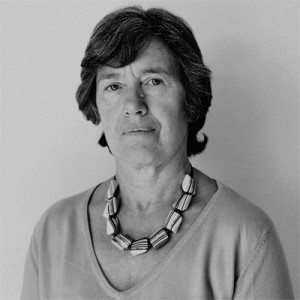
Julia Mear met Rosie Giles at her home by the sea in Seaton, Devon. This is Rosie’s story:
“I was Farmer Giles’ daughter, born in Kingsbridge, Devon in 1949. When I was seven we moved to a farm in Clyst St Mary – father was told he had three months to live – he had asthma and we lived near a granite quarry in Kingsbridge. We sold up and moved – my father lived for another 30 years. We lived on a mixed farm, mum used to take in B&Bs to make ends meet – it was just after the war and times were hard – there were four children to feed then.
I attended St Margaret’s School in Exeter, I was not bright – I suffered from dyslexia. My Headteacher, Miss Morford encouraged me to work hard at my O’levels and go to college. I had to take my English O’level twice and had extra English lessons to help me. I went off to Worcester College without taking an A’level. I studied Primary Education specialising in Rural Science and Maths. In 1970 I became a teacher; my first job was in the largest infant school in England. Chantry Infant School, Luton, had 750 children – 90 new reception children every term. I taught a reception class of 34 children, very few could speak English. The first word I tried to teach my class was ‘toilet’. I lived in a block of high rise flats in Luton and whilst there I had a tough experience – my neighbour shot himself and then threatened to kill me, so I was put under police protection. I wasn’t sleeping, couldn’t do my job properly and was given tablets by my doctor. Because of this experience I changed my life – I was in a terrible state and on one occasion I made a promise to God: ‘I promise Lord if you can help me through this I will serve you for the rest of my life’. From here on I became a committed Christian and never took another tablet again.
After three years at Chantry, I went to another school in rural Bedfordshire – Westoning Primary School near Flitwick. Only 180 children, it was a complete contrast, there were lots of farming children – I remember playground duty one day thinking ‘it’s like playing at being school’. I was there until 1977, then I came down to teach at Charmouth, Dorset from 1978-1984. I was head of Infants – it was the old Charmouth School then – there was one class in the school and four temporary classrooms with about 90 children. I lived in Axminster and got involved in church work at the Baptist Church in Kilmington.
In November 1983 I applied for the Headship at Marshwood School, they’d wanted a man, but I got the job and started in April 1984. There were 48 children in a very old run down building – the windows leaked, and when the wind blew we had to move the children two metres away from the wall, it was so cold. After two years of being there a boy pulled a radiator off the wall and we found asbestos – the school was condemned. Half the school was sealed off and we had to use temporary classrooms. Mobile phones hadn’t been invented then, I had no telephone for three weeks, so we were cut off from the outside world – this wouldn’t be allowed today. The school is sited in a very exposed area and the temporary classrooms rocked in the wind. One day was so stormy and the children were quite scared, so I filled up all the cracks in the windows with washing up liquid and we had a day of bubbles – the children loved it. The building work took nine months but at the end of it we had three lovely classrooms with new central heating and windows.
One day a child said “Miss Giles, there’s a pig in the playground!” so myself and Mrs Passmore were seen chasing it up the road with a broom in hand. We’ve had straying pigs and ducks – once back in 1990 somebody dropped three little puppies in a box at our school – we found a local farmer to take them on. There was a time when life was getting tough, the children were getting bored and fed up – I changed my methods, giving out lots of well dones and stickers. The following year the children took off incredibly – that’s when I learnt to praise rather than criticise. Just to praise children, even those struggling are good at something and it’s noticing those little somethings that builds up their self-esteem. We learnt to laugh with each other rather than at each other. I am known for my inability to sing – the children would put their hands over their ears and ask me to stop. There was a very strong Christian ethos, our school motto was ‘Love Lord your God with all your heart, soul and mind, and your neighbour as you would yourself’.
In 1994 I went along to a Christian Head’s conference where they asked if anyone was willing to run conferences in Africa. I went to Uganda that summer during the school holidays. I thought in naivety that heads all around the world had a similar lifestyle to mine – how wrong I was. Often schools had no desks, chairs, equipment and leaking roofs with often 90 children using five books between them. One school had a roof made out of banana leaves. When I returned to Marshwood I talked to the children about it and we raised £1500 for them to have a new roof.
Our numbers began to increase and we ran out of teaching space in 2000. We needed a new classroom but there was nowhere to build one. I approached the PCC (Parochial Church Council) and asked if we could use the church and it was agreed. We removed the pews, replaced them with chairs, a new floor with carpet, put in heating and it was done. The children have lessons in there every day and then on Sundays it is converted back into a church with padded chairs rather than hard old pews. We were the first school in the country to move into a church. Sometimes we have to give up the classroom for a funeral but the church try and organise them from 2.30pm onwards to avoid too much disruption. We’ve had Christmas parties there with music blasting out – it has been a fantastic improvement on the school and village life – it is used for lots of functions now. I loved being the head teacher there – the staff, children and parents were always fantastic and so supportive. In 2002 I was put forward for a teaching award and received the Teaching Leadership Trust Award for School Leadership in Primary Schools for South England. For the last two years I have been a judge on these teaching awards – it has been fantastic to see encouraged and enthused teachers. I also moved from Axminster to Seaton in 2002 – this is my forever home now.
Numbers at Marshwood continued to increase again and again, so in 2007 I suggested we use the roof space of the school building to create another classroom. Again, it was approved and we now have a lovely fourth classroom which was opened last year just before I left. We also looked into conservation of energy ideas and now have a wind turbine – the first in Dorset. It cost £17,000, of which we paid £1,000, thanks to all the grants we were able to receive, together with the help and support of the governors and PFA.
I continued my travels to other parts of Africa, but Uganda had warmed my heart. I decided to finish at Marshwood School last year when I was 60 and have been in Uganda since October 2009, I returned in March this year. Primary education is now free there but many families can’t afford to let their children go because they are needed to work at home. I started writing a child protection policy which included child sacrifice, child abuse and girl defilement. In one district 500 girls were rape defiled by their teacher in one year. The children are desperate to go to school as they know an education can help them.
My time at Marshwood School was very special to me. There were 68 children there when I left and all were precious to me. There are children in the school now whose great grandparents were taught there and about 20% of the children there now, were children whose parents I taught either at Charmouth or Marshwood. I always remember the story of the boy and the starfish on the seafront: ‘A boy was picking up starfish on the beach and throwing them back into the sea, someone came along and said why are you bothering to do that it won’t make a difference. The boy said I can’t change the world but I can make a difference to one or two’.”
Up Front 04/10
According to many reports, typical characteristics of a person suffering a mid-life crises will include the purchase of unusual or expensive items such as motorbikes, boats or sports cars. Some will even get themselves a tattoo or an unusual body piercing. Apparently, sufferers are also likely to take more interest in their appearance, attempting to cover up baldness or wear clothes that might be more appropriate to somebody younger. In an attempt to claw back some of their missing youth, people have even been known to take up new sports or ‘youthful’ hobbies. In my case I took up tennis, rollerblading, surfing and real tennis, since I realised I was only going to get hurt if I tried to play football with anyone older than a toddler. I managed to avoid the fast cars, boats and bikes by not being able to afford them, and never really fancied a tattoo. However there may still be time to acquire a new adornment. According to a survey undertaken by researchers at the University of Kent, I could extend the length of my ‘mid-life’ depending on who I listen to or what country I live in. The survey asked 40,000 people in 21 countries, when does ‘youth’ end and ‘old age’ begin? For the UK, average response to this question was that, youth ends in one’s mid-thirties and old age begins from the end of one’s fifties. However on average, the youngest respondents (15 to 24-year old) judged that youth ends at 28 and old age starts from 55, whereas the oldest age group (80 and older) judged that youth ends after 42 and old age starts at 67. In Cyprus, the average perception of the end of youth and start of old age was over 52 and 67 respectively. So the good news for anyone thinking they are too old for fast cars, boats, bikes or extreme knitting is to listen to your elders, or go and live in Cyprus – or both, as the elders will probably have already moved there.
Alistair Chisholm
Robin Mills went to Dorchester to meet Town Crier Alistair Chisholm. This is his story.
“I was born in Surbiton, Surrey, the archetypal suburb, famed location for the TV series The Good Life. My father came from Aberdeen, and worked for most of his life at the Bank of Scotland in the City. This of course was in the “old days” of banking, and he would be spinning in his grave given what’s happened recently. Mother was from South Africa, and was in London to take up a singing scholarship when they met.
My father didn’t earn a fortune, but because he felt he’d missed out somewhat in his own education, somehow found the money to send my brother and me to King’s College School, Wimbledon, although it nearly crippled him financially. I enjoyed my time there, but even then I was uneasy with the feeling that it was a privileged position to be in. I spent most of my time rowing, and left with pretty mediocre academic qualifications.
When I was 13, my father died, which was of course a devastating thing to happen to a family. Two years later my sister left home to get married, my brother went abroad to work, and I was at home with my mother. Soon after I left school, I joined Voluntary Service Overseas and went to Sarawak, Borneo, teaching in a secondary school at the very tender age of 19. I was there 18 months or so, but managed to study, so that when I came home I got a place at Queens University, Belfast, reading geography. I was also doing English, and I can remember listening to Seamus Heaney teaching poetry, spending a whole lecture on maybe one line, and being amazed and fascinated by him. I wish I’d recorded it. The Troubles were in full swing by the time I left Belfast.
I spent 4 years or so teaching in West Bromwich after University, and then I went on a trip to South Africa with my mother, visiting her many relatives. It was there I met my first wife Kate, who then came to England with me, and we set up home in West London. Then I saw a job advertised in London for a tour manager. I thought it would involve ‘managing tours’, and might suit my interest in geography, but in reality found myself at the front of a busload of 50 Americans heading for Hampton Court Palace, some of whom knew a great deal more about its history than I did. However, as the tours went from one major centre of English history to the next, I very soon picked up the historical connections between them all, so that as my interest and knowledge grew I was able to make the tours rather more enlightening. To complete the tours in London, I needed a Blue Badge registration, which incidentally I had to work harder to get than anything else I’d done, a bit like the London cabby’s knowledge. Having achieved that, I began to enjoy the work more now and I really got to know London properly.
The down side to the work was perhaps situations like taking a group round somewhere as fabulous as Westminster Abbey, truly a focal point of English history, feeling a bit like toothpaste being squeezed out of a tube. You were squashed in with all the other parties, trying to make yourself heard above the Japanese, the Swedish, the German guides all trying to make themselves heard, driving your group along like a lot of unwilling sheep. It was during this time my family was growing; we had two boys, and we felt the suburbs of London weren’t the best place to bring them up. I knew the New Forest, and I knew Devon and Cornwall, but I didn’t know the bit in between. Having come to Dorset, like so many people I was completely and utterly hooked on the place. That would be about 1985, and we bought a small cottage in Buckland Newton, where our daughter Nicola was born.
We were soon very involved in village life; as a newcomer one soon gets asked, and I think it’s great. Dorset villages are probably no different to anywhere else, but community involvement is at the heart. I was part-time teaching, and then when we moved to just outside Dorchester, I started to get really interested in the history of the town. You’d hear a lot about Hardy, Judge Jefferies, the Tolpuddle Martyrs, the Roman history, Maiden Castle, etc, and I began to realise just how absolutely thick with heritage the place really was. And yet nobody really seemed to be taking it seriously. So I decided to have a go at tours again, bought a minibus and set up the Thomas Hardy Explorer tours. I’d recite bits of Hardy’s writing as well as showing the main sites like the birthplace and Max Gate. I was also realising just how much Dorchester had to offer in present-day resources; for example the direct rail links with both London and Bristol via two stations, a fact which, if one is looking for sustainable assets, is quite a starting point. And then there’s Prince Charles’ choice of Dorchester as the place to develop his vision of urban development at Poundbury. So I was including these facts in the tours I was organising, so that they contained a unique mix of historical and present-day interest.
In 1996, the Dorchester Town Crier Bob Walker died, and I thought I might have a go as his replacement. So I had an audition with the Town Council, got the job, and was given £200 to get ‘kitted up’: no qualifications or training necessary. It’s a role which comes from centuries ago when few people could read, and it was the only way information from the authorities, local news, and all matters of importance could be broadcast. These days, a Town Crier needs to be able to do the job with suitable pomp and decorum if the occasion demands it, but it’s ok to be light-hearted sometimes; you need quite a bit of showmanship, but above all you need to be passionate about the place you represent. I also think it’s important to be independent of the local authority. I’m not paid to be Town Crier, so I’m free to criticise authority if I want. I try to help chivvy things along, such as Dorchester’s absolutely fabulous skate-park, which has finally come about after 12 years of wrangle.
In 2000 my wife Kate and I split up, and I became very depressed. It was a condition I’d struggled with before, and my Presbyterian upbringing made me think I should be able to snap out of it on my own. I gave up everything, including being Town Crier, and to all intents and purposes disappeared. But it was another Kate, Kate Hebditch, who helped rescue me: she visited me in Puddletown Forest where I was living in my van, and now we’ve been together for 5 years. This, of course, meant that when Kate became Mayor of Dorchester, I became the Mayoress, which was very amusing. I owe a huge debt to the many people who helped me get back on my feet, and I now take medication which enables me to be the person I want to be. I have no problem with that, and my experience has taught me that with this awful but very common condition there are many ways you can get help.
With my tours, and as Town Crier, maybe I’m a link with the past; if we’re ignorant of the past we go blindly into the future. I started out volunteering with VSO, and in a way I’ve never stopped volunteering. I hope some of the projects I’ve given my time to have helped restore Dorchester as the county town. I’ve been involved with promoting Dorchester in everything I’ve done. Dorchester now has a Business Improvement District (the only town in Dorset at present), and I’m now part of a community interest company called ‘Promote Dorchester’ to help market both the town and the great number and variety of events run by all sectors of the community. A community that works together can be incredibly powerful, and I’m proud to play my part in that ‘togetherness’.”