

Sunday, March 22, 2026
Home Blog Page 102

Richard Bertinet

Richard Bertinet may prove to be a great advertisement for the boy scouts. One of the first nuggets of wisdom he passes on to me about his cooking style is the need to be prepared. “It makes it easier to just sit down and enjoy your food” he says. “Cooking is only a small bit of it. It is the preparation of all your ingredients – the cooking part, if you look at it, is very simple stuff. The preparation is what takes time. I believe it is a bit like winning the 100 metres, your race will last 10 seconds if you are very good, but your preparation will last two or three years.”

Owner of The Bertinet Bakery and The Bertinet Kitchen in Bath, Richard came to prominence when he published his first book Dough in 2005. A hugely successful book on the subject of making bread, it won numerous awards including the James Beard Award for Best Book (Baking & Deserts) and the Julia Child Award for Best First Book. Richard exploded the myth that baking bread must be a necessarily daunting and time-consuming task and showed how, having a quick and easy bread baking in the oven while dinner is cooking, is just as natural a part of preparing the meal as opening a bottle of wine. He followed up with Crust in 2007 which won World Gourmand Award for Best UK Book (Baking).

He has just launched a new organic bread range which comprises more than a dozen breads. They will be available in London’s Selfridges Food Hall and in Riverford Organic delivery boxes in franchises in much of the South West and across Wales. His bread will also be supplied to restaurants such as Angela Hartnett at the York & Albany, Tom Norrington Davies at Great Queen Street and many other restaurants and delicatessens in London, Cardiff and the South West. Speaking about the launch of the new range Richard says, “I grew up in a culture where wonderful bread was something everyone would buy from their local bakery every day, and spent the past seven years seeing the extraordinary response to my books and bread classes from people discovering the satisfaction of creating their own bread. Now I am on a mission to make great bread available to everyone – bread you can trust as much as something you have baked yourself, bread so good you will eat your crusts and use every last crumb.”

However in his early days in the industry Richard wasn’t exactly enamoured with his job. “I really hated it” he tells me. “I started it when I was fourteen and I thought it would be a good idea. But all my friends, they were mechanics or something like that, and on Friday night they would all get a night off. They would all go to a pub or something and I would go to work. So I used to hate my job. And my day off was Monday – where I lived that day it was a ghost town, there was nothing going on. So you sleep during the day, you are always tired and you become Mr Grumpy a bit.”

He remembers how the local bakery tempted him even as a young boy. “I used to peek through the door to see the workmen in the back. And the oven, I was fascinated by it. One day I found myself behind the door and I couldn’t get out again. To buy the bread was one thing but I was always very fascinated with what was going on behind the door. The baker was very proud to open the door and put the bread in the shop, he was like ‘Hey look at me, I’m the baker, I’ve made this bread.’” Richard decided he also wanted to be able to show that pride. “Bread is part of your blood, you learn to work with it. If you care about your job, you get caught in a spiral and you can’t get out of it. I have absolutely no regret. I have moved on since – working the hard way when you are young isn’t bad for you.”

Richard enjoys the social benefits of cooking with family. We talk about our children and he points out the value of time spent sitting around the kitchen table. “We are all in the kitchen, having a bit of fun, a glass of wine” he says. “We get the pleasure of relaxing around food. When your girls are 16 or 17 they will love cooking with you: when they have problems they will be able to share them with you whilst cooking. In the old days that’s what they used to do. People used to sit around the big table, peeling the potatoes and solve problems.” He paints a picture of a genial camaraderie that so often is not found in commercial kitchens.

With pride he tells me that Dough has now been published in 15 countries and in 12 different languages and that there is one lesson he takes with him in whatever he does – simplicity. “I want people to understand, there is nothing complicated about it. There is no French word that people don’t understand. It is giving people a little push, ‘come on, have a go, don’t be scared of it.’”

Dough was soon followed by the also successful Crust, but Richard’s latest book, Cook: in a class of your own with Richard Bertinet takes a slightly different path. Since his cookery school in Bath now attracts pupils from all over the world, it is logical that he should offer some of his extensive knowledge to those that may not be able to attend courses in the West Country. Cook takes Richard’s understanding of the need for simplicity and preparation to a level that many amateur cooks have been crying out for. The book makes no effort to draw readers into complicated recipes but prefers to concentrate on answering the questions that many of us are afraid to ask, whilst at the same time giving hands on advice on simple yet very satisfying kitchen tasks. That’s not to say that Cook isn’t jammed solid full of mouth watering recipes. From Pork fillet stuffed with Gruyere, Sage and Bacon, and Braised Little Gem Lettuce, to Mussels in the Bag with Ginger, Chilli and Lemongrass, the book sheds inspiration from every page and it’s hard not to want to rush to the shops for fresh ingredients. Unless you want to spend the wee hours of the morning pan-frying, beating, battering and buttering it’s best not to take this book to bed with you. Like Richard’s personality it may become slightly addictive.
Denhay Farms

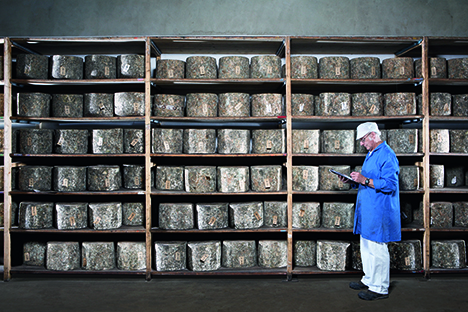
denhayWhen someone shows a particular affinity for, or skill in a chosen hobby or trade, they are often said to have it ‘in their blood’, especially if the same interest can be traced back through their recent ancestry. We have all known of artists, musicians, writers, sportsmen and even politicians who are adept at their chosen art as a result of genes passed down through the generations. Family elders might watch a youngster play the piano or kick a football and sagely comment ‘it’s in his blood you know’. And though it’s common comment for many professions and activities, there are times when the saying just sounds odd. For example to say that George Streatfeild, of Denhay Farms in West Dorset, has cheese in his blood might be a bit of a conversation stopper, but in one sense it is true.
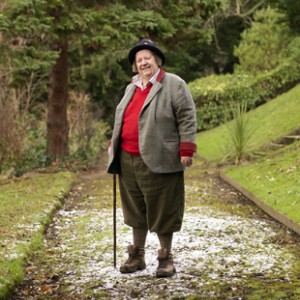
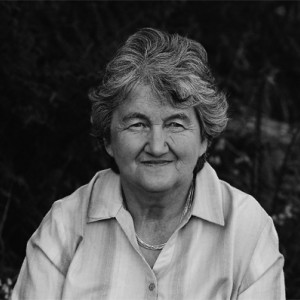
If you go back into the history of cheesemaking at Denhay you will find that ancestral hands were at work long before the current family business was set up by Commander Streatfeild (‘the Commander’) and Alexander Hood in 1952.

In 1927 Major Davies of Leigh House, Chard, the Commander’s father-in-law, started making cheddar and joined the newly formed English Cheddar Cheesemakers’ Federation (ECCF). He made 50 gallons a day into cheddar and was paid 118 shillings a cwt for it at three months of age. This was sold to Sainsburys, who were buying around 30 tons a month at the time.

When in 1952 Streatfeild Hood and Co. sought to set up a farming business, the farm was 250 acres of corn, beef and sheep but mainly bogs, brambles and rabbits. Recognising that West Dorset grows good grass for dairying, three herds of cows were soon up and running and they expanded into Farmhouse Cheddar production, with pigs being kept to use whey, the by-product. It was very much a traditional West Country farming cycle.

Two prefabricated bungalows were bought from London, together with a coal fired boiler. One bungalow was the cheese room and the other the store. All the equipment was found second-hand from around the West Country, and Ken Corbin, their first cheese maker, was employed. Production started on 12th June 1959 with 120 gallons of milk – the whey being fed to the sows outside in arks. Once under way, they made 400 gallons a day, seven days a week. The milk was collected in churns from Denhay’s three herds, together with four neighbouring farms’ milk.

George Streatfield explains how the business was run. “The cheesemaking day was a long one” he says. “Someone – usually the farm student – had to get up at 2.30am to light the coal boiler in order to get the steam ready for Ken Corbin when he arrived at 4.30am. The churns were then tipped into a balance tank before being pumped direct into the vat. Initially there was no pasteurisation. We used the same starter culture (bacteria) every day called Ethel. Ethel would perform well for 6 months. Then she would die – this was caused by a small microbe called a phage. The Commander would have to get into the Landrover and beg, borrow and steal starter of all types from other cheese makers such as Coombe Farm and Horlicks. After a week of this, Ethel would come to life and things returned to normal for another six months.” By-products of the cheese were Farmhouse butter and clotted cream. George says “These were sold locally to shops and caravan sites in and around Bridport, delivered by my mother in the back of her Austin A30 van.”

As the business grew, more herds of cows were started, more pigs fattened to drink the whey and more cheese sold. The Commander died in 1977 and his role was replaced by Philip Crawford, who had already been at Denhay for twelve years, and was previously the pre-college student who lit the boiler at 2.30am! George and his wife Amanda joined the business and he became Philip’s assistant. “1983 was a very poor year for the cheddar market” remembers George. And although Denhay then found itself the largest maker of Traditional Cheese in a shrinking market, the business, now known as Denhay Farms Ltd, has won a raft of awards over the years and become synonymous with the true flavour of Farmhouse Cheddar cheese.

However that is a flavour that George and Amanda Streatfeild, along with many other traditional farmhouse cheddar makers, feel is under threat. As George explains, “Cheddar making has been traced back to 1170. However the father of modern cheddar making was Somerset dairy farmer, Joseph Harding. In 1864 he described the ideal quality of Cheddar as ‘close and firm in texture, yet mellow in character or quality; it is rich with a tendency to melt in the mouth, the flavour full and fine, approaching to that of a hazelnut’.” Expanding on the description George says, “Cheddar, made in the classical way, tends to have a sharp, pungent flavour, often slightly earthy. Its texture is firm, with farmhouse traditional Cheddar being slightly crumbly. Real Cheddar is never ‘soapy’, in texture or mouth-feel.”

George is aware that over the last 30 years there has been a shift in the recipe used by the majority of cheddar makers (large factories); they have included new Helveticus strains of starters. He points out that it has been convenient for large scale creameries to make a different sort of cheddar with distinct flavour notes. Also, these cheeses are softer and more pliable, allowing for efficient cutting and accurate weighing of fixed weight blocks. The result is an instant flavour sometimes called ‘sweet’ and often described as burnt caramel.

It’s a subtle change that is not noticed by all cheese eaters. Using words such as ‘strong’ and ‘vintage’ the average cheese buyer’s palette is being slowly retrained to adapt to a different flavour – a flavour with an instant hit. And although the majority of cheese eaters may not care either way, some prefer and miss the traditional savoury flavour of true cheddar – the slow development in the mouth and the long lingering creamy flavour. “They have not the time to hunt out on the shelf what is what, and are confused by all the claims made on the packaging about provenance and flavour” says George. “They give up and just pick up what easily comes to hand – usually what is on promotion.”

The result is that there is a real danger that we are losing the uniqueness of British Cheddars with their traditional flavours. The remaining makers will either stop production (as did Tower Farms in 2009) or make the same flavour change themselves, to fall in line with new consumer expectations.

However, to try to combat this and create awareness of the subtle differences of flavour and production a group of makers has banded together to launch a brand stamp to help consumers make a more educated choice. They hope to highlight the differences between this classic taste and the modern style of cheddars. Both are good, but the classic style has a savoury emphasis compared to the modern sweeter taste.

Until now, consumers have not had any information as to which style of cheddar they are purchasing and therefore no way of consistently buying the style and flavour they prefer. With the launch of “Protecting the Authentic Taste of Cheddar” stamp, it will be easier to chose between the authentic savoury flavour and the modern style by looking for the stamp or reading the makers’ labels. Other cheese makers that are supporting the stamp are: Bakers of Haselbury Plucknett, Brue Valley Farm, Montgomery’s Cheddar, Westcombe Dairy, Parkham Farms, Quickes’ Traditional, WH Longman and Son (Vale of Camelot) and Farmhouse Cheesemakers Ltd.

It’s early days yet and it may be a while before the stamp has filtered out to packaging, but the concept that the original flavour of an artisan product is being eroded from public consciousness is not new. Neither is the concept of a group of producers gathering together to protect their product. Like his ancestor before him who joined the English Cheddar Cheesemakers’ Federation, George Streatfeild is standing up for a piece of his industry’s history.

To find out about protecting the flavour of farmhouse cheddar visit www.authenticcheddar.co.uk.

Clarissa Dickson Wright

Clarissa Dickson Wright talks to Fergus Byrne

According to Clarissa Dickson Wright, the trouble with cooking and cookery books in this country is the chefs. “People either do things which are totally banal or over complicate things,” she says. “Chefs are rather like lawyers, I mean they complicate things for the sake of complicating – to make themselves appear rather more important than they really are.” As someone who passed her bar exams aged 21, becoming the country’s youngest female barrister, she should know. She is currently ensconced in London’s Goring Hotel talking about her new book Potty: Clarissa’s One Pot Cookbook. I suggest that the title is very her, to which she readily agrees but points out that it is also dedicated to her two and a half-year-old goddaughter and therefore doubly relevant.

After her last two books: Spilling the Beans, a very detailed account of her extraordinary life and, Rifling Through My Drawers, an account of a journey around Britain with yet more stories and anecdotes from her life, Potty, is simply a cookbook. It contains over 100 of her favourite recipes. The hook, for those that aren’t already fans of Clarissa’s no-nonsense style, is that all the recipes in the book can be made in one pot. Its simplicity is what elicits the comments that chefs are the root of the problem with cookery. In Michael Ball’s current TV show Clarissa is cooking from the book and teaching Michael how simple cooking can be. “He’s going ‘it’s so easy’ and I’m going ‘well that’s what cooking should be, really’”.

Clarissa speaks well of Marco Pierre White and Shawn Hill and although perhaps not over enamoured with this country’s chefs in general, she is nonetheless a fan of British food. “It’s excellent!” she says. “In 1748 you had the Venetian ambassador writing about how good English food is and you don’t get much more hedonistic than Venice really, do you?” The ambassador is quoted as saying at the time, ‘The food of the inns of England is the stuff of which Heaven is made’. She remembers how during filming of her very successful TV show, Two Fat Ladies, she and the late Jennifer Paterson went to visit Jamie Oliver’s pub before he became a national name. Having heard that Jennifer loved suckling pig he had gone out and found one and cooked them a magnificent meal. Although she reiterates her disappointment with Jamie for “wasting his opportunity to become a force for good”, she believes he is a good cook and she also has a lot of time for Hugh Fearnley-Whittingstall, though suggests that “the thing with Tesco and the chickens was at best naïve”.

Anyone who has read her autobiography will know her life has been a roller coaster. Brought up in a well to do family with servants and all the trappings of a privileged background, she was nonetheless beaten horribly by an abusive alcoholic father who had been chief surgeon to the royal family. She remembers boarding school and her mother as two refuges from his violent temper. To spite her father, who hated lawyers, she decided to choose that profession and became the youngest woman to be called to the bar. Years later on hearing of her mother’s death, she turned to alcohol and herself became an alcoholic, quickly frittering away her massive inheritance on a lavish lifestyle. She attended a recovery clinic at the end of the eighties and for a time carved a hugely successful career in television. She made three series of Two Fat Ladies with Jennifer Paterson, who died in 1999 while filming the fourth series. It was the kind of scenario that could so easily have plunged her back into alcoholism but instead, she has wonderful memories that she uses to brighten the bad days. For example when the series was dubbed into Japanese the company used a male voiceover for her part. “To make myself laugh when things seem really black” she tells me. “I just go and put on the video of Jennifer and I in Japanese. It is so ridiculous.”

Clarissa Dickson Wright is not one to pull her punches in any situation and over the years her political opinions and support for the Countryside Alliance have put her in the firing line. She was beset with numerous death threats for her stance on hunting and received an absolute discharge when she when taken to court accused of hare coursing in 2009. However, she believes the recent change of government must be good for the country. “I think there are a lot of good people,” she says, referring to the current crop of politicians. “The overall whole seems to be so much better from the countryside point of view and from the British food point of view – and the British farmer’s point of view.” She was never a fan of the Labour party, knowing Tony Blair as ‘Miranda’ during her days at the bar and was not a fan of Jack Straw’s ‘passionate communism’, however, the new government may also change her career. She is currently doing a one-off television programme called The Great British Food Revival and has a few other things in the pipeline. She laughs saying, “I always said when there was a change of government I would get back on the television, and it looks like I was right.”

Though there is a smattering of British classics in Potty, the book carries recipes with a wide range of influences from all around the world. Omelette Stephanie, for example, is credited to Crown Princess Stephanie, the wife of the Austrian Crown Prince Rudolph. Clarissa points out that there have been plays, films, novels and even a ballet written on the theme of the Crown Prince and his role in starting the First World War, but his wife’s recipe for an omelette with raspberries is little known – shocking. Mexican Corn Pudding, Romanian Pork and Puerto Rican Rice sit happily alongside Steak and Kidney Pie and Stuffed Vegetable Marrow and they are complemented by a new twist on the great British breakfast – Bacon and Eggs in a Mug. Potty will be fantastically useful for those dull British winter days when energy levels are low and simplicity is needed to produce a good meal. Clarissa’s wealth of recipe knowledge, combined with a touch of ingenuity in the kitchen, has produced a cookbook that could so easily become more than well-thumbed.

Derek Stevens 08/10

With the end of the U-Boat threat exotic fruits, like bananas and oranges, began to reappear in the shops. Bananas were distributed on an area by area rotation system announced in the local press. A shipment of Seville oranges arrived but most had to be dumped because of the unavailability of sugar for the making of marmalade.The Board of Trade announced a special importation of children’s Wellington boots from Canada. The Board decided that they must first go to smaller retailers in villages and market towns as country children were to have priority.

‘Less Black-out More Eggs’, claimed one press item. With the lifting of black-out restrictions egg producers were able to lengthen periods of artificial light in poultry houses thereby increasing the yield of eggs during the winter months.

To the great delight of us kids ice cream became available again, unseen since the start of the war outside of parties given for children by the American GIs, and that only with permission of the British food authorities. I remember whilst queuing for tickets in the foyer of the Regent cinema in Lyme Regis, news came that a delivery of ice cream was on its way. We switched across to another queue forming to await its arrival and in doing so missed the beginning of the film we had come to see.

As the end of the war began to be seen as only a matter of time, attention began to focus on matters at home. Calls appeared in the press for the closure of Dartmoor Prison, it being considered too ancient to serve as a modern prison. Recently, over sixty years later, the calls for the prison’s closure are being made again.

Also being called into question was the statue of King George III on Weymouth sea front. A letter from the Weymouth Ratepayers Association suggested that the statue had outlived its purpose, had become an eyesore and was a nuisance to the traffic of the town.

“It isn’t an eyesore to everyone.” replied the Town Council. “George III had a lot to do with putting Weymouth on the map as a health resort, and when can it be said that a statue has outlived its purpose?”

“This is a memorial – it is not merely a statue.” said the deputy mayor, who urged that anything to do with Weymouth’s Georgian character should be preserved. It was also pointed out that “The late Thomas Hardy had described the inscription on the statue as a wonderful relic.”

Today it still stands serving as a bus stop.

A fascinating court action reported at the time was that taken by Miss Dora Isabel Sneezum of Lyme Regis against her sisters, Misses Mable, Gladys and Olive Sneezum, all of them in their sixties. She was claiming that reasonable provision for her maintenance should be made out of the estate of her father, formerly a butcher of Bury St Edmonds. The estate being estimated to be about £40,000. Dora had been left an annuity of £50 at the discretion of the trustees, two of her sisters. The discretion allowed them to withhold the annuity if Dora annoyed them. After the death of her mother Dora had been turned out of the Bury St Edmonds home in 1933 and had been given a small allowance by her father who, she claimed, was under the influence of her sisters.

The court was told that Dora did not conform to her family’s habits. She did little in the way of church work and went to art classes. She did not take her father out in the pony trap and did not come down to breakfast at the same time as the others. The gas used to be turned off at 8pm and the family went to bed by candlelight, so if Dora came in after 8 o’clock she could not cook a meal.

“It all reads more like a story by Dickens”, said council. Miss Dora Sneezum told the court she certainly did have scraps with her sisters in younger days when they baited her but had not done anything to justify her father cutting her out of his will.

Hearing that the combined income of the three Sneezum sisters was £2,800 gross Mr Justice Cohen said that unless it was satisfactorily explained, it seemed to him unreasonable to leave the applicant with £50 per year. The hearing was adjourned.

When the court next sat the judge was informed that the parties had come to an accommodation. A satisfied Miss Dora Sneezum thereafter returned to her home in Woodmead Road, Lyme Regis.

In the June issue I wrote about Mr Clifford Fowler, a British POW, and his experience in 1945. It was the time when over 80,000 allied POWs were released from camps and force marched for three months through Germany on the orders of Hitler. Many of them died in the subzero temperatures. I was delighted to receive the following letter from his widow, an edited version of which we reproduce below.

I always read the Marshwood Vale Magazine. What a surprise when read about Cliff Fowler returning home after five years as a POW. He was my husband, he died 8 years ago aged 82. I met him when he came home and was working at the Yonder Hill saw mills near Chard. I was in our small shop one day when some men came in. The shop manager said to one of them “Good to see you again Cliff’” he answered “Good to be home”. I never thought I would marry him one day. He had 5 brothers in the forces and they all came home, but unhappily their mother never lived long enough to see any of them marry.

In Germany Cliff had worked on a farm driving 4 horses. Summers were hot and winters very cold. They used to pinch eggs and milk as they never got any Red Cross parcels and were only given black bread and potato soup, but he said that was better than being in the crowded prison camp.

When he was captured in 1940 he was in a cattle truck for 11 days, nothing to eat and no stops. When they reached the camp they had to spend so much time queuing for food that when he came home he vowed never to queue again. On the long march they found a dead horse. Cliff had been a butcher so he cut out the liver which they ate raw. They knew what it was to be hungry. He became a butcher again back in civvy street and when customers moaned about the meat ration he would tell them he didn’t have meat for five years, except for a raw piece of dead horse.

We had over 50 years of happy marriage, 2 children, 6 grandchildren and 1 great grandson . – Marjorie Fowler, Winsham, Nr Chard.

Yvonne Burton

Julia Mear met Yvonne Burton at her home in Morcombelake, Dorset. This is Yvonne’s story:

“I was born in the farmhouse at Westhay Farm, Stonebarrow, Dorset, in 1943, named Sylvia Yvonne, but I am known as Yvonne. My grandparents and great grandparents, on my mother’s side, farmed Westhay and Stonebarrow Hill between Morcombelake and Charmouth. They grew a lot of wheat on the land and milking must have been very hard work in those days – I remember how cold the cowshed was in winter, all the milking was done by hand. We had some wonderful times at the farm, the farmhouse was a special place full of character, and I always enjoyed visiting my grandparents with my sister and cousins. The house had a very dark passageway that went right through it which was a bit scary, there was no lighting in there but we had great fun exploring. Cooking was done by paraffin stove and on the open fire. There was a wonderful fireplace which you stepped up to with bench seats either side, with large logs burning. You could look right up the chimney and there was always a kettle and cooking pot hanging over the fire on hooks. The outside loo at the bottom of the garden had three different sized seats with a stream running underneath – it was very chilly in the winter. You certainly would not want to sit there and read the paper.

My mother, Marjorie Austin was one of nine children, one of which died at an early age – so she had five sisters and two brothers. Sadly they have all passed away now.

When my grandparents retired to North Chideock, nobody took over Westhay Farm from them, so it was sold to the National Trust. What upset the family most though was that the National Trust demolished the farmhouse. Their excuse was that the builders were sent in to pull down an old barn and pulled down the farmhouse by mistake! At least the farm cottages are still there today.

I grew up in the nearby village of Ryall with my parents and younger sister, Sonia. We went to school at Whitchurch Canonicorum. We had to walk in all weathers as there were no school buses for us then, it was a mile each way and I was only five. My mother and her brothers and sisters must have had a tougher walk to school from Westhay Farm to Charmouth. Every year we would look forward to the local flower show in Whitchurch Canonicorum, making our miniature gardens out of berries and flowers we found in the hedgerows – mum would be fretting about us not eating any of the berries. The flower show was held in the Reading Room but that’s no longer there now. Sonia went on to train as a teacher, she lives in Hereford with her husband Paul and are both now enjoying their retirement.

In 1940 my mother, Marjorie Austin, married my dad, Edward Love, who was a motor mechanic at Star Garage, Morecombelake, everyone called him Ted. The garage later became Frodshams Motors – now that has gone too. The Love family owned the gravel pit on Hardown Hill, Morecombelake, where they sold the gravel they brought down by horse and cart. My grandfather, William Love, and his father were quarrymen and worked the pit – that’s where the name Love Lane originated from as their family lived in the cottages in the lane. Grandad was in India during World War I but returned to the quarry after the war. When the quarries closed he went to work as a baker at Moore’s bakery in Morcombelake – he delivered the bread to all the surrounding villages on a pony and trap.

My great uncle Tom Hansford, who was my grandmother Lillian Love née Hansford’s brother, was in the navy and served on the Iron Duke during the Battle of Jutland in 1916. He used to ferry Admiral Jellicoe ashore, he had a lot of tales to tell about it – I only wish I sat and listened to his stories more as he is gone now.

I left Lyme Regis Senior School in the late fifties and went to work in Charmouth, in the ironmongers shop owned by the Child family. In the sixties they took over Morgans Newsagents where I worked for 39 years. I finished in the late nineties and saw a lot of changes in ownership of this shop over the years. Working in the newsagents, I got to know nearly everyone living in Charmouth but Charmouth has changed so much now, lots of new houses have been built in the last 15 years – there aren’t many people there now that I remember.

When I decided to retire from Morgans I thought it would be great not to be in a routine but it was not so good and I found life boring, so, I went to help out in the shop at Golden Cap Holiday Park, Seatown for two years. Then I went to help out in the card shop, Cards and Things, in Bridport and stayed there for seven years – now I’m definitely retired! I enjoy the quiet life at home and lovely walks with my border collie, Sam – there are so many beautiful walks around here. I cannot persuade my husband, Maurice, to retire – I don’t think he knows what the word means. Maurice has worked as a Plant operator for Axminster Excavators for the last 15 years – he’s 69 now.

I have always loved animals from an early age having my own cat named Rustler. I remember one day mum sent me down to the farm at Ryall owned by Mr and Mrs Barnes to get some apples or eggs – they had some baby white rabbits so I ended up going home with one in my basket forgetting about apples and eggs. I was told very sternly that I would have to be responsible for feeding and cleaning it out and I always did. I used to take the cats for walks and one day we met the bull terrier from the bottom of the road – he rushed to get the cat so I picked the cat up quickly and the dog bit the back of my leg!

Maurice and I met in Charmouth when we were both working there and married in 1964. We moved here to Morcombelake, we have a couple of small paddocks and since we have been here we have always had border collies, but over the years we have taken in all sorts of animals needing a home – ducks, chickens, ferrets, rabbits, goats, budgies, cats and a Shetland pony – Dobbie, that had been in the family from a young pony and lived with us for about 25 years to the ripe old age of 35. This meant we have not had many holidays. Dobbie had lived with my aunty and uncle in Evershot and was ridden by my cousin Carolyn, I am very proud to be godmother to Carolyn’s daughter, Kelly, she’s 21 now and they live near Dorchester.

I am the only one from the Love and Austin families still living in Morcombelake. Westhay Farm and Stonebarrow is a very special place to me which is why I still live very near to it. I helped to set up the ‘Past and Present’ event at Whitchurch village hall in 2009, organised by Sylvia Creed Castle. It was so popular we ran it again earlier this year. It was full of photos and the histories of local families and farms around Whitchurch Canonicorum, Wootton Fitzpaine, Morcombelake and Ryall, so I had plenty to contribute.

Three years ago I had a life threatening illness. Maurice found me collapsed on the floor in the night and called an ambulance. By the time I got to hospital my heart had stopped and they had to use the crash trolley to bring me back to life. I woke up in intensive care two days later – it was very scary and frightening. Then they moved me to a high dependency ward – the Coronary Care ward. After lots of tests I was taken to Bournemouth Hospital where two very good heart surgeons found what was wrong – they put hot wires in my heart and burnt out the problem – something they told me I was probably born with, but I’m still here to tell the tale.

Someone from the hospital told me I have been given a second chance in life now and I should enjoy everyday, even if it’s just listening to the birds singing – which I thought was very nice, and I do.”

Marshall Stapleton

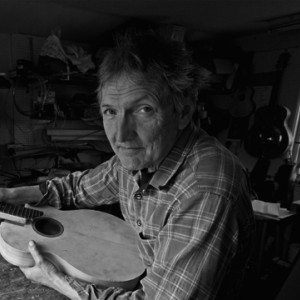
In workshops throughout the world, inspirational craftsmen and women have been developing complex skills to create beautiful furniture. From elegant chairs and tables, to distinctive cabinets, desks and beds, their carving, sanding, tonguing and grooving has added both function and beauty to our lives. No less inspirational and fascinating is the world of the luthier, the maker of stringed instruments. Fergus Byrne visited Lyme Regis based musician and luthier, Marshall Stapleton, who is electrifying an ancient craft.

It’s fair to say that we live in a world where much is taken for granted. Milk comes from the shop, electricity from a switch, water from a tap and music comes from the stereo – or nowadays more likely a computer or iPod. However music, as most of us know, comes from a huge range of different instruments and finding out what makes these different instruments work was what started Lyme Regis musician, Marshall Stapleton, on a unique adventure in wood. He had played a guitar since he was 13. “Months of pleading with my parents was rewarded with a cheap and extremely nasty second hand plywood Spanish guitar”, remembers Marshall. “The thick and slightly rusty metal strings were about half an inch from the fret board until I thought of lowering the bridge, thereby rendering it playable. In retrospect this was a moment of epiphany.”

Fifteen years and a lot of cheap guitars later, he had another moment of epiphany when he managed to buy a second hand Martin guitar – one of the top American makes. Although the experience of having an exceptional guitar helped him enjoy playing more, it reinforced his quest to find out what makes an instrument so good. So not only did he try to find out, he decided to try to make one. Enrolling in evening classes, he started to build a steel-string guitar under the tutelage of master craftsman Sam Palmer, famous for his Hurdy Gurdys.

During this time he came into contact with George Hinchliffe, a muti-talented musician who had hit on the idea of forming a band playing only ukuleles – not at all hip in 1988. Marshall played with The Ukulele Orchestra of Great Britain for a time and was inspired to begin making ukuleles. He made what must have been the first Flying V ukulele, modelling it on the Gibson electric guitar, much loved by the heavy metal fraternity. Today cheap, Chinese made copies of Marshall’s rock ‘n roll uke are all over the internet. He admits it’s not an easy shape to play and is really just a bit of fun. “However now of course the ukulele scene is massive,” says Marshall. “It has become the people’s instrument, a reaction maybe to the greedy so called music business and soulless expensive modern technology. Groups have sprung up all over the world bringing people together to play these charming mini guitars.”

Marshall continues to build musical instruments in his studio in Lyme Regis, making mostly tenor ukuleles, a bigger instrument, tuned the same but with more scope for a serious musician. “Many guitar players are discovering the ukulele has a serious side and is an instrument in its own right” he says. “I feel proud to have had a small part in its renaissance and long may they pluck!” He has also recently built a special electro-acoustic guitar which is to be sold at Axminster Music in Axminster. Marshall can be contacted on 07941 619676.

Joanne Francis

Ever since man first learned to communicate, passion has been a source of huge inspiration – powerful emotions have compelled human beings to reach for the impossible, and often achieve the unimaginable. Whether building spacecraft, writing sonnets or expanding the horizons of medical science – like trees or plants that reach for the sky – it is often the passion of one individual that drives others to great heights of achievement.

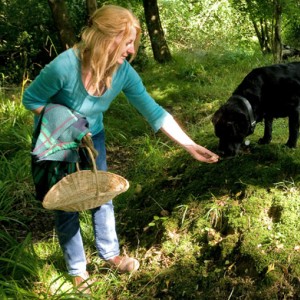
Dr Joanna Francis is one of those who possess that passion. A woodland restoration expert, her enthusiasm for the natural world she lives in is powerful and infectious. Although her main job is as a restoration ecologist, she forages, along with her dog Henry, for fungi, berries, leaves and other wild food whenever she can, often supplying them to a local restaurant in Beaminster, West Dorset. Her eyes light up when she talks about foraging expeditions in local woodland. “When I see the first chanterelles of the season my heart sings!” she says. “I would have made a great cave woman. I would have been much better off being born many, many years ago – because gathering from our wild larder is just inherent in me. It’s not something I do from a weird, alternative perspective, but because it’s completely a part of my psyche.” Five minutes in her company and I find myself wondering how any youngster could have wasted time climbing trees, when there was so much to learn in the undergrowth below them.

She remembers being pushed in her pram as a child while her parents pointed out edible foods in the hedgerows. She grew up in West Sussex where her family owned a Garden Centre and Nursery, and this helped instil her original interest in botany, which she learned primarily from her father. He taught her to be observant and, as a four year old, to use books to look up different plants to see how they grew and reproduced and in which habitats they lived. She also remembers how her mother’s foraging trips were an adventurous mission to gather the season’s full bounty. “She wouldn’t just take us out to get a few blackberries for a single crumble, for example, we would go on a mission until all the blackberries had been picked”. The place where she grew up has now been engulfed by Gatwick Airport. With more than a hint of sadness she reflects on the loss of “those lovely semi-natural habitats, ancient woods and old grasslands. I remember what grew in them as a child – I can now interpret what important habitats they were and yet they are all gone”.

After gaining a Botany Degree from Imperial College, she spent a little time in the City, and then for a spell with her own flower shop, before accepting that there was something far more powerful driving her. She undertook a PhD in Woodland Ecology back at Imperial College where she met renowned fungi expert Ted Green MBE who became her mentor. Founder of the Ancient Tree Forum, Ted Green is a pioneer of the theory that ancient trees were once ‘working trees’, serving man over many centuries. He promotes the view that they should be regarded as historic living monuments – a view that Joanna enthusiastically subscribes to. She understands that the whole natural system relies on what goes on under ground. “I am fascinated by the role that fungi play in woodland habitats” she says. “It is such a complex system and, fundamentally, fungi are running it. They are the primary nutrient recyclers, without which the woodlands would look completely different because none of the timber would break down. They are essential for the health of natural woodlands. Yes, there are a few fungi such as Honey Fungus and species of the current rogue Phyphtophora that have become detrimental to us, killing trees, hedges and plants in our tidy gardens and managed forests. Where the fungal flora is kept in balance as in semi-natural woodlands that very rarely happens, because they are contained by the rest of the fungi in the habitat. That some fungi are edible, and as Ted would often say ’are all aphrodisiacs’!, is how that world opened up to me, but I have since realised their inherent importance within my favourite habitat. I went out most days in the autumn for about five years while I was doing my PhD and I was very, very lucky to meet some of the Gods in the fungal world. I learnt such a lot from them.”

She follows an unwritten code of practise when foraging, ensuring that rare plants or mushrooms are not picked and makes sure that a member of each generation of whatever she finds stays behind. “It’s important that you don’t pillage as they are all natural foods for other wildlife” she says. Apart from the deeper need to understand the world she works in, Joanna sees huge benefits for anyone wanting to enjoy foraging. She loves the fresh air, the healthy walk and the seasonality but, most of all, not knowing what might be around the next corner. “I love the fact that I go along the path on a normal walk one day in March” she says, “and suddenly there are some new shoots, and I think right, now it’s time for me to have my nettle soups, my risottos and omelettes! Spring has arrived.”

She has now dedicated herself to breathing new life into habitats after ‘man’, or humankind, has disturbed them. Her passion for what goes on at and, most importantly, below ground level leads to an interesting and compelling analogy between what can and can’t be achieved. “If we really, really wanted to,” she says. ”we could, for example, move St. Paul’s Cathedral in its entirety, shifting it brick by brick from one place to another. We have the technology, we could rebuild it. However we cannot do that with an ancient woodland.” As she so rightly points out, this is partly due to a lack of interest. “People happily pay for a day at Alton Towers, but put a price on visiting the woods with all their rich natural heritage and nobody would come.”

It’s not an uncommon reflection of the world we live in, and the power and resources that go into marketing a plastic, and lately ‘virtual’ world, all but wipe out the attraction of the natural earth we grew up on. This is why we need the passion and knowledge of people like Joanna. They offer inspiration on so many levels. Joanna is now delighted that her sister takes her three little daughters on similar foraging missions along bountiful hedgerows to those they shared as children. The earth is a giant beast and each of us spends a very tiny amount of time on it – we should make the best of that time. So if you happen to be wandering the woods and you meet a giant black Labrador who answers to the name of Henry, you may be lucky enough to find one of nature’s really passionate supporters very nearby.

Is there life after the world cup

For some of us, yes. For others, it’s a long slow process of returning to normal. I personally even had time to mow the lawn last week (the first occasion for over a month) instead of being glued to the Telly at 7.30 watching Japan versus Paraguay or whoever…

Yes, I reluctantly admit that I’m suffering from an attack of the ‘Vuvuzelas’ – also known as “World Cup 2010 withdrawal symptoms”. I’m already missing the excitement, colourful crowds of fans in funny hats and the noisy swarm of bees filling our living room three times a day. Mind you, I’m not missing England’s pathetic pitch performance (best forgotten as soon as possible), but I do miss genuine sporting drama such as the dancing fans when South Africa defeated France (hurrah!), and the pain and angst of poor Ghana losing to the cheating Uruguayans.

Of course, I realise there may be some people who couldn’t give a Capetown brass cent about any of it and are mainly relieved that the daily assault on their TVs has finally ceased. There may be others who have absolutely no idea what I’m talking about or who think I’m referring to next year’s Rugby World Cup in New Zealand. But even they would have to admit that football traditions and rules play a central role (or perhaps that should read a ‘defensive midfield’ role?) in England’s psyche. When we lose (which we mostly always seem to do at an early point), all the country’s newspaper headlines are six inches high in condemnation. Even David Cameron expressed his ‘disappointment’ and called on Fifa to install new technology after Lampard’s “goal that never was”. Meanwhile Germany’s Chancellor Angela Merkel could be seen dancing for joy on global TV.

World Cup Football is not merely a game or a sport – it’s become an inter-continental culture clash between the World’s nations. In the old days, Serbia, Slovakia, Slovenia and other neighbouring countries might have declared war on each other, but in 2010 their only hostile engagement was on the football field. Swapping bullets for goals seems pretty sensible to me. Rather than having border curses or worse, adjoining countries such as Nigeria and Cameroon, Chile and Argentina and even Australia and New Zealand could sort out any differences between them on a South African soccer pitch. This is especially true of two teams who remarkably both qualified for this year’s World Cup but who never actually met on the field… North and South Korea. Now, that would have been an interesting match to watch!

I think we should all learn from this and recognise the healing (as well as occasionally divisive) properties of football. For example, garden hedge disputes with your neighbour could possibly be resolved by a penalty shoot-out. The whole street could turn out to watch and then commiserate with the loser and toast the winner perhaps with a glass of chilled Prosecco. Very refined and much more civilised (and considerably cheaper) than hiring lawyers to sort it out in court.

Local Councils debating local disputes (e.g. Waste Disposal or Planning) long into the night would be forced to conclude their discussion in only 90 minutes. After that there would be a maximum of 30 minutes extra time for both sides to make their closing arguments.

Long running issues such as the Kart Racetrack north of Honiton or public parking in Crewkerne could be helped by the appointment of a neutral referee who – no doubt with the benefit of goal-line technology – would toss a coin, blow a whistle and make an arbitrary decision in favour of one side or the other. As in many refereeing decisions on the pitch, this brings instant condemnation equally from both opposing teams and their fans. Thankfully it therefore helps to defuse the situation and cool down the temperature as each side then argues with the ref rather than each other.

Worried about new supermarkets opening in your local town? Force them to go away by catching them in a defensive offside trap or by displaying a red card at the checkout counter.

Worried about the number of road accidents in Yeovil? Look for a driver using a mobile phone or driving with one hand on the wheel and the other holding a hamburger, and you can loudly declare a handball situation. You can also spit provocatively onto the pavement – a bit disgusting, but quite effective. Mr Wayne Rooney seemed to spend a lot of time doing this on TV during England’s matches, so it must be OK. In fact, he didn’t appear to be doing much else when I watched him…

Too much noise from the pub next door? You can employ teams of Vuvuzela Blowers to stand outside and drown them out with mega decibels of blaring horns. That would certainly stop them. Actually, it would stop all activity anywhere near to you. Anyone within 200 metres would suffer permanent damage to their ears. People within a mile are known to painfully endure the very nasty Migraine known as “African Tinnitus 2010”. Residents in towns up to ten miles away downwind might experience what is known as “Mild Trumpet Trauma” with accompanying headaches and disorientation.

They might think it’s all over, but there’s only another four years to go. You have been warned.

August plantings

Sowing in August will maximise yields from your garden. Early August is a good time to plant turnips, wild rocket, chard and perpetual spinach, Little Gem lettuce, spring cabbage and oriental leaves. Day lengths are declining now, so timing is important. Your altitude and micro-climate have a bearing, and you are also gambling how warm the autumn will be. Generally the beginning of the month is best to sow.

Little Gem lettuce, ready to eat from October onwards is a favourite catch crop of mine. This 19th century variety has such sweet and crisp leaves, rather sweeter in late Autumn than the last cut and come again leaves, which have a tired flavour by then. As always, planting in modules means you can sow now, and later transplant in the gaps of harvested crops as they appear.

Oriental leaves, such as pak choi, mizuna, tatsoi (my favourite) and mustards are best grown over winter in the greenhouse. If we have a mild winter, they may give you a decent crop, especially under fleece. Don’t pick too many leaves before the winter sets in, so they get strong enough to overwinter outside. Pak choi is a particular favourite of slugs, so keep hoeing around them. You may also need to keep them under fleece while the cabbage butterfly is flying. Mustards seem remarkably hardy, good if you like strong flavours. The smaller the leaf you pick, the less pungent. Try Green in Snow or Red Frills.

True spinach can be worth a try. Like oriental leaves, it lies mainly dormant through December and January, but will produce more leaves in the spring before flowering.

Swiss chard and perpetual spinach are best sown in early July, but you’ll get a reasonable leaf harvest if you plant now and water well.

Rocket can be planted any time in August. I prefer Wild Rocket, which is more resistant to flea beetle, and less prone to flower before the winter. It will provide pungent green leaves all through the winter if the plant is healthy.

Turnips will provide a sweet addition to winter foods. Sow in modules now and you should get a good sized bulb by late October. Spring cabbage are hopefuls for planting now. For me it is all a question of keeping the pigeons off, but in fertile soil you should get a good harvest by May. We always seem to lose the pigeon battle, so prefer to rely on spinach and asparagus to feed us in May.

Why do melons have fancy weddings? Because they cantaloupe.

August in the Garden 2010

We seem to be having a pretty fair summer this year (sorry if, by the time you read this, rains of biblical proportions have returned!) and the hard winter seems to have promoted really good flowering. Recent prolonged sunny weather, followed by a good dose of wind and rain, may have caused herbaceous plants to flop unless well staked. I didn’t get around to staking everything earlier this year, when it would have been easy to do, so now I am forced to do a bit of emergency intervention. It’s not ideal, and the big old herbaceous lumps do appear ‘trussed up’, but that’s the price to pay for not doing things in a timely fashion.

As ever I am playing ‘catch-up’ when I should be relaxing and enjoying the benefits of my gardening labours. Installing more water collecting apparatus is an aim I never seem to get around to. You can’t have enough water butts and it’s good to have them near to where the water is going to be needed. If you need to attach it to your gutter downpipe, which is often in full view, then it’s worth investing in one of the clever ‘trompe l’oeil’ versions that are available.

With the trend for all things bee related, promoting diverse insect life should be high on any gardener’s agenda, I have recently fallen for a butt cunningly disguised as a romantic version of a bee ‘skep’. What’s more it’s made by ‘Richard Sankey & Sons’, more fondly referred to as ‘Sankeys’, which is great as they have been in existence for over 150 years. If you are an aficionado of antique flowerpots then you will know that, please excuse the pun, Sankeys are the ‘bees knees’ when it comes to old terracotta pots. I have a few ancient pots with the legend ‘R Sankey and Sons, Notts’ impressed into the clay around the rim. A faux ‘antique’ plastic water butt may not be quite as authentic but it brings the story nicely up to date.

Speaking of ‘up to date’; while I was working at the ‘Hampton Court Palace Flower Show’ I filmed a piece on new plant introductions featuring a newly launched Linaria on the ‘Hardy’s Cottage Garden Plants’ stand. When first recce’d it was simply named ‘Dwarf’ to reflect that it is a more compact, denser flowering, chance seedling of the taller, more willowy, Linaria purpurea (Toadflax). It’s so new that Rob and Rosy Hardy hadn’t had time to think about a more memorable variety name so the rather dull ‘Dwarf’ was applied instead.

By the time that I returned with Chris Beardshaw to actually film the item, ‘Dwarf’ had morphed into the much more user-friendly ‘Mini-Me’ – so that’s what we called it for the programme. Alas it was not to be; before we had a chance to transmit that item Rob had got back in touch to alert us that ‘Mini-Me’ was already claimed by another firm, for all horticultural use, so ‘Dwarf’ was reinstated. We couldn’t re-record the item, at that late stage, so the whole section was consigned to the cutting room floor. No-one will ever know how close Linaria ‘Dwarf’ came to being the much more exotic ‘Mini-Me’!

When it comes to good plants in August there is a bit of a sea change in the flowering ‘feel’ as the later summer perennials come into their own. Phlox is (are?) the classic choice to plug what can be a slight hiatus in flowering. Recent new introductions have sought to combat their reputation for being a martyr to mildew and eelworm so they really are worth revisiting if you gave up on them many moons ago.

I really like Phlox paniculata ‘Blue Paradise’ as it has almost blue flowers, for a phlox, which are scented and really come into their own in the evening. They are best grown in a little shade, which helps to reduce the risk of mildew, but not the sort of shade which causes them to be dry at the root. As long as they don’t go short of water then a sunny border situation can suit them but there is a danger that strong sun will fade the flowers very quickly in some varieties.

On the maintenance side of things then the standard ‘keep calm and carry on’ applies to the regular mowing / deadheading / trimming / watering side of things. Feeding can be reduced from now on as promoting too much soft growth at this stage of the growing season is best avoided. Annual and bedding plants are the exception to this rule as they need all the help they can get to keep going as long as possible.

I am pleased to report that my mail-order Penstemons are going from strength to strength. I’m in quandary as to whether to let them flower in this first season or to keep pinching out the buds to promote stronger growth…….decisions, decisions. Either way they are getting big enough to take a few stem cuttings from so I may have even more little plants to overwinter than I started with.

It’s worth noting that you are only allowed to take cuttings from plants with ‘PBR’ (‘Plant Breeders Rights’) status for your own use, not for profit or for selling on. Most new cultivars (man-made varieties) will be protected in this way as otherwise there is little motive for breeders to put money into new, improved, garden plants if they aren’t allowed to profit from them before every Tom, Dick and Harriet has them on their market stall. It also helps to identify ‘newer’ varieties when looking through catalogues or nursery lists.

Before I go; hedges should be trimmed as necessary this month plus it’s time to start gearing up for the annual shearing of yew, in all its garden incarnations. I tend to start this in late August but not actually finish the task until well into September – and that’s another month gone…