
Sunday, March 22, 2026
Home Blog Page 101

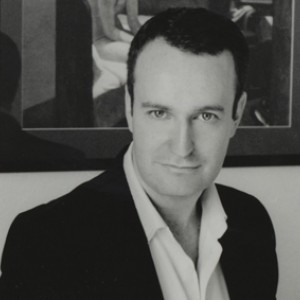
Andrew O’Hagen – Following Voices

Maf, a Maltese terrier, given as a present to Marilyn Monroe by Frank Sinatra became her constant companion for the last two years of her life. Katherine Locke talked to Andrew O’Hagen whose new novel looks at a fascinating moment in American culture through the dog’s eyes.

Andrew O’Hagan’s six year old daughter has finally called a halt to the game they have been playing all her life. Her novelist father has become too much of an embarrassment for her. The game is ‘Dogs’, and consists of choosing your breed and becoming the character. Invaluable research for Andrew’s latest novel The Life and Opinions of Maf the Dog, and of his Friend Marilyn Monroe, told entirely from the perspective of the dog.

It is an unusual subject, with an unusual central character and it raises two very obvious questions. Why Marilyn Monroe and why the dog? ‘I grew up in a house with no books’ says Andrew, ‘this was a Glasgow housing estate in the 1970s where books were considered to be for other people’. One day Andrew’s father brought home a biography of Marilyn Monroe and he was immediately captivated. ‘I had never seen a woman like it’, he recalls. There began a life long interest in the Hollywood legend. He was particularly fascinated by her journey out of poverty and into the most famous woman in the world. ‘She used art, cinema and literature to aid her passage from small town girl to movie star and I could relate to that’, he says.

Being such a fan, he was delighted when he came across an auction of her personal possessions in New York in 1999. Among the lots were six Polaroids of Marilyn with her dog Maf. The photographs ended up fetching $22,000. When Andrew was looking at the images, he says he ‘heard the voice of the dog’. ‘As a novelist you follow those voices whenever you hear them’ he says. He then spent the next ten years researching the project.

His passion for all things Marilyn got him into some scrapes, even risking arrest in Bel Air. ‘I wanted to walk around her neighbourhood and feel the pavement under my feet’ he says ‘and LA doesn’t cater for walkers, dogs or wandering writers’. As anyone who has been there will attest, if you aren’t in a car you immediately arouse suspicion. However, those walks and raiding the archives of 20th Century Fox proved invaluable when writing the book. The period flavour is absolutely spot on and it is clear that a phenomenal amount of research has gone into the work.

As well as spending time in LA, Andrew also interviewed many people from the psychoanalytic world in New York. Marilyn Monroe’s analyst, who she saw for many years, was a particularly interesting character who had grown up in Vienna and played with Freud’s daughter. She also became Freud’s patient as a young woman, so her credentials were impeccable. Whether her methods with Marilyn were successful or not remains open to debate. It is this attention to detail in the novel that makes it such a fascinating read and it is easy to see how ten years of research went into the finished product. ‘As Samuel Johnson says’ quotes Andrew ‘“It takes miles of literature to make one little book”’.

So what of the dog? Maf was a Maltese terrier, given to Marilyn as a gift from Frank Sinatra and was her constant companion for the final two years of her life. The puppy was bred in Scotland by the family of Vanessa Bell and imported to the US by Natalie Wood’s mother – an eccentric collector of dogs and supplier of canines to the stars. There is no doubt that Maf bore witness to a fascinating moment in American culture and politics. In fact, after Marilyn’s death, the dog took up residence in the White House, a period of history that would certainly warrant a sequel. But Andrew says ‘This is a book you could only write once’. He was drawn by the prospect of the opportunities for comedy that the structure allowed. ‘Maf absorbs the knowledge and reading of everyone he comes into contact with’, as such he is astonishingly well read and has the insight of a philosophy graduate coupled with the chutzpah of a Scottish boy made good. Can Andrew relate to Maf’s journey too?

‘The novel has been described as picaresque by a number of publisher’s and journalists’ he says ‘ and it definitely is an adventure story told from the viewpoint of the lowliest character. There are some aspects of Maf’s story that I can absolutely relate to’. As previously mentioned, Andrew grew up in a working class home with his parents and three brothers. He was the first person in the family to go to university. His lucky break came when his English teacher pulled him out of class one day. She told him that even though he played the class clown, he had probably read more books than she had. Andrew remembers her as being very old and wise, but looking back he says ‘she was probably only about twenty-eight’. Miss O’Neil took the young Andrew O’Hagan under her wing and offered him extra English tuition and encouraged him to apply to university.

His second lucky break came when, as a twenty-one year old graduate fresh out of the University of Strathclyde, he landed a job as an editor on the London Review of Books, a post usually reserved for Oxbridge graduates. ‘This was the moment I began to realise the possibilities of writing and its different disciplines and styles’ he says. His first book, The Missing was published in 1995 to great critical acclaim. A non-fiction piece, it explored the lives of people who have gone missing and the families they left behind. His debut novel Our Fathers was nominated for several literary awards, including the Booker. Every book Andrew has published since has been nominated, or received, a major literary award.

It is clear that Andrew loves writing in all its forms. He is a prolific journalist and essayist, contributing to The Guardian, The New Yorker, The Times and The Evening Standard, amongst others. Also, reading the scenes with Marilyn at the Lee Strasberg Acting Studio, it’s clear that he holds actors in great regard too. ‘I’ve had a fantastic time recently working with actors reading scenes from Maf the Dog’ he says. He admits to having something of a showbiz mentality himself and finds working with actors a complete joy. ‘I think acting is the art most similar to writing’ he says ‘as it requires the ability to truly inhabit a character and become it. Actors also use language in order to create a reality and that is very appealing’. His third novel Be Near Me was adapted for the stage in 2009.

And what of the dogs in his own life? ‘My dad breeds Irish Wheaten Terriers’, he says ‘and we have one of his, a seven year old boy called Otis’. However, Otis is taking a break from city life, as he was finding the Primrose Hill traffic too stressful. ‘He has gone to stay with friends in Norfolk for while. It‘s a kind of Betty Ford Clinic for dogs’.

Andrew O’Hagan has received a huge amount of attention for Maf the Dog. The film rights have already been sold and several major actors have been tipped for the lead roles (George Clooney as Frank?), he is not however, going to write the screenplay. ‘It needs fresh eyes’ he says. When asked if he agrees with the critics who are saying that this is his best novel yet, he replies, ‘Your best book is always the next one’.
Basil & Pesto

Every year we sow a modular tray of 40 basil plants in mid April in the greenhouse, plant the 30 biggest plants out in mid-May at 7” spacings, and take two huge harvests of leaves in July and late August to make about 20lbs of pesto for the freezer. Into the food processor go olive oil, home grown garlic, chopped mixed nuts, strong grated cheddar and salt and you should have about 20lbs of top quality pesto by the end of the summer. It goes in the freezer, or can be pasteurised. We find you do not need expensive pine nuts or Parmesan, just lots of good basil.


Basil is now in most seed catalogues, a bewildering variety of novelty types, as with most vegetables today. Greek basil tends to flower less, and has loads of fiddly little leaves. Red basil is beautiful and very slow to grow. Lemon basil adds a citrus delight in dishes such as ratatouille. Yet every year I come back to the original Sweet (sometimes called Genovese) basil.


This variety grows a lot of large leaves, making it quicker and easier to harvest. Basil is delicious in so many dishes, most famously anything with tomato in, and also in salads.


A basic rule with basil is that you must not let it flower. Pretty though they are, the plant and its leaves will soon look wretched as they try to produce seed. As the plant starts to flower, take your first main leaf crop, taking care to remove all flowering stems. This doesn’t make them look too pretty, but within a week new leaves start forming. A second crop can be taken in late August. Basil is a real heat lover, and by late September, the plants give up the struggle and die back, whether you have picked the leaves or not. We tend to take them out and plant wild rocket in their place in early September. In a greenhouse, you will get an extra month’s cropping into October.


If you do not have a greenhouse or cold frame, then you can sow your basil in May, but you will have to wait almost until July before you can start picking any leaves. Module or seed trays are recommended, especially as you can keep them in the warmth of your house for a week until they germinate. If you plant them out too early, they will just look wretched and not grow. June, July and August are their favourite months.


And if all you want is a few plants of basil, just buy a pot of basil from a good nursery and plant it in the ground. The leaves off an outdoor plant are much meatier than indoor plants, and more prolific. A pot in a window sill is a sure way of growing sickly basil, don’t do it! In addition, every time I tend my Basil, I think of John Cleese jokes and have a good laugh to myself. I’m afraid his jokes are all too risqué to print in this lovely magazine, so please enjoy a good giggle at home.

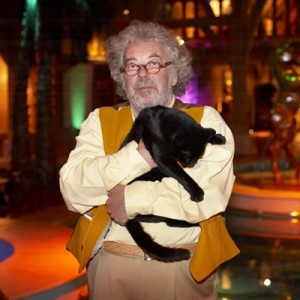
Felix Dennis

In a soho garden

Felix Dennis doesn’t believe he’s going to live to a ripe old age. It’s something he’s been acutely aware of for a very long time. He is now 63 years old, has had at least three very close brushes with death already, and abused his body to such a degree that there is sometimes debate on whether he has lost, not one decade, but two. As we sit drinking a pre-lunch rosé in the kitchen of his flat in Soho, he chain smokes and prowls the room like a caged beast, snatching gulps of fresh air from the tiny veranda he likes to call his London garden. “It’s titchy!” he exclaims, as he gazes across the horizon. “It must be the smallest garden in the world”. One imagines his voice booms across the Soho rooftops, disturbing the occupants of tiny bedrooms, where many past tabloid headlines were born.

His fear of death is, however, nothing new. In fact it may have been the driving force that saw him rise from growing up in a house with no electricity, no central heating and an outside toilet, to becoming one of Britain’s most successful entrepreneurs. “I think I’ve gone through my life as an utterly fearful worm, believing that every day is going to be the last day of my life,” he says. “There is no question that I have lived my life, ever since I can remember, in a perpetual state of fear and anxiety, and that is what drives me. But it does something else you know. Because it’s with you continually, all day every day, nothing frightens you. It means that I will do things that other people, far more sensible, will not do.” He remembers how, in his younger days, he would earn or save money with dangerous antics – running across canals on sewage pipes to earn ten shillings, or climbing a drainpipe to avoid paying rent. It’s a habit that followed him on through his business life. He cites a recent example of spending $48M “of money that I had already paid tax on!” to make a magazine a success in America. “When I could have just stopped!” he says.

Regardless of how long his life has been, or even will be, his list of achievements is quite remarkable. Born in 1947 in Kingston-upon-Thames he never knew his father. With a degree of pride he tells me that his mother worked hard to give himself and his brother a decent life. She was one of the first women to become a chartered accountant, allowing the family to move to a house with electricity. He remembers showing his brother how a light switch worked. Today he has moved his mother into a house near his home and cut back on his travel so he can see more of her – she is 91 and has recently suffered a serious stroke.

To the complete dismay, and somewhat annoyance, of his head teacher he passed the 11 plus and went on to grammar school. His teacher told him there had to have been some kind of mix-up in the results, because he was an ‘idle boy’ that couldn’t possibly have passed on his own merits. His teacher wasn’t to be the last person to make the mistake of underestimating him.

After spending many years playing in R&B bands and living a hipper than hippy lifestyle he joined the team producing the underground magazine, Oz, and found that his drive to make money could go to good use. While all his colleagues sported Afghan coats and psychedelic shirts, Felix got himself a three-piece suit and went out looking for income for the magazine. “They didn’t know anything about money!” he exclaims. He retained the long hair but his natural negotiation skills and business acumen helped keep the magazine afloat; at least until the now famous ‘Oz trial’ that got him banged up in Wormwood Scrubs. An issue of Oz, produced mostly by contributions from school kids, had resulted in one of the longest conspiracy trials in history. He recorded a single with John Lennon to raise money for a legal defence fund at the time, and the three co-editors were eventually acquitted on appeal.

Whilst many believe it was the experience of the British justice system that forged Felix Dennis’s drive for success, he believes it was already inside him. “Maybe I believed I was indestructible.” he says. “Even though I lived in fear and anxiety all my life – fear of what? I have no idea. Fear of extinction? Fear of failure? I have always turned my back on fear of failure. But nevertheless this undercurrent has always been there, where I’m constantly attempting to prove to myself that I will not be disabled by fear – which is nuts!” When it comes to making money he believes that drive has been very good for him. Although with the wisdom that only comes with age he admits, “It’s not a good life – it’s not a good way to live.”

However when it comes to writing poetry, Felix Dennis’s drive has produced extraordinary results. Some might say it has eclipsed anything he has achieved in his business life. In his younger days he used reciting poetry as a method of getting girls into bed, but after a life-threatening illness, he began writing his own verse and published his first book of poems, A Glass Half Full, in 2002. He has since published five more books, all to enormous critical acclaim. He spends up to three hours a day studying and writing and knows that success can only be achieved by solid effort. He chuckles at those that can’t believe he really writes so much, saying, “There are quite a lot of people that do not believe that I can do all the things that I do in my life – and still write this much poetry. Maybe they think I’ve got some gnomes hidden away in the broom cupboard who are writing it all for me.”

With a new book of poetry, Tales from the Woods, just out, he is about to embark on a 21 date tour of Britain and Ireland, starting in Exeter. Although it’s a gruelling tour of 2-hour performances, crammed into 32 days, he is excited at the prospect. “I want to give people two hours of solid entertainment” he says. As he fixes me with eyes partly hidden by heavy tortoiseshell bifocals, I can see his natural penchant for drama will ensure a great show. More than forty years playing R&B has trained him for the stage and anyone listening to recordings from the Mustique Blues Festival, where he still plays a set each year, will know that Felix Dennis knows how to use a microphone, and work an audience.

As we wrap up to get on with our respective days, I am drawn to ask one more question. Has he any regrets? There is a long pause, giving me time to wonder if the question is just a little too close to the bone. But he is open and honest and delivers an answer that hangs heavily in the air. “I should have opened my heart to one person” he says. “I should have taken that risk. That was a cowardly and pathetic thing not to do. Too late now – it really is too late… I think I should have had children, I love children, I’ve got so many god children. That was foolish and idiotic… I think I should have started writing poetry when I was twenty-five or thirty years old… Also, it would have been OK to have four or five years on crack cocaine, but having two lost decades is utterly stupid and totally ridiculous. And it doesn’t matter how many hundreds and hundreds of beautiful whores and concubines you’ve been to bed with, because in the end they all just merge into one. It’s just a complete waste of effort and time – ludicrous and dangerous, for them as well as for you.” He stops, attempts a smile and says. “But hey, on a scale of one to ten… nine point five!” His booming laughter fills the room. “I don’t really think that”, he says. “But let’s say it, let’s keep our chin up.”

As I head back through the throng of London commuters, with his booming laughter still ringing in my ears, I can’t help thinking that although he reckons he won’t live to a ripe old age, Felix Dennis will probably still cram more into whatever years he has left, than a whole bunch of the rest of us put together.

Up Front 09/10

There have been many bizarre situations for which insurance policyholders have filed claims, but what is often most bizarre is the outcome. One well known story is about a burgler who, upon breaking into a house, locked himself into the homeowner’s garage. As the owners were away on holiday he was stuck there for a week and only managed to survive by eating dogfood. He consequentially sued the homeowners for having a faulty door lock which caused him, ‘undue mental anguish’, and apparently got himself a payout of half a million dollars. Some may find it hard to decide who to feel sorry for in that situation but one American pet insurance company is using their clients stories as part of it’s marketing strategy. The Veterinary Pet Insurance Company (VPI) set up the VPI Hambone Award, which they named after a dog that managed to open a fridge and eat a whole ham. This year dozens of entries included a dog that attacked a chainsaw; a cat that snuck into a tumble drier for a nap and a young Labrador retriever that ate a whole beehive. One of the recent entries for the award still makes me cringe when I think of it. A border collie named Aubie wasn’t normally a huge fan of his local postman but one day when he arrived nearly three hours late the dog decided to lunge at him through the window. However the poor dog failed to notice that the window was closed. The result doesn’t bear thinking about but pet lovers will be pleased to know that Aubie survived and is doing well. He now takes anti-anxiety medication, paid for by the insurance company. There are, as yet, no reports of the postman suing the dog’s owner for ‘mental anguish’.

September in the Garden 2010

hedge trimming so it’s a good place to start this one. In a perfect world I’d have been cutting my various hedges, a section at a time, when the mood took me but, as ever, I’ve let them get away from me. I always have a mad panic this month as the mixed hedges need taking in hand at exactly the same time as the yew gets its annual cut. It’s difficult to know what to do with all the trimmings. Short, soft, foliage can be composted but the larger, woodier, material needs to be fed through a shredder before adding to the heap. I generate so many clippings that the only practical method of dealing with it is a big bonfire – rather than burning precious fossil fuel driving down to the ‘recycling centre’ (formerly Bridport tip) and adding it to the green waste.

It’s a bit depressing thinking about bonfires and the autumn that is looming just around the corner. Much better to remember that this time of year yields blooms from some of my favourite plants; tricyrtis, cyclamen, schizostylis, liriope, late-flowering clematis, asters, Hydrangea villosa… et al. Rather conveniently it’s also a good time to plant, or move, such specimens due to the cooler temperatures, still warm soil and more abundant (!) rain. Exactly the same conditions that make September a good time to sow a lawn – giving it a good chance to get a bit of growth on before the properly cold weather arrives.

This time last year I was sowing ‘inoculation’ patches of ‘Yellow Rattle’, in random circles, in my field. The plan was for the rattle to germinate in the spring, parasitize the grass, flower and then ripen seed to re-inoculate the meadow when the long grass is cut down the following year. I’ve got to report that this experiment hasn’t been entirely successful but it has taught me valuable lessons.

The main one is that mowing the circles very close to the ground, then raking to aid inoculation by the rattle, had the unwanted by-product of encouraging any buttercup which was present to increase exponentially and kill off the weakened grass. Ironically this meant that in late spring I was forced to use a selective weedkiller wherever the buttercup had taken over. Weedkillers are an absolute ‘no-no’ when encouraging a species rich meadow because, of course, they wipe out the very sensitive rattle along with every other broadleaved meadow plant.

My excuse is that I am establishing a meadow from what was a ryegrass and clover agricultural mix, an entirely unnatural planting, and doing it mostly by mowing and selective weeding. Apart from the buttercup setback, and the reduced amount of rattle as a consequence, I must say that I am pretty chuffed that the sward, after just a couple of years, is already reverting to a diverse range of native grasses. These are beautiful in their own right and quite stunning in August just before the meadow is cut. I shall add wildflower seed, now that the grass is short again, and I’ll do it by broadcast sowing followed by gentle raking. That should be enough to get the seed into contact with the soil without damaging the grass to such an extent that the buttercup rears its ugly head again. A small amount is alright, as part of the mix, but sheets of Ranunculus are just rank.

I’ll not be adding bulbs to the meadow as I am not Prince Charles and I happen to think exotic tulips and the like have no place in what should be a natural looking landscape. They also make maintenance a bit of a nightmare and, I heard, he had to replant them every year, to get the desired massed effect, which is hardly sustainable! I shall, however, be planting plenty of bulbs this month in borders and in containers for spring interest. Tulips, and you must be getting bored of reading this by now, should wait until November for planting in order to reduce the risk of ‘tulip fire’ disease.

Some of you may remember that much earlier this year, February I think, I started work on a formal pond. I really wanted somewhere to grow hardy carnivorous plants, in the shallows, and because my ‘tin bath’ pond froze solid last winter killing all my ‘White Cloud Mountain Minnows’.That little project was halted by the ‘axe incident’ (as it has become known) and I’ve only just found the time to complete it – largely thanks to a posh new pondliner from those lovely people at ‘Hozelock’.

The pond should have enough time to reach some sort of equilibrium during what is left of the warmth before the restful winter cold is upon us. There is no time for resting yet, for gardeners, as late summer into autumn is a great time to be doing all those tasks which have been building up over the summer. Cuttings will need potting on, or planting out if hardy, while still actively growing. Tender plants should be tidied up in readiness for bringing under cover when frosts threaten. Dead-heading must continue but feeding should stop so as not to encourage lush foliage at this time of year when plants need to be hardening up to survive colder temperatures.

I am, as ever, hoping for an ‘Indian Summer’ so I shall leave you with that thought in mind and it’s worth remembering that a well-stocked garden is actually a very pleasant place to be at this time of year.

Posy Simmonds – Tamara Drewe

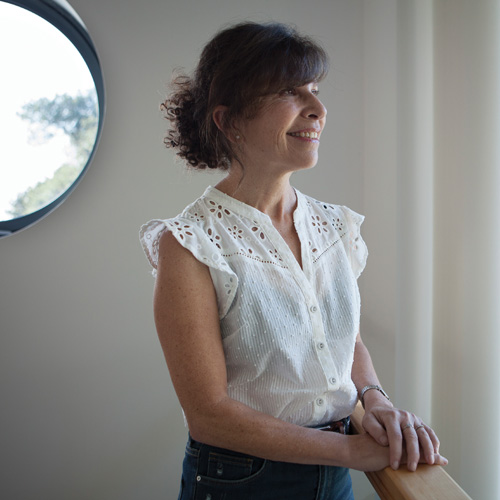
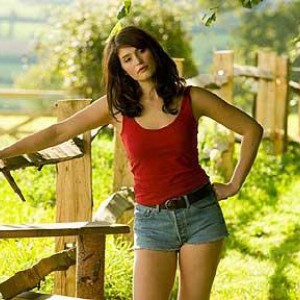
As she walks the red carpet at the Gala screening of the new film, Tamara Drewe, in Bridport in September, writer and illustrator, Posy Simmonds MBE, will be treading the pavements of her forebears. Her grandfather was a vicar in Bridport. Having said that, it is pure coincidence that the film, which was based on her successful graphic novel of the same name, was filmed around Bridport, as well as other locations in Dorset. With some of the characters borrowed from the plot of Thomas Hardy’s Far from the Madding Crowd, the story already has a strong Dorset feel, and with local scenery and many extras from the surrounding area it is sure to be a hit with the local community. It is fitting then, that a Gala screening, featuring an introduction by Posy Simmonds and a short talk by the film’s Director, Stephen Frears, is to be held at the Electric Palace cinema in Bridport on September 17th.

The daughter of a dairy farmer and auctioneer, Posy Simmonds grew up in Berkshire. After attending Central Saint Martin’s College of Art and Design in London she was determined to find work as an illustrator and eventually got her break with a commission to produce a cartoon for The Sun newspaper. Her extraordinary ability to observe and depict the humour in the minutia of daily life propelled her career, and saw her contributing to The Times, The Spectator, Cosmopolitan and The Guardian, as well as to Harper’s Magazine in America. In 2002 she was made a Member of the British Empire for her services to the newspaper industry.

Tamara Drewe, originally a serialised cartoon strip for The Guardian, is her first film. However, even though drawing a graphic novel is in many ways like writing a film, she had no idea that it might one day become one. She hadn’t realised that her chosen art encompasses many of the talents that come together to make a film. “You choose the locations, do mixed sketches, do the costumes and cast the characters”, she says. “You draw the faces, changing the noses or other features until somehow one of them leaps out and you think ‘yes, I know you’. And then you write the script. You get the characters to act, you do the close-ups, the long shots. I hadn’t realised how filmic the whole process is.” It has its occasional not so subtle differences though. She recalls an incident where Stephen Frears pointed out that it was much easier for her to change a scene to snow for example, whereas for him to recreate such a change on film was a huge undertaking.

Most fiction writers tend to be asked if their characters come from real life and Posy Simmonds admits that many of hers may be inspired by, or have parallels with, people she has observed over the years. Many years in the literary world have allowed her to observe the funny, the sad and the outright ridiculous situations that people can find themselves in. The story of Tamara Drewe is set around a writers’ retreat in the country, where novelists and other writers come to be pampered while they craft their art. It is run by Beth Hardiman, whole adulterous husband Nicholas is a relatively successful novelist himself. Hard working and long suffering Beth, living in a constant state of mistrust and jealousy, sends her husband off to a literary festival muttering, ‘I hate festivals… rutting grounds of viciousness, jealousy, vanity, disgusting displays of male ego – well, and female’. Posy Simmonds’ ability to work with both words and images adds a wonderful dimension to the story. Two havoc creating teenagers in the book, Jody and Casey, remind her of teenagers she has seen on various busses. “When some of the children come out of school and get a bus across London, it’s as if they put on a mini circus for the rest of the bus” she says. “They talk incredibly loudly, absolutely yelling into their mobile phones. They shout about how they ‘got well bladdered last night’ or ‘pissed’ out of their heads. And some of it you know is bravado… though some of it might be true. And of course the language is extraordinarily ripe.”

The film came about when a production company bought an option from her agent. Moira Buffini wrote a script, and Stephen Frears, having read it on a plane to New York, agreed to direct it. Posy is very impressed with the resulting film saying “Stephen has done an amazing job, because, although he has made his own film, it is incredibly close to the book.” Not to detract from people’s enjoyment of the film she doesn’t let on what changes have been made, but hints that, although much of the dialogue is the same, there are changes that she feels do enhance what has been billed as a lustful and humorous story.

Peck to the future

We live in unsettled and uncertain times. Forecasting the future has never been particularly easy, but it appears to be even more difficult in 2010. Will the UK Economy grow or shrink next month? Will house prices rise or fall? What about VAT and school milk? What about them indeed! These are questions that bring forth scores of experts and owlish wizards from their caves to perch on our TV sets and give us the questionable benefit of their advice. And the result is that nobody really knows… The more pundits gathered in a room, the more the number of opinions and the wider the spread of answers that nobody can question.

Will I win the national lottery next weekend? Will England win the 2011 Rugby World Cup? Very probably not, but then you never know do you? Will Dorchester FC beat Boreham Wood on 18th September? Possibly, but then again who knows – or even cares?

Will it rain across Southwest England tomorrow? ‘Haven’t got a clue… With global warming and the shift of the Atlantic jet stream, weather forecasting seems to have become a very hit and miss affair. (Am I alone in thinking how unreliable our local weather forecasts seem to have been this summer?)

Perhaps we need to go back to historic folklore and the castings of runes? In Ancient Rome, they used to observe the birds to foretell the omens and check out the Gods’ opinions in advance. You know the sort of thing… if a pigeon flew from left to right then it was going to be a nice day and Rome would win the war. If it flew from right to left, then it was probably better to stay at home. And if it stopped and ‘bombed’ a senator en route, then Mount Vesuvius would erupt and everyone be roasted alive. Simple really… If the forecast was a little hazy, then they killed the bird and examined its entrails to check out a second opinion. The evidence was therefore destroyed which helped to prevent expensive law suits when the Augurs got it wrong, and also provided the forecasters with a nourishing meal.

Personally I find Aunt Sarah’s mangy old bald parrot even more reliable (although rather less tasty). On entering her sitting room, this horrible old creature shrieks out a welcome. So does the parrot. If this squawk contains recognisable English words (such as ‘Shut the Door’ or ‘Pretty Boy’) then the sun will be out all day. If the language includes French swear words (from Aunt Sarah’s rather naughty times in Paris in the 1950s) then watch out for thunder storms by late afternoon. No squawks but a sullen silence will result in a humid overcast sky. It really does work.

Other animals can be useful at solving even more difficult problems. You may remember that the Germans had a celebrated octopus a month or two ago that was uncannily accurate in foretelling the outcome of footie matches. It even told them when their own team would be beaten – a great success, although vengeful German fans feasted on calamari and chips for weeks afterwards.

So why don’t we call on Mother Nature to answer some of our important imponderables? Answers will be cheaper, faster and – I am prepared to bet – much more accurate than teams of media pundits. For example, I have a small snail that climbs up the back wall in the morning and then glistens back down again by nightfall. I shall chalk a line five feet up the wall and, if it crosses the line by lunchtime, then it is obviously proof that the pound will rise against the Euro. Either that or Chideock will get its traffic bypass, or my chosen selection will win the 6.30 race at Windsor.

Again, you could take advantage of the late summer wasp scourge. Put three jam jar wasp traps filled with sugary water on the garden table. Mark the left hand one ‘YES’, the right one ‘NO’ and the one in the middle ‘MAYBE’. Ask any sensible question – e.g. “Will UK interest rates rise in the Autumn?” or perhaps “Will Christine Bleakley join X Factor as TV presenter next year?” – and wait for ten minutes. Count the number of dead wasps for the answer.

Of course it’s difficult to remember all of this, but local West Country rhymes have helped us over the centuries to recall Nature’s messages. For example, “Red Sky O’er Devon, The Weather Be Heaven” works OK if you live in Dorset because the red sky is to the West. But if you live in Cornwall, this would be bad news and a sign of Easterly winds. Here are a few more for you to ponder and try out for yourselves:

When Birds Fly High,

Crewkerne Be Dry”

When Birds Fly Low,

Weymouth Will Blow”

If Seagulls On Guard,

Take Shelter In Chard”

David Longley

“Originally I come from Hythe, in Kent, where I was born 83 years ago. My father was a builder, and I had two brothers and a sister. We lived there until 1940, about the time of the evacuation of Dunkirk. That was when my school was evacuated also, but we went to Merthyr Tydfil in South Wales, where it was thought to be a lot safer for children in case there was an invasion. I was there for two years, and when I came back, I started my apprenticeship as a plumber, working for my father. When I was old enough, I registered for National Service. If you waited until they called you up, you went where you were told, including coal mines, which wasn’t very appealing, but since I’d volunteered, I was able to join the Navy, just before my 17th birthday.


After training, we went over to Ostend, to join a minesweeper. By now the war was over, and we spent 3 months or so sweeping German mines, up and down the coast of France, Belgium and Holland. One job we had was to retrieve a sunken German armed trawler from St Peter Port, in Guernsey. It had been raised from the seabed where it had lain for two years, and we had to tow it back to Willhelmshaven in Germany. The trawler was classified as a war grave, with the bodies of German sailors still on board, so it wasn’t pleasant, and after we crossed the North Sea we were met by 7 German E-boats, who escorted us into port. After that, we were transferred to fishery protection, going with the fleets from Grimsby and Aberdeen up to Bear Island in the Arctic. We also went to Loch Fyne, helping the herring fleets find their catch with our Asdic echo sounders, which we had been using to detect mines.


I spent 3 years in the Navy in all and enjoyed it, so when I came out I finished my plumbing apprenticeship. Things weren’t too good in the building trade at that time, and I found it hard to settle down. In 1949 Mary and I got married. Then in 1953, my brother-in-law, Bob Browning, who was farming here in Sydling St Nicholas, offered me a job. He wanted quite a bit of building done, so we moved down from Kent, and I built a dairy for him, converted buildings for calf pens, and in between times I did general farm work and lorry driving. The farm was about 1500 acres, and there were 2 dairies, milking Red Poll cattle, and we also grew corn and potatoes. We hauled all our own cattle cake, and later fertilizer, which was why we ran the lorry. Like many of the farms up this valley, it was tenanted; Winchester College owned a lot of land in those days.


When I started, I was the 23rd member of staff on the farm, which gives an idea of how labour-intensive farming was then. 3 of the staff were Lithuanian displaced persons; there was the keeper and his boy, and the strappers who were the old boys who did the hedging and ditching. It was like a small army coming up the road in the mornings, with everybody coming in to work, mostly on bicycles. We grew mangles and swedes for the cows, which meant a lot of back-breaking hoeing, and at one time we had 160 acres of potatoes – we were very big potato growers. Over at Martinstown, there was a camp of Nissen huts, where people from all walks of life came for a holiday picking potatoes, and I’d go over there to pick them up with the lorry. I turned up at the farm once with 30 Swedish girls on the lorry from the camp, and that certainly made the blokes’ eyes pop. There were about 60 cows in one dairy, and 80 in the other, quite large-scale for those days, and each dairy was looked after by 2 dairymen and a helper, and they’d sometimes help out with the potato harvest; the boss would say “I need 10 ton by breakfast-time”, and we’d go out and pick them. After breakfast the dairy staff would haul them in, and later we’d weigh them and bag them up. The farm had a sales outlet in Poole, and they would collect the potatoes and distribute them to shops around that area. In winter we’d be busy riddling out potatoes from the straw-covered clamps in the barns. It was a cold job sometimes, but working with a good crowd you could always have bit of a laugh.


After I’d been on the farm about 3 years, I took on tractor-driving. We used crawler tractors for ploughing, and we’d try to plough everything by Christmas. Apart from a couple of Fergusons, they were all American. There were 3 Case tractors, 2 Allis-Chalmers, and 2 International TD-9’s. The first one I drove was an Allis-Chalmers Model M. It was only 35HP, but it would lug on a 4-furrow plough quite comfortably, doing about 7 acres in a full day. With no cab it could be bitter, and I remember one day when, after a day’s ploughing on the top of the hill, my ears were so cold nobody dared touch them in case they fell off. We always reckoned it was 3 coats’ difference between the top of the hill and down here. For harvesting the 500-odd acres of corn, we had 3 combines. There was a Massey-Ferguson 726, with an 8ft cut, and 2 Massey 21’s which were 12ft cut. You could guarantee that if there were 3 combines in a field one of them would be broken down. I also drove one of the two balers, an Allis-Chalmers Rotabaler, a machine which could drive a man crazy. If the crop was fit, it went ok, but if it was a bit damp it was constant trouble. I pulled that behind a crawler, and every time it made a bale you had to hit it into gear, and out again, using a hand clutch. We made 20-30,000 bales of hay every year, which was a lot of gear changes, and somehow we must have had the fine weather to make that much hay, which doesn’t seem to happen these days. Of course, if a machine broke then, you fixed it, and I always enjoyed the machinery side of the job. Bob Browning was a clever man, who could turn his hand to anything, and he taught me a lot about mending machinery.


There were always plenty of rabbits; in fact, there were so many we were almost farming them. I was told that the rabbits paid the keeper’s wages, and his rent, and for all the shooting. Trapping rabbits was mostly what the keeper did, with about 500 traps which had to be moved around the farm, and there were two ex-army jeeps to do that. At their peak, we trapped and shot 26,000 rabbits one year, and then of course the myxomatosis came and the keeper was pretty much out of a job, although he worked more on the farm after that.


Gradually, through the sixties and seventies the machinery got bigger and better, and there were less people working here inevitably, despite the fact we still farmed dairy, corn and potatoes. The Red Poll cattle were replaced by Holstein Friesians, combined into one dairy. In 1984, Winchester College decided to sell the land, and it was bought by Mr Langley-Pope. He said he thought I’d be more use to him in the workshop, and that suited me down to the ground, so that’s where I worked up until the present owner, Mr Cooper, bought it. When I first worked here it was farmed more or less organically, which was how everyone farmed. From then on it got gradually more and more intensive, and now, Mr Cooper’s converted the whole farm to organic production. So I’ve seen it go full circle, with the main difference between 1953 and now being the amount of paperwork.


Sadly Mary died in 1986, but we brought up four children on the farm. Vanessa, the oldest, came with us from Kent, and Russ, Mark, and Nicola were born here. I had to pay 3 shilling a week rent for the house we lived in then, and the wages were just over £5 a week when I started. I’m still doing one day a week, looking after the farm water supplies, which keeps me out of mischief. Seeing all the changes in farming over the years, it’s been an interesting life.”

Derek Stevens 09/10

With the introduction of America’s Lend Lease Program in 1941 colourful new tractors began to appear on British farmland. At the time work on the small farms of the West Country was mainly horse-drawn, any tractors in use being, most probably, a Standard Fordson being driven by a Land Army girl, a dull green machine with a folded potato sack on the seat to provide a bit of comfort. Now names from the great plains of the American West were shipped over the Atlantic, Allis Chalmers, Farmall, Oliver, Massey Harris, Case, John Deere and Indianapolis Moline. All can be found in vintage tractors parades of today. Odd to remind oneself that the final payments for all that machinery was made just a few years ago in 2006.


But I was more aware of the horses, great friendly Shires with names like Captain. Smart, and Prince. Sometimes, walking to the village of Compyne to collect some milk, I would need to pass through the field in which these three horses were grazing. Seeing me with an interesting metal can in my hand they would gallop across the field towards me, their hooves thundering the ground and their manes and fetlocks flaring in the wind. It was easy to imagine medieval knights astride their backs. Although I knew they would stop as they galloped towards me it was always a little alarming until they did.


I remember well helping a neighbouring farmer with hay making, lying on top of a last horse-drawn load of hay of the day, bumping gently down the ruts of a lane and watching the moon shining through overhanging branches above. In the summer pairs of horses drawing binders would slowly harvest fields of corn. The wind would caress the standing corn into waves across a golden seascape. Rabbits would scatter as the binder reached its last cuts and corn crakes could be heard in the silence of the evening, a bird long gone due to the use of more speedy mechanical farm practices.


Another familiar bird at the time was the lapwing, or peewit as it is also called. Large flocks were an autumn feature as they competed with seagulls behind the plough, now a few might be seen along estuaries, like that of the river Axe.


During the nineteen-forties there was a healthy population of elm trees across the lower Axe valley. It was difficult to see across the valley without one’s view being interrupted by these huge trees. Landowners had planted them during previous centuries as a drainage scheme, the trees would consume the moisture from the valley ground and dissipate it into the atmosphere, but, of course, they became tragic victims of the Dutch elm disease and disappeared.


Floods in the valley at the time seemed far more immense and extensive than they appear today when they happen. I recall walking down Bosshill down towards Colyford after a period of severely heavy rains, flood waters completely covered the valley bottom right up to Axminster and beyond. It appeared more like Coniston Water than the River Axe. The only point a crossing could be made was at the concrete bridge between Axmouth and Seaton, all other roads up the valley being completely submerged. Drainage schemes implemented since that time now clear the valley of floodwater more swiftly so those dramatic Lakeland scenes occur no more.


One of those schemes was to raise the level of the approaching road to Colyford and move it a few metres downstream, and to build a new bridge which was to cover the old Stedcombe Estate salmon fishing pool. But before this happened the pool was used by the Ministry of Agriculture and Fisheries. A salmon trap was installed and for several years fish were trapped on their downstream journey, recorded and tagged and put in a recovery box to continue their journey back to the Atlantic. The purpose, I was told at the time, was to establish whether salmon returned to the river of their origin. I was informed that already it had been found that some of previously tagged fish had later turned up in Swedish and French rivers, proving that salmon were inaccurate in finding their birthplace, or that they just did not care.


One tale the man at the trap told me I found quite amazing. Apparently a salmon tagged, registered and released was caught twelve days later by a Danish trawler off the coast of Greenland…Wow!


Another feature of the Axe Valley in those years of the forties was the number of different breeds of cattle which could be seen along the riverside pastures. White faced Herefords seemed a predominant animal, but there were also red coated Devons and ginger coloured South Devons. Then there were roan Shorthorns and Longhorns, and, happily, they were allowed to keep their horns in those days. It was a long time before the arrival of the big boned breeds from the Continent, and even what was to become the ubiquitous black and white Friesians and Holsteins were then rare on the ground. Sadly even they now seem to be disappearing from our hills and valleys as local farmers and their sixty head herds succumb to the high costs of dairy farming for herds below three hundred in number.

A feature of wartime years which greatly affected agriculture was British double summer time. This was ended in the summer of 1945 ending confusion for cows about milking times and long summer evenings became free from the noise of playing children, which had incurred an evening curfew on children in some villages and towns.


As we near the end of this year’s period of British summer time I think it apposite to present to you my Ode to the end of BST…


Longering nights and dew-sodden dawns,

The last warmth of a September sun,

Holidaymakers thin on the beach,

School’s back, darts and skittle’s begun.

So as summer days fade away,

deck chairs are packed away,

Cometh a sobering thing,

that our last festive rites,

are our carnival nights,

Up Front 08/10

Back in the late 70s and early 80s I was a member of an organisation called the Campaign for Real Ale (CAMRA). Membership was a perfect excuse to travel around the country, sampling bitters from different breweries, whilst protesting against bland, mass-produced beers. At that time it was an entertaining exercise that offered social interaction and also had an educational element. The possibility that it might make any real change to the corporate structure of the brewing industry, though always at the forefront of our thoughts, was often forgotten as evenings wore on. However, according to a study carried out at Nottingham University Business School, Britain’s beer drinkers could now serve as role models for the nation as it struggles to emerge from recession. Between 1900 and 1970 the range of products and the number of centres of production in brewing in England declined dramatically. By 1970 the number of breweries was just 141, compared to 1,324 in 1900. Most of these were located in a few cities and towns. The trend for bland, big-name products became so dominant that Ind Coope advertised its Long Life brand with the slogan ‘It never varies!’ But CAMRA’s arrival, and the group’s campaign for variety and quality, resulted in the now ongoing boom in microbreweries. By 2004 the number of breweries in England stood at 480 – approximately the same as in 1939. If the trend continues the situation here could one day rival that of Bavaria, where almost every village has at least one brewery. Professor Peter Swann, the study’s author, believes that the beer industry’s rebirth, in the wake of the Campaign for Real Ale’s founding in 1971, offers us a perfect example of ‘small is beautiful’, and that many lessons could be learned from it.