
Sunday, March 22, 2026
Home Blog Page 100

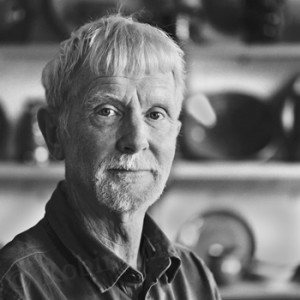
Miles Bell

“I was born in Wimbledon, in 1948, so I was a suburban child. My upbringing was very conventional; I went to a minor public school, and left it with no clear idea of what I wanted to do, as long as it was something to do with the arts side of things because that was what I’d concentrated on, and enjoyed, at school. I think my parents were fairly desperate to get me into “the professions”. My father had a very difficult working life: he was in the RAF during the war, then worked in the motor trade, in various management positions, and was made redundant several times. Because of this, they hoped a professional career would give me the security so lacking in their lives. So they put my interest in art and buildings together and came up with architecture – the perfect solution – so that’s what I did.


I thought that’d probably be ok, perhaps for lack of a better idea, and off I went to Hammersmith College of Building and Art, which was a fairly low-key way into the profession, and at the same time was assigned to an architectural practice as a trainee. I did that for about 5 years, in the 1960s. However, with everything that was happening in London at that time with architecture, I grew very dissatisfied with the profession. As someone aged about 20 I was supposed to go on site and tell experienced craftsmen what to do, which was pretty difficult as obviously I had neither their experience nor skills. I had other architecture student friends, one in particular from Cambridge University, who felt the same disillusion, and who didn’t want to go along with the conventions of the profession. It was 1968/69, a time when there really was a whiff of revolution in the air; we were getting involved with the politics of it all, and the horrors of tower-block building in London were at their peak.


Eventually I gave up my job, and gave up my course with about two years to go. I just couldn’t see myself in that life. The practice I was assigned to wasn’t a bad job, the people were nice to work with, but mostly we were doing up posh houses for posh people and it just didn’t seem relevant to me. There was quite a lot of social unrest going on, and inappropriate development was leading to the break-up of communities, especially in the East End of London, so that was why I left.


It just happened that at the same time as I gave up my job, in September 1970, one of my architectural student friends was coming down to Dorset, to a place called Pilsdon, to do a small building job, and invited me to join them. So I landed up at Pilsdon community, which for me was a completely extraordinary experience. I was there for two months, and then returned to London, to Hackney, and tried living in a commune there, almost an obligatory thing to do at that time. Mostly what I learned from that experience, was how hard it is to live in a community with some kind of common ideals going on, and perhaps inevitably the commune collapsed. Then I went with a friend to live in another commune in West Chinnock, near Crewkerne, but that one collapsed as well and I found myself with not much to do and nowhere to live. So, in 1972 I went back to the Pilsdon community. I didn’t go there with the idea of joining the community, but Percy Smith, who was in charge there at the time, suggested I should, so I agreed. I lived there for the next 5 years, and it was a most wonderful time.


I left Pilsdon in 1977 to live in Bettiscombe with a girlfriend for the next 3 years, after which I returned to Pilsdon to assist in the change of leadership. Unfortunately there were differences between some of the community members and the new warden who’d replaced Percy Smith, so a group of us left. While I had been there however, I’d been learning pottery. At school I’d wanted to do pottery, but because I did art I wasn’t allowed to do craft; one of those school curricular absurdities. After picking up the basics of pottery at Pilsdon, I was making pots as a sideline, but the building work earned the cash to support myself. In 1982, I got married, and we had two boys who of course are now well grown up, but I’m afraid the marriage didn’t last. Then I got married again, fairly soon after the first marriage, and we had a daughter together. Added to the daughter my second wife already had, I now had four children from two marriages to try and support, so I had to keep pretty busy at the building work to make a living, although I didn’t enjoy the work all that much. However, it was reasonably successful, we managed to move up the housing ladder a bit, and we were living in Bridport, using the garage as a pottery. The pottery has followed me all over West Dorset, in various sheds and garages, wherever I’ve been living.


My second marriage broke up in 2002, but very soon after that, I was given the opportunity to buy Symondsbury Pottery, lock stock and barrel. Andy Lloyd, who had it before me, had decided to give it up. He was selling off various bits and pieces of equipment, and when I responded to his advert in the paper, he said “why don’t you buy the whole lot?”, so rather to my surprise, I agreed. I think it was one of those life-changing opportunities you sort of blunder into, and I’m very glad I did because I’ve been here ever since. There’s four of us who work here as potters, and it’s going really well. I’ve been living here in Symondsbury now for 18 months, just across the road from the pottery, in an estate cottage that I did up for myself. It’s a glorious place to live and work, and these days I only seem to need to go and do a small amount of outside work to make ends meet.


I sing in the Broadoak Choir; in fact all four of us potters belong. It’s a local singing group run by Chris Reynolds, a musician, composer, and fellow potter. At the moment we’re getting ready for a concert at Pilsdon. We’re not a church choir, but we do sing in churches, and we also perform at weddings, harvest suppers and other jolly events. I’ve also been very involved with theatre in Bridport for many years. First it was acting, and nowadays it’s directing the Encore Theatre, an amateur company but very, very talented. We try and do every type of theatre repertoire as long as it’s the best of its type, and perform in Bridport Arts Centre. For example we’ve done “Noises Off” by Michael Frayn, which I think is the most brilliant farce ever written. Quite differently, we’ve done “The Crucible”, by Arthur Miller, twice now. I thought it was time to put it on again a couple of years ago, when George Bush was in the White House, saying things like “if you’re not with me you’re against me”, which is a direct quote from the play except of course he’d misunderstood it. We won some awards with that play; there’s another farce in the pipeline for next autumn.

So it’s been a busy life, quite stimulating, and it’s had its ups and downs. I don’t mind stress; I actually think it helps things along, although nowadays I’m trying to restrict myself to being involved with one project at time as I’m getting older, trying to do bit less but enjoy life more.”

Laying your own eggs

Keeping your own hens is very easy, and eggs from a small flock at home always taste better than bought ones. There are a lot of books on the subject, so this article aims at answering a few common practical questions.

Choice of hen

‘Hybrid’ hens are my favourites, as they are strong, healthy, friendly, productive and cheap to buy. There are endless different strains of hybrids, bred from differing mixes of the original old, ‘rare’, breeds.

Mr. Hookins at Gillingham (01747 822312) charges from £7 for a point of lay pullet. In the last couple of years he has sold me 13 Black Lakes (relatives of the Black Rock), which are supposed to lay eggs for longer than most, and 3 Lomin Browns, which lay browner eggs. We are currently laying 12½ eggs a day.

Probably the cheapest source of hens is to buy 1 year old discards from a factory farm. At the end of a year, these hens start to moult and lay less than an egg a day, and become unprofitable by the factory’s standards. There is always a factory near you, they generally cost less than £3 each. Feed them correctly and they will lay well (see below). Older hens lay less eggs, but bigger ones, and have a laying life of around 4 years.

If you want your hens to look beautiful and exotic, you are never far from a breeder of rare breed beauties. Or try Revels poultry auction in Middlemarsh on the first Sunday of each month (01300 345301) or Moon Ridge near Exeter (01392 851190), or the Somerset Smallholders website at www.shasomerset.org.uk. They will cost more, and you will get less eggs, but have a lot of fun.

Keeping the eggs coming

Feeding ad lib layers pellets is essential. And as fresh as possible, at 2 months old there is a definite drop in egg numbers. Check the label when you buy your pellets. The pellets contain grass nuts, so the hens will eat little grass, they are scavengers by nature, and their favourite foods are worms and grubs.

You can feed a little grain to outdoor hens in the cold of winter, or to rare breeds, but risk losing eggs if you overdo it. Most hens take a natural break from laying eggs in the autumn as the days shorten, and while they change their feathers for the winter. Keep feeding fresh pellets, and if the hens refuse to start laying again, perhaps try a different company’s pellets. We usually buy a few point of lay pullets in June to get around this problem.

Space

Any small amount of ground will do. Hens need access to ad lib feed and water, and a little coop. My hens have the luxury of a large old farmyard to play in, and they keep the weeds down a treat. Hens tend not to eat much grass, as layers pellets contain grass nuts, but they will peck the shoots of any green matter. I have yet to see a garden with hens in that isn’t a complete mess, and it is best to keep them in a contained area.

Security

Whatever the wildlife lobby say, foxes love killing for fun, whether humans, lambs or hens. Security is the biggest cost of all, but finding headless chicks everywhere is a ghastly experience. It happens to me every so often, and will not stop until you square with the fox doing the damage.

You will need either an electric fence or a high wire one. If you are keeping just a few hens, then a small ready made coop may be best. These are fairly expensive, but will pay in the long run. Make sure the fox can’t dig underneath it by putting some chicken wire flat on the ground around it. Badgers and rats are also a problem, but tend to only eat hen food and chicks.

And why did the chicken cross the playground? To get to the other slide.

All the fun and food at the fair

The South West really is the nation’s top class cuisine region – a fact celebrated by the horde of regional food fairs and festivals springing up like wild mushrooms all over the place. You’ve only got to turn your back on a nice little field and within a month it’s loaded with rows of cars stuck in the mud, several marquees selling local bacon, hand made chocolates and nettle chutney, plus a chef on a stage with a microphone stuck on his neck telling jokes while basting a chicken with sorrel and saffron sauce. Either that, or he/she disappears in a sheet of flame while stir-frying champignons in rather too much Somerset brandy. Fun for all the family – provided you stay back at least twenty feet from the chef’s raised podium.

There used to be a time not so long ago when our region could only boast rain soaked fish and chips, Dorset knobs and apple cake, Devon cream tea and a packet of local salt and vinegar crisps. But no more, because we now live in an area of outstanding natural booty! A lot of this success is due of course to Hugh FW, Mat Follas, Aidan Chapman, Mark Hix and many other local and national chefs who have done so much to publicise better appreciation of our food on TV and elsewhere (and also in this magazine!). Between them all, they have helped make the kitchen the focal point of a home rather than a damp 1950s cubbyhole next to the dining room (plates pushed through a sliding hatch of course). They have also shown (particularly to men) that cooking is cool, cooking is OK, cooking can be fun. And it’s grown and grown so much that now we can all enjoy successful events such as the ‘Eat Dorset Food Fair’ at Parnham, the Cheese Fair at Frome, many food festivals in South Somerset and Devon plus specialised food fairs in Dartmouth, Montacute, Lyme Regis, Wimborne, Honiton, Bridport, the Marshwood Vale and elsewhere. Wherever you live in fact, it seems there’s an eating event either happening or about to happen near you.

So, thank you one and all – I’ve hardly needed to go shopping for food since September. I could just as easily have dined out on all those thousands of free samples stuck on cocktail sticks. And such new and exciting stuff too – not like the boring old bits of tired cheese or limp sausage (sometimes with a chunk of tinned pineapple if you were lucky… ugh…). This year I’ve sampled such glamorous titbits as wild blackberry kebabs, chilli prunes, potted quails eggs and figgy mushroom pudding (v. good). I’ve had water buffalo burgers from a stall in Purbeck (excellent), nibbled honey tarragon cake from a Somerset tent (interesting) and munched a delicious but rather damp shrimp pancake on a rainy Dorset afternoon. This has all been most welcome, but I think we’ve possibly now reached a peak as I read with alarm that an Axminster fishmonger has just launched a line in seafood flavoured ice cream: king prawn and smoked salmon mixed with cherry tomatoes and chives. Yes really. Yum? Well, no actually.

Is this because people are now so used to ‘normal food‘ that there’s a temptation to resort to gimmickry in search of ever more exciting things to eat? To present a successful recipe, it seems you now must include wildly different and contrasting contents with a resulting crash of tortured tastebuds. In pursuit of publicity perhaps rather than provisions…

But who cares! While this trend continues, I shall jump onto their exotic grubwagon and try to make a quick quid or two. The more disparate and potentially horrid the ingredients, the greater the commercial opportunity! So here’s a sneak preview of what I shall be selling at next year’s food festivals (Health & Safety permitting, which might be a problem with some of these examples).

Dorset Water Vole with wild blackberry and anchovy stuffing”: this sounds so revolting that it’s a shame not to be able to try it at least once in your life, but the water vole is a protected species and is not easily available unless imported frozen from Norway where it is a national delicacy.

Grilled Devon Dead Bat with cold cauliflower and a gooseberry and aubergine coulis”: Words cannot explain how awful this sounds to me as I detest aubergines and loathe gooseberries. As for ‘cold cauliflower’, I would rather die. Also, the addition of the word ‘Dead’ when applied to the word ‘Bat’ is unnecessary since a live bat would flap around the room and wouldn’t stay on your plate long enough for you to carve it up (not that I would dare to…).

Stir-fried Chesil Beach Seaweed with assorted flotsam salad and crunchy jetsam croutons”: This is (mostly, but not 100% guaranteed for Vegans) a vegetarian option for very brave diners. Quite tasty but rather too salty for my liking. In some parts of Dorset, you can be arrested if you are caught eating this in a public place, but that all adds to the fun!

Poached Somerset Slugs with Wild Sparrow Eggs in a nettle and river estuary mud jus”: ‘Difficult to be objective about this recipe. It will almost certainly fail the Health and Safety test owing to river estuary mud (a vital flavoursome ingredient) being too full of mercury and sulphuric cyanide. No problem with the slugs or the sparrows’ eggs though, if you can track them down. They’re hard to find. Tesco doesn’t stock them, nor do Morrisons or Waitrose. The Co-op might, but I haven’t checked. Go on and call them. I dare you.

West Country Beef Fillet Steak with Cream, Peppercorns, French fries, green beans, green salad and a squashed roadkill badger sauce.” Yes, I know, I know… It was all going so well up to the badger bit. Sorry about that, but I still reckon I’ll get some takers – even if they’re only after curiosity and self denial. But then, people like that don’t live in our area. No, definitely not!

Alex Lowery

Selection is at the heart of Alex Lowery’s way of painting. Elements of place are distilled, the image is reduced and concentrated. Mary Talbot meets the artist that gives the banal and ordinary a surprising beauty.

Look at an Alex Lowery painting and you are likely to find the unlovely buildings, the car parks and bollards, remnants of human activity that most painters edit out, transformed by brilliant sea light into something beautiful. Extending the range of what might be considered attractive, these everyday structures are typically set against seas or skies infinitely beyond the human.

Look at Alex Lowery and you are likely to find a private person who doesn’t seek to impose his own intellectual rigour on others. Here is a man with an easy smile, a gentle, diffident manner and intelligent eyes, an artist who floats his paint effortlessly over simple rhythmic compositions. However, it doesn’t take long to realise that these dazzling paintings hold their fascination through an underpinning of clear-headed thought and understanding.

Alex Lowery started painting West Bay some twenty years ago and has made his name nationally and in Europe arguably through painting this one unassuming seaside resort. His paintings are entitled only with their place name and a number. The name West Bay is both specific and universal, rather like Portland, another local area which has caught his imagination over the last ten years. ‘I don’t look for the obviously picturesque,’ he explains. ‘I am drawn to the randomness, the awkwardness of West Bay. And yet there is a sort of cohesion… perhaps its very randomness is its integrity… it enables selection of the things you can use.’

Selection is at the heart of Alex Lowery’s way of painting. Elements of place are distilled, the image is reduced and concentrated until it fires the intense hit that characterise his paintings. ‘You have to sustain that immediacy of the moment when you connect with that elusive something. At the same time there needs to be something more, something which will bear prolonged looking. Matisse refers to wanting to reach “that state of condensation of sensations which constitutes a picture”.’

The design and abstract qualities of the picture are clearly crucial to his work. How much of his mind is made up before he starts? ‘For me, the subject must be the stimulus when you begin a painting but you don’t necessarily know why. That’s the frustration of it,’ he laughs. ‘On the one hand, you try to be direct and immediate with your response to a place but then, you don’t want it to become overly naturalistic, so on the other, you are considering the means and matter of paint itself, although too much thinking about the artifice of painting is, I think, a dry game. It’s always a question of finding a balance.’

Lowery was brought up in London, with parents who had themselves met at art school before going on to become teachers. He studied at Bath Academy and the Sir John Cass School of Art before taking his BA in Fine Art at the Central School of Art in London. Graduating in 1982, he immediately began working seriously as an artist, setting up studio in the east end of London and exhibiting sporadically before being taken up first by Rocket Gallery, and then by Art First who have now represented him in London for over a decade. Well acquainted with West Dorset through family connections of his partner, the painter Vanessa Gardiner, they both moved to Dorset in the mid 1990’s.

Alex Lowery’s work has often been compared to that of the American painter Edward Hopper for a stillness, strongly contrasting light and shadow, and a way of finding in the banal and ordinary a surprising beauty. Both create a powerful emotional atmosphere, Edward Hopper’s perhaps oppressive and closed in, but Alex Lowery’s opening out with an extraordinary feeling of freedom. His luminous skies seem to offer escape.

‘I have a childish wish to break out, shake the bars,’ he smiles. His work has evolved over the years. ‘You don’t want to be stylistically bound in,’ he comments, ‘but it’s not a straight-forward progression. I tend to reach out and then step back a bit, act and react to my own work. You try to learn how to do what you want but then you have to break out when things become predictable or prescribed.’

In 2008 he took up the opportunity of a residency at the Ballinglen Foundation in County Mayo, Ireland, which offered him a month alone in a studio surrounded by staggering scenery. It was a departure from his usual subject matter but luckily the ubiquitous Irish bungalows were there for him. The Mayo pictures have a robustness and ruggedness which has brought back ideas of texture and of structural breakdown which he first played with some years ago in his Dorset Heath series. The acid greens of Ireland injected a new zest into his painting which continued once he returned and found he was inspired in a new way by West Bay, Portland and Heath.

Since then he has taken part in some interesting projects. At the Estorick Collection of Italian Art in North London, he took part this year in ‘Another Country’ a show looking at connections between contemporary British artists and aspects of Italian modernism. Of Italian artists the paintings of Morandi have particular relevance to Lowery who treats buildings rather as vessels in a seaside still life, painted in subtle colours creating a dreamlike metaphysical atmosphere.

Andrew Lambirth, who described Alex Lowery in The Spectator as ‘the poet of the Dorset coast’, selected his work for his ‘Critic’s Choice’ exhibition this year at Browse & Darby in Cork Street. Alex’s success does not go to his head. ‘This morning I have been thinking about how not to think,’ he says cryptically, ‘learning not to know how to paint.’

Alex Lowery’s paintings can be seen at Sladers Yard, West Bay, Bridport from 14 November in ‘Sea Light’ with paintings by Jeremy Scrine, Stephen Jacobson and Rufus Knight-Webb.

www.sladersyard.co.uk t: 01308 459511.

Derek Stevens 10/10

On December 3, 1944, stand down parades for the Home Guard were held throughout the country. Each member was given a certificate of service and was allowed to keep their uniform and boots. Operational since 1940 over one and a half million volunteers had served in the force, all either too old or too young to serve in the regular services. Answering a radio appeal given by Anthony Eden 400,000 men volunteered in the first two weeks. All they were issued with to confront the enemy was an armband. Noel Coward observed this fact by writing and singing a song entitled ‘Can you please oblige us with a bren gun?’ Ancient rifles of American and Canadian origin were later issued until supplies of modern equipment were eventually organised.


The Home Guard hand book contained some devilish instructions as to how to deal with enemy invaders as follows: ‘Home Guard cyclist trap – Stretch a strand of wire across the road about four feet high. If there are several cyclists let them all crash, then shoot or club them individually, starting with those who manage to pull up before crashing.’


Many early volunteers were active left wingers and veterans of the Spanish Civil War, and suspicions arose among the establishment as to whether efforts would be made by them to form a revolutionary people’s army. MI5 focussed themselves particularly on this possibility.


One British International Brigade veteran was of special interest to them, Tom Wittringham, who had acquired valuable specialist knowledge of guerilla methods of warfare during his time fighting for the Republican cause in Spain. He set up a training school in Osterly Park, west of London. During his time in Spain he had made friends with American writer Ernest Hemmingway who based one of his characters in his book For Whom the Bell Tolls on him. A Marxist and known as ‘The Red Revolutionary’ he was eventually eased out of his position as commander of training of irregular warfare by an increasingly concerned War Office.


Another International Brigade veteran was George Orwell, author of 1984 and Animal Farm. He served as a sergeant in the Home Guard but was very critical of the structure of the Home Guard, observing:-


‘The Home Guard swells to over one million in a few weeks and is deliberately organised in such a way that only people with private incomes can hold a position of command. It is the most anti fascist body existing in England at the moment, and at the same time is an astonishing phenomenon, a sort of people’s army officered by Blimps. The rank and file are predominantly working class with strong middle-class seasoning, but practically all the commands are held by wealthy elderly men whom are utterly incompetent.’ With his strict socialist leanings he also observed ‘That rifle hanging on the wall of the working class flat or labourer’s cottage is the symbol of democracy. It is our job to see that it stays there’.


According to information revealed in a book entitled Churchill’s Underground Army published in 2008, auxiliary Home Guard units of SOS type forces, obviously the result of efforts by Tom Witringham, were formed throughout the country. The furthest unit in the South West was set up by Devon farmer, Douglas Ingrams, of Membury near Axminster. Together with neighbouring farmers, Stanley Lawrence and Sydney Watkins of Dalwood, secret hides and dead letter boxes were made in the surrounding countryside to provide information of the whereabouts and activities of enemy forces, if they were to arrive, directly to local army headquarters.

Dead letter boxes were made of several strange things, birds nests in hollows of trees, spaces behind the hinges of five-bar gates, at the back of loose bricks of a wall and behind the ID plate on a telegraph pole. The messenger would know if a message was within if the plate had been turned upside down. A children’s sand pit was also useful. A tennis ball with a split cover through which a message could be inserted could be found among the toys, this could be dropped down an apparent rabbit hole, or a hole drilled in the stump of a tree where it would roll down a terracotta drain pipe into a receiving bowl in the secret hide beneath ground. The operator would encode the message and forward it by radio to army HQ.


The defensive stop line of pill boxes and tank obstructions, which was built across the countryside from Seaton to the Bristol Channel at Burnham-on-Sea, included the construction of such hidden wireless stations. To the east of the lower Axe valley there was a radio hideaway at Hawkchurch, whilst on the other side of the valley on Bewley Down a back-to-back two seater privy, situated at the end of the gardens of two semi-detached cottages, hid the entrance to the secret wireless station of farmer Douglas Ingrams.


The construction of this Auxillary Units Operation Base, as they were to be called, was kept so secret that even the Royal Engineer sappers who built it were ferried back and forth to the site in completely closed trucks so they had no idea of the exact location.


One of the privy closets was built on a steel framework and, triggered by the pulling down of a coat hook on the privy wall, could be lifted vertically from above revealing a narrow shaft with the lifting mechanism, counterweights and a vertical ladder leading downwards. At the bottom was another coat hook which was to be pulled down to replace the suspended bucket, – very carefully one would imagine. From here a short passage led to a concrete chamber with a saucer shaped dish in the floor in which a message carrying tennis ball might rest containing information of enemy troop movements. Part of the far wall of the chamber consisted of two railway sleepers which, being hinged at the top, could be lifted to give access to a smaller room, the very secret wireless room. The electricity was wired from the cottages and the wireless aerials were concealed in the top branches of an old scots pine in a nearby spinney.


Imagine the consequences of Jim Perry and David Croft, the creators of Dad’s Army, knowing of this and including something similar in the capers of Walmington-on-Sea Home Guard, with the ever enthusiastic Corporal Jones saying ‘Captain Mainwaring, Captain Mainwaring, I wish to volunteer to pull down the coat hook’.

Vegetables – an extreme sport

Do we need GM? You would say not if you had seen these uncomfortable and grossly fat pumpkins oozing over their pallet at the Giant Vegetable Show at the Bath & West showground in early September. 27 year old Mark Baggs from Wareham broke the record for the heaviest pumpkin by 552 lbs. Marshalls Seeds, show sponsors, had offered £1 per lb for the pumpkin that set a new show record. Mark wasn’t going to enter the show, but when he heard of Marshall’s offer, he got growing.

He has ad-lib access to dung on his dairy farm, and grew his pumpkin in a polytunnel. It took 87 days from flower to 1,210 lb pumpkin. His pumpkin surprised Marshalls Seeds not a little, as he won £1,210 plus the show prize of £100. The weather must have helped, as 3 pumpkins broke the previous record this year.

The show is a little early for world records – the later shows often see heavier pumpkins, and the climate in parts of America is so much better than ours, not to mention their lavish sponsorship and prize money. They always hold the world record, which currently seems to be 1,725 lbs, for which Christy Hart won $10,350 at $6 per lb as well as nearly $20,000 prize money. Remarkably Christy’s husband also grew a 1,081 lb pumpkin in the same garden. Quite a pair! They say they use no fertilisers, only compost and water, which is a good lesson to us amateur gardeners.

In spite of this, our Somerset show attracts fantastic growing feats. Peter Glazebrook from near Newark on Trent, won 12 prizes, and broke the world record for heaviest potato at 8lb 4oz. He received an un-staggering £60. And a special prize certificate from the editor of the Guinness Book of World Records.

Peter entered 18 ‘long’ and 5 ‘heavy’ classes, and won more prizes than anyone else. His onion was grown on a pedestal in a polytunnel, bathed in light, and with a fan blowing on it to stop it getting too hot in the summer. He covers his marrows with muslin, as too much sunshine can make the skin split. His 21 foot beetroot grew in a pipe leaning against his barn and broke the world record.

Joe Atherton grew his record breaking 19 feet 1.96 inch long carrot last year. He sowed it 14 months earlier in two pieces of 21 foot guttering taped together and filled with Levingtons F25 compost. He keeps them in his greenhouse over the winter at a tilt and under duvets. Watering holes in the gutter allow him to keep the compost moist all the way down, and seed heads are picked off. Extracting and washing the carrot is his wife’s nervous job, and getting it to the show on his trailer without breaking it is always a nervous journey.

They all spend many patient hours unwrapping their roots and gently washing them, followed by a nervous drive down the motorway hoping their fragile roots won’t crack. An extreme sport indeed, and very good fun for us.

Up Front 10/10

The recent visit to the UK by Pope Benedict XVI was heavily covered by the media, and although Vatican related activity loomed large in my life as a child, I was surprised by the huge interest. I was even more surprised by the vitriolic response from some secular quarters. Oxford Professor Richard Dawkins saw Mr Ratzinger, as ‘head of the world’s second most evil religion’ whilst television personality Stephen Fry called the Pope ‘an evil presence’. Historian David Starkey described him as ‘a little clown in a dress and red slippers’. They are the sort of comments that some celebrities crave, it means they are still getting noticed, but I’m not sure Benedict XVI would have courted that kind of attention. I was brought up by parents who were polar opposite in their religious beliefs, and as so often happens in those situations the religious partner in the marriage tended to look after the children’s theological education. I have been told that I did have godparents but I never knew them and they played no role in ensuring my safe path to religious wellbeing. To my knowledge they never had to intervene in religious conflict either. However the battle between those that believe and those that don’t believe, whether it is that their God is the true God or whether it is that a scientific theory is the answer, is likely to rage for as long as the world survives. Last week I overheard someone talking about how his mother explained the difference between how Protestants and Catholics would get to heaven. While Protestants would probably go to heaven in a Mini Minor, she explained, Catholics would arrive in a Rolls Royce. It was not an uncommon analogy when I was growing up, and it has a gentle and tolerant logic. The sad thing is that in many parts of the world it doesn’t matter what type of car it is, as long as it’s bullet proof.

October in the Garden 2010

I finished working for the BBC early this year because I made programmes featuring the ‘RHS’ flower shows and did not work, as I have in previous years, on Gardeners’ World. This has meant that, apart from a month’s return to Birmingham covering for a friend on sick leave, I’ve actually become ‘self-unemployed’ earlier than ever. In theory I should therefore have an immaculate garden and be well ahead on all maintenance issues – err, ‘No’!


In fact I’ve filled my time setting up a little side venture to accompany the gardening. I’ve occupied a little unit in the ‘Antiques Centre’, on the St. Michael’s trading estate, and launched “Selected Eclectic”. Come along and I’ll willingly dispense gardening advice whilst trying to flog you a nice bit of ‘Mid Century Modern’ furniture…

Ironically I have bad memories of the building because it used to house someone who, almost 20 years ago, MOT’d my Triumph Herald estate and crashed it into the chapel doors, behind ‘Pam’s Place’, whilst in their ‘care’. I drove Herald estates in the early days of my gardening business which is how I came to be known as the ‘Triumphant Gardener’ – bringing things nicely full circle.


In the garden change is also afoot. Cooling temperatures will elicit the appearance of autumn flowering bulbs, chiefly autumn crocus and colchicums, to produce their very welcome, spring-like, blooms. A gentle reminder that now is the main season for planting spring flowering bulbs, a task which goes hand-in-hand with a light ‘editing’ of beds and borders.


This ‘edit’ will also make the most of any remaining blooms and prevents the whole lot from becoming a brown ‘mush’ when herbaceous plants die-down completely. I used to subscribe, out of laziness more than anything else, to leaving all the border clearance until very late winter or early spring but now I compromise somewhere between the two extremes.


Use your common sense to determine which stems and seed-heads are sturdy enough to resist turning to mush and leave them for winter structure in the hope of achieving lovely frost effects. Remove the densest, leafiest, herbaceous foliage and add it to the compost heap. If you are adding mostly woody, non-green, material at this time of year then an activator may be required to boost the breaking down process. Fresh leafy material is the best thing to add so layers of grass clippings between the brown stuff will help.


As the grass is growing more slowly now, and you shouldn’t be cutting it so short anyway, grass clippings may be in short supply. Growing an area of comfrey, which has big, nitrogen rich, leaves is one solution. My friend Wendy gave me a potful of a fine, purple-flowered, form, a few years ago, which has made a healthy patch in otherwise useless ground under a hedge. I chop the leaves off every time I need a layer to speed up the compost heap and, during the growing season, they soon bounce back bigger and better than before. I also, as mentioned in previous articles, keep a watering can in the bathroom to pee in and add that to the heap too.

It’s a good time to make new beds and borders as practically every type of plant will move well at this time of year so shifting stuff around is easy. Reshaping lawns is timely too as it’s still just about alright to sow new areas, during clement weather, and it’s certainly fine to be laying turf. If your new border is intended to house roses then they can be ordered for delivery bare-root from November to March. I set my heart on ‘Hot Chocolate’, having seen it in flower on the ‘Apuldram Roses’ stand at one of the flower shows, so I looked it up online and ordered it, with a few more chosen on impulse; simple.


With frosts looming sort out your greenhouse, windowsills, porch, or wherever you tend to overwinter plants, in readiness for the influx of tender perennials which need to be kept frost-free this winter. These plants will also need to be checked over and gathered close to the house where they can be whipped indoors as soon as overnight frost is forecast. I dose all specimens, which stay in pots from year to year, with a proprietary vine weevil killer because I have learned from bitter experience that these little monsters will polish off overwintering plants and the damage will not become apparent until it’s too late.


You may remember that I obtained lots of penstemons by post during the summer. These have now made good sturdy little plants and, although it’s later than recommended, I’ll pot them on into a pot size just marginally larger than the root system in a bid to overwinter them, with a degree of protection, while allowing for a small amount of extra growth without promoting rotting off. It’s a bit of a balancing act with these almost hardy plants; mature specimens will survive an average winter outdoors but these ‘teenage’ specimens aren’t quite to be trusted outdoors where the cold and the wet might just get the better of them.


As with so much in life it pays to know when it’s worth taking a chance and when ‘erring on the side of caution’ is more prudent. Even a lazy gardener like me does make the effort when the plant demands it!

Black cats are wild

I’ve been wanting to write about this for a number of years and it’s now time since I read last month about yet another local big cat sighting. This one’s apparently been spotted sniffing around a Somerset pig farm but he (or she) is certainly not alone. Other panther-like creatures are regularly sighted in Devon, Kent, Sussex, Scotland, Ireland and Wales but the majority appear to roam around parts of Dorset. In fact, West Dorset is now known as ‘Kitty Kounty’ by feline spotting fans. There’s even a website at www.dorsetbigcats.org. (True – type it in and check it out). If it was only the one animal at large, then it would have to run impossibly fast round the UK to be seen everywhere, so I assume we’ve got quite a few panther-like beasties prowling about our woods and fields. This makes sense as they don’t all appear to be the same type of animal anyway. Descriptions vary from ‘sleek’, ‘fast moving’ or even ‘fat’ (which would seem contradictory) to ‘black’, ‘dark brown’ or rather surprisingly ‘blueish-grey’ (the latter is obviously not a cat but an escaped pet rabbit or short legged alpaca). They also vary widely in size: ‘…as big as a small car…’ or ‘…as large as a labrador’. That means it probably is a black Labrador, but if anyone’s seen a small grey Renault answering to the name of ‘Tiddles’, please give it a wide berth.

Contrary to what you may think, I really would like to believe in local Wild Cats. It’s a feel-good escape movie kind of thing like ‘Chicken Run’ or ‘King Kong’ – you really want their freedom bid to succeed even if the story has a sad ending… “Go, Tiger, Go!”

I think it’s entirely possible that several lions or pumas (bought by a mad selfish owner or perhaps by Michael Jackson’s make-up artist) might have escaped from their squalid private zoos and now live in relative peace somewhere on Mutter’s Moor near Sidmouth or along the valley of the River Axe. I want to believe it – it’s like the Loch Ness Monster – a romantic yarn and good for tourism: “Come to the Jurassic Coast: Home to T.Rex, the Tiger and the Lynx!” We should all encourage greater diversity of fauna in our countryside. It might also help solve the over population of foxes problem.

OK, so there may be the odd downside… When they get peckish, they come out at dead of night to gobble a few sheep near Winterbourne Abbas. Sometimes they might even emerge from behind parked cars and growl at shoppers outside Waitrose, but personally I think that’s rather exotically thrilling and certainly makes weekday evenings in Crewkerne much more exciting than normal. You might also spot them as they leap over your garden wall and terrify your children but it’s not their fault if they’re cold and hungry. A tasty human child is probably a huge temptation to a famished panther, so just be firm and say ‘NO’ and I’m sure they’ll understand and back off. Remember, they’re probably lonely and a little upset. So would you be, if you were imported to a freezing and damp Britain from sunny Africa or America. So, be reasonable and please leave your outside patio heaters turned on at night to help keep them warm over winter. Either that or leave some of your old woolly jumpers out for them to try on. Adopt a Puma. Give a Jaguar a Break! But not, of course, if they stray into our garden and snatch a couple of our chickens.

So, if I really want to believe in the existence of West Country Wild Cats, why am I making fun of it all here? Because I have not as yet seen even one single convincing photograph. It’s surely not too much to ask nowadays for clear photographic proof given the fact that virtually everyone in 2010 carries a mobile phone or digital camera. Yes, I’ve seen lots of blurred shapes taken at half a mile distance but they might be anything – a poodle, a tabby cat, a wolf or a rat or a bunch of leaves. In that sense, it really is like the Loch Ness Monster. We might all secretly wish to believe in it, but nobody in all these years has ever produced a photo or a video that makes people sit up with a sudden intake of breath and exclaim “Wow – that’s a strange beast, that is!”

So please can someone sit up a tree all night with a decent camera? For added feline attraction, you could hang a dead goat from a branch as bait. Or perhaps we can persuade David Attenborough to squat in a thicket near Broadwindsor with his camera crew for a fortnight. I could supply them with a thermos of coffee if that would help. It’s the same as crop circles, UFOs, Big Foot or the Yeti. We may want to believe but…

There is one good thing about being anonymous however. The best hope for any big cats living locally is to remain unknown and unproven. Because, if anyone actually proved the existence of a real leopard living in a garden shed near Chard, it’d be photographed, autographed, documented, captured, imprisoned, biologically tested and monitored hourly with a radio antenna stuck to its head. Health and Safety signs would be erected (‘Warning: Baby Leopards Scratching’) and local residents vaccinated against possible Leopard Flu. Armed police would erect barbed wire fencing and all badgers and hedgehogs within 800 metres would be culled.

It’s much better if we never find out… “Hide, Tiger, Hide!”

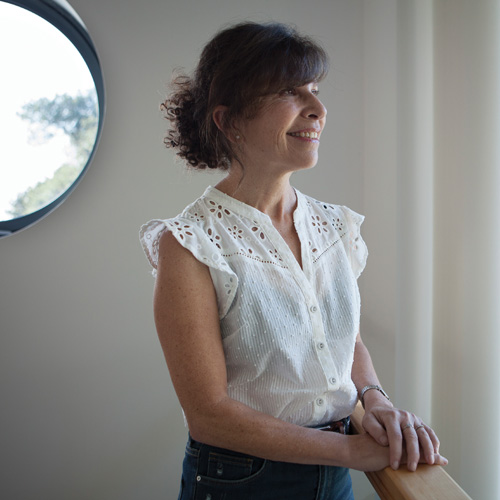
Anne Marie Vincent

“My Mum and Dad came over from Trinidad in the early fifties, to better their lives, like so many West Indians. It was actually Enoch Powell who was advertising in the Caribbean for workers to come to the UK to do the work British people weren’t able to do. They came from different areas in Trinidad; Dad was from a rural background, Mum was brought up in a town, but they met here in the UK, and I was born in Croydon. Dad was in the RAF at the time, and my Mum was nursing. However I spent 3 years of my early life in Singapore. We came back to north London, where Dad qualified as a solicitor, and Mum moved into midwifery. Later on when I was 14 or 15, we moved to Zambia, because Mum and Dad wanted to contribute to a developing community through their work, something they felt was important. Dad was helping people acquire skills to work in government departments, and Mum was finding midwifery in Zambia very different to the UK.


In Zambia, my Mum and Dad wanted to send us to boarding school. My youngest brother was sent to school in Truro, in Cornwall, but I resisted. We’d always had a connection with the South West because my family had good friends in Barnstaple, Devon; he was a doctor there. When we turned up, people knew who we were going to stay with because they were the only black family in the village. We had lots of fun there, going to the beach and swimming in the summer.


After working in Zambia, my parents decided they wanted to go back to Trinidad. Dad wanted to set up his own practice, and Mum started a retail business. To the astonishment of all of us, Mum’s business, a supermarket, was a huge financial success despite her complete lack of experience. My youngest brother now runs the business, which consists of several shops retailing DVD’s and computer equipment. Sadly my Mum died of medical negligence when I was in my 20’s. I was so privileged to have had her as a mother for that time, but of course I wish I could have had her a lot longer.


I always wanted to follow my father into law, but he told me I didn’t have a legal brain, I had a sociological brain. I think from a young age I had developed a strong social conscience. Maybe it was a female thing, but I was very inspired by my Mum, and as a family we had some pretty heavy duty political discussions round the dinner table. My father was very strict, very authoritarian, and I have to say that if it wasn’t for my Mum I would have had a rotten childhood. We weren’t allowed out, and we had to do chores before and after school, which none of my friends had to do. My parents instilled a great appetite for reading in me, and I used the library as a sanctuary, but I felt even that pleasure was taken away from me because my father censored the books I chose. I think my personality today reflects that almost Victorian upbringing, in that there’s no way I’d treat my own daughter like that, although finding the balance between freedom and self-discipline with children isn’t easy.


I totally loved my time at school, even the school dinners. I never had much problem with prejudice, unlike my brothers. Both of my brothers were compelled to fight, and their solution was to pick a fight with the biggest bully in the school, so that no-one else would wish to pick on them. Most immigrant families at the time felt that if you worked hard and excelled in education, you would later reap the rewards. In my case, I went to the Polytechnic of Central London to study law, met lots of interesting people and had a great time. However, one of the tutors commented that although they saw a lot of me around the place, it wasn’t often in lectures; so I got kicked out at the end of the second year because I failed a couple of exams. Back in Trinidad staying with my parents, I eventually went to the University of the West Indies and qualified with a sociology degree.


Since I was quite young, I’ve enjoyed being involved with community activities, trying to make a difference in people’s lives. Around 1990 I joined the Commission for Racial Equality, which was set up under the Race Relations Act. It was an absolutely fascinating time, and I did many different jobs there. I started off as a Complaints Officer, dealing with issues of discrimination, then moved into the social policy area. When Herman Ouseley, now Lord Ouseley, joined as Chair of the Commission I became the Head of the Executive office. Herman’s tenure heralded exciting and challenging times for the Commission and one of his initiatives was the “Kick it Out” football campaign. Through this I met many of the ‘movers and shakers’ of British society including politicians of the day like John Major, Michael Howard, and Ken Clarke, as well as famous footballers and musicians who supported us. In 1993 Stephen Lawrence was murdered, an event which was perhaps a watershed in race relations. The court used the phrase “institutional racism”, defining its existence; we knew it already existed, but the trial made it a matter of great public concern.

As my sister-in-law was born and bred in Charmouth we’d been visiting Bridport for over ten years before we decided to move down here. I had split up from my partner, and I wanted my daughter to grow up near her cousins. I’ve always found Bridport an incredibly welcoming, beautiful and creative place, and I’ve made so many lovely friends. So when the Commission closed down in 2007, I chose to take the redundancy package and move here. I really wanted to spend a bit more time with my daughter, because when I was working in London there weren’t enough hours in the day to be a Mum. The intention was to live on my own independent means, but ‘stuff happens’ so I’m looking for other ways to generate an income.


I’m involved with a number of voluntary groups because I need to be stimulated, but also because I believe in giving back to the community. I’m the Chair of the South West Multicultural Network; also I’m the Co-Chair of the Forum for Equality and Diversity which was set up under the aegis of Dorset County Council. I’m Vice-Chair for Magna Housing Association, primarily because I’m interested in issues around rural housing for people who may have been born and brought up in the countryside, but can’t afford to live here because of high property prices. I combine those roles with the work of governor for both a local primary and secondary school. I am also a director of West Dorset Sports Trust and a member of the Bridport Local Area Partnership.


All these involvements are great fun and very stimulating, which are something I do need, as well as hopefully helping to find a way forward for these community issues. I’m also a voracious reader, and luckily my daughter has picked up that interest. The only problem now is she’d rather be reading in the mornings instead of getting ready to go to school. Walditch has been one of the friendliest places I’ve ever lived; for example people offered to shop for me or take my daughter to school if I’ve been ill. As a village community it’s been absolutely great, and I think that’s generally the case in villages.


Most people aren’t comfortable talking about race issues; the large private sector companies I used to talk to in my previous job would far rather talk about gender inequality. Some people are frightened of difference, which can focus around disability, colour, religion etc, and it is sometimes media driven. My mantra in life has always been about being fair to other human beings, and to have respect for other cultures. The Network is trying to promote awareness of the fact we live a global life, and that unless you live totally self-sufficiently most of the necessities you buy are made by people from other cultures. If we rely on them we should be respectful of them and learn to be at ease with difference. People tell me I’m full of “joie de vivre”, and perhaps it’s because I get such a buzz from helping people to get to a position where they can help themselves. There can’t be anything more satisfying.